×

Uganda🇺🇬 | best national parksDiscover the 10 Best national parks Across Uganda

Uganda’s national parks are a tapestry of diverse landscapes and wildlife, each offering unique adventures that cater to different travel styles and budgets. From the misty mountains of Bwindi to the savannahs of Queen Elizabeth, your choice of park shapes not just the scenery but the entire experience.

Timing is crucial; the dry season invites easier access and wildlife sightings, while the wet season brings lush beauty and fewer crowds. Selecting the right park influences your pace of exploration, safety, and opportunities for cultural immersion. For backpackers and independent travelers, understanding these nuances unlocks a smoother journey through Uganda’s wild heart.

By Johan Kruseman 🇳🇱 | Updated June 5, 2026
Explore the best hikes in Uganda

Why go?Understanding Their Importance

Uganda’s national parks stand out due to their diverse ecosystems and rich biodiversity. Unlike many countries, Uganda offers a unique blend of landscapes, from the snow-capped peaks of the Rwenzori Mountains to the lush, green expanses of the Albertine Rift. This variety creates habitats for a staggering array of wildlife, including the rare mountain gorillas, which are a significant draw for eco-tourists.

However, accessing these parks can be a double-edged sword. While some parks are relatively easy to reach, others require lengthy travel times over rugged terrain, which can detract from the overall experience. The trade-off here is clear: a longer journey often leads to deeper immersion in Uganda’s stunning natural beauty and cultural richness, but it demands more time and energy.

Infrastructure … read more 👉
Uganda’s national parks stand out due to their diverse ecosystems and rich biodiversity. Unlike many countries, Uganda offers a unique blend of landscapes, from the snow-capped peaks of the Rwenzori Mountains to the lush, green expanses of the Albertine Rift. This variety creates habitats for a staggering array of wildlife, including the rare mountain gorillas, which are a significant draw for eco-tourists.

However, accessing these parks can be a double-edged sword. While some parks are relatively easy to reach, others require lengthy travel times over rugged terrain, which can detract from the overall experience. The trade-off here is clear: a longer journey often leads to deeper immersion in Uganda’s stunning natural beauty and cultural richness, but it demands more time and energy.

Infrastructure varies significantly across the country. While major parks have established roads and accommodations, remote areas may lack reliable facilities. This inconsistency can affect planning and comfort levels, making it essential for travelers to weigh their options carefully.

Uganda’s climatic conditions also play a role. The wet seasons can make some areas challenging to navigate, yet they also bring vibrant life to the landscapes. Understanding these factors is crucial for maximizing the adventure. Ultimately, Uganda’s national parks offer a compelling mix of challenges and rewards, making them a must-explore for those seeking authentic wilderness experiences.
Our Approach to Ranking
The list of best national parks in Uganda is created based on landscapes, wildlife, adventure opportunities, facilities, and overall experience. If you feel a national park is missing in this list, please let us know.

When to go?Optimal Periods for Travel

Seasonality in Uganda’s National Parks


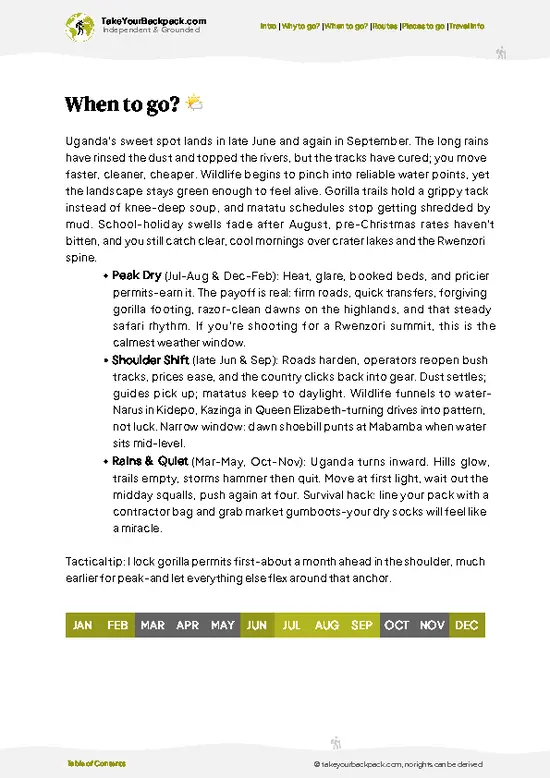
Uganda’s national parks offer a dynamic experience shaped by seasonal changes. The dry seasons, typically from June to August and December to February, present optimal wildlife visibility. Animals congregate around water sources, making sightings more frequent. Trails are generally drier and easier to navigate, enhancing the overall exploration experience.

However, the dry months attract more visitors. Expect crowded trails and higher accommodation costs. If solitude is a priority, consider the shoulder seasons—March to May and September to November. These months bring lush landscapes and vibrant flora, but also increased rainfall. Trails can become muddy, complicating hikes and wildlife tracking.

Rainfall varies across the country, impacting park … read more 👉

Seasonality in Uganda’s National Parks


Uganda’s national parks offer a dynamic experience shaped by seasonal changes. The dry seasons, typically from June to August and December to February, present optimal wildlife visibility. Animals congregate around water sources, making sightings more frequent. Trails are generally drier and easier to navigate, enhancing the overall exploration experience.

However, the dry months attract more visitors. Expect crowded trails and higher accommodation costs. If solitude is a priority, consider the shoulder seasons—March to May and September to November. These months bring lush landscapes and vibrant flora, but also increased rainfall. Trails can become muddy, complicating hikes and wildlife tracking.

Rainfall varies across the country, impacting park accessibility. Heavy rains can lead to temporary closures or difficult conditions in some areas. Yet, the trade-off is often worth it; fewer tourists mean a more intimate connection with nature.

Temperature extremes can also influence planning. Daytime heat can be intense, especially in the dry season, while nights can be surprisingly cool. Layering is essential for comfort.

Understanding these seasonal patterns allows for smarter planning. Prioritize wildlife visibility and trail conditions while balancing crowd levels and costs. This strategic approach unlocks a more rewarding experience in Uganda’s national parks.

national park hoppingHow to Combine national parks Into One Trip

General Routing Logic

Start by clustering parks regionally. Begin in the southwest with Bwindi Impenetrable National Park for gorilla trekking, then head to Queen Elizabeth National Park for wildlife viewing. This route flows naturally, minimizing backtracking and maximizing time spent in nature.

Typical Time Needed

Allocate at least two days in Bwindi for trekking and acclimatization. Queen Elizabeth deserves another two days for game drives and boat safaris. This pacing allows for deeper immersion without feeling rushed.

Common Planning Mistakes

A frequent pitfall is underestimating travel times between parks. Roads can be rough, and wildlife encounters can delay your schedule. Always factor in extra time for unexpected adventures.

Trade-offs and Constraints

Balancing speed and … read more 👉

General Routing Logic

Start by clustering parks regionally. Begin in the southwest with Bwindi Impenetrable National Park for gorilla trekking, then head to Queen Elizabeth National Park for wildlife viewing. This route flows naturally, minimizing backtracking and maximizing time spent in nature.

Typical Time Needed

Allocate at least two days in Bwindi for trekking and acclimatization. Queen Elizabeth deserves another two days for game drives and boat safaris. This pacing allows for deeper immersion without feeling rushed.

Common Planning Mistakes

A frequent pitfall is underestimating travel times between parks. Roads can be rough, and wildlife encounters can delay your schedule. Always factor in extra time for unexpected adventures.

Trade-offs and Constraints

Balancing speed and depth is crucial. Covering multiple parks in a short time may seem appealing, but it often sacrifices the richness of experience. Consider budget versus comfort; staying in lodges can enhance the experience but may stretch finances.

Flexibility and Strategic Planning

Embrace flexibility. Weather can change plans, and wildlife sightings are unpredictable. Build in buffer days to adapt your itinerary. This approach transforms a checklist into a journey, where each stop offers a unique story.

The ListHighly Recommended national parks of Uganda

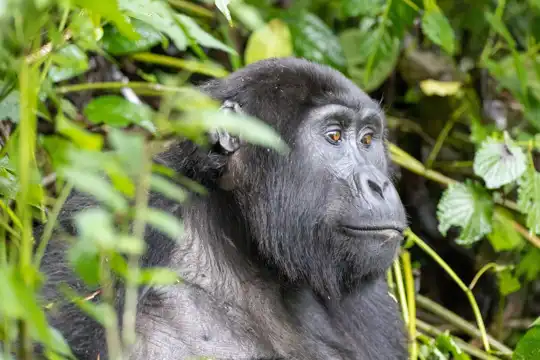
1 Bwindi Impenetrable National Park

mountain gorilla tracking, dense rainforest, steep ridges

Trek through tangled forest trails to encounter mountain gorillas in their natural habitat, surrounded by misty slopes and ancient trees.

Uganda - Bwindi Impenetrable National Park

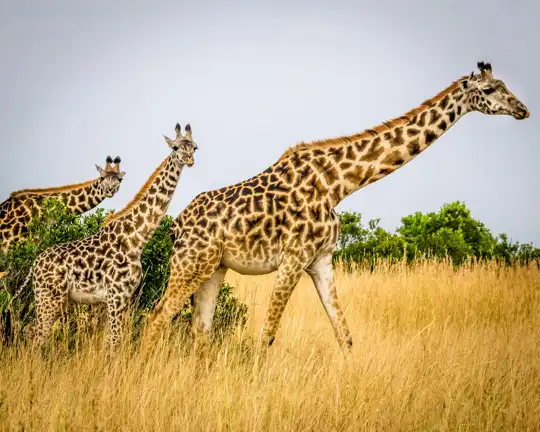
2 Murchison Falls National Park

Nile river, powerful waterfall, savanna game drives

Cruise the Nile to the base of a roaring waterfall, then search for elephants and giraffes across open grasslands and riverbanks.

3 Queen Elizabeth National Park

crater lakes, tree-climbing lions, Kazinga Channel

Spot lions lounging in fig trees, cruise past hippos and buffalo, and explore volcanic craters teeming with birdlife.

Uganda - Queen Elizabeth National Park

4 Kidepo Valley National Park

savanna wilderness, rugged mountains, remote plains

Experience wide horizons and isolated landscapes where lions, cheetahs, and ostriches roam beneath dramatic escarpments and open skies.

5 Kibale Forest National Park

chimpanzee encounters, tropical hardwoods, forest canopy

Follow expert trackers beneath towering trees to observe wild chimpanzees and dozens of other primate species in a lush, humid environment.

6 Rwenzori Mountains National Park

glacial peaks, alpine meadows, boggy valleys

Climb through ever-changing vegetation zones to reach snow-capped summits and high-altitude lakes in Africa’s tallest mountain range.

7 Mgahinga Gorilla National Park

volcanic peaks, golden monkeys, bamboo forest

Ascend volcanic slopes to spot rare golden monkeys and, with luck, meet gorilla families in a landscape shaped by ancient eruptions.

8 Lake Mburo National Park

acacia woodland, lakeshore wetlands, zebra herds

Cycle or walk among grazing zebra and impala, then watch hippos and birds from the edge of papyrus-fringed lakes.

uganda-national-park-lake-mburo-national-park
© Google |

9 Ziwa Rhino Sanctuary

white rhino tracking, savanna bush, conservation project

Join rangers on foot to track Uganda’s only wild rhinos, learning about ongoing efforts to restore this species to the wild.

uganda-national-park-ziwa-rhino-sanctuary
© Google |

10 Semuliki National Park

hot springs, lowland rainforest, Congo basin species

Walk muddy trails through humid forest to bubbling hot springs and spot rare birds and primates typical of Central Africa.

uganda-national-park-semuliki-national-park
© Google |

11 Mount Elgon National Park

extinct volcano, vast caldera, montane forest

Hike gentle slopes past waterfalls and caves to reach the world’s largest volcanic caldera, surrounded by wildflowers and forest.

12 Pian Upe Wildlife Reserve

open grasslands, roan antelope, rocky outcrops

Traverse broad plains dotted with boulders, searching for rare antelope and ostrich in one of Uganda’s least-visited reserves.

13 Budongo Forest Reserve

mahogany trees, chimpanzee research, birdwatching trails

Walk shaded paths beneath towering trees, listening for chimpanzee calls and spotting rare forest birds in a renowned research area.

14 Kyambura Game Reserve

Kyambura Gorge, chimpanzee tracking, riverine forest

Descend into a deep gorge to track wild chimpanzees and observe forest life hidden below the surrounding savanna.

15 Toro-Semliki Wildlife Reserve

palm savanna, forest edge, rare ungulates

Walk open palm-dotted savanna and forest margins, searching for elusive antelope and primates unique to this transitional landscape.

16 Karuma Wildlife Reserve

wooded savanna, Karuma Falls, antelope herds

Watch herds of antelope graze near the thunderous Karuma Falls, with chances to spot leopards and primates in the surrounding bush.

17 Bugungu Wildlife Reserve

riverine forest, buffalo herds, savanna grassland

Drive through mixed habitats where buffalo and waterbuck gather, and spot birds along the forested banks of the Nile.

18 Ajai Wildlife Reserve

seasonal floodplains, wetland birds, antelope species

Explore shifting floodplains and wetlands, home to waterbirds and rare antelope, in a quiet corner of northern Uganda.

Think you know Uganda?

Prove you’re a true local — uncover 8 lesser-known national parks in Uganda that locals tend to keep to themselves.
Loading the map 🌍

Expert viewTips and Advice from Travelers

Terrain

Uganda’s national parks are a patchwork of ecosystems, each with its own character. From the rolling hills of Bwindi Impenetrable National Park to the expansive savannahs of Queen Elizabeth National Park, the terrain shapes your experience. The dense forests of Bwindi offer a challenging trek, rewarding you with the chance to see mountain gorillas up close. But that challenge comes with a trade-off: the trails can be steep and muddy, requiring good boots and stamina. If you’re short on time, consider focusing on fewer parks to fully immerse yourself in their unique landscapes rather than rushing through multiple locations.

Park Infrastructure

Infrastructure varies widely across Uganda’s parks. Some, like Murchison Falls National Park, have well-maintained roads and a range of accommodation … read more 👉

Terrain

Uganda’s national parks are a patchwork of ecosystems, each with its own character. From the rolling hills of Bwindi Impenetrable National Park to the expansive savannahs of Queen Elizabeth National Park, the terrain shapes your experience. The dense forests of Bwindi offer a challenging trek, rewarding you with the chance to see mountain gorillas up close. But that challenge comes with a trade-off: the trails can be steep and muddy, requiring good boots and stamina. If you’re short on time, consider focusing on fewer parks to fully immerse yourself in their unique landscapes rather than rushing through multiple locations.

Park Infrastructure

Infrastructure varies widely across Uganda’s parks. Some, like Murchison Falls National Park, have well-maintained roads and a range of accommodation options, making it easier to navigate and enjoy. Others, such as Kidepo Valley National Park, are more remote, with limited facilities. This can enhance the adventure but also means you need to plan ahead. Bring extra supplies and be prepared for longer travel times. If you’re keen on maximizing your experience, prioritize parks with better infrastructure for a smoother journey, especially if you’re traveling with family or in a group.

Wildlife Activity

Wildlife activity fluctuates with the seasons. In Queen Elizabeth National Park, for instance, the dry season draws animals to water sources, making sightings more frequent. However, this is also peak tourist season, which can lead to crowded viewing spots. If you prefer a quieter experience, consider visiting during the shoulder seasons, when wildlife is still active but the crowds are thinner. Balancing your timing with wildlife activity can enhance your experience, allowing you to appreciate the natural world without feeling rushed.

Time Management

When planning your itinerary, aim for three to four parks to get a well-rounded experience of Uganda’s biodiversity. Each park requires a different investment of time; some, like Lake Mburo National Park, can be explored in a day, while others, like Bwindi, may need two or three days for trekking and relaxation. Factor in travel time between parks, which can be significant due to road conditions. If you’re pressed for time, prioritize parks that offer a variety of experiences in a compact area, allowing you to maximize your adventure without feeling stretched too thin.

Cultural Considerations

Engaging with local communities adds depth to your visit. Many parks are adjacent to villages where you can learn about traditional lifestyles and conservation efforts. However, be mindful of cultural sensitivities. Always ask before taking photos and respect local customs. This not only enriches your experience but also fosters goodwill. Balancing your wildlife adventures with cultural interactions can create a more holistic understanding of Uganda, making your journey feel more meaningful.

Safety

Safety is paramount. While Uganda is generally safe for tourists, always stay informed about local conditions and follow park guidelines. Some areas may have restrictions due to wildlife activity or weather conditions. Carry a first-aid kit and ensure your vaccinations are up to date. If you’re venturing into remote areas, consider hiring a local guide who knows the terrain and can enhance your experience. This investment not only boosts your safety but also supports the local economy.

Final Thoughts

Navigating Uganda’s national parks is an exhilarating challenge. By understanding the terrain, infrastructure, wildlife patterns, and cultural nuances, you can craft an experience that resonates deeply. Embrace the journey, and let each park reveal its story at your own pace.

✈️ The backpacker research shortcutUganda Travel Guide

An offline-friendly backpacking guide with optimized travel routes, ranked highlights, transport advice, and the best areas to stay.
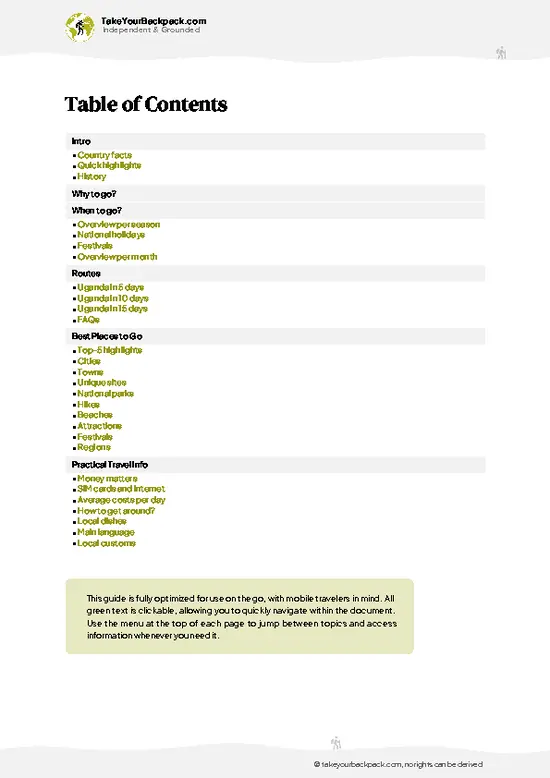
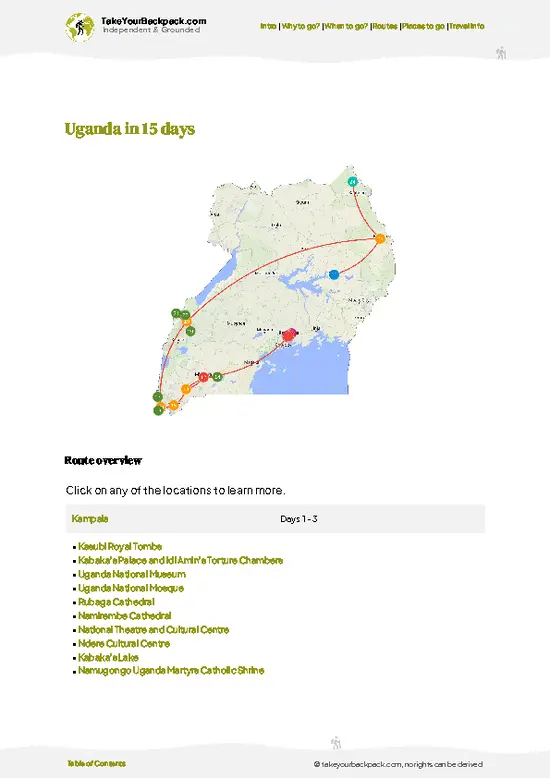
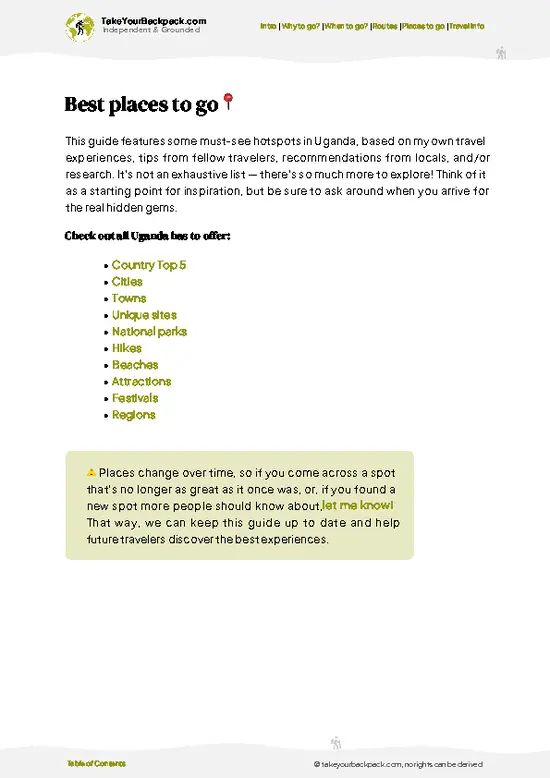
example page 0 from our offline Travel Guide for Uganda
example page 1 from our offline Travel Guide for Uganda
example page 2 from our offline Travel Guide for Uganda
example page 3 from our offline Travel Guide for Uganda
example page 4 from our offline Travel Guide for Uganda
example page 5 from our offline Travel Guide for Uganda
example page 6 from our offline Travel Guide for Uganda
example page 7 from our offline Travel Guide for Uganda
The digital guide (422 pages) contains:
109 highlights, ranked by travel appeal
Optimized 5, 10 & 15-day travel routes
Cities, national parks, landmarks, beaches
How to get around
Offline-friendly for travel without Wi-Fi
👉 Click to see all 30+ guide features

📅 Plan smarter in minutes, not weeks
Month by month travel advice
Festivals & national holidays
Budget expectations

🗺️ Go to the right places, skip the overrated ones
Honest pros & cons of destinations
Top hikes, parks & viewpoints
Lesser-known places most travelers miss
Clear “worth it vs skip it” guidance

🛏️ Travel smoothly without rookie mistakes
Best areas to stay
Transport systems explained simply
Common scams & safety advice
SIM cards, money & practical tips

🌍 Understand the country, not just visit it
Culture & traditions
52 Essential phrases & customs
Festivals worth planning around
Traveler-friendly historical context
Insights that make places more meaningful

📱 Built for real travel conditions
Fully downloadable PDF
Works completely offline
Optimized for phone use
Useful in remote areas & buses
Everything in one place
Save weeks of stressful planning
Get instant access to your full guide. 30‑day money-back guarantee.


By proceeding you agree to our terms.
Sent to your inbox immediately after payment • 100% Secure Checkout
Best Backpacking Travel Advisor 2025 tourism awardBest Backpacking
Travel Advisor
2025
What others say about Take Your Backpack Guides:
⭐⭐⭐⭐⭐
Fantastic, amazing amount of information!
⭐⭐⭐⭐⭐
My goodness this is amazing, it's what I've been looking for hats off too you!
⭐⭐⭐⭐⭐
I think this is absolutely BRILLIANT
⭐⭐⭐⭐
Very complete and informative. It's still missing places, but I gotta to commend you
⭐⭐⭐⭐⭐
This is truly amazing, thank you, can't wait to explore it with my kids!
⭐⭐⭐⭐⭐
Awesome resource, thank you!
⭐⭐⭐⭐⭐
This is amazing! Can't wait to explore the ones I haven't seen
⭐⭐⭐⭐
I love this! Well done, great idea.
⭐⭐⭐⭐⭐
Thanks for taking the time to make this gem!
⭐⭐⭐⭐⭐
This might be the best website I've ever seen.
⭐⭐⭐⭐⭐
Congratulations, and thank you so much for your work; it's incredibly valuable.
⭐⭐⭐⭐
In all seriousness I think you did a great job pointing out the important spots
⭐⭐⭐⭐⭐
10/10 very good
⭐⭐⭐⭐⭐
As someone who's only just starting to visit regularly this is awesome, thank you.
⭐⭐⭐⭐
Thank you very much! I'm going to visit my dad, it's going to be very useful!
⭐⭐⭐⭐⭐
This is really cool! We'll be travelling for the first time and this definitely come in handy.
⭐⭐⭐⭐⭐
You are now our minister of culture, congratulations 👨‍💼
⭐⭐⭐⭐⭐
Just wanted to tell you that this is a pearl! Going to follow your recommendations.
⭐⭐⭐⭐⭐
This is so cool. I'll definitely be using the resource for my travels soon.
⭐⭐⭐⭐⭐
This is very impressive! Good work.
⭐⭐⭐⭐⭐
This is an amazing and informative site. Very well done!

🛏️ Where to stay?Best Places to Stay in Uganda

Yes — hostels and budget guesthouses are widely available across Uganda, with the strongest supply in Kampala and in towns that serve national parks and adventure hubs; expect dorms, basic private rooms and campsite-style options and book ahead during peak tracking and holiday periods.
In Kampala the best budget clusters are Old Kampala/City Centre (cheapest, on main bus routes, noisy and basic security), Kabalagala (best nightlife and eateries, louder at night, good transport links) and Makerere/Kololo (near the university, quieter and slightly pricier).
Outside the capital, Entebbe (airport access and lakeshore calm) and Jinja (riverside hostels and activity access but busy on weekends) … read more 👉
Yes — hostels and budget guesthouses are widely available across Uganda, with the strongest supply in Kampala and in towns that serve national parks and adventure hubs; expect dorms, basic private rooms and campsite-style options and book ahead during peak tracking and holiday periods.
In Kampala the best budget clusters are Old Kampala/City Centre (cheapest, on main bus routes, noisy and basic security), Kabalagala (best nightlife and eateries, louder at night, good transport links) and Makerere/Kololo (near the university, quieter and slightly pricier).
Outside the capital, Entebbe (airport access and lakeshore calm) and Jinja (riverside hostels and activity access but busy on weekends) are practical bases, while Fort Portal, Kisoro/Bwindi and Kasese/Mweya offer basic budget lodgings or camps close to gorilla treks, forest trails and safari zones but with limited availability and simpler facilities.

If you enjoy meeting fellow travelers, consider choosing hostels with high ratings for atmosphere. On the other hand, if you prefer having your own space, a hotel might be a better option.

UgandaExplore Uganda

👋 Meet the founderWho’s Behind Take Your Backpack?

Johan, backpacker and founder of TakeYourBackpackHi, I’m Johan (Netherlands 🇳🇱), the creator of TakeYourBackpack. Over the past decade, I’ve backpacked through 80+ countries across six continents, gaining extensive experience with independent travel, long-term trips, and overland routes.

This site is built on a combination of firsthand travel experience and carefully curated insights from other backpackers. Many guides are based on places I’ve personally visited, while others bring together tips, observations, and practical advice shared by trusted travelers I’ve met along the way.

The goal is to provide realistic, experience-driven guidance — not generic itineraries — so you can explore destinations with better context, clearer expectations, and more confidence.

Get full Uganda guide •
Instant download • 109 highlights • Full Offline guide