×

Zimbabwe🇿🇼 | citiesChinhoyilimestone caves, university town, maize fields, regional transport link | things to do and best time to go

Explore GweruExplore Nyanga

Backpacking in Chinhoyi
👌 Worth visitingcity ranked #7
By Johan Kruseman 🇳🇱 | Updated June 8, 2026

Chinhoyi’s reputation as a sleepy transit town misses one wild truth: it’s home to the only cave system in Zimbabwe where you can swim in sapphire-blue water—no tour bus crowds, just you and the echo of your own splash. Set northwest of Harare, on the main road to Zambia, Chinhoyi is a crossroads with more character than most guidebooks admit. The city itself is compact, with a few colonial-era buildings and a market that’s lively but not overwhelming. The real draw is Chinhoyi Caves National Park—worth the detour for divers, geology nerds, or anyone craving a surreal, cool escape from the sun. It’s cheaper and less polished than Victoria Falls or Bulawayo, but also less social; you’ll need to make your own fun, and meeting fellow backpackers is hit-or-miss. Safety is decent by Zimbabwean standards, but don’t expect nightlife or backpacker bars—think quiet evenings, local beer, and the sound of mopane trees.

Discover everything you want to know in the 📖 Zimbabwe Travel Guide.


Get your Zimbabwe guide
90 ranked highlights, routes & tips, works offline (356 pages)
Loading the map 🌍
CLICK TO FILTER
cities
towns
landmarks
national parks
hikes
beaches
attractions
festivals
regions
SHOW COUNTRY’S BESTSHOW ALL

✨ Why go?
Ranked #7 city in Zimbabwe
The unique appeal for travelers

Chinhoyi is a strategic stop for backpackers weaving through Zimbabwe. It’s not just about the highlights; it’s about how they fit into your journey. The city offers a solid basecamp for day trips to nearby wonders, making it easy to explore without the hassle of constant packing.

Accommodations here are affordable, with hostels that foster a sense of community, perfect for swapping stories over a meal. Speaking of food, local eateries serve up hearty dishes that won’t break the bank, allowing you to fuel up for your adventures.

Chinhoyi is also walkable, so you can stretch your legs and soak in the local vibe without needing a taxi. When the sun sets, the nightlife is low-key but lively, with spots to unwind and connect with fellow travelers. Plus, onward travel is a breeze, linking you … read more 👉
Chinhoyi is a strategic stop for backpackers weaving through Zimbabwe. It’s not just about the highlights; it’s about how they fit into your journey. The city offers a solid basecamp for day trips to nearby wonders, making it easy to explore without the hassle of constant packing.

Accommodations here are affordable, with hostels that foster a sense of community, perfect for swapping stories over a meal. Speaking of food, local eateries serve up hearty dishes that won’t break the bank, allowing you to fuel up for your adventures.

Chinhoyi is also walkable, so you can stretch your legs and soak in the local vibe without needing a taxi. When the sun sets, the nightlife is low-key but lively, with spots to unwind and connect with fellow travelers. Plus, onward travel is a breeze, linking you to major routes without the stress. If you’re looking for a place that balances comfort and value, Chinhoyi might just be your perfect pit stop.
Want to include Chinhoyi in your Zimbabwe route?
Create a personalized Zimbabwe itinerary that includes Chinhoyi and the places that fit your trip — based on your travel style, budget, and available time. Get your route in seconds.

Generate my trip

💡 HighlightsEssential experiences to have while visiting Chinhoyi

  • Chinhoyi Caves (the Blue Lake) — A striking limestone cave system centered on a deep, cobalt-blue pool; the viewing platforms, guided walks and interpretive signs make the underwater chambers and collapse doline easy to appreciate without technical diving gear. It’s the town’s flagship natural attraction and the reason most people come to Chinhoyi.
  • Caves picnic and camping area — The well-kept picnic grounds and basic campsite right beside the caves let you stretch a day visit into a relaxed afternoon or overnight under the trees; it’s perfect for swimming at nearby safer spots, sunset watching and meeting local families who visit on weekends.
  • Chinhoyi University of Technology (CUT) campus — A lively campus with open grounds to stroll, student-run cafés and occasional public events; visiting
read more 👉
  • Chinhoyi Caves (the Blue Lake) — A striking limestone cave system centered on a deep, cobalt-blue pool; the viewing platforms, guided walks and interpretive signs make the underwater chambers and collapse doline easy to appreciate without technical diving gear. It’s the town’s flagship natural attraction and the reason most people come to Chinhoyi.
  • Caves picnic and camping area — The well-kept picnic grounds and basic campsite right beside the caves let you stretch a day visit into a relaxed afternoon or overnight under the trees; it’s perfect for swimming at nearby safer spots, sunset watching and meeting local families who visit on weekends.
  • Chinhoyi University of Technology (CUT) campus — A lively campus with open grounds to stroll, student-run cafés and occasional public events; visiting gives a real feel for local student life, short-term exhibitions and academic culture that shape the town.
  • Chinhoyi Central Market — Bustling, colorful and practical: fresh produce, household goods and locally made crafts. Great for tasting street-food snacks, buying cheap basics and watching everyday commerce that reflects the town’s rhythms.
A few real, visitable day trips from Chinhoyi worth doing are Harare (the capital’s museums, markets and restaurants) and Lake Kariba (boating, fishing and shoreline scenery); Lake Kariba is my personal favorite.
Spotted a mistake or missing something? Contact us.

Things to do near Chinhoyi

Ratings based on Tripadvisor reviews. When you book through this link, you support our work at no extra cost to you.

🏘️ NeighborhoodsKey areas and districts to know

Chinhoyi offers a unique blend of adventure and culture, making it an intriguing stop for backpackers. Here’s how the neighborhoods stack up:

Chinhoyi Town Center
This is the heartbeat of Chinhoyi. It’s bustling with local markets and shops, perfect for grabbing essentials. The vibe is lively, but not overwhelming. Costs are reasonable, making it ideal for budget travelers. Walkability is high; you can easily explore on foot. Nightlife is minimal, so expect a quieter evening scene. Great for short stays, as you can quickly access transport to nearby attractions.

Chinhoyi Caves Area
A must-visit for nature lovers. The caves are stunning and offer a unique experience. This area is more tranquil, perfect for those seeking peace after a day of exploration. Accommodation options vary from … read more 👉
Chinhoyi offers a unique blend of adventure and culture, making it an intriguing stop for backpackers. Here’s how the neighborhoods stack up:

Chinhoyi Town Center
This is the heartbeat of Chinhoyi. It’s bustling with local markets and shops, perfect for grabbing essentials. The vibe is lively, but not overwhelming. Costs are reasonable, making it ideal for budget travelers. Walkability is high; you can easily explore on foot. Nightlife is minimal, so expect a quieter evening scene. Great for short stays, as you can quickly access transport to nearby attractions.

Chinhoyi Caves Area
A must-visit for nature lovers. The caves are stunning and offer a unique experience. This area is more tranquil, perfect for those seeking peace after a day of exploration. Accommodation options vary from budget to mid-range. It’s less walkable, so having a vehicle or using local transport is advisable. Ideal for longer stays if you want to soak in the natural beauty and explore the caves thoroughly.

Rujeko
A residential area that gives you a taste of local life. It’s quieter and more laid-back, with fewer tourists around. Costs are lower here, making it a good choice for budget-conscious backpackers. Walkability is decent, but you might need to rely on public transport for longer distances. Not much nightlife, so it’s best for those who prefer a calm atmosphere. Suitable for longer stays if you want to immerse yourself in local culture.

⌛️ 1 dayHow to make the most of one day

Chinhoyi, Zimbabwe, is a small city that packs a punch with its rich history and stunning natural beauty. Known for the Chinhoyi Caves, this destination offers a unique blend of adventure and culture, making it a perfect spot for a day trip.

Start your morning at the Chinhoyi Caves, where you can explore the limestone formations and crystal-clear pools. The caves are not just a geological wonder; they hold historical significance as a site of resistance during the liberation struggle. Spend a couple of hours wandering through the cool, damp corridors, soaking in the eerie beauty. Bring a camera; the light filtering through the cave openings creates mesmerizing reflections.

After your cave adventure, head to the nearby town center for lunch. Try a local eatery like the Chinhoyi Hotel, where … read more 👉
Chinhoyi, Zimbabwe, is a small city that packs a punch with its rich history and stunning natural beauty. Known for the Chinhoyi Caves, this destination offers a unique blend of adventure and culture, making it a perfect spot for a day trip.

Start your morning at the Chinhoyi Caves, where you can explore the limestone formations and crystal-clear pools. The caves are not just a geological wonder; they hold historical significance as a site of resistance during the liberation struggle. Spend a couple of hours wandering through the cool, damp corridors, soaking in the eerie beauty. Bring a camera; the light filtering through the cave openings creates mesmerizing reflections.

After your cave adventure, head to the nearby town center for lunch. Try a local eatery like the Chinhoyi Hotel, where you can savor traditional Zimbabwean dishes like sadza and grilled meats. The atmosphere is relaxed, and you’ll get a taste of local life.

In the afternoon, take a stroll through the bustling streets of the central business district. Check out the vibrant markets where vendors sell everything from fresh produce to handmade crafts. This is a great opportunity to interact with locals and pick up a few unique souvenirs. If you’re feeling adventurous, visit the lesser-known Chinhoyi Museum, which showcases the city’s history and culture, often overlooked by tourists.

As the sun begins to set, find a cozy spot at a local bar or café. Enjoy a cold beverage while watching the day wind down. The friendly locals will likely share stories, adding a personal touch to your experience.

Chinhoyi may not be on everyone’s radar, but it offers a rich tapestry of experiences that make for a fulfilling day. Embrace the rhythm of the city, and you’ll leave with memories that linger long after you’ve departed.
Turn your Chinhoyi visit into an Zimbabwe adventure
Build a complete Zimbabwe route with Chinhoyi, hidden gems, must-see destinations, and realistic travel times included.

Generate my trip

🌤️ When to go?Seasonal considerations and timing


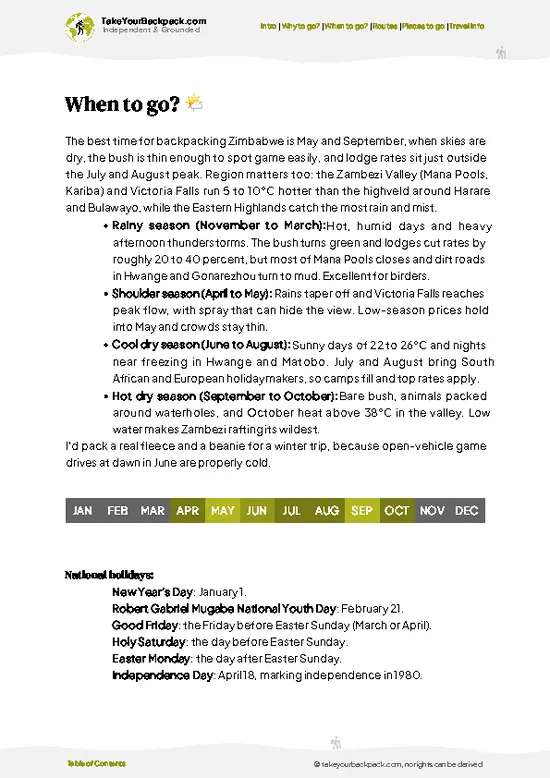
  • Topic: Weather – Chinhoyi’s dry season runs from May to October, offering clear skies and minimal rain. This is prime for trekking and exploring the caves without soggy boots or slippery trails.

  • Topic: Temperature – Expect daytime highs around 22-27°C (72-81°F) in the dry months, cooling to 10-15°C (50-59°F) at night. The wet season (November to April) heats up to 30°C (86°F) or more, with humidity that can sap your energy fast.

  • Topic: Daylight Hours – Daylight is fairly consistent year-round, roughly 11 to 12 hours. This means you won’t lose much exploring time no matter when you visit, but the dry season’s clearer skies make early mornings and late afternoons more pleasant.

  • Topic: Crowds – Tourist traffic peaks during Zimbabwe’s dry season, especially July and August. If you want
read more 👉

  • Topic: Weather – Chinhoyi’s dry season runs from May to October, offering clear skies and minimal rain. This is prime for trekking and exploring the caves without soggy boots or slippery trails.

  • Topic: Temperature – Expect daytime highs around 22-27°C (72-81°F) in the dry months, cooling to 10-15°C (50-59°F) at night. The wet season (November to April) heats up to 30°C (86°F) or more, with humidity that can sap your energy fast.

  • Topic: Daylight Hours – Daylight is fairly consistent year-round, roughly 11 to 12 hours. This means you won’t lose much exploring time no matter when you visit, but the dry season’s clearer skies make early mornings and late afternoons more pleasant.

  • Topic: Crowds – Tourist traffic peaks during Zimbabwe’s dry season, especially July and August. If you want solitude in the caves or at local markets, aim for shoulder months like May or September.

  • Topic: Seasonal Activities – Dry months are best for hiking, cave diving, and wildlife spotting. The wet season brings lush greenery and birdwatching but can limit access to some trails due to flooding.

  • Topic: Price Fluctuations – Accommodation and tours spike in the dry season’s peak months. Visiting just before or after this window can save you 20-30% without sacrificing much on experience quality.


Pro-tip: Target May or September for the sweet spot—pleasant weather, fewer crowds, and better prices. You’ll feel like you cracked the code on Chinhoyi’s timing.


source: climatestotravel.comJANJanuary: fair for travelingFEBFebruary: fair for travelingMARMarch: fair for travelingAPRApril: good for travelingMAYMay: excellent for travelingJUNJune: highly recommended for travelingJULJuly: highly recommended for travelingAUGAugust: highly recommended for travelingSEPSeptember: excellent for travelingOCTOctober: highly recommended for travelingNOVNovember: fair for travelingDECDecember: fair for traveling
when-to-go

✈️ The backpacker research shortcutZimbabwe Travel Guide

An offline-friendly backpacking guide with optimized travel routes, ranked highlights, transport advice, and the best areas to stay.
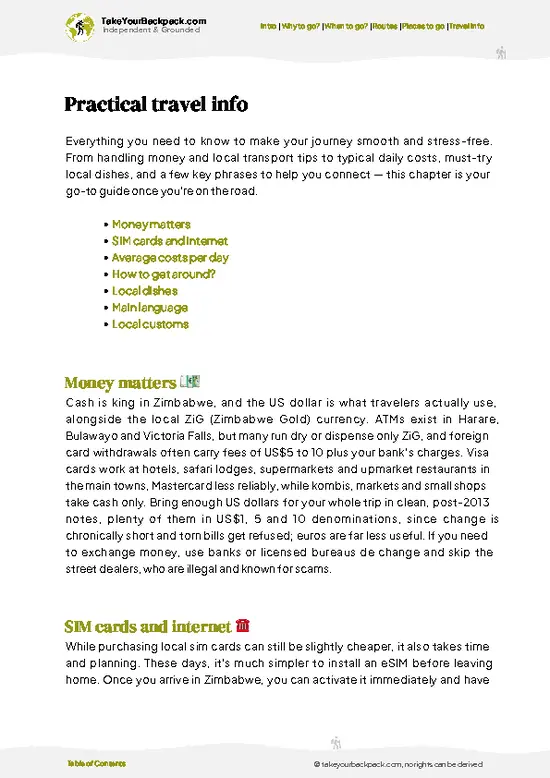
example page 0 from our offline Travel Guide for Zimbabwe
example page 1 from our offline Travel Guide for Zimbabwe
example page 2 from our offline Travel Guide for Zimbabwe
example page 3 from our offline Travel Guide for Zimbabwe
example page 4 from our offline Travel Guide for Zimbabwe
example page 5 from our offline Travel Guide for Zimbabwe
example page 6 from our offline Travel Guide for Zimbabwe
example page 7 from our offline Travel Guide for Zimbabwe
The digital guide (356 pages) contains:
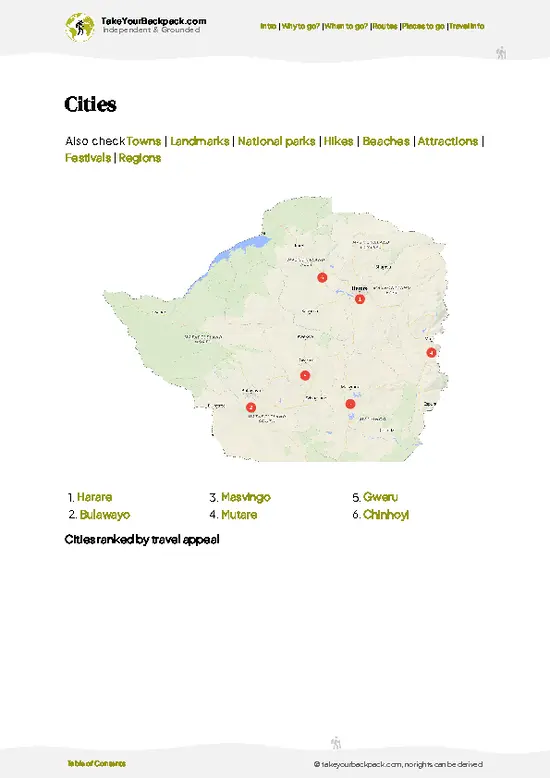
90 highlights, ranked by travel appeal
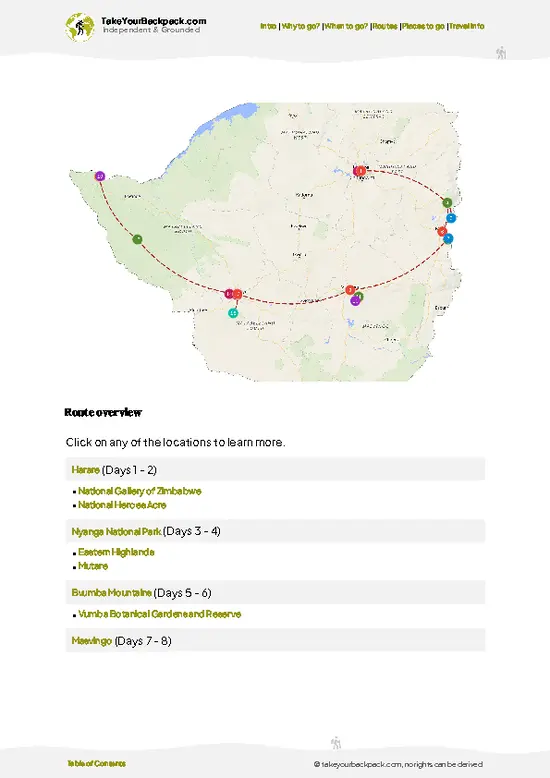
Optimized 5, 10 & 15-day travel routes
Cities, national parks, landmarks, beaches
How to get around
Offline-friendly for travel without Wi-Fi
👉 Click to see all 30+ guide features

📅 Plan smarter in minutes, not weeks
Month by month travel advice
Festivals & national holidays
Budget expectations

🗺️ Go to the right places, skip the overrated ones
Honest pros & cons of destinations
Top hikes, parks & viewpoints
Lesser-known places most travelers miss
Clear “worth it vs skip it” guidance

🛏️ Travel smoothly without rookie mistakes
Best areas to stay
Transport systems explained simply
Common scams & safety advice
SIM cards, money & practical tips

🌍 Understand the country, not just visit it
Culture & traditions
52 Essential phrases & customs
Festivals worth planning around
Traveler-friendly historical context
Insights that make places more meaningful

📱 Built for real travel conditions
Fully downloadable PDF
Works completely offline
Optimized for phone use
Useful in remote areas & buses
Everything in one place
Save weeks of stressful planning
Get instant access to your full guide. 30‑day money-back guarantee.


By proceeding you agree to our terms.
Sent to your inbox immediately after payment • 100% Secure Checkout
Best Backpacking Travel Advisor 2025 tourism awardBest Backpacking
Travel Advisor
2025
What others say about Take Your Backpack Guides:
⭐⭐⭐⭐⭐
Fantastic, amazing amount of information!
⭐⭐⭐⭐⭐
My goodness this is amazing, it's what I've been looking for hats off too you!
⭐⭐⭐⭐⭐
I think this is absolutely BRILLIANT
⭐⭐⭐⭐
Very complete and informative. It's still missing places, but I gotta to commend you
⭐⭐⭐⭐⭐
This is truly amazing, thank you, can't wait to explore it with my kids!
⭐⭐⭐⭐⭐
Awesome resource, thank you!
⭐⭐⭐⭐⭐
This is amazing! Can't wait to explore the ones I haven't seen
⭐⭐⭐⭐
I love this! Well done, great idea.
⭐⭐⭐⭐⭐
Thanks for taking the time to make this gem!
⭐⭐⭐⭐⭐
This might be the best website I've ever seen.
⭐⭐⭐⭐⭐
Congratulations, and thank you so much for your work; it's incredibly valuable.
⭐⭐⭐⭐
In all seriousness I think you did a great job pointing out the important spots
⭐⭐⭐⭐⭐
10/10 very good
⭐⭐⭐⭐⭐
As someone who's only just starting to visit regularly this is awesome, thank you.
⭐⭐⭐⭐
Thank you very much! I'm going to visit my dad, it's going to be very useful!
⭐⭐⭐⭐⭐
This is really cool! We'll be travelling for the first time and this definitely come in handy.
⭐⭐⭐⭐⭐
You are now our minister of culture, congratulations 👨‍💼
⭐⭐⭐⭐⭐
Just wanted to tell you that this is a pearl! Going to follow your recommendations.
⭐⭐⭐⭐⭐
This is so cool. I'll definitely be using the resource for my travels soon.
⭐⭐⭐⭐⭐
This is very impressive! Good work.
⭐⭐⭐⭐⭐
This is an amazing and informative site. Very well done!

🛏️ Where to stay?Choosing the right base

In Chinhoyi, the best spot for backpackers is the area around the town center, especially near the main bus terminus and market. This zone is the heartbeat of the city—safe enough during daylight, with a steady flow of locals and travelers crossing paths. It’s where you’ll find the most budget-friendly guesthouses and hostels, which means social opportunities are baked in. You’re not just booking a bed; you’re stepping into a communal vibe where swapping stories and tips happens naturally.

Compared to the quieter, more residential outskirts, staying central means cutting down on transport hassles … read more 👉
In Chinhoyi, the best spot for backpackers is the area around the town center, especially near the main bus terminus and market. This zone is the heartbeat of the city—safe enough during daylight, with a steady flow of locals and travelers crossing paths. It’s where you’ll find the most budget-friendly guesthouses and hostels, which means social opportunities are baked in. You’re not just booking a bed; you’re stepping into a communal vibe where swapping stories and tips happens naturally.

Compared to the quieter, more residential outskirts, staying central means cutting down on transport hassles and maximizing your time exploring the nearby Chinhoyi Caves or local markets. The trade-off is a bit more noise and bustle, but that’s part of the charm—comfort takes a backseat to connection and convenience here. Other neighborhoods tend to be either too isolated or geared toward private lodges, which can drain your budget and limit social interaction. For solo backpackers, the town center offers a smart balance: enough buzz to feel alive, enough safety to relax, and enough budget options to keep your wallet intact.

🚌 Getting aroundHow to get around Chinhoyi

Chinhoyi moves at a pace that’s neither frantic nor sluggish—it’s a city where time bends to local rhythms more than strict timetables. You won’t find a clock dictating every step, but rather a flow shaped by the ebb and pull of daily life, where intuition often trumps schedules. This means your travel choices here are a dance between patience and savvy. You can push for speed and comfort, but it’ll cost you. Or you can lean into the local tempo, saving money and gaining a richer sense of place, if you’re willing to accept a bit of unpredictability. Understanding this trade-off is your key to mastering Chinhoyi’s transit game.


  • Walking: The most straightforward and cost-free way to get around. Chinhoyi’s compact center makes walking practical, especially for short hops to markets or the
read more 👉
Chinhoyi moves at a pace that’s neither frantic nor sluggish—it’s a city where time bends to local rhythms more than strict timetables. You won’t find a clock dictating every step, but rather a flow shaped by the ebb and pull of daily life, where intuition often trumps schedules. This means your travel choices here are a dance between patience and savvy. You can push for speed and comfort, but it’ll cost you. Or you can lean into the local tempo, saving money and gaining a richer sense of place, if you’re willing to accept a bit of unpredictability. Understanding this trade-off is your key to mastering Chinhoyi’s transit game.


  • Walking: The most straightforward and cost-free way to get around. Chinhoyi’s compact center makes walking practical, especially for short hops to markets or the university. It’s slow but offers the richest sensory experience—every street corner tells a story. No schedule, no cost, but expect to spend time and energy.


  • Shared Minibuses (Combi Taxis): These are the backbone of local transit. They run roughly from 6 a.m. to 7 p.m., with fares around $0.50 to $1 depending on distance. Speed varies wildly—when full, they dart through traffic aggressively; when empty, they linger. Comfort is minimal, often cramped, but they’re the cheapest way to cover longer distances quickly if you’re flexible with timing.


  • Private Taxis: Available on demand, these offer a step up in comfort and speed, but at a steep price—expect to pay 5 to 10 times the minibus fare. No fixed schedule, so you control departure time. Ideal if you’re short on time or traveling with gear, but not budget-friendly.


  • Bicycle Rentals: A middle ground between walking and motorized transport. Renting a bike costs about $5 to $10 per day. You gain speed and range without the expense of taxis, plus the freedom to explore off the beaten path. Comfort depends on the bike’s condition and your stamina, but it’s a smart choice for budget travelers who want control over their schedule.


Mastering Chinhoyi’s transit means balancing these options against your priorities: save time and pay more, or save money and embrace the city’s natural rhythm. Either way, you’re not just moving through space—you’re tuning into the city’s pulse.

👛 Costs (as of 2 July 2025)How expensive it really is

Backpacking in Chinhoyi, Zimbabwe, offers a clear-cut trade-off between cost and comfort, with prices reflecting the city’s modest tourism infrastructure and local economy. Here’s the breakdown of what you’re likely to spend daily:
  • Dorm Accommodation (High Season): Expect to pay around $10 to $15 per night. High season pushes prices up slightly due to demand, but dorms remain basic with essential amenities.
  • Dorm Accommodation (Off-Season): Prices drop to about $7 to $10 per night. Off-season is quieter, so you can negotiate better deals or find quieter spots with the same facilities.
  • Meals: Local meals are affordable, typically $3 to $6 per meal if you stick to street food or small local eateries. Western-style or tourist-targeted restaurants push that to $8 to $12 per meal.
  • Local Transport:
read more 👉
Backpacking in Chinhoyi, Zimbabwe, offers a clear-cut trade-off between cost and comfort, with prices reflecting the city’s modest tourism infrastructure and local economy. Here’s the breakdown of what you’re likely to spend daily:
  • Dorm Accommodation (High Season): Expect to pay around $10 to $15 per night. High season pushes prices up slightly due to demand, but dorms remain basic with essential amenities.
  • Dorm Accommodation (Off-Season): Prices drop to about $7 to $10 per night. Off-season is quieter, so you can negotiate better deals or find quieter spots with the same facilities.
  • Meals: Local meals are affordable, typically $3 to $6 per meal if you stick to street food or small local eateries. Western-style or tourist-targeted restaurants push that to $8 to $12 per meal.
  • Local Transport: Minibus taxis dominate and cost roughly $0.50 to $1 per short trip within the city. They’re frequent but can be crowded and less predictable.
  • City Transport Pass: There’s no formal city transport pass system in Chinhoyi, so budgeting for individual minibus rides is necessary.
  • Basic Activities/Entry Fees: Visiting Chinhoyi Caves, the main attraction, costs about $5 to $7 for entry. Other local activities are similarly priced or free, keeping entertainment costs low.
  • Miscellaneous Expenses: Budget around $2 to $5 for essentials like bottled water, snacks, or small souvenirs. Internet cafes or SIM cards are inexpensive but vary by provider.

In total, a backpacker can expect to spend roughly $20 to $35 per day in Chinhoyi, balancing modest comfort with local flavor. This range gives you enough wiggle room to upgrade a meal or splurge on a guided cave tour without breaking the bank.
⚠️ Prices can change and everyone travels differently, so take this as a rough guide. Hope it helps you plan your adventure!

🚌 Day tripsWhere to go beyond the main area

Chinhoyi, Zimbabwe, is a strategic base for backpackers eager to explore the region’s hidden treasures. With its affordable accommodations and local charm, you can easily venture out for day trips that pack a punch.

Chinhoyi Caves
Just a short 30-minute ride from town, the Chinhoyi Caves are a must-see. These limestone formations are not just visually striking; they hold historical significance as a site of resistance during the liberation struggle. You can swim in the crystal-clear blue waters of the underground pool, but be prepared for a chilly dip. Entry fees are minimal, making this an easy win for your wallet. The best time to visit is during the dry season, from May to October, when the paths are less slippery. A common mistake? Underestimating how much time you’ll want to spend … read more 👉
Chinhoyi, Zimbabwe, is a strategic base for backpackers eager to explore the region’s hidden treasures. With its affordable accommodations and local charm, you can easily venture out for day trips that pack a punch.

Chinhoyi Caves
Just a short 30-minute ride from town, the Chinhoyi Caves are a must-see. These limestone formations are not just visually striking; they hold historical significance as a site of resistance during the liberation struggle. You can swim in the crystal-clear blue waters of the underground pool, but be prepared for a chilly dip. Entry fees are minimal, making this an easy win for your wallet. The best time to visit is during the dry season, from May to October, when the paths are less slippery. A common mistake? Underestimating how much time you’ll want to spend exploring the caves.


Lake Chivero
About an hour’s drive from Chinhoyi, Lake Chivero offers a refreshing escape. This expansive lake is perfect for a day of picnicking, birdwatching, or even a boat ride. The entrance fee is budget-friendly, and you can grab snacks from local vendors. The dry season is ideal for spotting wildlife, as animals flock to the water. Many first-timers overlook the importance of arriving early to secure a good spot by the lake.


Mukuvisi Woodlands
Just under two hours away, Mukuvisi Woodlands is a unique blend of urban and natural experiences. This wildlife sanctuary is home to various species, including zebra and giraffe, all within a short distance from the city. The entrance fee is reasonable, and guided tours are available for a small extra cost. The best time to visit is in the cooler months, from May to August. A common pitfall is not budgeting enough time for the guided tours, which can enrich your experience significantly.


Harare City
A day trip to Harare, about two hours from Chinhoyi, immerses you in the vibrant culture of Zimbabwe’s capital. Explore local markets, sample street food, and visit the National Gallery. Costs can vary, but you can navigate the city on a budget if you stick to public transport and local eateries. The best time to visit is during the cooler months, avoiding the scorching heat. Many backpackers miss out on the local bus experience, which can be a fun way to meet locals.
Want to know what more Zimbabwe offers?
The Zimbabwe Travel Guide describes 90 highlights, from cities to national parks, from beaches to hikes

Get the Travel Guide -

🍲 FoodLocal Cuisine & Drinks

In Chinhoyi, food and drinks are a gateway to local culture. Start with sadza, a staple made from maize, often served with a rich stew of beef or chicken. The texture is comforting, and it’s the perfect vehicle for soaking up flavors. Pair it with muriwo, a sautéed green vegetable that adds a fresh crunch.

Street food is where the magic happens. Vendors line the streets, grilling nyama, or meat skewers, that fill the air with smoky aromas. Don’t miss the chance to grab a samosa or two; they’re crispy, savory pockets filled with spiced potatoes or meat, perfect for a quick snack while exploring.

When it comes to drinks, try maheu, a fermented maize drink that’s both refreshing and slightly tangy. It’s a local favorite, often enjoyed during social gatherings. The drinking culture here is communal; … read more 👉
In Chinhoyi, food and drinks are a gateway to local culture. Start with sadza, a staple made from maize, often served with a rich stew of beef or chicken. The texture is comforting, and it’s the perfect vehicle for soaking up flavors. Pair it with muriwo, a sautéed green vegetable that adds a fresh crunch.

Street food is where the magic happens. Vendors line the streets, grilling nyama, or meat skewers, that fill the air with smoky aromas. Don’t miss the chance to grab a samosa or two; they’re crispy, savory pockets filled with spiced potatoes or meat, perfect for a quick snack while exploring.

When it comes to drinks, try maheu, a fermented maize drink that’s both refreshing and slightly tangy. It’s a local favorite, often enjoyed during social gatherings. The drinking culture here is communal; sharing a drink is a sign of friendship.

Etiquette is straightforward: eat with your hands, especially when enjoying sadza. It’s not just food; it’s an experience that connects you to the heart of Zimbabwean life. Embrace the flavors, and you’ll feel the pulse of Chinhoyi.

🛡️ SafetyScams, Hazards, and Annoyances

Chinhoyi is generally safe for backpackers, but a few situational awareness tips can enhance your experience. Stick to well-lit areas at night, especially around the town center. Solo travelers should be mindful of their surroundings; while locals are friendly, it’s wise to avoid overly isolated spots after dark.

Common scams are rare, but be cautious of overly eager guides at tourist sites. They may offer unsolicited help, expecting payment. Politely decline if you’re not interested. Everyday annoyances can include aggressive street vendors; a firm but friendly “no, thank you” usually does the trick.

Keep your belongings secure and avoid displaying valuables. A crossbody bag can be a good choice. By staying aware and confident, you’ll navigate Chinhoyi smoothly, allowing you to focus on the rich experiences waiting for you.

Other Zimbabwean cities near Chinhoyi

Explore more nearby:

  • Mazowe—citrus orchards, dam reservoir, mission schools| 84 km away
  • Harare—urban parks, contemporary art, business district, street markets| 104 km away
  • Kadoma—gold mining, textile mills, roadside commerce, semi-arid landscape| 112 km away

💡 Not sure where to go next?
Create a personalized itinerary for Zimbabwe including Chinhoyi and the places that fit your trip.

Generate my itinerary

👉 Discover all cities

Or checkout all Zimbabwe has to offer (think cities, towns, villages, national parks, hikes, beaches, festivals)
Country photo of Zimbabwe

We 💚 feedbackSumming up the experience

Chinhoyi is a treasure for adventurers. The Chinhoyi Caves, with their stunning blue waters, offer a surreal experience that feels like stepping into another world. But be ready for the trade-off: amenities can be sparse. Don’t expect luxury; instead, embrace the raw beauty and simplicity. It’s a place that rewards those willing to dive into its depths, both literally and metaphorically. Just pack your patience along with your gear.

✈️ When did I visit Zimbabwe?
I have backpacked Zimbabwe all the way back in 2001.

✍️ Help improve this page!
The information on this page is based on my own backpacking experience in Zimbabwe, supplemented with up-to-date research and feedback from other travelers. Travel details can change, so if you notice anything outdated or incomplete, feel free to let me know.


🙋‍♂️ Give feedback

👋 Meet the founderWho’s Behind Take Your Backpack?

Johan, backpacker and founder of TakeYourBackpackHi, I’m Johan (Netherlands 🇳🇱), the creator of TakeYourBackpack. Over the past decade, I’ve backpacked through 80+ countries across six continents, gaining extensive experience with independent travel, long-term trips, and overland routes.

This site is built on a combination of firsthand travel experience and carefully curated insights from other backpackers. Many guides are based on places I’ve personally visited, while others bring together tips, observations, and practical advice shared by trusted travelers I’ve met along the way.

The goal is to provide realistic, experience-driven guidance — not generic itineraries — so you can explore destinations with better context, clearer expectations, and more confidence.

Get full Zimbabwe guide •
Instant download • 90 highlights • Full Offline guide