×

Zimbabwe🇿🇼 | citiesHarareurban parks, contemporary art, business district, street markets | things to do and best time to go

Explore BulawayoExplore Mutare

Backpacking in Harare
🏆 Top pickcity ranked #1
By Johan Kruseman 🇳🇱 | Updated June 11, 2026

The practical advantage of Harare? It’s the one African capital where you can actually breathe—literally and logistically. Most travelers realize too late that Harare’s wide boulevards and leafy suburbs mean you’re spared the gridlock and chaos that choke so many other cities. Harare sits in the northeast of Zimbabwe, a plateau city with altitude that keeps the air crisp and the nights cool. For backpackers, Harare is a paradox: it’s not a tourist magnet, but that’s its charm. You’ll find the National Gallery’s modern African art, the lively Mbare market (bring your street smarts), and the faded colonial grandeur of Africa Unity Square. The nightlife is real—think jazz bars and rooftop parties, not just hotel lounges. It’s affordable by regional standards, safer than most expect if you stick to the center and trust your instincts, and the city’s rhythm is relaxed, almost suburban. Meeting other travelers is hit-or-miss; this isn’t Victoria Falls or Bulawayo, but that means the conversations you do have are deeper. Harare rewards curiosity, not checklists.

Discover everything you want to know in the 📖 Zimbabwe Travel Guide.


Get your Zimbabwe guide
90 ranked highlights, routes & tips, works offline (356 pages)
Loading the map 🌍
CLICK TO FILTER
cities
towns
landmarks
national parks
hikes
beaches
attractions
festivals
regions
SHOW COUNTRY’S BESTSHOW ALL

✨ Why go?
Ranked #1 city in Zimbabwe
Why visitors keep coming back

Harare, Zimbabwe, is often overlooked, but it’s a strategic stop for backpackers. The basecamp value here is solid. You’ll find affordable hostels that cater to budget travelers, offering a social vibe that makes it easy to meet fellow adventurers. The food scene is diverse, with local markets and street vendors serving up delicious options that won’t break the bank.

The city is walkable, allowing you to explore its neighborhoods and soak in the local culture without relying on transport. This is key for those who want to stretch their legs and experience the rhythm of daily life. When the sun sets, the nightlife offers a mix of laid-back bars and lively clubs, perfect for unwinding after a day of exploration.

Moreover, Harare serves as a gateway for easy onward travel to stunning destinations … read more 👉
Harare, Zimbabwe, is often overlooked, but it’s a strategic stop for backpackers. The basecamp value here is solid. You’ll find affordable hostels that cater to budget travelers, offering a social vibe that makes it easy to meet fellow adventurers. The food scene is diverse, with local markets and street vendors serving up delicious options that won’t break the bank.

The city is walkable, allowing you to explore its neighborhoods and soak in the local culture without relying on transport. This is key for those who want to stretch their legs and experience the rhythm of daily life. When the sun sets, the nightlife offers a mix of laid-back bars and lively clubs, perfect for unwinding after a day of exploration.

Moreover, Harare serves as a gateway for easy onward travel to stunning destinations like national parks and nearby towns. This makes it a practical choice for backpackers looking to balance time and comfort. You can enjoy a few days here, soaking in the local atmosphere while planning your next adventure, or use it as a quick stopover. Either way, Harare has its own charm that’s worth experiencing.
Want to include Harare in your Zimbabwe route?
Create a personalized Zimbabwe itinerary that includes Harare and the places that fit your trip — based on your travel style, budget, and available time. Get your route in seconds.

Generate my trip

💡 HighlightsTop highlights of Harare

  • National Heroes Acre — A huge, symbolic hillside memorial for Zimbabwe’s liberation fighters; the carved black granite Zimbabwe Bird and the terraces make it a somber, striking place to reflect on history and get a different perspective on the city.
  • Mbare Musika Market — Raw, chaotic, and utterly alive: packs of vendors, produce, fabrics and commuter bustle. It’s where you feel the real pulse of Harare and can pick up cheap snacks, traditional goods and great street photography—go early and be aware of your belongings.
  • National Gallery of Zimbabwe — The best place to see contemporary Zimbabwean art and rotating shows by local artists; the gallery mixes painting, sculpture and often thought-provoking installations that tell modern cultural stories you won’t get from guidebooks.
  • Zimbabwe
read more 👉
  • National Heroes Acre — A huge, symbolic hillside memorial for Zimbabwe’s liberation fighters; the carved black granite Zimbabwe Bird and the terraces make it a somber, striking place to reflect on history and get a different perspective on the city.
  • Mbare Musika Market — Raw, chaotic, and utterly alive: packs of vendors, produce, fabrics and commuter bustle. It’s where you feel the real pulse of Harare and can pick up cheap snacks, traditional goods and great street photography—go early and be aware of your belongings.
  • National Gallery of Zimbabwe — The best place to see contemporary Zimbabwean art and rotating shows by local artists; the gallery mixes painting, sculpture and often thought-provoking installations that tell modern cultural stories you won’t get from guidebooks.
  • Zimbabwe Museum of Human Sciences (National Museum) — Small but rich museum with archaeological finds, ethnography and the story of pre-colonial Zimbabwe; it’s the go-to spot to understand the deeper history behind the country’s symbols and artifacts.
  • Chapungu Sculpture Park — An open-air showcase of Shona stone sculpture set in parkland; wandering between monumental pieces by Zimbabwe’s best carvers is a quiet, almost magical experience and great for photos and buying original sculptures.
  • Mukuvisi Woodlands — A surprising patch of bush inside the city with walking trails, birds, small mammals and guided cultural walks; perfect for a half-day escape to see wildlife, rock art replicas and local conservation efforts without leaving town.
  • Harare Gardens — The old colonial-era city park in the CBD with lawns, a bandstand and people-watching; small, central and useful when you want a shady break, a picnic or to watch Harare life unfold at street level.
  • Avondale Saturday Market — A friendly weekend market where locals sell crafts, fresh food, baked goods and coffee; it’s casual, good for souvenirs and meeting Harare creatives without the tourist-shop feel.
  • Eastgate Centre — Not just a mall: an architectural case study in passive cooling (designed with natural ventilation in mind). Walking the atria gives you a neat insight into how local design tackles the climate—plus it’s a functioning shopping and office hub.
  • Harare Botanical Gardens — A larger, quieter green space with labelled plant collections, shady paths and picnic spots; great for a relaxed stroll, birdwatching and seeing indigenous and exotic flora up close.
Outside the city you can easily day-trip to Domboshava (granite outcrops and ancient rock art), Lake Chivero Recreational Park (wildlife and water activities) and the Chinhoyi Caves (dramatic blue pools), and Domboshava is my personal favorite.
Spotted a mistake or missing something? Contact us.

Things to do in Harare

Ratings based on Tripadvisor reviews. When you book through this link, you support our work at no extra cost to you.

🏘️ NeighborhoodsNeighborhood guide to Harare

Harare offers a mix of vibrant culture and practical logistics for backpackers. Here’s how the neighborhoods stack up:

Avondale: This area is a backpacker favorite for its laid-back vibe and affordability. You’ll find cozy guesthouses and local eateries. It’s walkable, with parks and shops nearby. The nightlife is low-key, perfect for unwinding after a day of exploring. Transport options are solid, making it easy to hop around the city. Ideal for longer stays if you want to soak in the local scene.

Belgravia: A bit more upscale, Belgravia has a charming atmosphere with tree-lined streets. It’s quieter, offering a peaceful retreat from the city buzz. While accommodation can be pricier, you’ll find some excellent cafes and restaurants. Public transport is accessible, but you might want to … read more 👉
Harare offers a mix of vibrant culture and practical logistics for backpackers. Here’s how the neighborhoods stack up:

Avondale: This area is a backpacker favorite for its laid-back vibe and affordability. You’ll find cozy guesthouses and local eateries. It’s walkable, with parks and shops nearby. The nightlife is low-key, perfect for unwinding after a day of exploring. Transport options are solid, making it easy to hop around the city. Ideal for longer stays if you want to soak in the local scene.

Belgravia: A bit more upscale, Belgravia has a charming atmosphere with tree-lined streets. It’s quieter, offering a peaceful retreat from the city buzz. While accommodation can be pricier, you’ll find some excellent cafes and restaurants. Public transport is accessible, but you might want to rely on rideshares for convenience. Great for short stays if you want a taste of local life without the chaos.

CBD (Central Business District): The heart of Harare, the CBD is bustling and full of energy. It’s a hub for commerce, so expect a mix of street vendors and shops. Accommodation is varied, from budget hostels to mid-range hotels. Walkability is high, but be cautious at night. The nightlife is vibrant, with bars and clubs nearby. Perfect for short stays if you want to dive into the city’s pulse.

Mount Pleasant: This suburban area is quieter and more residential. It’s a bit further from the action, but you’ll find spacious accommodations and a relaxed atmosphere. Transport options are decent, but you may need to plan ahead. Ideal for longer stays if you prefer a slower pace and local interactions.

⌛️ 1 dayWhat you can realistically do in a day

Harare, Zimbabwe’s capital, is a city that pulses with a unique blend of history and modernity. It’s a place where colonial architecture meets vibrant street life, and the spirit of resilience is palpable. You can feel the energy as you wander through its neighborhoods, each with its own character and charm.

Start your day in the Mbare district, known for its bustling market. Arrive early to beat the heat and dive into the local culture. The Mbare Musika market is a sensory overload—vendors shouting, colors exploding from fresh produce, and the aroma of street food wafting through the air. Grab a breakfast of roasted maize or a local pastry called a “samosa” from a street vendor. It’s not just food; it’s a taste of everyday life here.

After fueling up, head to the National Gallery of Zimbabwe … read more 👉
Harare, Zimbabwe’s capital, is a city that pulses with a unique blend of history and modernity. It’s a place where colonial architecture meets vibrant street life, and the spirit of resilience is palpable. You can feel the energy as you wander through its neighborhoods, each with its own character and charm.

Start your day in the Mbare district, known for its bustling market. Arrive early to beat the heat and dive into the local culture. The Mbare Musika market is a sensory overload—vendors shouting, colors exploding from fresh produce, and the aroma of street food wafting through the air. Grab a breakfast of roasted maize or a local pastry called a “samosa” from a street vendor. It’s not just food; it’s a taste of everyday life here.

After fueling up, head to the National Gallery of Zimbabwe in the city center. This isn’t just a stop for art lovers; it’s a glimpse into the soul of Zimbabwean creativity. The gallery showcases both traditional and contemporary works, and you might even catch a local artist at work. Spend a couple of hours here, soaking in the culture.

As the afternoon rolls in, make your way to the Avondale neighborhood. This area is a delightful mix of cafes and boutiques. Grab lunch at a local eatery like The Deli, where you can enjoy a hearty meal while chatting with friendly locals. Afterward, stroll through the nearby Avondale Flea Market. It’s a treasure trove of handmade crafts and unique souvenirs, far from the typical tourist traps.

As evening approaches, head to the Harare Gardens. It’s a peaceful oasis where you can unwind, and if you’re lucky, you might catch a local music performance. For dinner, try out a restaurant like The Fishmonger, known for its fresh catch and lively atmosphere.

By the end of the day, you’ll have tasted the essence of Harare—its people, its art, and its flavors—making your visit not just a checklist of sights, but a rich experience that lingers long after you leave.
Turn your Harare visit into an Zimbabwe adventure
Build a complete Zimbabwe route with Harare, hidden gems, must-see destinations, and realistic travel times included.

Generate my trip

🌤️ When to go?Seasonal considerations and timing


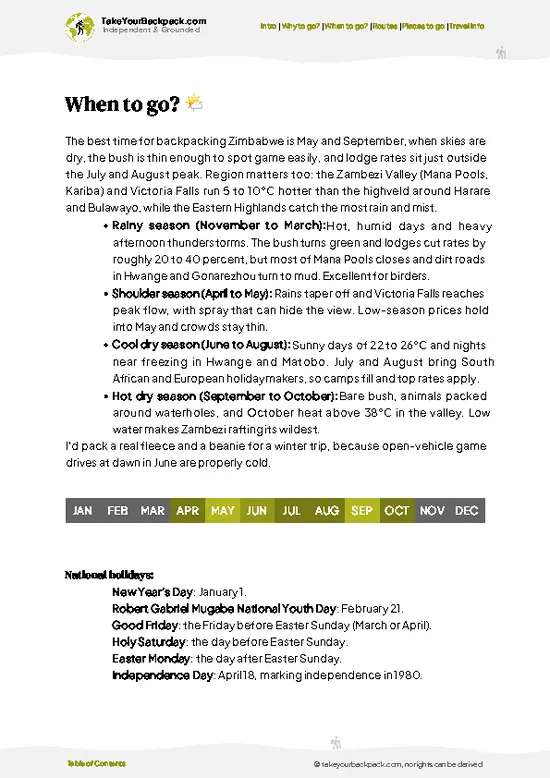
  • Weather: Harare’s climate is mild and subtropical. The dry season from May to October offers clear skies and little rain, making it ideal for trekking and city exploration. The wet season, November to April, brings heavy rains that can turn dirt roads into mud traps and disrupt plans.

  • Temperature: During the dry season, daytime highs hover around 22-25°C (72-77°F), with chilly nights dropping to 7-10°C (45-50°F). The wet season heats up to 28-30°C (82-86°F), with humidity making it feel warmer and less comfortable for long hikes.

  • Daylight Hours: Harare enjoys roughly 11-13 hours of daylight year-round, with a slight increase during the southern hemisphere summer (November to February). Longer days mean more time to explore but also hotter afternoons.

  • Crowds: Peak tourist flow coincides
read more 👉

  • Weather: Harare’s climate is mild and subtropical. The dry season from May to October offers clear skies and little rain, making it ideal for trekking and city exploration. The wet season, November to April, brings heavy rains that can turn dirt roads into mud traps and disrupt plans.

  • Temperature: During the dry season, daytime highs hover around 22-25°C (72-77°F), with chilly nights dropping to 7-10°C (45-50°F). The wet season heats up to 28-30°C (82-86°F), with humidity making it feel warmer and less comfortable for long hikes.

  • Daylight Hours: Harare enjoys roughly 11-13 hours of daylight year-round, with a slight increase during the southern hemisphere summer (November to February). Longer days mean more time to explore but also hotter afternoons.

  • Crowds: Peak tourist flow coincides with the dry season, especially July and August, when international visitors escape northern winters. This means busier hostels and higher prices but also more social opportunities.

  • Seasonal Activities: Wildlife viewing peaks in the dry months as animals congregate around waterholes. Cultural festivals and markets also ramp up during this time, offering authentic local experiences.

  • Price Fluctuations: Accommodation and tour prices spike in the dry season’s peak months. The wet season sees significant discounts but comes with the trade-off of unpredictable weather and limited access to some parks.


Pro-tip: Aim for the shoulder months of May or October—weather is still pleasant, crowds thin, and prices start to drop. You get the best of both worlds without the hassle.


source: climatestotravel.comJANJanuary: fair for travelingFEBFebruary: fair for travelingMARMarch: fair for travelingAPRApril: good for travelingMAYMay: highly recommended for travelingJUNJune: highly recommended for travelingJULJuly: excellent for travelingAUGAugust: excellent for travelingSEPSeptember: excellent for travelingOCTOctober: highly recommended for travelingNOVNovember: fair for travelingDECDecember: fair for traveling
when-to-go

✈️ The backpacker research shortcutZimbabwe Travel Guide

An offline-friendly backpacking guide with optimized travel routes, ranked highlights, transport advice, and the best areas to stay.
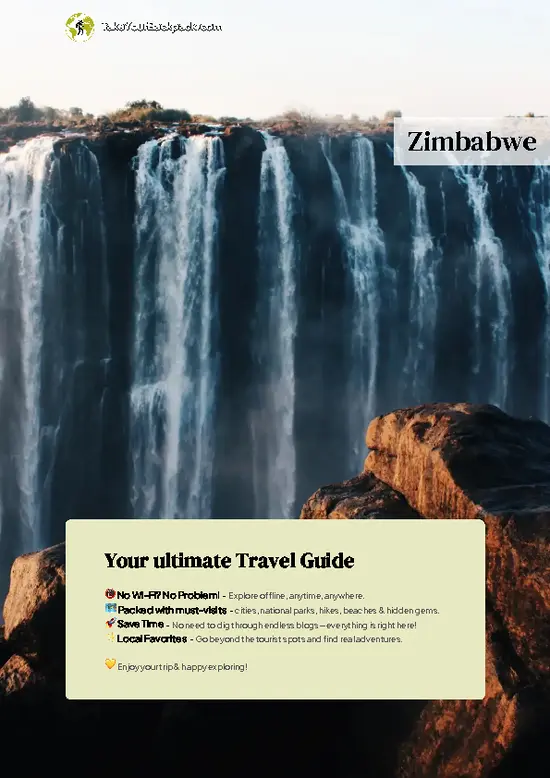
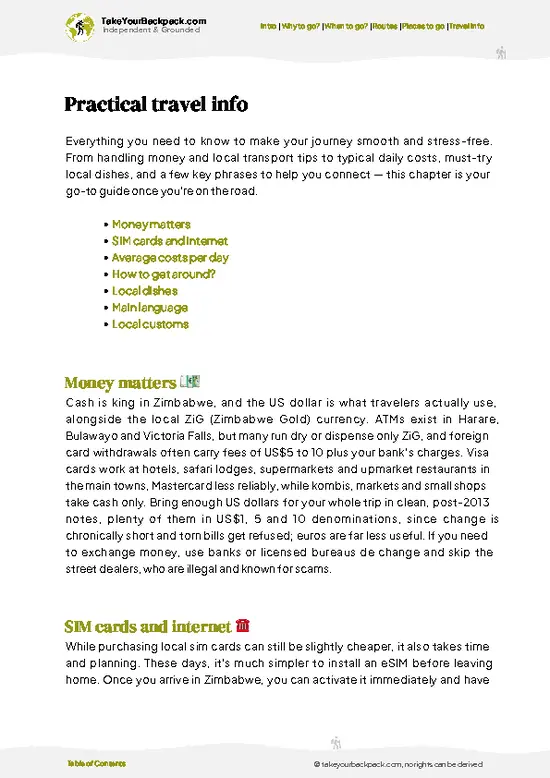
example page 0 from our offline Travel Guide for Zimbabwe
example page 1 from our offline Travel Guide for Zimbabwe
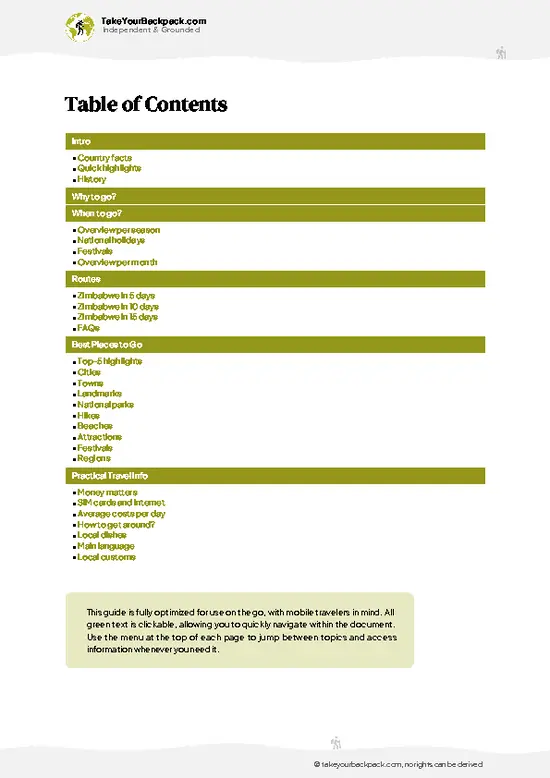
example page 2 from our offline Travel Guide for Zimbabwe
example page 3 from our offline Travel Guide for Zimbabwe
example page 4 from our offline Travel Guide for Zimbabwe
example page 5 from our offline Travel Guide for Zimbabwe
example page 6 from our offline Travel Guide for Zimbabwe
example page 7 from our offline Travel Guide for Zimbabwe
The digital guide (356 pages) contains:
90 highlights, ranked by travel appeal
Optimized 5, 10 & 15-day travel routes
Cities, national parks, landmarks, beaches
How to get around
Offline-friendly for travel without Wi-Fi
👉 Click to see all 30+ guide features

📅 Plan smarter in minutes, not weeks
Month by month travel advice
Festivals & national holidays
Budget expectations

🗺️ Go to the right places, skip the overrated ones
Honest pros & cons of destinations
Top hikes, parks & viewpoints
Lesser-known places most travelers miss
Clear “worth it vs skip it” guidance

🛏️ Travel smoothly without rookie mistakes
Best areas to stay
Transport systems explained simply
Common scams & safety advice
SIM cards, money & practical tips

🌍 Understand the country, not just visit it
Culture & traditions
52 Essential phrases & customs
Festivals worth planning around
Traveler-friendly historical context
Insights that make places more meaningful

📱 Built for real travel conditions
Fully downloadable PDF
Works completely offline
Optimized for phone use
Useful in remote areas & buses
Everything in one place
Save weeks of stressful planning
Get instant access to your full guide. 30‑day money-back guarantee.


By proceeding you agree to our terms.
Sent to your inbox immediately after payment • 100% Secure Checkout
Best Backpacking Travel Advisor 2025 tourism awardBest Backpacking
Travel Advisor
2025
What others say about Take Your Backpack Guides:
⭐⭐⭐⭐⭐
Fantastic, amazing amount of information!
⭐⭐⭐⭐⭐
My goodness this is amazing, it's what I've been looking for hats off too you!
⭐⭐⭐⭐⭐
I think this is absolutely BRILLIANT
⭐⭐⭐⭐
Very complete and informative. It's still missing places, but I gotta to commend you
⭐⭐⭐⭐⭐
This is truly amazing, thank you, can't wait to explore it with my kids!
⭐⭐⭐⭐⭐
Awesome resource, thank you!
⭐⭐⭐⭐⭐
This is amazing! Can't wait to explore the ones I haven't seen
⭐⭐⭐⭐
I love this! Well done, great idea.
⭐⭐⭐⭐⭐
Thanks for taking the time to make this gem!
⭐⭐⭐⭐⭐
This might be the best website I've ever seen.
⭐⭐⭐⭐⭐
Congratulations, and thank you so much for your work; it's incredibly valuable.
⭐⭐⭐⭐
In all seriousness I think you did a great job pointing out the important spots
⭐⭐⭐⭐⭐
10/10 very good
⭐⭐⭐⭐⭐
As someone who's only just starting to visit regularly this is awesome, thank you.
⭐⭐⭐⭐
Thank you very much! I'm going to visit my dad, it's going to be very useful!
⭐⭐⭐⭐⭐
This is really cool! We'll be travelling for the first time and this definitely come in handy.
⭐⭐⭐⭐⭐
You are now our minister of culture, congratulations 👨‍💼
⭐⭐⭐⭐⭐
Just wanted to tell you that this is a pearl! Going to follow your recommendations.
⭐⭐⭐⭐⭐
This is so cool. I'll definitely be using the resource for my travels soon.
⭐⭐⭐⭐⭐
This is very impressive! Good work.
⭐⭐⭐⭐⭐
This is an amazing and informative site. Very well done!

🛏️ Where to stay?How to pick the right area

Harare’s best backpacker zones boil down to two main neighborhoods: the central business district (CBD) and the northern suburbs, especially areas like Avondale and Borrowdale. The CBD is the heartbeat of the city—busy, gritty, and alive with street vendors, local markets, and a steady pulse of daily life. It’s where you’ll find the most budget-friendly hostels, making it a magnet for solo travelers looking to stretch every dollar. Safety here is relative; stick to well-trodden streets and avoid wandering after dark. The upside is a social atmosphere where meeting other backpackers is easy, and … read more 👉
Harare’s best backpacker zones boil down to two main neighborhoods: the central business district (CBD) and the northern suburbs, especially areas like Avondale and Borrowdale. The CBD is the heartbeat of the city—busy, gritty, and alive with street vendors, local markets, and a steady pulse of daily life. It’s where you’ll find the most budget-friendly hostels, making it a magnet for solo travelers looking to stretch every dollar. Safety here is relative; stick to well-trodden streets and avoid wandering after dark. The upside is a social atmosphere where meeting other backpackers is easy, and you get a raw, unfiltered taste of Harare’s urban rhythm.

Then there’s Avondale and Borrowdale, a step up in comfort and security without blowing your budget. These neighborhoods are leafy, quieter, and favored by expats and locals who want a break from the city’s chaos. Hostels here tend to be smaller, more intimate, and often come with communal spaces that encourage mingling. You sacrifice some of the hustle and bustle for a safer, more relaxed vibe, but you gain access to cafes, bars, and parks that make downtime enjoyable.

Compared to the southern and eastern suburbs, which are more residential and less backpacker-friendly, these two areas strike the best balance between safety, social opportunities, and affordability. Your choice boils down to whether you want to dive headfirst into Harare’s urban sprawl or enjoy a more laid-back base with easy city access. Both deliver value, but on different terms.

🚌 Getting aroundGetting around like a local

Harare moves at a pace that’s neither strictly regimented nor wildly unpredictable—it’s a city where schedules exist mostly on paper, but the real rhythm is set by the pulse of daily life and the savvy traveler’s ability to read between the lines. You won’t find a clockwork transit system here, but you will find a network that rewards patience, local knowledge, and a willingness to adapt. The trade-off map for getting around Harare is a balancing act between time, money, and comfort, and knowing which mode to pick can turn a logistical headache into a smooth, even enjoyable, part of your adventure.


  • Walking: The ultimate budget option and the best way to soak in Harare’s street life. It’s free, flexible, and often faster than waiting for transport in congested areas. However, it’s only
read more 👉
Harare moves at a pace that’s neither strictly regimented nor wildly unpredictable—it’s a city where schedules exist mostly on paper, but the real rhythm is set by the pulse of daily life and the savvy traveler’s ability to read between the lines. You won’t find a clockwork transit system here, but you will find a network that rewards patience, local knowledge, and a willingness to adapt. The trade-off map for getting around Harare is a balancing act between time, money, and comfort, and knowing which mode to pick can turn a logistical headache into a smooth, even enjoyable, part of your adventure.


  • Walking: The ultimate budget option and the best way to soak in Harare’s street life. It’s free, flexible, and often faster than waiting for transport in congested areas. However, it’s only practical for short distances or if you’re comfortable navigating uneven sidewalks and busy intersections. Safety varies by neighborhood, so stay alert and stick to well-trafficked routes during daylight.


  • Commuter Omnibuses (Kombi): The backbone of Harare’s public transport, these minibuses run from dawn until late evening, typically between 5:30 AM and 9 PM. Fares are dirt cheap—usually under $1 USD—but expect cramped conditions and a stop-anywhere style of service that can stretch your travel time. Comfort is minimal, but the kombis are fast through traffic and cover most of the city and suburbs.


  • City Buses: Larger and slightly more comfortable than kombis, city buses operate on fixed routes with scheduled stops, mostly during peak hours. They cost a bit more—around $1 to $2 USD—but offer a more predictable timetable and a bit more breathing room. The trade-off here is slower boarding and less frequency, so you might wait longer but get a steadier ride.


  • Taxis: Metered taxis exist but are rare and often expensive for budget travelers. Most taxis operate on negotiated fares, which can be a gamble unless you know the local rates. They offer the highest comfort and speed, especially if you’re traveling with luggage or in a group, but the price premium means you’re paying for convenience, not savings.


  • Bicycle Rentals: A niche but growing option, especially for the adventurous. Renting a bike costs more upfront than walking but less than motorized transport. It offers a middle ground in speed and comfort, with the added benefit of flexibility and exercise. Not ideal for long distances or heavy traffic zones, but perfect for exploring parks and quieter neighborhoods.


Mastering Harare’s transit means understanding these trade-offs: you can save money by squeezing into a kombi, but you’ll sacrifice comfort and some time. Walking costs nothing and offers freedom but limits your range. Taxis buy you speed and ease but at a steep price. The city’s flow rewards those who can read its subtle cues and pick the right mode for the moment—turning travel logistics from a chore into a strategic game you’re winning.

👛 Costs (as of 4 July 2025)Money, prices, and spending tips

Backpacking in Harare, Zimbabwe, involves a clear trade-off between cost and comfort, and knowing the numbers upfront lets you play the system smartly.
  • Dorm Accommodation (High Season): Expect to pay around $10 to $15 per night for a bed in a shared dorm. High season pushes prices up due to demand, especially around local holidays or events.
  • Dorm Accommodation (Off-Season): Drop to about $7 to $10 per night. Fewer tourists mean better deals, but some places might close or reduce services.
  • Meals: Street food and local eateries will run you about $3 to $6 per meal. Western-style restaurants or tourist spots can double that easily, so sticking to local joints is both authentic and budget-friendly.
  • Local Transport: Minibus taxis are the backbone here, costing roughly $0.30 to $0.50 per ride
read more 👉
Backpacking in Harare, Zimbabwe, involves a clear trade-off between cost and comfort, and knowing the numbers upfront lets you play the system smartly.
  • Dorm Accommodation (High Season): Expect to pay around $10 to $15 per night for a bed in a shared dorm. High season pushes prices up due to demand, especially around local holidays or events.
  • Dorm Accommodation (Off-Season): Drop to about $7 to $10 per night. Fewer tourists mean better deals, but some places might close or reduce services.
  • Meals: Street food and local eateries will run you about $3 to $6 per meal. Western-style restaurants or tourist spots can double that easily, so sticking to local joints is both authentic and budget-friendly.
  • Local Transport: Minibus taxis are the backbone here, costing roughly $0.30 to $0.50 per ride within the city. They’re frequent but can be crowded and chaotic.
  • City Transport Pass: There isn’t a formal city transport pass system, so budgeting for daily minibus rides is your best bet. Expect to spend around $2 to $3 daily if you’re moving around a lot.
  • Basic Activities/Entry Fees: Museums, parks, and cultural sites typically charge between $2 and $5. Some attractions might be free or ask for a small donation, but plan for a few dollars here and there.
  • Miscellaneous Expenses: Think bottled water, snacks, occasional tips, or SIM cards. Around $2 to $4 daily covers these small but necessary extras.

All told, you’re looking at a daily budget roughly between $15 and $30. That’s enough to keep you comfortable without blowing your wallet, especially if you lean into local food and transport. The key is balancing when to splurge on comfort and when to embrace the hustle of Harare’s streets.


source: zimbabwetourism.net
⚠️ Prices can change and everyone travels differently, so take this as a rough guide. Hope it helps you plan your adventure!

🚌 Day tripsWhere to go beyond the main area

Harare, Zimbabwe, serves as a fantastic launchpad for day trips that offer a taste of the country’s rich culture and stunning landscapes. Here are some top picks that balance time, money, and comfort.

Lake Chivero
Just a short 30-minute drive from Harare, Lake Chivero is a serene escape from the city’s hustle. You can rent a canoe or simply stroll along the shores, soaking in the sights of hippos and diverse birdlife. The park entrance fee is around $5, making it a budget-friendly option. Bring a picnic to enjoy by the water, but be cautious of the sun—early mornings or late afternoons are ideal for a visit. First-timers often underestimate the time needed to explore; don’t rush your experience.


Great Zimbabwe Ruins
About a 2.5-hour drive from Harare, the Great Zimbabwe Ruins are … read more 👉
Harare, Zimbabwe, serves as a fantastic launchpad for day trips that offer a taste of the country’s rich culture and stunning landscapes. Here are some top picks that balance time, money, and comfort.

Lake Chivero
Just a short 30-minute drive from Harare, Lake Chivero is a serene escape from the city’s hustle. You can rent a canoe or simply stroll along the shores, soaking in the sights of hippos and diverse birdlife. The park entrance fee is around $5, making it a budget-friendly option. Bring a picnic to enjoy by the water, but be cautious of the sun—early mornings or late afternoons are ideal for a visit. First-timers often underestimate the time needed to explore; don’t rush your experience.


Great Zimbabwe Ruins
About a 2.5-hour drive from Harare, the Great Zimbabwe Ruins are a must-see for history buffs. This UNESCO World Heritage site showcases the remnants of a once-thriving civilization. Entry costs around $10, and you can easily spend half a day wandering through the ancient stone structures. The best time to visit is during the cooler months from May to August. A common mistake is to skip the guided tour; local guides provide invaluable context that enriches your experience.


Mana Pools National Park
While a bit further at roughly 4 hours away, Mana Pools is worth the trek for its breathtaking landscapes and wildlife. You can join a day safari for about $30, which often includes a guide and transportation. The park is best visited during the dry season from May to October when animals congregate around water sources. Many backpackers underestimate the park’s vastness; plan to spend a full day here to truly appreciate its beauty.
👉 Explore Mana Pools National Park

Chimanimani Mountains
Just under 3 hours from Harare, the Chimanimani Mountains offer stunning hikes and breathtaking views. The entry is free, but you might want to hire a local guide for around $15 to navigate the trails. The best time to hike is during the dry season, from May to September. A common pitfall is not checking the weather; conditions can change rapidly in the mountains, so be prepared.


These day trips from Harare provide a mix of adventure, culture, and natural beauty, allowing you to tailor your experience based on your interests and budget.
Want to know what more Zimbabwe offers?
The Zimbabwe Travel Guide describes 90 highlights, from cities to national parks, from beaches to hikes

Get the Travel Guide -

🍲 FoodLocal Flavors for Backpackers

In Harare, the culinary scene is a vibrant tapestry of flavors that beckons the adventurous backpacker. Start with sadza, a staple made from maize meal, often served with a rich stew or grilled meat. It’s the heart of many meals here, and you’ll find it at bustling markets or from street vendors who dish it out with pride. Pair it with nyama, tender beef or chicken, marinated and grilled to perfection.

Don’t miss the chance to try maputi, popped maize, a popular snack that’s both crunchy and satisfying. You’ll find it sold by vendors on street corners, perfect for munching while you explore. For something refreshing, sip on maheu, a fermented drink made from maize, slightly sweet and tangy, ideal for cooling off in the heat.

The drinking culture here is lively, with local beers like Chibukuread more 👉
In Harare, the culinary scene is a vibrant tapestry of flavors that beckons the adventurous backpacker. Start with sadza, a staple made from maize meal, often served with a rich stew or grilled meat. It’s the heart of many meals here, and you’ll find it at bustling markets or from street vendors who dish it out with pride. Pair it with nyama, tender beef or chicken, marinated and grilled to perfection.

Don’t miss the chance to try maputi, popped maize, a popular snack that’s both crunchy and satisfying. You’ll find it sold by vendors on street corners, perfect for munching while you explore. For something refreshing, sip on maheu, a fermented drink made from maize, slightly sweet and tangy, ideal for cooling off in the heat.

The drinking culture here is lively, with local beers like Chibuku served in communal containers, encouraging sharing and conversation. It’s common to see groups gathered around, laughing and enjoying each other’s company.

When dining, embrace the local custom of eating with your hands, especially when enjoying sadza. It’s not just about the food; it’s about the experience and connection. So dive in, savor the flavors, and soak up the warm, communal vibe of Harare.

🛡️ SafetyScams, Hazards, and Annoyances

Harare is generally safe for backpackers, but a few situational awareness tips can enhance your experience. Stick to well-trodden areas like Avondale and the city center during the day. At night, it’s wise to avoid less populated streets and stick to main roads. If you’re solo, consider using rideshare apps instead of walking after dark; it’s a simple way to stay secure.

Common scams are rare, but be cautious around street vendors who might overcharge tourists. Always negotiate prices upfront, especially for taxis. A friendly smile can go a long way, but don’t hesitate to walk away if something feels off.

Annoyances like persistent touts can test your patience, but a firm “no, thank you” usually does the trick. Carry your belongings close and stay aware of your surroundings. With a bit … read more 👉
Harare is generally safe for backpackers, but a few situational awareness tips can enhance your experience. Stick to well-trodden areas like Avondale and the city center during the day. At night, it’s wise to avoid less populated streets and stick to main roads. If you’re solo, consider using rideshare apps instead of walking after dark; it’s a simple way to stay secure.

Common scams are rare, but be cautious around street vendors who might overcharge tourists. Always negotiate prices upfront, especially for taxis. A friendly smile can go a long way, but don’t hesitate to walk away if something feels off.

Annoyances like persistent touts can test your patience, but a firm “no, thank you” usually does the trick. Carry your belongings close and stay aware of your surroundings. With a bit of mindfulness, you’ll navigate Harare smoothly and enjoy its vibrant culture without unnecessary stress.

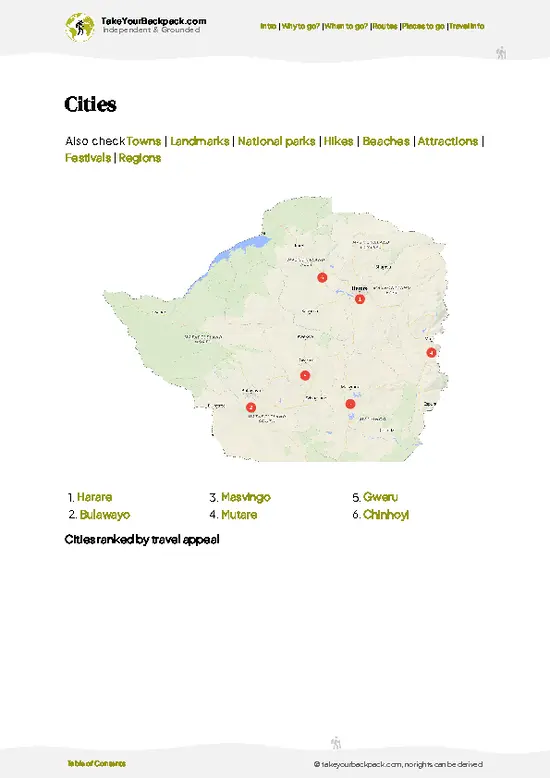
Other Zimbabwean cities near Harare

Explore more nearby:

  • Mazowe—citrus orchards, dam reservoir, mission schools| 36 km away
  • Chinhoyi—limestone caves, university town, maize fields, regional transport link| 104 km away
  • Kadoma—gold mining, textile mills, roadside commerce, semi-arid landscape| 133 km away

💡 Not sure where to go next?
Create a personalized itinerary for Zimbabwe including Harare and the places that fit your trip.

Generate my itinerary

👉 Discover all cities

Or checkout all Zimbabwe has to offer (think cities, towns, villages, national parks, hikes, beaches, festivals)
Country photo of Zimbabwe

We 💚 feedbackIs it worth it?

Harare has a pulse that’s hard to ignore. The local markets are a sensory overload—colors, sounds, and the aroma of street food that’ll make your mouth water. But here’s the catch: the infrastructure can be a bit rough around the edges. Expect some delays and hiccups. Embrace the unpredictability, and you’ll find that the city’s charm lies in its resilience. It’s a place that invites you to dig deeper, beyond the surface.

✈️ When did I visit Zimbabwe?
I have backpacked Zimbabwe all the way back in 2001.

✍️ Help improve this page!
The information on this page is based on my own backpacking experience in Zimbabwe, supplemented with up-to-date research and feedback from other travelers. Travel details can change, so if you notice anything outdated or incomplete, feel free to let me know.


🙋‍♂️ Give feedback

👋 Meet the founderWho’s Behind Take Your Backpack?

Johan, backpacker and founder of TakeYourBackpackHi, I’m Johan (Netherlands 🇳🇱), the creator of TakeYourBackpack. Over the past decade, I’ve backpacked through 80+ countries across six continents, gaining extensive experience with independent travel, long-term trips, and overland routes.

This site is built on a combination of firsthand travel experience and carefully curated insights from other backpackers. Many guides are based on places I’ve personally visited, while others bring together tips, observations, and practical advice shared by trusted travelers I’ve met along the way.

The goal is to provide realistic, experience-driven guidance — not generic itineraries — so you can explore destinations with better context, clearer expectations, and more confidence.

Get full Zimbabwe guide •
Instant download • 90 highlights • Full Offline guide