×

Sudan Itinerary Planner

Build your own Sudan journey from scratch, exactly the way you like to travel. Set your trip length, pick what matters most to you from cities & towns, villages, landmarks, national parks, hikes, beaches, and attractions, then choose your travel style and pace so every day feels right, whether that means slow mornings in Khartoum or long days chasing new places. Add a starting point, an end point, and any must-see stops, and the planner turns it all into a complete route that actually fits your priorities instead of forcing you into a one-size-fits-all tour.

Plan
your Trip


We build
your Route


Get your
Travel Plan

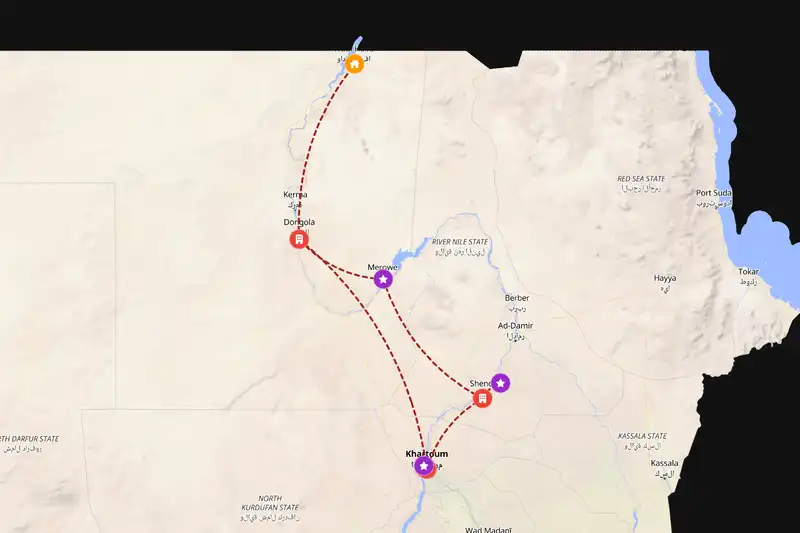
Example Sudan itinerary planner route
Build your own Sudan route
Example Sudan itinerary planner route
Build your own Sudan route

🇸🇩 SudanCreate Your Itinerary

1 How many days will you travel?
2 What are your interests?
3 Travel speed
⚙️ Advanced options

🙋 FAQGood to know before you start

If you only have about five days, focus on Khartoum and the main Nile-side pyramid sites like Meroe; with roughly ten days you can add more desert temples and slower travel between stops, and around two weeks or a bit more lets you loop through the north, visit multiple archaeological areas, and still keep some rest days.
Sudan combines most naturally with Egypt to the north for a longer Nile and desert history route, and some travelers also link it with Ethiopia or Eritrea to the southeast for a broader Horn of Africa trip, or with Chad and South Sudan if they are experienced and comfortable with more remote, challenging overland travel.

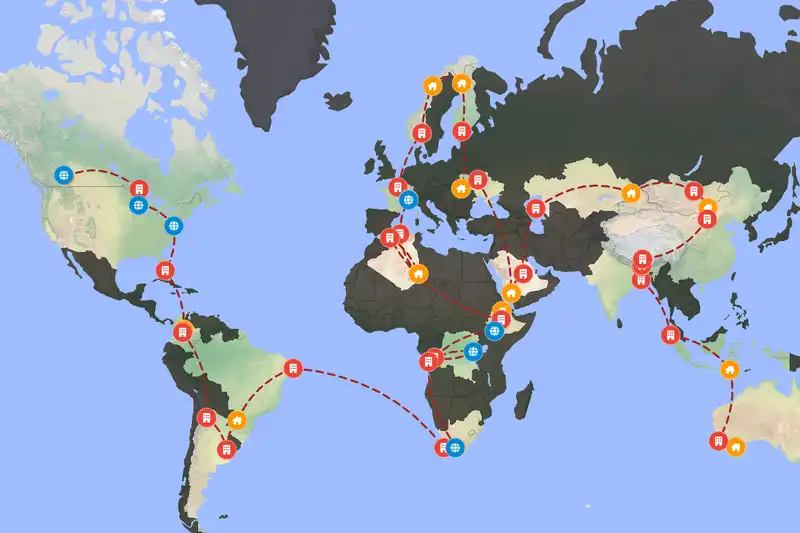
Build a multi-country route
Yes. Stops are sequenced to minimize backtracking and grouped by how close they are to each other, and your chosen travel pace (fast, normal, or slow) adjusts how much ground each day covers.
Absolutely. Adjust your trip length, interests, starting point, or travel style and generate a new route in seconds.
Yes, generating and viewing your route is completely free. An offline-friendly PDF version is available as an optional purchase which gives more detailed information for each location on your route.

🗺️ RegionsRegions worth knowing about

Sudan is big, and the places you might want to see are often far apart, with long stretches of empty land between them. Khartoum and the National Museum of Sudan sit in a very different pocket of the country than the Meroë Pyramids or the Red Sea Mountains, and trying to bounce back and forth quickly becomes tiring and wastes days you could spend actually exploring. This planner keeps things realistic by grouping nearby stops into a smooth flow, so you move across the country in broad sweeps instead of zigzagging. That way you feel the gradual change in landscapes and cultures as you go, rather than spending your energy retracing your steps.

📈 StatisticsWhat the numbers show

Our set of curated travel destinations for Sudan

Cities & Towns: 28      Landmarks: 6      National Parks: 14      Hikes: 7      Beaches: 3      Attractions: 11     

Most popular interests

  • 🌆 Cities & Towns (100%)
  • 🌽 Villages (100%)
  • ⭐️ Landmarks (100%)
  • 🚶‍♀️ Hikes (100%)
  • 🏖️ Beaches (100%)

Most included destinations

⚙️ How it worksBuilding your route, step by step

The planner starts by looking at how long you have, what kind of places you want, and how fast you like to move, then it groups nearby spots together so you are not bouncing back and forth across Sudan for no reason. It keeps those clusters in a logical order, usually moving in one broad direction, so your route feels like a steady journey instead of a zigzag of long, tiring transfers. Inside each cluster, it decides how much time to give each stop based on what it is and how many other places sit around it, so a big town or city with several things to see nearby naturally turns into your base, while smaller villages, landmarks, or hikes become easy side trips. If you choose cities, landmarks, and attractions, for example, it might have you stay longer in Khartoum, using it as your hub for the National Museum of Sudan and other nearby sights, then move you onward in a single clear direction, which feels efficient on the ground and matches how travelers actually move.