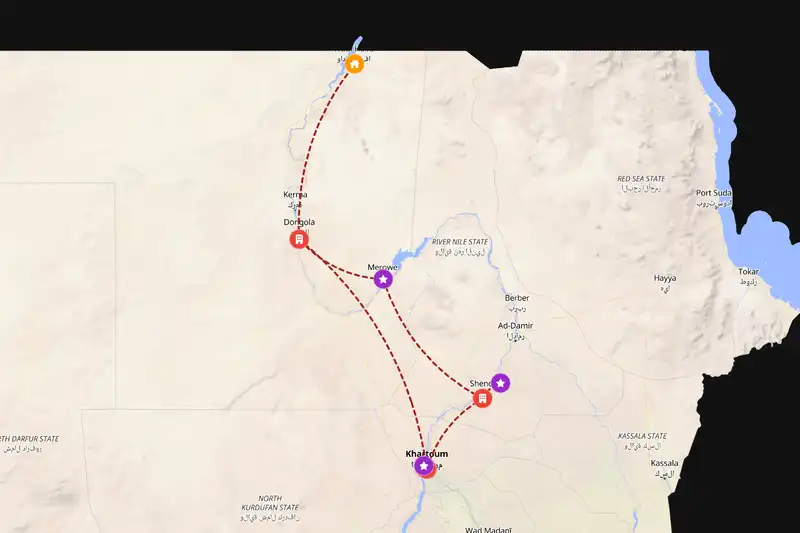
Sudan is doable to backpack independently if you’re comfortable with rough edges and slow logistics. Outside Khartoum, English drops off fast, transport is basic, and permits or checkpoints can appear without warning, so you need patience, a flexible plan, and a willingness to ask for help in simple Arabic or with gestures.
The upside is that people are
exceptionally hospitable, crime against foreigners is relatively low in most areas travelers visit, and costs are friendly to a tight budget. If you’ve handled places like rural Egypt or Pakistan, Sudan will feel challenging but very rewarding rather than impossible.
For a solid first trip that doesn’t feel rushed, aim for
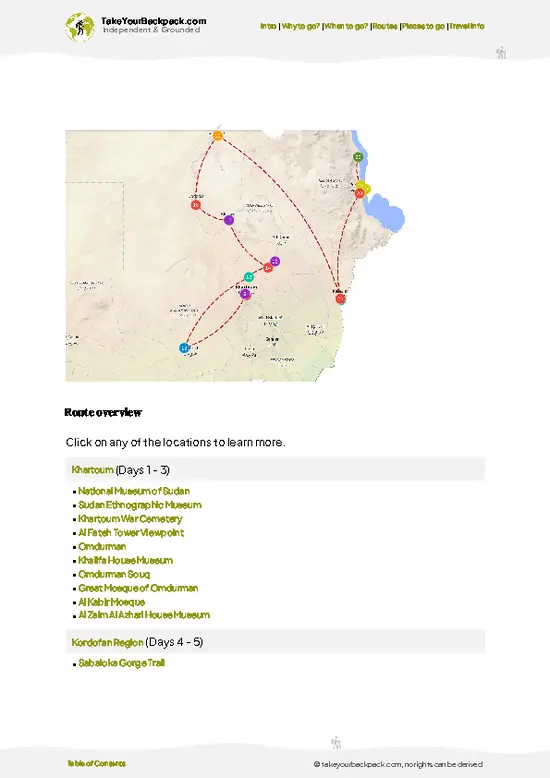
10–14 days; that gives you time for Khartoum, the Nile north to the pyramids, and at least one slower detour without living on buses. Less than a week is possible but you’ll mostly just scratch the surface around Khartoum and a quick dash to Meroe.
If you’re the slow, hardcore backpacker type and want to wander up the Nile, linger in small towns, and maybe push toward the Red Sea or the Ethiopian border,
3–4 weeks lets you travel at local speed and absorb the rhythm instead of just collecting sights.
You can absolutely get around Sudan without a car, but it takes time and flexibility. Intercity travel is mostly by buses and shared minibuses that leave when full, so departures can be irregular and comfort is basic, but fares are cheap and you’ll meet locals instantly.
Within cities, you’ll rely on
rickety minibuses, tuk-tuks, and cheap taxis, often with no clear signage, so having destinations written in Arabic helps a lot. For remote archaeological sites, you may need to team up with other travelers to hire a local driver for a day, which is still affordable when split a few ways.
If you see only one thing, make it the
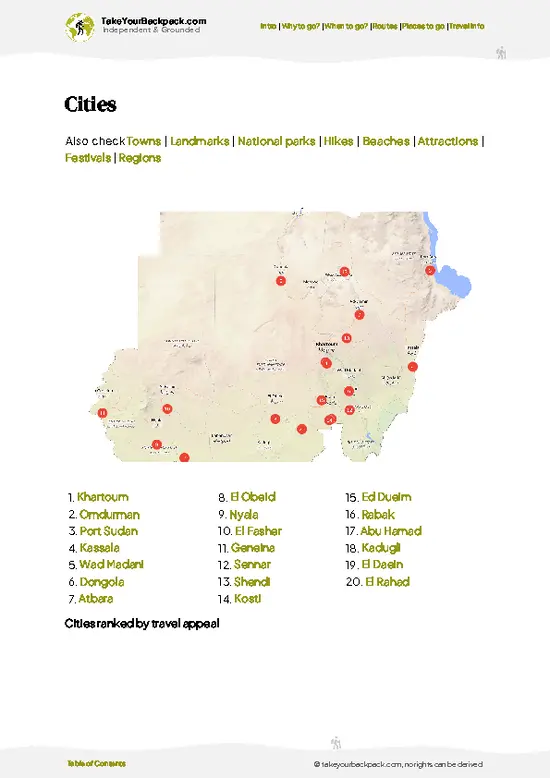
Meroe pyramids; camping or visiting at sunset when you’re almost alone among the dunes feels like time travel on a backpacker budget. Combine that with a couple of days in Khartoum for the Nile confluence, the Mahdi-era history in Omdurman, and the chaotic souqs to understand modern Sudanese life.
If you have more time, push north along the Nile to sites like Nuri, Karima, and Jebel Barkal, where temples, tombs, and village life blend into one long, dusty, photogenic corridor. For a very different vibe, Port Sudan and the Red Sea coast are worth it if you’re into diving or just want a break from desert heat.
If you’re short on time, skip trying to see
every single pyramid and temple along the Nile; after Meroe and one or two major sites like Jebel Barkal, the smaller ruins start to blur together and the long bus rides stop feeling worth it. Focus on a tight loop instead of chasing every dot on the map.
I’d also skip deep detours into far western or southern regions on a quick trip; they’re logistically heavy, sometimes sensitive security-wise, and eat days of travel that budget backpackers can better spend between Khartoum, the main Nile corridor, and maybe one Red Sea stop if you have the time and energy.
Yes, our itinerary-planner does exactly that. Set your trip length in days, give your interests and travel style, optionally give start- and end location and/or some mandatory stops you would like to include and the itinerary planner creates your personalized routes for Sudan in seconds. Try it out!
Try the itinerary plannerv2.webp)

 Best Backpacking