×

Algeria🇩🇿 | best regionsNo region found in Algeria

Top regions elude us, but don’t let that stop your trip. Algeria is packed with lots of other highlights and hidden gems, scenic views, and unique adventures. And, if you know of any great region to add here, just contact us.

By Johan Kruseman 🇳🇱 | Updated June 13, 2026
Explore the best cities in Algeria

Why go?What Makes Them Special

Algeria’s regions are a tapestry of climatic diversity, each offering a unique lens through which to experience the country. From the Mediterranean coast to the Sahara Desert, the landscapes shift dramatically, creating a rich backdrop for exploration. The coastal areas boast a temperate climate, ideal for those seeking sun-soaked beaches and vibrant local markets. In contrast, the interior regions, with their rugged mountains and expansive deserts, present a harsher climate that rewards the adventurous traveler with breathtaking vistas and a sense of isolation.

Culturally, Algeria is a mosaic of influences, shaped by its Berber, Arab, and French heritage. This blend is palpable in the architecture, cuisine, and local traditions, making each region a distinct chapter in the country’s narrative. … read more 👉
Algeria’s regions are a tapestry of climatic diversity, each offering a unique lens through which to experience the country. From the Mediterranean coast to the Sahara Desert, the landscapes shift dramatically, creating a rich backdrop for exploration. The coastal areas boast a temperate climate, ideal for those seeking sun-soaked beaches and vibrant local markets. In contrast, the interior regions, with their rugged mountains and expansive deserts, present a harsher climate that rewards the adventurous traveler with breathtaking vistas and a sense of isolation.

Culturally, Algeria is a mosaic of influences, shaped by its Berber, Arab, and French heritage. This blend is palpable in the architecture, cuisine, and local traditions, making each region a distinct chapter in the country’s narrative. However, this diversity comes with trade-offs. Traveling between regions often requires significant time and planning. The vast distances can lead to long journeys, which may deter those seeking a quick trip. Yet, those willing to invest the time will find that the depth of experience gained is well worth the effort.

Infrastructure varies widely across Algeria. Major cities are relatively well-connected, but rural areas can be challenging to navigate. This disparity means that while some travelers may find it easy to access urban attractions, the more remote regions require a commitment to truly immerse oneself in the local culture and landscape.

Ultimately, Algeria’s regions matter because they encapsulate the essence of a country that is both vast and varied. Understanding the climatic, cultural, and infrastructural nuances is essential for any traveler looking to appreciate the full spectrum of what Algeria has to offer. The rewards are profound, but they demand a willingness to embrace the journey.
Why These Made the Cut
The list of best regions in Algeria is created based on landscapes, local culture, attractions, vibes, and overall appeal. If you feel a region is missing in this list, please let us know.

When to go?When to Plan Your Trip

Climate Variation
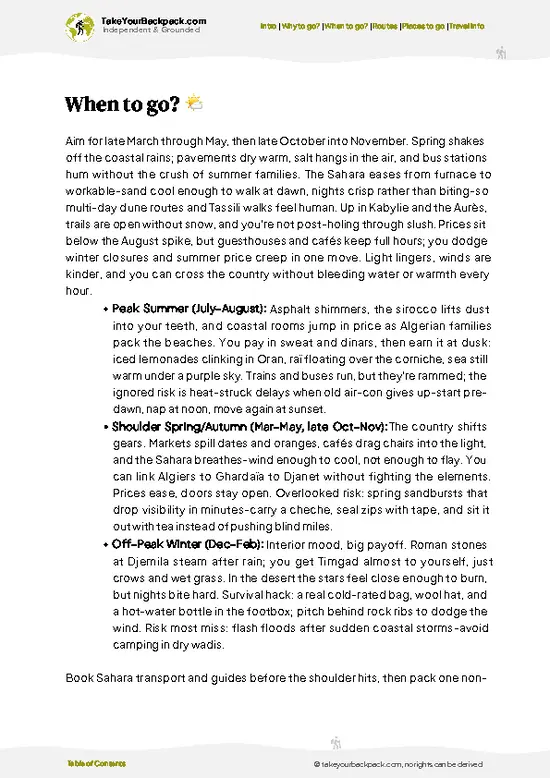
Algeria’s climate is as diverse as its landscapes. The coastal areas experience a Mediterranean climate, with hot, dry summers and mild, wet winters. In contrast, the Sahara is characterized by extreme temperatures, scorching days, and chilly nights. This variation significantly influences when to visit different regions.

Optimal Months
The best time to explore Algeria generally falls between late autumn and early spring. During these months, temperatures are more manageable, allowing for comfortable exploration. Coastal regions are particularly pleasant, with temperatures hovering around the mid-60s to low-70s Fahrenheit. The Sahara, while still hot, becomes more bearable, especially in the mornings and evenings.

Shoulder Seasons
Visiting during the shoulder seasons—spring … read more 👉
Climate Variation
Algeria’s climate is as diverse as its landscapes. The coastal areas experience a Mediterranean climate, with hot, dry summers and mild, wet winters. In contrast, the Sahara is characterized by extreme temperatures, scorching days, and chilly nights. This variation significantly influences when to visit different regions.

Optimal Months
The best time to explore Algeria generally falls between late autumn and early spring. During these months, temperatures are more manageable, allowing for comfortable exploration. Coastal regions are particularly pleasant, with temperatures hovering around the mid-60s to low-70s Fahrenheit. The Sahara, while still hot, becomes more bearable, especially in the mornings and evenings.

Shoulder Seasons
Visiting during the shoulder seasons—spring and autumn—offers a unique experience. Fewer crowds mean a more intimate connection with the landscape. However, travelers should be prepared for unpredictable weather. Spring can bring sudden rain, while autumn may still hold onto summer heat. Costs may also be lower during these times, making it an attractive option for budget-conscious travelers.

Peak Periods
Peak tourist seasons coincide with major festivals and events, drawing larger crowds. These periods can enhance the cultural experience but may also lead to higher prices and limited availability. Travelers should weigh the benefits of vibrant local celebrations against the potential discomfort of crowded conditions.

Seasonal Constraints
Travelers should consider seasonal constraints, such as the intense summer heat in the Sahara, which can limit outdoor activities. Winter may bring cooler temperatures in the north, affecting accessibility to certain attractions. Understanding these patterns allows for a more rewarding journey, ensuring that the effort invested in planning pays off with rich experiences.

region hoppingPlanning Your Route Efficiently

Traveling through Algeria requires a keen sense of direction and an appreciation for its diverse landscapes. Start in the north, where the Mediterranean coast offers a refreshing contrast to the arid interior. The coastal cities, like Algiers and Oran, are rich in history and culture, making them ideal first stops. Allocate at least two to three days here to soak in the architecture and local cuisine.

Heading inland, the terrain shifts dramatically. The Kabylie region, with its rugged mountains and Berber villages, demands exploration. Plan for a couple of days to hike and engage with local traditions. The trails here are steep and challenging, but the panoramic views of the valleys below make every step worthwhile.

As you move south, the Sahara beckons. The vastness of the desert is both … read more 👉
Traveling through Algeria requires a keen sense of direction and an appreciation for its diverse landscapes. Start in the north, where the Mediterranean coast offers a refreshing contrast to the arid interior. The coastal cities, like Algiers and Oran, are rich in history and culture, making them ideal first stops. Allocate at least two to three days here to soak in the architecture and local cuisine.

Heading inland, the terrain shifts dramatically. The Kabylie region, with its rugged mountains and Berber villages, demands exploration. Plan for a couple of days to hike and engage with local traditions. The trails here are steep and challenging, but the panoramic views of the valleys below make every step worthwhile.

As you move south, the Sahara beckons. The vastness of the desert is both daunting and exhilarating. A visit to the Tassili n’Ajjer National Park is essential. Here, ancient rock art and surreal landscapes await. A three-day excursion is ideal to truly appreciate the stark beauty and the quiet solitude of the dunes.

Common mistakes include trying to cram too many regions into a short timeframe. Each area has its own rhythm and deserves time to be fully appreciated. Balancing speed with depth is crucial; rushing through will lead to missed experiences.

Consider logistics carefully. Internal flights can save time, but road trips offer a chance to witness the changing landscapes. Budget for comfort, especially in remote areas where amenities may be limited.

Flexibility is key. Weather can shift quickly, especially in the desert. Being open to adjusting plans can lead to unexpected rewards, like stumbling upon a local festival or a breathtaking sunset over the dunes.

Expert viewWhat You Should Know

Geographic Diversity
Algeria is a land of contrasts, where the Sahara’s endless dunes meet the rugged Atlas Mountains and the Mediterranean coastline. Each region offers a unique flavor, shaped by its geography and climate. The north, with its fertile plains and coastal cities, is a stark contrast to the arid expanses of the south. The Sahara is not just a desert; it’s a vast, living entity with its own rhythm. You can feel the heat radiating off the sand, the air thick with the scent of dry earth and distant spices.

Traveling between these regions can be an adventure in itself. The roads can be rough, and public transport may not always run on time. Expect to spend hours on a bus or in a shared taxi, but this is part of the experience. You’ll see the landscape shift from green hills to … read more 👉
Geographic Diversity
Algeria is a land of contrasts, where the Sahara’s endless dunes meet the rugged Atlas Mountains and the Mediterranean coastline. Each region offers a unique flavor, shaped by its geography and climate. The north, with its fertile plains and coastal cities, is a stark contrast to the arid expanses of the south. The Sahara is not just a desert; it’s a vast, living entity with its own rhythm. You can feel the heat radiating off the sand, the air thick with the scent of dry earth and distant spices.

Traveling between these regions can be an adventure in itself. The roads can be rough, and public transport may not always run on time. Expect to spend hours on a bus or in a shared taxi, but this is part of the experience. You’ll see the landscape shift from green hills to ochre sands, each mile revealing a new layer of Algeria’s character. The trade-off? Time. You’ll need to pace yourself and be prepared for longer travel times than you might anticipate.

Cultural Variation
Culturally, Algeria is a mosaic of influences—Berber, Arab, French, and more. Each region has its own traditions, dialects, and culinary delights. In the north, you might find bustling markets filled with fresh produce, spices, and the aroma of grilled meats. The south, however, offers a more laid-back vibe, where the pace slows and the focus shifts to storytelling and hospitality.

When planning your journey, consider how much time you want to spend immersing yourself in local culture versus moving from one place to another. If you rush through, you might miss the chance to share a meal with a local family or join in a traditional music session. The effort to engage with the culture pays off in rich experiences that linger long after your trip.

Transport Between Regions
Getting around Algeria can be a mixed bag. While major cities are connected by a network of buses and trains, rural areas may require more creative solutions. Expect to navigate a patchwork of transport options, from shared taxis to long-distance buses. Each mode of transport offers its own slice of life—watching the landscape unfold through a bus window or sharing a cramped taxi with locals can be eye-opening.

However, this means you’ll need to plan your itinerary with flexibility. Allow for delays and be ready to adapt. The trade-off here is comfort versus authenticity. While a private car might offer convenience, the local transport experience connects you to the heart of Algeria.

Pacing Trade-Offs
When it comes to pacing your trip, think about what you want to achieve. If you’re eager to see the Sahara, you’ll need to allocate several days for travel and exploration. The vastness of the desert demands time to appreciate its beauty—sunsets that set the sky ablaze and the silence that envelops you at night.

On the flip side, if you’re drawn to the coastal regions, you might find yourself wanting to linger longer by the sea. The Mediterranean offers a different kind of allure, with its vibrant markets and rich history. The trade-off here is between breadth and depth. You can either skim the surface of many regions or dive deep into a few.

Safety & Cultural Considerations
Safety is a crucial factor in your planning. While Algeria is generally safe for travelers, it’s wise to stay informed about local customs and current events. Respect for local traditions is essential; dress modestly, especially in rural areas, and be mindful of cultural sensitivities. Engaging with locals can enhance your experience, but always approach interactions with respect and openness.

In the Sahara, the remoteness can be both exhilarating and daunting. Ensure you have adequate supplies and a reliable guide if you venture into the desert. The trade-off here is between adventure and caution. Embrace the thrill of exploration, but don’t underestimate the power of preparation.

Planning & Prioritizing Regions
Ultimately, I’d recommend focusing on three to four regions during your visit. This allows you to experience the diversity without feeling rushed. Each region has its own story, and the time spent will deepen your understanding of Algeria’s rich tapestry.

Consider starting in the north, where you can acclimate to the culture and climate before heading south. The transition from the lush coast to the stark beauty of the Sahara is a journey worth savoring.

In summary, Algeria is a country that rewards those willing to invest time and effort. The grit of the streets and the burn of the trails lead to moments that resonate long after you leave. Embrace the challenges, and you’ll find that the beauty of Algeria is not just in its landscapes but in the connections you make along the way.

✈️ The backpacker research shortcutAlgeria Travel Guide

An offline-friendly backpacking guide with optimized travel routes, ranked highlights, transport advice, and the best areas to stay.
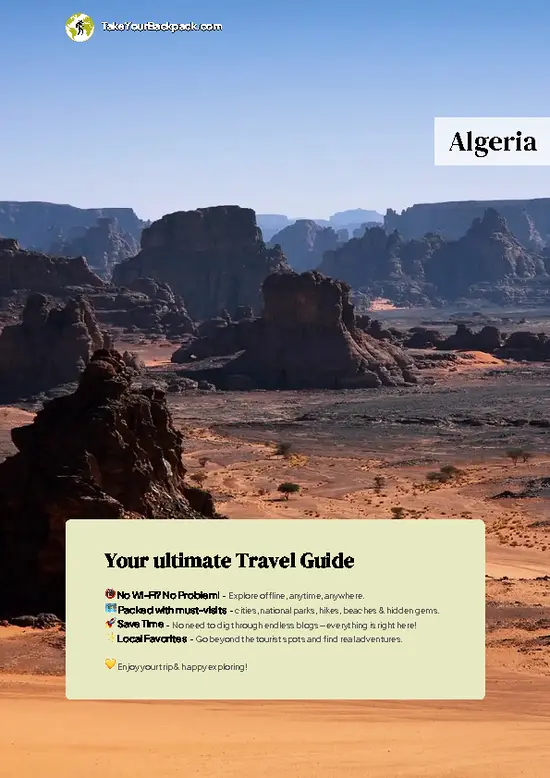
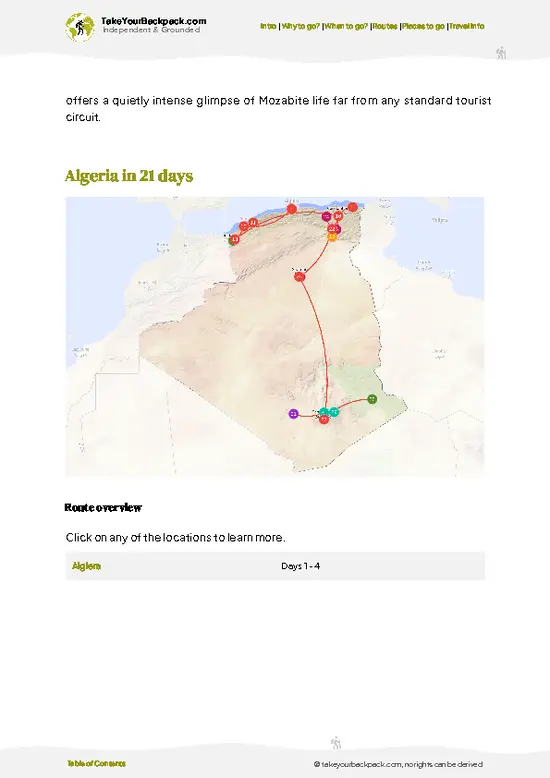
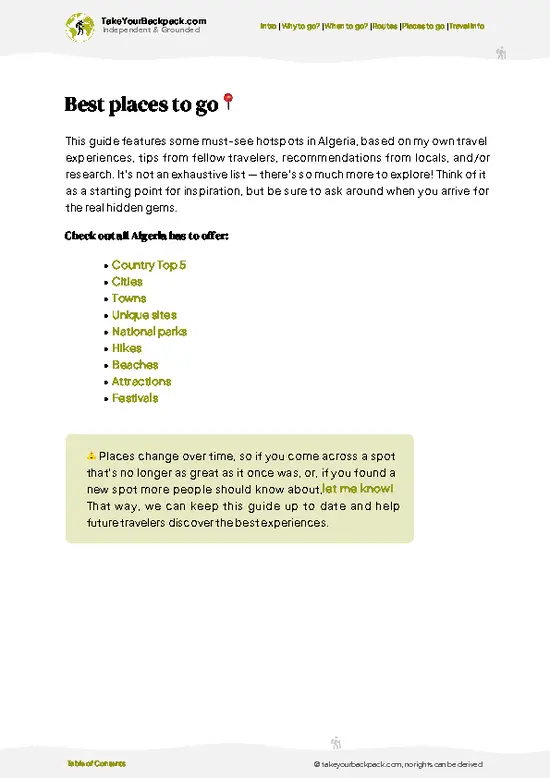
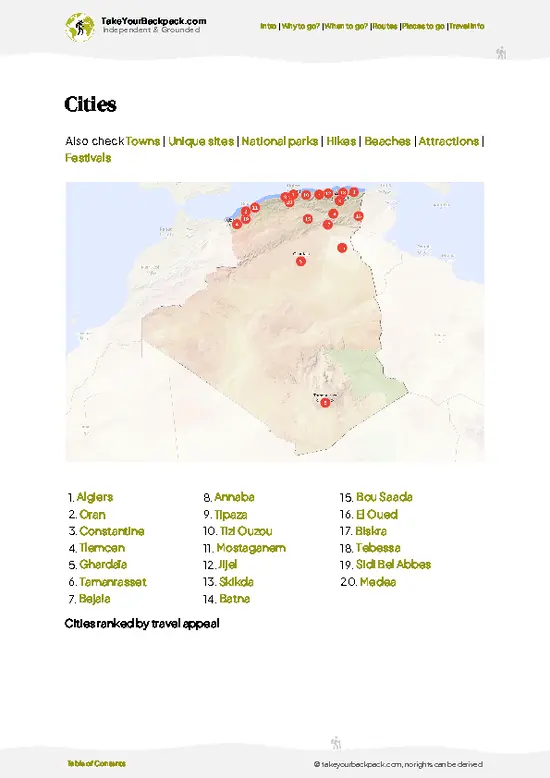
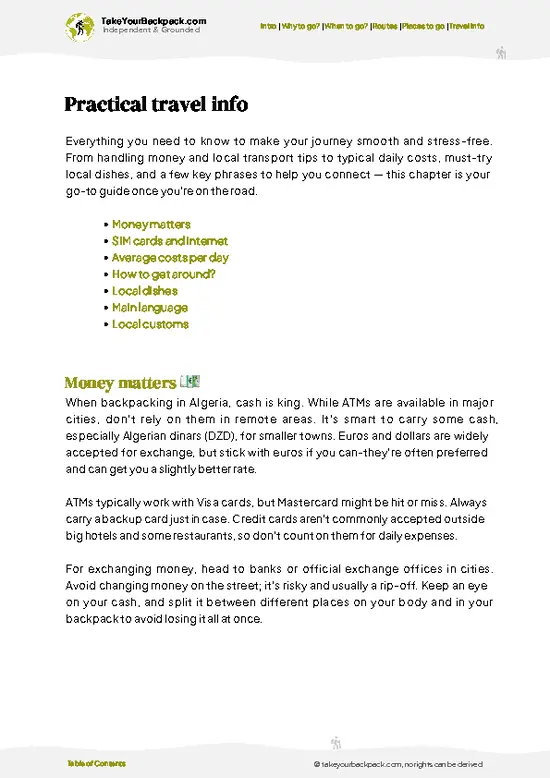
example page 0 from our offline Travel Guide for Algeria
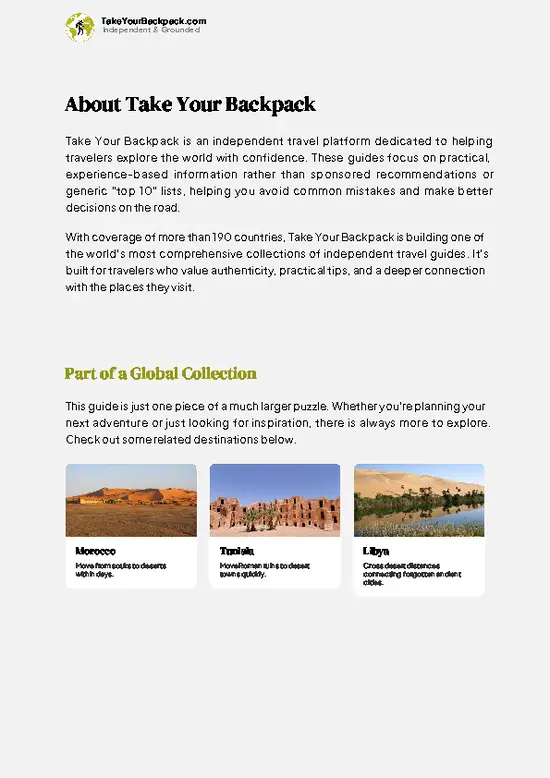
example page 1 from our offline Travel Guide for Algeria
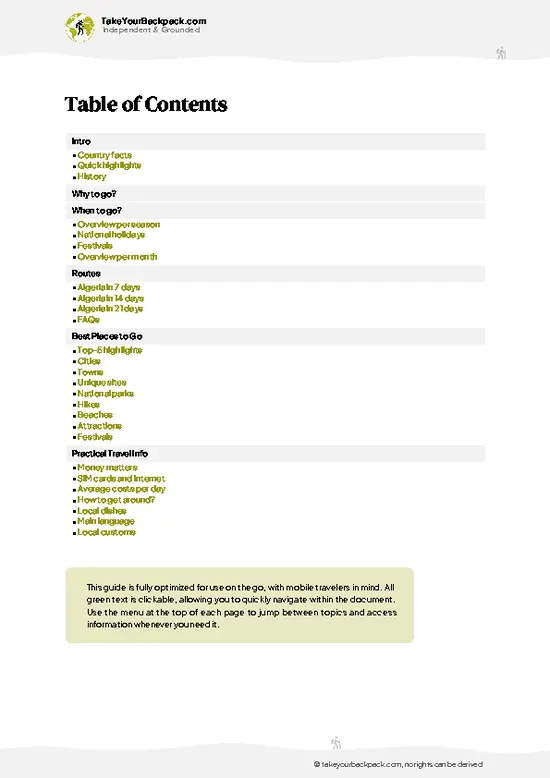
example page 2 from our offline Travel Guide for Algeria
example page 3 from our offline Travel Guide for Algeria
example page 4 from our offline Travel Guide for Algeria
example page 5 from our offline Travel Guide for Algeria
example page 6 from our offline Travel Guide for Algeria
example page 7 from our offline Travel Guide for Algeria
The digital guide (356 pages) contains:
91 highlights, ranked by travel appeal
Optimized 7, 14 & 21-day travel routes
Cities, national parks, landmarks, beaches
How to get around
Offline-friendly for travel without Wi-Fi
👉 Click to see all 30+ guide features

📅 Plan smarter in minutes, not weeks
Month by month travel advice
Festivals & national holidays
Budget expectations

🗺️ Go to the right places, skip the overrated ones
Honest pros & cons of destinations
Top hikes, parks & viewpoints
Lesser-known places most travelers miss
Clear “worth it vs skip it” guidance

🛏️ Travel smoothly without rookie mistakes
Best areas to stay
Transport systems explained simply
Common scams & safety advice
SIM cards, money & practical tips

🌍 Understand the country, not just visit it
Culture & traditions
52 Essential phrases & customs
Festivals worth planning around
Traveler-friendly historical context
Insights that make places more meaningful

📱 Built for real travel conditions
Fully downloadable PDF
Works completely offline
Optimized for phone use
Useful in remote areas & buses
Everything in one place
Save weeks of stressful planning
Get instant access to your full guide. 30‑day money-back guarantee.


By proceeding you agree to our terms.
Sent to your inbox immediately after payment • 100% Secure Checkout
Best Backpacking Travel Advisor 2025 tourism awardBest Backpacking
Travel Advisor
2025
What others say about Take Your Backpack Guides:
⭐⭐⭐⭐⭐
Fantastic, amazing amount of information!
⭐⭐⭐⭐⭐
My goodness this is amazing, it's what I've been looking for hats off too you!
⭐⭐⭐⭐⭐
I think this is absolutely BRILLIANT
⭐⭐⭐⭐
Very complete and informative. It's still missing places, but I gotta to commend you
⭐⭐⭐⭐⭐
This is truly amazing, thank you, can't wait to explore it with my kids!
⭐⭐⭐⭐⭐
Awesome resource, thank you!
⭐⭐⭐⭐⭐
This is amazing! Can't wait to explore the ones I haven't seen
⭐⭐⭐⭐
I love this! Well done, great idea.
⭐⭐⭐⭐⭐
Thanks for taking the time to make this gem!
⭐⭐⭐⭐⭐
This might be the best website I've ever seen.
⭐⭐⭐⭐⭐
Congratulations, and thank you so much for your work; it's incredibly valuable.
⭐⭐⭐⭐
In all seriousness I think you did a great job pointing out the important spots
⭐⭐⭐⭐⭐
10/10 very good
⭐⭐⭐⭐⭐
As someone who's only just starting to visit regularly this is awesome, thank you.
⭐⭐⭐⭐
Thank you very much! I'm going to visit my dad, it's going to be very useful!
⭐⭐⭐⭐⭐
This is really cool! We'll be travelling for the first time and this definitely come in handy.
⭐⭐⭐⭐⭐
You are now our minister of culture, congratulations 👨‍💼
⭐⭐⭐⭐⭐
Just wanted to tell you that this is a pearl! Going to follow your recommendations.
⭐⭐⭐⭐⭐
This is so cool. I'll definitely be using the resource for my travels soon.
⭐⭐⭐⭐⭐
This is very impressive! Good work.
⭐⭐⭐⭐⭐
This is an amazing and informative site. Very well done!

🛏️ Where to stay?Where to Base Yourself

Yes — there are hostels and budget guesthouses in Algeria, mainly in major cities and tourist towns such as Algiers, Oran, Constantine, Tipaza and Ghardaïa, while options are sparse in rural and desert areas.
Algiers concentrates most low-cost options around Hydra (quieter and safer, more hotels but generally pricier and farther from the old town), Bab El Oued (cheapest, seafront and lively but basic with more noise), and the Casbah (closest to heritage sites and atmospheric but narrow streets, basic facilities and variable safety); Oran’s city centre and historic districts give more nightlife and choices but are busier; Tipaza and Ghardaïa offer small guesthouses near ruins or oases that … read more 👉
Yes — there are hostels and budget guesthouses in Algeria, mainly in major cities and tourist towns such as Algiers, Oran, Constantine, Tipaza and Ghardaïa, while options are sparse in rural and desert areas.
Algiers concentrates most low-cost options around Hydra (quieter and safer, more hotels but generally pricier and farther from the old town), Bab El Oued (cheapest, seafront and lively but basic with more noise), and the Casbah (closest to heritage sites and atmospheric but narrow streets, basic facilities and variable safety); Oran’s city centre and historic districts give more nightlife and choices but are busier; Tipaza and Ghardaïa offer small guesthouses near ruins or oases that are peaceful yet limited in services and transport.

If you enjoy meeting fellow travelers, consider choosing hostels with high ratings for atmosphere. On the other hand, if you prefer having your own space, a hotel might be a better option.

AlgeriaExpand Your Journey

👋 Meet the founderWho’s Behind Take Your Backpack?

Johan, backpacker and founder of TakeYourBackpackHi, I’m Johan (Netherlands 🇳🇱), the creator of TakeYourBackpack. Over the past decade, I’ve backpacked through 80+ countries across six continents, gaining extensive experience with independent travel, long-term trips, and overland routes.

This site is built on a combination of firsthand travel experience and carefully curated insights from other backpackers. Many guides are based on places I’ve personally visited, while others bring together tips, observations, and practical advice shared by trusted travelers I’ve met along the way.

The goal is to provide realistic, experience-driven guidance — not generic itineraries — so you can explore destinations with better context, clearer expectations, and more confidence.

Get full Algeria guide •
Instant download • 91 highlights • Full Offline guide