×
Iguazu Falls

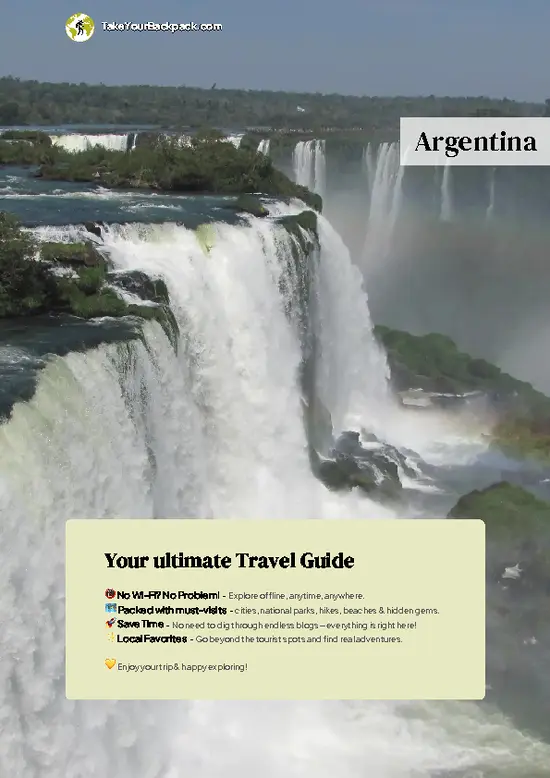
Argentina🇦🇷 | landmarksIguazu Fallsmassive waterfalls, subtropical rainforest, misty viewpoints | things to do and best time to go

Explore Cueva de las Manos, Río PinturasExplore Lagunas de Estromatolitos

Backpacking in Iguazu Falls
🏆 Top pickunique site ranked #1
By Johan Kruseman 🇳🇱 | Updated July 17, 2026

Most people realize too late that Iguazu is one of the easiest “big-ticket” wonders to do without a tour: the park trains, walkways, and signage make it almost idiot-proof for independent travelers, which saves a ton of money if you plan it right. It sits in Argentina’s far northeast, in Misiones province, right on the border with Brazil and Paraguay. As a backpacker destination, Iguazu Falls is a full sensory punch in the face: the roar, the spray, the sheer scale of Garganta del Diablo feel almost fake, like CGI. It’s expensive by Argentine standards, crowded on most days, and the classic viewpoints can feel like a conveyor belt of selfie sticks. But the infrastructure is solid, trails are easy to navigate with a daypack, and if you push beyond the main platforms or stay for late-afternoon light, you get that rare combo of world-wonder drama and quiet jungle moments that actually feel wild.

Discover everything you want to know in the 📖 Argentina Travel Guide.
Loading the map 🌍
CLICK TO FILTER
cities
towns
villages
landmarks
national parks
hikes
beaches
attractions
festivals
regions
SHOW COUNTRY’S BESTSHOW ALL

✨ Why go?
Ranked #1 unique site in Argentina
What makes this unique site worth visiting

Iguazu Falls isn’t just another pretty picture for your Instagram feed; it’s a raw, powerful experience that demands your attention. Sure, the crowds can be overwhelming, especially during peak season, but the sheer scale of the falls—over 275 individual cascades—makes it worth the hustle. You’ll feel the mist on your face and hear the thunderous roar as you stand at the edge of the Devil’s Throat.

The cost? Reasonable. Entry fees are manageable, and you can easily find budget accommodations nearby. Plus, the park offers a range of trails that let you explore without breaking the bank.

What sets Iguazu apart is how it fits into a broader South American adventure. It’s a natural stop between Buenos Aires and Brazil, making it a perfect addition to your route. You can hop on a bus from Buenos … read more 👉
Iguazu Falls isn’t just another pretty picture for your Instagram feed; it’s a raw, powerful experience that demands your attention. Sure, the crowds can be overwhelming, especially during peak season, but the sheer scale of the falls—over 275 individual cascades—makes it worth the hustle. You’ll feel the mist on your face and hear the thunderous roar as you stand at the edge of the Devil’s Throat.

The cost? Reasonable. Entry fees are manageable, and you can easily find budget accommodations nearby. Plus, the park offers a range of trails that let you explore without breaking the bank.

What sets Iguazu apart is how it fits into a broader South American adventure. It’s a natural stop between Buenos Aires and Brazil, making it a perfect addition to your route. You can hop on a bus from Buenos Aires, and in about 18 hours, you’re in a world where nature reigns supreme.

Forget the tourist traps; the real magic lies in the authentic connection you’ll feel with the landscape. It’s not just a destination; it’s a life-changing moment waiting to happen.
Want to include Iguazu Falls in your Argentina route?
Create a personalized Argentina itinerary that includes Iguazu Falls and the places that fit your trip — based on your travel style, budget, and available time. Get your route in seconds.

Generate my trip

💡 HighlightsWhat this place is best known for

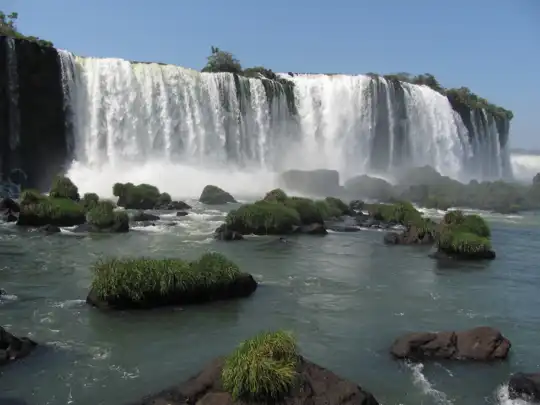
  1. Garganta del Diablo (Devil’s Throat) — The crown jewel: a U-shaped cliff where dozens of waterfalls converge into one thunderous, mist-shrouded curtain. You walk out on a metal platform and feel the roar and spray up close; personal favorite — it’s the most visceral “I’m tiny” moment you’ll get here.
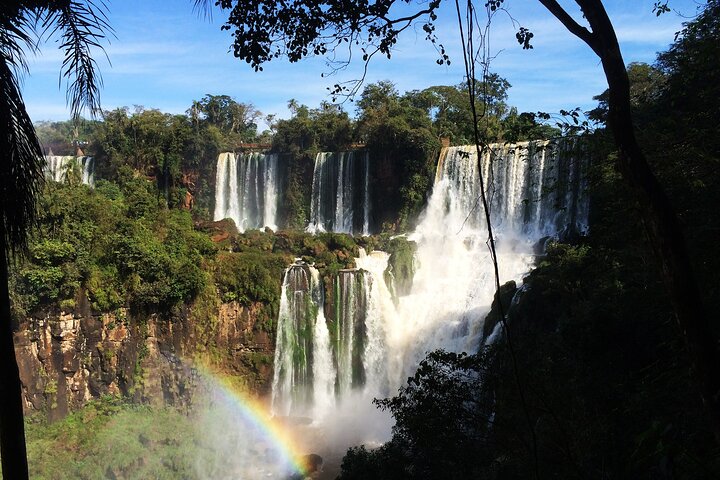
  2. Upper Circuit (Circuito Superior) — A series of rim walkways that give sweeping panoramic views of multiple falls at once. Great for photos and for seeing how the river slices through the rainforest; the perspectives change every few steps.
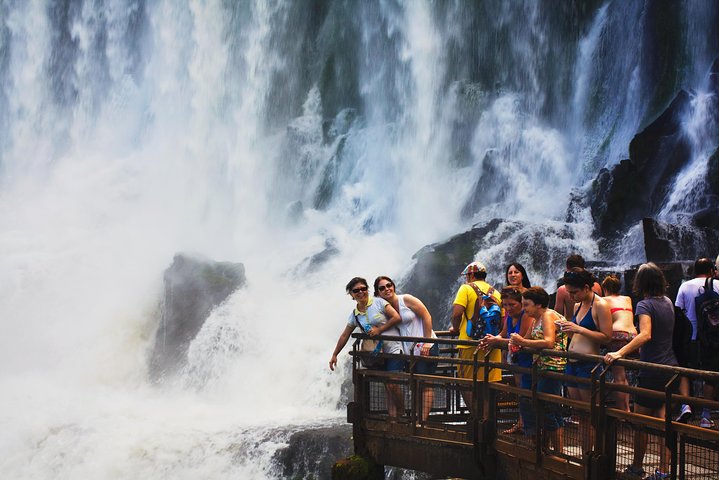
  3. Lower Circuit (Circuito Inferior) — A set of trails that bring you down toward the river level and underneath some cascades. You’ll get splashed, hear the water’s bass up close, and see different angles of islands and plunge pools the rim overlooks miss.
read more 👉
  1. Garganta del Diablo (Devil’s Throat) — The crown jewel: a U-shaped cliff where dozens of waterfalls converge into one thunderous, mist-shrouded curtain. You walk out on a metal platform and feel the roar and spray up close; personal favorite — it’s the most visceral “I’m tiny” moment you’ll get here.
  2. Upper Circuit (Circuito Superior) — A series of rim walkways that give sweeping panoramic views of multiple falls at once. Great for photos and for seeing how the river slices through the rainforest; the perspectives change every few steps.
  3. Lower Circuit (Circuito Inferior) — A set of trails that bring you down toward the river level and underneath some cascades. You’ll get splashed, hear the water’s bass up close, and see different angles of islands and plunge pools the rim overlooks miss.
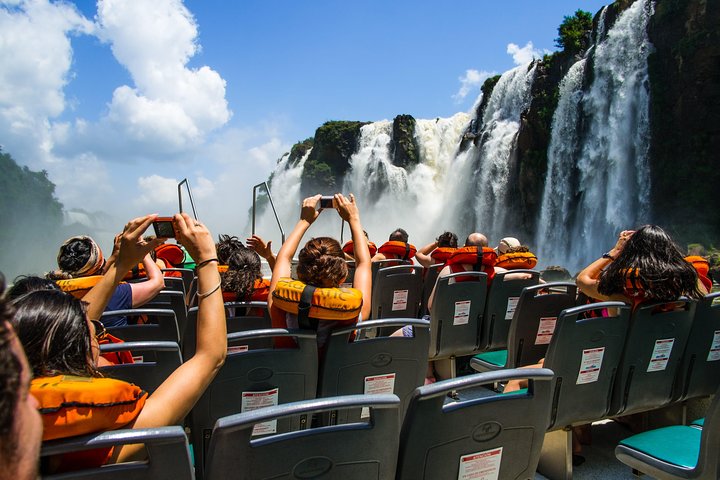
  4. Gran Aventura boat ride — A wet-and-wild boat trip that takes you deep into the Iguazú River and right under some of the falls. Not the quietest experience, but unbeatable for adrenaline and the “you have to see this to believe it” factor.
  5. Isla San Martín — A small island reached by boat where short trails and stairways lead to viewpoints facing big drops. It’s quieter than the main decks and gives an intimate middle-of-the-river feeling that’s surprisingly cinematic.
  6. Ecological Jungle Train & rainforest walks — The little eco-train is practical and charming, dropping you into jungle trails where toucans, coatis and a riot of butterflies are common. The biodiversity here is part of the attraction — the falls don’t stand alone, they sit inside a living ecosystem.
  7. Wildlife and birdwatching — Beyond the water, the subtropical forest hosts unique wildlife: coatis that will steal snacks if you’re careless, colorful birds, and plenty of butterfly species. Good binoculars pay off; it turns a visit into a mini nature safari.
Spotted a mistake or missing something? Contact us.

Things to do around Iguazu Falls

Ratings based on Tripadvisor reviews. When you book through this link, you support our work at no extra cost to you.

🌤️ When to go?Weather, crowds, and seasonal trade-offs


  • Weather: The falls roar loudest in the rainy season from November to March, but expect heavy downpours and sticky humidity. Dry season (April to October) offers clearer skies and less mud, but the water flow drops noticeably.

  • Temperature: Summer highs hit 30-35°C (86-95°F), making hikes sweaty and exhausting. Winter temps drop to a comfortable 15-20°C (59-68°F), perfect for long walks without overheating.

  • Daylight Hours: Longer days in summer stretch to about 13-14 hours, giving you more daylight to explore. Winter days shrink to around 10-11 hours, so plan your treks accordingly.

  • Crowds: Peak tourist season aligns with summer holidays and local festivals, packing the trails and viewpoints. Shoulder seasons (March-April, September-October) strike a better balance—fewer people without
read more 👉

  • Weather: The falls roar loudest in the rainy season from November to March, but expect heavy downpours and sticky humidity. Dry season (April to October) offers clearer skies and less mud, but the water flow drops noticeably.

  • Temperature: Summer highs hit 30-35°C (86-95°F), making hikes sweaty and exhausting. Winter temps drop to a comfortable 15-20°C (59-68°F), perfect for long walks without overheating.

  • Daylight Hours: Longer days in summer stretch to about 13-14 hours, giving you more daylight to explore. Winter days shrink to around 10-11 hours, so plan your treks accordingly.

  • Crowds: Peak tourist season aligns with summer holidays and local festivals, packing the trails and viewpoints. Shoulder seasons (March-April, September-October) strike a better balance—fewer people without sacrificing much of the spectacle.

  • Seasonal Activities: Summer invites boat rides that splash you right under the falls, a thrilling but wet experience. Dry months favor hiking and wildlife spotting, with fewer mosquitoes and clearer trails.

  • Price Fluctuations: Expect inflated prices for accommodation and tours during peak summer and holiday periods. Booking in shoulder seasons can save you a solid chunk of cash without losing the essence of the experience.


Pro-tip: Aim for early autumn (March-April) to dodge the worst crowds and humidity while still catching the falls in a powerful mood—your camera and your patience will thank you.


source: climatestotravel.comJANJanuary: fair for travelingFEBFebruary: fair for travelingMARMarch: highly recommended for travelingAPRApril: highly recommended for travelingMAYMay: good for travelingJUNJune: good for travelingJULJuly: good for travelingAUGAugust: good for travelingSEPSeptember: highly recommended for travelingOCTOctober: highly recommended for travelingNOVNovember: fair for travelingDECDecember: fair for traveling
Argentina&Brazil - the Iguazu Falls

✈️ The backpacker research shortcutArgentina Travel Guide

An offline-friendly backpacking guide with optimized travel routes, ranked highlights, transport advice, and the best areas to stay.
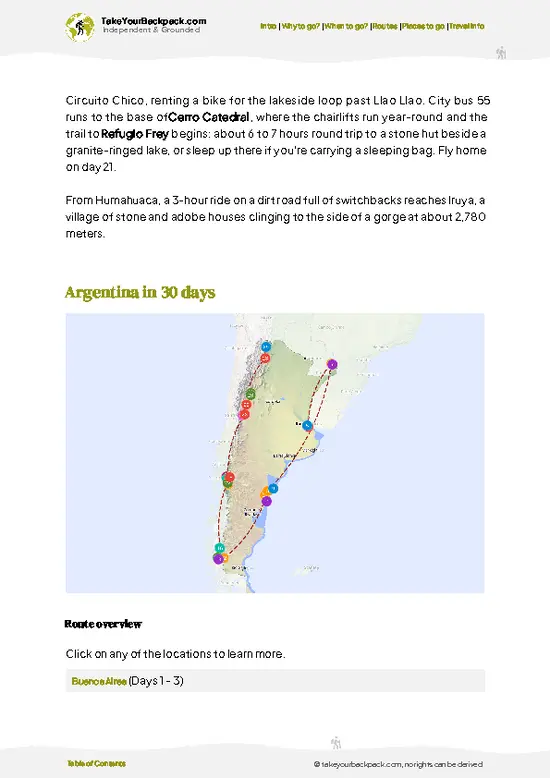
example page 0 from our offline Travel Guide for Argentina
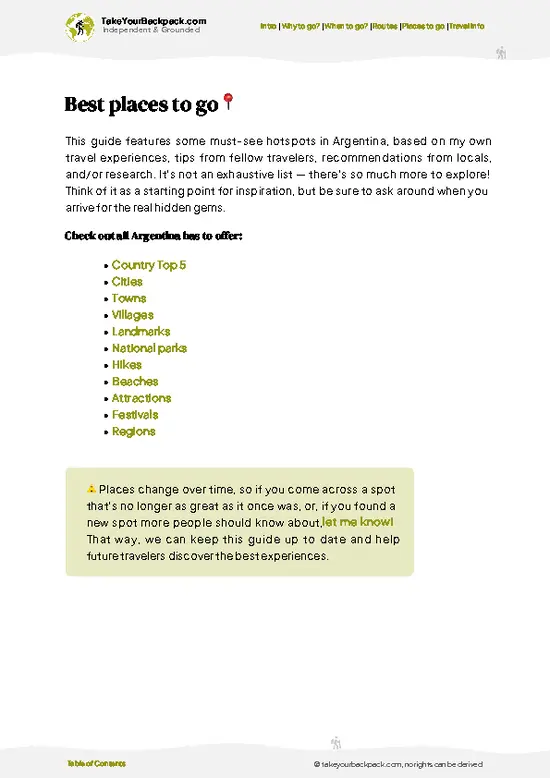
example page 1 from our offline Travel Guide for Argentina
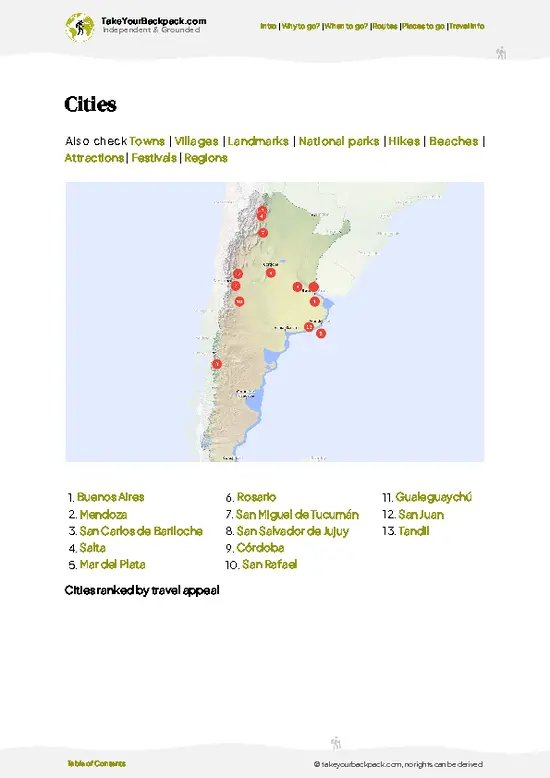
example page 2 from our offline Travel Guide for Argentina
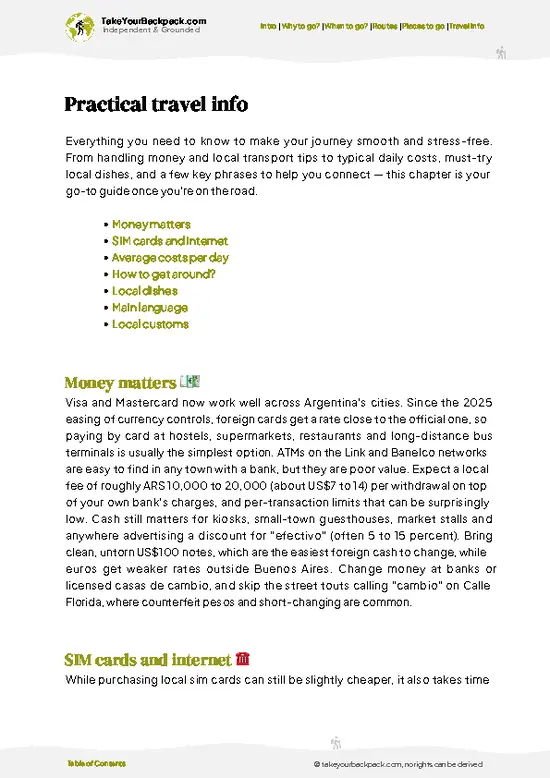
example page 3 from our offline Travel Guide for Argentina
example page 4 from our offline Travel Guide for Argentina
example page 5 from our offline Travel Guide for Argentina
example page 6 from our offline Travel Guide for Argentina
example page 7 from our offline Travel Guide for Argentina
The digital guide (505 pages) contains:
135 highlights, ranked by travel appeal
Optimized 14, 21 & 30-day travel routes
Cities, national parks, landmarks, beaches
How to get around
Offline-friendly for travel without Wi-Fi
👉 Click to see all 30+ guide features

📅 Plan smarter in minutes, not weeks
Month by month travel advice
Festivals & national holidays
Budget expectations

🗺️ Go to the right places, skip the overrated ones
Honest pros & cons of destinations
Top hikes, parks & viewpoints
Lesser-known places most travelers miss
Clear “worth it vs skip it” guidance

🛏️ Travel smoothly without rookie mistakes
Best areas to stay
Transport systems explained simply
Common scams & safety advice
SIM cards, money & practical tips

🌍 Understand the country, not just visit it
Culture & traditions
52 Essential phrases & customs
Festivals worth planning around
Traveler-friendly historical context
Insights that make places more meaningful

📱 Built for real travel conditions
Fully downloadable PDF
Works completely offline
Optimized for phone use
Useful in remote areas & buses
Everything in one place
Save weeks of stressful planning
Get instant access to your full guide. 30‑day money-back guarantee.


By proceeding you agree to our terms.
Sent to your inbox immediately after payment • 100% Secure Checkout
Best Backpacking Travel Advisor 2025 tourism awardBest Backpacking
Travel Advisor
2025
What others say about Take Your Backpack Guides:
⭐⭐⭐⭐⭐
Fantastic, amazing amount of information!
⭐⭐⭐⭐⭐
My goodness this is amazing, it's what I've been looking for hats off too you!
⭐⭐⭐⭐⭐
I think this is absolutely BRILLIANT
⭐⭐⭐⭐
Very complete and informative. It's still missing places, but I gotta to commend you
⭐⭐⭐⭐⭐
This is truly amazing, thank you, can't wait to explore it with my kids!
⭐⭐⭐⭐⭐
Awesome resource, thank you!
⭐⭐⭐⭐⭐
This is amazing! Can't wait to explore the ones I haven't seen
⭐⭐⭐⭐
I love this! Well done, great idea.
⭐⭐⭐⭐⭐
Thanks for taking the time to make this gem!
⭐⭐⭐⭐⭐
This might be the best website I've ever seen.
⭐⭐⭐⭐⭐
Congratulations, and thank you so much for your work; it's incredibly valuable.
⭐⭐⭐⭐
In all seriousness I think you did a great job pointing out the important spots
⭐⭐⭐⭐⭐
10/10 very good
⭐⭐⭐⭐⭐
As someone who's only just starting to visit regularly this is awesome, thank you.
⭐⭐⭐⭐
Thank you very much! I'm going to visit my dad, it's going to be very useful!
⭐⭐⭐⭐⭐
This is really cool! We'll be travelling for the first time and this definitely come in handy.
⭐⭐⭐⭐⭐
You are now our minister of culture, congratulations 👨‍💼
⭐⭐⭐⭐⭐
Just wanted to tell you that this is a pearl! Going to follow your recommendations.
⭐⭐⭐⭐⭐
This is so cool. I'll definitely be using the resource for my travels soon.
⭐⭐⭐⭐⭐
This is very impressive! Good work.
⭐⭐⭐⭐⭐
This is an amazing and informative site. Very well done!

🛏️ Where to stay?Choosing the right base

Staying near Iguazu Falls can feel like a game of dodgeball with the crowds, but don’t let that deter you. The area around Puerto Iguazú is your best bet. It’s buzzing with backpackers, making it easy to connect with fellow travelers. You’ll find a mix of budget-friendly hostels and guesthouses that cater to the social scene.

The town itself is a lively hub, with plenty of restaurants and bars where you can swap stories over a cold beer after a day of hiking. Safety is generally good here, but keep your wits about you, especially at night.

If you want a quieter vibe, consider staying a bit … read more 👉
Staying near Iguazu Falls can feel like a game of dodgeball with the crowds, but don’t let that deter you. The area around Puerto Iguazú is your best bet. It’s buzzing with backpackers, making it easy to connect with fellow travelers. You’ll find a mix of budget-friendly hostels and guesthouses that cater to the social scene.

The town itself is a lively hub, with plenty of restaurants and bars where you can swap stories over a cold beer after a day of hiking. Safety is generally good here, but keep your wits about you, especially at night.

If you want a quieter vibe, consider staying a bit outside of town. There are eco-lodges and smaller hostels that offer a more laid-back atmosphere. You’ll still be close enough to the falls, but you’ll escape the tourist rush. Plus, you might get a chance to see some local wildlife, which is a bonus.

Don’t forget to check out the local markets. They’re not just for souvenirs; you’ll find authentic food and crafts that tell the story of the region. This is where the real magic happens, away from the Instagram filters.

👛 Costs (as of 6 August 2026)What things cost and how to budget

Visiting Iguazu Falls is a breathtaking experience, but it comes with its own set of costs that can catch you off guard. Here’s the real deal on what to expect financially.
  • Entrance Fee: Expect to pay around $20 to $30 USD for a day pass. This grants you access to the park and its various trails. If you want to take a boat ride close to the falls, that’ll set you back an additional $15 to $25 USD. Worth it? Absolutely, if you want that adrenaline rush and a splash of reality.
  • Transportation: Getting to the falls can vary. If you’re coming from Puerto Iguazú, a taxi will cost about $15 to $25 USD. Buses are cheaper, around $3 to $5 USD, but they can be crowded and take longer. If you’re staying in the area, consider renting a bike for about $10 USD a day. It’s a fun way to explore and avoid the
read more 👉
Visiting Iguazu Falls is a breathtaking experience, but it comes with its own set of costs that can catch you off guard. Here’s the real deal on what to expect financially.
  • Entrance Fee: Expect to pay around $20 to $30 USD for a day pass. This grants you access to the park and its various trails. If you want to take a boat ride close to the falls, that’ll set you back an additional $15 to $25 USD. Worth it? Absolutely, if you want that adrenaline rush and a splash of reality.
  • Transportation: Getting to the falls can vary. If you’re coming from Puerto Iguazú, a taxi will cost about $15 to $25 USD. Buses are cheaper, around $3 to $5 USD, but they can be crowded and take longer. If you’re staying in the area, consider renting a bike for about $10 USD a day. It’s a fun way to explore and avoid the crowds.
  • Accommodation: Options range widely. Budget hostels start at about $10 to $20 USD per night. Mid-range hotels will run you $50 to $100 USD. For a splurge, upscale lodges can go from $150 USD and up. Choose wisely based on your comfort level and proximity to the park.
  • Food: Dining can be affordable or pricey, depending on where you go. Street food and local eateries offer meals for $5 to $10 USD. If you opt for sit-down restaurants, expect to pay $15 to $30 USD for a decent meal. Bring snacks for the park; they can be pricey inside.
  • Guided Tours: If you want a deeper understanding of the falls, consider a guided tour. Prices range from $50 to $100 USD, depending on the length and inclusions. This can be a great way to skip the lines and get insider knowledge.

Plan your budget wisely. The falls are stunning, but the costs can add up quickly. Prioritize what matters most to you, and you’ll find the real magic in this natural wonder.


source: argentina.gob.ar
⚠️ Prices can change and everyone travels differently, so take this as a rough guide. Hope it helps you plan your adventure!

Other Argentinian landmarks near Iguazu Falls

Explore more nearby:

  • Laguna el Palmar—palm-dotted lagoon, wetland wildlife, tranquil waters| 454 km away
  • Laguna Mar Chiquita—inland saline lake, migratory bird haven, fluctuating shoreline| 1168 km away
  • Las Salinas Grandes—endless salt flats, polygonal crusts, high plateau| 1191 km away

💡 Not sure where to go next?
Create a personalized itinerary for Argentina including Iguazu Falls and the places that fit your trip.

Generate my itinerary

👉 Discover all landmarks

Or checkout all Argentina has to offer (think cities, towns, villages, national parks, hikes, beaches, festivals)
Country photo of Argentina

We 💚 feedbackSumming up the experience

Iguazu Falls is a powerhouse of nature, a thunderous roar that shakes your core. Standing there, drenched in mist, you realize how small you are in the grand scheme. But let’s be real: the crowds can be overwhelming, especially during peak season. You’ll be elbow-to-elbow with tourists snapping selfies. Still, if you can time your visit for early morning or late afternoon, you’ll snag those magical moments when the falls feel like they’re just for you.

✈️ When did I visit Argentina?
I have visited Argentina, together with Chile, in September 2012.

✍️ Help improve this page!
The information on this page is based on my own backpacking experience in Argentina, supplemented with up-to-date research and feedback from other travelers. Travel details can change, so if you notice anything outdated or incomplete, feel free to let me know.


🙋‍♂️ Give feedback

👋 Meet the founderWho’s Behind Take Your Backpack?

Johan, backpacker and founder of TakeYourBackpackHi, I’m Johan (Netherlands 🇳🇱), the creator of TakeYourBackpack. Over the past decade, I’ve backpacked through 80+ countries across six continents, gaining extensive experience with independent travel, long-term trips, and overland routes.

This site is built on a combination of firsthand travel experience and carefully curated insights from other backpackers. Many guides are based on places I’ve personally visited, while others bring together tips, observations, and practical advice shared by trusted travelers I’ve met along the way.

The goal is to provide realistic, experience-driven guidance — not generic itineraries — so you can explore destinations with better context, clearer expectations, and more confidence.

Get full Argentina guide •
Instant download • 135 highlights • Full Offline guide