×

Bolivia🇧🇴 | landmarksCañon del Tuniglacial valley, Andean peaks, remote trails | things to do and best time to go

Explore CaranaviExplore Cerro Rico

Backpacking in Cañon del Tuni
👌 Worth visitingunique site ranked #8
By Johan Kruseman 🇳🇱 | Updated June 2, 2026

Most people only realize after they leave that Cañon del Tuni is basically La Paz’s wild backyard training ground: you can do a full-on Andean canyon adventure and still sleep in a cheap city hostel that night. Cañon del Tuni sits in the Cordillera Real, northwest of La Paz in the La Paz department, just beyond the Tuni village and reservoir. This isn’t a polished, world-famous “must-see”; it’s raw, windy, and often completely empty. The rock walls and high-altitude light are jaw-dropping, but the wow-factor is quiet, not postcard-obvious. Access is a bit of a hassle with patchy transport and thin info, yet that’s exactly why you won’t be elbowing through tour groups. It’s cheap, harsh, photogenic if you work for your angles, and feels more like a local training zone than a packaged attraction.

Discover everything you want to know in the 📖 Bolivia Travel Guide.


Get your Bolivia guide
82 ranked highlights, routes & tips, works offline (350 pages)
Loading the map 🌍
CLICK TO FILTER
cities
towns
landmarks
national parks
hikes
beaches
attractions
festivals
regions
SHOW COUNTRY’S BESTSHOW ALL

✨ Why go?
Ranked #8 unique site in Bolivia
Why Cañon del Tuni should be on your travel list

Cañon del Tuni isn’t just another pretty spot for your Instagram feed; it’s a raw, rugged beauty that demands your attention. Yes, the crowds can be a drag, especially during peak season, but the effort-to-reward ratio here is off the charts. You’ll trek through stunning landscapes that shift from arid mountains to lush valleys, all while soaking in the local culture that’s often overlooked.

Accessibility is a breeze. It fits perfectly into a broader route through Bolivia, making it an easy stop between La Paz and Uyuni. Plus, the cost is a steal—entry fees are minimal, and you can camp nearby for next to nothing.

What makes this place truly special is the sense of solitude you can find if you wander off the beaten path. Take a moment to breathe in the crisp air and listen to the silence. That’s where the real magic happens.
Want to include Cañon del Tuni in your Bolivia route?
Create a personalized Bolivia itinerary that includes Cañon del Tuni and the places that fit your trip — based on your travel style, budget, and available time. Get your route in seconds.

Generate my trip

💡 HighlightsWhat this place is best known for

  • Sheer canyon walls and sculpted rock — The steep, weathered cliffs are the canyon’s headline act: layered sedimentary rock carved by millennia of water and wind. It’s great for photographers and anyone who likes feeling tiny next to geology that actually looks dramatic in daylight.
  • Tuni River and seasonal waterfalls — Narrow channels and cascades run through the bottom, swelling after rains and offering splashy scenery and little natural pools. Bring sturdy shoes; the best views usually come from short scrambles down to the riverbed.
  • Short hikes and rugged trails — Trails range from easy walks to steeper scrambles that keep the day cheap and active. You can do solid canyon exploration in a half-day without a guide, but hiring a local for a few bolivianos adds safety and local stories.
read more 👉
  • Sheer canyon walls and sculpted rock — The steep, weathered cliffs are the canyon’s headline act: layered sedimentary rock carved by millennia of water and wind. It’s great for photographers and anyone who likes feeling tiny next to geology that actually looks dramatic in daylight.
  • Tuni River and seasonal waterfalls — Narrow channels and cascades run through the bottom, swelling after rains and offering splashy scenery and little natural pools. Bring sturdy shoes; the best views usually come from short scrambles down to the riverbed.
  • Short hikes and rugged trails — Trails range from easy walks to steeper scrambles that keep the day cheap and active. You can do solid canyon exploration in a half-day without a guide, but hiring a local for a few bolivianos adds safety and local stories.
  • Andean flora and birdlife — The canyon’s microclimates support scrub, native grasses and a surprising number of birds of prey and highland species. It’s a quiet spot for birdwatching — bring binoculars and patience.
  • Nearby village life and Quechua culture — Small farming communities around the canyon give a real slice of rural Bolivian life: stony terraces, market snacks, and a chance to buy homemade food or a woven scarf. Conversations are informal; a small purchase goes a long way.
  • Geological details up close — Folds, visible strata and mineral streaks make the canyon a compact field trip for anyone who likes reading the land. It’s one of those places where you can actually trace how the landscape was made.
  • Rim viewpoints and sunset light — The light at golden hour hits the canyon walls like someone turned up the contrast. Watching the colors deepen and the shadows crawl is the simplest, cheapest thrill here — my personal favorite.
Spotted a mistake or missing something? Contact us.

🌤️ When to go?When to go for the best experience


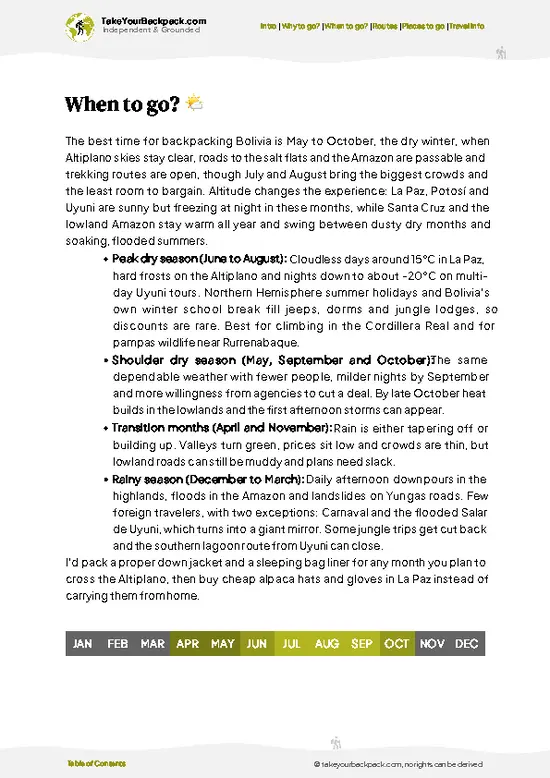
  • Weather: The dry season from May to October is your best bet. Expect clear skies and minimal rain, which means the trails are safer and the views sharper. The wet season (November to March) turns the canyon slippery and sometimes inaccessible.

  • Temperature: Daytime temps hover around 15-20°C (59-68°F) during the dry season—cool but comfortable for hiking. Nights can dip below freezing, so pack layers. The wet season is warmer but muggy, which can sap your energy fast.

  • Daylight Hours: Roughly 10-12 hours of daylight year-round, but the dry season offers more consistent, bright mornings perfect for early starts and longer hikes.

  • Crowds: Don’t expect solitude. The dry season draws most backpackers and local tourists, especially July and August. If you want fewer people, aim for shoulder
read more 👉

  • Weather: The dry season from May to October is your best bet. Expect clear skies and minimal rain, which means the trails are safer and the views sharper. The wet season (November to March) turns the canyon slippery and sometimes inaccessible.

  • Temperature: Daytime temps hover around 15-20°C (59-68°F) during the dry season—cool but comfortable for hiking. Nights can dip below freezing, so pack layers. The wet season is warmer but muggy, which can sap your energy fast.

  • Daylight Hours: Roughly 10-12 hours of daylight year-round, but the dry season offers more consistent, bright mornings perfect for early starts and longer hikes.

  • Crowds: Don’t expect solitude. The dry season draws most backpackers and local tourists, especially July and August. If you want fewer people, aim for shoulder months like May or September.

  • Seasonal Activities: Dry season is prime for trekking and photography. The wet season brings lush greenery but also muddy trails and fewer services open.

  • Price Fluctuations: Expect higher prices for guides and lodging during peak dry months. Off-season offers bargains but at the cost of comfort and accessibility.


Pro-tip: Visit in late May or early September to dodge crowds and still enjoy solid weather—your wallet and your patience will thank you.


source: climatestotravel.comJANJanuary: fair for travelingFEBFebruary: fair for travelingMARMarch: fair for travelingAPRApril: good for travelingMAYMay: highly recommended for travelingJUNJune: excellent for travelingJULJuly: excellent for travelingAUGAugust: excellent for travelingSEPSeptember: highly recommended for travelingOCTOctober: highly recommended for travelingNOVNovember: fair for travelingDECDecember: fair for traveling
bolivia-unique-site-canon-del-tuni
© Google |

✈️ The backpacker research shortcutBolivia Travel Guide

An offline-friendly backpacking guide with optimized travel routes, ranked highlights, transport advice, and the best areas to stay.
example page 0 from our offline Travel Guide for Bolivia
example page 1 from our offline Travel Guide for Bolivia
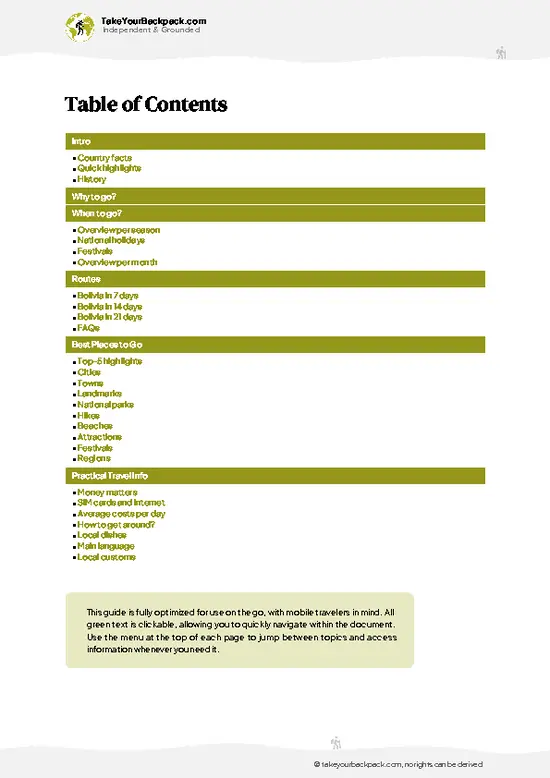
example page 2 from our offline Travel Guide for Bolivia
example page 3 from our offline Travel Guide for Bolivia
example page 4 from our offline Travel Guide for Bolivia
example page 5 from our offline Travel Guide for Bolivia
example page 6 from our offline Travel Guide for Bolivia
example page 7 from our offline Travel Guide for Bolivia
The digital guide (350 pages) contains:
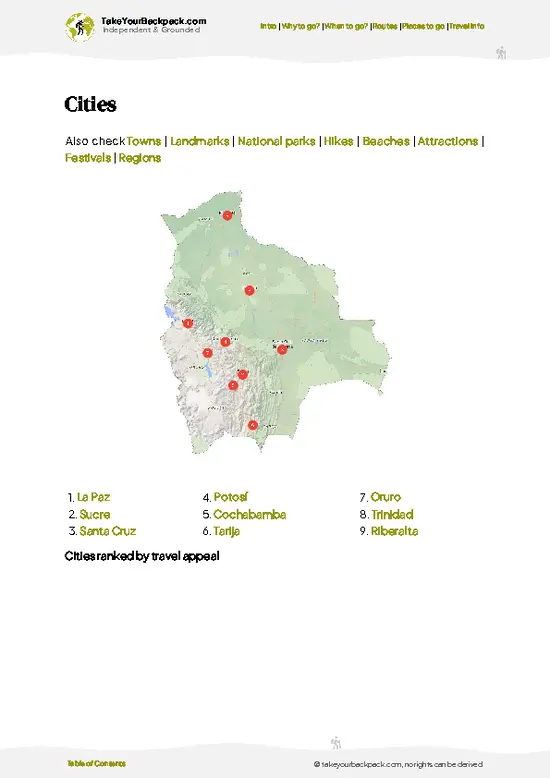
82 highlights, ranked by travel appeal
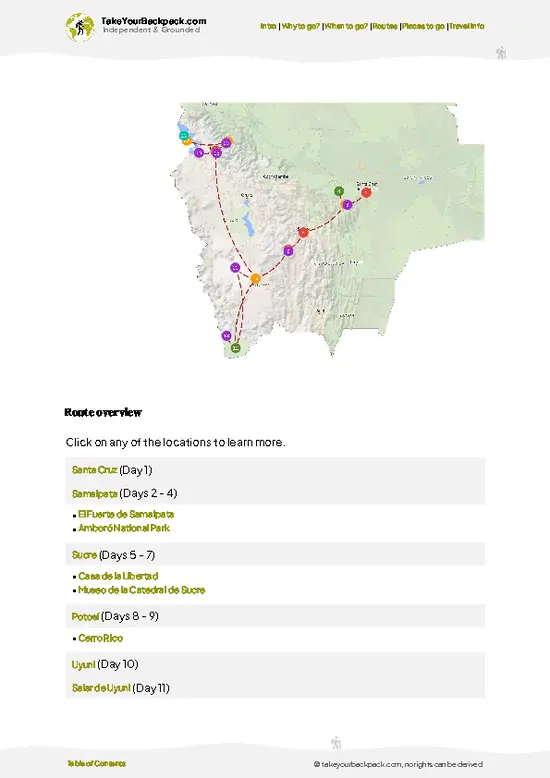
Optimized 7, 14 & 21-day travel routes
Cities, national parks, landmarks, beaches
How to get around
Offline-friendly for travel without Wi-Fi
👉 Click to see all 30+ guide features

📅 Plan smarter in minutes, not weeks
Month by month travel advice
Festivals & national holidays
Budget expectations

🗺️ Go to the right places, skip the overrated ones
Honest pros & cons of destinations
Top hikes, parks & viewpoints
Lesser-known places most travelers miss
Clear “worth it vs skip it” guidance

🛏️ Travel smoothly without rookie mistakes
Best areas to stay
Transport systems explained simply
Common scams & safety advice
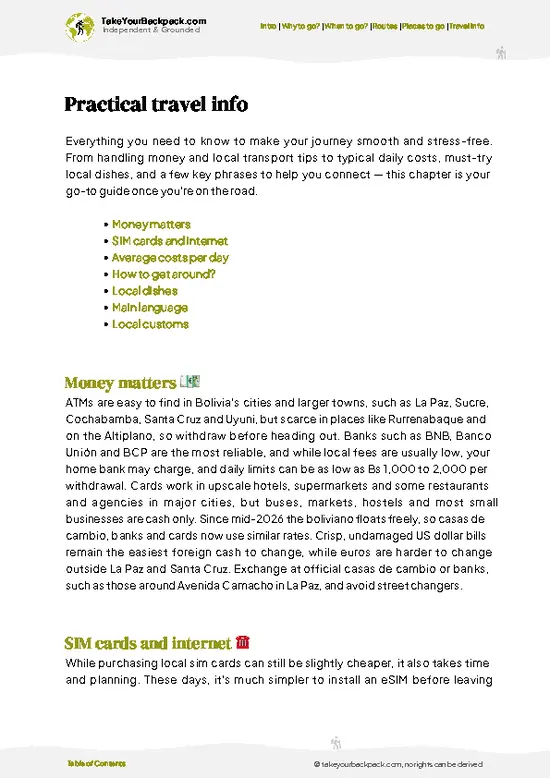
SIM cards, money & practical tips

🌍 Understand the country, not just visit it
Culture & traditions
52 Essential phrases & customs
Festivals worth planning around
Traveler-friendly historical context
Insights that make places more meaningful

📱 Built for real travel conditions
Fully downloadable PDF
Works completely offline
Optimized for phone use
Useful in remote areas & buses
Everything in one place
Save weeks of stressful planning
Get instant access to your full guide. 30‑day money-back guarantee.


By proceeding you agree to our terms.
Sent to your inbox immediately after payment • 100% Secure Checkout
Best Backpacking Travel Advisor 2025 tourism awardBest Backpacking
Travel Advisor
2025
What others say about Take Your Backpack Guides:
⭐⭐⭐⭐⭐
Fantastic, amazing amount of information!
⭐⭐⭐⭐⭐
My goodness this is amazing, it's what I've been looking for hats off too you!
⭐⭐⭐⭐⭐
I think this is absolutely BRILLIANT
⭐⭐⭐⭐
Very complete and informative. It's still missing places, but I gotta to commend you
⭐⭐⭐⭐⭐
This is truly amazing, thank you, can't wait to explore it with my kids!
⭐⭐⭐⭐⭐
Awesome resource, thank you!
⭐⭐⭐⭐⭐
This is amazing! Can't wait to explore the ones I haven't seen
⭐⭐⭐⭐
I love this! Well done, great idea.
⭐⭐⭐⭐⭐
Thanks for taking the time to make this gem!
⭐⭐⭐⭐⭐
This might be the best website I've ever seen.
⭐⭐⭐⭐⭐
Congratulations, and thank you so much for your work; it's incredibly valuable.
⭐⭐⭐⭐
In all seriousness I think you did a great job pointing out the important spots
⭐⭐⭐⭐⭐
10/10 very good
⭐⭐⭐⭐⭐
As someone who's only just starting to visit regularly this is awesome, thank you.
⭐⭐⭐⭐
Thank you very much! I'm going to visit my dad, it's going to be very useful!
⭐⭐⭐⭐⭐
This is really cool! We'll be travelling for the first time and this definitely come in handy.
⭐⭐⭐⭐⭐
You are now our minister of culture, congratulations 👨‍💼
⭐⭐⭐⭐⭐
Just wanted to tell you that this is a pearl! Going to follow your recommendations.
⭐⭐⭐⭐⭐
This is so cool. I'll definitely be using the resource for my travels soon.
⭐⭐⭐⭐⭐
This is very impressive! Good work.
⭐⭐⭐⭐⭐
This is an amazing and informative site. Very well done!

🛏️ Where to stay?Best areas to stay in Bolivia

When you’re heading to Cañon del Tuni, you want a base that’s not just a place to crash but a hub for adventure. Look at the town of Cochabamba. It’s a solid choice, buzzing with backpackers and locals alike. The vibe is friendly, and you’ll find plenty of budget-friendly eateries where you can fuel up on local fare without breaking the bank.

Another option is Potosí, a bit further away but worth it for its rich history and vibrant atmosphere. It’s a hotspot for solo travelers, making it easy to connect with others. The streets are alive with stories, and you’ll find cozy spots to share tales … read more 👉
When you’re heading to Cañon del Tuni, you want a base that’s not just a place to crash but a hub for adventure. Look at the town of Cochabamba. It’s a solid choice, buzzing with backpackers and locals alike. The vibe is friendly, and you’ll find plenty of budget-friendly eateries where you can fuel up on local fare without breaking the bank.

Another option is Potosí, a bit further away but worth it for its rich history and vibrant atmosphere. It’s a hotspot for solo travelers, making it easy to connect with others. The streets are alive with stories, and you’ll find cozy spots to share tales over a cup of mate.

Both areas offer safe accommodations and a social scene that welcomes newcomers. You’ll want to be close to transport links for easy access to the canyon, but the real magic lies in the people you meet and the experiences you share. Don’t just stay; immerse yourself.

👛 Costs (as of 21 February 2026)What things cost and how to budget

Visiting Cañon del Tuni in Bolivia is a journey that demands both your time and your budget, but it rewards you with raw beauty and a sense of adventure that’s hard to find elsewhere.
  • Entrance Fees: Expect to pay around $5 to $10 USD for entry. This fee helps maintain the trails and the surrounding environment. It’s a small price for access to such stunning landscapes.
  • Transportation: Getting to Cañon del Tuni can be a bit of a trek. If you’re coming from La Paz, a bus ride will cost you about $10 to $15 USD. Once you arrive, local transport options like taxis or shared rides might add another $5 to $10 USD, depending on your destination within the area.
  • Guided Tours: If you want to dive deeper into the experience, consider a guided tour. Prices range from $30 to $100 USD, depending on the length
read more 👉
Visiting Cañon del Tuni in Bolivia is a journey that demands both your time and your budget, but it rewards you with raw beauty and a sense of adventure that’s hard to find elsewhere.
  • Entrance Fees: Expect to pay around $5 to $10 USD for entry. This fee helps maintain the trails and the surrounding environment. It’s a small price for access to such stunning landscapes.
  • Transportation: Getting to Cañon del Tuni can be a bit of a trek. If you’re coming from La Paz, a bus ride will cost you about $10 to $15 USD. Once you arrive, local transport options like taxis or shared rides might add another $5 to $10 USD, depending on your destination within the area.
  • Guided Tours: If you want to dive deeper into the experience, consider a guided tour. Prices range from $30 to $100 USD, depending on the length and inclusions. A good guide can enhance your understanding of the canyon’s geology and local culture.
  • Food and Drink: Meals in nearby towns or at local eateries will typically cost between $5 to $15 USD. If you’re planning to pack your own food, budget for snacks and drinks, which might add another $10 USD to your overall cost.
  • Accommodation: Options vary widely. Dormitory beds in hostels can be as low as $10 USD per night, while private rooms in guesthouses might range from $20 to $50 USD. If you’re looking for something more upscale, expect to pay upwards of $70 USD.

Be prepared for crowds, especially during peak season. But don’t let that deter you. The real magic lies in the moments of solitude you’ll find along the trails, where the canyon reveals its true character.
⚠️ Prices can change and everyone travels differently, so take this as a rough guide. Hope it helps you plan your adventure!

Other Bolivian landmarks near Cañon del Tuni

Explore more nearby:


💡 Not sure where to go next?
Create a personalized itinerary for Bolivia including Cañon del Tuni and the places that fit your trip.

Generate my itinerary

👉 Discover all landmarks

Or checkout all Bolivia has to offer (think cities, towns, villages, national parks, hikes, beaches, festivals)
Country photo of Bolivia

We 💚 feedbackFinal thoughts on visiting Cañon del Tuni

Cañon del Tuni is a raw slice of Bolivia that feels untouched. The vibrant rock formations and the sheer scale of the canyon are jaw-dropping. But let’s be real: the trek to get there can be grueling, and the crowds can be a buzzkill. If you’re ready to sweat for that view, it’s worth every step. Just know that solitude might be hard to find amidst the Instagrammers.

✈️ When did I visit Bolivia?
Bolivia I visited during my half year trip through South and Central America back in 2003

✍️ Help improve this page!
The information on this page is based on my own backpacking experience in Bolivia, supplemented with up-to-date research and feedback from other travelers. Travel details can change, so if you notice anything outdated or incomplete, feel free to let me know.


🙋‍♂️ Give feedback

👋 Meet the founderWho’s Behind Take Your Backpack?

Johan, backpacker and founder of TakeYourBackpackHi, I’m Johan (Netherlands 🇳🇱), the creator of TakeYourBackpack. Over the past decade, I’ve backpacked through 80+ countries across six continents, gaining extensive experience with independent travel, long-term trips, and overland routes.

This site is built on a combination of firsthand travel experience and carefully curated insights from other backpackers. Many guides are based on places I’ve personally visited, while others bring together tips, observations, and practical advice shared by trusted travelers I’ve met along the way.

The goal is to provide realistic, experience-driven guidance — not generic itineraries — so you can explore destinations with better context, clearer expectations, and more confidence.

Get full Bolivia guide •
Instant download • 82 highlights • Full Offline guide