×

Bolivia🇧🇴 | townsCaranavicoffee region, Yungas foothills, cloud forest | things to do and best time to go

Explore BermejoExplore Cañon del Tuni

Backpacking in Caranavi
👍 Recommendedtown ranked #12
By Johan Kruseman 🇳🇱 | Updated June 4, 2026

Your shirt is still damp from La Paz’s cold drizzle when you step off the bus into Caranavi’s thick, sweet air: wet earth, ripe coffee cherries, exhaust from a single battered minibus, and someone frying empanadas under a buzzing fluorescent tube. This small town sits in Bolivia’s Yungas, roughly halfway between the high plateau and the Amazon lowlands, and it feels exactly like a hinge between worlds. For backpackers, Caranavi is more functional than charming: a practical base for coffee-farm visits, river dips, and short jungle walks, or a necessary overnight on the way between La Paz and Rurrenabaque. The center is compact and walkable, with a dusty plaza, a few simple hospedajes, and cheap set lunches that appear and vanish with the midday heat. Buses are frequent but slow, and the road in is winding enough that you feel every curve in your stomach. It’s quieter and less touristy than Coroico, with fewer viewpoints and almost no nightlife, which means meeting other travelers depends heavily on who happens to be in your guesthouse that night. Costs are low, safety is mostly about watching your bag at the terminal and not wandering drunk near the river in the dark, and the reward is that first warm, heavy breath of jungle air that tells you you’ve left the altiplano behind.

Discover everything you want to know in the 📖 Bolivia Travel Guide.


Get your Bolivia guide
82 ranked highlights, routes & tips, works offline (350 pages)
Loading the map 🌍
CLICK TO FILTER
cities
towns
landmarks
national parks
hikes
beaches
attractions
festivals
regions
SHOW COUNTRY’S BESTSHOW ALL

✨ Why go?
Ranked #12 town in Bolivia
The unique appeal for travelers

Caranavi is a backpacker’s waypoint that thrives on its convenience for accessing nearby hikes and cultural sites. The walkable streets invite exploration, with small-scale hostels and guesthouses offering a cozy atmosphere where you can swap stories over local dishes. The scent of fresh produce fills the air at markets, making it easy to grab a bite and fuel up for your next adventure. Travelers often linger here for a few days, soaking in the friendly social vibe that attracts solo adventurers and small groups alike. It’s not a party town, but the warmth of the locals and fellow travelers creates a sense of community that feels just right.
Want to include Caranavi in your Bolivia route?
Create a personalized Bolivia itinerary that includes Caranavi and the places that fit your trip — based on your travel style, budget, and available time. Get your route in seconds.

Generate my trip

💡 HighlightsTop highlights of Caranavi

  • Plaza Principal (Plaza Central) — The social heart of Caranavi: benches, street vendors, and a steady stream of local life. Good place to sit with a coffee, people-watch, and see how the town pulses from morning into evening.
  • Mercado Central de Caranavi — Loud, colorful, and delicious: the market is where you’ll find fresh fruit, chestnuts, local cuts of meat, and homemade snacks. It’s the most honest way to learn what people actually eat here and to practice a few Spanish phrases.
  • Iglesia Matriz / Parroquia local — The main Catholic church on the plaza is worth a quick look for its architecture, local devotional practices, and the role it plays during festivals and processions.
  • Río Caranavi riverside — Walk the riverbanks that thread through town. Locals wash clothes, kids swim, and
read more 👉
  • Plaza Principal (Plaza Central) — The social heart of Caranavi: benches, street vendors, and a steady stream of local life. Good place to sit with a coffee, people-watch, and see how the town pulses from morning into evening.
  • Mercado Central de Caranavi — Loud, colorful, and delicious: the market is where you’ll find fresh fruit, chestnuts, local cuts of meat, and homemade snacks. It’s the most honest way to learn what people actually eat here and to practice a few Spanish phrases.
  • Iglesia Matriz / Parroquia local — The main Catholic church on the plaza is worth a quick look for its architecture, local devotional practices, and the role it plays during festivals and processions.
  • Río Caranavi riverside — Walk the riverbanks that thread through town. Locals wash clothes, kids swim, and you’ll get a real sense of the valley’s microclimate and why the area grows such good coffee and fruit.
  • Local coffee cooperatives and small fincas — Caranavi is a coffee region; several small producers and cooperatives inside and just at the edge of town welcome visitors for short tours and tastings. It’s where agriculture, economy, and community meet—very tangible and educational.
  • El Mirador / hill viewpoint above town — A short climb up one of the nearby urban hills rewards you with panoramic views of the valley and town layout. Great for sunrise or late-afternoon light and for orienting yourself in the landscape.
  • Estadio Municipal / cancha local — Catching a weekend football match is a cheap, lively cultural fix: noisy local support, street food outside the gate, and an authentic slice of community pride.
  • Artisan and produce stalls along the main avenue — Smaller than the central market but full of crafts, woven goods, and seasonal produce. Good for picking up a hand-made souvenir and meeting local makers without leaving town.
  • Municipal parks and plazas (smaller neighborhood squares) — Scattered pocket parks and plazas show everyday life—grandparents feeding pigeons, kids playing, local vendors selling snacks. They’re quiet spots to observe daily routines and informal social networks.
  • Weekly agro-fair / productores’ market (feria semanal) — If you hit the right day, the weekly producers’ fair brings farmers from the surrounding valley into town to sell coffee, fruit, and homemade goods. It’s a compact way to see the regional economy in action and taste things you won’t find in supermarkets.
A few real, visitable highlights outside town but easy as day trips: the Yungas town of Coroico, the surrounding coffee fincas in the Caranavi valley, and nearby riverside communities and waterfalls — Coroico is my personal favorite.
Spotted a mistake or missing something? Contact us.

Things to do near Caranavi

Ratings based on Tripadvisor reviews. When you book through this link, you support our work at no extra cost to you.

🏘️ NeighborhoodsUnderstanding the local layout

Caranavi is a vibrant hub for backpackers, offering a mix of adventure and local culture. Here’s how to navigate its neighborhoods:

Centro: This is the heart of Caranavi. Bustling with markets and street vendors, it’s perfect for short stays. Everything is walkable, and you’ll find affordable eateries. The nightlife is low-key, with a few bars where locals gather.

La Paz Avenue: A bit more laid-back, this area has cozy hostels and cafes. It’s ideal for longer stays, with easy access to transport for day trips. The vibe is relaxed, making it a great spot to recharge after exploring.

El Alto: Known for its scenic views, this neighborhood is quieter and less touristy. It’s a bit further from the center, but the tranquility is worth it. Perfect for those looking to immerse themselves in local … read more 👉
Caranavi is a vibrant hub for backpackers, offering a mix of adventure and local culture. Here’s how to navigate its neighborhoods:

Centro: This is the heart of Caranavi. Bustling with markets and street vendors, it’s perfect for short stays. Everything is walkable, and you’ll find affordable eateries. The nightlife is low-key, with a few bars where locals gather.

La Paz Avenue: A bit more laid-back, this area has cozy hostels and cafes. It’s ideal for longer stays, with easy access to transport for day trips. The vibe is relaxed, making it a great spot to recharge after exploring.

El Alto: Known for its scenic views, this neighborhood is quieter and less touristy. It’s a bit further from the center, but the tranquility is worth it. Perfect for those looking to immerse themselves in local life, though you’ll need to rely on taxis for transport.

⌛️ 1 dayWhat you can realistically do in a day

Caranavi, Bolivia, is a vibrant town nestled in the lush Yungas region, where the air is thick with the scent of fresh coffee and the sounds of bustling markets fill the streets. It’s a place where the rhythm of life slows down, inviting you to explore its hidden corners.

Start your morning at the local market, where the colors of fruits and vegetables pop against the backdrop of the Andes. Grab a cup of freshly brewed coffee from a nearby stall—it’s a local specialty. As you sip, take in the lively chatter and the aroma of street food wafting through the air.

In the afternoon, head to the nearby La Senda Verde, an animal sanctuary that’s often overlooked by tourists. Here, you can connect with rescued wildlife while surrounded by breathtaking greenery. The experience is both humbling and … read more 👉
Caranavi, Bolivia, is a vibrant town nestled in the lush Yungas region, where the air is thick with the scent of fresh coffee and the sounds of bustling markets fill the streets. It’s a place where the rhythm of life slows down, inviting you to explore its hidden corners.

Start your morning at the local market, where the colors of fruits and vegetables pop against the backdrop of the Andes. Grab a cup of freshly brewed coffee from a nearby stall—it’s a local specialty. As you sip, take in the lively chatter and the aroma of street food wafting through the air.

In the afternoon, head to the nearby La Senda Verde, an animal sanctuary that’s often overlooked by tourists. Here, you can connect with rescued wildlife while surrounded by breathtaking greenery. The experience is both humbling and uplifting, a reminder of the region’s rich biodiversity.

As the sun begins to set, stroll through the charming streets of the San Juan neighborhood. The golden light casts a warm glow on the colorful houses, perfect for capturing that Instagram-worthy shot. Wrap up your day with dinner at a local eatery, savoring traditional Bolivian dishes. The warmth of the people and the flavors of the food will leave you feeling like you’ve truly experienced the heart of Caranavi.
Turn your Caranavi visit into an Bolivia adventure
Build a complete Bolivia route with Caranavi, hidden gems, must-see destinations, and realistic travel times included.

Generate my trip

🌤️ When to go?Best time to visit Caranavi


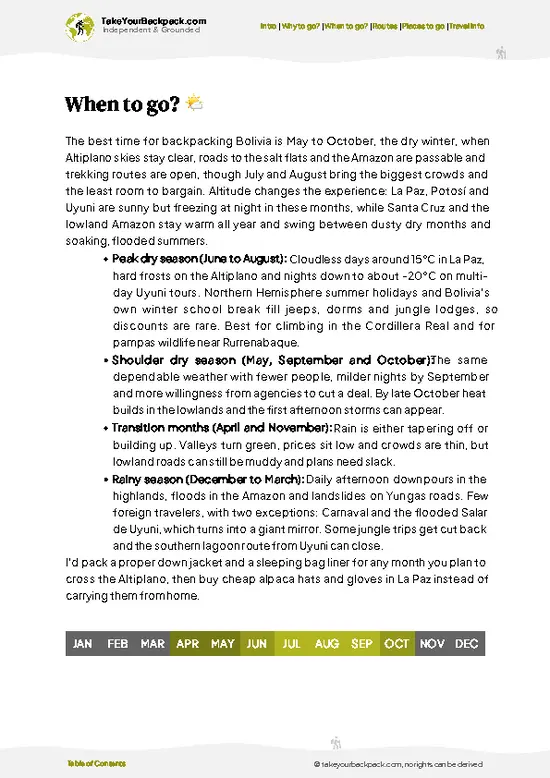
  • Weather: Caranavi sits in a tropical valley, so expect heavy rains from November to March. Trails turn to mud baths, and rivers swell, making trekking tricky. The dry season, May to September, offers clearer skies and firmer ground, perfect for hiking.

  • Temperature: Temperatures hover between 18-28°C (64-82°F) year-round. The dry season feels cooler and less sticky, especially in the mornings and evenings, which makes early starts more comfortable.

  • Daylight Hours: Near the equator, daylight stays steady around 12 hours. Sunrise is roughly 6 AM, sunset near 6 PM, giving you a reliable window for daily adventures without sudden shifts.

  • Crowds: Caranavi is off the beaten path, so crowds are minimal year-round. However, the dry season attracts more backpackers aiming for clear trails and
read more 👉

  • Weather: Caranavi sits in a tropical valley, so expect heavy rains from November to March. Trails turn to mud baths, and rivers swell, making trekking tricky. The dry season, May to September, offers clearer skies and firmer ground, perfect for hiking.

  • Temperature: Temperatures hover between 18-28°C (64-82°F) year-round. The dry season feels cooler and less sticky, especially in the mornings and evenings, which makes early starts more comfortable.

  • Daylight Hours: Near the equator, daylight stays steady around 12 hours. Sunrise is roughly 6 AM, sunset near 6 PM, giving you a reliable window for daily adventures without sudden shifts.

  • Crowds: Caranavi is off the beaten path, so crowds are minimal year-round. However, the dry season attracts more backpackers aiming for clear trails and easier river crossings.

  • Seasonal Activities: The dry months open up opportunities for river rafting and exploring cloud forests without the constant drizzle. The rainy season is better for those chasing lush greenery and fewer tourists but comes with slippery paths.

  • Price Fluctuations: Accommodation and local transport prices dip slightly during the rainy season due to fewer visitors. The dry season sees a modest price bump but rewards you with better conditions and more reliable services.


Pro-tip: Aim for late May or early June—when the rains have eased but the landscape still holds that fresh, green vibrancy. It’s the sweet spot between comfort and wild beauty.


source: climatestotravel.comJANJanuary: fair for travelingFEBFebruary: fair for travelingMARMarch: fair for travelingAPRApril: good for travelingMAYMay: highly recommended for travelingJUNJune: excellent for travelingJULJuly: excellent for travelingAUGAugust: excellent for travelingSEPSeptember: highly recommended for travelingOCTOctober: good for travelingNOVNovember: fair for travelingDECDecember: fair for traveling
when-to-go

✈️ The backpacker research shortcutBolivia Travel Guide

An offline-friendly backpacking guide with optimized travel routes, ranked highlights, transport advice, and the best areas to stay.
example page 0 from our offline Travel Guide for Boliviaexample page 1 from our offline Travel Guide for Boliviaexample page 2 from our offline Travel Guide for Boliviaexample page 3 from our offline Travel Guide for Boliviaexample page 4 from our offline Travel Guide for Boliviaexample page 5 from our offline Travel Guide for Boliviaexample page 6 from our offline Travel Guide for Boliviaexample page 7 from our offline Travel Guide for Bolivia
The digital guide (350 pages) contains:
82 highlights, ranked by travel appeal
Optimized 7, 14 & 21-day travel routes
Cities, national parks, landmarks, beaches
How to get around
Offline-friendly for travel without Wi-Fi
👉 Click to see all 30+ guide features

📅 Plan smarter in minutes, not weeks
Month by month travel advice
Festivals & national holidays
Budget expectations

🗺️ Go to the right places, skip the overrated ones
Honest pros & cons of destinations
Top hikes, parks & viewpoints
Lesser-known places most travelers miss
Clear “worth it vs skip it” guidance

🛏️ Travel smoothly without rookie mistakes
Best areas to stay
Transport systems explained simply
Common scams & safety advice
SIM cards, money & practical tips

🌍 Understand the country, not just visit it
Culture & traditions
52 Essential phrases & customs
Festivals worth planning around
Traveler-friendly historical context
Insights that make places more meaningful

📱 Built for real travel conditions
Fully downloadable PDF
Works completely offline
Optimized for phone use
Useful in remote areas & buses
Everything in one place
Save weeks of stressful planning
Get instant access to your full guide. 30‑day money-back guarantee.


By proceeding you agree to our terms.
Sent to your inbox immediately after payment • 100% Secure Checkout
Best Backpacking Travel Advisor 2025 tourism awardBest Backpacking
Travel Advisor
2025
What others say about Take Your Backpack Guides:
⭐⭐⭐⭐⭐
Fantastic, amazing amount of information!
⭐⭐⭐⭐⭐
My goodness this is amazing, it's what I've been looking for hats off too you!
⭐⭐⭐⭐⭐
I think this is absolutely BRILLIANT
⭐⭐⭐⭐
Very complete and informative. It's still missing places, but I gotta to commend you
⭐⭐⭐⭐⭐
This is truly amazing, thank you, can't wait to explore it with my kids!
⭐⭐⭐⭐⭐
Awesome resource, thank you!
⭐⭐⭐⭐⭐
This is amazing! Can't wait to explore the ones I haven't seen
⭐⭐⭐⭐
I love this! Well done, great idea.
⭐⭐⭐⭐⭐
Thanks for taking the time to make this gem!
⭐⭐⭐⭐⭐
This might be the best website I've ever seen.
⭐⭐⭐⭐⭐
Congratulations, and thank you so much for your work; it's incredibly valuable.
⭐⭐⭐⭐
In all seriousness I think you did a great job pointing out the important spots
⭐⭐⭐⭐⭐
10/10 very good
⭐⭐⭐⭐⭐
As someone who's only just starting to visit regularly this is awesome, thank you.
⭐⭐⭐⭐
Thank you very much! I'm going to visit my dad, it's going to be very useful!
⭐⭐⭐⭐⭐
This is really cool! We'll be travelling for the first time and this definitely come in handy.
⭐⭐⭐⭐⭐
You are now our minister of culture, congratulations 👨‍💼
⭐⭐⭐⭐⭐
Just wanted to tell you that this is a pearl! Going to follow your recommendations.
⭐⭐⭐⭐⭐
This is so cool. I'll definitely be using the resource for my travels soon.
⭐⭐⭐⭐⭐
This is very impressive! Good work.
⭐⭐⭐⭐⭐
This is an amazing and informative site. Very well done!

🛏️ Where to stay?Best areas to stay in Bolivia

Caranavi’s heart for backpackers pulses strongest around its central plaza and the nearby streets that fan out from it. This area is the practical choice because it’s where the town’s social life happens—vendors hawk fresh fruit, locals gather for afternoon mate, and the air carries the scent of earth and rain from the surrounding jungle. Staying here means you’re never far from the pulse of daily life, which is crucial when you want to blend in rather than just pass through.

Hostels cluster in this zone, offering budget beds and a chance to meet fellow travelers swapping stories over shared … read more 👉
Caranavi’s heart for backpackers pulses strongest around its central plaza and the nearby streets that fan out from it. This area is the practical choice because it’s where the town’s social life happens—vendors hawk fresh fruit, locals gather for afternoon mate, and the air carries the scent of earth and rain from the surrounding jungle. Staying here means you’re never far from the pulse of daily life, which is crucial when you want to blend in rather than just pass through.

Hostels cluster in this zone, offering budget beds and a chance to meet fellow travelers swapping stories over shared meals or cold beers. The streets are lively but manageable, with enough foot traffic to feel safe even after dusk. Compared to the quieter, more residential outskirts, this central hub keeps you connected and grounded. You’ll wake up to the chatter of market stalls and the distant hum of motorcycles, a soundtrack that reminds you you’re somewhere real, not just a waypoint.

🚌 Getting aroundMoving around without the hassle

Caranavi moves at its own rhythm—less a clock-driven town and more a place where the day unfolds with the scent of damp earth and the chatter of market vendors. The light filters through thick jungle canopy, dappling the streets in shifting patterns that make punctuality feel like a suggestion, not a rule. Here, transit isn’t about strict timetables but about catching the right moment between the hum of engines and the calls of drivers hustling for passengers. The town’s pulse is organic, a blend of local intuition and the practical need to connect with the wider world beyond the mountains.


  • Walking: The best way to soak in Caranavi’s atmosphere, especially around the central market and riverfront. Distances are short, and the uneven, often muddy streets demand sturdy shoes. Walking lets
read more 👉
Caranavi moves at its own rhythm—less a clock-driven town and more a place where the day unfolds with the scent of damp earth and the chatter of market vendors. The light filters through thick jungle canopy, dappling the streets in shifting patterns that make punctuality feel like a suggestion, not a rule. Here, transit isn’t about strict timetables but about catching the right moment between the hum of engines and the calls of drivers hustling for passengers. The town’s pulse is organic, a blend of local intuition and the practical need to connect with the wider world beyond the mountains.


  • Walking: The best way to soak in Caranavi’s atmosphere, especially around the central market and riverfront. Distances are short, and the uneven, often muddy streets demand sturdy shoes. Walking lets you catch the smells of fresh fruit stalls and hear the local gossip—plus, it’s free.

  • Minibuses (Micros): These are the workhorses of Caranavi’s transit, running roughly from 6:30 AM to 6 PM. Fares hover around 3-5 BOB (Bolivianos), making them the cheapest way to reach nearby villages or the bus terminal. Expect crowded, bumpy rides with open windows letting in jungle humidity and dust.

  • Shared Taxis: Faster and more flexible than micros, shared taxis leave when full, usually between 7 AM and 5 PM. They cost about 10-15 BOB for trips to key spots like the bus terminal or nearby towns. Comfort varies—some have air conditioning, but most are basic, with the windows down and the engine humming loudly.

  • Intercity Buses: For longer hauls, buses to La Paz or Coroico depart from the main terminal. They start early, around 5 AM, and run until mid-afternoon. Tickets range from 30 to 50 BOB depending on the destination and bus quality. These rides can be slow and winding but offer a chance to watch the jungle give way to highland vistas.

👛 Costs (as of 27 February 2026)Travel costs and budget guide for Caranavi

Backpacking in Caranavi, Bolivia, offers a raw, authentic experience where your money stretches further than in the big cities, but the trade-off is a slower pace and simpler comforts.
  • Dorm Accommodation: Expect to pay around $5 to $10 USD per night for a bed in a basic hostel dorm. These places are no-frills, often with shared bathrooms and limited hot water, but they put you right in the heart of town where the air smells of fresh earth and tropical plants.
  • Meals: Local eateries serve hearty plates for $2 to $5 USD. Think rice, beans, fresh vegetables, and sometimes chicken or fish. Street food snacks like salteñas or empanadas hover around $0.50 to $1.50. The flavors are straightforward but satisfying, grounding you in the local rhythm.
  • Local Transport: Minibuses and shared taxis are
read more 👉
Backpacking in Caranavi, Bolivia, offers a raw, authentic experience where your money stretches further than in the big cities, but the trade-off is a slower pace and simpler comforts.
  • Dorm Accommodation: Expect to pay around $5 to $10 USD per night for a bed in a basic hostel dorm. These places are no-frills, often with shared bathrooms and limited hot water, but they put you right in the heart of town where the air smells of fresh earth and tropical plants.
  • Meals: Local eateries serve hearty plates for $2 to $5 USD. Think rice, beans, fresh vegetables, and sometimes chicken or fish. Street food snacks like salteñas or empanadas hover around $0.50 to $1.50. The flavors are straightforward but satisfying, grounding you in the local rhythm.
  • Local Transport: Minibuses and shared taxis are the norm, costing about $0.50 to $1 per trip within town or to nearby villages. The rides are bumpy and slow, but they offer a window into daily life, with the scent of dust and diesel mixing in the air.
  • Basic Activities/Entry Fees: Most natural attractions around Caranavi don’t have formal entry fees, but guided hikes or tours can run $10 to $20 if you want a local’s insight. The trails are lush and humid, with the sound of birds and insects filling the air, making the modest cost feel like a ticket to a secret world.
  • Miscellaneous Expenses: Budget $1 to $3 for bottled water, snacks, or small essentials. Keep in mind that electricity can be spotty, so charging devices might require a small fee at hostels or cafes.

All told, you’re looking at roughly $10 to $25 USD per day to cover the basics in Caranavi. It’s a place where the simplicity of life is part of the charm, and every dollar saved on accommodation or food means more freedom to explore the wild surroundings.
⚠️ Prices can change and everyone travels differently, so take this as a rough guide. Hope it helps you plan your adventure!

🚌 Day tripsWhere to go beyond the main area

Caranavi is a backpacker’s dream base for exploring Bolivia’s lush landscapes and vibrant culture. The town itself buzzes with life, the air rich with the scent of fresh coffee and the sound of local chatter. Here are some day trips that will elevate your experience.

Coffee Farm Tour
Dive into the world of Bolivian coffee on a tour of nearby coffee farms. The journey takes about 30 minutes by local transport. You’ll witness the entire process, from bean to brew, and savor tastings that will redefine your morning cup. Expect to spend around $10 for the tour, which often includes samples. The best time to visit is during the harvest season, from May to September. A common mistake? Skipping the chance to chat with the farmers; their stories add depth to the experience.


Yungas Road Adventureread more 👉
Caranavi is a backpacker’s dream base for exploring Bolivia’s lush landscapes and vibrant culture. The town itself buzzes with life, the air rich with the scent of fresh coffee and the sound of local chatter. Here are some day trips that will elevate your experience.

Coffee Farm Tour
Dive into the world of Bolivian coffee on a tour of nearby coffee farms. The journey takes about 30 minutes by local transport. You’ll witness the entire process, from bean to brew, and savor tastings that will redefine your morning cup. Expect to spend around $10 for the tour, which often includes samples. The best time to visit is during the harvest season, from May to September. A common mistake? Skipping the chance to chat with the farmers; their stories add depth to the experience.


Yungas Road Adventure
For adrenaline junkies, a day trip to the infamous Yungas Road is a must. It’s about an hour’s drive from Caranavi. The thrill of biking down this winding path, surrounded by misty mountains and dense jungle, is unmatched. Budget around $25 for bike rental and transport. The dry season, from May to October, offers the best conditions. Many first-timers underestimate the chill at higher altitudes; pack layers to stay comfortable.
👉 Explore Yungas Road

Choro Trek
The Choro Trek is a fantastic way to experience Bolivia’s natural beauty without committing to a multi-day hike. Start early; it’s a 1.5-hour drive to the trailhead. You can complete a section of this historic route in a day, soaking in views of waterfalls and lush valleys. Expect to spend around $15 for transport and snacks. The trek is best from April to October. A common rookie mistake is not bringing enough water; hydration is key in the altitude.


Local Market Exploration
Immerse yourself in local culture with a visit to Caranavi’s bustling market. Just a short walk from the town center, you can spend hours wandering through stalls filled with colorful produce, textiles, and handmade crafts. Bring about $5 for snacks and small purchases. The market is vibrant on Saturdays, making it the ideal day to visit. Many newcomers overlook the chance to try local street food; don’t miss the salteñas!
Want to know what more Bolivia offers?
The Bolivia Travel Guide describes 82 highlights, from cities to national parks, from beaches to hikes

Get the Travel Guide -

🛡️ SafetyStaying Safe: What Travelers Should Know

Caranavi is generally safe, but a few practical tips can enhance your experience. Stay aware in crowded markets; pickpockets can be sneaky. If you’re solo, avoid wandering too far after dark. The streets can feel quiet, and it’s best to stick to well-lit areas.

Watch for common scams, like inflated taxi fares; always agree on a price beforehand. Locals are friendly, but a firm, confident demeanor goes a long way. Carry your belongings close, and keep your phone out of sight when not in use. This approach helps you blend in and enjoy the vibrant atmosphere without unnecessary stress.

Other Bolivian towns near Caranavi

Explore more nearby:

  • Coroico—Yungas retreat, subtropical hills, panoramic roads| 44 km away
  • Viacha—altiplano town, industrial plants, Aymara culture| 120 km away
  • Achacachi—Aymara heartland, Lake Titicaca access, rural market| 123 km away

💡 Not sure where to go next?
Create a personalized itinerary for Bolivia including Caranavi and the places that fit your trip.

Generate my itinerary

👉 Discover all towns

Or checkout all Bolivia has to offer (think cities, towns, villages, national parks, hikes, beaches, festivals)
Country photo of Bolivia

We 💚 feedbackKey takeaways before you go

Caranavi’s lush landscapes and rich coffee culture are a sensory delight. The aroma of fresh beans fills the air, inviting you to explore local farms. But be ready for the humidity; it can be stifling. Embrace it. The sweat is worth it for the vibrant experiences waiting around every corner.

✈️ When did I visit Bolivia?
Bolivia I visited during my half year trip through South and Central America back in 2003

✍️ Help improve this page!
The information on this page is based on my own backpacking experience in Bolivia, supplemented with up-to-date research and feedback from other travelers. Travel details can change, so if you notice anything outdated or incomplete, feel free to let me know.


🙋‍♂️ Give feedback

👋 Meet the founderWho’s Behind Take Your Backpack?

Johan, backpacker and founder of TakeYourBackpackHi, I’m Johan (Netherlands 🇳🇱), the creator of TakeYourBackpack. Over the past decade, I’ve backpacked through 80+ countries across six continents, gaining extensive experience with independent travel, long-term trips, and overland routes.

This site is built on a combination of firsthand travel experience and carefully curated insights from other backpackers. Many guides are based on places I’ve personally visited, while others bring together tips, observations, and practical advice shared by trusted travelers I’ve met along the way.

The goal is to provide realistic, experience-driven guidance — not generic itineraries — so you can explore destinations with better context, clearer expectations, and more confidence.

Get full Bolivia guide •
Instant download • 82 highlights • Full Offline guide