×

Bolivia🇧🇴 | townsViachaaltiplano town, industrial plants, Aymara culture | things to do and best time to go

Explore LlallaguaExplore Quime

Backpacking in Viacha
👍 Recommendedtown ranked #10
By Johan Kruseman 🇳🇱 | Updated June 9, 2026

Viacha is not for anyone chasing bucket-list sights, party hostels, or easy Instagram wins. It’s a working-class city on the Altiplano, just southwest of La Paz, more famous for its cement factory than its skyline. That’s exactly why it’s useful for backpackers: you see everyday Bolivia without the tourist markup or performance. The vibe is gritty, practical, and a bit grey, but the central plaza, local markets, and small churches give you a grounded pause between La Paz chaos and Lake Titicaca. It’s cheap, safe by daylight if you use normal big-city street sense, and almost devoid of foreign travelers, which means fewer hostel hangouts but more real conversations over market lunches and crowded minibuses.

Discover everything you want to know in the 📖 Bolivia Travel Guide.


Get your Bolivia guide
82 ranked highlights, routes & tips, works offline (350 pages)
Loading the map 🌍
CLICK TO FILTER
cities
towns
landmarks
national parks
hikes
beaches
attractions
festivals
regions
SHOW COUNTRY’S BESTSHOW ALL

✨ Why go?
Ranked #10 town in Bolivia
The unique appeal for travelers

Viacha is a strategic stop for backpackers weaving through Bolivia. It offers a basecamp value that’s hard to beat. You’ll find affordable hostels that cater to the budget-conscious, making it easy to rest up before your next adventure. The walkability of the city means you can explore local markets and street food without breaking a sweat. Speaking of food, the local cuisine is both delicious and cheap, perfect for fueling your travels.

Nightlife here is low-key but lively, with a few bars where you can unwind and meet fellow travelers. Plus, Viacha’s proximity to major transport routes makes onward travel a breeze, whether you’re heading to La Paz or beyond. It’s not just a pit stop; it’s a place to recharge and connect, making it a worthy addition to your itinerary or a quick, satisfying break on your journey.
Want to include Viacha in your Bolivia route?
Create a personalized Bolivia itinerary that includes Viacha and the places that fit your trip — based on your travel style, budget, and available time. Get your route in seconds.

Generate my trip

💡 HighlightsThe experiences that define the visit

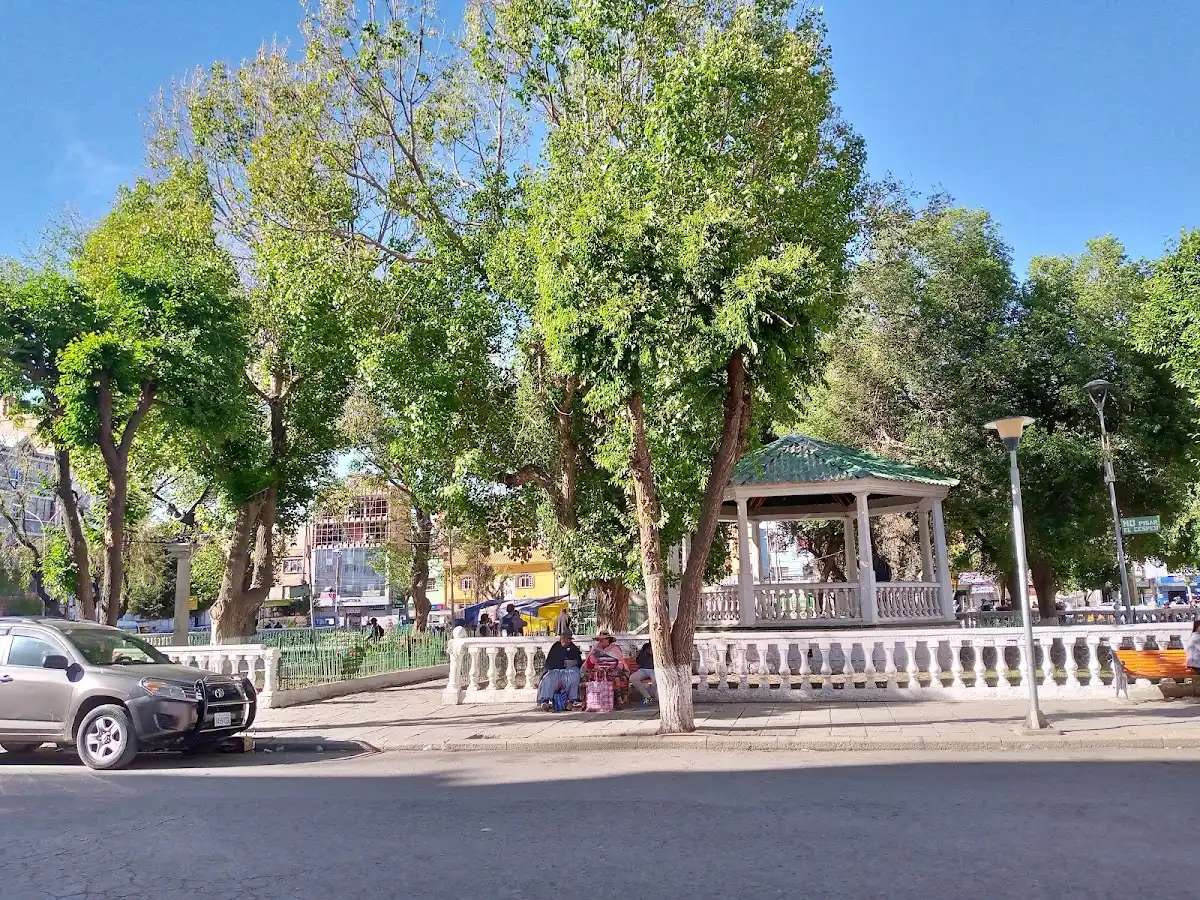
  1. Plaza Principal de Viacha — The town’s social heartbeat: a compact plaza where locals meet, children play, vendors set up, and you can read the pulse of everyday life in a few minutes. Great for people-watching and a morning coffee with bread from a nearby horno.
  2. Mercado Municipal (Central Market) — A lively maze of fresh produce, dried llama meat, spices and household goods. The smells, colors and bargaining are authentic; it’s where you learn what people actually eat and how they shop here.
  3. Iglesia Matriz / Parroquia local — The main parish church near the plaza. Beyond religious functions it’s a community anchor: festivals, processions and local devotion give a real glimpse into Viacha’s cultural rhythms.
  4. Estación Ferroviaria de Viacha (old train area) — A working/abandoned rail area
read more 👉
  1. Plaza Principal de Viacha — The town’s social heartbeat: a compact plaza where locals meet, children play, vendors set up, and you can read the pulse of everyday life in a few minutes. Great for people-watching and a morning coffee with bread from a nearby horno.
  2. Mercado Municipal (Central Market) — A lively maze of fresh produce, dried llama meat, spices and household goods. The smells, colors and bargaining are authentic; it’s where you learn what people actually eat and how they shop here.
  3. Iglesia Matriz / Parroquia local — The main parish church near the plaza. Beyond religious functions it’s a community anchor: festivals, processions and local devotion give a real glimpse into Viacha’s cultural rhythms.
  4. Estación Ferroviaria de Viacha (old train area) — A working/abandoned rail area that tells the story of regional transport and industry. Walk the tracks, see old rolling stock and watch local rail activity — gritty, photogenic, and distinctly part of Viacha’s identity.
  5. Feria Dominical / Mercado de pulgas — The weekend street fair where you’ll find secondhand gear, household items, local clothes and cheap eats. It’s low-key tourist-friendly and perfect for picking up odd souvenirs and practicing haggling.
  6. Parque Municipal — Small green space where families gather, kids use the playground and elders chat on benches. Not a grand park, but useful for a short rest, a casual picnic and seeing neighborhood life away from the market bustle.
  7. Feria Ganadera (livestock market) — Held on specific market days just inside town limits: sellers bring lambs, cattle and chickens. It’s raw, unfiltered rural commerce and a good place to witness traditional buying, animal care and local agricultural economy.
  8. Talleres de artesanía y textiles — Small workshops and family-run stalls making traditional weavings and textiles. Less polished than tourist boutiques, these places let you watch the weaving process and buy directly from makers at fair prices.
  9. Cementerio Municipal — A surprisingly interesting cultural spot: local burial architecture, painted graves, and Día de los Muertos-style offerings show beliefs, community ties and artisanship you won’t see in guidebooks.
  10. Casa de la Cultura / Centro Comunitario — Modest cultural centers where local events, folk-music rehearsals and school exhibitions happen. Visiting during a performance or exhibition gives context to local traditions and youth culture.
If you want to expand beyond town for a day trip: Tiwanaku (the archaeological site), the shores and communities around Lake Titicaca (e.g., Copacabana), and the city of La Paz are all nearby and very visitable — Tiwanaku is my personal favorite for a half-day cultural deep dive.
Spotted a mistake or missing something? Contact us.

Things to do near Viacha

Ratings based on Tripadvisor reviews. When you book through this link, you support our work at no extra cost to you.

🏘️ NeighborhoodsUnderstanding the local layout

Viacha, a bustling town near La Paz, offers a unique blend of local culture and accessibility for backpackers. Here’s how its neighborhoods stack up:

Centro: This is the heartbeat of Viacha. It’s vibrant and walkable, with local markets and street food galore. Costs are low, making it ideal for budget travelers. The nightlife is modest but lively, with a few bars where you can mingle with locals. Perfect for short stays, as you can easily explore on foot.

Zona Norte: A quieter area, great for those seeking a more relaxed vibe. It’s less touristy, with charming cafes and parks. While transport options are decent, you might need to rely on taxis for late-night returns. This neighborhood suits longer stays, especially if you want to immerse yourself in local life.

Zona Sur: Known for its residential … read more 👉
Viacha, a bustling town near La Paz, offers a unique blend of local culture and accessibility for backpackers. Here’s how its neighborhoods stack up:

Centro: This is the heartbeat of Viacha. It’s vibrant and walkable, with local markets and street food galore. Costs are low, making it ideal for budget travelers. The nightlife is modest but lively, with a few bars where you can mingle with locals. Perfect for short stays, as you can easily explore on foot.

Zona Norte: A quieter area, great for those seeking a more relaxed vibe. It’s less touristy, with charming cafes and parks. While transport options are decent, you might need to rely on taxis for late-night returns. This neighborhood suits longer stays, especially if you want to immerse yourself in local life.

Zona Sur: Known for its residential feel, this area is a bit pricier but offers a taste of suburban Bolivia. It’s less walkable, so public transport is essential. The nightlife is subdued, making it ideal for those who prefer peace over parties. Great for longer stays if you want a home base away from the hustle.

Choose wisely, and you’ll find the right balance of time, money, and comfort in Viacha.

⌛️ 1 daySeeing the highlights in 24 hours

Viacha, Bolivia, is a vibrant hub just a stone’s throw from La Paz, often overlooked by travelers. It’s a place where the pulse of local life beats strong, and you can truly immerse yourself in Bolivian culture without the touristy frills.

Start your morning at the bustling Mercado Central. The aroma of fresh produce and sizzling street food fills the air. Grab a hearty breakfast of salteñas—savory pastries bursting with meat and spices. As you wander through the stalls, engage with the vendors; their stories add layers to your experience.

In the afternoon, head to the Plaza 10 de Noviembre. This central square is a perfect spot to people-watch and soak in the local vibe. Nearby, the Iglesia de San Juan Bautista offers a glimpse into the city’s history with its charming colonial architecture. … read more 👉
Viacha, Bolivia, is a vibrant hub just a stone’s throw from La Paz, often overlooked by travelers. It’s a place where the pulse of local life beats strong, and you can truly immerse yourself in Bolivian culture without the touristy frills.

Start your morning at the bustling Mercado Central. The aroma of fresh produce and sizzling street food fills the air. Grab a hearty breakfast of salteñas—savory pastries bursting with meat and spices. As you wander through the stalls, engage with the vendors; their stories add layers to your experience.

In the afternoon, head to the Plaza 10 de Noviembre. This central square is a perfect spot to people-watch and soak in the local vibe. Nearby, the Iglesia de San Juan Bautista offers a glimpse into the city’s history with its charming colonial architecture. For something off the beaten path, stroll through the neighborhood of Villa Adela. Here, you’ll find colorful murals and local artisans at work, a refreshing contrast to the more commercial areas.

As evening falls, make your way to a local eatery like El Fogón. The ambiance is cozy, and the traditional dishes are a must-try. Enjoy a plate of pique a lo macho, a hearty mix of beef, sausage, and potatoes, while chatting with locals who might share their favorite spots in the city.

By the end of the day, you’ll have tasted the essence of Viacha—its flavors, its people, and its stories—making your trip not just a visit, but a memorable experience.
Turn your Viacha visit into an Bolivia adventure
Build a complete Bolivia route with Viacha, hidden gems, must-see destinations, and realistic travel times included.

Generate my trip

🌤️ When to go?Best time to visit Viacha


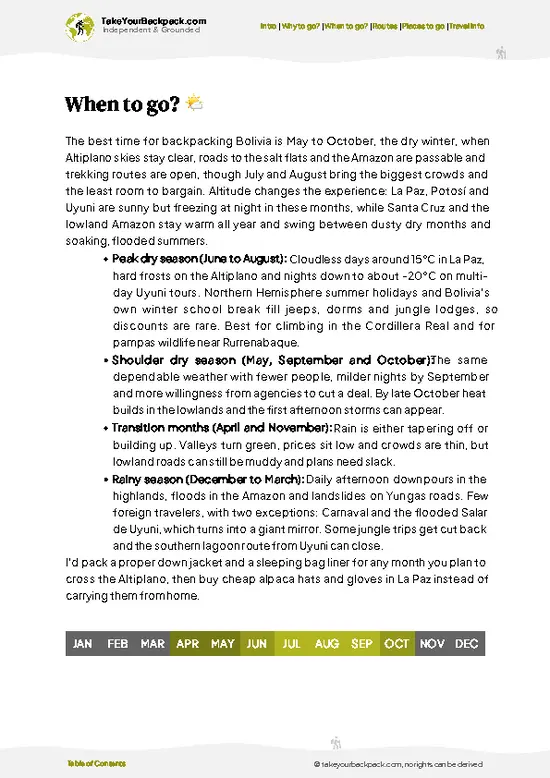
  • Topic: Weather – Viacha sits high on the Altiplano, so expect a dry season from May to October with crisp, clear skies and minimal rain. The wet season, November through March, brings frequent afternoon showers that can turn trails slick and muddy.

  • Topic: Temperature – Daytime highs hover around 15-20°C (59-68°F) during dry months, dropping sharply at night to near freezing. Wet season days are slightly warmer but cloudier, with nights still cold.

  • Topic: Daylight Hours – Near the equator, daylight varies little year-round, roughly 11 to 13 hours daily, so no drastic shifts to plan around.

  • Topic: Crowds – Peak backpacker season aligns with the dry months, especially June to August, when trails and local spots fill up. The wet season sees fewer visitors, offering solitude but less predictable
read more 👉

  • Topic: Weather – Viacha sits high on the Altiplano, so expect a dry season from May to October with crisp, clear skies and minimal rain. The wet season, November through March, brings frequent afternoon showers that can turn trails slick and muddy.

  • Topic: Temperature – Daytime highs hover around 15-20°C (59-68°F) during dry months, dropping sharply at night to near freezing. Wet season days are slightly warmer but cloudier, with nights still cold.

  • Topic: Daylight Hours – Near the equator, daylight varies little year-round, roughly 11 to 13 hours daily, so no drastic shifts to plan around.

  • Topic: Crowds – Peak backpacker season aligns with the dry months, especially June to August, when trails and local spots fill up. The wet season sees fewer visitors, offering solitude but less predictable conditions.

  • Topic: Seasonal Activities – Dry season is prime for trekking and cultural festivals, while wet months favor indoor experiences and lower prices.

  • Topic: Price Fluctuations – Accommodation and tours spike in the dry season due to demand; the wet season offers bargains but at the cost of comfort and accessibility.


Pro-tip: Aim for shoulder months like April or October to balance decent weather, manageable crowds, and better prices—smart timing turns a good trip into a great one.


source: climatestotravel.comJANJanuary: fair for travelingFEBFebruary: fair for travelingMARMarch: fair for travelingAPRApril: highly recommended for travelingMAYMay: highly recommended for travelingJUNJune: excellent for travelingJULJuly: excellent for travelingAUGAugust: excellent for travelingSEPSeptember: highly recommended for travelingOCTOctober: highly recommended for travelingNOVNovember: fair for travelingDECDecember: fair for traveling
bolivia-city-viacha
© Google |

✈️ The backpacker research shortcutBolivia Travel Guide

An offline-friendly backpacking guide with optimized travel routes, ranked highlights, transport advice, and the best areas to stay.
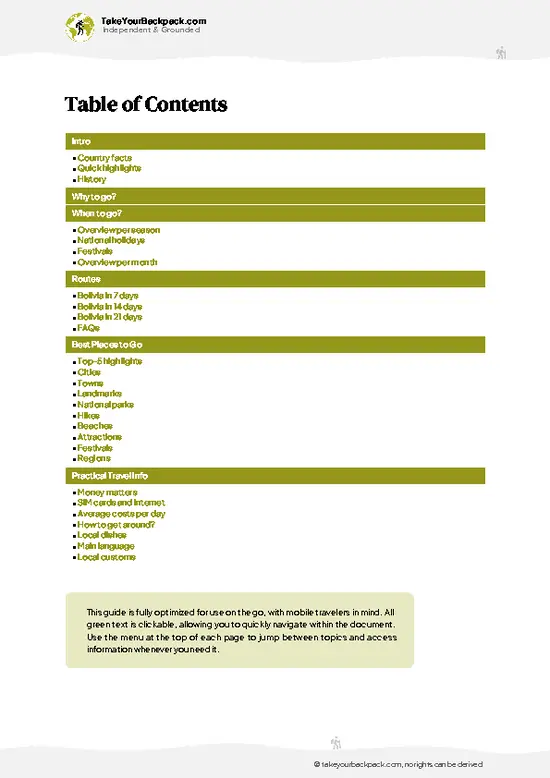
example page 0 from our offline Travel Guide for Bolivia
example page 1 from our offline Travel Guide for Bolivia
example page 2 from our offline Travel Guide for Bolivia
example page 3 from our offline Travel Guide for Bolivia
example page 4 from our offline Travel Guide for Bolivia
example page 5 from our offline Travel Guide for Bolivia
example page 6 from our offline Travel Guide for Bolivia
example page 7 from our offline Travel Guide for Bolivia
The digital guide (350 pages) contains:
82 highlights, ranked by travel appeal
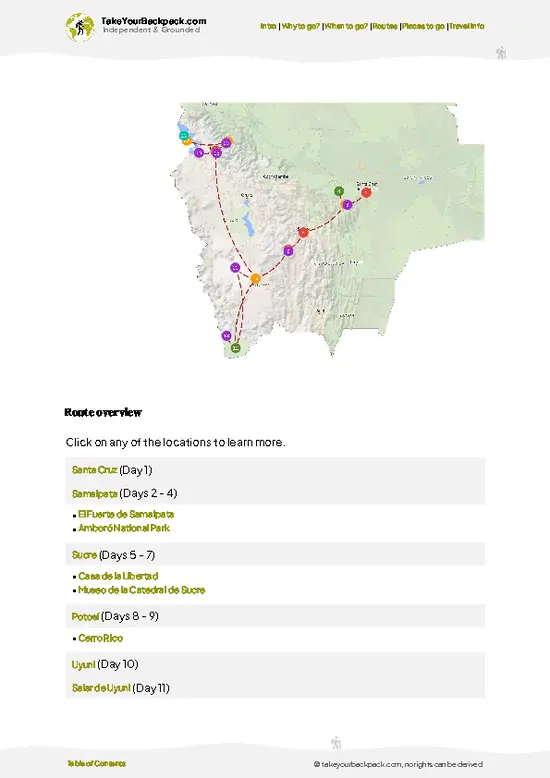
Optimized 7, 14 & 21-day travel routes
Cities, national parks, landmarks, beaches
How to get around
Offline-friendly for travel without Wi-Fi
👉 Click to see all 30+ guide features

📅 Plan smarter in minutes, not weeks
Month by month travel advice
Festivals & national holidays
Budget expectations

🗺️ Go to the right places, skip the overrated ones
Honest pros & cons of destinations
Top hikes, parks & viewpoints
Lesser-known places most travelers miss
Clear “worth it vs skip it” guidance

🛏️ Travel smoothly without rookie mistakes
Best areas to stay
Transport systems explained simply
Common scams & safety advice
SIM cards, money & practical tips

🌍 Understand the country, not just visit it
Culture & traditions
52 Essential phrases & customs
Festivals worth planning around
Traveler-friendly historical context
Insights that make places more meaningful

📱 Built for real travel conditions
Fully downloadable PDF
Works completely offline
Optimized for phone use
Useful in remote areas & buses
Everything in one place
Save weeks of stressful planning
Get instant access to your full guide. 30‑day money-back guarantee.


By proceeding you agree to our terms.
Sent to your inbox immediately after payment • 100% Secure Checkout
Best Backpacking Travel Advisor 2025 tourism awardBest Backpacking
Travel Advisor
2025
What others say about Take Your Backpack Guides:
⭐⭐⭐⭐⭐
Fantastic, amazing amount of information!
⭐⭐⭐⭐⭐
My goodness this is amazing, it's what I've been looking for hats off too you!
⭐⭐⭐⭐⭐
I think this is absolutely BRILLIANT
⭐⭐⭐⭐
Very complete and informative. It's still missing places, but I gotta to commend you
⭐⭐⭐⭐⭐
This is truly amazing, thank you, can't wait to explore it with my kids!
⭐⭐⭐⭐⭐
Awesome resource, thank you!
⭐⭐⭐⭐⭐
This is amazing! Can't wait to explore the ones I haven't seen
⭐⭐⭐⭐
I love this! Well done, great idea.
⭐⭐⭐⭐⭐
Thanks for taking the time to make this gem!
⭐⭐⭐⭐⭐
This might be the best website I've ever seen.
⭐⭐⭐⭐⭐
Congratulations, and thank you so much for your work; it's incredibly valuable.
⭐⭐⭐⭐
In all seriousness I think you did a great job pointing out the important spots
⭐⭐⭐⭐⭐
10/10 very good
⭐⭐⭐⭐⭐
As someone who's only just starting to visit regularly this is awesome, thank you.
⭐⭐⭐⭐
Thank you very much! I'm going to visit my dad, it's going to be very useful!
⭐⭐⭐⭐⭐
This is really cool! We'll be travelling for the first time and this definitely come in handy.
⭐⭐⭐⭐⭐
You are now our minister of culture, congratulations 👨‍💼
⭐⭐⭐⭐⭐
Just wanted to tell you that this is a pearl! Going to follow your recommendations.
⭐⭐⭐⭐⭐
This is so cool. I'll definitely be using the resource for my travels soon.
⭐⭐⭐⭐⭐
This is very impressive! Good work.
⭐⭐⭐⭐⭐
This is an amazing and informative site. Very well done!

🛏️ Where to stay?How to pick the right area

Viacha isn’t a sprawling metropolis with distinct backpacker districts like La Paz, but it does have pockets where budget travelers naturally gravitate. The central area around the main plaza is your best bet. It’s where you’ll find a handful of hostels catering to solo travelers and small groups, offering a straightforward, no-frills base. Safety here is decent during the day, thanks to steady local foot traffic and market activity, but like many smaller Bolivian towns, you’ll want to keep your wits about you after dark.

Compared to the quieter residential neighborhoods on the outskirts, the … read more 👉
Viacha isn’t a sprawling metropolis with distinct backpacker districts like La Paz, but it does have pockets where budget travelers naturally gravitate. The central area around the main plaza is your best bet. It’s where you’ll find a handful of hostels catering to solo travelers and small groups, offering a straightforward, no-frills base. Safety here is decent during the day, thanks to steady local foot traffic and market activity, but like many smaller Bolivian towns, you’ll want to keep your wits about you after dark.

Compared to the quieter residential neighborhoods on the outskirts, the central zone buzzes with social energy—street vendors, local eateries, and a few bars where you can meet other travelers without the tourist overload. It’s not about luxury or comfort; it’s about immersion and connection. If you’re chasing a place that’s both wallet-friendly and socially engaging, this core area nails it. Venturing beyond this risks isolation or sketchier spots with fewer traveler amenities. In Viacha, the center is where the backpacker pulse beats strongest.

🚌 Getting aroundMoving around without the hassle

Viacha moves at its own rhythm—neither a frantic rush nor a laid-back drift. It’s a city where schedules exist but bend to local habits, where the clock is a guideline, not a law. You’ll find moments of sharp punctuality, especially around official hubs, but more often, the flow is dictated by intuition and the ebb and pull of daily life. This blend means your transit choices are a dance between patience, speed, and your wallet’s limits. Understanding this trade-off map is your ticket to mastering Viacha’s pulse without getting caught in its quirks.


  • Walking: The ultimate budget option. Viacha’s compact center makes walking not just feasible but often faster than waiting for transport. No cost, full control over your pace, and the chance to soak in street-level details. Best for trips under
read more 👉
Viacha moves at its own rhythm—neither a frantic rush nor a laid-back drift. It’s a city where schedules exist but bend to local habits, where the clock is a guideline, not a law. You’ll find moments of sharp punctuality, especially around official hubs, but more often, the flow is dictated by intuition and the ebb and pull of daily life. This blend means your transit choices are a dance between patience, speed, and your wallet’s limits. Understanding this trade-off map is your ticket to mastering Viacha’s pulse without getting caught in its quirks.


  • Walking: The ultimate budget option. Viacha’s compact center makes walking not just feasible but often faster than waiting for transport. No cost, full control over your pace, and the chance to soak in street-level details. Best for trips under 2 kilometers or when you want to explore neighborhoods intimately.


  • Minibuses (Micros): The backbone of local transit. Runs roughly from 6:00 AM to 9:00 PM, fares hover around 1-2 Bs (Bolivianos). They’re cheap and frequent but expect crowding and unpredictable stops. Speed varies with traffic and passenger demand, so comfort is minimal—think standing room and open windows.


  • Shared Taxis: A step up in comfort and speed, shared taxis operate on flexible routes but often stick to main roads. They cost about 3-5 Bs, run from early morning until late evening, and offer a quicker, less cramped ride than micros. You sacrifice a bit of budget for a smoother, more direct trip.


  • Motorcycle Taxis: For the bold and time-pressed, these dart through traffic with agility. Prices start around 5 Bs, negotiable depending on distance. They’re fast and can reach places inaccessible to larger vehicles but come with safety trade-offs and minimal comfort—helmet optional, adrenaline guaranteed.


  • Intercity Buses: If your journey extends beyond Viacha, these buses connect to El Alto and La Paz. Departures are somewhat regular from early morning to early evening, fares vary by destination but remain budget-friendly. They balance comfort and speed, with reserved seating but occasional delays due to road conditions.

👛 Costs (as of 1 March 2026)Typical daily expenses

Backpacking in Viacha, Bolivia, is a study in balancing tight budgets with authentic local experiences. Here’s how your daily expenses typically break down:
  • Dorm Accommodation (High Season): Expect to pay around $5 to $8 per night. High season sees a slight bump due to increased demand, but prices remain modest compared to bigger cities.
  • Dorm Accommodation (Off-Season): Prices drop to about $3 to $5 per night. Fewer travelers mean better deals and more room to negotiate.
  • Meals: Street food and local eateries dominate here. Budget around $4 to $7 daily if you stick to traditional markets and small restaurants. Meals are filling and flavorful without the tourist markup.
  • Local Transport: Viacha’s minibuses and shared taxis cost roughly $0.30 to $0.50 per ride. Budget $1 to $2 daily if you’re
read more 👉
Backpacking in Viacha, Bolivia, is a study in balancing tight budgets with authentic local experiences. Here’s how your daily expenses typically break down:
  • Dorm Accommodation (High Season): Expect to pay around $5 to $8 per night. High season sees a slight bump due to increased demand, but prices remain modest compared to bigger cities.
  • Dorm Accommodation (Off-Season): Prices drop to about $3 to $5 per night. Fewer travelers mean better deals and more room to negotiate.
  • Meals: Street food and local eateries dominate here. Budget around $4 to $7 daily if you stick to traditional markets and small restaurants. Meals are filling and flavorful without the tourist markup.
  • Local Transport: Viacha’s minibuses and shared taxis cost roughly $0.30 to $0.50 per ride. Budget $1 to $2 daily if you’re hopping around town frequently.
  • City Transport Pass: Not commonly used in Viacha; individual rides are cheap enough that a pass isn’t necessary or widely available.
  • Basic Activities/Entry Fees: Most local attractions are free or cost under $2. Budget $1 to $3 daily if you plan to visit markets, small museums, or cultural sites.
  • Miscellaneous Expenses: Include bottled water, snacks, or occasional treats. Around $1 to $3 daily keeps you covered without splurging.

All told, a realistic daily budget for backpacking in Viacha ranges from about $10 on a shoestring to $20 if you want a bit more comfort or flexibility. This is a place where your money stretches far, letting you focus on the experience rather than the expense.
⚠️ Prices can change and everyone travels differently, so take this as a rough guide. Hope it helps you plan your adventure!

🚌 Day tripsEasy escapes and nearby places

Viacha, Bolivia, is a strategic launchpad for day trips that blend culture, nature, and adventure. With its proximity to various attractions, you can easily explore the best of the Altiplano without breaking the bank.

Lake Titicaca
A classic day trip, Lake Titicaca is about a two-hour bus ride from Viacha. This massive lake, the highest navigable body of water in the world, offers stunning views and a chance to visit the floating islands of Uros. Expect to spend around $15 for transport and a boat tour. The best time to go is during the dry season, from May to October, when the skies are clear. First-timers often underestimate the chill; pack layers to stay comfortable on the water.
👉 Explore Lake Titicaca

Tiwanaku Ruins
Just an hour away, the ancient ruins of Tiwanaku are a must-see … read more 👉
Viacha, Bolivia, is a strategic launchpad for day trips that blend culture, nature, and adventure. With its proximity to various attractions, you can easily explore the best of the Altiplano without breaking the bank.

Lake Titicaca
A classic day trip, Lake Titicaca is about a two-hour bus ride from Viacha. This massive lake, the highest navigable body of water in the world, offers stunning views and a chance to visit the floating islands of Uros. Expect to spend around $15 for transport and a boat tour. The best time to go is during the dry season, from May to October, when the skies are clear. First-timers often underestimate the chill; pack layers to stay comfortable on the water.
👉 Explore Lake Titicaca

Tiwanaku Ruins
Just an hour away, the ancient ruins of Tiwanaku are a must-see for history buffs. This UNESCO World Heritage site showcases the remnants of a pre-Columbian civilization. Entry fees are around $5, and you can easily find a local bus for about $1. The best months to visit are during the dry season, but avoid weekends when local tourists flock to the site. A common mistake is to rush through; take your time to absorb the rich history and stunning stonework.


El Alto Market
For a taste of local life, head to El Alto, a bustling market just 30 minutes from Viacha. Here, you can find everything from fresh produce to handmade crafts. Bring about $10 for snacks and souvenirs. Weekdays are less crowded, making it easier to navigate. Many first-timers miss the chance to haggle; don’t be shy—it’s part of the experience!


Chacaltaya
If you’re craving adventure, Chacaltaya is your spot. Roughly a two-hour drive will take you to this former ski resort, now a hiking destination with breathtaking views of the Andes. Expect to spend around $20 for transport and entry. The best time to visit is during the dry season, but be aware of altitude sickness; acclimatize in Viacha first. Many overlook the importance of hydration—bring plenty of water!
Want to know what more Bolivia offers?
The Bolivia Travel Guide describes 82 highlights, from cities to national parks, from beaches to hikes

Get the Travel Guide -

🍲 FoodLocal Flavors for Backpackers

In Viacha, the food scene is a delightful mix of tradition and local flair. You can’t miss trying salteñas, those golden, flaky pastries filled with juicy meat or veggies. They’re a breakfast staple, bursting with flavor and a bit of spice. Pair them with a cup of api, a warm, sweet corn drink that’s perfect for chilly mornings.

Street food is where the heart of Viacha beats. Vendors line the streets with sizzling anticuchos—grilled skewers of beef heart, marinated and served with a tangy sauce. The aroma wafts through the air, drawing you in. Markets are vibrant hubs, filled with locals chatting over fresh produce and homemade snacks.

When it comes to drinking, chicha is a must-try. This fermented corn drink has deep roots in Andean culture. Don’t be surprised if you’re offered a shared … read more 👉
In Viacha, the food scene is a delightful mix of tradition and local flair. You can’t miss trying salteñas, those golden, flaky pastries filled with juicy meat or veggies. They’re a breakfast staple, bursting with flavor and a bit of spice. Pair them with a cup of api, a warm, sweet corn drink that’s perfect for chilly mornings.

Street food is where the heart of Viacha beats. Vendors line the streets with sizzling anticuchos—grilled skewers of beef heart, marinated and served with a tangy sauce. The aroma wafts through the air, drawing you in. Markets are vibrant hubs, filled with locals chatting over fresh produce and homemade snacks.

When it comes to drinking, chicha is a must-try. This fermented corn drink has deep roots in Andean culture. Don’t be surprised if you’re offered a shared cup; it’s a sign of camaraderie. Just remember, it’s polite to take a sip and pass it on. Embrace the communal vibe, and you’ll feel right at home in this lively city.

🛡️ SafetyTraveler Safety Guide

Viacha is generally safe for backpackers, but a few smart practices can enhance your experience. Stay aware in crowded markets and public transport, where pickpockets might lurk. If you’re solo, avoid wandering too far from well-lit areas after dark; stick to main streets where locals are around.

Common scams are rare, but be cautious of overly friendly strangers offering unsolicited help. Politely decline and keep your belongings secure. Everyday annoyances include aggressive street vendors; a firm “no gracias” usually does the trick.

Carry yourself confidently, and trust your instincts. A relaxed demeanor can deter unwanted attention. With these strategies, you can navigate Viacha smoothly and focus on enjoying the local culture.

Other Bolivian towns near Viacha

Explore more nearby:

  • Coroico—Yungas retreat, subtropical hills, panoramic roads| 78 km away
  • Achacachi—Aymara heartland, Lake Titicaca access, rural market| 79 km away
  • Copacabana—lakefront, pilgrimage site, Isla del Sol access| 100 km away

💡 Not sure where to go next?
Create a personalized itinerary for Bolivia including Viacha and the places that fit your trip.

Generate my itinerary

👉 Discover all towns

Or checkout all Bolivia has to offer (think cities, towns, villages, national parks, hikes, beaches, festivals)
Country photo of Bolivia

We 💚 feedbackSumming up the experience

Viacha offers a raw glimpse into Bolivian life, where you can savor local street food and connect with warm-hearted residents. But be prepared: the infrastructure isn’t polished. Public transport can be a challenge, and English isn’t widely spoken. Embrace the chaos, and you’ll find the experience richer than any tourist trap. It’s a trade-off worth making for authenticity.

✈️ When did I visit Bolivia?
Bolivia I visited during my half year trip through South and Central America back in 2003

✍️ Help improve this page!
The information on this page is based on my own backpacking experience in Bolivia, supplemented with up-to-date research and feedback from other travelers. Travel details can change, so if you notice anything outdated or incomplete, feel free to let me know.


🙋‍♂️ Give feedback

👋 Meet the founderWho’s Behind Take Your Backpack?

Johan, backpacker and founder of TakeYourBackpackHi, I’m Johan (Netherlands 🇳🇱), the creator of TakeYourBackpack. Over the past decade, I’ve backpacked through 80+ countries across six continents, gaining extensive experience with independent travel, long-term trips, and overland routes.

This site is built on a combination of firsthand travel experience and carefully curated insights from other backpackers. Many guides are based on places I’ve personally visited, while others bring together tips, observations, and practical advice shared by trusted travelers I’ve met along the way.

The goal is to provide realistic, experience-driven guidance — not generic itineraries — so you can explore destinations with better context, clearer expectations, and more confidence.

Get full Bolivia guide •
Instant download • 82 highlights • Full Offline guide