×

Chile🇨🇱 | attractionsChurches of ChiloéWooden churches, salmon-painted tin, Achao nave, island villages | things to do and best time to go

Explore Fonck MuseumExplore Bahía Inglesa

Backpacking in Churches of Chiloé
🏆 Top pickattraction ranked #3
By Johan Kruseman 🇳🇱 | Updated October 19, 2026

Sixteen of the wooden churches on Chiloé are UNESCO-listed, and the ones you can see are spread across an island, so a rental car or a bus-hopping plan matters more than any ticket. They sit on the Big Island of Chiloé, in the south of Chile, across the Chacao Channel from the mainland. Why are they scattered? Jesuit missionaries built chapels along circuits of coastal villages, so each church marks a settlement, not a tourist cluster. Experienced travelers therefore pick one base, Castro or Chonchi, and fan out by local bus, because the island’s buses run on the same village logic. Entry is mostly free, and crowds stay thin outside the Castro and Dalcahue stops. The wow-factor is quiet: shingled walls, ship-hull ceilings, no gloss. I still hear the creak of the plank floor in Achao and the smell of damp larch and candle wax at the door. Start your first day in Castro, then catch a morning bus to Dalcahue or Achao.

Discover everything you want to know in the 📖 Chile Travel Guide.


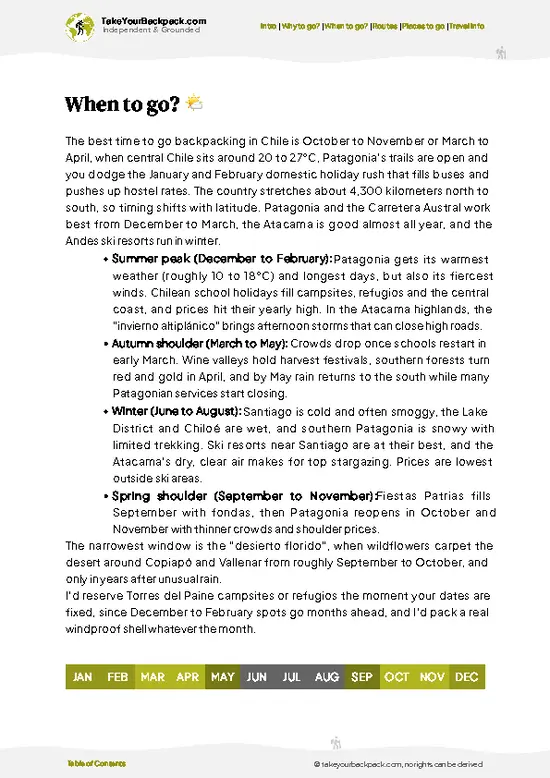
example page 0 from our offline Travel Guide for Chile
example page 1 from our offline Travel Guide for Chile
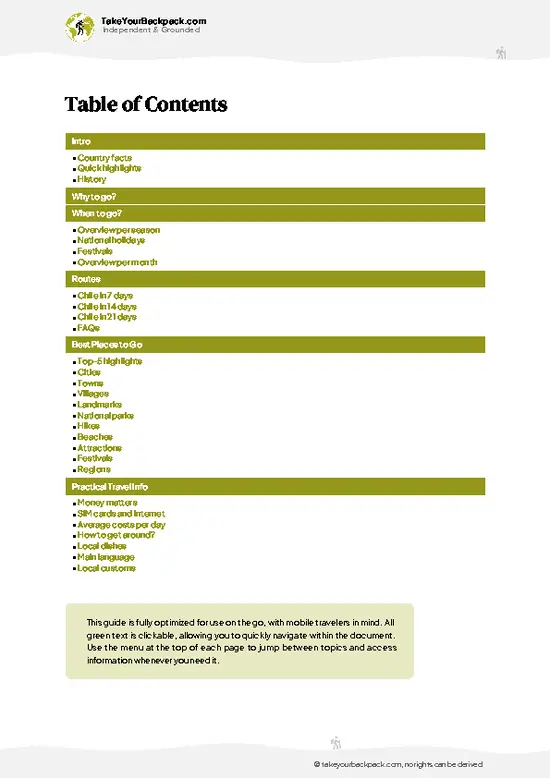
example page 2 from our offline Travel Guide for Chile
example page 3 from our offline Travel Guide for Chile
example page 4 from our offline Travel Guide for Chile
example page 5 from our offline Travel Guide for Chile
example page 6 from our offline Travel Guide for Chile
example page 7 from our offline Travel Guide for Chile
Loading the map 🌍
CLICK TO FILTER
cities
towns
villages
landmarks
national parks
hikes
beaches
attractions
festivals
regions
SHOW COUNTRY’S BESTSHOW ALL

✨ Why go?
Ranked #3 attraction in Chile
What makes this attraction worth visiting

Churches of Chiloé is one of the few places in South America where a UNESCO listing covers living, working parish churches rather than ruins. Most are still used for services, and they are built almost entirely of local timber, with wooden pegs standing in for nails in many of them. That is the real pull: you see a boatbuilding tradition turned inside out, with interiors that read like upturned hulls. The oldest of the group is the Church of Achao, dating to the 18th century, and it is a good measure of how the style has aged. The second reason is route value. The churches give a long island a purpose, a way to string together fishing villages, palafito stilt houses and seafood markets without feeling you are ticking off boxes. A day of church-hopping also puts you on slow rural roads, where … read more 👉
Churches of Chiloé is one of the few places in South America where a UNESCO listing covers living, working parish churches rather than ruins. Most are still used for services, and they are built almost entirely of local timber, with wooden pegs standing in for nails in many of them. That is the real pull: you see a boatbuilding tradition turned inside out, with interiors that read like upturned hulls. The oldest of the group is the Church of Achao, dating to the 18th century, and it is a good measure of how the style has aged. The second reason is route value. The churches give a long island a purpose, a way to string together fishing villages, palafito stilt houses and seafood markets without feeling you are ticking off boxes. A day of church-hopping also puts you on slow rural roads, where ferries to small islands like Quinchao show you the archipelago’s daily rhythm. The third is cost: entry is usually free or by donation, so the whole circuit is one of the best-value cultural days you can spend in Patagonia’s north. Expect the Jesuit and Franciscan legacy in every plaza.

💡 HighlightsKey sights and experiences for travelers

  1. Church of Castro (San Francisco): the one everyone photographs. Its plain exterior is sheet metal painted salmon and violet, but the interior is entirely wood, with a soaring vaulted ceiling you can see from the plaza in minutes.
  2. Church of Achao (Santa María de Loreto): the oldest surviving church of the group, on Quinchao Island. Pegged joints and a heavy, dark nave show how the older builders worked before metal.
  3. Church of Nercón: a short ride from Castro, with a clean, tall tower and a shingled facade you can study without a crowd. It is the quiet pick when Castro feels busy.
  4. Church of Dalcahue: it sits above a waterfront craft market, so you can combine a wooden interior with woolens, baskets and fresh shellfish stalls in one stop.
  5. Church of Rilán: far smaller, in a village setting. It shows
… read more 👉
  1. Church of Castro (San Francisco): the one everyone photographs. Its plain exterior is sheet metal painted salmon and violet, but the interior is entirely wood, with a soaring vaulted ceiling you can see from the plaza in minutes.
  2. Church of Achao (Santa María de Loreto): the oldest surviving church of the group, on Quinchao Island. Pegged joints and a heavy, dark nave show how the older builders worked before metal.
  3. Church of Nercón: a short ride from Castro, with a clean, tall tower and a shingled facade you can study without a crowd. It is the quiet pick when Castro feels busy.
  4. Church of Dalcahue: it sits above a waterfront craft market, so you can combine a wooden interior with woolens, baskets and fresh shellfish stalls in one stop.
  5. Church of Rilán: far smaller, in a village setting. It shows the rural end of the tradition, with simple lines and little visitor traffic.
  6. Church of Chonchi: a three-tier tower and a bright facade over a hillside town. Inside, look at the carved wooden columns and the ship-like ribbing overhead.
  7. Church of Quinchao: a quieter church on the island of Quinchao, well suited to a bike or slow bus day after Achao.
  8. Church of Tenaún: known for its colorful blue and white facade with a triple tower, one of the more photogenic of the north coast.
Go first to Castro’s church, since the town is the island’s transport hub and its interior sets the standard against which every other church makes sense.
Spotted a mistake or missing something? Contact us.

Things to do near Churches of Chiloé

Ratings based on Tripadvisor reviews. When you book through this link, you support our work at no extra cost to you.

🌤️ When to go?Seasonal considerations and timing

  • Summer (December to February): Dry-ish, with highs of 16 to 20°C (61 to 68°F) and lows around 8 to 10°C (46 to 50°F). Daylight runs past 15 hours, ferries and buses run most often, and the Castro craft fairs and festivals are in full swing. Crowds and prices peak, and rooms in Castro, Dalcahue and Achao book out.
  • Autumn (March to May): Highs of 12 to 16°C (54 to 61°F), with rain returning from April. Crowds thin, prices ease, and the shingled churches look best against grey, moody skies.
  • Winter (June to August): Cold, wet and windy, with highs of 8 to 11°C (46 to 52°F) and lows near 3°C (37°F). Daylight shrinks to around 9 hours, some rural churches keep irregular hours and boat services thin out. Rooms are the cheapest of the year.
  • Spring (September to November): Highs of 11 to 15°C (52 to 59°F),
… read more 👉
  • Summer (December to February): Dry-ish, with highs of 16 to 20°C (61 to 68°F) and lows around 8 to 10°C (46 to 50°F). Daylight runs past 15 hours, ferries and buses run most often, and the Castro craft fairs and festivals are in full swing. Crowds and prices peak, and rooms in Castro, Dalcahue and Achao book out.
  • Autumn (March to May): Highs of 12 to 16°C (54 to 61°F), with rain returning from April. Crowds thin, prices ease, and the shingled churches look best against grey, moody skies.
  • Winter (June to August): Cold, wet and windy, with highs of 8 to 11°C (46 to 52°F) and lows near 3°C (37°F). Daylight shrinks to around 9 hours, some rural churches keep irregular hours and boat services thin out. Rooms are the cheapest of the year.
  • Spring (September to November): Highs of 11 to 15°C (52 to 59°F), longer days and fewer visitors. Showers are frequent.
Whatever the month, pack a real rain shell, since Chiloé gets rain on most days of the year.


source: climatestotravel.comJANJanuary: excellent for travelingFEBFebruary: excellent for travelingMARMarch: highly recommended for travelingAPRApril: highly recommended for travelingMAYMay: fair for travelingJUNJune: fair for travelingJULJuly: fair for travelingAUGAugust: fair for travelingSEPSeptember: good for travelingOCTOctober: highly recommended for travelingNOVNovember: highly recommended for travelingDECDecember: excellent for traveling
chile-attraction-churches-of-chiloe
© Google |

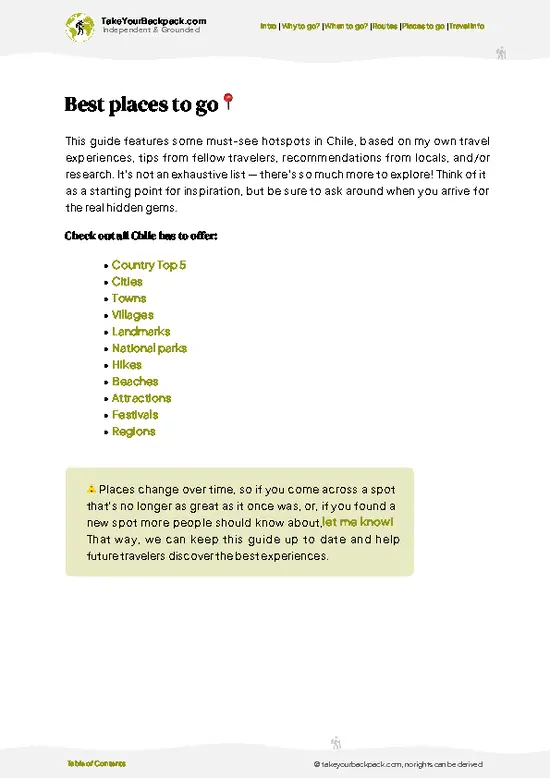
✈️ The backpacker research shortcutChile Travel Guide

An offline-friendly backpacking guide with optimized travel routes, ranked highlights, transport advice, and the best areas to stay.
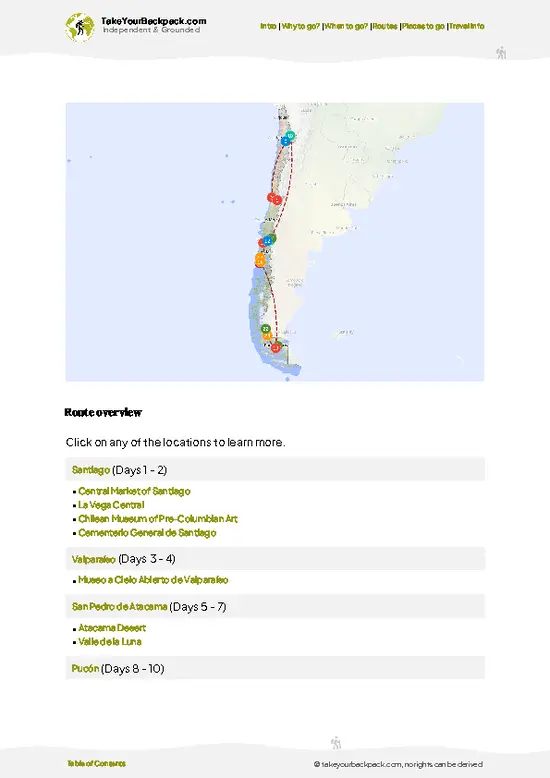
example page 0 from our offline Travel Guide for Chile
example page 1 from our offline Travel Guide for Chile
example page 2 from our offline Travel Guide for Chile
example page 3 from our offline Travel Guide for Chile
example page 4 from our offline Travel Guide for Chile
example page 5 from our offline Travel Guide for Chile
example page 6 from our offline Travel Guide for Chile
example page 7 from our offline Travel Guide for Chile
The digital guide (333 pages) contains:
✅ 107 highlights, ranked by travel appeal
✅ Optimized 7, 14 & 21-day travel routes
✅ Cities, national parks, landmarks, beaches
✅ How to get around
✅ Offline-friendly for travel without Wi-Fi
👉 Click to see all 30+ guide features

📅 Plan smarter in minutes, not weeks
✅ Month by month travel advice
✅ Festivals & national holidays
✅ Budget expectations

🗺️ Go to the right places, skip the overrated ones
✅ Honest pros & cons of destinations
✅ Top hikes, parks & viewpoints
✅ Lesser-known places most travelers miss
✅ Clear “worth it vs skip it” guidance

🛏️ Travel smoothly without rookie mistakes
✅ Best areas to stay
✅ Transport systems explained simply
✅ Common scams & safety advice
✅ SIM cards, money & practical tips

🌍 Understand the country, not just visit it
✅ Culture & traditions
✅ 52 Essential phrases & customs
✅ Festivals worth planning around
✅ Traveler-friendly historical context
✅ Insights that make places more meaningful

📱 Built for real travel conditions
✅ Fully downloadable PDF
✅ Works completely offline
✅ Optimized for phone use
✅ Useful in remote areas & buses
✅ Everything in one place
Stop searching, start planning
Get instant access to your full guide. 30‑day money-back guarantee.
+ Add another guide for just

By proceeding you agree to our terms.
Sent to your inbox immediately after payment • 100% Secure Checkout
Best Backpacking Travel Advisor 2025 tourism awardBest Backpacking
Travel Advisor
2025
What others say about Take Your Backpack Guides:
⭐⭐⭐⭐⭐
Fantastic, amazing amount of information!
⭐⭐⭐⭐⭐
My goodness this is amazing, it's what I've been looking for hats off too you!
⭐⭐⭐⭐⭐
I think this is absolutely BRILLIANT
⭐⭐⭐⭐
Very complete and informative. It's still missing places, but I gotta to commend you
⭐⭐⭐⭐⭐
This is truly amazing, thank you, can't wait to explore it with my kids!
⭐⭐⭐⭐⭐
Awesome resource, thank you!
⭐⭐⭐⭐⭐
This is amazing! Can't wait to explore the ones I haven't seen
⭐⭐⭐⭐
I love this! Well done, great idea.
⭐⭐⭐⭐⭐
Thanks for taking the time to make this gem!
⭐⭐⭐⭐⭐
This might be the best website I've ever seen.
⭐⭐⭐⭐⭐
Congratulations, and thank you so much for your work; it's incredibly valuable.
⭐⭐⭐⭐
In all seriousness I think you did a great job pointing out the important spots
⭐⭐⭐⭐⭐
10/10 very good
⭐⭐⭐⭐⭐
As someone who's only just starting to visit regularly this is awesome, thank you.
⭐⭐⭐⭐
Thank you very much! I'm going to visit my dad, it's going to be very useful!
⭐⭐⭐⭐⭐
This is really cool! We'll be travelling for the first time and this definitely come in handy.
⭐⭐⭐⭐⭐
You are now our minister of culture, congratulations 👨‍💼
⭐⭐⭐⭐⭐
Just wanted to tell you that this is a pearl! Going to follow your recommendations.
⭐⭐⭐⭐⭐
This is so cool. I'll definitely be using the resource for my travels soon.
⭐⭐⭐⭐⭐
This is very impressive! Good work.
⭐⭐⭐⭐⭐
This is an amazing and informative site. Very well done!

🛏️ Where to stay?Choosing the right base

Castro is the best base for the Churches of Chiloé, because it has the most budget beds, the busiest hostel scene and the island’s main bus terminal, where you catch buses to most church towns. Dorm beds run roughly US$12 to 20 a night in high season, and private rooms in family guesthouses US$30 to 50. The palafito (stilt house) waterfront and the hillside streets near the Plaza de Armas put you within walking distance of the Iglesia San Francisco, the best-known church, plus cheap seafood stalls and the Feria Artesanal. Solo travelers meet others easily here, and the streets are safe to walk … read more 👉
Castro is the best base for the Churches of Chiloé, because it has the most budget beds, the busiest hostel scene and the island’s main bus terminal, where you catch buses to most church towns. Dorm beds run roughly US$12 to 20 a night in high season, and private rooms in family guesthouses US$30 to 50. The palafito (stilt house) waterfront and the hillside streets near the Plaza de Armas put you within walking distance of the Iglesia San Francisco, the best-known church, plus cheap seafood stalls and the Feria Artesanal. Solo travelers meet others easily here, and the streets are safe to walk in the evening.
Dalcahue is a quieter alternative, with a handful of homestays and a Sunday craft market beside its own wooden church. It suits you if you want calm and a short ride to Castro. Achao, on Quinchao Island, has small guesthouses and the oldest surviving church on the island, but few other travelers and little nightlife, so it works best as a one-night stop. Chonchi is a pleasant, laid-back option too, with a few hostels, a restored old quarter and a church on the plaza. Ancud in the north is the other social hub, handy if you arrive from Puerto Montt by the northern ferry.

👛 Costs (as of 19 October 2026)How expensive it really is

Expect to spend about US$32 to 69 a day visiting the Churches of Chiloé on a backpacker budget, with most of that going to beds and local buses. Entry to most churches is free, though a few ask for a small donation.
CategoryBudget RangeLocal Reality
Church entryUS$0 to 3Most are free. Donations are welcome, and Achao and some Castro-area churches may charge a small fee or have a guide.
Accommodation (high season)US$12 to 25Dorms in Castro run US$12 to 20. Guesthouse rooms are pricier and cheaper in winter.
FoodUS$10 to 18A set lunch (menú del día) costs US$6 to 10. Curanto, the local seafood and potato stew, costs US$10 to 15. Supermarkets help you save.
Local transportUS$6 to 12Buses and minibuses between Castro, Dalcahue, Chonchi and Achao run roughly US$1.50 to 4 each way. Locals pay in pesos.
… read more 👉
Expect to spend about US$32 to 69 a day visiting the Churches of Chiloé on a backpacker budget, with most of that going to beds and local buses. Entry to most churches is free, though a few ask for a small donation.
CategoryBudget RangeLocal Reality
Church entryUS$0 to 3Most are free. Donations are welcome, and Achao and some Castro-area churches may charge a small fee or have a guide.
Accommodation (high season)US$12 to 25Dorms in Castro run US$12 to 20. Guesthouse rooms are pricier and cheaper in winter.
FoodUS$10 to 18A set lunch (menú del día) costs US$6 to 10. Curanto, the local seafood and potato stew, costs US$10 to 15. Supermarkets help you save.
Local transportUS$6 to 12Buses and minibuses between Castro, Dalcahue, Chonchi and Achao run roughly US$1.50 to 4 each way. Locals pay in pesos.
FerriesUS$1 to 3The Dalcahue to Achao crossing and other short island ferries cost little for foot passengers.
ExtrasUS$3 to 8Museum entries, a guided tour of the church circuit or a coffee and kuchen stop.
Total Daily BudgetUS$32 to 69Roughly US$55 to 60 is a realistic mid-range figure for a backpacker in high season.


source: chile.travel
⚠️ Prices can change and everyone travels differently, so take this as a rough guide. Hope it helps you plan your adventure!

FAQCommon questions from travelers

Plan two to three days for the Churches of Chiloé if you want to see the main cluster. Castro’s Iglesia San Francisco takes under an hour, and a day trip by bus to Dalcahue and ferry to Achao on Quinchao Island fills a full day. Add a third day for Chonchi, Rilán and the southern churches, or a full week if you want to cover more of the 16 UNESCO-listed sites.
Yes, mostly because the Churches of Chiloé are free to enter. A few ask for a donation of around US$1 to 3, and a church with a guide or museum may charge a small fee. Even when you pay, you get hand-built wooden architecture from the 18th and 19th centuries, with shingled facades and ship-style interiors that are unique in Chile.
Fly to Puerto Montt and take a bus south, or fly from Santiago to Mocopulli airport near Castro, or travel overland, crossing the Chacao Channel by ferry to reach Ancud or Castro. Buses from Puerto Montt to Castro take about 3.5 to 4 hours and cost roughly US$10 to 18, with the ferry crossing included. Once you are on the island, local buses and minibuses from Castro reach Dalcahue, Chonchi and other church towns for US$1.50 to 4.
⚠️ Things can change over time, so always validate details locally before you go.

Other Chilean attractions near Churches of Chiloé

Explore more nearby:


💡 Not sure where to go next?
Create a personalized itinerary for Chile including Churches of Chiloé and the places that fit your trip.

Generate my itinerary

👉 Discover all attractions

Or checkout all Chile has to offer (think cities, towns, villages, national parks, hikes, beaches, festivals)
Country photo of Chile

We 💚 feedbackParting advice and final tips

Churches of Chiloé pairs best with a few days in Castro and the stilt houses of its waterfront, then a ferry to Quinchao and a slow roll down to Chonchi. If your route runs south, end with Parque Nacional Chiloé on the wild Pacific side. I would skip rushing it; two unhurried days beat six churches in one.

✈️ When did I visit Chile?
I have visited Chile, together with Argentina, in September 2012.

✍️ Help improve this page!
The information on this page is based on my own backpacking experience in Chile, supplemented with up-to-date research and feedback from other travelers. Travel details can change, so if you notice anything outdated or incomplete, feel free to let me know.


🙋‍♂️ Give feedback

👋 Meet the founderWho’s Behind Take Your Backpack?

Johan, backpacker and founder of TakeYourBackpackHi, I’m Johan (Netherlands 🇳🇱), the creator of TakeYourBackpack. Over the past 3 decades, I’ve backpacked through 90+ countries across six continents, gaining extensive experience with independent travel, long-term trips, and overland routes.

This site is built on a combination of firsthand travel experience and carefully curated insights from other backpackers. Many guides are based on places I’ve personally visited, while others bring together tips, observations, and practical advice shared by trusted travelers I’ve met along the way.

The goal is to provide realistic, experience-driven guidance — not generic itineraries — so you can explore destinations with better context, clearer expectations, and more confidence.