×

Colombia🇨🇴 | best villagesEssential 2 villages to Explore in Colombia

Villages in Colombia come in four distinct kinds, and picking the wrong one wastes days. The Andean colonial towns of Boyacá and Santander (whitewashed walls, red-tile roofs, plazas) are the easiest to reach, cost the least, and fill with Colombian families on long weekends. The coffee region (Eje Cafetero) has painted balconies and jeeps called Willys, plus the highest prices in the Andes, because fincas sell most of the experience. The Caribbean coast brings heat, river and sea settings, and rougher roads. The Pacific coast is remote, wet, and reached by boat or small plane, so it suits only travelers with spare days and budget. For backpacking or independent travel, the Andes win: frequent buses, hostels at US$10 to 20 a bed, and little hassle. Skip any village you can only reach on a day tour from a big city, because you will arrive with everyone else and leave before the evening, when the plaza finally empties and gets interesting.

By Johan Kruseman 🇳🇱 | Updated October 20, 2026
Explore the best landmarks in Colombia

Why go?Why Travelers Love These Spots

Colombia suits villages better than most of South America because of its three Andean ranges. They cut the country into isolated valleys, and each valley built its own small settlement pattern, food, music and accent. The result is real variety within a few hours of travel, not one template repeated.

The Spanish colonial grid explains the look: a central plaza, a church on one side, and low buildings around it. Many towns were founded in the 1500s to 1700s and then bypassed by trade, which left their centers largely intact. Coffee, which spread through the 19th and 20th centuries, added a second, very different architecture of wood and bright paint.

Altitude and climate matter more than a map suggests. Villages at 2,000 to 3,000 meters are cool and often cloudy. Those below 1,500 meters … read more 👉
Colombia suits villages better than most of South America because of its three Andean ranges. They cut the country into isolated valleys, and each valley built its own small settlement pattern, food, music and accent. The result is real variety within a few hours of travel, not one template repeated.

The Spanish colonial grid explains the look: a central plaza, a church on one side, and low buildings around it. Many towns were founded in the 1500s to 1700s and then bypassed by trade, which left their centers largely intact. Coffee, which spread through the 19th and 20th centuries, added a second, very different architecture of wood and bright paint.

Altitude and climate matter more than a map suggests. Villages at 2,000 to 3,000 meters are cool and often cloudy. Those below 1,500 meters are hot and humid. Pack for both, and do not assume a short drive keeps the same weather.

Before choosing Colombia for villages, know three things. First, mountain roads are slow. A distance of 100 kilometers can take three to four hours, and landslides in rainy periods can close routes. Second, domestic tourism drives everything. Colombian holiday weekends (puentes) bring crowds, higher prices and sold-out rooms, while midweek is calm. Third, the experience is uneven. Some famous towns have become souvenir strips with little life outside peak hours, and they are not worth a night. Smaller places with a working market day or a farming economy give you far more. Security has improved a great deal along main tourist corridors, but remote rural areas still need local advice before you go. Choose villages by region and road quality, not by photographs alone.
Why These Made the Cut
The list of best villages in Colombia is created based on authenticity, scenic beauty, community spirit, traditions, and overall character. If you feel a village is missing in this list, please let us know.

When to go?When to Plan Your Trip

Best months: The best months for villages in Colombia are December to March and July to August, the two drier seasons in the Andes, when roads are safer and plaza evenings stay dry. Colombia has no summer or winter, so elevation sets temperature: roughly 8 to 18°C in high Boyacá towns, 18 to 26°C in the coffee region, and 28 to 35°C on the Caribbean lowlands.
Shoulder and wet seasons: April to June and September to November are the main rainy periods in the Andes. Expect afternoon downpours most days, muddy trails, and fog that hides views. Landslides can close mountain roads, particularly between October and November. Rain is not a reason to skip the region, but plan hikes for mornings and keep a spare day in your schedule. Rooms and tours are noticeably easier to book then, and some hostels … read more 👉
Best months: The best months for villages in Colombia are December to March and July to August, the two drier seasons in the Andes, when roads are safer and plaza evenings stay dry. Colombia has no summer or winter, so elevation sets temperature: roughly 8 to 18°C in high Boyacá towns, 18 to 26°C in the coffee region, and 28 to 35°C on the Caribbean lowlands.
Shoulder and wet seasons: April to June and September to November are the main rainy periods in the Andes. Expect afternoon downpours most days, muddy trails, and fog that hides views. Landslides can close mountain roads, particularly between October and November. Rain is not a reason to skip the region, but plan hikes for mornings and keep a spare day in your schedule. Rooms and tours are noticeably easier to book then, and some hostels offer lower rates.
Crowds and prices: Peak periods change decisions. Semana Santa (Holy Week), the late December to mid-January holidays, and Colombian long weekends (puentes, several a year) fill small towns. Prices for rooms can rise 30 to 100 percent, minimum stays appear, and buses sell out. Book accommodation early or travel midweek. Avoid the coffee region during these weekends, since it is the nearest escape for Bogotá, Medellín and Cali.
Regional differences: The Caribbean coast is driest from December to April and extremely hot and wet from September to November. The Pacific coast is wet nearly all year, with heavier rain in many months, so go for whale season (July to October) or accept the weather. Boyacá is cold at night year-round, so bring a warm layer even in dry months.

village hoppingPlanning Your Route Efficiently

How many days: A trip combining several villages in Colombia needs 10 to 16 days, and fewer than ten turns it into a blur of buses. Group stops by region, not by fame, because the mountain geography punishes zigzagging.
Which regions go together: The cleanest pairing is Bogotá with Boyacá and Santander. Both sit on the Eastern Cordillera, linked by Tunja, Villa de Leyva and San Gil as transport hubs. The coffee region pairs with Medellín and Antioquia, using Pereira, Armenia or Manizales as hubs. The Caribbean coast works best as a separate leg from Cartagena or Santa Marta. Treat the Pacific as its own trip, not an add-on.
Direction and timing: A sensible loop runs north from Bogotá through Boyacá and Santander, then flies from Bucaramanga or Bogotá to Medellín, and finishes south through the … read more 👉
How many days: A trip combining several villages in Colombia needs 10 to 16 days, and fewer than ten turns it into a blur of buses. Group stops by region, not by fame, because the mountain geography punishes zigzagging.
Which regions go together: The cleanest pairing is Bogotá with Boyacá and Santander. Both sit on the Eastern Cordillera, linked by Tunja, Villa de Leyva and San Gil as transport hubs. The coffee region pairs with Medellín and Antioquia, using Pereira, Armenia or Manizales as hubs. The Caribbean coast works best as a separate leg from Cartagena or Santa Marta. Treat the Pacific as its own trip, not an add-on.
Direction and timing: A sensible loop runs north from Bogotá through Boyacá and Santander, then flies from Bucaramanga or Bogotá to Medellín, and finishes south through the coffee region to Cali or back to Bogotá. Allow two nights per village at minimum. One night rarely covers the arrival, the evening and a morning market or walk, while four nights in a small place is usually too many unless you hike or volunteer.
Travel times and mistakes: Typical bus times: Bogotá to Tunja 3 to 4 hours, Bogotá to San Gil 7 to 8 hours, Medellín to the coffee region 5 to 7 hours. Flights between regions take about an hour and often cost less in time than a 10-hour overnight bus.

The first mistake is underestimating mountain roads: plan one transfer a day, not two. The second is crossing the country by land to save money, which costs a day each time. Fly the long gaps and bus the short ones. The third is arriving in the afternoon on a connection, since last buses to small villages leave by late afternoon, so start early. The fourth is packing in famous stops and skipping lesser-known towns on the same road, which are often quieter and cheaper.

The ListHighly Recommended villages of Colombia

1 Minca

Mountain river pools, coffee farms, treetop hostels, motorbike taxis

Hike forest paths to cold swimming holes, tour a late 19th-century coffee farm, and end the day at long communal hostel tables.

2 Capurganá

Car-free sand lanes, reef snorkeling, jungle waterfall, boat access

Walk dirt lanes to calm beaches, snorkel a small reef at Aguacate, and follow a forest trail to a modest waterfall and shaded pools.

Loading the map 🌍

Expert viewInsights from Locals and Experts

How many villages to visit: Plan on four to six villages in a two-week trip. That gives two nights each plus transfer days, with room for a rainy day or a closed road. Anything above seven turns the trip into a chain of bus terminals. If you only have a week, choose a single region and visit three villages, because the transfers eat more time than you expect.
Which kind to prioritize: For culture and architecture, choose the Boyacá and Santander colonial towns: plazas, markets, and few international tourists midweek. For hiking and nature, pick coffee-region villages, where trails and cloud forest sit a short jeep ride away. For beach or river life, choose the Caribbean, but accept heat, mosquitoes and rougher infrastructure. Skip the Pacific unless you have at least a week spare and US$80 … read more 👉
How many villages to visit: Plan on four to six villages in a two-week trip. That gives two nights each plus transfer days, with room for a rainy day or a closed road. Anything above seven turns the trip into a chain of bus terminals. If you only have a week, choose a single region and visit three villages, because the transfers eat more time than you expect.
Which kind to prioritize: For culture and architecture, choose the Boyacá and Santander colonial towns: plazas, markets, and few international tourists midweek. For hiking and nature, pick coffee-region villages, where trails and cloud forest sit a short jeep ride away. For beach or river life, choose the Caribbean, but accept heat, mosquitoes and rougher infrastructure. Skip the Pacific unless you have at least a week spare and US$80 to 150 a day, since boats and flights are the main costs. Skip any village known only for a photo spot; one hour is enough there.
What it costs: Budget US$25 to 45 a day in the Andes: a hostel bed at US$10 to 20 (private rooms US$25 to 50), set lunches (menú del día) at COP 12,000 to 25,000 (US$3 to 6), and dinner at COP 25,000 to 50,000 (US$6 to 12). Coffee-region fincas and Caribbean towns cost more, often US$40 to 70 a day.

Per-visit costs add up. Buses between villages run COP 15,000 to 80,000 (US$4 to 20). Willys jeep rides to trailheads cost COP 5,000 to 20,000 shared, or more if you charter. Guides for day hikes cost COP 80,000 to 200,000 (US$20 to 50). Nature reserve and museum entries range from COP 5,000 to 40,000 (US$1 to 10). Coffee farm tours run COP 40,000 to 100,000 (US$10 to 25).
Costs and traps that catch travelers out: Holiday weekends can double room rates, so check the Colombian calendar before booking. Many villages have no ATM, or one that runs empty by Sunday. Carry COP 200,000 to 300,000 in cash from the last big town. Card machines at small shops often fail.

Avoid paying for a guide in places with clear, marked paths, but hire one for cloud-forest or high-altitude routes where trails fork and fog is common. Agree prices for jeeps and guides before you start, because quotes shift afterward.
Safety and cultural points: Main village corridors in the Andes are generally calm for travelers. Stay alert in bus terminals, use registered taxis or apps in cities, and avoid walking rural roads after dark. Check local conditions before going to remote areas, especially border regions and parts of the Pacific, where armed groups remain active in some zones. Landslides and flooded roads are a larger everyday risk than crime during rainy months. Carry a rain jacket and leave a buffer before flights.

Culturally, greet people with a buenos días or buenas tardes when you enter shops. Dress modestly in church areas. Ask before photographing people, especially at markets. Alcohol often flows late on weekends in plazas, so choose lodging a block or two from the square if you want to sleep. A little Spanish goes a long way, as English is uncommon outside hostels.

✈️ The backpacker research shortcutColombia Travel Guide

An offline-friendly backpacking guide with optimized travel routes, ranked highlights, transport advice, and the best areas to stay.
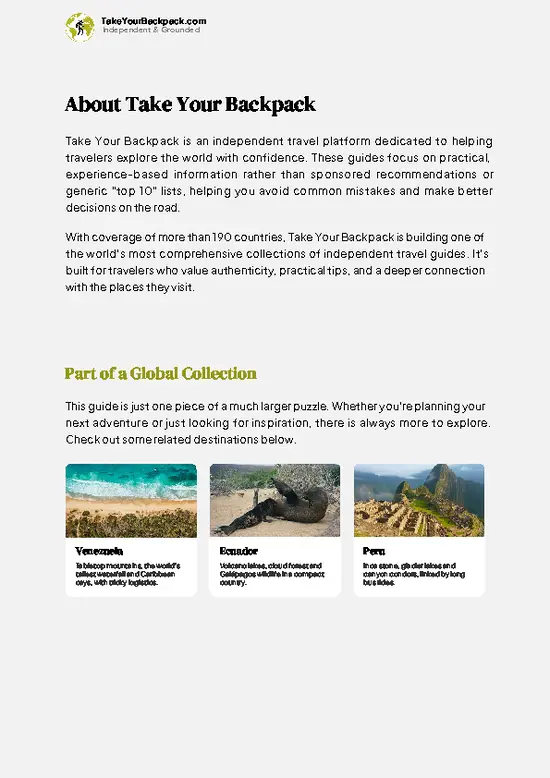
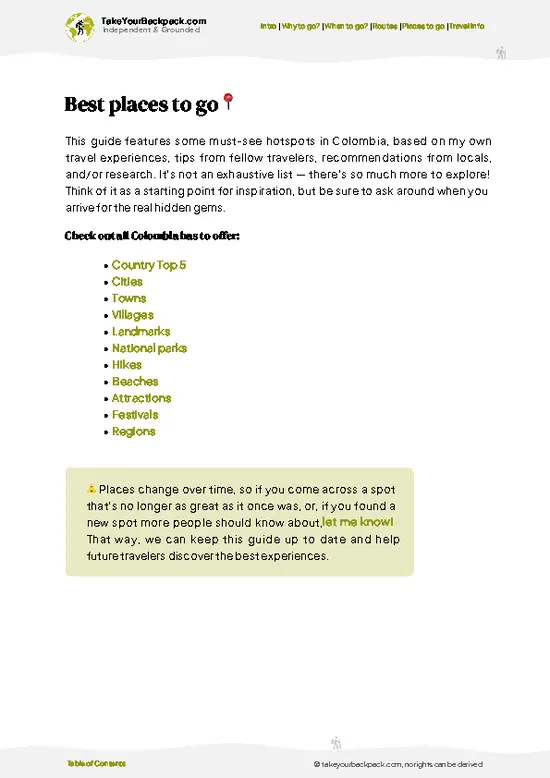
example page 0 from our offline Travel Guide for Colombia
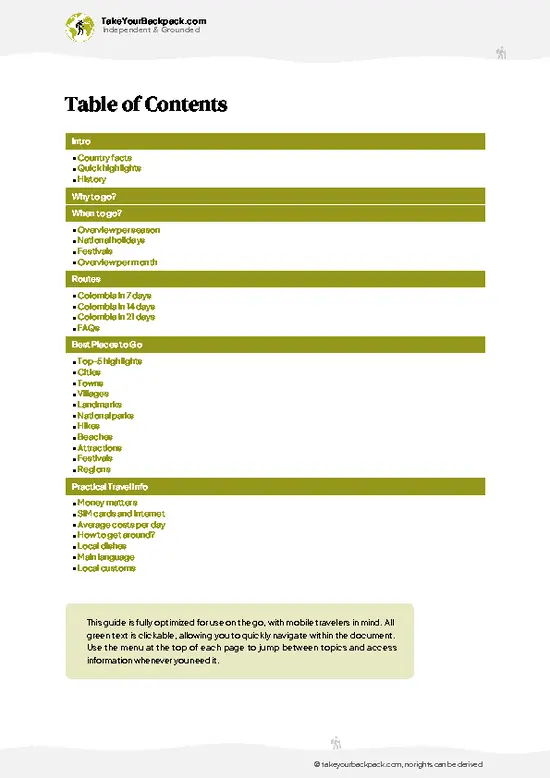
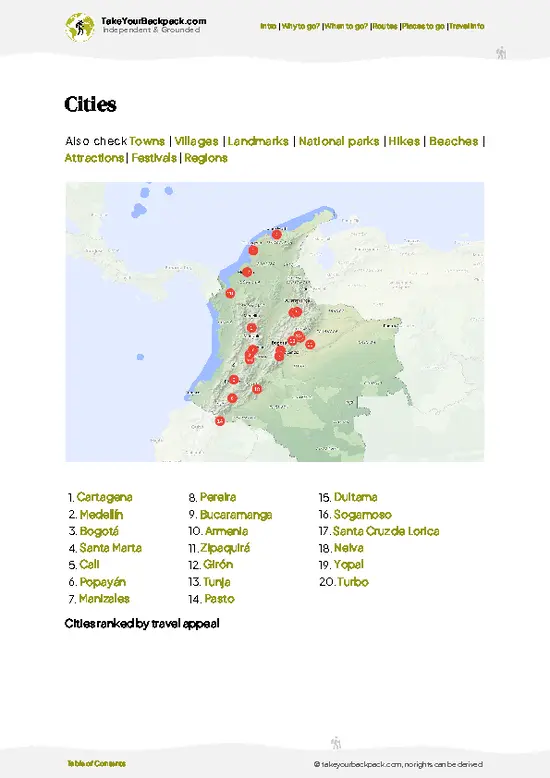
example page 1 from our offline Travel Guide for Colombia
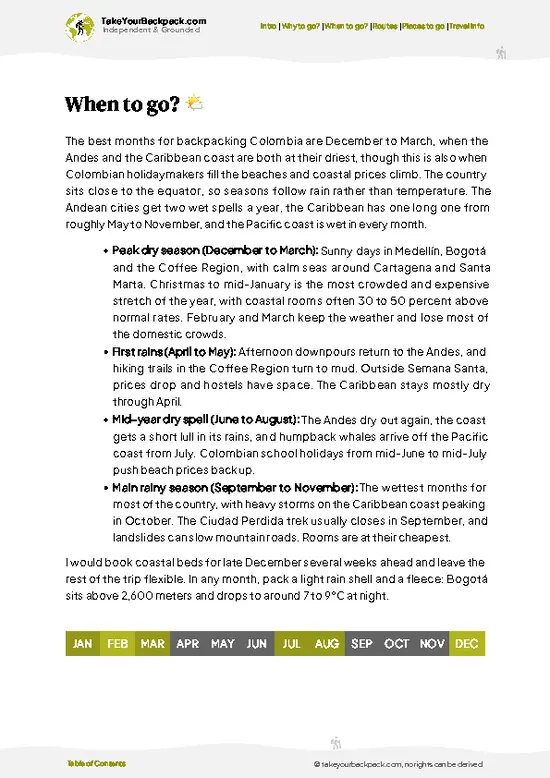
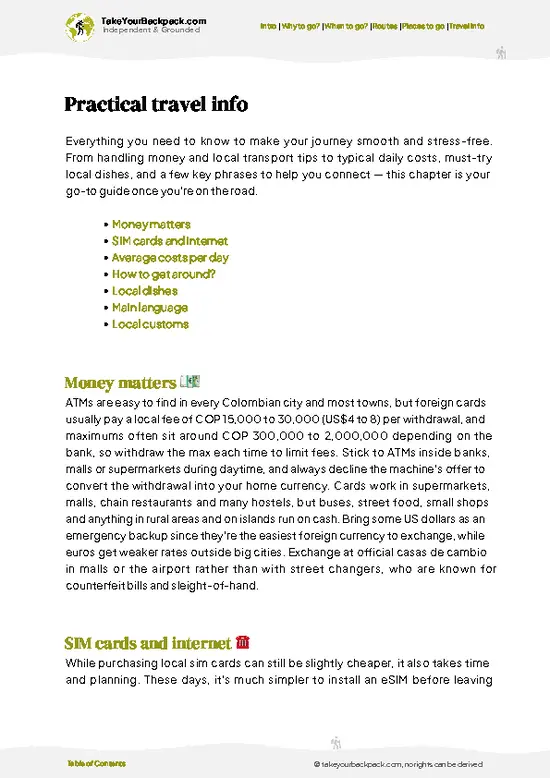
example page 2 from our offline Travel Guide for Colombia
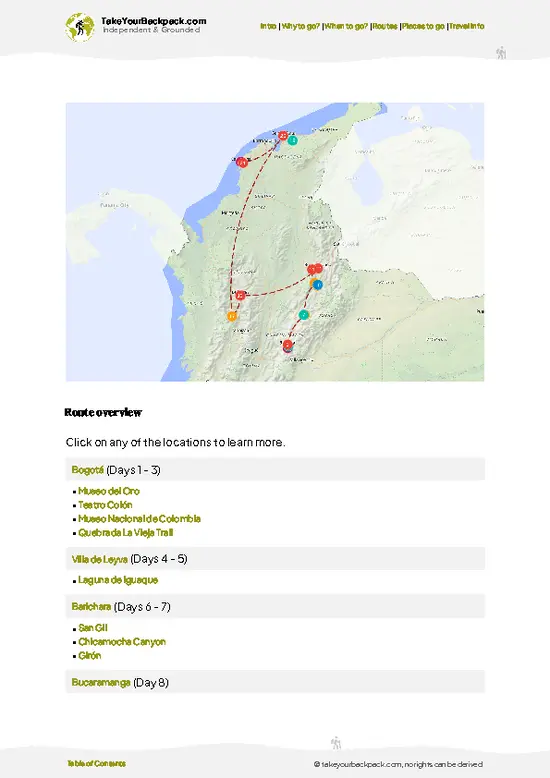
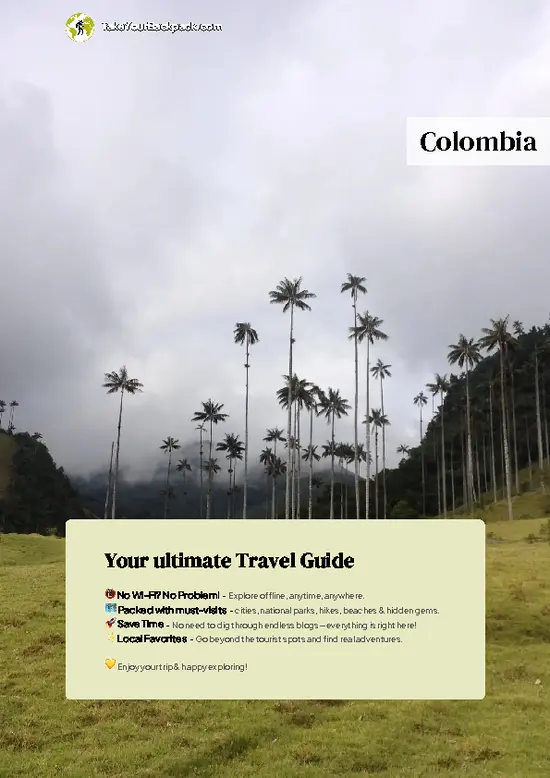
example page 3 from our offline Travel Guide for Colombia
example page 4 from our offline Travel Guide for Colombia
example page 5 from our offline Travel Guide for Colombia
example page 6 from our offline Travel Guide for Colombia
example page 7 from our offline Travel Guide for Colombia
The digital guide (349 pages) contains:
✅ 115 highlights, ranked by travel appeal
✅ Optimized 7, 14 & 21-day travel routes
✅ Cities, national parks, landmarks, beaches
✅ How to get around
✅ Offline-friendly for travel without Wi-Fi
👉 Click to see all 30+ guide features

📅 Plan smarter in minutes, not weeks
✅ Month by month travel advice
✅ Festivals & national holidays
✅ Budget expectations

🗺️ Go to the right places, skip the overrated ones
✅ Honest pros & cons of destinations
✅ Top hikes, parks & viewpoints
✅ Lesser-known places most travelers miss
✅ Clear “worth it vs skip it” guidance

🛏️ Travel smoothly without rookie mistakes
✅ Best areas to stay
✅ Transport systems explained simply
✅ Common scams & safety advice
✅ SIM cards, money & practical tips

🌍 Understand the country, not just visit it
✅ Culture & traditions
✅ 52 Essential phrases & customs
✅ Festivals worth planning around
✅ Traveler-friendly historical context
✅ Insights that make places more meaningful

📱 Built for real travel conditions
✅ Fully downloadable PDF
✅ Works completely offline
✅ Optimized for phone use
✅ Useful in remote areas & buses
✅ Everything in one place
Stop searching, start planning
Get instant access to your full guide. 30‑day money-back guarantee.
+ Add another guide for just

By proceeding you agree to our terms.
Sent to your inbox immediately after payment • 100% Secure Checkout
Best Backpacking Travel Advisor 2025 tourism awardBest Backpacking
Travel Advisor
2025
What others say about Take Your Backpack Guides:
⭐⭐⭐⭐⭐
Fantastic, amazing amount of information!
⭐⭐⭐⭐⭐
My goodness this is amazing, it's what I've been looking for hats off too you!
⭐⭐⭐⭐⭐
I think this is absolutely BRILLIANT
⭐⭐⭐⭐
Very complete and informative. It's still missing places, but I gotta to commend you
⭐⭐⭐⭐⭐
This is truly amazing, thank you, can't wait to explore it with my kids!
⭐⭐⭐⭐⭐
Awesome resource, thank you!
⭐⭐⭐⭐⭐
This is amazing! Can't wait to explore the ones I haven't seen
⭐⭐⭐⭐
I love this! Well done, great idea.
⭐⭐⭐⭐⭐
Thanks for taking the time to make this gem!
⭐⭐⭐⭐⭐
This might be the best website I've ever seen.
⭐⭐⭐⭐⭐
Congratulations, and thank you so much for your work; it's incredibly valuable.
⭐⭐⭐⭐
In all seriousness I think you did a great job pointing out the important spots
⭐⭐⭐⭐⭐
10/10 very good
⭐⭐⭐⭐⭐
As someone who's only just starting to visit regularly this is awesome, thank you.
⭐⭐⭐⭐
Thank you very much! I'm going to visit my dad, it's going to be very useful!
⭐⭐⭐⭐⭐
This is really cool! We'll be travelling for the first time and this definitely come in handy.
⭐⭐⭐⭐⭐
You are now our minister of culture, congratulations 👨‍💼
⭐⭐⭐⭐⭐
Just wanted to tell you that this is a pearl! Going to follow your recommendations.
⭐⭐⭐⭐⭐
This is so cool. I'll definitely be using the resource for my travels soon.
⭐⭐⭐⭐⭐
This is very impressive! Good work.
⭐⭐⭐⭐⭐
This is an amazing and informative site. Very well done!

🛏️ Where to stay?Best Stay Options in Colombia

Hostels and budget guesthouses are easy to find across Colombia, with dorm beds typically running COP 40,000 to 80,000 (US$12 to 25) and private rooms from about COP 100,000 (US$31). In Bogotá, La Candelaria puts you within walking distance of the museums and old-town streets but empties out after dark, while Chapinero has better restaurants, bars and a safer evening feel; in Medellín, El Poblado is the party hub with the highest prices and noise, and Laureles is calmer, greener and more local. In Cartagena, Getsemaní has the densest cluster of hostels, street art and plaza nightlife a few minutes from the walled Centro Histórico, which is prettier and quieter but costs noticeably more.

If you … read more 👉
Hostels and budget guesthouses are easy to find across Colombia, with dorm beds typically running COP 40,000 to 80,000 (US$12 to 25) and private rooms from about COP 100,000 (US$31). In Bogotá, La Candelaria puts you within walking distance of the museums and old-town streets but empties out after dark, while Chapinero has better restaurants, bars and a safer evening feel; in Medellín, El Poblado is the party hub with the highest prices and noise, and Laureles is calmer, greener and more local. In Cartagena, Getsemaní has the densest cluster of hostels, street art and plaza nightlife a few minutes from the walled Centro Histórico, which is prettier and quieter but costs noticeably more.

If you enjoy meeting fellow travelers, consider choosing hostels with high ratings for atmosphere. On the other hand, if you prefer having your own space, a hotel might be a better option.

ColombiaWhere to Go Next

👋 Meet the founderWho’s Behind Take Your Backpack?

Johan, backpacker and founder of TakeYourBackpackHi, I’m Johan (Netherlands 🇳🇱), the creator of TakeYourBackpack. Over the past 3 decades, I’ve backpacked through 90+ countries across six continents, gaining extensive experience with independent travel, long-term trips, and overland routes.

This site is built on a combination of firsthand travel experience and carefully curated insights from other backpackers. Many guides are based on places I’ve personally visited, while others bring together tips, observations, and practical advice shared by trusted travelers I’ve met along the way.

The goal is to provide realistic, experience-driven guidance — not generic itineraries — so you can explore destinations with better context, clearer expectations, and more confidence.