×

Djibouti🇩🇯 | townsDikhilAfar market, qat hour, wadi edges | things to do and best time to go

Explore Gulf of TadjouraExplore Obock

Backpacking in Dikhil
🌟 Highlighttown ranked #3
By Johan Kruseman 🇳🇱 | Updated October 22, 2026

Dikhil is the usual last town on the paved road toward Lac Abbé and the Ethiopian border, yet most travelers drive straight through it. It sits in the southwest of Djibouti, inland from the capital, at a modest elevation that gives slightly easier nights than the coast. Getting here is simple, since minibuses and shared taxis run from Djibouti City along the main highway, which is why the town has no real tourist machinery. Lodging is limited and basic, so an experienced traveler books ahead through an agency in the capital and keeps cash in hand, because cards are rarely useful here. Evenings are quiet and social life centers on tea stalls and the afternoon qat session, so meeting other backpackers is mostly luck. Expect a working administrative town, not a sightseeing one. Slow travelers and overlanders heading for the lakes will like it. Anyone wanting nightlife or monuments will not.

Discover everything you want to know in the 📖 Djibouti Travel Guide.


example page 0 from our offline Travel Guide for Djibouti
example page 1 from our offline Travel Guide for Djibouti
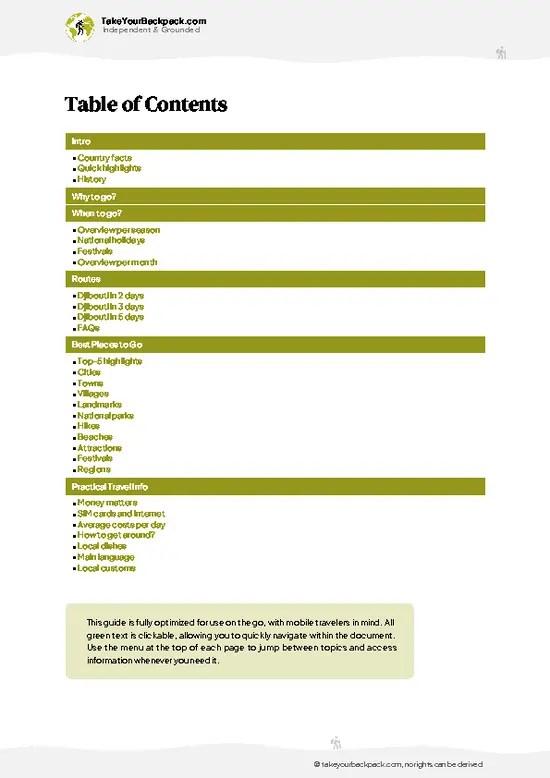
example page 2 from our offline Travel Guide for Djibouti
example page 3 from our offline Travel Guide for Djibouti
example page 4 from our offline Travel Guide for Djibouti
example page 5 from our offline Travel Guide for Djibouti
example page 6 from our offline Travel Guide for Djibouti
example page 7 from our offline Travel Guide for Djibouti
Loading the map 🌍
CLICK TO FILTER
cities
towns
villages
landmarks
national parks
hikes
beaches
attractions
festivals
regions
SHOW COUNTRY’S BESTSHOW ALL

✨ Why go?
Ranked #3 town in Djibouti
What sets this place apart

Dikhil earns a stop because it is the practical doorway to the southwest. It is the place to buy water, fuel and supplies before the rough tracks toward Lac Abbé, and the place to sleep when a long drive from the capital makes little sense. Most backpackers stay one night, a few stretch to two when they arrange transport onward. The town itself is walkable in an hour, with a central market where Afar and Issa traders sell grain, cloth and tea, and where you can eat simple stews and flatbread without a menu in sight. Guesthouses are small, plain and low-key, so you will probably meet locals before other travelers. That suits solo travelers who like to talk, and hikers or overlanders who want a base on the road to the Gobaad plain and the salt lakes. It does not suit anyone who needs nightlife, polished cafés or a packed sightseeing list.

💡 HighlightsKey sights and experiences for travelers

  1. Dikhil Central Market: The town’s commercial heart, where Afar and Issa traders sell dates, spices, fabric and everyday goods under tin roofs and awnings. Go in the morning when stalls are fullest. Entry is free, and an hour is enough, plus time for a glass of sweet tea at a nearby stall.
  2. The afternoon qat hour: Around midday and early afternoon, fresh qat bundles arrive and the town visibly slows as men settle to chew. Watching from a respectful distance explains much about local rhythm. Free, 30 to 45 minutes. Ask before photographing anyone.
  3. Dikhil Main Mosque: The central place of worship and a landmark for the call to prayer that structures the day. Non-Muslim visitors should admire it from outside and dress modestly. Free, 15 to 20 minutes, best outside prayer times.
  4. Evening walk along
… read more 👉
  1. Dikhil Central Market: The town’s commercial heart, where Afar and Issa traders sell dates, spices, fabric and everyday goods under tin roofs and awnings. Go in the morning when stalls are fullest. Entry is free, and an hour is enough, plus time for a glass of sweet tea at a nearby stall.
  2. The afternoon qat hour: Around midday and early afternoon, fresh qat bundles arrive and the town visibly slows as men settle to chew. Watching from a respectful distance explains much about local rhythm. Free, 30 to 45 minutes. Ask before photographing anyone.
  3. Dikhil Main Mosque: The central place of worship and a landmark for the call to prayer that structures the day. Non-Muslim visitors should admire it from outside and dress modestly. Free, 15 to 20 minutes, best outside prayer times.
  4. Evening walk along the town’s dry wadi edges: On the outskirts, low acacia scrub and rocky ground open toward the volcanic hills, with goat herders heading home as the heat eases. It costs nothing and takes 1 to 1.5 hours. Stay on visible paths and keep to the town side.
From Dikhil, Lac Abbé with its limestone chimneys and flamingos, the salt flats of Lac Assal, the Gobaad plain and the Hanlé basin are the real highlights, and each makes a long day trip with a driver. For a first visit, the central market is the best choice, since it shows the town’s trade and people in one stretch.
Spotted a mistake or missing something? Contact us.

Things to do near Dikhil

Ratings based on Tripadvisor reviews. When you book through this link, you support our work at no extra cost to you.

🏘️ NeighborhoodsWhere things are and how it's laid out

Dikhil is small enough to cover on foot in under an hour, and its areas blend into one another rather than sitting apart. Distances are short, but midday heat is why you plan walks around it.
  • Town center and main road: The market, small shops and tea stalls cluster along the RN1 axis, which is why this is where you buy water, phone credit and food. Grilled goat, rice, flatbread and sweet spiced tea are the staples. Go in the morning, before the heat sends most people indoors for the afternoon.
  • Administrative quarter: Dikhil is a regional capital, so government buildings and the police post sit near the center. It is quiet and orderly. Ask here for local travel information, since officials are the people who know the road conditions to the border and to the lakes.
  • Residential neighborhoods: Low
… read more 👉
Dikhil is small enough to cover on foot in under an hour, and its areas blend into one another rather than sitting apart. Distances are short, but midday heat is why you plan walks around it.
  • Town center and main road: The market, small shops and tea stalls cluster along the RN1 axis, which is why this is where you buy water, phone credit and food. Grilled goat, rice, flatbread and sweet spiced tea are the staples. Go in the morning, before the heat sends most people indoors for the afternoon.
  • Administrative quarter: Dikhil is a regional capital, so government buildings and the police post sit near the center. It is quiet and orderly. Ask here for local travel information, since officials are the people who know the road conditions to the border and to the lakes.
  • Residential neighborhoods: Low concrete houses and walled courtyards spread out from the center on dusty streets. There is little to see, and photographing people or homes without asking is poorly received, so ask first and accept a no. Walk through with a purpose and greet people, as is customary.
  • Edge of town and the plateau: The town sits on a high plateau, so evenings are slightly cooler on the outskirts, with open views over the dry landscape. Nightlife is essentially absent. Dikhil sleeps early, and an evening is tea, conversation and a meal before dark.

⌛️ 1 dayA smart one-day plan

A slow desert-town day, built around heat, tea and the road out toward the volcanic plains.

6:30 AM, Tea stall near the market: Start with sweet spiced tea and bread while the town wakes. It is cool enough to think, and shopkeepers are setting up. Walk five minutes to the market.

7:30 AM, Dikhil Central Market: Wander the stalls for dates, cloth and spices, and buy water and snacks for later. Prices are low and bargaining is gentle. Spend about an hour, then stroll to the mosque.

9:00 AM, Main Mosque: Look from outside, note the architecture and the rhythm of arrivals before prayer. Keep shoulders and knees covered. Then head to a shaded café.

10:30 AM, Rest and planning: Use the hot stretch to arrange onward transport or a driver for Lac Abbé. Rest in your guesthouse, write, and drink plenty … read more 👉
A slow desert-town day, built around heat, tea and the road out toward the volcanic plains.

6:30 AM, Tea stall near the market: Start with sweet spiced tea and bread while the town wakes. It is cool enough to think, and shopkeepers are setting up. Walk five minutes to the market.

7:30 AM, Dikhil Central Market: Wander the stalls for dates, cloth and spices, and buy water and snacks for later. Prices are low and bargaining is gentle. Spend about an hour, then stroll to the mosque.

9:00 AM, Main Mosque: Look from outside, note the architecture and the rhythm of arrivals before prayer. Keep shoulders and knees covered. Then head to a shaded café.

10:30 AM, Rest and planning: Use the hot stretch to arrange onward transport or a driver for Lac Abbé. Rest in your guesthouse, write, and drink plenty of water.

1:00 PM, Lunch at a local eatery: Order rice or pasta with goat stew, the standard plate. Eat slowly, since nothing happens quickly at this hour.

3:00 PM, The qat hour: Observe the quiet midday ritual from a polite distance, as shops thin out and men gather in shaded rooms. Skip photos unless invited.

4:30 PM, Wadi edges on the outskirts: This is the part most travelers never see. Walk the dry channels and scrubby slopes on the town fringe, where herders bring goats back and the volcanic ridges catch warm light. Stay on visible tracks and turn back before dark.

7:00 PM, Dinner and tea: Finish with grilled meat or fish if available, and one more glass of tea before an early night.

🌤️ When to go?Weather, crowds, and seasonal trade-offs

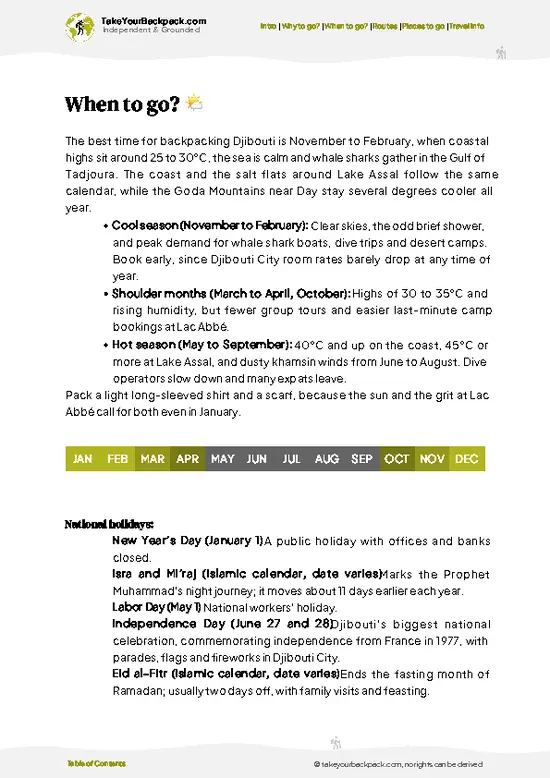
Dikhil is best from November to March, when daytime highs sit around 28 to 34°C (82 to 93°F) rather than the extreme heat of summer.
  • Cool Season (November to March): Mild by Djibouti standards, with nights around 20 to 24°C (68 to 75°F). Daylight runs roughly 11 to 12 hours. This is the busiest period for the few travelers heading to Lake Assal and Lake Abbe, though crowds in Dikhil itself stay minimal, and transport prices rise only a little.
  • Hot Season (May to September): Highs reach 38 to 44°C (100 to 111°F) with hot winds. Outdoor activity is punishing from late morning, and many people travel only at dawn. Vehicle hire can be cheaper, but the heat makes day trips risky.
  • Shoulder Months (April and October): Warm, at 32 to 38°C (90 to 100°F), and manageable if you start early. Rain is rare
… read more 👉
Dikhil is best from November to March, when daytime highs sit around 28 to 34°C (82 to 93°F) rather than the extreme heat of summer.
  • Cool Season (November to March): Mild by Djibouti standards, with nights around 20 to 24°C (68 to 75°F). Daylight runs roughly 11 to 12 hours. This is the busiest period for the few travelers heading to Lake Assal and Lake Abbe, though crowds in Dikhil itself stay minimal, and transport prices rise only a little.
  • Hot Season (May to September): Highs reach 38 to 44°C (100 to 111°F) with hot winds. Outdoor activity is punishing from late morning, and many people travel only at dawn. Vehicle hire can be cheaper, but the heat makes day trips risky.
  • Shoulder Months (April and October): Warm, at 32 to 38°C (90 to 100°F), and manageable if you start early. Rain is rare and brief, mostly arriving as short downpours in winter or spring.
Book a driver for lake trips a few days ahead in the cool season, when vehicles fill up.


source: climatestotravel.comJANJanuary: excellent for travelingFEBFebruary: excellent for travelingMARMarch: excellent for travelingAPRApril: fair for travelingMAYMay: fair for travelingJUNJune: below average for travelingJULJuly: below average for travelingAUGAugust: below average for travelingSEPSeptember: fair for travelingOCTOctober: good for travelingNOVNovember: excellent for travelingDECDecember: excellent for traveling
when-to-go

✈️ The backpacker research shortcutDjibouti Travel Guide

An offline-friendly backpacking guide with optimized travel routes, ranked highlights, transport advice, and the best areas to stay.
example page 0 from our offline Travel Guide for Djibouti
example page 1 from our offline Travel Guide for Djibouti
example page 2 from our offline Travel Guide for Djibouti
example page 3 from our offline Travel Guide for Djibouti
example page 4 from our offline Travel Guide for Djibouti
example page 5 from our offline Travel Guide for Djibouti
example page 6 from our offline Travel Guide for Djibouti
example page 7 from our offline Travel Guide for Djibouti
The digital guide (186 pages) contains:
✅ 44 highlights, ranked by travel appeal
✅ Optimized 2, 3 & 5-day travel routes
✅ Cities, national parks, landmarks, beaches
✅ How to get around
✅ Offline-friendly for travel without Wi-Fi
👉 Click to see all 30+ guide features

📅 Plan smarter in minutes, not weeks
✅ Month by month travel advice
✅ Festivals & national holidays
✅ Budget expectations

🗺️ Go to the right places, skip the overrated ones
✅ Honest pros & cons of destinations
✅ Top hikes, parks & viewpoints
✅ Lesser-known places most travelers miss
✅ Clear “worth it vs skip it” guidance

🛏️ Travel smoothly without rookie mistakes
✅ Best areas to stay
✅ Transport systems explained simply
✅ Common scams & safety advice
✅ SIM cards, money & practical tips

🌍 Understand the country, not just visit it
✅ Culture & traditions
✅ 52 Essential phrases & customs
✅ Festivals worth planning around
✅ Traveler-friendly historical context
✅ Insights that make places more meaningful

📱 Built for real travel conditions
✅ Fully downloadable PDF
✅ Works completely offline
✅ Optimized for phone use
✅ Useful in remote areas & buses
✅ Everything in one place
Stop searching, start planning
Get instant access to your full guide. 30‑day money-back guarantee.
+ Add another guide for just

By proceeding you agree to our terms.
Sent to your inbox immediately after payment • 100% Secure Checkout
Best Backpacking Travel Advisor 2025 tourism awardBest Backpacking
Travel Advisor
2025
What others say about Take Your Backpack Guides:
⭐⭐⭐⭐⭐
Fantastic, amazing amount of information!
⭐⭐⭐⭐⭐
My goodness this is amazing, it's what I've been looking for hats off too you!
⭐⭐⭐⭐⭐
I think this is absolutely BRILLIANT
⭐⭐⭐⭐
Very complete and informative. It's still missing places, but I gotta to commend you
⭐⭐⭐⭐⭐
This is truly amazing, thank you, can't wait to explore it with my kids!
⭐⭐⭐⭐⭐
Awesome resource, thank you!
⭐⭐⭐⭐⭐
This is amazing! Can't wait to explore the ones I haven't seen
⭐⭐⭐⭐
I love this! Well done, great idea.
⭐⭐⭐⭐⭐
Thanks for taking the time to make this gem!
⭐⭐⭐⭐⭐
This might be the best website I've ever seen.
⭐⭐⭐⭐⭐
Congratulations, and thank you so much for your work; it's incredibly valuable.
⭐⭐⭐⭐
In all seriousness I think you did a great job pointing out the important spots
⭐⭐⭐⭐⭐
10/10 very good
⭐⭐⭐⭐⭐
As someone who's only just starting to visit regularly this is awesome, thank you.
⭐⭐⭐⭐
Thank you very much! I'm going to visit my dad, it's going to be very useful!
⭐⭐⭐⭐⭐
This is really cool! We'll be travelling for the first time and this definitely come in handy.
⭐⭐⭐⭐⭐
You are now our minister of culture, congratulations 👨‍💼
⭐⭐⭐⭐⭐
Just wanted to tell you that this is a pearl! Going to follow your recommendations.
⭐⭐⭐⭐⭐
This is so cool. I'll definitely be using the resource for my travels soon.
⭐⭐⭐⭐⭐
This is very impressive! Good work.
⭐⭐⭐⭐⭐
This is an amazing and informative site. Very well done!

🛏️ Where to stay?Best areas to stay in Djibouti

Dikhil has very limited accommodation, so the best budget option is the central area near the main road and market. Beds here are mostly in simple guesthouses, with a few basic rooms rather than traditional hostels, and dorm-style options are rare. Walking distance to food, water and the minibus pickup point matters more than anything else, because you will be moving through the heat on foot.

The center is also the safest choice at night. People are about until the evening, shops stay open a while, and it is easier to find help if needed. Noise is moderate, mostly early prayer calls, traffic … read more 👉
Dikhil has very limited accommodation, so the best budget option is the central area near the main road and market. Beds here are mostly in simple guesthouses, with a few basic rooms rather than traditional hostels, and dorm-style options are rare. Walking distance to food, water and the minibus pickup point matters more than anything else, because you will be moving through the heat on foot.

The center is also the safest choice at night. People are about until the evening, shops stay open a while, and it is easier to find help if needed. Noise is moderate, mostly early prayer calls, traffic on the main road and roosters, so earplugs are useful for light sleepers. Power cuts and weak water pressure occur, so a fan, a flashlight and a water bottle are worth having.

The quieter residential edges of town give more peace but little else. Lighting is poor, and transport links are weaker, so you would rely on walking or a pickup for each trip. Many backpackers use Dikhil as a short stopover and book ahead for Djibouti City, where the real choice of hostels is. If arriving late, confirm a room by phone first.

🚌 Getting aroundTransportation options and practical tips

Dikhil is walkable end to end, and on foot is the easiest way to get around because everything useful sits within a kilometer of the main road. Traffic is light, but the heat is the real constraint, so move before late morning. Public transport is informal and runs when vehicles fill.
  • Walking: Free, and the center takes 15 to 20 minutes to cross. Carry water and cover your head, since shade is scarce. After dark, streets are poorly lit, so a small flashlight helps.
  • Shared minibuses and buses to Djibouti City: The RN1 road links Dikhil with the capital, roughly 100 kilometers away, and the trip takes about 2 to 2.5 hours. Fares run about US$3 to 6. Vehicles leave when full, which is why departures cluster in the morning and the last ones head out by mid-afternoon. Arrive early and confirm the
… read more 👉
Dikhil is walkable end to end, and on foot is the easiest way to get around because everything useful sits within a kilometer of the main road. Traffic is light, but the heat is the real constraint, so move before late morning. Public transport is informal and runs when vehicles fill.
  • Walking: Free, and the center takes 15 to 20 minutes to cross. Carry water and cover your head, since shade is scarce. After dark, streets are poorly lit, so a small flashlight helps.
  • Shared minibuses and buses to Djibouti City: The RN1 road links Dikhil with the capital, roughly 100 kilometers away, and the trip takes about 2 to 2.5 hours. Fares run about US$3 to 6. Vehicles leave when full, which is why departures cluster in the morning and the last ones head out by mid-afternoon. Arrive early and confirm the fare before boarding.
  • Shared taxis and local pickups: The main option for nearby villages and for Lake Abbe, where there is no scheduled service. Expect to pay a negotiated seat price of around US$5 to 15 for shorter runs. Ask other passengers what the going rate is, since that anchors your bargaining.
  • Private 4x4 with driver: Needed for Lake Abbe and the Gaggade area, where tracks cross rocky terrain. Expect about US$100 to 200 a day for the vehicle, which is why splitting it among 3 or 4 people matters. Agree the route, fuel and waiting time before departure, and settle payment terms in advance.
Taxis within town are rare and not needed. Pay in cash, carry small bills, and keep your timing flexible, because a vehicle that is full leaves immediately, while an empty one may wait an hour or more. The roads outside the main highway are rough, and no vehicle should go off-track without a local driver who knows the ground.

👛 Costs (as of 22 October 2026)Travel costs and budget guide for Dikhil

Dikhil costs about US$45 to 70 a day for a backpacker, with a total of US$62 once you count high-season lodging, because beds and transport are limited and prices are set by scarcity rather than competition.
CategoryBudget RangeLocal Reality
Dorm accommodationUS$15 to 25 (high season), US$10 to 18 (low season)Few true dorms exist, so you will usually take a basic private room with a fan.
MealsUS$8 to 15Rice, pasta, goat, fish and flatbread at local eateries. Tea and fresh juice add little.
Local transportUS$3 to 8Walking is free, and shared minibuses to nearby places run a few dollars.
Basic activities/entry feesUS$10 to 15Few formal fees, but shared 4x4 trips to the lakes cost more on their own.
MiscellaneousUS$3 to 7Water, phone credit and small tips.
Total Daily BudgetUS$62Excludes private 4x4
… read more 👉
Dikhil costs about US$45 to 70 a day for a backpacker, with a total of US$62 once you count high-season lodging, because beds and transport are limited and prices are set by scarcity rather than competition.
CategoryBudget RangeLocal Reality
Dorm accommodationUS$15 to 25 (high season), US$10 to 18 (low season)Few true dorms exist, so you will usually take a basic private room with a fan.
MealsUS$8 to 15Rice, pasta, goat, fish and flatbread at local eateries. Tea and fresh juice add little.
Local transportUS$3 to 8Walking is free, and shared minibuses to nearby places run a few dollars.
Basic activities/entry feesUS$10 to 15Few formal fees, but shared 4x4 trips to the lakes cost more on their own.
MiscellaneousUS$3 to 7Water, phone credit and small tips.
Total Daily BudgetUS$62Excludes private 4x4 days, which can reach US$100 to 200 per vehicle.
To save money, split a 4x4 and driver with other travelers, since the vehicle is by far the biggest cost. Carry small US dollar or local cash notes, as card payments are rarely accepted.
⚠️ Prices can change and everyone travels differently, so take this as a rough guide. Hope it helps you plan your adventure!

🚌 Day tripsEasy escapes and nearby places

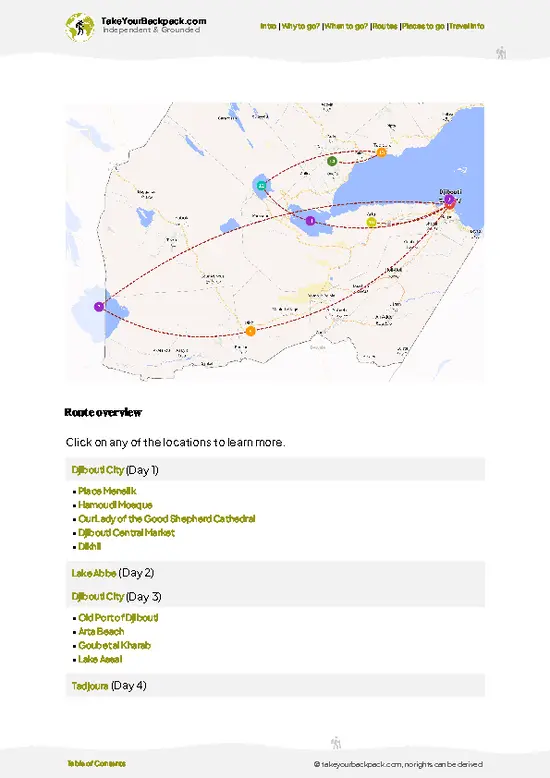
Dikhil works well as a base for trips toward Lake Abbe and the southern desert, though all need a 4x4 and a driver, so costs fall when you share.
Lake Abbe:
The salt lake on the Ethiopian border is lined with limestone chimneys that steam at dawn and shelter flamingos. The drive takes about 2.5 to 3 hours each way on a mix of paved road and rough track. Expect US$40 to 70 per person in a shared 4x4. Go between November and March, and the common error is leaving too late and missing the cool morning light.
👉 Explore Lake Abbe
Lake Assal:
At about 150 meters below sea level, this crater lake is one of the lowest points on Earth and ringed by white salt flats. From Dikhil it takes roughly 3 hours each way, usually combined with a stop in Djibouti City. Budget US$30 to 60 per person when sharing. … read more 👉
Dikhil works well as a base for trips toward Lake Abbe and the southern desert, though all need a 4x4 and a driver, so costs fall when you share.
Lake Abbe:
The salt lake on the Ethiopian border is lined with limestone chimneys that steam at dawn and shelter flamingos. The drive takes about 2.5 to 3 hours each way on a mix of paved road and rough track. Expect US$40 to 70 per person in a shared 4x4. Go between November and March, and the common error is leaving too late and missing the cool morning light.
👉 Explore Lake Abbe
Lake Assal:
At about 150 meters below sea level, this crater lake is one of the lowest points on Earth and ringed by white salt flats. From Dikhil it takes roughly 3 hours each way, usually combined with a stop in Djibouti City. Budget US$30 to 60 per person when sharing. Swimming is possible but the water is extremely salty, so bring fresh water to rinse off.
👉 Explore Lake Assal
Gaggade Plain:
This dry plain of volcanic rock and acacia sits near Lake Abbe and suits walkers who want empty land. Allow about 2 hours by 4x4 each way. Costs are shared with the Lake Abbe trip, so combine them. Visit in cooler months, and carry at least 3 liters of water each.

As Eyla:
A small town on the Ethiopia road, As Eyla gives a view of a livestock trading corridor and local life. It takes about 1.5 hours each way by shared transport, at US$3 to 8 total. Go in the morning, since activity fades by midday.
👉 Explore As Eyla

🛡️ SafetyScams, Hazards, and Annoyances

Dikhil is broadly safe for travelers, and the usual troubles are small ones. Petty theft is uncommon, but keep your phone and cash out of sight in the market, and carry only what you need for the day. Solo travelers, women included, should dress modestly in loose, covering clothing, which in this conservative, mostly Muslim area avoids unwanted attention. Night is quiet, but poorly lit streets make walking after dark uncomfortable, so stay in the center and return before late evening. The main annoyance is heat, and dehydration catches more people out than crime, so drink steadily and rest at midday. Ask permission before photographing people, and never photograph military or government sites, since this near the border it can bring questioning from officials. Carry your passport or a copy, … read more 👉
Dikhil is broadly safe for travelers, and the usual troubles are small ones. Petty theft is uncommon, but keep your phone and cash out of sight in the market, and carry only what you need for the day. Solo travelers, women included, should dress modestly in loose, covering clothing, which in this conservative, mostly Muslim area avoids unwanted attention. Night is quiet, but poorly lit streets make walking after dark uncomfortable, so stay in the center and return before late evening. The main annoyance is heat, and dehydration catches more people out than crime, so drink steadily and rest at midday. Ask permission before photographing people, and never photograph military or government sites, since this near the border it can bring questioning from officials. Carry your passport or a copy, as police checkpoints on the road are routine. Agree prices for rides and guides before starting, because haggling afterward causes most disputes. If you plan to head toward the Ethiopian or Somaliland frontier areas, check current conditions locally and use a registered driver.

FAQFrequently asked questions about Dikhil

Dikhil is worth a short visit mainly as a gateway rather than a destination in itself. The town offers a quiet look at inland Djibouti, with a market and tea stalls along the RN1 road, and it sits closer than the capital to Lake Abbe, about 2.5 to 3 hours by 4x4. Most travelers stay one night, use it to arrange a driver, and move on.
One night and one full day are enough for Dikhil itself, and two to three days if you add Lake Abbe or Gaggade Plain. The town takes about an hour to walk through, so the extra time goes to the surrounding desert. Plan around the heat, with outings in the cool season from November to March.
Dikhil can be reached from Djibouti City in a long day, since the road is roughly 100 kilometers and takes 2 to 2.5 hours by minibus at about US$3 to 6. That leaves little time to see anything once you arrive, and the last vehicles back leave by mid-afternoon. A better plan is to stay one night, which also positions you for an early start to the lakes.
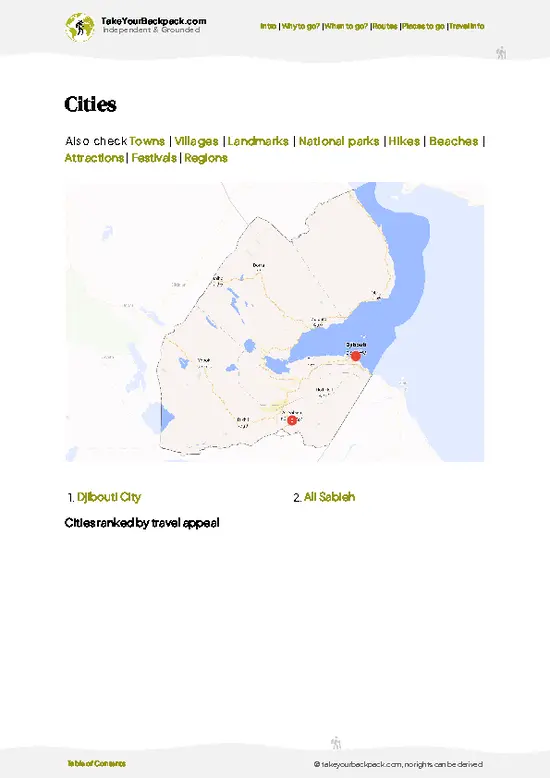
⚠️ Things can change over time, so always validate details locally before you go.

Other Djiboutian towns near Dikhil

Explore more nearby:

  • As Eyla—Highway tea stalls, truck stop, stony plain| 31 km away
  • Yoboki—Afar tea stalls, dusty main strip, dry riverbeds| 53 km away
  • Holhol—Railway halt, roadside stands, volcanic plain| 65 km away

💡 Not sure where to go next?
Create a personalized itinerary for Djibouti including Dikhil and the places that fit your trip.

Generate my itinerary

👉 Discover all towns

Or checkout all Djibouti has to offer (think cities, towns, villages, national parks, hikes, beaches, festivals)
Country photo of Djibouti

We 💚 feedbackWhat to keep in mind

Dikhil works best as one night, two at most, and only if you are using it as a staging point for Lac Abbé. Skip trying to fill extra days in town, because the real attractions lie outside it. I would arrange a driver in Djibouti City beforehand, bring small bills, and carry a scarf for dust and modest dress.

✍️ Help improve this page!
The information on this page is based on in-depth research, insights shared by experienced travelers, and feedback from the local travel community in Djibouti. While every effort is made to keep the information accurate and current, conditions can change — so if you spot anything incorrect or outdated, please get in touch.


🙋‍♂️ Give feedback

👋 Meet the founderWho’s Behind Take Your Backpack?

Johan, backpacker and founder of TakeYourBackpackHi, I’m Johan (Netherlands 🇳🇱), the creator of TakeYourBackpack. Over the past 3 decades, I’ve backpacked through 90+ countries across six continents, gaining extensive experience with independent travel, long-term trips, and overland routes.

This site is built on a combination of firsthand travel experience and carefully curated insights from other backpackers. Many guides are based on places I’ve personally visited, while others bring together tips, observations, and practical advice shared by trusted travelers I’ve met along the way.

The goal is to provide realistic, experience-driven guidance — not generic itineraries — so you can explore destinations with better context, clearer expectations, and more confidence.