×

Egypt🇪🇬 | best festivalsWhere to Find the 10 Best festivals in Egypt

Festivals in Egypt fall into three camps, and they behave very differently. Moulids, the saints’ birthday celebrations of the Nile Delta and Upper Egypt, are free, loud, crowded and mostly Egyptian. Film, music and arts festivals run in Cairo, Alexandria, Luxor and the Red Sea resort towns, with ticketed venues, reliable transport and easy English. Desert and solar events in Siwa and Aswan are small, scattered and costly to reach.

For a backpacker or independent traveler, Cairo and Luxor are the easy picks. Delta moulids pay off, but only if you accept thin tourist infrastructure and cramped crowds. Resort-based events are the weakest value. Hotel prices jump, and the crowd is mostly package tourists. Skip those unless the lineup is the reason you came.

By Johan Kruseman 🇳🇱 | Updated October 18, 2026
Explore the best regions in Egypt

Why go?What Makes Them Special

Egypt suits festivals because religious and agricultural calendars have shaped public life here for thousands of years, and gatherings still follow them. Muslim and Coptic Christian traditions overlap in the same towns, and many saint celebrations are attended by both communities. The Nile Valley concentrates people into a narrow strip, so a celebration in Luxor or a Delta town draws crowds quickly and fills streets rather than stadiums. The result is street-level events where visitors can watch without a ticket.

The climate helps and hurts. Almost no rain falls across most of the country, so outdoor events rarely get canceled for weather. Summer heat in the south, though, pushes most outdoor programming into cooler months, and midday in Upper Egypt from May to September is not worth planning … read more 👉
Egypt suits festivals because religious and agricultural calendars have shaped public life here for thousands of years, and gatherings still follow them. Muslim and Coptic Christian traditions overlap in the same towns, and many saint celebrations are attended by both communities. The Nile Valley concentrates people into a narrow strip, so a celebration in Luxor or a Delta town draws crowds quickly and fills streets rather than stadiums. The result is street-level events where visitors can watch without a ticket.

The climate helps and hurts. Almost no rain falls across most of the country, so outdoor events rarely get canceled for weather. Summer heat in the south, though, pushes most outdoor programming into cooler months, and midday in Upper Egypt from May to September is not worth planning around.

Before choosing Egypt for festivals, know that the most authentic events follow the Islamic lunar calendar, which moves about 11 days earlier each Gregorian year. Dates are confirmed late, sometimes only days ahead by the moon sighting. Booking nonrefundable transport far in advance is a gamble. Coptic dates are fixed to a different calendar and are easier to plan.

Infrastructure is uneven. Cairo and Luxor have trains, flights and plenty of beds. Small towns hosting traditional gatherings may have a single basic hotel, which sells out. Expect crowds, noise and little formal information in English. Official festival websites are often incomplete, so local confirmation through your hotel or a guide matters. Foreign visitors are welcome at most public events, but religious ones carry expectations of modest dress and respectful behavior. Egypt rewards flexibility far more than tight scheduling.
Why These Made the Cut
The list of best festivals in Egypt is created based on energy, traditions, crowd experience, activities, and overall excitement. If you feel a festival is missing in this list, please let us know.

When to go?When to Plan Your Trip

Best months: The best months for festivals in Egypt are October to April, when daytime highs sit around 20 to 28°C and outdoor gatherings are comfortable. Rain is minimal. Cairo averages roughly 25 mm a year, mostly in winter, while Alexandria and the north coast get more, around 150 to 190 mm between November and March.

Peak and shoulder seasons: December to February is the busiest stretch in Luxor and Aswan, with the highest prices. Dorm beds and budget rooms can cost 30 to 60 percent more than in shoulder months, and good places sell out around Christmas and New Year. Days reach 22 to 26°C in the south, but nights can drop to 5 to 10°C, and desert camps are properly cold. October, November, March and April are the smarter value. Temperatures are still pleasant, crowds are thinner, and … read more 👉
Best months: The best months for festivals in Egypt are October to April, when daytime highs sit around 20 to 28°C and outdoor gatherings are comfortable. Rain is minimal. Cairo averages roughly 25 mm a year, mostly in winter, while Alexandria and the north coast get more, around 150 to 190 mm between November and March.

Peak and shoulder seasons: December to February is the busiest stretch in Luxor and Aswan, with the highest prices. Dorm beds and budget rooms can cost 30 to 60 percent more than in shoulder months, and good places sell out around Christmas and New Year. Days reach 22 to 26°C in the south, but nights can drop to 5 to 10°C, and desert camps are properly cold. October, November, March and April are the smarter value. Temperatures are still pleasant, crowds are thinner, and prices ease.

Months to avoid: June to August is not worth the effort in Upper Egypt. Luxor and Aswan regularly hit 40 to 45°C, and outdoor daytime activity becomes miserable. Cairo is hot too, at 33 to 36°C, though it is bearable in the evening. Siwa is hot all summer and best in the cooler months. Along the Red Sea, summer is hot but livable, and domestic tourists fill the resorts at higher prices during school holidays.

Moving dates: Religious calendars override season. Ramadan shifts by about 11 days each year. Daytime sightseeing slows, many restaurants close until sunset, and nights come alive. Eid periods bring packed trains, sold-out buses and higher fares, so book transport early. In summer Ramadan, heat plus fasting makes long days hard. A winter Ramadan is much easier.

festival hoppingOptimizing Your Multi-Stop Itinerary

Trip length: A trip combining several festivals in Egypt needs 10 to 21 days, depending on whether you include Siwa or Abu Simbel. Anything shorter turns into a transit marathon, because dates are fixed and distances are long.

Direction and clusters: Cairo is the natural hub. The Cairo, Alexandria and Delta cluster works well together: Alexandria is about 2.5 hours by train, and Delta towns like Tanta are roughly 1.5 to 2 hours from Cairo. Spend 3 to 4 days in Cairo and 1 to 2 in Alexandria. Then go south. The Luxor and Aswan pair is the second cluster. Luxor to Aswan takes about 3.5 hours by train, or 3 to 4 hours by road. Allow 3 to 4 days in Luxor and 2 to 3 in Aswan. Cairo to Luxor is about 10 hours on the sleeper train or about an hour by plane. Fly one way and take the train the other … read more 👉
Trip length: A trip combining several festivals in Egypt needs 10 to 21 days, depending on whether you include Siwa or Abu Simbel. Anything shorter turns into a transit marathon, because dates are fixed and distances are long.

Direction and clusters: Cairo is the natural hub. The Cairo, Alexandria and Delta cluster works well together: Alexandria is about 2.5 hours by train, and Delta towns like Tanta are roughly 1.5 to 2 hours from Cairo. Spend 3 to 4 days in Cairo and 1 to 2 in Alexandria. Then go south. The Luxor and Aswan pair is the second cluster. Luxor to Aswan takes about 3.5 hours by train, or 3 to 4 hours by road. Allow 3 to 4 days in Luxor and 2 to 3 in Aswan. Cairo to Luxor is about 10 hours on the sleeper train or about an hour by plane. Fly one way and take the train the other if budget allows. Abu Simbel is roughly 3 hours by road from Aswan and needs a very early start.

Siwa: Siwa does not combine with anything. The bus from Cairo takes 8 to 9 hours, and from Marsa Matruh about 4 hours. Give it a minimum of 3 days or skip it. A rushed visit means more time on the bus than at the oasis.

Planning mistakes: The most common error is stacking festivals on consecutive days in distant regions. Trains run late and buses fill, so leave a buffer day between stops. Another is locking in lunar-calendar dates too early. Book flexible accommodation, and confirm dates locally in the final week. Travelers also underestimate Upper Egypt’s heat in shoulder months and schedule midday transfers. Move early in the morning or at night instead. Finally, arriving at a small town on festival day without a bed is a real risk, so reserve the night before.

The ListMust-Visit festivals in Egypt

1 Abu Simbel Sun Festival

Ramses II statues, temple illumination, desert procession

Join travelers and locals as sunlight travels deep into Abu Simbel, lighting up colossal statues in a precise, twice-yearly event.

2 Cairo International Film Festival

Downtown cinemas, global premieres, industry networking

Experience a major gathering of filmmakers and cinephiles, with screenings and panels that draw international attention to Egypt’s capital.

3 D-CAF (Downtown Contemporary Arts Festival)

Urban art, site-specific performances, multimedia installations

Navigate Cairo’s downtown as it transforms into a stage for contemporary art, with pop-up events and interactive works in public spaces.

4 Cairo Jazz Festival

Live jazz, open-air concerts, international musicians

Hear jazz in unexpected places, with performances ranging from classic to experimental, often blending Egyptian influences with global sounds.

5 El Gouna Film Festival

Red Sea resort, gala events, regional cinema

Attend film screenings and industry talks in a modern resort town, where the festival atmosphere extends from theaters to waterfront venues.

6 Luxor African Film Festival

African cinema, Nile-side venues, heritage sites

Watch films from across Africa in historic Luxor, where screenings and events connect contemporary stories with ancient surroundings.

7 Aswan International Women’s Film Festival

Nubian culture, women filmmakers, riverside screenings

Attend film premieres and discussions highlighting women’s voices, set against the backdrop of Aswan’s unique blend of tradition and modernity.

8 Sharm El Sheikh International Theatre Festival

Red Sea stages, experimental theatre, youth troupes

See innovative performances by emerging artists in a coastal setting, with shows that often spill into public spaces and resort venues.

9 Moulid of Al-Hussein

Religious procession, Old Cairo, shrine gatherings

Observe a major pilgrimage as devotees converge on Al-Hussein Mosque, filling the area with prayer, music, and shared food.

10 Moulid of Sayeda Zeinab

Sufi rituals, Cairo neighborhood, devotional music

Join crowds celebrating a revered saint with processions, chanting, and communal meals in one of Cairo’s most storied districts.

11 Moulid of Al-Sayyid Al-Badawi

Tanta city, Sufi brotherhoods, tented fairs

Experience Egypt’s largest moulid, where spiritual rituals mix with carnival-like festivities and visitors camp out for days of celebration.

12 Moulid of Al-Dessouki

Delta town, spiritual healing, local markets

Visit a lesser-known moulid focused on blessings and healing, with a strong local flavor and bustling market stalls.

13 Moulid of Al-Sayyida Nafisa

Women’s shrine, family gatherings, Cairo processions

Take part in a community-focused festival honoring a female saint, marked by inclusive rituals and a welcoming neighborhood atmosphere.

Think you know Egypt?

Prove you’re a true local — uncover 3 lesser-known festivals in Egypt that locals tend to keep to themselves.
Loading the map 🌍

Expert viewTips and Advice from Travelers

How many festivals to attend: Two or three is the right number for a single trip. Egypt’s distances are long, transport shifts constantly, and a festival day takes a full day plus recovery. Attending four or five forces rushed transfers, and the fifth stop is rarely better than extra time at the second. Choose one street-level traditional event, one ticketed cultural event, and keep a spare day for date changes.

Which kind to prioritize: Travelers who want local life should put moulids and religious celebrations first. They are free, unfiltered and rarely marketed to tourists. They are also crowded, loud and basic. Travelers who want comfort and easier logistics should choose film, music and arts festivals in Cairo, Alexandria or Luxor, where tickets, English and transport are straightforward. … read more 👉
How many festivals to attend: Two or three is the right number for a single trip. Egypt’s distances are long, transport shifts constantly, and a festival day takes a full day plus recovery. Attending four or five forces rushed transfers, and the fifth stop is rarely better than extra time at the second. Choose one street-level traditional event, one ticketed cultural event, and keep a spare day for date changes.

Which kind to prioritize: Travelers who want local life should put moulids and religious celebrations first. They are free, unfiltered and rarely marketed to tourists. They are also crowded, loud and basic. Travelers who want comfort and easier logistics should choose film, music and arts festivals in Cairo, Alexandria or Luxor, where tickets, English and transport are straightforward. Those short on time should skip resort-based events, which cost more and tell you little about Egypt. Solo travelers and first-timers do best starting in Cairo, where support is strongest, before attempting smaller towns.

What it costs: Plan on US$25 to 45 a day (about EGP 1,250 to 2,250) for a backpacker: a dorm bed or budget room at EGP 250 to 700 (US$5 to 14), meals at EGP 150 to 400, local transport the rest. Traditional events cost nothing to enter. Ticketed arts or film events typically run EGP 100 to 500 (US$2 to 10) per screening or concert. A local guide for a festival day runs EGP 500 to 1,500 (US$10 to 30), worth it for religious gatherings where context and introductions help. Budget another EGP 100 to 400 for taxis late at night. Festival weeks push rooms up 20 to 50 percent and sometimes more in small towns, so the savings come from booking early.

Costs and delays that catch travelers out: Taxi drivers near big events quote inflated fares. Agree the price before getting in, or use a ride-hailing app in Cairo and Alexandria. Sleeper trains and buses sell out around Eid, so reserve days ahead. Photography fees, camera charges and unofficial guides at sites add up. Carry small notes, because change is scarce. Skipping a local confirmation of dates is the costliest mistake, since a lunar festival can move by a day or two. Keep your accommodation flexible.

Safety and cultural considerations: Crowds at moulids are dense, and pickpocketing and groping happen. Carry a small day bag in front, leave your passport at your lodging with a photo copy on you, and women should consider going with a guide or a group. Dress modestly everywhere: shoulders and knees covered, and more conservative in Upper Egypt and religious settings. Ask before photographing people, especially women and worshippers, and never photograph at military or police checkpoints. During Ramadan, avoid eating, drinking or smoking in public during daylight, and expect most daytime restaurants to be shut. Alcohol is absent at religious events. Check your government’s current travel advice, and note that some Sinai and desert areas require permits or police escorts. Travelers who register with the tourist police at larger sites find help easier to get. A bit of Arabic, even greetings, opens doors. Keep drinks sealed and drink bottled water in the crowds.

✈️ The backpacker research shortcutEgypt Travel Guide

An offline-friendly backpacking guide with optimized travel routes, ranked highlights, transport advice, and the best areas to stay.
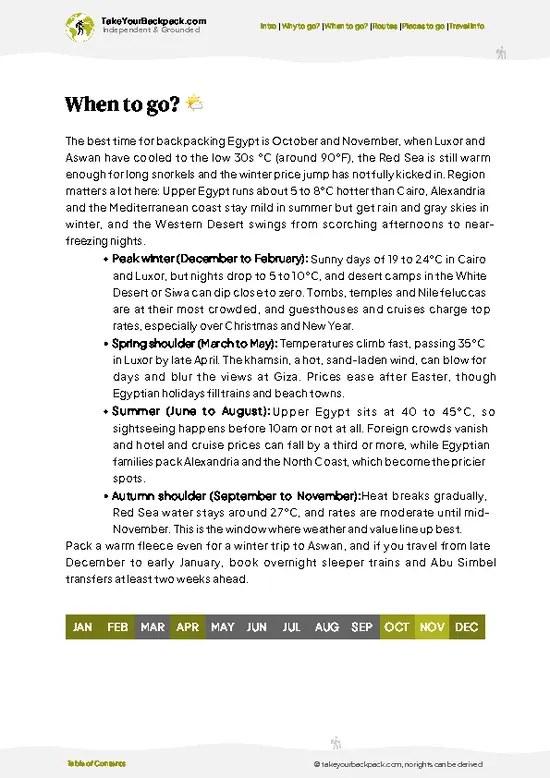
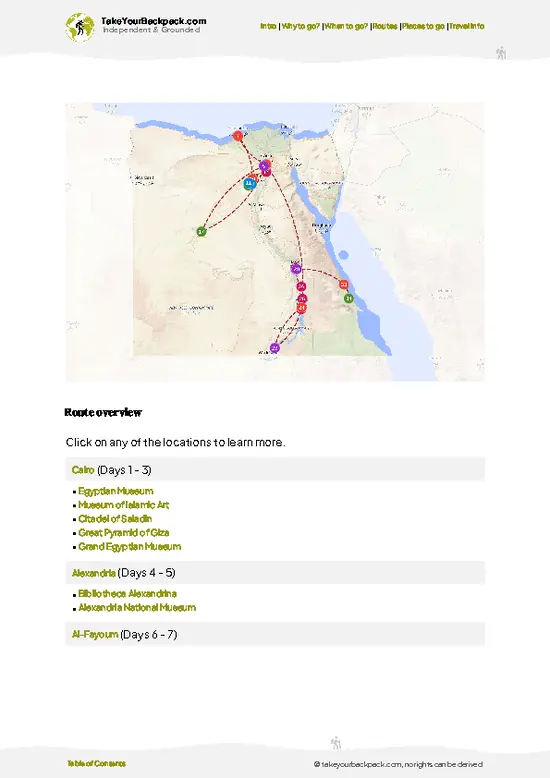
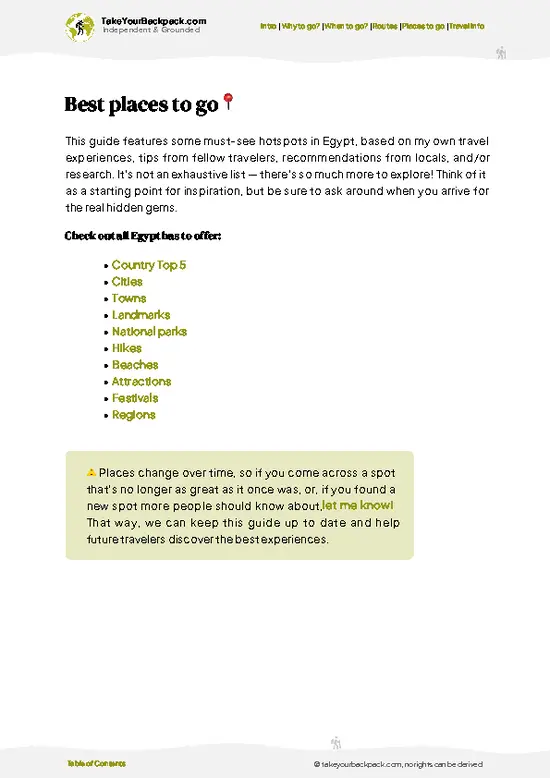
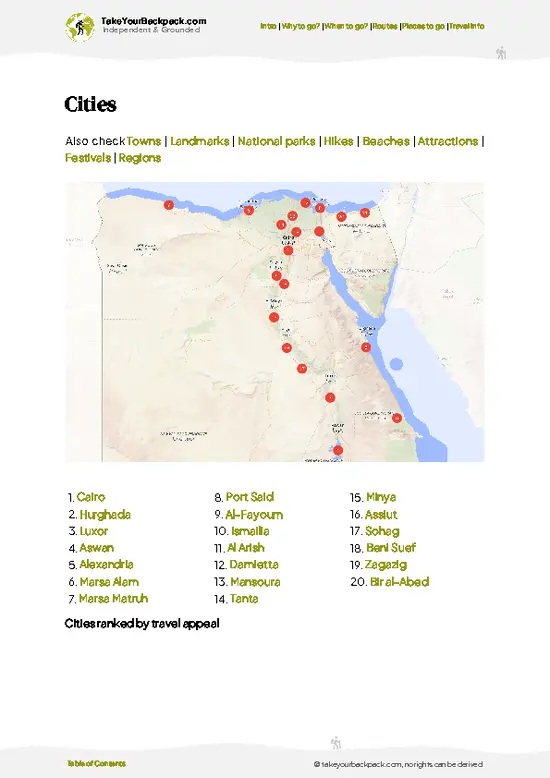
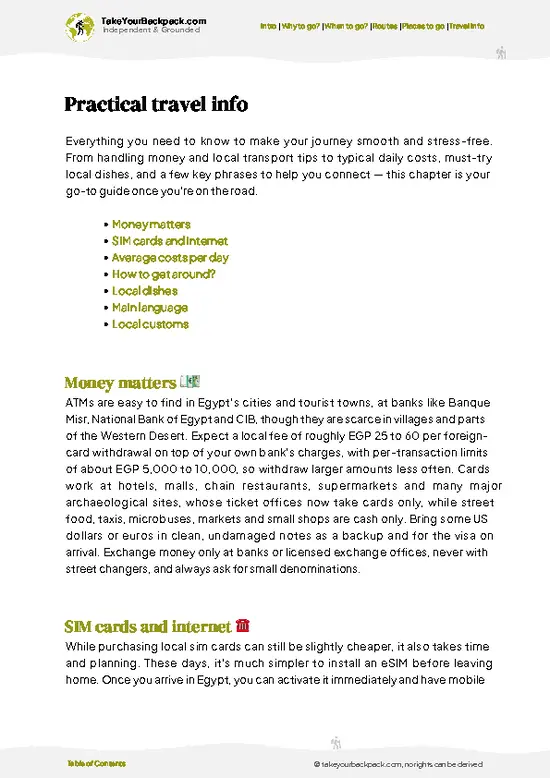
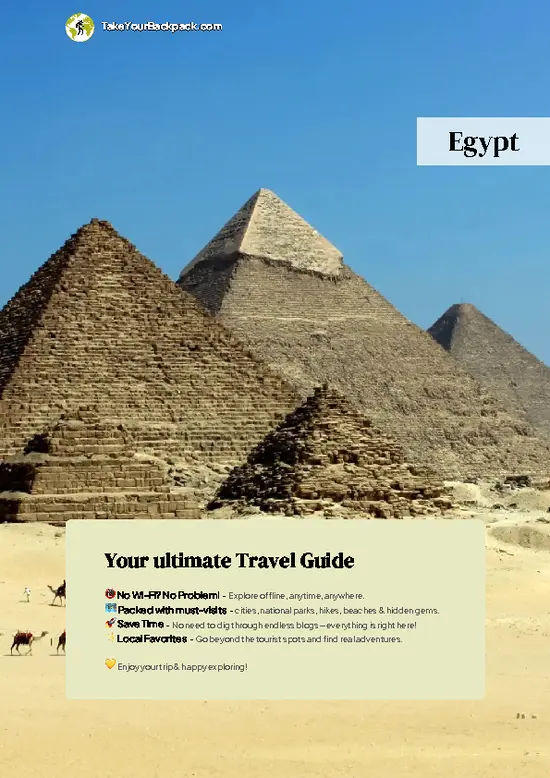
example page 0 from our offline Travel Guide for Egypt
example page 1 from our offline Travel Guide for Egypt
example page 2 from our offline Travel Guide for Egypt
example page 3 from our offline Travel Guide for Egypt
example page 4 from our offline Travel Guide for Egypt
example page 5 from our offline Travel Guide for Egypt
example page 6 from our offline Travel Guide for Egypt
example page 7 from our offline Travel Guide for Egypt
The digital guide (389 pages) contains:
✅ 100 highlights, ranked by travel appeal
✅ Optimized 7, 14 & 21-day travel routes
✅ Cities, national parks, landmarks, beaches
✅ How to get around
✅ Offline-friendly for travel without Wi-Fi
👉 Click to see all 30+ guide features

📅 Plan smarter in minutes, not weeks
✅ Month by month travel advice
✅ Festivals & national holidays
✅ Budget expectations

🗺️ Go to the right places, skip the overrated ones
✅ Honest pros & cons of destinations
✅ Top hikes, parks & viewpoints
✅ Lesser-known places most travelers miss
✅ Clear “worth it vs skip it” guidance

🛏️ Travel smoothly without rookie mistakes
✅ Best areas to stay
✅ Transport systems explained simply
✅ Common scams & safety advice
✅ SIM cards, money & practical tips

🌍 Understand the country, not just visit it
✅ Culture & traditions
✅ 52 Essential phrases & customs
✅ Festivals worth planning around
✅ Traveler-friendly historical context
✅ Insights that make places more meaningful

📱 Built for real travel conditions
✅ Fully downloadable PDF
✅ Works completely offline
✅ Optimized for phone use
✅ Useful in remote areas & buses
✅ Everything in one place
Stop searching, start planning
Get instant access to your full guide. 30‑day money-back guarantee.
+ Add another guide for just

By proceeding you agree to our terms.
Sent to your inbox immediately after payment • 100% Secure Checkout
Best Backpacking Travel Advisor 2025 tourism awardBest Backpacking
Travel Advisor
2025
What others say about Take Your Backpack Guides:
⭐⭐⭐⭐⭐
Fantastic, amazing amount of information!
⭐⭐⭐⭐⭐
My goodness this is amazing, it's what I've been looking for hats off too you!
⭐⭐⭐⭐⭐
I think this is absolutely BRILLIANT
⭐⭐⭐⭐
Very complete and informative. It's still missing places, but I gotta to commend you
⭐⭐⭐⭐⭐
This is truly amazing, thank you, can't wait to explore it with my kids!
⭐⭐⭐⭐⭐
Awesome resource, thank you!
⭐⭐⭐⭐⭐
This is amazing! Can't wait to explore the ones I haven't seen
⭐⭐⭐⭐
I love this! Well done, great idea.
⭐⭐⭐⭐⭐
Thanks for taking the time to make this gem!
⭐⭐⭐⭐⭐
This might be the best website I've ever seen.
⭐⭐⭐⭐⭐
Congratulations, and thank you so much for your work; it's incredibly valuable.
⭐⭐⭐⭐
In all seriousness I think you did a great job pointing out the important spots
⭐⭐⭐⭐⭐
10/10 very good
⭐⭐⭐⭐⭐
As someone who's only just starting to visit regularly this is awesome, thank you.
⭐⭐⭐⭐
Thank you very much! I'm going to visit my dad, it's going to be very useful!
⭐⭐⭐⭐⭐
This is really cool! We'll be travelling for the first time and this definitely come in handy.
⭐⭐⭐⭐⭐
You are now our minister of culture, congratulations 👨‍💼
⭐⭐⭐⭐⭐
Just wanted to tell you that this is a pearl! Going to follow your recommendations.
⭐⭐⭐⭐⭐
This is so cool. I'll definitely be using the resource for my travels soon.
⭐⭐⭐⭐⭐
This is very impressive! Good work.
⭐⭐⭐⭐⭐
This is an amazing and informative site. Very well done!

🛏️ Where to stay?Top Areas to Stay

Egypt has plenty of hostels and budget guesthouses, with dorm beds typically around US$6 to 12 and simple private doubles around US$15 to 30. In Cairo, Downtown holds the biggest cluster of hostels in the upper floors of old apartment blocks, putting you a short walk from Tahrir and the metro, though the traffic noise runs late; Zamalek is leafier and quieter with better bars but costs more, while Giza guesthouses near the pyramids give you sunrise views at the price of a long ride into town. Further south, Luxor’s East Bank is handier for transport and restaurants, its West Bank is calmer and closer to the tombs, Aswan’s Nubian guesthouses across the Nile are peaceful but need a ferry hop, … read more 👉
Egypt has plenty of hostels and budget guesthouses, with dorm beds typically around US$6 to 12 and simple private doubles around US$15 to 30. In Cairo, Downtown holds the biggest cluster of hostels in the upper floors of old apartment blocks, putting you a short walk from Tahrir and the metro, though the traffic noise runs late; Zamalek is leafier and quieter with better bars but costs more, while Giza guesthouses near the pyramids give you sunrise views at the price of a long ride into town. Further south, Luxor’s East Bank is handier for transport and restaurants, its West Bank is calmer and closer to the tombs, Aswan’s Nubian guesthouses across the Nile are peaceful but need a ferry hop, and Dahab’s seafront strip is the cheapest, most social spot on the Red Sea coast.

If you enjoy meeting fellow travelers, consider choosing hostels with high ratings for atmosphere. On the other hand, if you prefer having your own space, a hotel might be a better option.

EgyptDiscover the Country

👋 Meet the founderWho’s Behind Take Your Backpack?

Johan, backpacker and founder of TakeYourBackpackHi, I’m Johan (Netherlands 🇳🇱), the creator of TakeYourBackpack. Over the past 3 decades, I’ve backpacked through 90+ countries across six continents, gaining extensive experience with independent travel, long-term trips, and overland routes.

This site is built on a combination of firsthand travel experience and carefully curated insights from other backpackers. Many guides are based on places I’ve personally visited, while others bring together tips, observations, and practical advice shared by trusted travelers I’ve met along the way.

The goal is to provide realistic, experience-driven guidance — not generic itineraries — so you can explore destinations with better context, clearer expectations, and more confidence.