×

El Salvador🇸🇻 | best regionsTop-Rated 2 regions in El Salvador

El Salvador is the smallest country in Central America, and that is exactly what shapes its regions. You can cross it in about four hours, yet the mood changes fast. The Pacific coast hums with generator-warm nights, salt wind and the thud of surf. The volcanic highlands smell of coffee blossom and wood smoke, with cool mornings and cobbled lanes. The east and north are hotter, quieter and rougher on the road. Prices, crowds and bus frequency shift between them, so independent travelers should choose by pace and comfort first, then by distance.

By Johan Kruseman 🇳🇱 | Updated October 9, 2026
Explore the best cities in El Salvador

Why go?Key Factors That Shape the Experience

El Salvador sits on the Pacific Ring of Fire, and that single fact explains almost everything about how the country divides itself. A chain of volcanoes runs parallel to the coast, with black sand beaches on one side and cool, ash-fed highlands on the other. Soil is rich, so coffee terraces climb the slopes, and the air changes from sticky heat at sea level to a light chill above 1,000 meters.

The country is also dense. Around six million people live in a territory of roughly 21,000 square kilometers, which means short distances and a crowded, noisy bus network of repainted school buses that reaches nearly every town for well under US$2 a ride. Colonial plazas, Maya sites and civil war memory sit close together, so history is never far from the road.

Before choosing El Salvador, know that … read more 👉
El Salvador sits on the Pacific Ring of Fire, and that single fact explains almost everything about how the country divides itself. A chain of volcanoes runs parallel to the coast, with black sand beaches on one side and cool, ash-fed highlands on the other. Soil is rich, so coffee terraces climb the slopes, and the air changes from sticky heat at sea level to a light chill above 1,000 meters.

The country is also dense. Around six million people live in a territory of roughly 21,000 square kilometers, which means short distances and a crowded, noisy bus network of repainted school buses that reaches nearly every town for well under US$2 a ride. Colonial plazas, Maya sites and civil war memory sit close together, so history is never far from the road.

Before choosing El Salvador, know that safety has improved sharply since the government's crackdown on gangs, and police and soldier checkpoints are common and routine. Carry your passport, expect to be waved through, and keep valuables out of sight. The US dollar is the currency, so budgeting is simple. Facilities thin out quickly away from the main tourist areas, and Spanish matters far more than English.
Why These Made the Cut
The list of best regions in El Salvador is created based on landscapes, local culture, attractions, vibes, and overall appeal. If you feel a region is missing in this list, please let us know.

When to go?Optimal Periods for Travel

Best months for El Salvador's regions: The best months are November to April, the dry season, when skies are clear, roads stay passable and volcano views open up before the afternoon haze. Days on the coast run 31 to 35°C (88 to 95°F), and the heat is dry enough that shade feels like relief.
Rainy season and shoulder months: From May to October rain arrives in heavy afternoon bursts, with the wettest stretch usually September and October. Most of the country receives roughly 1,500 to 2,000 mm a year, nearly all of it in these months. Mornings are often bright, so early starts still work, but unpaved highland roads turn to red mud and landslides can close a route for a day. May and November are the shoulder months, when green hills and thinner crowds meet fewer rain delays.
Altitude, crowds and … read more 👉
Best months for El Salvador's regions: The best months are November to April, the dry season, when skies are clear, roads stay passable and volcano views open up before the afternoon haze. Days on the coast run 31 to 35°C (88 to 95°F), and the heat is dry enough that shade feels like relief.
Rainy season and shoulder months: From May to October rain arrives in heavy afternoon bursts, with the wettest stretch usually September and October. Most of the country receives roughly 1,500 to 2,000 mm a year, nearly all of it in these months. Mornings are often bright, so early starts still work, but unpaved highland roads turn to red mud and landslides can close a route for a day. May and November are the shoulder months, when green hills and thinner crowds meet fewer rain delays.
Altitude, crowds and prices: The highlands stay cooler at 18 to 25°C (64 to 77°F), with chilly nights in December and January, so pack a fleece. The Pacific coast is warm all year, and surf season peaks from March to October with bigger swells. Crowds spike at Christmas, Holy Week (Semana Santa) and in early August, when Salvadoran families fill beach towns. During these periods, book rooms ahead and expect rates to rise by 20 to 50 percent. Outside them, hostel beds stay around US$10 to 18.

region hoppingTips for Visiting Multiple Destinations

How many days to combine El Salvador's regions: A trip linking several regions needs 7 to 12 days, and the country's small size makes that comfortable. San Salvador is the natural hub because nearly every bus route starts or ends in the capital's terminals.
Direction and pacing: Group the western highlands and volcano area together, then drop to the Pacific coast, and add the north or east only if you have extra days. A loop starting in the west and ending in the capital avoids backtracking. Allow 2 to 4 days per stop, since beaches and mountain towns reward a lazy second morning more than a rushed first. Typical transfers run 1 to 3 hours, and the longest crossings, such as the capital to the far east, take 3.5 to 4 hours by bus. Shuttles cost roughly US$10 to 25 a seat, while chicken buses … read more 👉
How many days to combine El Salvador's regions: A trip linking several regions needs 7 to 12 days, and the country's small size makes that comfortable. San Salvador is the natural hub because nearly every bus route starts or ends in the capital's terminals.
Direction and pacing: Group the western highlands and volcano area together, then drop to the Pacific coast, and add the north or east only if you have extra days. A loop starting in the west and ending in the capital avoids backtracking. Allow 2 to 4 days per stop, since beaches and mountain towns reward a lazy second morning more than a rushed first. Typical transfers run 1 to 3 hours, and the longest crossings, such as the capital to the far east, take 3.5 to 4 hours by bus. Shuttles cost roughly US$10 to 25 a seat, while chicken buses cost US$1 to 2 but add a change or two.
Common planning mistakes: Many travelers try to cram one region per day. Diesel fumes, packed aisles and midday heat make that exhausting, so cap yourself at one real move a day. Another mistake is traveling after dark, because services thin out after about 5 pm and some rural stops have no late connection. Instead, move in the morning, arrive by mid-afternoon and keep the coast for rest days.

The ListMust-Visit regions in El Salvador

1 Ruta de Las Flores

mountain towns, weekend markets, coffee plantations

Wander through highland villages where local crafts, seasonal food stalls, and hillside coffee farms invite slow exploration and unexpected encounters.

el-salvador-region-ruta-de-las-flores
© Google | Hugo Martinez

2 Conchagua

volcanic coastline, Gulf views, fishing villages

Ascend forested slopes for panoramic ocean vistas, then descend to quiet beaches and small communities shaped by the rhythms of the sea.

el-salvador-region-conchagua
© Google |
Loading the map 🌍

Expert viewPro Tips for Exploring the Best

How many regions to visit: I advise three regions on a first trip of one to two weeks. Moves take a half day with luggage, buses run hot and loud, and each place needs a couple of nights to feel like more than a transit stop. Three also lets you sample the highlands, the coast and one wild card without burning your last rest day on a bus. Add a fourth only past two weeks.
Choosing by travel style: Surfers and beach people should put the Pacific coast first: warm water, the sound of surf all night and fresh grilled fish on the sand. Hikers and coffee drinkers should prioritize the volcanic highlands, where mornings are cold enough for a sweater and the trail ends at a crater lake or a farm tasting. History and culture seekers do well in the north and east, where war memorials, small museums … read more 👉
How many regions to visit: I advise three regions on a first trip of one to two weeks. Moves take a half day with luggage, buses run hot and loud, and each place needs a couple of nights to feel like more than a transit stop. Three also lets you sample the highlands, the coast and one wild card without burning your last rest day on a bus. Add a fourth only past two weeks.
Choosing by travel style: Surfers and beach people should put the Pacific coast first: warm water, the sound of surf all night and fresh grilled fish on the sand. Hikers and coffee drinkers should prioritize the volcanic highlands, where mornings are cold enough for a sweater and the trail ends at a crater lake or a farm tasting. History and culture seekers do well in the north and east, where war memorials, small museums and fewer foreigners mean more conversation, though transport is slower. Anyone with limited time should avoid mixing all three styles.
What it costs: Plan US$25 to 45 a day on a shoestring: dorm beds at US$10 to 18, pupusas at US$0.50 to 1.50 each, bus rides at US$0.35 to 2. Mid-range travelers spending US$50 to 90 get private rooms, shuttles and a guided hike. Typical extras per visit include national park entry at roughly US$3 to 6 for foreigners, guides for volcano hikes at about US$5 to 25, and a surf lesson or board rental at US$15 to 40. You get a hot meal, a crater view or a clean wave for what a single coffee costs back home.
Safety and cultural notes: Violent crime has dropped markedly, and travelers report feeling comfortable in tourist areas, but standard care still counts. Skip walking at night in cities, use registered taxis or apps after dark and leave flashy jewelry at home. Expect police and military checkpoints on highways. Stay calm, keep ID within reach and follow instructions. Greetings matter, so say buenos días when entering a shop or bus. Dress modestly in towns and churches, ask before photographing people, and carry small bills, as vendors rarely have change for a US$20.

✈️ The backpacker research shortcutEl Salvador Travel Guide

An offline-friendly backpacking guide with optimized travel routes, ranked highlights, transport advice, and the best areas to stay.
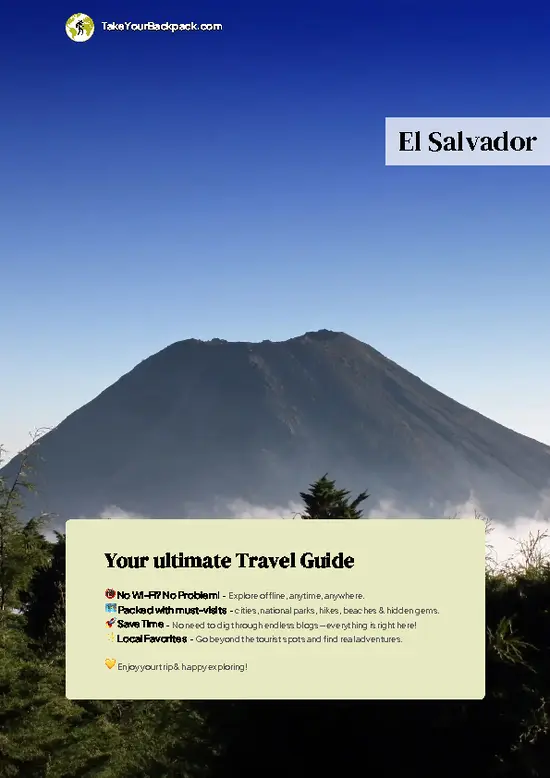
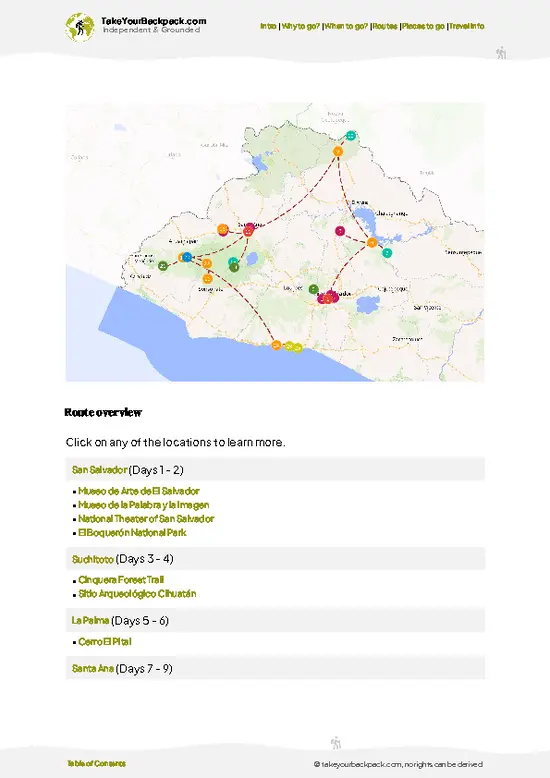
example page 0 from our offline Travel Guide for El Salvador
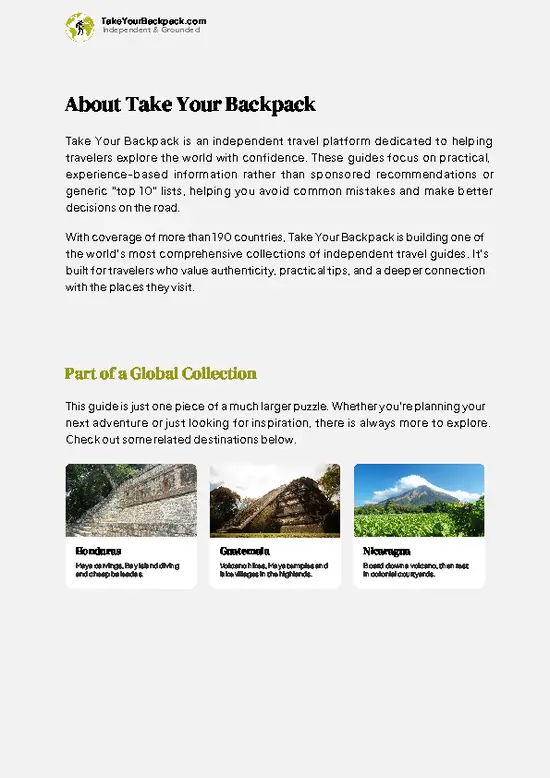
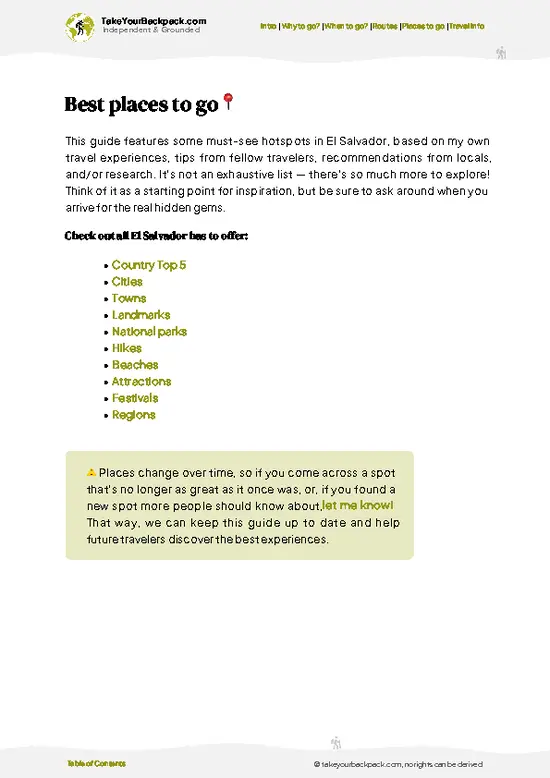
example page 1 from our offline Travel Guide for El Salvador
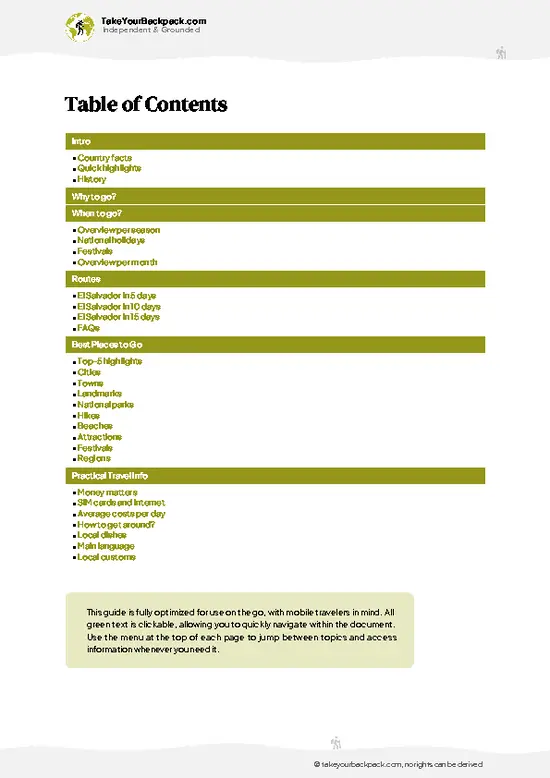
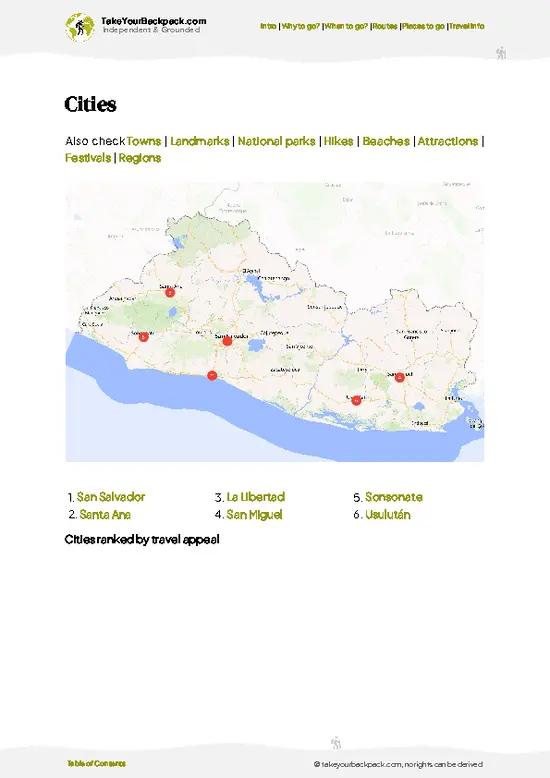
example page 2 from our offline Travel Guide for El Salvador
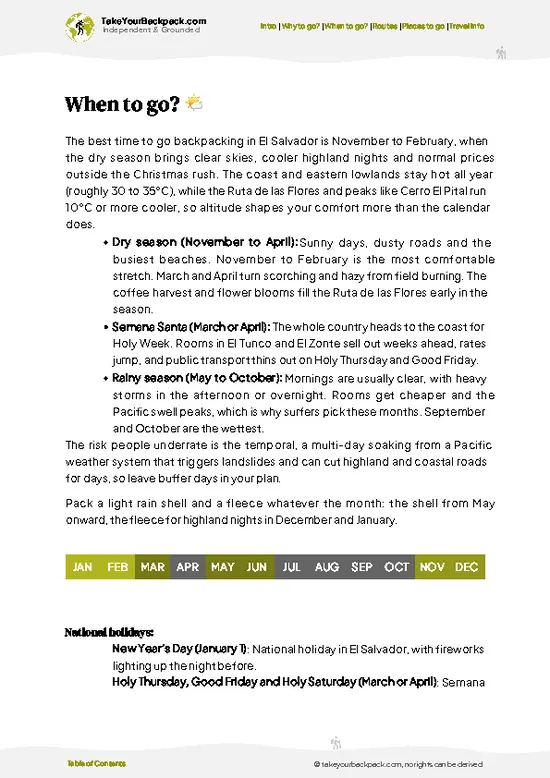
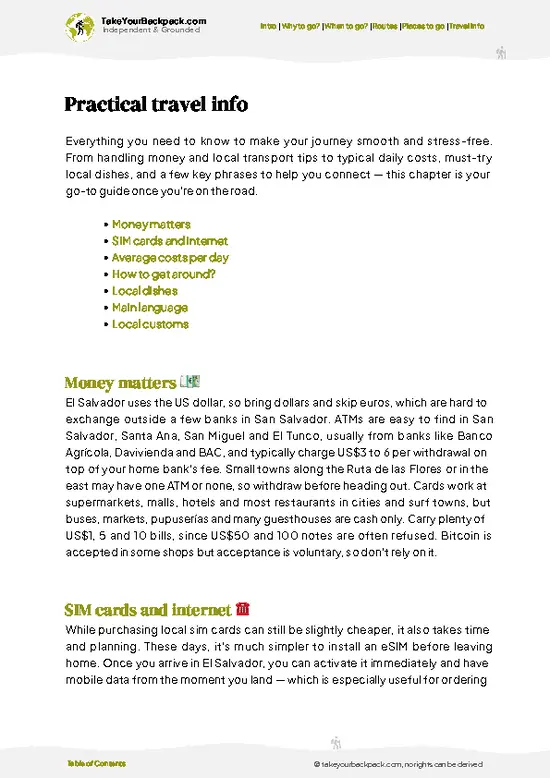
example page 3 from our offline Travel Guide for El Salvador
example page 4 from our offline Travel Guide for El Salvador
example page 5 from our offline Travel Guide for El Salvador
example page 6 from our offline Travel Guide for El Salvador
example page 7 from our offline Travel Guide for El Salvador
The digital guide (294 pages) contains:
✅ 77 highlights, ranked by travel appeal
✅ Optimized 5, 10 & 15-day travel routes
✅ Cities, national parks, landmarks, beaches
✅ How to get around
✅ Offline-friendly for travel without Wi-Fi
👉 Click to see all 30+ guide features

📅 Plan smarter in minutes, not weeks
✅ Month by month travel advice
✅ Festivals & national holidays
✅ Budget expectations

🗺️ Go to the right places, skip the overrated ones
✅ Honest pros & cons of destinations
✅ Top hikes, parks & viewpoints
✅ Lesser-known places most travelers miss
✅ Clear “worth it vs skip it” guidance

🛏️ Travel smoothly without rookie mistakes
✅ Best areas to stay
✅ Transport systems explained simply
✅ Common scams & safety advice
✅ SIM cards, money & practical tips

🌍 Understand the country, not just visit it
✅ Culture & traditions
✅ 52 Essential phrases & customs
✅ Festivals worth planning around
✅ Traveler-friendly historical context
✅ Insights that make places more meaningful

📱 Built for real travel conditions
✅ Fully downloadable PDF
✅ Works completely offline
✅ Optimized for phone use
✅ Useful in remote areas & buses
✅ Everything in one place
Save weeks of stressful planning
Get instant access to your full guide. 30‑day money-back guarantee.
+ Add another guide for just

By proceeding you agree to our terms.
Sent to your inbox immediately after payment • 100% Secure Checkout
Best Backpacking Travel Advisor 2025 tourism awardBest Backpacking
Travel Advisor
2025
What others say about Take Your Backpack Guides:
⭐⭐⭐⭐⭐
Fantastic, amazing amount of information!
⭐⭐⭐⭐⭐
My goodness this is amazing, it's what I've been looking for hats off too you!
⭐⭐⭐⭐⭐
I think this is absolutely BRILLIANT
⭐⭐⭐⭐
Very complete and informative. It's still missing places, but I gotta to commend you
⭐⭐⭐⭐⭐
This is truly amazing, thank you, can't wait to explore it with my kids!
⭐⭐⭐⭐⭐
Awesome resource, thank you!
⭐⭐⭐⭐⭐
This is amazing! Can't wait to explore the ones I haven't seen
⭐⭐⭐⭐
I love this! Well done, great idea.
⭐⭐⭐⭐⭐
Thanks for taking the time to make this gem!
⭐⭐⭐⭐⭐
This might be the best website I've ever seen.
⭐⭐⭐⭐⭐
Congratulations, and thank you so much for your work; it's incredibly valuable.
⭐⭐⭐⭐
In all seriousness I think you did a great job pointing out the important spots
⭐⭐⭐⭐⭐
10/10 very good
⭐⭐⭐⭐⭐
As someone who's only just starting to visit regularly this is awesome, thank you.
⭐⭐⭐⭐
Thank you very much! I'm going to visit my dad, it's going to be very useful!
⭐⭐⭐⭐⭐
This is really cool! We'll be travelling for the first time and this definitely come in handy.
⭐⭐⭐⭐⭐
You are now our minister of culture, congratulations 👨‍💼
⭐⭐⭐⭐⭐
Just wanted to tell you that this is a pearl! Going to follow your recommendations.
⭐⭐⭐⭐⭐
This is so cool. I'll definitely be using the resource for my travels soon.
⭐⭐⭐⭐⭐
This is very impressive! Good work.
⭐⭐⭐⭐⭐
This is an amazing and informative site. Very well done!

🛏️ Where to stay?Top Places to Consider Staying

El Salvador has a solid spread of hostels and budget guesthouses, with dorm beds typically US$10 to 18 and private rooms US$25 to 45. Surf towns El Tunco and El Zonte hold the most options, with El Tunco offering beach bars and late nights while El Zonte is calmer and better for longer surf stays. In San Salvador, the Colonia Escalón, San Benito and Flor Blanca areas are the safest, handy for restaurants and nightlife but a ride away from the historic center, while Santa Ana’s center and Juayúa on the Ruta de las Flores are quiet, cheap bases close to volcanoes and coffee farms.

If you enjoy meeting fellow travelers, consider choosing hostels with high ratings for atmosphere. On the other hand, … read more 👉
El Salvador has a solid spread of hostels and budget guesthouses, with dorm beds typically US$10 to 18 and private rooms US$25 to 45. Surf towns El Tunco and El Zonte hold the most options, with El Tunco offering beach bars and late nights while El Zonte is calmer and better for longer surf stays. In San Salvador, the Colonia Escalón, San Benito and Flor Blanca areas are the safest, handy for restaurants and nightlife but a ride away from the historic center, while Santa Ana’s center and Juayúa on the Ruta de las Flores are quiet, cheap bases close to volcanoes and coffee farms.

If you enjoy meeting fellow travelers, consider choosing hostels with high ratings for atmosphere. On the other hand, if you prefer having your own space, a hotel might be a better option.

El SalvadorMore Places Across El Salvador

👋 Meet the founderWho’s Behind Take Your Backpack?

Johan, backpacker and founder of TakeYourBackpackHi, I’m Johan (Netherlands 🇳🇱), the creator of TakeYourBackpack. Over the past 3 decades, I’ve backpacked through 90+ countries across six continents, gaining extensive experience with independent travel, long-term trips, and overland routes.

This site is built on a combination of firsthand travel experience and carefully curated insights from other backpackers. Many guides are based on places I’ve personally visited, while others bring together tips, observations, and practical advice shared by trusted travelers I’ve met along the way.

The goal is to provide realistic, experience-driven guidance — not generic itineraries — so you can explore destinations with better context, clearer expectations, and more confidence.