×

El Salvador🇸🇻 | best landmarksTop-Rated 4 landmarks in El Salvador

Landmarks in El Salvador are mostly volcanic, ancient or scarred by history, and they sit within a few hours of each other because the country is smaller than Massachusetts. Expect Maya ruins in the west, sulfur-scented crater rims and coffee slopes along the central highlands, and civil war memorials in the northeast, where the ground still feels heavy. Entry fees are low, often US$1 to 5, and most sites are reachable by chicken bus from San Salvador. Crowds stay thin outside weekends, when Salvadoran families arrive with coolers. For backpacking or independent travel, the west is easiest, while the east demands patience, dust and a sturdy pair of boots.

By Johan Kruseman 🇳🇱 | Updated October 9, 2026
Explore the best national parks in El Salvador

Why go?Key Factors That Shape the Experience

El Salvador sits on the Pacific Ring of Fire, and that single fact shapes almost everything you will see. Volcanoes, crater lakes and black-sand coasts share a compact territory, so one dawn can mean cold mist on a cloud forest ridge and the same afternoon, hot asphalt and the smell of grilled corn in a town plaza. The country also holds the southeastern edge of the Maya world, with Pipil and Lenca traces layered over it, and the stone is often rougher and less restored than at famous sites in neighboring Guatemala or Mexico.

The twelve-year civil war that ended in 1992 left a different kind of landmark: bullet-pocked walls, quiet memorials and villages rebuilt by returning families. These places carry weight, so go prepared to listen rather than photograph everything.

Before choosing El … read more 👉
El Salvador sits on the Pacific Ring of Fire, and that single fact shapes almost everything you will see. Volcanoes, crater lakes and black-sand coasts share a compact territory, so one dawn can mean cold mist on a cloud forest ridge and the same afternoon, hot asphalt and the smell of grilled corn in a town plaza. The country also holds the southeastern edge of the Maya world, with Pipil and Lenca traces layered over it, and the stone is often rougher and less restored than at famous sites in neighboring Guatemala or Mexico.

The twelve-year civil war that ended in 1992 left a different kind of landmark: bullet-pocked walls, quiet memorials and villages rebuilt by returning families. These places carry weight, so go prepared to listen rather than photograph everything.

Before choosing El Salvador, know that infrastructure is uneven. Signage is sparse, some sites close early or without notice, and interpretation is often in Spanish only. Heat, humidity and sudden downpours shape every outing. Yet the small distances and the warmth of locals who will cheerfully point you onto the right bus make independent exploring more manageable than the country’s reputation suggests. Come for depth, not polish.
Behind the Scenes of Selection
The list of best unique sites in El Salvador is created based on history or culture, wow factor, atmosphere, quirks, and memorability. If you feel a unique site is missing in this list, please let us know.

When to go?Optimal Periods for Travel

Best months for landmarks: The best months are November to February, when the dry season brings clear skies, crisp volcano views and daytime highs of 28 to 32°C with almost no rain. Cloud forest and crater rims can drop to 10 to 15°C at dawn, so a light jacket earns its place in your pack.
Shoulder seasons: March to April turns hot and dusty, with lowland temperatures of 33 to 37°C and hazy horizons from burning fields, so start early and finish before noon. November is a good compromise, as the hills still smell green and wet after the rains while the trails are drying out.
Rainy season: From May to October, most of El Salvador’s 1,700 to 2,000 mm of rain falls, usually in heavy afternoon storms that turn dirt tracks to red mud. Mornings are often clear, so plan outdoor sites for 7 to 11 a. … read more 👉
Best months for landmarks: The best months are November to February, when the dry season brings clear skies, crisp volcano views and daytime highs of 28 to 32°C with almost no rain. Cloud forest and crater rims can drop to 10 to 15°C at dawn, so a light jacket earns its place in your pack.
Shoulder seasons: March to April turns hot and dusty, with lowland temperatures of 33 to 37°C and hazy horizons from burning fields, so start early and finish before noon. November is a good compromise, as the hills still smell green and wet after the rains while the trails are drying out.
Rainy season: From May to October, most of El Salvador’s 1,700 to 2,000 mm of rain falls, usually in heavy afternoon storms that turn dirt tracks to red mud. Mornings are often clear, so plan outdoor sites for 7 to 11 a.m. Volcano summits are frequently clouded in. September and October are the wettest, and rural roads in the east can flood.
Crowds and prices: Crowds spike during Semana Santa (late March or April), the first week of August (San Salvador’s August festivals) and the Christmas period, when Salvadoran families fill sites and hotels raise rates by roughly 20 to 50 percent. Outside those weeks, weekdays are nearly empty.

unique site hoppingTips for Visiting Multiple Destinations

How many days to plan: A trip combining several landmarks in El Salvador works best in 7 to 10 days, which is enough to cross the country without spending every afternoon on a bus.
Grouping the regions: Three clusters make sense. The western highlands around Santa Ana and Ahuachapán sit about 1 to 2 hours apart by road. The central zone around San Salvador and its volcanoes is the transport hub, and nearly every route passes through it. The northeast and east, around Perquín and San Miguel, need more time because the roads wind and buses thin out. Travel west to east, finishing in the northeast, so the longest and slowest leg comes when you are acclimated to the heat and the schedules.
Time per stop: Allow half a day for most ruins and memorials, and a full morning for any volcano hike, since … read more 👉
How many days to plan: A trip combining several landmarks in El Salvador works best in 7 to 10 days, which is enough to cross the country without spending every afternoon on a bus.
Grouping the regions: Three clusters make sense. The western highlands around Santa Ana and Ahuachapán sit about 1 to 2 hours apart by road. The central zone around San Salvador and its volcanoes is the transport hub, and nearly every route passes through it. The northeast and east, around Perquín and San Miguel, need more time because the roads wind and buses thin out. Travel west to east, finishing in the northeast, so the longest and slowest leg comes when you are acclimated to the heat and the schedules.
Time per stop: Allow half a day for most ruins and memorials, and a full morning for any volcano hike, since you will want to be down before afternoon cloud and storms. Typical transfers run 1 to 2 hours between western and central stops, and 3 to 4 hours from San Salvador to the northeast. Chicken buses cost under US$1 to 3 per ride, while shuttles cost more but save time.
Common planning mistakes: The usual error is packing three sites into one day, then losing hours to missed connections and midday heat. Choose two at most. Another is leaving the return leg until dusk, when buses thin out and fewer vehicles run on rural roads. Build a slow buffer day into the east, where weather and schedules decide.

The ListMust-Visit landmarks in El Salvador

1 Joya de Cerén

buried village, volcanic ash, daily life remains

Walk through preserved remnants of a pre-Hispanic farming community, frozen in time by volcanic eruption and revealing everyday details of ancient life.

el-salvador-unique-site-joya-de-ceren
© Google | Chris Webster

2 Tamanique Waterfalls

cliffside drops, swimming holes, rugged descent

Navigate steep trails to reach dramatic falls plunging into deep basins, offering a cool swim after a challenging hike through wild terrain.

el-salvador-unique-site-tamanique-waterfalls
© Google | Nury Alvarenga

3 Cascadas de La Paz

multi-tiered waterfalls, forest pools, misty trails

Follow winding forest paths to a series of cascading falls, where clear water collects in tranquil pools surrounded by dense greenery.

el-salvador-unique-site-cascadas-de-la-paz
© Google | Walter Melendez

4 La Gruta del Espíritu Santo

prehistoric cave art, limestone formations, indigenous heritage

Descend into a cavern marked by ancient rock paintings and natural chambers, where the echoes of early civilizations linger in the cool air.

Loading the map 🌍

Expert viewPro Tips for Exploring the Best

How many landmarks to visit: I advise five to seven landmarks over a week or ten days. That number keeps you to one site per morning, which matters because heat, humidity and afternoon storms make anything after 1 p.m. a slog. You also leave room for the unplanned: a pupusa stand by the road, a farmer offering a lift. The reward is arriving at each place with energy to actually look.
Choosing between kinds: If you like history and archaeology, favor the Maya and Pipil sites, which are low-key and rarely crowded. If you are drawn to nature and views, prioritize one or two volcano or crater-rim sites and go at sunrise, when the air is cool and the valleys fill with pale mist. If you want human stories, add a civil war memorial or museum in the northeast and consider a local guide, who gives context … read more 👉
How many landmarks to visit: I advise five to seven landmarks over a week or ten days. That number keeps you to one site per morning, which matters because heat, humidity and afternoon storms make anything after 1 p.m. a slog. You also leave room for the unplanned: a pupusa stand by the road, a farmer offering a lift. The reward is arriving at each place with energy to actually look.
Choosing between kinds: If you like history and archaeology, favor the Maya and Pipil sites, which are low-key and rarely crowded. If you are drawn to nature and views, prioritize one or two volcano or crater-rim sites and go at sunrise, when the air is cool and the valleys fill with pale mist. If you want human stories, add a civil war memorial or museum in the northeast and consider a local guide, who gives context no sign will. Short on time, pick one of each kind rather than three of the same.
What it costs: A realistic backpacker budget is US$25 to 45 a day, including a hostel dorm at US$10 to 15, meals at US$3 to 6 and local transport. El Salvador uses the US dollar, so bring small bills, because change for US$20 is often hard to find in rural areas. Entry fees run about US$1 to 6 per site, some national park fees run slightly higher for foreigners, and guides cost roughly US$10 to 30 depending on the hike. Shuttles or taxis for remote sites add US$15 to 40 per ride, usually split among passengers.
Safety and cultural care: Security has improved a great deal, and the state of exception has put a heavy police and military presence on roads and in towns. You will pass checkpoints, so carry your passport or a copy and answer politely. Volcano and cloud forest hikes are safest with a local guide or tourist police escort, which is often available at no charge at popular sites. Keep valuables out of sight on buses and avoid walking rural roads at dusk.
Respect on the ground: At memorials and sites linked to the war, speak quietly and ask before photographing people or their homes. Many families lost relatives, and a brief greeting in Spanish opens conversations that often end in a coffee or a story. Dress modestly in churches and small towns. Carry water, sun protection and rain gear, because shade is rare and storms arrive fast.

✈️ The backpacker research shortcutEl Salvador Travel Guide

An offline-friendly backpacking guide with optimized travel routes, ranked highlights, transport advice, and the best areas to stay.
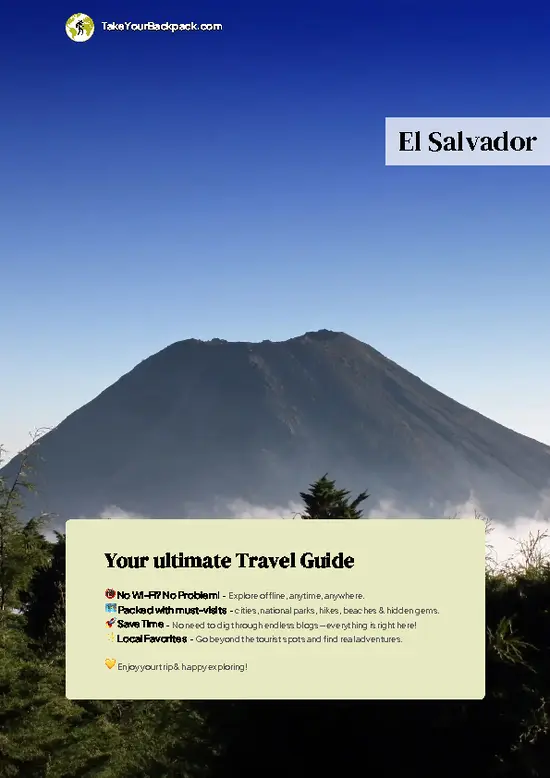
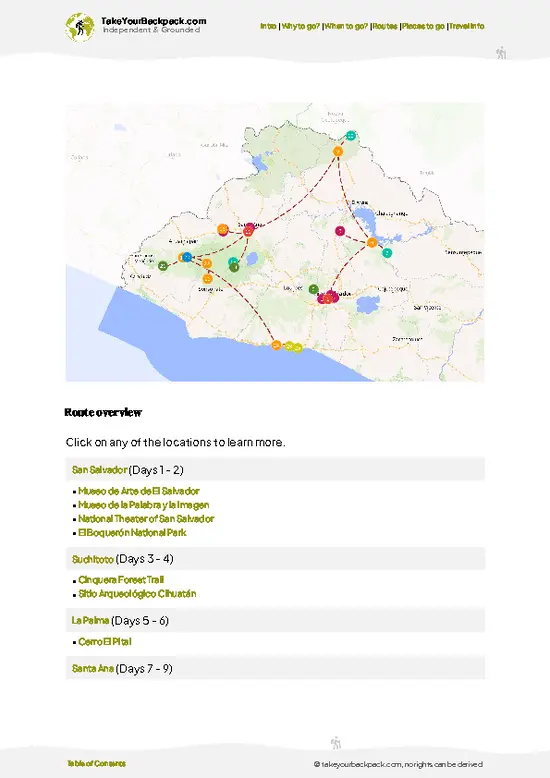
example page 0 from our offline Travel Guide for El Salvador
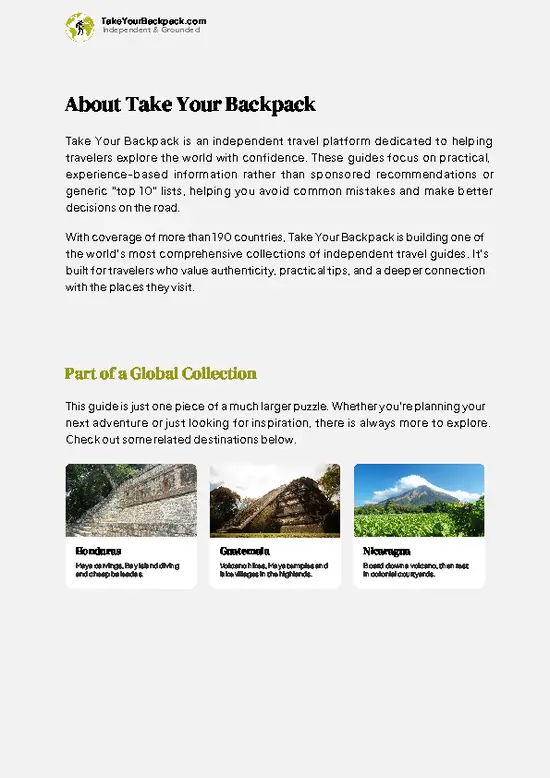
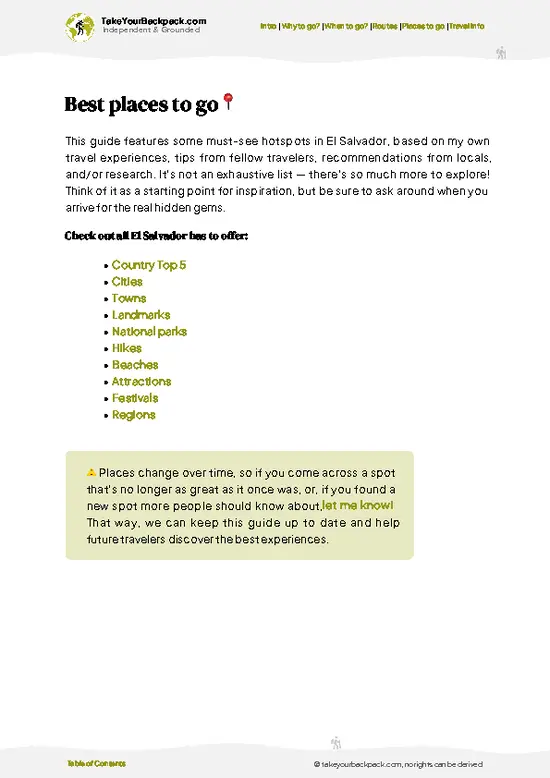
example page 1 from our offline Travel Guide for El Salvador
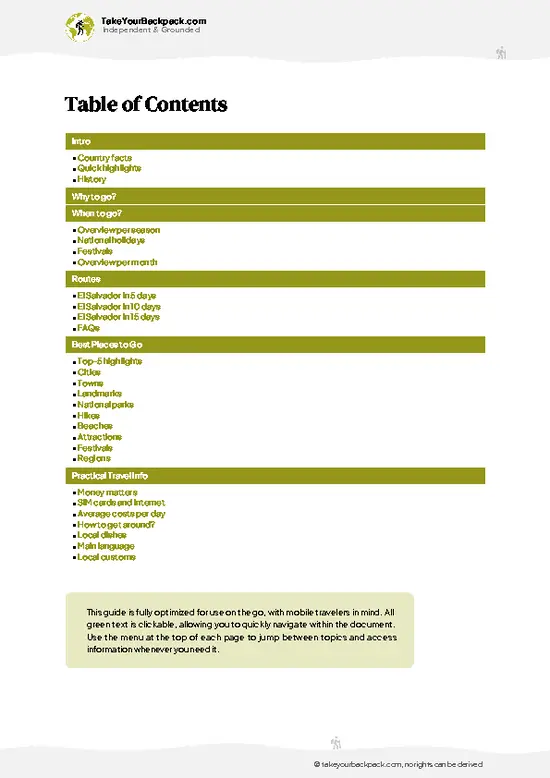
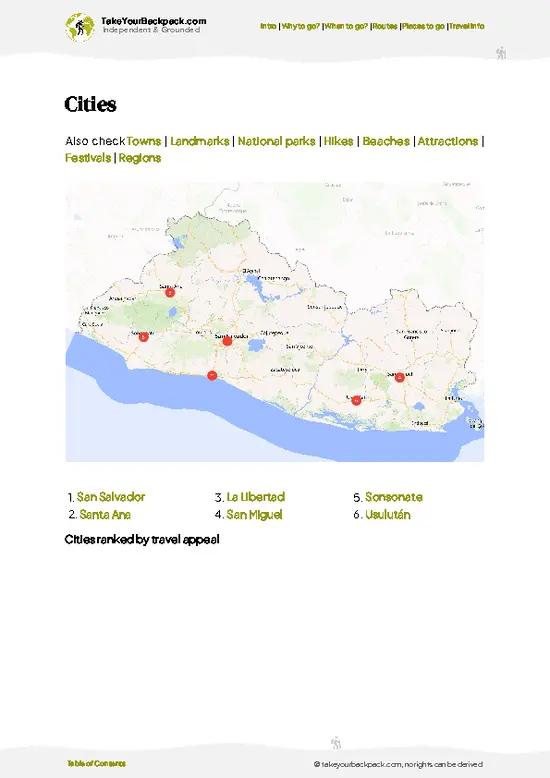
example page 2 from our offline Travel Guide for El Salvador
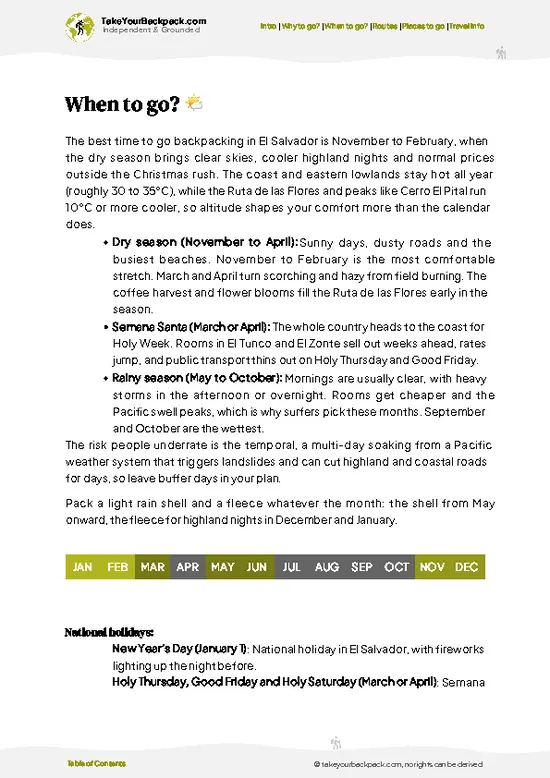
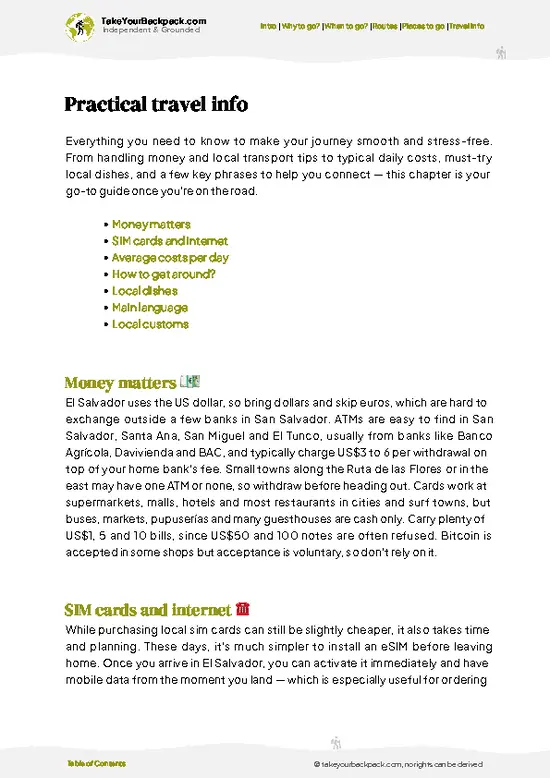
example page 3 from our offline Travel Guide for El Salvador
example page 4 from our offline Travel Guide for El Salvador
example page 5 from our offline Travel Guide for El Salvador
example page 6 from our offline Travel Guide for El Salvador
example page 7 from our offline Travel Guide for El Salvador
The digital guide (294 pages) contains:
✅ 77 highlights, ranked by travel appeal
✅ Optimized 5, 10 & 15-day travel routes
✅ Cities, national parks, landmarks, beaches
✅ How to get around
✅ Offline-friendly for travel without Wi-Fi
👉 Click to see all 30+ guide features

📅 Plan smarter in minutes, not weeks
✅ Month by month travel advice
✅ Festivals & national holidays
✅ Budget expectations

🗺️ Go to the right places, skip the overrated ones
✅ Honest pros & cons of destinations
✅ Top hikes, parks & viewpoints
✅ Lesser-known places most travelers miss
✅ Clear “worth it vs skip it” guidance

🛏️ Travel smoothly without rookie mistakes
✅ Best areas to stay
✅ Transport systems explained simply
✅ Common scams & safety advice
✅ SIM cards, money & practical tips

🌍 Understand the country, not just visit it
✅ Culture & traditions
✅ 52 Essential phrases & customs
✅ Festivals worth planning around
✅ Traveler-friendly historical context
✅ Insights that make places more meaningful

📱 Built for real travel conditions
✅ Fully downloadable PDF
✅ Works completely offline
✅ Optimized for phone use
✅ Useful in remote areas & buses
✅ Everything in one place
Save weeks of stressful planning
Get instant access to your full guide. 30‑day money-back guarantee.
+ Add another guide for just

By proceeding you agree to our terms.
Sent to your inbox immediately after payment • 100% Secure Checkout
Best Backpacking Travel Advisor 2025 tourism awardBest Backpacking
Travel Advisor
2025
What others say about Take Your Backpack Guides:
⭐⭐⭐⭐⭐
Fantastic, amazing amount of information!
⭐⭐⭐⭐⭐
My goodness this is amazing, it's what I've been looking for hats off too you!
⭐⭐⭐⭐⭐
I think this is absolutely BRILLIANT
⭐⭐⭐⭐
Very complete and informative. It's still missing places, but I gotta to commend you
⭐⭐⭐⭐⭐
This is truly amazing, thank you, can't wait to explore it with my kids!
⭐⭐⭐⭐⭐
Awesome resource, thank you!
⭐⭐⭐⭐⭐
This is amazing! Can't wait to explore the ones I haven't seen
⭐⭐⭐⭐
I love this! Well done, great idea.
⭐⭐⭐⭐⭐
Thanks for taking the time to make this gem!
⭐⭐⭐⭐⭐
This might be the best website I've ever seen.
⭐⭐⭐⭐⭐
Congratulations, and thank you so much for your work; it's incredibly valuable.
⭐⭐⭐⭐
In all seriousness I think you did a great job pointing out the important spots
⭐⭐⭐⭐⭐
10/10 very good
⭐⭐⭐⭐⭐
As someone who's only just starting to visit regularly this is awesome, thank you.
⭐⭐⭐⭐
Thank you very much! I'm going to visit my dad, it's going to be very useful!
⭐⭐⭐⭐⭐
This is really cool! We'll be travelling for the first time and this definitely come in handy.
⭐⭐⭐⭐⭐
You are now our minister of culture, congratulations 👨‍💼
⭐⭐⭐⭐⭐
Just wanted to tell you that this is a pearl! Going to follow your recommendations.
⭐⭐⭐⭐⭐
This is so cool. I'll definitely be using the resource for my travels soon.
⭐⭐⭐⭐⭐
This is very impressive! Good work.
⭐⭐⭐⭐⭐
This is an amazing and informative site. Very well done!

🛏️ Where to stay?Accommodation Highlights

El Salvador has a solid spread of hostels and budget guesthouses, with dorm beds typically US$10 to 18 and private rooms US$25 to 45. Surf towns El Tunco and El Zonte hold the most options, with El Tunco offering beach bars and late nights while El Zonte is calmer and better for longer surf stays. In San Salvador, the Colonia Escalón, San Benito and Flor Blanca areas are the safest, handy for restaurants and nightlife but a ride away from the historic center, while Santa Ana’s center and Juayúa on the Ruta de las Flores are quiet, cheap bases close to volcanoes and coffee farms.

If you enjoy meeting fellow travelers, consider choosing hostels with high ratings for atmosphere. On the other hand, … read more 👉
El Salvador has a solid spread of hostels and budget guesthouses, with dorm beds typically US$10 to 18 and private rooms US$25 to 45. Surf towns El Tunco and El Zonte hold the most options, with El Tunco offering beach bars and late nights while El Zonte is calmer and better for longer surf stays. In San Salvador, the Colonia Escalón, San Benito and Flor Blanca areas are the safest, handy for restaurants and nightlife but a ride away from the historic center, while Santa Ana’s center and Juayúa on the Ruta de las Flores are quiet, cheap bases close to volcanoes and coffee farms.

If you enjoy meeting fellow travelers, consider choosing hostels with high ratings for atmosphere. On the other hand, if you prefer having your own space, a hotel might be a better option.

El SalvadorSee More of El Salvador

👋 Meet the founderWho’s Behind Take Your Backpack?

Johan, backpacker and founder of TakeYourBackpackHi, I’m Johan (Netherlands 🇳🇱), the creator of TakeYourBackpack. Over the past 3 decades, I’ve backpacked through 90+ countries across six continents, gaining extensive experience with independent travel, long-term trips, and overland routes.

This site is built on a combination of firsthand travel experience and carefully curated insights from other backpackers. Many guides are based on places I’ve personally visited, while others bring together tips, observations, and practical advice shared by trusted travelers I’ve met along the way.

The goal is to provide realistic, experience-driven guidance — not generic itineraries — so you can explore destinations with better context, clearer expectations, and more confidence.