×

El Salvador🇸🇻 | best national parksTop-Rated 7 national parks in El Salvador

National parks in El Salvador are small, volcanic and close together, so the choice comes down to altitude and coast rather than distance. The western highlands offer cloud forest, damp pine duff underfoot, cool mornings and a fog that swallows the trail ahead. The coastal and lowland reserves swap that for mangrove mud, hot air and the hum of cicadas. Entry is cheap, often a few dollars, and crowds thin out fast on weekdays. Access runs from paved roads and chicken buses to rutted tracks that need a pickup. For independent travel, the highlands are the easiest start, while remote areas ask for more planning.

By Johan Kruseman 🇳🇱 | Updated October 9, 2026
Explore the best hikes in El Salvador

Why go?Key Factors That Shape the Experience

El Salvador is the smallest country in Central America and the only one without a Caribbean coast, which shapes everything about its protected land. A chain of volcanoes runs across the country, and the ash-rich soil has long been farmed, so much of the original forest was cleared for coffee, sugar and cattle. What survives is fragmented, often on volcano slopes and in cloud forest pockets where mist beads on moss and the air smells of wet leaf litter. The 1980 to 1992 civil war also left some highland areas inaccessible for years, and a few remote parts still feel unvisited today.

This makes the country well suited to short, varied outings and poorly suited to multiday wilderness trekking. Trails are usually brief, well marked in popular areas and rougher elsewhere, and infrastructure is … read more 👉
El Salvador is the smallest country in Central America and the only one without a Caribbean coast, which shapes everything about its protected land. A chain of volcanoes runs across the country, and the ash-rich soil has long been farmed, so much of the original forest was cleared for coffee, sugar and cattle. What survives is fragmented, often on volcano slopes and in cloud forest pockets where mist beads on moss and the air smells of wet leaf litter. The 1980 to 1992 civil war also left some highland areas inaccessible for years, and a few remote parts still feel unvisited today.

This makes the country well suited to short, varied outings and poorly suited to multiday wilderness trekking. Trails are usually brief, well marked in popular areas and rougher elsewhere, and infrastructure is modest: basic visitor centers, simple toilets, small cafés or none at all. Travelers should know that guides are often required or strongly advised in some areas, that opening hours tend to end by mid-afternoon, and that cash is the norm. Distances are short, but roads wind and public transport slows to a crawl on mountain stretches. Expect warm days, sharp sun, sudden rain and a landscape where geology is always close to the surface.
How the List Was Created
The list of best national parks in El Salvador is created based on landscapes, wildlife, adventure opportunities, facilities, and overall experience. If you feel a national park is missing in this list, please let us know.

When to go?Optimal Periods for Travel

Best months and the dry season: The dry season from November to April is the best time for national parks in El Salvador, because skies are clear, trails are firm and volcano views are sharp. Days reach roughly 28 to 33°C in the lowlands and 20 to 26°C in the highlands, with cool nights that can drop to 10 to 15°C at altitude. Dust hangs in the air and the hills turn tawny, while the sun is strong by 10 a.m.
Rainy season and shoulder months: From May to October the country gets most of its roughly 1,500 to 2,000 mm of annual rain, usually as heavy afternoon downpours after bright mornings. Trails turn to slick red mud, rivers rise and cloud often covers summits. The upside is vivid green forest, quieter paths and lower demand. May and October are the shoulder months, with showers that are less … read more 👉
Best months and the dry season: The dry season from November to April is the best time for national parks in El Salvador, because skies are clear, trails are firm and volcano views are sharp. Days reach roughly 28 to 33°C in the lowlands and 20 to 26°C in the highlands, with cool nights that can drop to 10 to 15°C at altitude. Dust hangs in the air and the hills turn tawny, while the sun is strong by 10 a.m.
Rainy season and shoulder months: From May to October the country gets most of its roughly 1,500 to 2,000 mm of annual rain, usually as heavy afternoon downpours after bright mornings. Trails turn to slick red mud, rivers rise and cloud often covers summits. The upside is vivid green forest, quieter paths and lower demand. May and October are the shoulder months, with showers that are less predictable. Coastal areas stay hot and humid all year, often above 30°C, while the highlands are noticeably cooler and wetter.
Crowds and prices: Local holidays matter more than foreign tourism. Semana Santa in March or April and the early August festivities fill popular areas with Salvadoran families, and nearby lodging can rise by 20 to 40 percent. Weekdays outside those periods are the quietest. Entry fees stay fixed through the year.

national park hoppingTips for Visiting Multiple Destinations

How many days to allow: A trip combining several national parks in El Salvador needs 5 to 8 days, because the country is compact but mountain roads are slow. Distances look small on a map, yet a 60 km drive can take two hours behind trucks and buses.
Grouping and direction: The western highlands cluster well around Santa Ana and Ahuachapán, and the central and eastern areas link better from San Salvador or San Miguel. A sensible direction is west to east, or the reverse, using San Salvador as the hinge, since the main bus routes radiate from the capital. Coastal stops fit between the two as short detours rather than separate legs.
Time per stop: Plan half a day to a full day at each park, with an extra night where a pre-dawn start or a guided hike is involved. Travel between regions typically … read more 👉
How many days to allow: A trip combining several national parks in El Salvador needs 5 to 8 days, because the country is compact but mountain roads are slow. Distances look small on a map, yet a 60 km drive can take two hours behind trucks and buses.
Grouping and direction: The western highlands cluster well around Santa Ana and Ahuachapán, and the central and eastern areas link better from San Salvador or San Miguel. A sensible direction is west to east, or the reverse, using San Salvador as the hinge, since the main bus routes radiate from the capital. Coastal stops fit between the two as short detours rather than separate legs.
Time per stop: Plan half a day to a full day at each park, with an extra night where a pre-dawn start or a guided hike is involved. Travel between regions typically takes 2 to 4 hours by bus, usually with a change in a regional hub. Mornings are best for hiking, since cloud builds by noon in the wet months and heat peaks in the dry ones.
Planning mistakes: The most common error is packing in too many stops, which turns the trip into hours on a crowded chicken bus with luggage on your knees. Pick two regions and stay put in each. Another is arriving late, when last entries and the final buses leave by mid-afternoon. Start early, confirm return transport, and build in a slack day for rain.

The ListMust-Visit national parks in El Salvador

1 El Imposible National Park

dense forest, steep ravines, rare wildlife

Hike through tangled cloud forest and deep canyons, where elusive animals and dramatic elevation changes challenge even experienced trekkers.

2 Montecristo National Park

tri-border summit, misty cloud forest, orchids

Ascend to cool, fog-shrouded heights where three countries meet and mossy trails reveal rare plants and highland birds.

3 Cerro Verde National Park

volcano viewpoints, lush gardens, cool climate

Wander shaded trails between volcanoes, pausing for sweeping views and the scent of flowering trees in a refreshingly temperate setting.

el-salvador-national-park-cerro-verde-national-park
© Google |

4 El Boquerón National Park

giant crater, pine woods, city overlook

Peer into a massive volcanic crater surrounded by pine forest, then trace short paths to overlooks above San Salvador.

el-salvador-national-park-el-boqueron-national-park
© Google |

5 Jiquilisco Bay Biosphere Reserve

mangrove channels, sea turtles, coastal wetlands

Paddle through winding mangroves and spot nesting turtles, exploring a vast wetland that supports both wildlife and local fishing communities.

el-salvador-national-park-jiquilisco-bay-biosphere-reserve
© Google |

6 Walter Thilo Deininger National Park

dry forest, limestone caves, birdwatching

Venture into dry tropical forest and explore hidden caves, watching for colorful birds and reptiles along little-used footpaths.

el-salvador-national-park-walter-thilo-deininger-national-park
© Google |

7 La Libertad Coastal Park

rocky shoreline, surf breaks, tide pools

Walk rugged coastal trails past crashing waves and tidal pools, with access to some of the region’s most consistent surf spots.

Loading the map 🌍

Expert viewPro Tips for Exploring the Best

How many parks to visit: I would advise three or four national parks on a single trip. That is enough to compare cloud forest, volcano and coast, and few enough to avoid constant transfers on slow mountain roads. Beyond that, the experiences start to blur and you spend more time on buses than on trails. Each stop earns a full morning, with the afternoon left for a market lunch and a rest from the heat.
Choosing the kind that fits you: Hikers who want views and cool air should prioritize the highlands and volcano areas, where you climb through pine and mist to ridgelines that open over crater lakes and coffee slopes. Travelers who prefer wildlife and a slower pace do better in coastal and mangrove zones, with boat rides, birdsong and sticky heat. Budget-focused travelers should lean on parks … read more 👉
How many parks to visit: I would advise three or four national parks on a single trip. That is enough to compare cloud forest, volcano and coast, and few enough to avoid constant transfers on slow mountain roads. Beyond that, the experiences start to blur and you spend more time on buses than on trails. Each stop earns a full morning, with the afternoon left for a market lunch and a rest from the heat.
Choosing the kind that fits you: Hikers who want views and cool air should prioritize the highlands and volcano areas, where you climb through pine and mist to ridgelines that open over crater lakes and coffee slopes. Travelers who prefer wildlife and a slower pace do better in coastal and mangrove zones, with boat rides, birdsong and sticky heat. Budget-focused travelers should lean on parks reached by regular local bus, and those short on time should choose areas within about two hours of San Salvador.
What it costs: Expect US$25 to 45 a day on a backpacker budget, including a dorm bed or simple guesthouse at US$10 to 20, pupusas and set lunches at US$2 to 5, and local transport. Entry fees are generally US$1 to 6 for foreigners, and some areas charge a small parking or camping fee. Guides cost roughly US$10 to 30 per group for a half-day, and boat trips in coastal areas run about US$15 to 40 per boat. Local bus fares are often under US$1 per leg, while taxis or shared pickups to remote trailheads cost US$10 to 30. Carry small US dollar bills, since El Salvador uses the dollar and change is scarce.
Safety and local etiquette: Tourist areas are much safer than they were a decade ago, but sensible habits still pay off. Hike with a local guide or a group on remote or less-trafficked trails, start early, and avoid walking at dusk. Carry only what you need, since a light daypack and a little cash keep you relaxed. Expect police and soldier checkpoints; carry your passport or a clear copy and stay polite. Dress modestly in villages, greet people with a quick “buenos días,” and ask before photographing locals. Volcanic areas can have sulfur fumes and unstable ground, so follow ranger instructions and stay on marked paths. Pack a rain jacket, sun protection and a liter or two of water, and you get the view without the misery.

✈️ The backpacker research shortcutEl Salvador Travel Guide

An offline-friendly backpacking guide with optimized travel routes, ranked highlights, transport advice, and the best areas to stay.
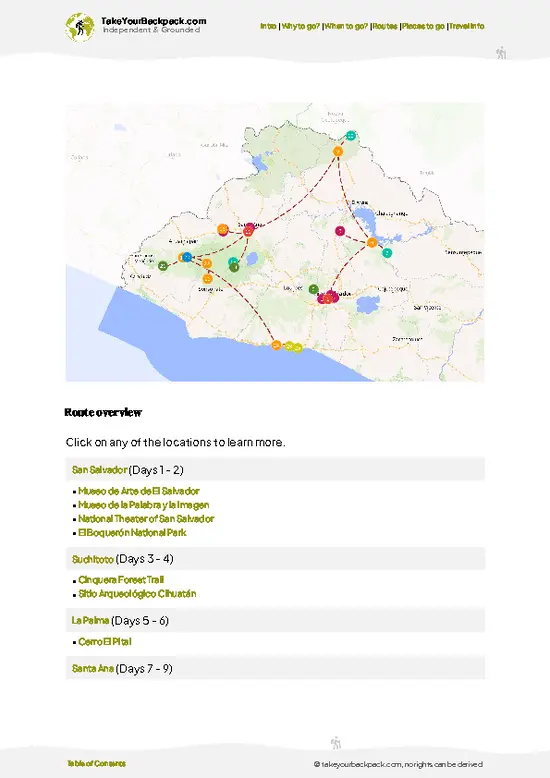
example page 0 from our offline Travel Guide for El Salvador
example page 1 from our offline Travel Guide for El Salvador
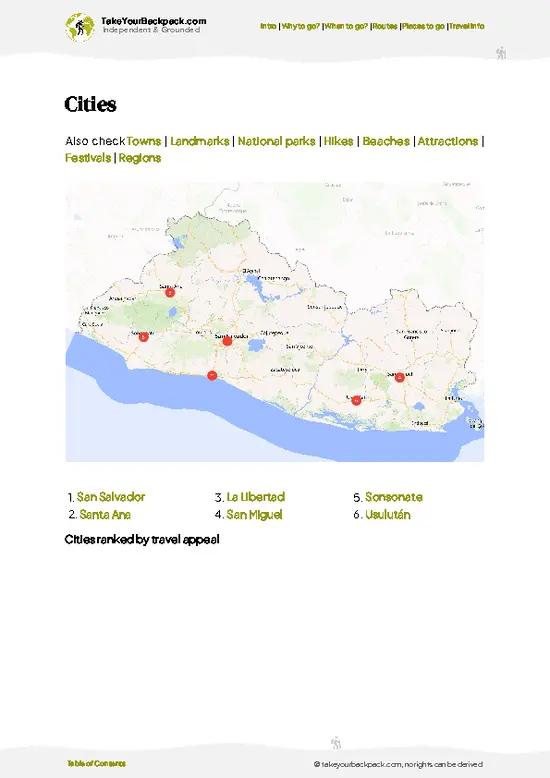
example page 2 from our offline Travel Guide for El Salvador
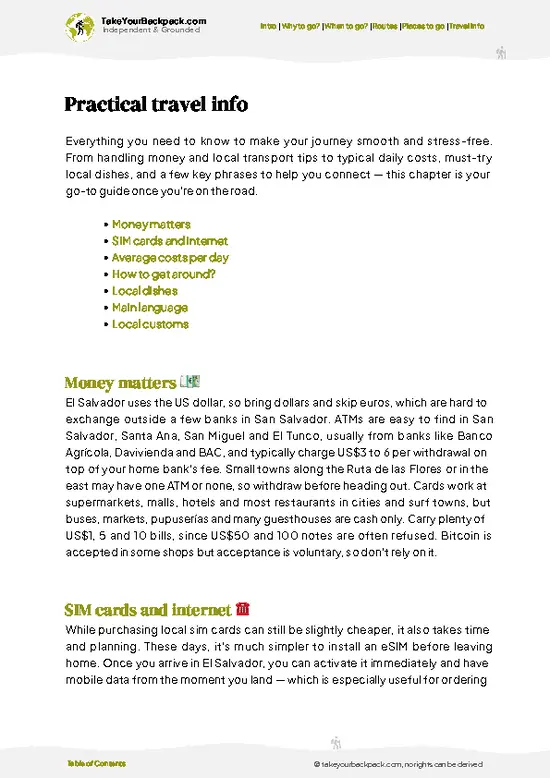
example page 3 from our offline Travel Guide for El Salvador
example page 4 from our offline Travel Guide for El Salvador
example page 5 from our offline Travel Guide for El Salvador
example page 6 from our offline Travel Guide for El Salvador
example page 7 from our offline Travel Guide for El Salvador
The digital guide (294 pages) contains:
✅ 77 highlights, ranked by travel appeal
✅ Optimized 5, 10 & 15-day travel routes
✅ Cities, national parks, landmarks, beaches
✅ How to get around
✅ Offline-friendly for travel without Wi-Fi
👉 Click to see all 30+ guide features

📅 Plan smarter in minutes, not weeks
✅ Month by month travel advice
✅ Festivals & national holidays
✅ Budget expectations

🗺️ Go to the right places, skip the overrated ones
✅ Honest pros & cons of destinations
✅ Top hikes, parks & viewpoints
✅ Lesser-known places most travelers miss
✅ Clear “worth it vs skip it” guidance

🛏️ Travel smoothly without rookie mistakes
✅ Best areas to stay
✅ Transport systems explained simply
✅ Common scams & safety advice
✅ SIM cards, money & practical tips

🌍 Understand the country, not just visit it
✅ Culture & traditions
✅ 52 Essential phrases & customs
✅ Festivals worth planning around
✅ Traveler-friendly historical context
✅ Insights that make places more meaningful

📱 Built for real travel conditions
✅ Fully downloadable PDF
✅ Works completely offline
✅ Optimized for phone use
✅ Useful in remote areas & buses
✅ Everything in one place
Save weeks of stressful planning
Get instant access to your full guide. 30‑day money-back guarantee.
+ Add another guide for just

By proceeding you agree to our terms.
Sent to your inbox immediately after payment • 100% Secure Checkout
Best Backpacking Travel Advisor 2025 tourism awardBest Backpacking
Travel Advisor
2025
What others say about Take Your Backpack Guides:
⭐⭐⭐⭐⭐
Fantastic, amazing amount of information!
⭐⭐⭐⭐⭐
My goodness this is amazing, it's what I've been looking for hats off too you!
⭐⭐⭐⭐⭐
I think this is absolutely BRILLIANT
⭐⭐⭐⭐
Very complete and informative. It's still missing places, but I gotta to commend you
⭐⭐⭐⭐⭐
This is truly amazing, thank you, can't wait to explore it with my kids!
⭐⭐⭐⭐⭐
Awesome resource, thank you!
⭐⭐⭐⭐⭐
This is amazing! Can't wait to explore the ones I haven't seen
⭐⭐⭐⭐
I love this! Well done, great idea.
⭐⭐⭐⭐⭐
Thanks for taking the time to make this gem!
⭐⭐⭐⭐⭐
This might be the best website I've ever seen.
⭐⭐⭐⭐⭐
Congratulations, and thank you so much for your work; it's incredibly valuable.
⭐⭐⭐⭐
In all seriousness I think you did a great job pointing out the important spots
⭐⭐⭐⭐⭐
10/10 very good
⭐⭐⭐⭐⭐
As someone who's only just starting to visit regularly this is awesome, thank you.
⭐⭐⭐⭐
Thank you very much! I'm going to visit my dad, it's going to be very useful!
⭐⭐⭐⭐⭐
This is really cool! We'll be travelling for the first time and this definitely come in handy.
⭐⭐⭐⭐⭐
You are now our minister of culture, congratulations 👨‍💼
⭐⭐⭐⭐⭐
Just wanted to tell you that this is a pearl! Going to follow your recommendations.
⭐⭐⭐⭐⭐
This is so cool. I'll definitely be using the resource for my travels soon.
⭐⭐⭐⭐⭐
This is very impressive! Good work.
⭐⭐⭐⭐⭐
This is an amazing and informative site. Very well done!

🛏️ Where to stay?Top Places to Consider Staying

El Salvador has a solid spread of hostels and budget guesthouses, with dorm beds typically US$10 to 18 and private rooms US$25 to 45. Surf towns El Tunco and El Zonte hold the most options, with El Tunco offering beach bars and late nights while El Zonte is calmer and better for longer surf stays. In San Salvador, the Colonia Escalón, San Benito and Flor Blanca areas are the safest, handy for restaurants and nightlife but a ride away from the historic center, while Santa Ana’s center and Juayúa on the Ruta de las Flores are quiet, cheap bases close to volcanoes and coffee farms.

If you enjoy meeting fellow travelers, consider choosing hostels with high ratings for atmosphere. On the other hand, … read more 👉
El Salvador has a solid spread of hostels and budget guesthouses, with dorm beds typically US$10 to 18 and private rooms US$25 to 45. Surf towns El Tunco and El Zonte hold the most options, with El Tunco offering beach bars and late nights while El Zonte is calmer and better for longer surf stays. In San Salvador, the Colonia Escalón, San Benito and Flor Blanca areas are the safest, handy for restaurants and nightlife but a ride away from the historic center, while Santa Ana’s center and Juayúa on the Ruta de las Flores are quiet, cheap bases close to volcanoes and coffee farms.

If you enjoy meeting fellow travelers, consider choosing hostels with high ratings for atmosphere. On the other hand, if you prefer having your own space, a hotel might be a better option.

El SalvadorMore Places Across El Salvador

👋 Meet the founderWho’s Behind Take Your Backpack?

Johan, backpacker and founder of TakeYourBackpackHi, I’m Johan (Netherlands 🇳🇱), the creator of TakeYourBackpack. Over the past 3 decades, I’ve backpacked through 90+ countries across six continents, gaining extensive experience with independent travel, long-term trips, and overland routes.

This site is built on a combination of firsthand travel experience and carefully curated insights from other backpackers. Many guides are based on places I’ve personally visited, while others bring together tips, observations, and practical advice shared by trusted travelers I’ve met along the way.

The goal is to provide realistic, experience-driven guidance — not generic itineraries — so you can explore destinations with better context, clearer expectations, and more confidence.