v2.webp)
- Adi Keyh Central Market (Souq) — The clearest heartbeat of the town: vendors, fresh mountain produce, spices, second-hand clothes and a lively barter atmosphere; best early in the morning when stalls and local life are at full throttle.
- Martyrs’ Memorial — A modest but meaningful monument and gathering place where locals commemorate the independence struggle; visiting gives insight into community memory and local stories you won’t get from guidebooks.
- Main Eritrean Orthodox Church — The town’s primary church (you’ll recognize the timket/holiday activity) offers both spiritual atmosphere and a window into local religious life and fast-paced ceremonial rhythms.
- Italian-era architecture cluster — A handful of colonial-period buildings and stone houses scattered through the centre; not grand,
- Adi Keyh Central Market (Souq) — The clearest heartbeat of the town: vendors, fresh mountain produce, spices, second-hand clothes and a lively barter atmosphere; best early in the morning when stalls and local life are at full throttle.
- Martyrs’ Memorial — A modest but meaningful monument and gathering place where locals commemorate the independence struggle; visiting gives insight into community memory and local stories you won’t get from guidebooks.
- Main Eritrean Orthodox Church — The town’s primary church (you’ll recognize the timket/holiday activity) offers both spiritual atmosphere and a window into local religious life and fast-paced ceremonial rhythms.
- Italian-era architecture cluster — A handful of colonial-period buildings and stone houses scattered through the centre; not grand, but they show the town’s layered history and make for good slow-walking and photo stops.
- Panoramic ridge lookout — A short walk up from the centre leads to sweeping views over the highland plateau and neighbouring valleys; great for sunrise/sunset and to get your bearings on the landscape.
- Weekly livestock & goods market — On market day villagers bring goats, chickens, household goods and tools; it’s raw, practical and sociable—perfect for seeing regional trade and practicing basic bargaining.
- Local craft workshops — Small family workshops where you can watch and sometimes buy woven baskets, embroidered textiles and leatherwork made by local artisans; direct support for makers and a real slice of everyday creativity.
- Community cultural space / small museum exhibits — Modest displays and community rooms (often run by local associations) that hold photos, flyers and objects from the town’s recent past—useful for context and friendly conversation with locals.
- Coffee-ceremony stops and neighborhood cafés — Not a single flashy café but many homes and tiny cafés that perform traditional coffee ceremonies; it’s the best way to meet people and learn local customs over a few cups.
- Town cemeteries and oral-history corners — Visiting the local cemeteries and speaking with elders is a respectful way to hear first-hand accounts of the area’s history, migrations and wartime memories; it’s quiet, human, and revealing.
Spotted a mistake or missing something? Contact us.

Asmara City Tour
✓ Free cancellation

4 days tour Asmara - Keren - Massawa
✓ Free cancellation

3 days tour Asmara - Massawa - Keren
✓ Free cancellation

4 Days Private Eritrea Tour with Transfer
✓ Free cancellation

8 Days in Eritrea Asmara Ancient Sites and Red Sea Paradise
✓ Free cancellation

7 Days Private Eritrea Tour
✓ Free cancellation

9 Days Eritrea and Beyond Explore Asmara Keren Massawa Djibouti
✓ Free cancellation

Eritrean Highlights Safari 8 Days / 7 Nights
✓ Free cancellation

 Best Backpacking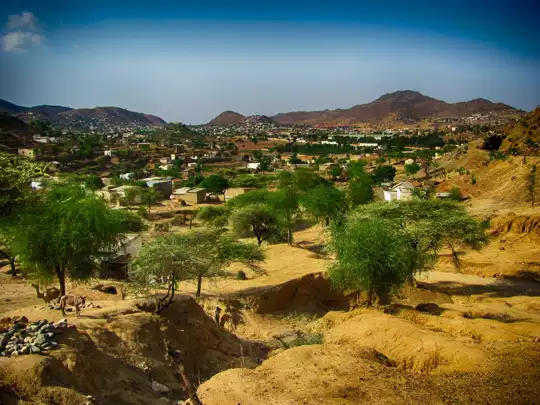
.jpg) Hi, I’m Johan (Netherlands 🇳🇱), the creator of TakeYourBackpack. Over the past decade, I’ve backpacked through 80+ countries across six continents, gaining extensive experience with independent travel, long-term trips, and overland routes.
Hi, I’m Johan (Netherlands 🇳🇱), the creator of TakeYourBackpack. Over the past decade, I’ve backpacked through 80+ countries across six continents, gaining extensive experience with independent travel, long-term trips, and overland routes.