×

Ethiopia🇪🇹 | best regionsBest 4 regions in Ethiopia

Ethiopia is a land of striking contrasts, where each region offers a unique tapestry of climate, landscapes, and cultural character. From the rugged Simien Mountains to the arid expanses of the Danakil Depression, your choice of region shapes your entire backpacking experience. The highlands boast cooler temperatures and lush greenery, perfect for trekking, while the lowlands present a harsher climate, ideal for those seeking adventure in extreme conditions.

Traveling in Ethiopia isn’t just about the sights; it’s about the vibe. Regions like Oromia and Amhara offer rich cultural immersion, with vibrant festivals and local traditions that resonate deeply. Seasonal nuances also play a crucial role; the rainy season can make certain trails impassable, while the dry months reveal breathtaking vistas. Understanding these factors is essential for independent travelers, as they directly influence budget, safety, and ease of travel. Choose wisely, and the rewards will be profound.

By Johan Kruseman 🇳🇱 | Updated June 18, 2026
Explore the best cities in Ethiopia

Why go?Why Travelers Love These Spots

Ethiopia stands out as a land of climatic diversity and cultural richness, offering a tapestry of experiences that few countries can match. From the highlands to the lowlands, the climate shifts dramatically, creating distinct ecosystems that shape both the landscape and the lifestyle of its people. Travelers can find themselves trekking through the rugged Simien Mountains, where the air is crisp and the views are breathtaking, only to descend into the arid plains of the Afar region, where the heat is palpable and the terrain starkly beautiful.

The cultural character of Ethiopia is equally compelling. With over 80 ethnic groups, each with its own traditions, languages, and cuisines, the country is a living museum of human history. This diversity is not just a backdrop; it’s woven into the … read more 👉
Ethiopia stands out as a land of climatic diversity and cultural richness, offering a tapestry of experiences that few countries can match. From the highlands to the lowlands, the climate shifts dramatically, creating distinct ecosystems that shape both the landscape and the lifestyle of its people. Travelers can find themselves trekking through the rugged Simien Mountains, where the air is crisp and the views are breathtaking, only to descend into the arid plains of the Afar region, where the heat is palpable and the terrain starkly beautiful.

The cultural character of Ethiopia is equally compelling. With over 80 ethnic groups, each with its own traditions, languages, and cuisines, the country is a living museum of human history. This diversity is not just a backdrop; it’s woven into the daily lives of its people. However, this richness comes with trade-offs. The vast distances between regions can mean long travel times, which may limit the depth of exploration. While you can cover a lot of ground, the immersive experiences often require patience and planning.

Infrastructure varies widely. Major cities like Addis Ababa have modern amenities, but rural areas may lack reliable roads and services. This can make accessing remote regions challenging, yet those who venture off the beaten path are rewarded with authentic encounters and stunning landscapes that feel untouched by time.

Ethiopia’s unique blend of historical significance—being one of the oldest nations in the world—adds another layer of intrigue. Yet, the traveler must weigh the allure of its ancient sites against the realities of travel logistics. Understanding these constraints is crucial for anyone looking to experience the true essence of Ethiopia. The effort invested in navigating its complexities often leads to profound rewards, making each journey a testament to the country’s enduring spirit.
How the List Was Created
The list of best regions in Ethiopia is created based on landscapes, local culture, attractions, vibes, and overall appeal. If you feel a region is missing in this list, please let us know.

When to go?Optimal Periods for Travel

Climate Variation
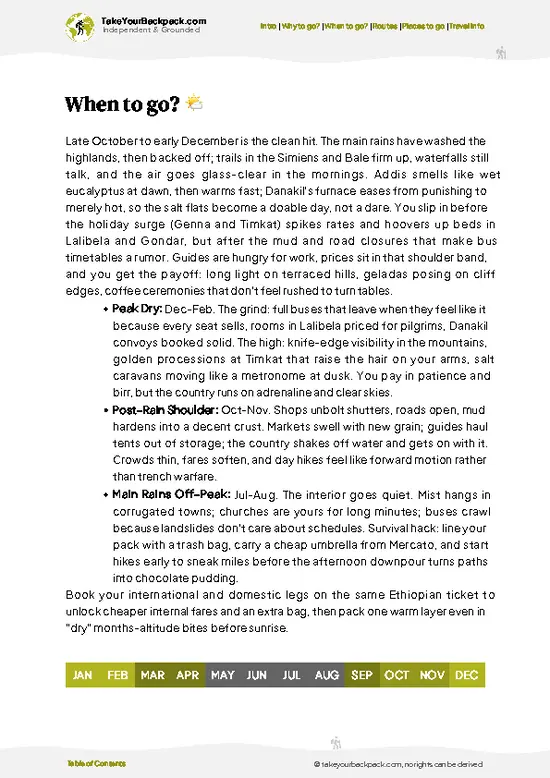
Ethiopia’s climate is as diverse as its landscapes. The highlands experience a temperate climate, while the lowlands can be scorching. Generally, the main rainy season runs from June to September, bringing lush greenery but also muddy trails and potential travel disruptions. The dry season, from October to May, offers clearer skies and more stable conditions, making it ideal for exploration.

Optimal Months
The best time to visit is during the dry season, particularly from October to February. Temperatures are mild, and the air is crisp, perfect for trekking and cultural experiences. This period also coincides with major festivals, adding a vibrant layer to the experience. However, the peak tourist season can lead to crowded attractions and higher prices.

Shoulder Seasonsread more 👉
Climate Variation
Ethiopia’s climate is as diverse as its landscapes. The highlands experience a temperate climate, while the lowlands can be scorching. Generally, the main rainy season runs from June to September, bringing lush greenery but also muddy trails and potential travel disruptions. The dry season, from October to May, offers clearer skies and more stable conditions, making it ideal for exploration.

Optimal Months
The best time to visit is during the dry season, particularly from October to February. Temperatures are mild, and the air is crisp, perfect for trekking and cultural experiences. This period also coincides with major festivals, adding a vibrant layer to the experience. However, the peak tourist season can lead to crowded attractions and higher prices.

Shoulder Seasons
Visiting during the shoulder months of March to May can be a double-edged sword. While the weather remains pleasant, the onset of the rains can lead to occasional downpours, especially in the highlands. Crowds thin out, and costs drop, making it a budget-friendly option. Travelers should weigh the trade-off between fewer tourists and the risk of unpredictable weather.

Peak Periods
While the dry season is generally favorable, certain festivals draw larger crowds. These events can enhance the cultural experience but may also complicate logistics. Planning around these peak periods requires careful consideration of accommodation and transportation availability.

Seasonal Constraints
Travelers should be mindful of the rainy season’s impact on accessibility. Some regions may become challenging to reach, and certain activities may be limited. Balancing comfort with the desire for authentic experiences is crucial for a rewarding journey through Ethiopia’s varied regions.

region hoppingOptimizing Your Multi-Stop Itinerary

Traveling through Ethiopia requires a keen sense of direction and an appreciation for its diverse landscapes. Start by clustering regions based on proximity and thematic experiences. The highlands of the north, including places like Lalibela and Gondar, offer rich historical insights and stunning mountain vistas. From there, head south to the Rift Valley, where the lakes and wildlife create a different rhythm. This route not only minimizes travel time but also allows for a gradual immersion into Ethiopia’s cultural tapestry.

Timing is crucial. Allocate at least two to three days in major hubs like Addis Ababa and Lalibela. This pacing allows for exploration without feeling rushed. The drive from Lalibela to Gondar can take about four hours, so plan accordingly. Each stop should be a balance … read more 👉
Traveling through Ethiopia requires a keen sense of direction and an appreciation for its diverse landscapes. Start by clustering regions based on proximity and thematic experiences. The highlands of the north, including places like Lalibela and Gondar, offer rich historical insights and stunning mountain vistas. From there, head south to the Rift Valley, where the lakes and wildlife create a different rhythm. This route not only minimizes travel time but also allows for a gradual immersion into Ethiopia’s cultural tapestry.

Timing is crucial. Allocate at least two to three days in major hubs like Addis Ababa and Lalibela. This pacing allows for exploration without feeling rushed. The drive from Lalibela to Gondar can take about four hours, so plan accordingly. Each stop should be a balance of exploration and rest, ensuring that the journey itself becomes part of the experience.

Common pitfalls include trying to see too much too quickly. Ethiopia’s charm lies in its depth, not breadth. Rushing through regions can lead to missed connections with locals or the chance to savor a traditional meal. Prioritize experiences over a checklist of sights.

Consider trade-offs carefully. A faster itinerary may save time but can sacrifice the richness of interaction with the culture. Budget travelers might find comfort in local guesthouses, while those seeking ease can opt for more established hotels. Each choice shapes the journey, influencing how the landscape and its people are experienced.

Flexibility is key. Weather can shift quickly, especially in the highlands. Be prepared to adjust plans based on local advice or conditions. This adaptability often leads to the most rewarding moments, whether it’s a spontaneous detour to a village festival or an unexpected encounter with a local guide. Embrace the journey; the rewards are often found in the unplanned.

The ListMust-Visit regions in Ethiopia

1 Omo Valley

tribal markets, body painting, riverine forests, seasonal migration

Meet diverse communities, witness elaborate ceremonies, and navigate remote tracks where cultural traditions and natural cycles shape daily life.

2 Konso Cultural Landscape

terraced hills, fortified villages, wooden grave markers, dryland farming

Walk through a living landscape where stone-walled settlements, intricate agriculture, and unique burial traditions reveal centuries of adaptation and resilience.

ethiopia-region-konso-cultural-landscape v1
© Google |

3 Lake Tana

island monasteries, papyrus boats, Blue Nile source, birdlife

Travel by boat to centuries-old monasteries, watch local fishermen at work, and spot pelicans along the reed-fringed shores of Ethiopia’s largest lake.

4 Lakes Ziway and Abijatta

rift valley lakes, hippo sightings, soda flats, migratory birds

Observe flamingos and pelicans on alkaline shores, visit lakeside villages, and experience the Rift Valley’s shifting landscapes and wildlife up close.

ethiopia-region-lakes-ziway-and-abijatta v1
© Google |
Loading the map 🌍

Expert viewExpert Commentary on regions

Geographic Diversity
Ethiopia is a land of contrasts, where the highlands meet the lowlands, and ancient traditions coexist with modern life. The country is divided into several regions, each with its own unique geography and culture. From the rugged Simien Mountains to the arid plains of the Afar region, the terrain shapes not only the landscape but also the people and their way of life.

When planning your journey, consider visiting at least three to four regions to truly grasp Ethiopia’s diversity. Each region offers something distinct, whether it’s the lush greenery of the south or the stark beauty of the north. However, be prepared for the reality that traveling between these regions can be time-consuming. Roads can be rough, and public transport is often less than reliable. If you’re … read more 👉
Geographic Diversity
Ethiopia is a land of contrasts, where the highlands meet the lowlands, and ancient traditions coexist with modern life. The country is divided into several regions, each with its own unique geography and culture. From the rugged Simien Mountains to the arid plains of the Afar region, the terrain shapes not only the landscape but also the people and their way of life.

When planning your journey, consider visiting at least three to four regions to truly grasp Ethiopia’s diversity. Each region offers something distinct, whether it’s the lush greenery of the south or the stark beauty of the north. However, be prepared for the reality that traveling between these regions can be time-consuming. Roads can be rough, and public transport is often less than reliable. If you’re short on time, prioritize regions that are geographically close to each other to minimize travel fatigue.

Transport Between Regions
Navigating Ethiopia requires a bit of grit. The road conditions can vary dramatically, and while some routes are well-paved, others are riddled with potholes and dust. Domestic flights can save you time, but they often come with a premium price tag. If you opt for road travel, brace yourself for long hours in a shared minibus or a private vehicle. The experience can be a mixed bag; you’ll encounter breathtaking landscapes and local life, but also the frustration of delays and cramped quarters.

Consider your comfort level with travel. If you’re the type who thrives on adventure, the bus rides can be a cultural immersion, filled with lively conversations and the scent of local snacks wafting through the air. If you prefer a smoother ride, budget for flights where possible. Just remember, the more remote the region, the more effort you’ll need to invest in getting there.

Cultural Variation
Ethiopia is a tapestry of cultures, each region boasting its own languages, customs, and culinary delights. The Oromo, Amhara, Tigray, and Somali people each bring their own flavor to the Ethiopian identity. In the highlands, you might find yourself sharing injera with a family, while in the lowlands, the spices of a traditional Somali dish will tantalize your taste buds.

As you move from one region to another, be mindful of cultural sensitivities. Dress modestly, especially in rural areas, and always ask before taking photos of people. The warmth of the Ethiopian people is palpable, but respect goes a long way in fostering genuine connections.

Pacing Trade-offs
When it comes to pacing your trip, think about what you want to experience. If you’re eager to soak in the rich history and diverse landscapes, a slower pace allows for deeper exploration. However, this means you’ll need to allocate more time for travel. A week might feel rushed if you’re trying to cover multiple regions, while two weeks can provide a more relaxed experience.

On the flip side, if you’re short on time, you might be tempted to rush through. This can lead to a superficial understanding of the culture and landscape. The trade-off here is significant: a hurried trip might save you time but could rob you of the chance to truly engage with the local culture.

Infrastructure and Travel Constraints
Ethiopia’s infrastructure is improving, but it’s still a work in progress. Major cities have decent amenities, but rural areas can lack basic services. Accommodations range from luxury hotels to simple guesthouses, but don’t expect the same standards everywhere. Always check reviews and be prepared for surprises.

Internet access can be spotty, especially in remote areas, so don’t rely on it for navigation or communication. Download maps and essential information before you head out. Safety is generally good, but stay informed about local conditions and be cautious in unfamiliar areas.

Safety & Cultural Considerations
Ethiopia is relatively safe for travelers, but like anywhere, it’s wise to stay alert. Avoid political demonstrations and be cautious in crowded areas. The cultural landscape is rich, but it’s essential to approach it with an open mind and a respectful attitude.

Engaging with locals can enhance your experience, but always be aware of cultural norms. For example, in some regions, it’s customary to greet elders first, and in others, sharing food is a sign of hospitality. These small gestures can lead to meaningful interactions and a deeper understanding of the local way of life.

In summary, Ethiopia offers a wealth of experiences that are well worth the effort. By carefully selecting regions, planning your transport, and respecting cultural nuances, you can create a journey that is both rewarding and enriching. Embrace the grit of the roads and the warmth of the people, and you’ll find that the beauty of Ethiopia is truly earned.

✈️ The backpacker research shortcutEthiopia Travel Guide

An offline-friendly backpacking guide with optimized travel routes, ranked highlights, transport advice, and the best areas to stay.
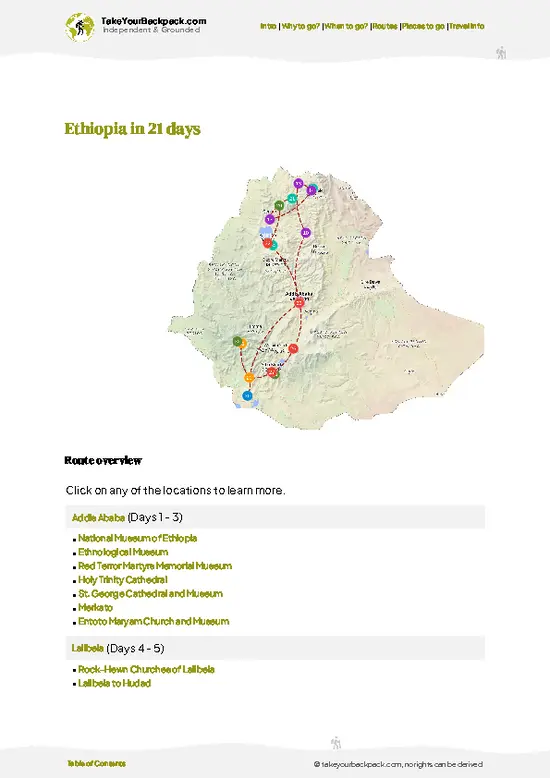
example page 0 from our offline Travel Guide for Ethiopia
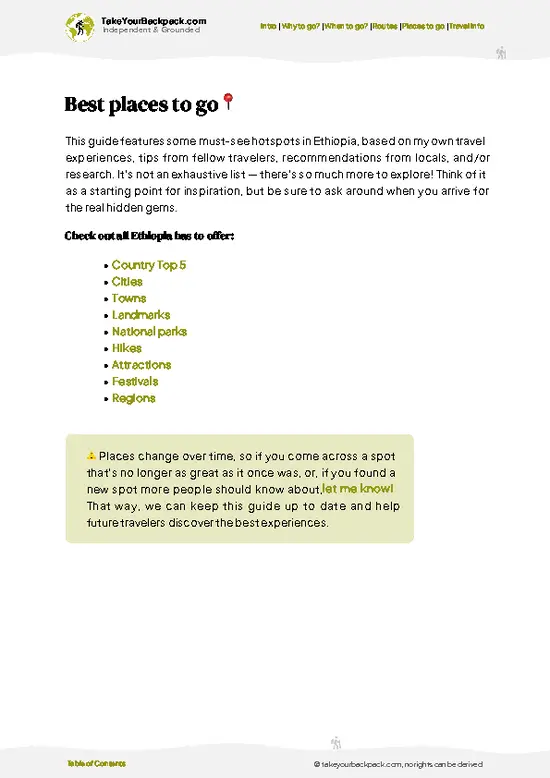
example page 1 from our offline Travel Guide for Ethiopia
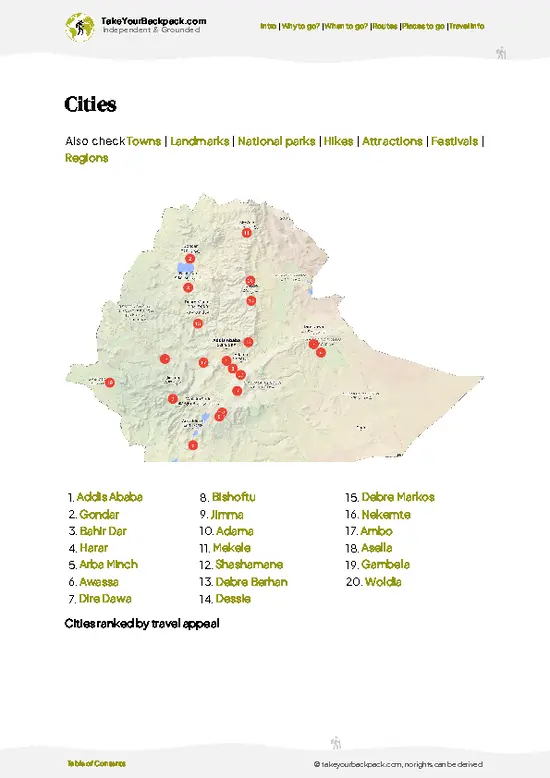
example page 2 from our offline Travel Guide for Ethiopia
example page 3 from our offline Travel Guide for Ethiopia
example page 4 from our offline Travel Guide for Ethiopia
example page 5 from our offline Travel Guide for Ethiopia
example page 6 from our offline Travel Guide for Ethiopia
example page 7 from our offline Travel Guide for Ethiopia
The digital guide (395 pages) contains:
101 highlights, ranked by travel appeal
Optimized 7, 14 & 21-day travel routes
Cities, national parks, landmarks, beaches
How to get around
Offline-friendly for travel without Wi-Fi
👉 Click to see all 30+ guide features

📅 Plan smarter in minutes, not weeks
Month by month travel advice
Festivals & national holidays
Budget expectations

🗺️ Go to the right places, skip the overrated ones
Honest pros & cons of destinations
Top hikes, parks & viewpoints
Lesser-known places most travelers miss
Clear “worth it vs skip it” guidance

🛏️ Travel smoothly without rookie mistakes
Best areas to stay
Transport systems explained simply
Common scams & safety advice
SIM cards, money & practical tips

🌍 Understand the country, not just visit it
Culture & traditions
52 Essential phrases & customs
Festivals worth planning around
Traveler-friendly historical context
Insights that make places more meaningful

📱 Built for real travel conditions
Fully downloadable PDF
Works completely offline
Optimized for phone use
Useful in remote areas & buses
Everything in one place
Save weeks of stressful planning
Get instant access to your full guide. 30‑day money-back guarantee.


By proceeding you agree to our terms.
Sent to your inbox immediately after payment • 100% Secure Checkout
Best Backpacking Travel Advisor 2025 tourism awardBest Backpacking
Travel Advisor
2025
What others say about Take Your Backpack Guides:
⭐⭐⭐⭐⭐
Fantastic, amazing amount of information!
⭐⭐⭐⭐⭐
My goodness this is amazing, it's what I've been looking for hats off too you!
⭐⭐⭐⭐⭐
I think this is absolutely BRILLIANT
⭐⭐⭐⭐
Very complete and informative. It's still missing places, but I gotta to commend you
⭐⭐⭐⭐⭐
This is truly amazing, thank you, can't wait to explore it with my kids!
⭐⭐⭐⭐⭐
Awesome resource, thank you!
⭐⭐⭐⭐⭐
This is amazing! Can't wait to explore the ones I haven't seen
⭐⭐⭐⭐
I love this! Well done, great idea.
⭐⭐⭐⭐⭐
Thanks for taking the time to make this gem!
⭐⭐⭐⭐⭐
This might be the best website I've ever seen.
⭐⭐⭐⭐⭐
Congratulations, and thank you so much for your work; it's incredibly valuable.
⭐⭐⭐⭐
In all seriousness I think you did a great job pointing out the important spots
⭐⭐⭐⭐⭐
10/10 very good
⭐⭐⭐⭐⭐
As someone who's only just starting to visit regularly this is awesome, thank you.
⭐⭐⭐⭐
Thank you very much! I'm going to visit my dad, it's going to be very useful!
⭐⭐⭐⭐⭐
This is really cool! We'll be travelling for the first time and this definitely come in handy.
⭐⭐⭐⭐⭐
You are now our minister of culture, congratulations 👨‍💼
⭐⭐⭐⭐⭐
Just wanted to tell you that this is a pearl! Going to follow your recommendations.
⭐⭐⭐⭐⭐
This is so cool. I'll definitely be using the resource for my travels soon.
⭐⭐⭐⭐⭐
This is very impressive! Good work.
⭐⭐⭐⭐⭐
This is an amazing and informative site. Very well done!

🛏️ Where to stay?Top Places to Consider Staying

Yes — hostels and budget guesthouses are common in Addis Ababa and in tourist towns like Lalibela, Bahir Dar, Gondar and Axum, with dorms and cheap private rooms widely available.
In Addis the main clusters are Bole (modern, near the airport and cafes, safer but pricier), Piazza/Arada (historic, closest to markets and transport, cheap but noisy and crowded), Kazanchis (business district, quieter at night, somewhat more expensive) and Merkato (cheapest and closest to the big market but chaotic and less secure after dark).
Outside the capital budget stays sit close to major sights so you trade convenience for very basic facilities and intermittent hot water; carry cash, book ahead in high … read more 👉
Yes — hostels and budget guesthouses are common in Addis Ababa and in tourist towns like Lalibela, Bahir Dar, Gondar and Axum, with dorms and cheap private rooms widely available.
In Addis the main clusters are Bole (modern, near the airport and cafes, safer but pricier), Piazza/Arada (historic, closest to markets and transport, cheap but noisy and crowded), Kazanchis (business district, quieter at night, somewhat more expensive) and Merkato (cheapest and closest to the big market but chaotic and less secure after dark).
Outside the capital budget stays sit close to major sights so you trade convenience for very basic facilities and intermittent hot water; carry cash, book ahead in high season and expect quieter nights with limited nightlife and services.

If you enjoy meeting fellow travelers, consider choosing hostels with high ratings for atmosphere. On the other hand, if you prefer having your own space, a hotel might be a better option.

EthiopiaMore Places Across Ethiopia

👋 Meet the founderWho’s Behind Take Your Backpack?

Johan, backpacker and founder of TakeYourBackpackHi, I’m Johan (Netherlands 🇳🇱), the creator of TakeYourBackpack. Over the past decade, I’ve backpacked through 80+ countries across six continents, gaining extensive experience with independent travel, long-term trips, and overland routes.

This site is built on a combination of firsthand travel experience and carefully curated insights from other backpackers. Many guides are based on places I’ve personally visited, while others bring together tips, observations, and practical advice shared by trusted travelers I’ve met along the way.

The goal is to provide realistic, experience-driven guidance — not generic itineraries — so you can explore destinations with better context, clearer expectations, and more confidence.

Get full Ethiopia guide •
Instant download • 101 highlights • Full Offline guide