×

Georgia🇬🇪 | best festivalsYour Guide to the 7 Best festivals in Georgia

Festivals in Georgia run on wine, polyphony and long tables rather than ticket gates. In the east, Kakheti harvest gatherings smell of crushed grapes and woodsmoke, with qvevri cellars open to anyone who wanders in. Tbilisi is the loud, electronic, late-night end, with sets in Soviet-era concrete and sulfur-bath neighborhoods. Up in Svaneti and Tusheti, village feasts sit on rough mountain tracks and mean cold nights, shared tents and slow marshrutka rides. Entry is often free or cheap, but transport decides your costs. Independent travel works well here, since locals pull strangers straight to the table.

By Johan Kruseman 🇳🇱 | Updated October 18, 2026
Explore the best regions in Georgia

Why go?Why Travelers Love These Spots

Georgia suits festivals because the calendar is built around agriculture, church and village life rather than tourism. The country has made wine in clay vessels for roughly 8,000 years, so harvest is a communal event: grape presses, churchkhela dripping in courtyards, and tables loaded with khachapuri, grilled meat and pitchers of amber wine. Polyphonic singing, performed by men standing shoulder to shoulder, is part of ordinary gatherings, not a staged act.

Geography shapes everything. A small country packs in subtropical coast, wine valleys and glaciated Caucasus, so celebrations differ sharply within a few hours' drive. Orthodox saints' days (many on the Julian-influenced church calendar) bring pilgrims, animal offerings and mountain shrines, usually in places with no signage and no English. … read more 👉
Georgia suits festivals because the calendar is built around agriculture, church and village life rather than tourism. The country has made wine in clay vessels for roughly 8,000 years, so harvest is a communal event: grape presses, churchkhela dripping in courtyards, and tables loaded with khachapuri, grilled meat and pitchers of amber wine. Polyphonic singing, performed by men standing shoulder to shoulder, is part of ordinary gatherings, not a staged act.

Geography shapes everything. A small country packs in subtropical coast, wine valleys and glaciated Caucasus, so celebrations differ sharply within a few hours' drive. Orthodox saints' days (many on the Julian-influenced church calendar) bring pilgrims, animal offerings and mountain shrines, usually in places with no signage and no English.

Before you choose Georgia, know that infrastructure is uneven. Tbilisi and Batumi have polished venues, while village events depend on shared taxis, marshrutkas and hosts who improvise. Schedules shift, start times slip, and toasts led by a tamada can stretch a meal past midnight. Pace yourself with the wine, because refusing every glass can read as rude. The reward is access that larger-scale festivals in other countries rarely give.
How the List Was Created
The list of best festivals in Georgia is created based on energy, traditions, crowd experience, activities, and overall excitement. If you feel a festival is missing in this list, please let us know.

When to go?When to Plan Your Trip

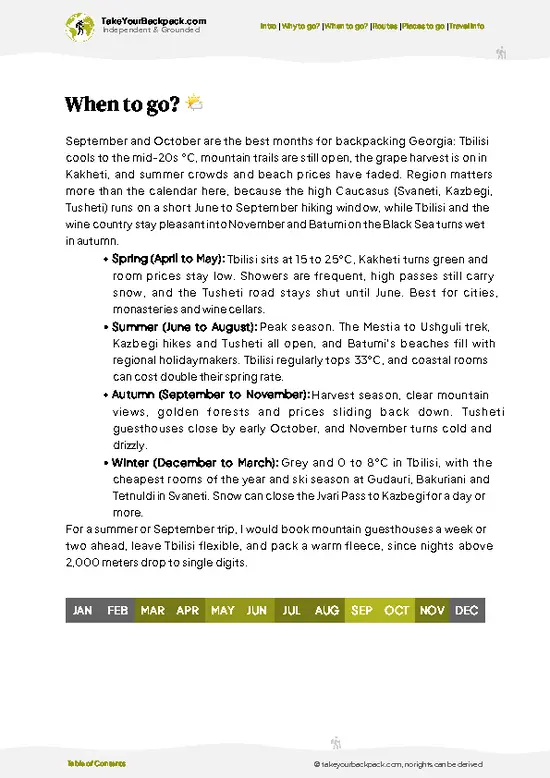
Best months: September and October are the best months for festivals in Georgia, because the grape harvest (rtveli) fills Kakheti with activity while daytime temperatures sit at a comfortable 18 to 26°C. Expect warm, golden afternoons, cool evenings and the sweet smell of fermenting must in village lanes. Rain is light in the east, though Batumi and the western coast stay damp, with autumn showers common.

Shoulder and peak seasons: May and June are the shoulder season, with 20 to 28°C in Tbilisi, green hills and open mountain roads. Gatherings in Svaneti and Tusheti cluster in July and August, when high passes clear of snow. Tusheti's Abano pass usually opens only from about June to October, and the road is rough, steep and slow. Tbilisi in July and August is hot, often 30 to 38°C, so outdoor … read more 👉
Best months: September and October are the best months for festivals in Georgia, because the grape harvest (rtveli) fills Kakheti with activity while daytime temperatures sit at a comfortable 18 to 26°C. Expect warm, golden afternoons, cool evenings and the sweet smell of fermenting must in village lanes. Rain is light in the east, though Batumi and the western coast stay damp, with autumn showers common.

Shoulder and peak seasons: May and June are the shoulder season, with 20 to 28°C in Tbilisi, green hills and open mountain roads. Gatherings in Svaneti and Tusheti cluster in July and August, when high passes clear of snow. Tusheti's Abano pass usually opens only from about June to October, and the road is rough, steep and slow. Tbilisi in July and August is hot, often 30 to 38°C, so outdoor days start early and finish late.

Prices and winter: Guesthouse beds rise 20 to 40 percent in harvest weeks and August on the Black Sea, so book Kakheti ahead for late September. Winter is cold, with snow in the mountains and temperatures near freezing in Tbilisi, and many village stays close. Ski-town events around Gudauri and Bakuriani run from December to March, and Orthodox Christmas on January 7 brings processions.

festival hoppingSuggested Travel Strategies

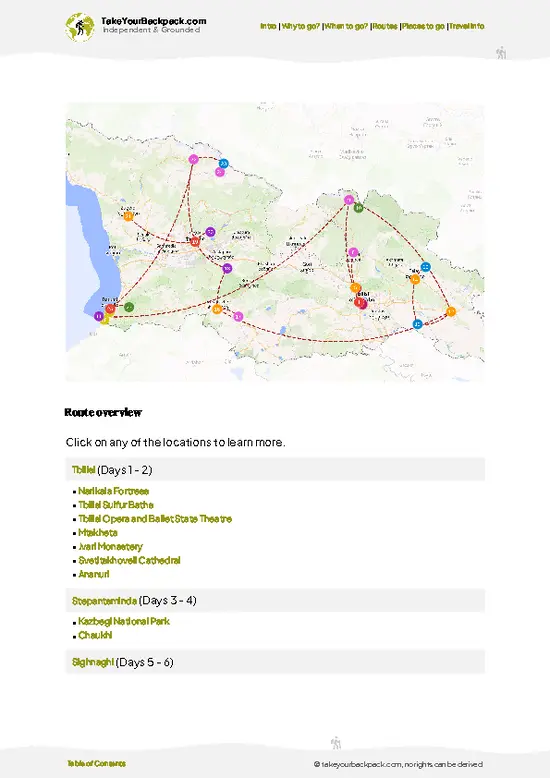
How long you need: A trip combining several festivals in Georgia needs 10 to 14 days, because distances look short on the map but roads are slow. Tbilisi is the natural hub, with marshrutkas and trains radiating outward from Didube and Station Square.

Which regions pair well: Tbilisi and Kakheti cluster easily. Telavi and Sighnaghi are 2 to 3 hours from the capital by marshrutka, so allow 3 to 4 days there, mostly for slow cellar visits and long lunches. Western Georgia links Kutaisi, Batumi and the Black Sea coast, with the Tbilisi to Kutaisi train taking around 5 hours. Mountain stops such as Mestia in Svaneti are 8 to 10 hours from the capital, and Tusheti's jeep road from Kakheti takes 5 to 7 hours, so give each at least 3 to 4 days. A sensible direction runs east to west: Tbilisi, Kakheti, … read more 👉
How long you need: A trip combining several festivals in Georgia needs 10 to 14 days, because distances look short on the map but roads are slow. Tbilisi is the natural hub, with marshrutkas and trains radiating outward from Didube and Station Square.

Which regions pair well: Tbilisi and Kakheti cluster easily. Telavi and Sighnaghi are 2 to 3 hours from the capital by marshrutka, so allow 3 to 4 days there, mostly for slow cellar visits and long lunches. Western Georgia links Kutaisi, Batumi and the Black Sea coast, with the Tbilisi to Kutaisi train taking around 5 hours. Mountain stops such as Mestia in Svaneti are 8 to 10 hours from the capital, and Tusheti's jeep road from Kakheti takes 5 to 7 hours, so give each at least 3 to 4 days. A sensible direction runs east to west: Tbilisi, Kakheti, back through the capital, Kutaisi, then Svaneti, finishing at Batumi on the coast.

Planning mistakes: The most common error is stacking mountain and city events on consecutive days. Landslides, fog and mud can add hours to a pass, and a delayed marshrutka will not wait. Leave one spare day before any fixed date in Svaneti or Tusheti. Another error is assuming Tbilisi nights are easy after a village feast, when you arrive hungover and tired. Sleep where you eat, and move the next morning.

The ListThe Best festivals of Georgia

1 Tbilisoba

citywide celebration, autumn harvest, street performances

Experience Tbilisi’s annual gathering as locals fill the streets with music, regional foods, and traditions that reveal the city’s layered identity.

2 Rtveli

vineyard rituals, grape picking, family feasts

Join villagers in the fields for hands-on grape harvesting, shared meals, and the communal spirit that marks Georgia’s winemaking season.

3 Batumi Black Sea Jazz Festival

international artists, seaside venues, late-night sessions

Hear global jazz acts perform on the Black Sea coast, where concerts spill into the city’s nightlife and draw music lovers from across the region.

4 Tbilisi Open Air

multi-genre music, festival grounds, youth culture

Immerse yourself in Georgia’s largest outdoor music event, where diverse crowds gather for live sets and a relaxed, communal atmosphere.

5 Art-Gene Festival

folk music, craft workshops, open-air museum

Discover Georgia’s living traditions through performances, artisan demonstrations, and interactive events set among historic wooden architecture.

6 Tushetoba

mountain horse races, shepherd culture, remote villages

Travel deep into the Caucasus for a festival where locals showcase ancient skills, equestrian contests, and highland hospitality.

7 Georgian Cheese Festival

artisan producers, tasting stalls, regional varieties

Sample a wide range of Georgian cheeses, meet local makers, and learn about the country’s distinct dairy traditions in a single afternoon.

Loading the map 🌍

Expert viewTips and Advice from Travelers

How many to attend: Three to four festivals across a two-week trip is the right number. That leaves buffer days for broken-down vans, mountain weather and the recovery that Georgian hospitality demands. Packing in six means you spend most of the trip on roads, watching the landscape through a dusty window.

Choosing the kind that fits you: If you want food and wine, put a Kakheti harvest gathering first. You get warm cellars, clay-pot wine poured by the family who made it, and a table that expands as strangers join. If you want music and nightlife, choose a Tbilisi electronic or arts event, where raves in old industrial spaces run until sunrise. If you want something that feels remote and old, head to a mountain village celebration in Svaneti or Tusheti, where the ground is wet, the nights … read more 👉
How many to attend: Three to four festivals across a two-week trip is the right number. That leaves buffer days for broken-down vans, mountain weather and the recovery that Georgian hospitality demands. Packing in six means you spend most of the trip on roads, watching the landscape through a dusty window.

Choosing the kind that fits you: If you want food and wine, put a Kakheti harvest gathering first. You get warm cellars, clay-pot wine poured by the family who made it, and a table that expands as strangers join. If you want music and nightlife, choose a Tbilisi electronic or arts event, where raves in old industrial spaces run until sunrise. If you want something that feels remote and old, head to a mountain village celebration in Svaneti or Tusheti, where the ground is wet, the nights are cold and the singing echoes off stone towers. Solo travelers on tight schedules do best in Tbilisi and Kakheti. Experienced hikers who can handle long transfers get the most from the mountains.

What it costs: Budget US$35 to 60 a day outside peak season: guesthouse beds US$15 to 30 with breakfast, a village meal with wine US$8 to 15, marshrutkas US$3 to 10 per leg. Add US$10 to 25 in peak harvest or August weeks. Entry to village events is often free or a few lari, while Tbilisi club and music-festival tickets typically run US$20 to 80. A 4x4 transfer into Tusheti costs roughly US$40 to 70 per person in a shared jeep, and a day with a driver in Kakheti runs US$60 to 100 split between travelers. Cash in lari matters because village hosts rarely take cards.

Safety and etiquette: Georgia is safe for travelers, but the real risks are on the road and in the glass. Mountain roads are narrow, often unpaved and shared with cattle, so skip night transfers. Drinking is the central ritual, led by a tamada who proposes toasts. Sip, hold the glass in your right hand when toasting, and never drain a glass uninvited if you want to pace yourself. Dress modestly when visiting churches linked to events, cover shoulders and knees, and women should bring a scarf. Ask before photographing people at religious ceremonies. Hold onto your valuables in dense Tbilisi crowds, and take a flashlight for unlit village lanes at night. Reward: a seat at a table you will remember for years.

✈️ The backpacker research shortcutGeorgia Travel Guide

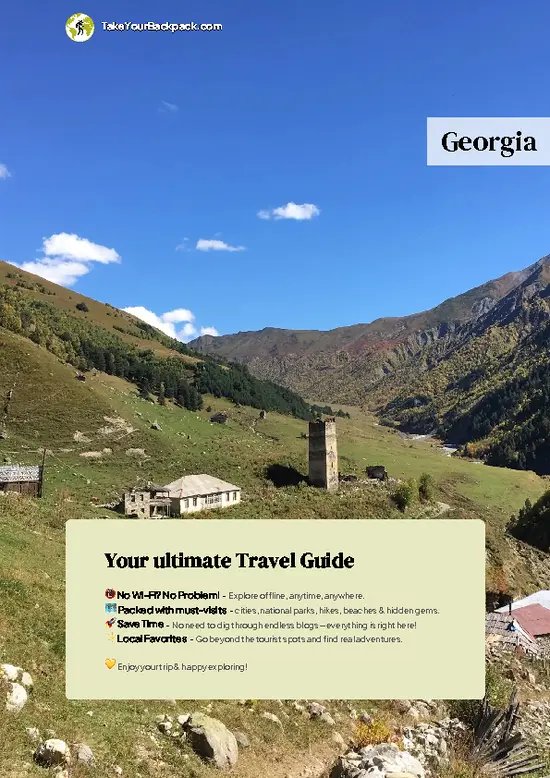
An offline-friendly backpacking guide with optimized travel routes, ranked highlights, transport advice, and the best areas to stay.
example page 0 from our offline Travel Guide for Georgia
example page 1 from our offline Travel Guide for Georgia
example page 2 from our offline Travel Guide for Georgia
example page 3 from our offline Travel Guide for Georgia
example page 4 from our offline Travel Guide for Georgia
example page 5 from our offline Travel Guide for Georgia
example page 6 from our offline Travel Guide for Georgia
example page 7 from our offline Travel Guide for Georgia
The digital guide (350 pages) contains:
✅ 89 highlights, ranked by travel appeal
✅ Optimized 5, 10 & 15-day travel routes
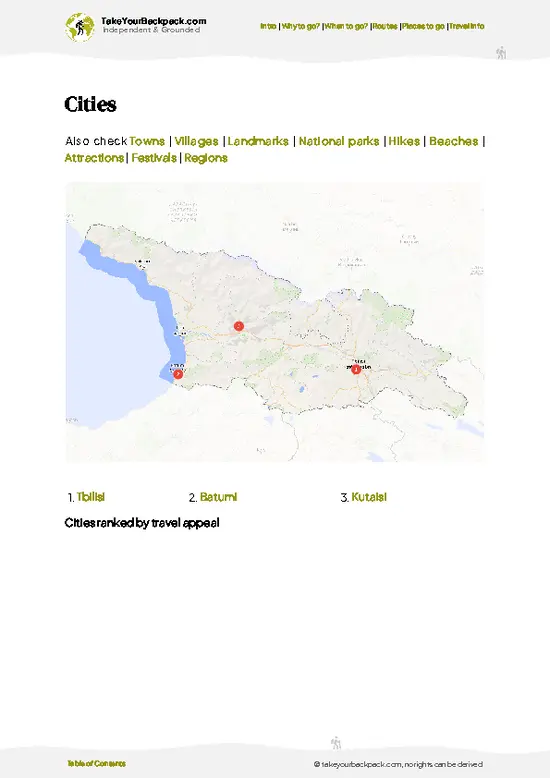
✅ Cities, national parks, landmarks, beaches
✅ How to get around
✅ Offline-friendly for travel without Wi-Fi
👉 Click to see all 30+ guide features

📅 Plan smarter in minutes, not weeks
✅ Month by month travel advice
✅ Festivals & national holidays
✅ Budget expectations

🗺️ Go to the right places, skip the overrated ones
✅ Honest pros & cons of destinations
✅ Top hikes, parks & viewpoints
✅ Lesser-known places most travelers miss
✅ Clear “worth it vs skip it” guidance

🛏️ Travel smoothly without rookie mistakes
✅ Best areas to stay
✅ Transport systems explained simply
✅ Common scams & safety advice
✅ SIM cards, money & practical tips

🌍 Understand the country, not just visit it
✅ Culture & traditions
✅ 52 Essential phrases & customs
✅ Festivals worth planning around
✅ Traveler-friendly historical context
✅ Insights that make places more meaningful

📱 Built for real travel conditions
✅ Fully downloadable PDF
✅ Works completely offline
✅ Optimized for phone use
✅ Useful in remote areas & buses
✅ Everything in one place
Stop searching, start planning
Get instant access to your full guide. 30‑day money-back guarantee.
+ Add another guide for just

By proceeding you agree to our terms.
Sent to your inbox immediately after payment • 100% Secure Checkout
Best Backpacking Travel Advisor 2025 tourism awardBest Backpacking
Travel Advisor
2025
What others say about Take Your Backpack Guides:
⭐⭐⭐⭐⭐
Fantastic, amazing amount of information!
⭐⭐⭐⭐⭐
My goodness this is amazing, it's what I've been looking for hats off too you!
⭐⭐⭐⭐⭐
I think this is absolutely BRILLIANT
⭐⭐⭐⭐
Very complete and informative. It's still missing places, but I gotta to commend you
⭐⭐⭐⭐⭐
This is truly amazing, thank you, can't wait to explore it with my kids!
⭐⭐⭐⭐⭐
Awesome resource, thank you!
⭐⭐⭐⭐⭐
This is amazing! Can't wait to explore the ones I haven't seen
⭐⭐⭐⭐
I love this! Well done, great idea.
⭐⭐⭐⭐⭐
Thanks for taking the time to make this gem!
⭐⭐⭐⭐⭐
This might be the best website I've ever seen.
⭐⭐⭐⭐⭐
Congratulations, and thank you so much for your work; it's incredibly valuable.
⭐⭐⭐⭐
In all seriousness I think you did a great job pointing out the important spots
⭐⭐⭐⭐⭐
10/10 very good
⭐⭐⭐⭐⭐
As someone who's only just starting to visit regularly this is awesome, thank you.
⭐⭐⭐⭐
Thank you very much! I'm going to visit my dad, it's going to be very useful!
⭐⭐⭐⭐⭐
This is really cool! We'll be travelling for the first time and this definitely come in handy.
⭐⭐⭐⭐⭐
You are now our minister of culture, congratulations 👨‍💼
⭐⭐⭐⭐⭐
Just wanted to tell you that this is a pearl! Going to follow your recommendations.
⭐⭐⭐⭐⭐
This is so cool. I'll definitely be using the resource for my travels soon.
⭐⭐⭐⭐⭐
This is very impressive! Good work.
⭐⭐⭐⭐⭐
This is an amazing and informative site. Very well done!

🛏️ Where to stay?Top Areas to Stay

Georgia has plenty of hostels and guesthouses, with dorm beds typically 25 to 40 GEL (about US$9 to 15) and private guesthouse rooms from around 70 GEL (US$26). In Tbilisi, Sololaki and the Old Town put you within walking distance of the sulfur baths and the best wine bars but come with steep cobbled streets and late-night noise, while Marjanishvili and Chughureti on the left bank are cheaper, well connected by metro and home to the city’s liveliest hostel and bar scene. On the coast, Batumi’s Old Town keeps you close to the boulevard and beach, and in Kutaisi the streets around the center are quiet, safe and handy for early marshrutka departures to the mountains.

If you enjoy meeting fellow … read more 👉
Georgia has plenty of hostels and guesthouses, with dorm beds typically 25 to 40 GEL (about US$9 to 15) and private guesthouse rooms from around 70 GEL (US$26). In Tbilisi, Sololaki and the Old Town put you within walking distance of the sulfur baths and the best wine bars but come with steep cobbled streets and late-night noise, while Marjanishvili and Chughureti on the left bank are cheaper, well connected by metro and home to the city’s liveliest hostel and bar scene. On the coast, Batumi’s Old Town keeps you close to the boulevard and beach, and in Kutaisi the streets around the center are quiet, safe and handy for early marshrutka departures to the mountains.

If you enjoy meeting fellow travelers, consider choosing hostels with high ratings for atmosphere. On the other hand, if you prefer having your own space, a hotel might be a better option.

GeorgiaDiscover the Country

👋 Meet the founderWho’s Behind Take Your Backpack?

Johan, backpacker and founder of TakeYourBackpackHi, I’m Johan (Netherlands 🇳🇱), the creator of TakeYourBackpack. Over the past 3 decades, I’ve backpacked through 90+ countries across six continents, gaining extensive experience with independent travel, long-term trips, and overland routes.

This site is built on a combination of firsthand travel experience and carefully curated insights from other backpackers. Many guides are based on places I’ve personally visited, while others bring together tips, observations, and practical advice shared by trusted travelers I’ve met along the way.

The goal is to provide realistic, experience-driven guidance — not generic itineraries — so you can explore destinations with better context, clearer expectations, and more confidence.