×

Georgia🇬🇪 | best beachesYour Guide to the 3 Best beaches in Georgia

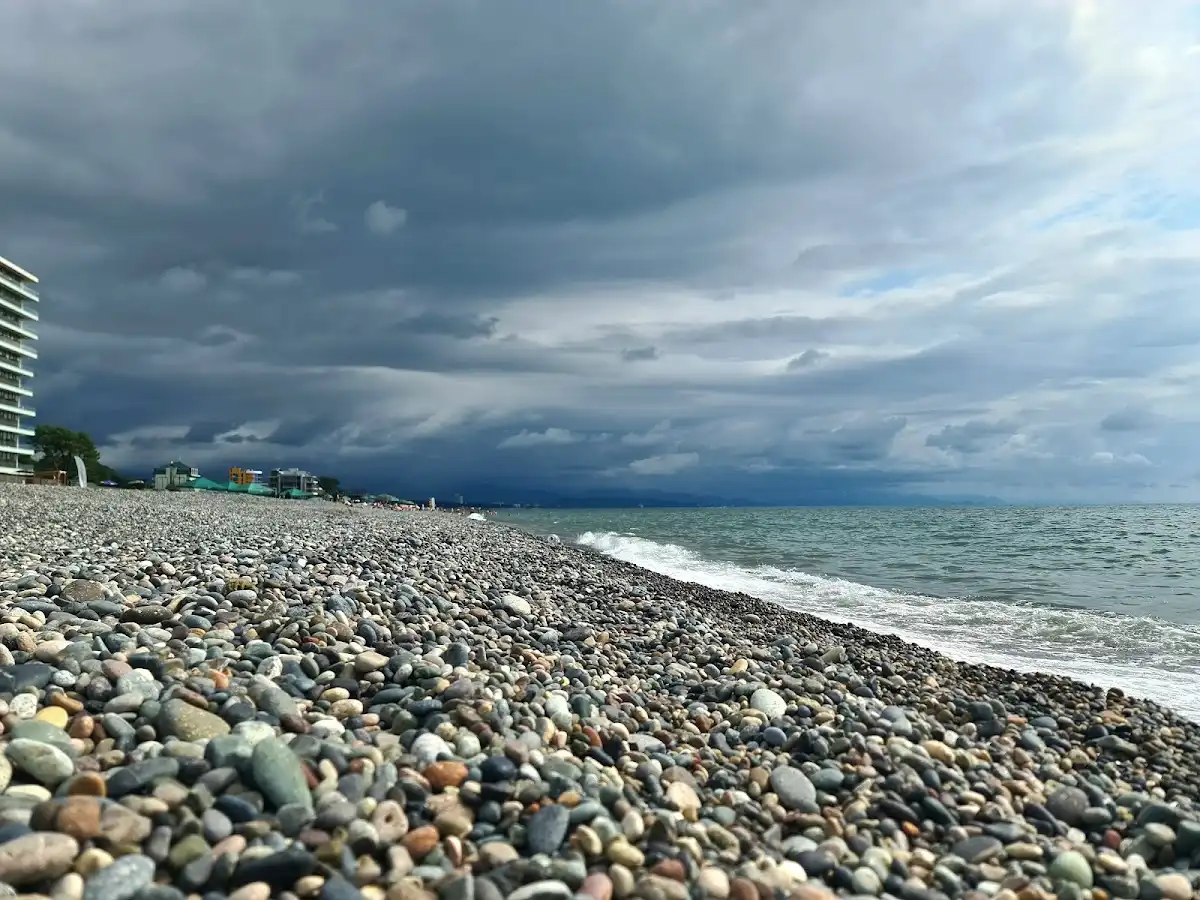
Beaches in Georgia mean the Black Sea coast, a roughly 310 km strip of dark gray pebbles, iron-heavy sand and warm, slightly salty water that is far less saline than the Mediterranean. Expect the clatter of stones under each wave, the smell of grilled corn and fried khachapuri, and cheap soviet-era sanatorium blocks beside new high-rises. The Adjara stretch around Batumi is lively, easy to reach and priced for volume. Further north, Guria and Samegrelo are quieter, with simple guesthouses and fewer foreign faces. Abkhazia is not accessible for independent travel from Georgia proper. For backpacking, the coast works because beds start cheap and buses run constantly.

By Johan Kruseman 🇳🇱 | Updated October 18, 2026
Explore the best attractions in Georgia

Why go?Why Travelers Love These Spots

Georgia is not a coast of white sand and coral. Its identity comes from the Black Sea and the Caucasus behind it, which together create a humid subtropical strip where mountains rise within a short drive of the shore. That means a beach day can be paired with tea plantations, canyons and snowy ridges, something few beach countries offer. The shore is mostly pebble and dark volcanic-gray sand, hot enough underfoot in July to demand sandals, and the water is calm and shallow with little tide. Decades of Soviet-era resort culture left a habit of beach holidays among Georgians, Armenians, Azerbaijanis and Russian-speaking visitors, so promenades, cafes and cheap rooms exist in volume, though some older concrete buildings look tired. Infrastructure has been polished mostly in Batumi, where beachfront … read more 👉
Georgia is not a coast of white sand and coral. Its identity comes from the Black Sea and the Caucasus behind it, which together create a humid subtropical strip where mountains rise within a short drive of the shore. That means a beach day can be paired with tea plantations, canyons and snowy ridges, something few beach countries offer. The shore is mostly pebble and dark volcanic-gray sand, hot enough underfoot in July to demand sandals, and the water is calm and shallow with little tide. Decades of Soviet-era resort culture left a habit of beach holidays among Georgians, Armenians, Azerbaijanis and Russian-speaking visitors, so promenades, cafes and cheap rooms exist in volume, though some older concrete buildings look tired. Infrastructure has been polished mostly in Batumi, where beachfront clubs thump until late and new towers dominate the skyline. Elsewhere, services are thin and signage is mostly in Georgian. Travelers should know that this is a short-season, regional coast rather than a diving or surfing destination, that swimming water is murkier near river mouths after rain, and that the appeal lies in value, food and the mountain backdrop rather than pristine shoreline.
Why These Made the Cut
The list of best beaches in Georgia is created based on beauty, vibe, water quality, activities, and surrounding scenery. If you feel a beach is missing in this list, please let us know.

When to go?When to Plan Your Trip

Best months for the coast: The best months are June to September, when daytime air temperatures reach 26 to 30°C and the Black Sea warms to roughly 23 to 26°C, enough for comfortable swimming. July and August are the peak, with humid heat, loud promenades and the highest prices, often 1.5 to 2 times those of shoulder months for private rooms in Batumi. Shoulder seasons: May and October are quieter. Water sits around 17 to 21°C, days are mild at roughly 18 to 24°C, and many cafes and seafront hotels remain open at lower rates. Expect the occasional gray, drizzly day. The Adjara region is among the wettest places in the Caucasus, with annual rainfall often exceeding 2,000 mm, and autumn brings heavy storms that can churn the sea brown. Winter: From November to April the shore is windy, cool … read more 👉
Best months for the coast: The best months are June to September, when daytime air temperatures reach 26 to 30°C and the Black Sea warms to roughly 23 to 26°C, enough for comfortable swimming. July and August are the peak, with humid heat, loud promenades and the highest prices, often 1.5 to 2 times those of shoulder months for private rooms in Batumi. Shoulder seasons: May and October are quieter. Water sits around 17 to 21°C, days are mild at roughly 18 to 24°C, and many cafes and seafront hotels remain open at lower rates. Expect the occasional gray, drizzly day. The Adjara region is among the wettest places in the Caucasus, with annual rainfall often exceeding 2,000 mm, and autumn brings heavy storms that can churn the sea brown. Winter: From November to April the shore is windy, cool at 5 to 12°C and often wet. Seasonal kiosks and beach clubs shut, though Batumi itself stays alive and rooms are cheapest. Further up the coast in Guria and Samegrelo, many guesthouses close or have limited service outside summer, so book ahead in peak weeks and confirm availability in shoulder months.

beach hoppingSuggested Travel Strategies

How many days to plan: A trip combining several beaches in Georgia needs 5 to 8 days, which allows two or three bases without constant packing. The coast clusters naturally into the southern Adjara area around Batumi and the northern Guria and Samegrelo lowlands, with Kutaisi as the main inland hub. Direction and pacing: Flying into Kutaisi or Tbilisi and moving south toward Batumi, or ending there, works well because Batumi has the largest choice of rooms, food and onward links. Allow 2 to 3 nights per base, since a single beach day is usually enough to cover the shore and the rest goes to rain buffers, markets and mountain detours. Tbilisi to Batumi takes roughly 5 to 6 hours by train or 5 to 6 by minibus, Kutaisi to Batumi about 2 to 2.5 hours, and hops between coastal towns by marshrutka … read more 👉
How many days to plan: A trip combining several beaches in Georgia needs 5 to 8 days, which allows two or three bases without constant packing. The coast clusters naturally into the southern Adjara area around Batumi and the northern Guria and Samegrelo lowlands, with Kutaisi as the main inland hub. Direction and pacing: Flying into Kutaisi or Tbilisi and moving south toward Batumi, or ending there, works well because Batumi has the largest choice of rooms, food and onward links. Allow 2 to 3 nights per base, since a single beach day is usually enough to cover the shore and the rest goes to rain buffers, markets and mountain detours. Tbilisi to Batumi takes roughly 5 to 6 hours by train or 5 to 6 by minibus, Kutaisi to Batumi about 2 to 2.5 hours, and hops between coastal towns by marshrutka often take 30 to 90 minutes. Common planning mistakes: Travelers often cram too many stops into a short stay, spending half the day on crowded minibuses with rattling windows and diesel fumes. Pick two bases and make short day trips. Another error is relying on exact marshrutka timetables, which are informal and leave when full, so start early and keep slack in the afternoon.

The ListThe Best beaches of Georgia

1 Kvariati Beach

pebble shore, clear water, mountain backdrop

Swim in transparent waters edged by steep green hills, where the beach narrows and the landscape feels both open and secluded.

georgia-beach-kvariati-beach
© Google |

2 Gonio Beach

Roman fortress, wide coastline, relaxed atmosphere

Spend time on a broad stretch of coast near ancient ruins, where the sea is calm and the pace is unhurried even in summer.

georgia-beach-gonio-beach
© Google |

3 Ureki Beach

magnetic black sand, shallow entry, pine trees

Walk barefoot on dark, mineral-rich sand under scattered pines, with gentle waves and a gradual slope ideal for long swims.

Loading the map 🌍

Expert viewTips and Advice from Travelers

How many beaches to visit: I advise two or three beach stops, no more. The coast is one long ribbon of similar gray pebbles, so a fourth beach adds little beyond another bus ride, while a longer stay in fewer places lets you learn the rhythm of each shoreline: the clink of stones, the evening promenade, the smell of grilled fish and wood smoke. Which kind suits your style: If you want nightlife, easy hostels and a wide range of food, choose the Adjara resort stretch. If you prefer quiet, home-cooked meals and a guesthouse run by a family, choose the Guria and Samegrelo shoreline, where you may share the stones with a handful of locals and the sea feels yours. Anyone chasing white sand or clear water should adjust expectations, since the water is often murky after rain and the sand is dark … read more 👉
How many beaches to visit: I advise two or three beach stops, no more. The coast is one long ribbon of similar gray pebbles, so a fourth beach adds little beyond another bus ride, while a longer stay in fewer places lets you learn the rhythm of each shoreline: the clink of stones, the evening promenade, the smell of grilled fish and wood smoke. Which kind suits your style: If you want nightlife, easy hostels and a wide range of food, choose the Adjara resort stretch. If you prefer quiet, home-cooked meals and a guesthouse run by a family, choose the Guria and Samegrelo shoreline, where you may share the stones with a handful of locals and the sea feels yours. Anyone chasing white sand or clear water should adjust expectations, since the water is often murky after rain and the sand is dark and coarse. What it costs: Public beaches are free. Sunbeds and umbrellas at beach clubs run roughly 20 to 60 GEL (US$7 to 22) depending on location and season, and showers or changing cabins usually cost 2 to 5 GEL (under US$2). A dorm bed is around 30 to 60 GEL (US$11 to 22) in summer, a simple guesthouse room 80 to 150 GEL (US$30 to 55), and a meal of khachapuri or grilled fish 15 to 40 GEL (US$5 to 15). Local minibuses between coastal towns cost about 3 to 10 GEL (US$1 to 4). A realistic budget is US$25 to 45 a day, more in July and August. Safety and local etiquette: The main hazard is the sea. Rip currents and steep pebble shelves can pull swimmers off their feet, especially in stormy weather when surf is sharp and the water is brown, and lifeguard coverage is limited outside the main resort areas. Heed red flags, avoid swimming alone and never swim after drinking. Pebbles are hot by midday, so wear water shoes. Georgians generally accept swimwear on the beach, but cover up when walking into town, and topless sunbathing is not the norm. Keep valuables close in crowded zones, since petty theft is rare but possible. Ask before photographing locals, and accept a toast graciously if invited, because hospitality here is a way of life.

✈️ The backpacker research shortcutGeorgia Travel Guide

An offline-friendly backpacking guide with optimized travel routes, ranked highlights, transport advice, and the best areas to stay.
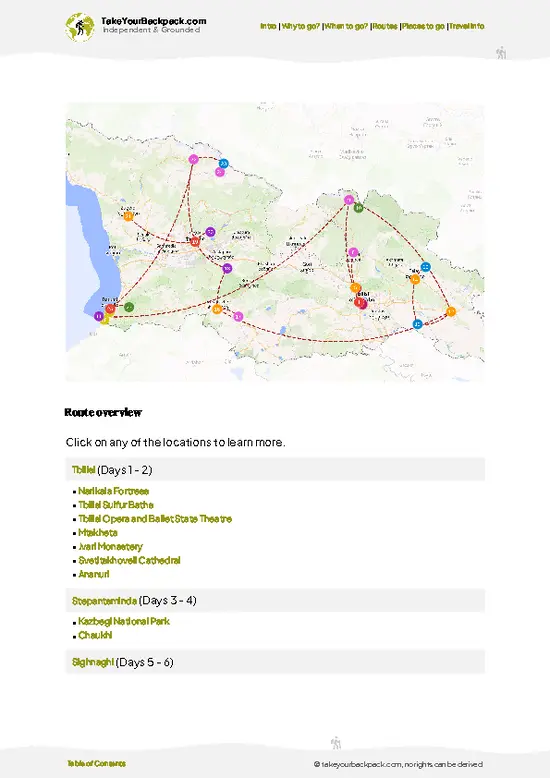
example page 0 from our offline Travel Guide for Georgia
example page 1 from our offline Travel Guide for Georgia
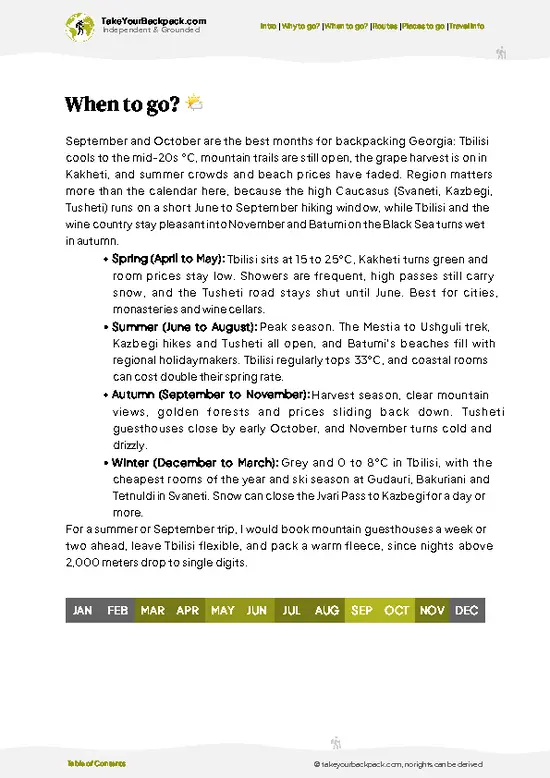
example page 2 from our offline Travel Guide for Georgia
example page 3 from our offline Travel Guide for Georgia
example page 4 from our offline Travel Guide for Georgia
example page 5 from our offline Travel Guide for Georgia
example page 6 from our offline Travel Guide for Georgia
example page 7 from our offline Travel Guide for Georgia
The digital guide (350 pages) contains:
✅ 89 highlights, ranked by travel appeal
✅ Optimized 5, 10 & 15-day travel routes
✅ Cities, national parks, landmarks, beaches
✅ How to get around
✅ Offline-friendly for travel without Wi-Fi
👉 Click to see all 30+ guide features

📅 Plan smarter in minutes, not weeks
✅ Month by month travel advice
✅ Festivals & national holidays
✅ Budget expectations

🗺️ Go to the right places, skip the overrated ones
✅ Honest pros & cons of destinations
✅ Top hikes, parks & viewpoints
✅ Lesser-known places most travelers miss
✅ Clear “worth it vs skip it” guidance

🛏️ Travel smoothly without rookie mistakes
✅ Best areas to stay
✅ Transport systems explained simply
✅ Common scams & safety advice
✅ SIM cards, money & practical tips

🌍 Understand the country, not just visit it
✅ Culture & traditions
✅ 52 Essential phrases & customs
✅ Festivals worth planning around
✅ Traveler-friendly historical context
✅ Insights that make places more meaningful

📱 Built for real travel conditions
✅ Fully downloadable PDF
✅ Works completely offline
✅ Optimized for phone use
✅ Useful in remote areas & buses
✅ Everything in one place
Stop searching, start planning
Get instant access to your full guide. 30‑day money-back guarantee.
+ Add another guide for just

By proceeding you agree to our terms.
Sent to your inbox immediately after payment • 100% Secure Checkout
Best Backpacking Travel Advisor 2025 tourism awardBest Backpacking
Travel Advisor
2025
What others say about Take Your Backpack Guides:
⭐⭐⭐⭐⭐
Fantastic, amazing amount of information!
⭐⭐⭐⭐⭐
My goodness this is amazing, it's what I've been looking for hats off too you!
⭐⭐⭐⭐⭐
I think this is absolutely BRILLIANT
⭐⭐⭐⭐
Very complete and informative. It's still missing places, but I gotta to commend you
⭐⭐⭐⭐⭐
This is truly amazing, thank you, can't wait to explore it with my kids!
⭐⭐⭐⭐⭐
Awesome resource, thank you!
⭐⭐⭐⭐⭐
This is amazing! Can't wait to explore the ones I haven't seen
⭐⭐⭐⭐
I love this! Well done, great idea.
⭐⭐⭐⭐⭐
Thanks for taking the time to make this gem!
⭐⭐⭐⭐⭐
This might be the best website I've ever seen.
⭐⭐⭐⭐⭐
Congratulations, and thank you so much for your work; it's incredibly valuable.
⭐⭐⭐⭐
In all seriousness I think you did a great job pointing out the important spots
⭐⭐⭐⭐⭐
10/10 very good
⭐⭐⭐⭐⭐
As someone who's only just starting to visit regularly this is awesome, thank you.
⭐⭐⭐⭐
Thank you very much! I'm going to visit my dad, it's going to be very useful!
⭐⭐⭐⭐⭐
This is really cool! We'll be travelling for the first time and this definitely come in handy.
⭐⭐⭐⭐⭐
You are now our minister of culture, congratulations 👨‍💼
⭐⭐⭐⭐⭐
Just wanted to tell you that this is a pearl! Going to follow your recommendations.
⭐⭐⭐⭐⭐
This is so cool. I'll definitely be using the resource for my travels soon.
⭐⭐⭐⭐⭐
This is very impressive! Good work.
⭐⭐⭐⭐⭐
This is an amazing and informative site. Very well done!

🛏️ Where to stay?Top Areas to Stay

Georgia has plenty of hostels and guesthouses, with dorm beds typically 25 to 40 GEL (about US$9 to 15) and private guesthouse rooms from around 70 GEL (US$26). In Tbilisi, Sololaki and the Old Town put you within walking distance of the sulfur baths and the best wine bars but come with steep cobbled streets and late-night noise, while Marjanishvili and Chughureti on the left bank are cheaper, well connected by metro and home to the city’s liveliest hostel and bar scene. On the coast, Batumi’s Old Town keeps you close to the boulevard and beach, and in Kutaisi the streets around the center are quiet, safe and handy for early marshrutka departures to the mountains.

If you enjoy meeting fellow … read more 👉
Georgia has plenty of hostels and guesthouses, with dorm beds typically 25 to 40 GEL (about US$9 to 15) and private guesthouse rooms from around 70 GEL (US$26). In Tbilisi, Sololaki and the Old Town put you within walking distance of the sulfur baths and the best wine bars but come with steep cobbled streets and late-night noise, while Marjanishvili and Chughureti on the left bank are cheaper, well connected by metro and home to the city’s liveliest hostel and bar scene. On the coast, Batumi’s Old Town keeps you close to the boulevard and beach, and in Kutaisi the streets around the center are quiet, safe and handy for early marshrutka departures to the mountains.

If you enjoy meeting fellow travelers, consider choosing hostels with high ratings for atmosphere. On the other hand, if you prefer having your own space, a hotel might be a better option.

GeorgiaDiscover the Country

👋 Meet the founderWho’s Behind Take Your Backpack?

Johan, backpacker and founder of TakeYourBackpackHi, I’m Johan (Netherlands 🇳🇱), the creator of TakeYourBackpack. Over the past 3 decades, I’ve backpacked through 90+ countries across six continents, gaining extensive experience with independent travel, long-term trips, and overland routes.

This site is built on a combination of firsthand travel experience and carefully curated insights from other backpackers. Many guides are based on places I’ve personally visited, while others bring together tips, observations, and practical advice shared by trusted travelers I’ve met along the way.

The goal is to provide realistic, experience-driven guidance — not generic itineraries — so you can explore destinations with better context, clearer expectations, and more confidence.