×

Georgia🇬🇪 | best attractionsYour Guide to the 10 Best attractions in Georgia

Georgia, the country in the Caucasus, packs its attractions into a space smaller than South Carolina, yet the experience changes sharply within an hour of driving. In the high Greater Caucasus, stone watchtowers sit above glacial valleys where cold wind smells of wet slate and cow dung, and roads turn to mud. Around Tbilisi and Kakheti, monasteries and wine cellars mean candle smoke, qvevri clay and sunlit courtyards, with low entry costs and easy minibus access. The Black Sea coast brings humid, crowded resort air. For backpacking or independent travel, access and season matter more than distance: the remote north rewards effort, the center rewards ease.

By Johan Kruseman 🇳🇱 | Updated October 18, 2026
Explore the best festivals in Georgia

Why go?Why Travelers Love These Spots

Georgia sits where Europe and Asia meet, and the ground shows it. Roman, Persian, Ottoman and Soviet rulers all left layers here, so ancient churches, fortress towns and cave settlements stand within a short drive of Soviet-era sanatoriums and mountain villages that still keep medieval defense towers. The country has one of the oldest Christian traditions in the world and one of the oldest winemaking cultures, which you taste in amber wine, smell in smoky bakeries and hear in polyphonic singing drifting from church doors.

Geography does the rest. The Greater Caucasus forms a wall along the northern border, with peaks above 5,000 meters, while the Lesser Caucasus in the south brings dry volcanic plateaus. Subtropical air on the western coast carries humidity and heavy rain, and the east is … read more 👉
Georgia sits where Europe and Asia meet, and the ground shows it. Roman, Persian, Ottoman and Soviet rulers all left layers here, so ancient churches, fortress towns and cave settlements stand within a short drive of Soviet-era sanatoriums and mountain villages that still keep medieval defense towers. The country has one of the oldest Christian traditions in the world and one of the oldest winemaking cultures, which you taste in amber wine, smell in smoky bakeries and hear in polyphonic singing drifting from church doors.

Geography does the rest. The Greater Caucasus forms a wall along the northern border, with peaks above 5,000 meters, while the Lesser Caucasus in the south brings dry volcanic plateaus. Subtropical air on the western coast carries humidity and heavy rain, and the east is drier and warmer. That mix of climates explains why attractions feel so varied.

Before choosing Georgia, know that infrastructure is uneven. Main roads between big towns are decent, but mountain routes can close with snow or landslides, and marshrutkas (shared minibuses) leave when full, with little signage in English. Dust, diesel and driving that can feel aggressive come with the territory. In return, prices stay low and hospitality is warm, with hosts quick to press food and wine on you.
How the List Was Created
The list of best attractions in Georgia is created based on cultural significance or entertainment value. If you feel a attraction is missing in this list, please let us know.

When to go?When to Plan Your Trip

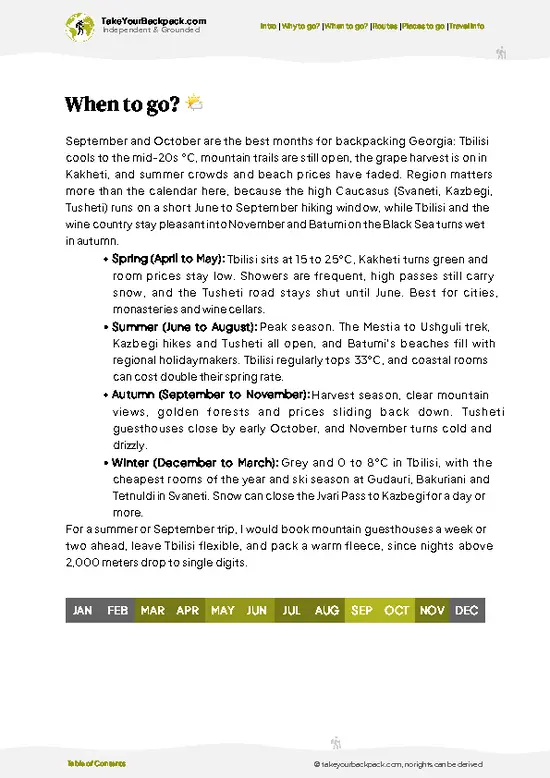
Best months and weather: The best months for attractions in Georgia are May, June, September and early October, when most of the country sits at roughly 15 to 27°C, roads are open and the light is clear and golden. In spring, orchards and meadows smell of blossom and wet earth, though May can bring afternoon rain, especially in the west.
Summer and peak periods: July and August run hot, with Tbilisi often reaching 32 to 38°C and heat pooling in stone streets. The Black Sea coast turns humid and crowded, and prices for beds there can rise by 30 to 60 percent. The high mountains are at their best now, with trails mostly snow-free from about late June to September, though afternoon thunderstorms are common.
Autumn and winter: Autumn is harvest season in the wine region of Kakheti, when grape pressing … read more 👉
Best months and weather: The best months for attractions in Georgia are May, June, September and early October, when most of the country sits at roughly 15 to 27°C, roads are open and the light is clear and golden. In spring, orchards and meadows smell of blossom and wet earth, though May can bring afternoon rain, especially in the west.
Summer and peak periods: July and August run hot, with Tbilisi often reaching 32 to 38°C and heat pooling in stone streets. The Black Sea coast turns humid and crowded, and prices for beds there can rise by 30 to 60 percent. The high mountains are at their best now, with trails mostly snow-free from about late June to September, though afternoon thunderstorms are common.
Autumn and winter: Autumn is harvest season in the wine region of Kakheti, when grape pressing scents the villages, usually in September and October. Days stay mild and the crowds thin. From November to March the cities cool to roughly 0 to 8°C and some mountain roads close, with heavy snow in the high Caucasus and some guesthouses shutting for the season. Ski areas operate from about December to April. Winter does bring the lowest prices and empty churches, but short days limit sightseeing.

attraction hoppingSuggested Travel Strategies

How many days to plan: A trip combining several of Georgia’s main attractions needs 8 to 14 days, and 10 is a comfortable middle. The country is compact, but mountain roads are slow, so distances on a map mislead.
Regions and direction: Tbilisi is the natural hub, with shared minibuses and trains fanning out from its stations. The east (Kakheti) and the central plains cluster well with the capital, with day trips of 1.5 to 3 hours each way. The north-central highway toward the Greater Caucasus takes about 3 hours to the first mountain stops, and the far northwest (Svaneti) needs a full travel day, roughly 8 to 10 hours by road from Tbilisi. The west, around Kutaisi and the Black Sea coast, connects by train in about 4 to 5 hours. A sensible loop runs Tbilisi, east, back through the capital, … read more 👉
How many days to plan: A trip combining several of Georgia’s main attractions needs 8 to 14 days, and 10 is a comfortable middle. The country is compact, but mountain roads are slow, so distances on a map mislead.
Regions and direction: Tbilisi is the natural hub, with shared minibuses and trains fanning out from its stations. The east (Kakheti) and the central plains cluster well with the capital, with day trips of 1.5 to 3 hours each way. The north-central highway toward the Greater Caucasus takes about 3 hours to the first mountain stops, and the far northwest (Svaneti) needs a full travel day, roughly 8 to 10 hours by road from Tbilisi. The west, around Kutaisi and the Black Sea coast, connects by train in about 4 to 5 hours. A sensible loop runs Tbilisi, east, back through the capital, north to the mountains, then west and out through Kutaisi or Batumi, so you never backtrack over the same pass.
Time per stop and planning mistakes: Give cities 2 to 3 nights, mountain bases 2 to 4 nights and wine villages 1 to 2. The classic error is cramming a remote valley into a single day, then spending hours in a bouncing van. Another is ignoring weather, since cloud and rain can erase views and shut passes. Leave a buffer day before flights and build in slack for departures that wait until the vehicle fills.

The ListThe Best attractions of Georgia

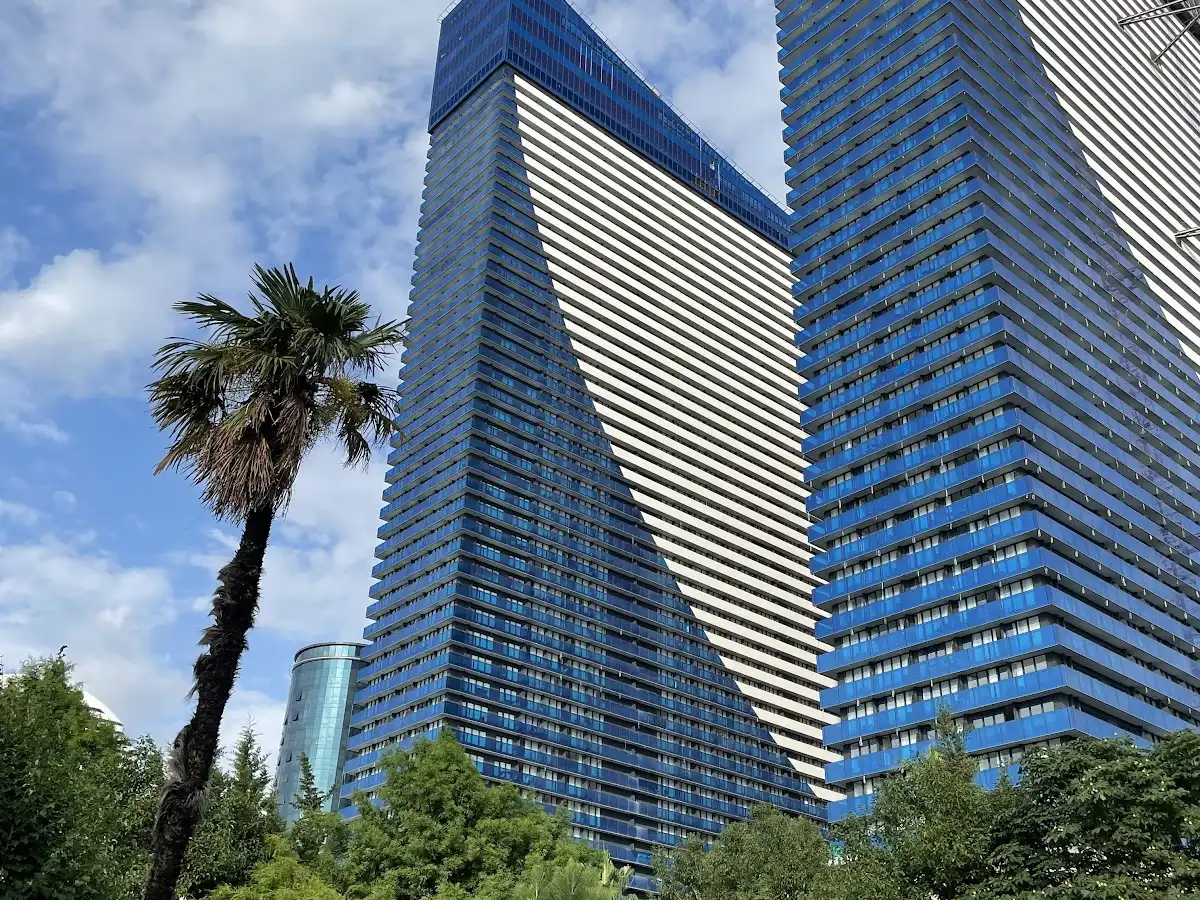
1 Batumi Boulevard

urban promenade, sculptures, nightlife spots

Stroll a lively seafront lined with public art and evening activity, where the city meets the Black Sea in a continuous flow.

georgia-attraction-batumi-boulevard
© Google |

2 Narikala Fortress

hilltop ramparts, city panorama, ancient fortifications

Climb uneven paths to survey Tbilisi’s old quarters and river, with centuries-old walls offering insight into the city’s defensive past.

3 Svetitskhoveli Cathedral

UNESCO site, royal burials, religious frescoes

Enter a spiritual center where ancient legends, intricate murals, and centuries of Georgian royalty converge in a single architectural complex.

4 Jvari Monastery

hilltop church, early medieval stonework, Mtskheta valley views

Stand at the crossroads of history and landscape where early Christian architecture overlooks the confluence of two rivers and ancient capital.

5 Uplistsikhe Cave Town

rock-cut dwellings, ancient tunnels, pagan temples

Navigate a labyrinth of carved chambers and passageways that reveal Georgia’s pre-Christian rituals and early urban planning.

6 Prometheus Cave

underground chambers, stalactite formations, subterranean river

Walk illuminated pathways through vast limestone halls and witness geological formations shaped by water over thousands of years.

7 Tbilisi Sulfur Baths

thermal domes, tiled bathhouses, mineral pools

Soak in naturally heated waters beneath brick domes, experiencing a centuries-old bathing tradition central to local daily life.

8 Georgian National Museum

archaeological treasures, Soviet-era exhibits, natural history

Discover Georgia’s layered past through ancient artifacts, regional art, and rotating exhibitions that reveal the country’s diverse cultural influences.

9 Tbilisi Opera and Ballet State Theatre

Moorish Revival façade, classical performances, ornate interiors

Attend a performance or tour the lavish halls to experience Tbilisi’s enduring dedication to music, dance, and architectural grandeur.

10 Kutaisi State Historical Museum

regional artifacts, medieval manuscripts, ethnographic displays

Browse collections that trace western Georgia’s evolution, from Bronze Age relics to local textiles and the city’s shifting political role.

Loading the map 🌍

Expert viewTips and Advice from Travelers

How many attractions to plan: Eight to ten stops is the number I advise for a trip of 10 to 14 days. Georgia is small on a map, but mountain roads, shared minibuses (marshrutkas) that leave only when full, and winding two-lane highways stretch every transfer. Add more stops and you spend your days on vinyl seats with the window rattling, watching the landscape through a smear of dust. Fewer, longer visits let you stay for the late light, when stone monasteries turn honey-colored and the air smells of woodsmoke and cut grass.
Choosing by travel style: If you love history and architecture, put the medieval churches, cave monasteries and old-town streets first. Most are quiet by 9 a.m., cool inside even in July, and thick with candle wax and damp stone. If you hike, give the high Caucasus the … read more 👉
How many attractions to plan: Eight to ten stops is the number I advise for a trip of 10 to 14 days. Georgia is small on a map, but mountain roads, shared minibuses (marshrutkas) that leave only when full, and winding two-lane highways stretch every transfer. Add more stops and you spend your days on vinyl seats with the window rattling, watching the landscape through a smear of dust. Fewer, longer visits let you stay for the late light, when stone monasteries turn honey-colored and the air smells of woodsmoke and cut grass.
Choosing by travel style: If you love history and architecture, put the medieval churches, cave monasteries and old-town streets first. Most are quiet by 9 a.m., cool inside even in July, and thick with candle wax and damp stone. If you hike, give the high Caucasus the biggest share of your time. Trails there mean mud, loose scree, cowbells and tea at a guesthouse at the end, which is the point. If you are here for food and wine, pick attractions in the eastern wine country and city markets, where you taste amber wine from clay vessels and eat warm bread straight from the tone oven. Mixing one of each kind per week keeps your legs and your attention fresh.
What it costs: Plan on 100 to 180 GEL a day (about US$35 to 65) for sightseeing, local transport and meals, excluding your bed. Many churches and monasteries are free. Museums, fortresses and cave complexes usually charge 5 to 30 GEL (US$2 to 11). Marshrutka legs run about 5 to 25 GEL (US$2 to 9), while a driver for a full day to reach remote sites costs roughly 150 to 350 GEL (US$55 to 130) per car, which drops sharply when you split it among four. Local guides at major sites usually charge 50 to 150 GEL (US$18 to 55) for a few hours. Carry cash in lari, since village ticket booths and minibus drivers rarely take cards.
Safety and etiquette: Dress rules are real at working churches. Women need a headscarf and a skirt below the knee (a wrap is often lent at the door), and men should wear long trousers. Keep the camera down during services, when chanting echoes off the walls and incense hangs in the air. Mountain weather shifts within an hour, so carry a rain shell and check road conditions, because landslides and snow close passes. Drivers overtake on blind bends, so sit in the middle of a marshrutka if you are prone to carsickness. Stray dogs are common and usually lazy, though you should keep your distance near sheep camps, where guard dogs are serious. Stay well clear of the administrative boundary lines with Abkhazia and South Ossetia, and ask locally before walking border-area trails, such as those near the Azerbaijan frontier. If a host invites you to a table, accept at least one toast and a plate, since refusing everything can read as rude and the food is usually excellent.

✈️ The backpacker research shortcutGeorgia Travel Guide

An offline-friendly backpacking guide with optimized travel routes, ranked highlights, transport advice, and the best areas to stay.
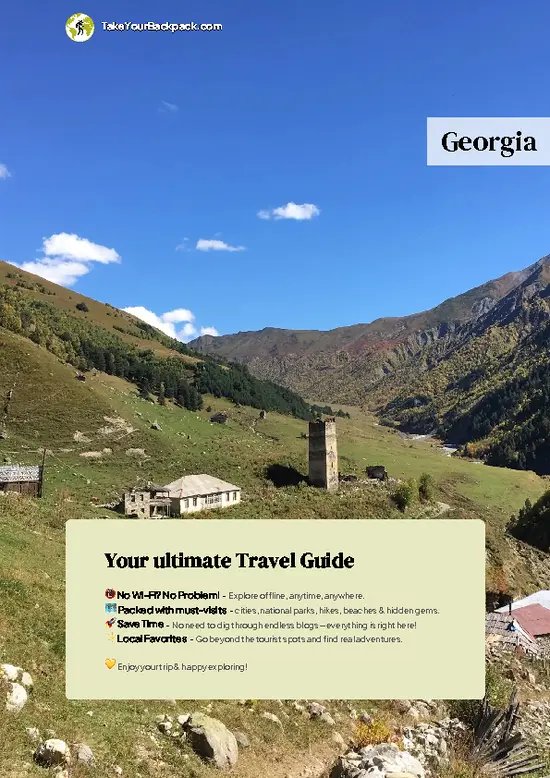
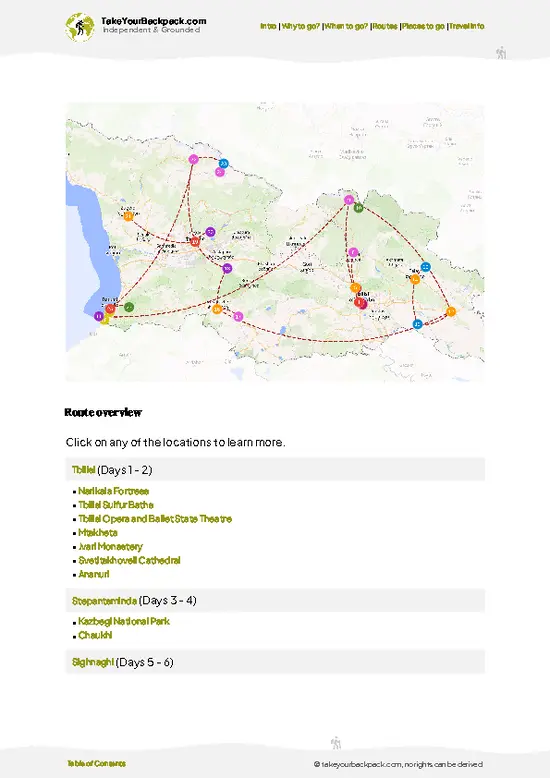
example page 0 from our offline Travel Guide for Georgia
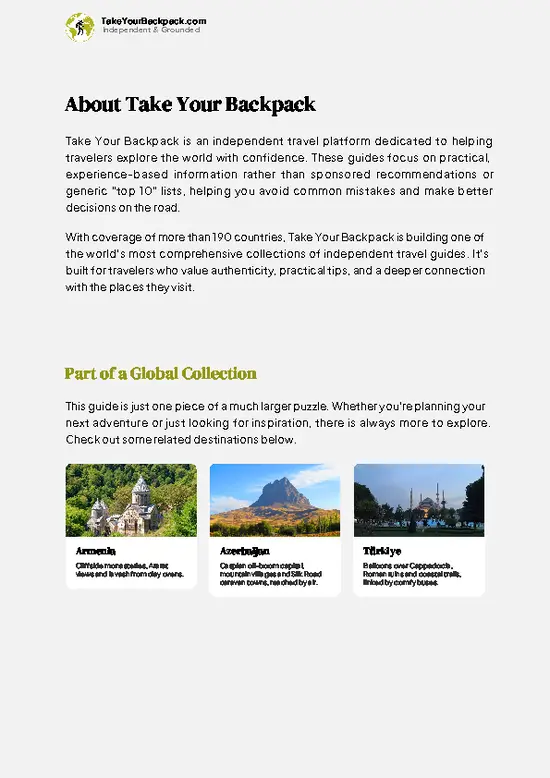
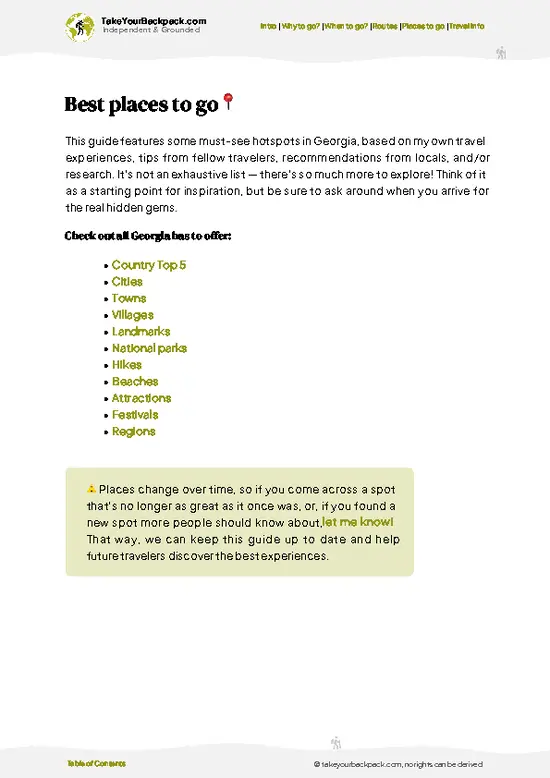
example page 1 from our offline Travel Guide for Georgia
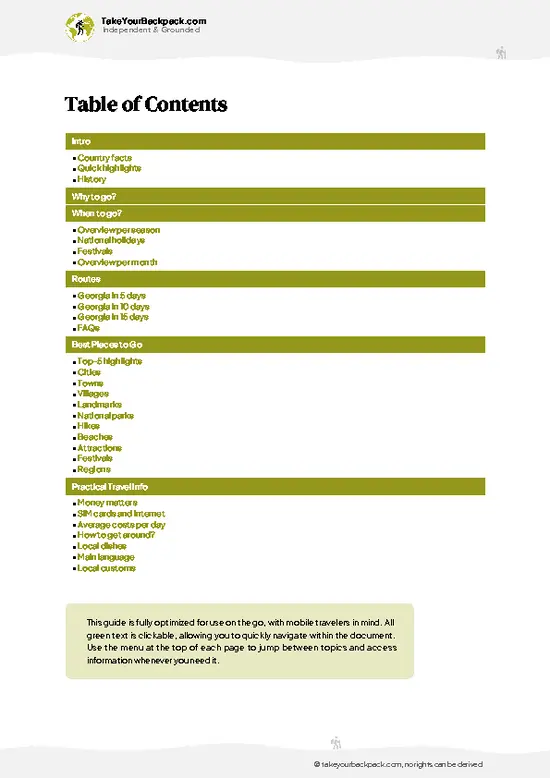
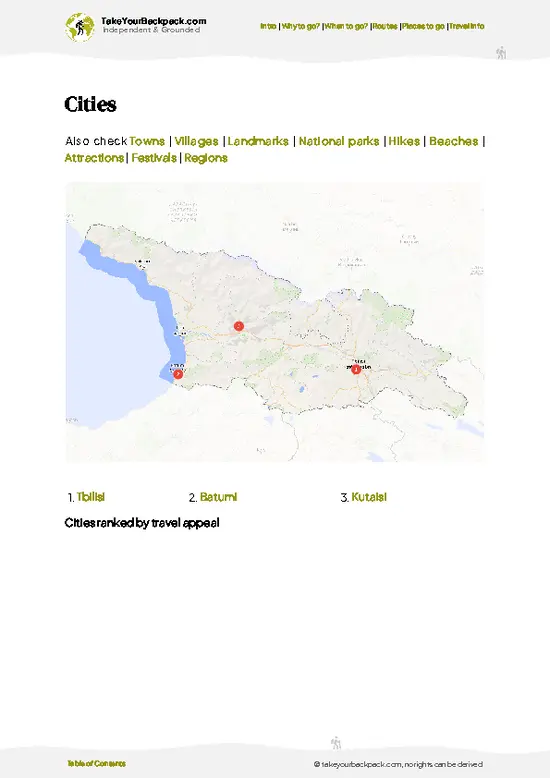
example page 2 from our offline Travel Guide for Georgia
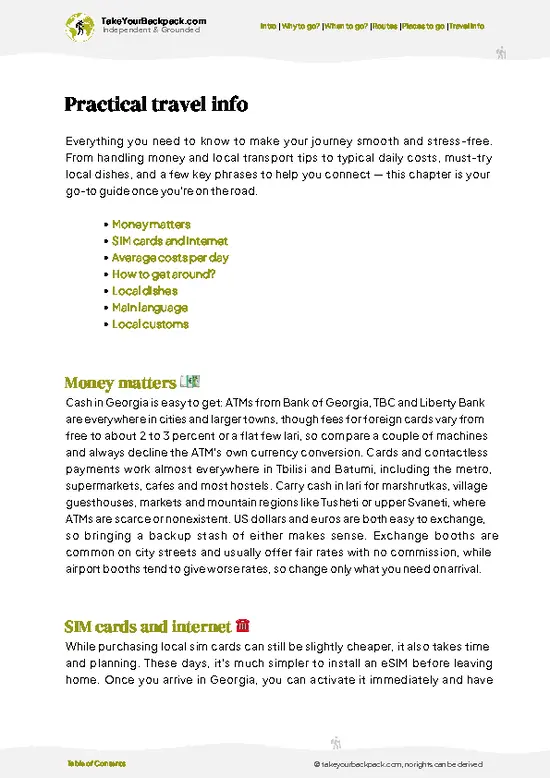
example page 3 from our offline Travel Guide for Georgia
example page 4 from our offline Travel Guide for Georgia
example page 5 from our offline Travel Guide for Georgia
example page 6 from our offline Travel Guide for Georgia
example page 7 from our offline Travel Guide for Georgia
The digital guide (350 pages) contains:
✅ 89 highlights, ranked by travel appeal
✅ Optimized 5, 10 & 15-day travel routes
✅ Cities, national parks, landmarks, beaches
✅ How to get around
✅ Offline-friendly for travel without Wi-Fi
👉 Click to see all 30+ guide features

📅 Plan smarter in minutes, not weeks
✅ Month by month travel advice
✅ Festivals & national holidays
✅ Budget expectations

🗺️ Go to the right places, skip the overrated ones
✅ Honest pros & cons of destinations
✅ Top hikes, parks & viewpoints
✅ Lesser-known places most travelers miss
✅ Clear “worth it vs skip it” guidance

🛏️ Travel smoothly without rookie mistakes
✅ Best areas to stay
✅ Transport systems explained simply
✅ Common scams & safety advice
✅ SIM cards, money & practical tips

🌍 Understand the country, not just visit it
✅ Culture & traditions
✅ 52 Essential phrases & customs
✅ Festivals worth planning around
✅ Traveler-friendly historical context
✅ Insights that make places more meaningful

📱 Built for real travel conditions
✅ Fully downloadable PDF
✅ Works completely offline
✅ Optimized for phone use
✅ Useful in remote areas & buses
✅ Everything in one place
Stop searching, start planning
Get instant access to your full guide. 30‑day money-back guarantee.
+ Add another guide for just

By proceeding you agree to our terms.
Sent to your inbox immediately after payment • 100% Secure Checkout
Best Backpacking Travel Advisor 2025 tourism awardBest Backpacking
Travel Advisor
2025
What others say about Take Your Backpack Guides:
⭐⭐⭐⭐⭐
Fantastic, amazing amount of information!
⭐⭐⭐⭐⭐
My goodness this is amazing, it's what I've been looking for hats off too you!
⭐⭐⭐⭐⭐
I think this is absolutely BRILLIANT
⭐⭐⭐⭐
Very complete and informative. It's still missing places, but I gotta to commend you
⭐⭐⭐⭐⭐
This is truly amazing, thank you, can't wait to explore it with my kids!
⭐⭐⭐⭐⭐
Awesome resource, thank you!
⭐⭐⭐⭐⭐
This is amazing! Can't wait to explore the ones I haven't seen
⭐⭐⭐⭐
I love this! Well done, great idea.
⭐⭐⭐⭐⭐
Thanks for taking the time to make this gem!
⭐⭐⭐⭐⭐
This might be the best website I've ever seen.
⭐⭐⭐⭐⭐
Congratulations, and thank you so much for your work; it's incredibly valuable.
⭐⭐⭐⭐
In all seriousness I think you did a great job pointing out the important spots
⭐⭐⭐⭐⭐
10/10 very good
⭐⭐⭐⭐⭐
As someone who's only just starting to visit regularly this is awesome, thank you.
⭐⭐⭐⭐
Thank you very much! I'm going to visit my dad, it's going to be very useful!
⭐⭐⭐⭐⭐
This is really cool! We'll be travelling for the first time and this definitely come in handy.
⭐⭐⭐⭐⭐
You are now our minister of culture, congratulations 👨‍💼
⭐⭐⭐⭐⭐
Just wanted to tell you that this is a pearl! Going to follow your recommendations.
⭐⭐⭐⭐⭐
This is so cool. I'll definitely be using the resource for my travels soon.
⭐⭐⭐⭐⭐
This is very impressive! Good work.
⭐⭐⭐⭐⭐
This is an amazing and informative site. Very well done!

🛏️ Where to stay?Best Stay Options in Georgia

Georgia has plenty of hostels and guesthouses, with dorm beds typically 25 to 40 GEL (about US$9 to 15) and private guesthouse rooms from around 70 GEL (US$26). In Tbilisi, Sololaki and the Old Town put you within walking distance of the sulfur baths and the best wine bars but come with steep cobbled streets and late-night noise, while Marjanishvili and Chughureti on the left bank are cheaper, well connected by metro and home to the city’s liveliest hostel and bar scene. On the coast, Batumi’s Old Town keeps you close to the boulevard and beach, and in Kutaisi the streets around the center are quiet, safe and handy for early marshrutka departures to the mountains.

If you enjoy meeting fellow … read more 👉
Georgia has plenty of hostels and guesthouses, with dorm beds typically 25 to 40 GEL (about US$9 to 15) and private guesthouse rooms from around 70 GEL (US$26). In Tbilisi, Sololaki and the Old Town put you within walking distance of the sulfur baths and the best wine bars but come with steep cobbled streets and late-night noise, while Marjanishvili and Chughureti on the left bank are cheaper, well connected by metro and home to the city’s liveliest hostel and bar scene. On the coast, Batumi’s Old Town keeps you close to the boulevard and beach, and in Kutaisi the streets around the center are quiet, safe and handy for early marshrutka departures to the mountains.

If you enjoy meeting fellow travelers, consider choosing hostels with high ratings for atmosphere. On the other hand, if you prefer having your own space, a hotel might be a better option.

GeorgiaWhere to Go Next

👋 Meet the founderWho’s Behind Take Your Backpack?

Johan, backpacker and founder of TakeYourBackpackHi, I’m Johan (Netherlands 🇳🇱), the creator of TakeYourBackpack. Over the past 3 decades, I’ve backpacked through 90+ countries across six continents, gaining extensive experience with independent travel, long-term trips, and overland routes.

This site is built on a combination of firsthand travel experience and carefully curated insights from other backpackers. Many guides are based on places I’ve personally visited, while others bring together tips, observations, and practical advice shared by trusted travelers I’ve met along the way.

The goal is to provide realistic, experience-driven guidance — not generic itineraries — so you can explore destinations with better context, clearer expectations, and more confidence.