×

Ghana🇬🇭 | townsAkosomboVolta Dam, lake cruises, Atimpoku bridge | things to do and best time to go

Explore KetaExplore Bimbilla

Backpacking in Akosombo
🏆 Top picktown ranked #2
By Johan Kruseman 🇳🇱 | Updated October 16, 2026

Diesel hangs in the humid air at the Akosombo port as a freight ferry slides in, and the hills across Lake Volta turn from copper to gray as the afternoon haze thickens. Akosombo sits in Ghana’s Eastern Region, about 100 kilometers northeast of Accra on the Volta River. It is calm, green and spread out, with few street-level sights beyond the dam and the lake. Getting here is easy: trotros run from Accra’s Tema Station and Tema, usually 2 to 2.5 hours, and the smarter move is to leave before 8 AM, since the Accra exit roads clog by mid-morning. Evenings are quiet. Hostel options are few, so you will meet travelers at lakeside resorts and on boat trips rather than in bars. Compared with Aburi, it is hotter and less polished. Compared with Ho, it is closer to Accra and easier for a base.

Discover everything you want to know in the 📖 Ghana Travel Guide.


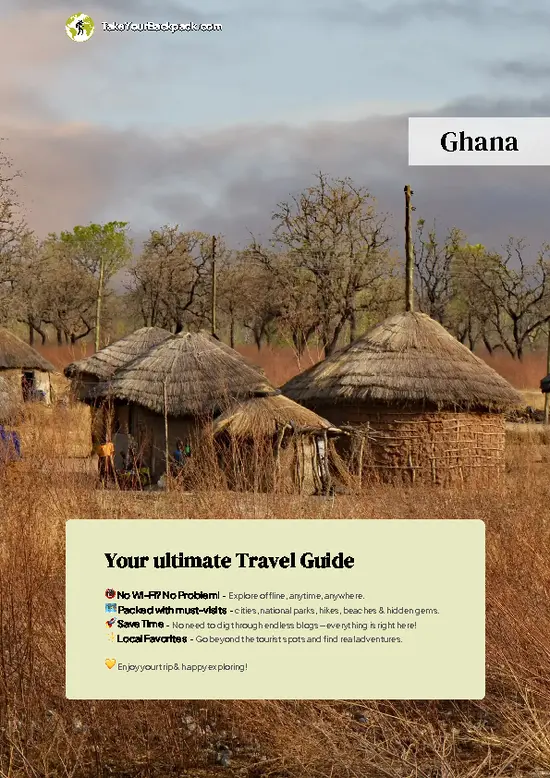
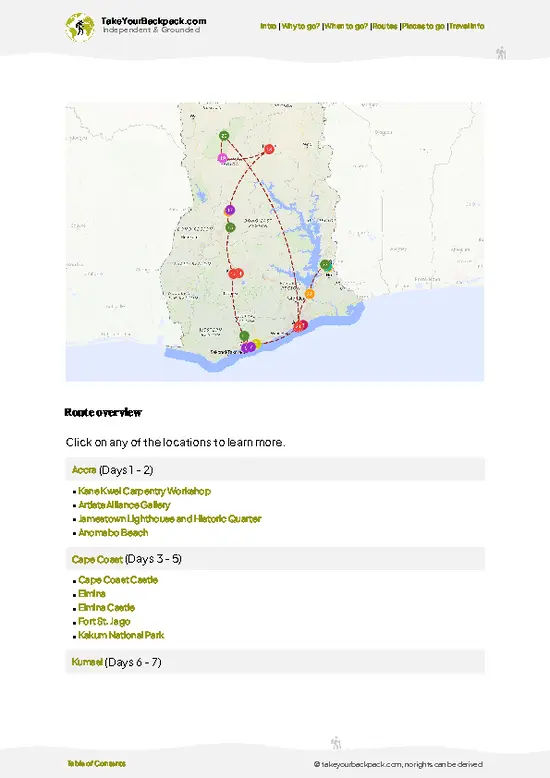
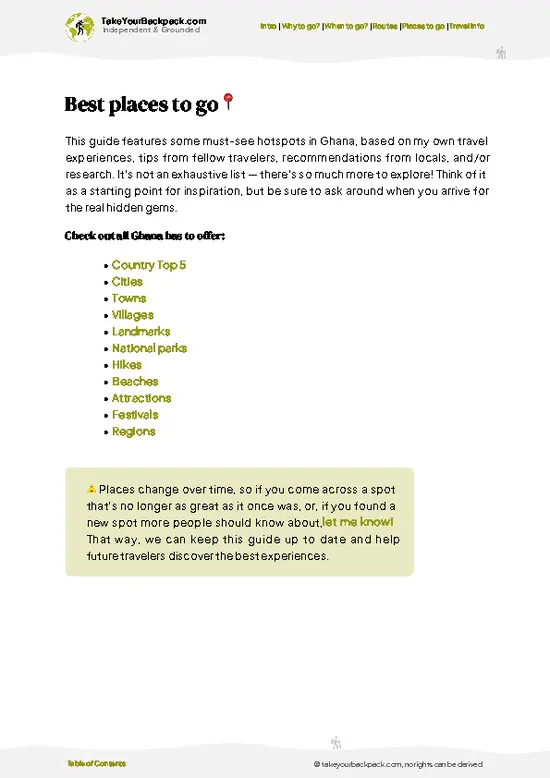
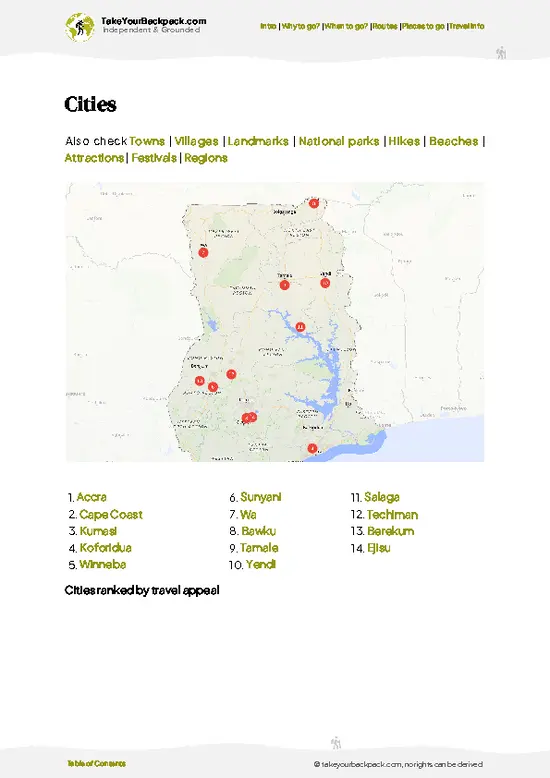
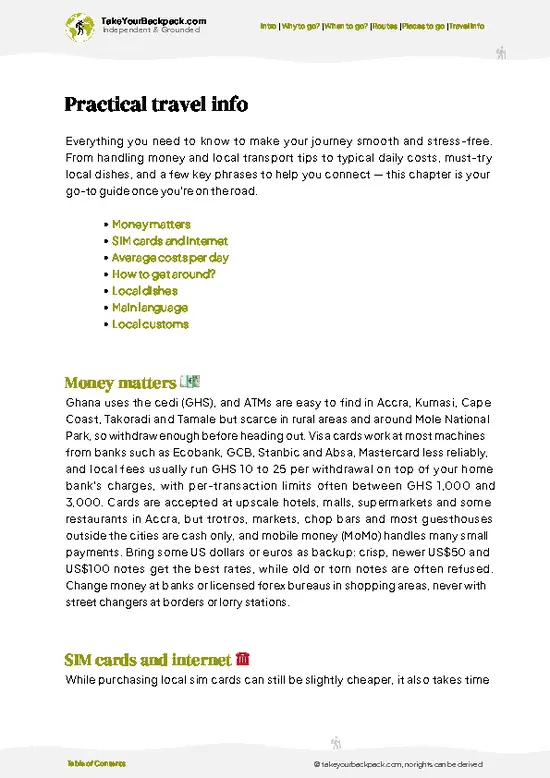
example page 0 from our offline Travel Guide for Ghana
example page 1 from our offline Travel Guide for Ghana
example page 2 from our offline Travel Guide for Ghana
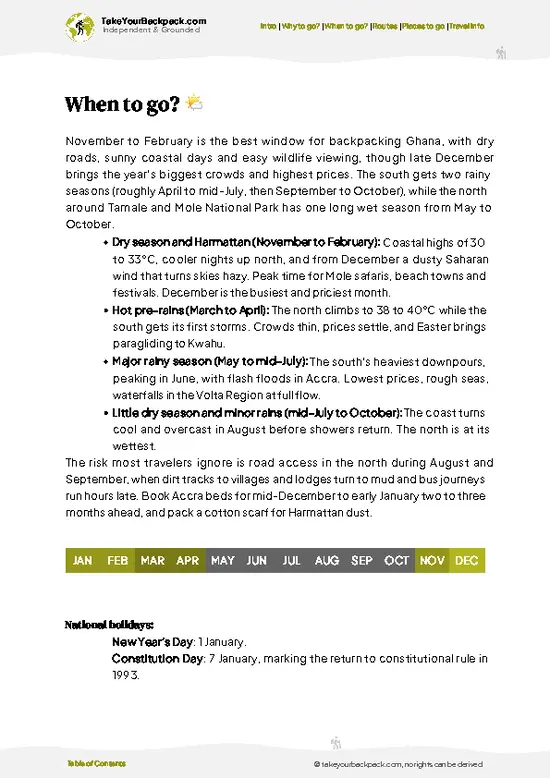
example page 3 from our offline Travel Guide for Ghana
example page 4 from our offline Travel Guide for Ghana
example page 5 from our offline Travel Guide for Ghana
example page 6 from our offline Travel Guide for Ghana
example page 7 from our offline Travel Guide for Ghana
Loading the map 🌍
CLICK TO FILTER
cities
towns
villages
landmarks
national parks
hikes
beaches
attractions
festivals
regions
SHOW COUNTRY’S BESTSHOW ALL

✨ Why go?
Ranked #2 town in Ghana
Reasons people choose to visit here

Akosombo earns its place as a slow-down stop on the way between Accra and the Volta Region, not as a destination with a long list of sights. The big draw is Lake Volta, one of the largest man-made reservoirs on earth, and the Akosombo Dam that created it. You can see both in a morning and still have the afternoon for a boat trip. Most backpackers stay one night, a few linger two to enjoy the breeze off the water and the fresh tilapia grilled at lakeside spots. The town works best for solo travelers and small groups who like quiet evenings, and for anyone using it as a base for day trips to Atimpoku, Dodi Island or Boti Falls. Budget guesthouses are limited, so book ahead for weekends, when Accra families arrive. If you need nightlife, hostels packed with people or a walkable old center, push on to Ho or head back to Accra.

💡 HighlightsThe experiences that define the visit

  1. Akosombo Dam and viewpoint. The 1965 dam holds back Lake Volta and feeds one of Ghana’s main hydroelectric plants. Walk the crest and look at the spillway and the gorge below. Go in the morning, when the light is soft and the heat is bearable. Expect to pay about GH¢20 to 100 depending on tour and permit rules. Allow 1 to 2 hours. Bring ID, as security staff may ask.
  2. Volta Lake boat cruise. Local operators run short trips from the Akosombo and Atimpoku waterfront. You see fishing canoes, stilted villages and the wide, brown-green water. Late afternoon is best. Budget roughly GH¢100 to 400 per person or per chartered boat, depending on group size and length. Plan 1 to 3 hours.
  3. Akosombo Port. Here the Volta Lake Transport Company freight and passenger ferries load for the northern lake. It is
… read more 👉
  1. Akosombo Dam and viewpoint. The 1965 dam holds back Lake Volta and feeds one of Ghana’s main hydroelectric plants. Walk the crest and look at the spillway and the gorge below. Go in the morning, when the light is soft and the heat is bearable. Expect to pay about GH¢20 to 100 depending on tour and permit rules. Allow 1 to 2 hours. Bring ID, as security staff may ask.
  2. Volta Lake boat cruise. Local operators run short trips from the Akosombo and Atimpoku waterfront. You see fishing canoes, stilted villages and the wide, brown-green water. Late afternoon is best. Budget roughly GH¢100 to 400 per person or per chartered boat, depending on group size and length. Plan 1 to 3 hours.
  3. Akosombo Port. Here the Volta Lake Transport Company freight and passenger ferries load for the northern lake. It is a working harbor, so watching lorries and cargo roll aboard is the draw. Visit between 9 AM and 4 PM. Looking costs nothing, and 30 minutes is enough. Ferry rides north are long trips, not day outings.
  4. Akosombo Textiles shop. The local textile company is known for printed wax cloth. Buy fabric for a tailor back in Accra, or browse the patterns. Go on weekday mornings. Fabric usually costs GH¢60 to 250 for a standard length, and a visit takes 30 to 60 minutes.
  5. Adomi Bridge at Atimpoku. About 5 to 10 kilometers from town, this 1957 suspension bridge crosses the Volta, with a smoked fish market nearby. Stop at sunrise or late afternoon for photos. Crossing is free, and an hour covers the bridge and a snack. Fish prices are low, often GH¢10 to 40.
For day trips, Boti Falls and Umbrella Rock near Koforidua, Dodi Island on the lake and Aburi Botanical Gardens are all within a few hours. I would pick Dodi Island first, because it puts you out on the water with a small, calm village feel that the dam views can’t match.
Spotted a mistake or missing something? Contact us.

Things to do near Akosombo

Ratings based on Tripadvisor reviews. When you book through this link, you support our work at no extra cost to you.

🏘️ NeighborhoodsKey areas and districts to know

Akosombo is small enough to understand in a day, but its three zones feel like different towns, and knowing why saves you wasted cedi on rides.
  • Akosombo Township (the Volta River Authority estate): Planned in the 1960s for dam engineers, so expect tidy tree-lined streets, red-roofed bungalows, hissing sprinklers and the hum of generators when power flickers. Quiet after dark, with a few chop bars selling banku and grilled tilapia. Walkable, but the hills are steep and midday sun is brutal, so walk early and take a taxi back.
  • Akosombo Dam and Overlook: The concrete wall towers above a roaring spillway and the lake sits flat and pewter-colored behind it. Tours need a permit and photo rules are strict, so go with your passport and ask at the visitor center rather than assuming the gate is open.
… read more 👉
Akosombo is small enough to understand in a day, but its three zones feel like different towns, and knowing why saves you wasted cedi on rides.
  • Akosombo Township (the Volta River Authority estate): Planned in the 1960s for dam engineers, so expect tidy tree-lined streets, red-roofed bungalows, hissing sprinklers and the hum of generators when power flickers. Quiet after dark, with a few chop bars selling banku and grilled tilapia. Walkable, but the hills are steep and midday sun is brutal, so walk early and take a taxi back.
  • Akosombo Dam and Overlook: The concrete wall towers above a roaring spillway and the lake sits flat and pewter-colored behind it. Tours need a permit and photo rules are strict, so go with your passport and ask at the visitor center rather than assuming the gate is open. It is a short drive from the township, not a pleasant walk along the road.
  • Akosombo Port and Lakeshore: Diesel, fish smoke and wet rope smell. Cargo and passenger boats dock here, and traders haul sacks of onions and yams. Cheap plates of fried fish and kenkey come off charcoal stoves. Daytime only for wandering. Locals head here early because the lake breeze fades by noon.
  • Atimpoku and the Adomi Bridge: A few kilometers south, this is the loud, practical hub. Roadside stalls sell smoked fish, dried plantain chips and beads, minibuses honk constantly, and the Adomi Bridge gives the best skyline view of the river. Nightlife means a few drinking spots with highlife blasting, and it is walkable along the main road with care for traffic.

⌛️ 1 dayWhat you can realistically do in a day

Akosombo suits a slow day built around the dam, the lake and the bridge at Atimpoku, with local food between each stop.

8:00 AM, Breakfast in town. Start with koko and bofrot (millet porridge and fried dough) from a roadside seller or a simple chop bar. It is cheap, filling and gets you ready for a hot day. Then take a taxi or short ride to the dam.

9:00 AM, Akosombo Dam. Walk the viewpoint area and look at the spillway and the huge reservoir behind it. Go early, before the sun gets harsh. Allow about 90 minutes, and keep your ID on you.

11:00 AM, Akosombo Port. A short ride brings you to the harbor, where ferries and cargo move. It is not a polished attraction, but watching a working lake port gives you a feel for how the Volta connects north and south.

12:30 PM, Lunch by the water. Order … read more 👉
Akosombo suits a slow day built around the dam, the lake and the bridge at Atimpoku, with local food between each stop.

8:00 AM, Breakfast in town. Start with koko and bofrot (millet porridge and fried dough) from a roadside seller or a simple chop bar. It is cheap, filling and gets you ready for a hot day. Then take a taxi or short ride to the dam.

9:00 AM, Akosombo Dam. Walk the viewpoint area and look at the spillway and the huge reservoir behind it. Go early, before the sun gets harsh. Allow about 90 minutes, and keep your ID on you.

11:00 AM, Akosombo Port. A short ride brings you to the harbor, where ferries and cargo move. It is not a polished attraction, but watching a working lake port gives you a feel for how the Volta connects north and south.

12:30 PM, Lunch by the water. Order grilled tilapia with banku or kenkey and pepper sauce at a lakeside spot. Plan on GH¢80 to 150 for a full plate. Eat slowly, because the afternoon is hot.

2:30 PM, Boat on the lake. Negotiate a short cruise at the waterfront, ideally 1 to 2 hours. Agree on the price and life jackets before you board. The water breeze is the best air-conditioning in town.

5:00 PM, Atimpoku and Adomi Bridge. This is the stop most visitors skip. Take a shared taxi or trotro to the 1957 suspension bridge and walk to the viewpoint as the light softens. Then browse the smoked fish stalls on the roadside.

7:00 PM, Sundowner and dinner. Return to your guesthouse or a resort bar for a cold drink and an easy dinner. Evenings are quiet, so an early night is realistic.

🌤️ When to go?Weather, crowds, and seasonal trade-offs

The best time to visit Akosombo is the dry season from November to March, when roads are passable and lake days are sunny.
  • Dry Season (November to March): Hot and hazy, 24 to 34°C (75 to 93°F), with Harmattan dust from the Sahara dimming skies in December and January. Daylight runs roughly 6am to 6pm all year. Boat trips and dam visits are easiest, and prices rise modestly around Christmas when Ghanaians come home.
  • Major Rainy Season (April to July): Warm and humid at 23 to 31°C (73 to 88°F), with heavy afternoon downpours that turn side roads muddy. Fewer visitors and easier room bargaining. Waterfalls nearby are at their fullest.
  • Short Dry Spell (August): Cooler and cloudier at 22 to 28°C (72 to 82°F), often a pleasant, quiet window.
  • Minor Rains (September to October): Showers return, but they
… read more 👉
The best time to visit Akosombo is the dry season from November to March, when roads are passable and lake days are sunny.
  • Dry Season (November to March): Hot and hazy, 24 to 34°C (75 to 93°F), with Harmattan dust from the Sahara dimming skies in December and January. Daylight runs roughly 6am to 6pm all year. Boat trips and dam visits are easiest, and prices rise modestly around Christmas when Ghanaians come home.
  • Major Rainy Season (April to July): Warm and humid at 23 to 31°C (73 to 88°F), with heavy afternoon downpours that turn side roads muddy. Fewer visitors and easier room bargaining. Waterfalls nearby are at their fullest.
  • Short Dry Spell (August): Cooler and cloudier at 22 to 28°C (72 to 82°F), often a pleasant, quiet window.
  • Minor Rains (September to October): Showers return, but they are shorter and lighter than in May and June.
Arrive midweek, since weekends fill with day-trippers from Accra.


source: climatestotravel.comJANJanuary: excellent for travelingFEBFebruary: highly recommended for travelingMARMarch: highly recommended for travelingAPRApril: fair for travelingMAYMay: fair for travelingJUNJune: fair for travelingJULJuly: fair for travelingAUGAugust: fair for travelingSEPSeptember: fair for travelingOCTOctober: fair for travelingNOVNovember: highly recommended for travelingDECDecember: excellent for traveling
when-to-go

✈️ The backpacker research shortcutGhana Travel Guide

An offline-friendly backpacking guide with optimized travel routes, ranked highlights, transport advice, and the best areas to stay.
example page 0 from our offline Travel Guide for Ghana
example page 1 from our offline Travel Guide for Ghana
example page 2 from our offline Travel Guide for Ghana
example page 3 from our offline Travel Guide for Ghana
example page 4 from our offline Travel Guide for Ghana
example page 5 from our offline Travel Guide for Ghana
example page 6 from our offline Travel Guide for Ghana
example page 7 from our offline Travel Guide for Ghana
The digital guide (321 pages) contains:
✅ 105 highlights, ranked by travel appeal
✅ Optimized 5, 10 & 15-day travel routes
✅ Cities, national parks, landmarks, beaches
✅ How to get around
✅ Offline-friendly for travel without Wi-Fi
👉 Click to see all 30+ guide features

📅 Plan smarter in minutes, not weeks
✅ Month by month travel advice
✅ Festivals & national holidays
✅ Budget expectations

🗺️ Go to the right places, skip the overrated ones
✅ Honest pros & cons of destinations
✅ Top hikes, parks & viewpoints
✅ Lesser-known places most travelers miss
✅ Clear “worth it vs skip it” guidance

🛏️ Travel smoothly without rookie mistakes
✅ Best areas to stay
✅ Transport systems explained simply
✅ Common scams & safety advice
✅ SIM cards, money & practical tips

🌍 Understand the country, not just visit it
✅ Culture & traditions
✅ 52 Essential phrases & customs
✅ Festivals worth planning around
✅ Traveler-friendly historical context
✅ Insights that make places more meaningful

📱 Built for real travel conditions
✅ Fully downloadable PDF
✅ Works completely offline
✅ Optimized for phone use
✅ Useful in remote areas & buses
✅ Everything in one place
Stop searching, start planning
Get instant access to your full guide. 30‑day money-back guarantee.
+ Add another guide for just

By proceeding you agree to our terms.
Sent to your inbox immediately after payment • 100% Secure Checkout
Best Backpacking Travel Advisor 2025 tourism awardBest Backpacking
Travel Advisor
2025
What others say about Take Your Backpack Guides:
⭐⭐⭐⭐⭐
Fantastic, amazing amount of information!
⭐⭐⭐⭐⭐
My goodness this is amazing, it's what I've been looking for hats off too you!
⭐⭐⭐⭐⭐
I think this is absolutely BRILLIANT
⭐⭐⭐⭐
Very complete and informative. It's still missing places, but I gotta to commend you
⭐⭐⭐⭐⭐
This is truly amazing, thank you, can't wait to explore it with my kids!
⭐⭐⭐⭐⭐
Awesome resource, thank you!
⭐⭐⭐⭐⭐
This is amazing! Can't wait to explore the ones I haven't seen
⭐⭐⭐⭐
I love this! Well done, great idea.
⭐⭐⭐⭐⭐
Thanks for taking the time to make this gem!
⭐⭐⭐⭐⭐
This might be the best website I've ever seen.
⭐⭐⭐⭐⭐
Congratulations, and thank you so much for your work; it's incredibly valuable.
⭐⭐⭐⭐
In all seriousness I think you did a great job pointing out the important spots
⭐⭐⭐⭐⭐
10/10 very good
⭐⭐⭐⭐⭐
As someone who's only just starting to visit regularly this is awesome, thank you.
⭐⭐⭐⭐
Thank you very much! I'm going to visit my dad, it's going to be very useful!
⭐⭐⭐⭐⭐
This is really cool! We'll be travelling for the first time and this definitely come in handy.
⭐⭐⭐⭐⭐
You are now our minister of culture, congratulations 👨‍💼
⭐⭐⭐⭐⭐
Just wanted to tell you that this is a pearl! Going to follow your recommendations.
⭐⭐⭐⭐⭐
This is so cool. I'll definitely be using the resource for my travels soon.
⭐⭐⭐⭐⭐
This is very impressive! Good work.
⭐⭐⭐⭐⭐
This is an amazing and informative site. Very well done!

🛏️ Where to stay?Best areas and accommodation options

The best area to sleep in Akosombo is Atimpoku, with Akosombo Township as the quieter second choice.
Atimpoku has the widest range of budget beds, from basic guesthouses to simple lodges, usually GH¢150 to 400 a night for a private room, and dorm-style beds are scarce across the whole area. It sits on the main Accra to Ho road, so trotros and shared taxis pass all day and you can leave without arranging a private ride. The trade-off is noise: traffic horns start before dawn, trucks rumble past at night and nearby bars can play music late on weekends. Bring earplugs and ask for a room at the back, … read more 👉
The best area to sleep in Akosombo is Atimpoku, with Akosombo Township as the quieter second choice.
Atimpoku has the widest range of budget beds, from basic guesthouses to simple lodges, usually GH¢150 to 400 a night for a private room, and dorm-style beds are scarce across the whole area. It sits on the main Accra to Ho road, so trotros and shared taxis pass all day and you can leave without arranging a private ride. The trade-off is noise: traffic horns start before dawn, trucks rumble past at night and nearby bars can play music late on weekends. Bring earplugs and ask for a room at the back, away from the highway.
Akosombo Township is calmer, greener and very safe after dark, with wide streets and little foot traffic. Rooms are fewer and cost a bit more, and transport thins out after sunset, so you will rely on a pre-arranged taxi for late arrivals. It suits travelers who want sleep and shade more than nightlife.
Book ahead for weekends and public holidays, since Accra residents fill the lakeside rooms and prices climb. Midweek you can usually walk in and bargain.

🚌 Getting aroundGetting around like a local

The easiest way to get around Akosombo is by shared taxi, because the town is spread across hills and the sun is punishing by 10am. Distances are short, traffic is light in the township and heavy only at Atimpoku, and public transport runs reliably in daylight but thins out quickly after dark.
  • Shared Taxi: Flag one on the main road and expect to pay GH¢5 to 15 for short hops within town and nearby Atimpoku. They run roughly 6am to 8pm and leave when full, so ask the fare before you sit, since drivers quote foreigners higher. An experienced traveler waits for a taxi already carrying passengers, which usually means the local price.
  • Trotro (minibus): Rattling, packed and loud with gospel radio. Fares from Akosombo to Atimpoku or Asesewa cost about GH¢5 to 20. Vans fill before they leave, so allow
… read more 👉
The easiest way to get around Akosombo is by shared taxi, because the town is spread across hills and the sun is punishing by 10am. Distances are short, traffic is light in the township and heavy only at Atimpoku, and public transport runs reliably in daylight but thins out quickly after dark.
  • Shared Taxi: Flag one on the main road and expect to pay GH¢5 to 15 for short hops within town and nearby Atimpoku. They run roughly 6am to 8pm and leave when full, so ask the fare before you sit, since drivers quote foreigners higher. An experienced traveler waits for a taxi already carrying passengers, which usually means the local price.
  • Trotro (minibus): Rattling, packed and loud with gospel radio. Fares from Akosombo to Atimpoku or Asesewa cost about GH¢5 to 20. Vans fill before they leave, so allow 20 to 40 minutes of waiting at the station. Go early, before 3pm, since late-afternoon departures vanish.
  • Private Taxi (charter): A dedicated ride to the dam or lakeshore costs roughly GH¢40 to 100, depending on waiting time. It is the smarter option when permits or timing matter, because the driver can wait while you tour. Agree the price and the waiting time before you get in.
  • Walking: The township is pleasant at 6 to 8am, with cool air, sprinklers and birdsong under the shade trees. Pavements vanish near the port and bridge, so walk facing traffic and carry water. Skip walking between towns, as the road shoulder is thin and trucks pass close.
  • Motorbike Taxi (okada): Cheap at GH¢5 to 15, and common for hilly lanes, but helmets are rare. Many experienced travelers pick a trotro or taxi instead, since the savings are small.

👛 Costs (as of 16 October 2026)Travel costs and budget guide for Akosombo

Akosombo costs roughly USD 25 to 50 a day for an independent traveler, with accommodation taking the biggest share.
CategoryBudget RangeLocal Reality
Dorm accommodationUSD 12 to 25True dorms are rare, so expect a basic private guesthouse room, often with a fan and shared bathroom.
MealsUSD 6 to 12Banku with tilapia, jollof or waakye at chop bars costs USD 2 to 5 a plate.
Local transportUSD 2 to 6Shared taxis and trotros cost under USD 1 for short rides, with more for private charters.
Basic activities/entry feesUSD 3 to 10Dam visits, boat rides and waterfall entry fees are modest, but guides add up.
Miscellaneous expensesUSD 2 to 5Water, SIM data, snacks and small tips.
Total Daily BudgetUSD 25 to 58Lower end with trotros and chop bars, higher with private taxis and boat trips.
Eat where locals queue … read more 👉
Akosombo costs roughly USD 25 to 50 a day for an independent traveler, with accommodation taking the biggest share.
CategoryBudget RangeLocal Reality
Dorm accommodationUSD 12 to 25True dorms are rare, so expect a basic private guesthouse room, often with a fan and shared bathroom.
MealsUSD 6 to 12Banku with tilapia, jollof or waakye at chop bars costs USD 2 to 5 a plate.
Local transportUSD 2 to 6Shared taxis and trotros cost under USD 1 for short rides, with more for private charters.
Basic activities/entry feesUSD 3 to 10Dam visits, boat rides and waterfall entry fees are modest, but guides add up.
Miscellaneous expensesUSD 2 to 5Water, SIM data, snacks and small tips.
Total Daily BudgetUSD 25 to 58Lower end with trotros and chop bars, higher with private taxis and boat trips.
Eat where locals queue at lunchtime and carry small cedi notes, since vendors often cannot make change and round prices up.
⚠️ Prices can change and everyone travels differently, so take this as a rough guide. Hope it helps you plan your adventure!

🚌 Day tripsShort trips worth adding

Akosombo works well as a base for day trips, since most trips are one to two hours away by trotro and return before dark.
Wli Waterfalls
The tallest waterfall in Ghana, with a two-hour round-trip walk to the lower falls through forest full of butterflies. Getting there takes about 3 to 4 hours each way via Ho and Hohoe, so leave by 6am. Budget GH¢150 to 300 including transport, entry and a guide. Go in the rainy season for the heaviest flow. First-timers often skimp on sturdy shoes, and the final stretch gets slippery.
👉 Explore Wli Waterfalls
Boti Falls
A double cascade near Koforidua, with a short climb to the Umbrella Rock formation. Allow 2 to 3 hours each way via Koforidua and Boti. Expect to spend GH¢100 to 200 total. Visit from April to July when the water thunders. Many travelers forget … read more 👉
Akosombo works well as a base for day trips, since most trips are one to two hours away by trotro and return before dark.
Wli Waterfalls
The tallest waterfall in Ghana, with a two-hour round-trip walk to the lower falls through forest full of butterflies. Getting there takes about 3 to 4 hours each way via Ho and Hohoe, so leave by 6am. Budget GH¢150 to 300 including transport, entry and a guide. Go in the rainy season for the heaviest flow. First-timers often skimp on sturdy shoes, and the final stretch gets slippery.
👉 Explore Wli Waterfalls
Boti Falls
A double cascade near Koforidua, with a short climb to the Umbrella Rock formation. Allow 2 to 3 hours each way via Koforidua and Boti. Expect to spend GH¢100 to 200 total. Visit from April to July when the water thunders. Many travelers forget to arrange a return ride from the junction, so book your last trotro early.
👉 Explore Boti Falls
Adomi Bridge and Volta River Cruise
Short but memorable, with boat trips drifting beneath the steel arch. A half-day is plenty, about 30 minutes each way by taxi. Budget GH¢100 to 250 for a short boat ride and lunch. Late afternoon has the softest light. Agree the boat price before boarding.

Aburi Botanical Gardens
Shaded lawns, giant trees and cooler air in the Akuapem hills, about 2 hours each way. Costs around GH¢100 to 180 total. Arrive early on weekdays to avoid crowds.
👉 Explore Aburi Botanical Gardens

🛡️ SafetyStaying Safe: What Travelers Should Know

Akosombo is broadly safe, and most problems are minor annoyances rather than crime. Petty theft is uncommon, but keep your phone out of sight in the crowded Atimpoku market and at trotro stations, where jostling is constant. Walking alone at night in the township is generally fine because streets are quiet, but the lakeshore and bridge areas have little lighting, so take a taxi after dark. Solo women usually report friendly interest and persistent conversation rather than danger, and a calm no works. The most common annoyance is inflated prices for visitors, so ask the fare before sitting in a taxi and carry small bills. Photography around the dam and port is restricted, and guards will confiscate cameras or demand a permit if you ignore signs, so ask at the gate first. Swim only where locals … read more 👉
Akosombo is broadly safe, and most problems are minor annoyances rather than crime. Petty theft is uncommon, but keep your phone out of sight in the crowded Atimpoku market and at trotro stations, where jostling is constant. Walking alone at night in the township is generally fine because streets are quiet, but the lakeshore and bridge areas have little lighting, so take a taxi after dark. Solo women usually report friendly interest and persistent conversation rather than danger, and a calm no works. The most common annoyance is inflated prices for visitors, so ask the fare before sitting in a taxi and carry small bills. Photography around the dam and port is restricted, and guards will confiscate cameras or demand a permit if you ignore signs, so ask at the gate first. Swim only where locals do, since currents and waterborne parasites make some lake stretches unwise.

FAQTraveler FAQ

Akosombo is worth a short visit rather than just a stopover, mainly for the Akosombo Dam and Lake Volta. You can see the dam viewpoint, the port and a boat trip in one full day, and add Adomi Bridge at Atimpoku for a few extra hours. Most backpackers spend one night before moving on to Ho or the Volta Region.
One night and two days are enough for most travelers, with the dam in the morning and a lake cruise in the afternoon. Add a second night if you want a day trip to Dodi Island or Boti Falls, each about 1 to 2 hours away by road or boat. A third day only makes sense if you plan to rest by the water.
Yes, Akosombo works as a day trip from Accra, about 100 kilometers away and 2 to 2.5 hours each way by trotro or car. Leave before 7:30 AM to avoid traffic, see the dam and take a short boat ride, then head back by 4 PM. Expect to spend roughly GH¢100 to 300 on transport, entry and a lunch of grilled tilapia.
⚠️ Things can change over time, so always validate details locally before you go.

Other Ghanaian towns near Akosombo

Explore more nearby:

  • Akwamufie—Volta riverbanks, Adomi area, quiet farmland| 4 km away
  • Somanya—Krobo hills, bead markets, Yilo Krobo heartland| 19 km away
  • Mampong-Akuapem—Akuapem ridge, cool hills, Aburi road| 44 km away

💡 Not sure where to go next?
Create a personalized itinerary for Ghana including Akosombo and the places that fit your trip.

Generate my itinerary

👉 Discover all towns

Or checkout all Ghana has to offer (think cities, towns, villages, national parks, hikes, beaches, festivals)
Country photo of Ghana

We 💚 feedbackWhat to keep in mind

Akosombo is worth a night for the lake alone. Sitting by Lake Volta with grilled tilapia and a breeze beats most of what Accra offers on a hot day. The downside is that it is spread out, with limited budget beds and few evening options, so you will rely on taxis and plan meals early. Treat it as a restful pause, not a party stop.

✈️ When did I visit Ghana?
Ghana I visited in December 2024, starting in Accra following the coast, then up north to Mole National park to finish in the Volta Region.

✍️ Help improve this page!
The information on this page is based on my own backpacking experience in Ghana, supplemented with up-to-date research and feedback from other travelers. Travel details can change, so if you notice anything outdated or incomplete, feel free to let me know.


🙋‍♂️ Give feedback

👋 Meet the founderWho’s Behind Take Your Backpack?

Johan, backpacker and founder of TakeYourBackpackHi, I’m Johan (Netherlands 🇳🇱), the creator of TakeYourBackpack. Over the past 3 decades, I’ve backpacked through 90+ countries across six continents, gaining extensive experience with independent travel, long-term trips, and overland routes.

This site is built on a combination of firsthand travel experience and carefully curated insights from other backpackers. Many guides are based on places I’ve personally visited, while others bring together tips, observations, and practical advice shared by trusted travelers I’ve met along the way.

The goal is to provide realistic, experience-driven guidance — not generic itineraries — so you can explore destinations with better context, clearer expectations, and more confidence.