×

Guatemala🇬🇹 | best beachesExplore the 5 Best beaches in Guatemala

Guatemala’s beaches are mostly Pacific: long strips of black volcanic sand that burn your soles by noon, backed by palms, hammock shacks and the hiss of heavy surf. The Caribbean side is a different animal, with brown-green river water, humid air and boat-only villages near Livingston. Costs are low and crowds are thin outside holiday weekends. Access runs from easy shuttles out of Antigua to long chicken-bus days. For backpacking or any independent trip, pick your coast by what you want: cheap surf and sleepy rooms on the Pacific, or jungle, rivers and Garifuna culture in the east.

By Johan Kruseman 🇳🇱 | Updated October 23, 2026
Explore the best attractions in Guatemala

Why go?What Makes Them Special

Guatemala is not a white-sand, turquoise-water country, and knowing that saves disappointment. Its Pacific coast sits at the foot of a chain of volcanoes, so the sand is dark gray to black, fine as pepper and hot enough to hurt barefoot at midday. The surf is strong, with powerful waves and rip currents, and the water is warm like a bath. Swimming is often more about wading and cooling off than long, calm laps.

The real draw is what surrounds the shoreline: mangrove estuaries where you drift past egrets, turtle hatcheries, fish grilled over wood fires and evenings of cloud-streaked orange sky. Because most of the country’s tourism energy goes to highlands, Maya sites and lakes, beach areas remain inexpensive and low-key, with simple guesthouses and few resorts.

On the Caribbean side, the … read more 👉
Guatemala is not a white-sand, turquoise-water country, and knowing that saves disappointment. Its Pacific coast sits at the foot of a chain of volcanoes, so the sand is dark gray to black, fine as pepper and hot enough to hurt barefoot at midday. The surf is strong, with powerful waves and rip currents, and the water is warm like a bath. Swimming is often more about wading and cooling off than long, calm laps.

The real draw is what surrounds the shoreline: mangrove estuaries where you drift past egrets, turtle hatcheries, fish grilled over wood fires and evenings of cloud-streaked orange sky. Because most of the country’s tourism energy goes to highlands, Maya sites and lakes, beach areas remain inexpensive and low-key, with simple guesthouses and few resorts.

On the Caribbean side, the short coastline is shaped by rivers, rainforest and the Garifuna communities, with music, drumming and coconut-based cooking that you will not find on the Pacific. Expect rustic infrastructure, boat transfers and patchy services.

Before choosing Guatemala for beaches, plan to pair them with the rest of the country, bring cash, and accept that sun, heat and rough water come as part of the deal.
Why These Made the Cut
The list of best beaches in Guatemala is created based on beauty, vibe, water quality, activities, and surrounding scenery. If you feel a beach is missing in this list, please let us know.

When to go?Seasonal Guide to Visiting

Best months and weather: The best months for Guatemala’s beaches are November to April, the dry season, when skies are mostly clear, rain is rare and the Pacific coast runs about 30 to 35°C (86 to 95°F) by day. Mornings are bright and sticky, afternoons hot and glaring, and the sea breeze only partly helps.
Rainy season and shoulder months: From May to October, the Pacific side gets heavy downpours, often in the afternoon, with thunder rolling off the volcanoes. Annual rainfall on the coast can exceed 2,000 mm, and the wettest months, September and October, bring muddy roads, rougher surf and swollen rivers. May and November are good shoulder months: fewer people, greener land and lower prices. Rooms can be 20 to 40 percent cheaper in the rains, and many simple places stay open.
Caribbean side … read more 👉
Best months and weather: The best months for Guatemala’s beaches are November to April, the dry season, when skies are mostly clear, rain is rare and the Pacific coast runs about 30 to 35°C (86 to 95°F) by day. Mornings are bright and sticky, afternoons hot and glaring, and the sea breeze only partly helps.
Rainy season and shoulder months: From May to October, the Pacific side gets heavy downpours, often in the afternoon, with thunder rolling off the volcanoes. Annual rainfall on the coast can exceed 2,000 mm, and the wettest months, September and October, bring muddy roads, rougher surf and swollen rivers. May and November are good shoulder months: fewer people, greener land and lower prices. Rooms can be 20 to 40 percent cheaper in the rains, and many simple places stay open.
Caribbean side and peak periods: The Caribbean coast around Livingston and Izabal is humid year-round, with rain possible in any month and the heaviest spells from June to January. Dry spells there are shorter, so plan flexibly. Peak times are Semana Santa (Holy Week, March or April), Christmas and New Year, when Guatemalan families flood the Pacific shore, rooms double in price or sell out, and music thumps late.

beach hoppingHow to Combine beaches Into One Trip

How many days to plan: A trip combining several beaches in Guatemala needs 7 to 12 days, enough to cover one coast properly without turning the trip into a series of bus rides.
Which regions go together: The Pacific coast clusters well from Antigua or Guatemala City, so work along it from east to west or the other way, then loop back inland. The Caribbean side is better as a separate leg, usually tied to Río Dulce and Livingston, and reached from Guatemala City or Flores. Between regions, expect 5 to 8 hours by shuttle or bus. Within the Pacific strip, hops are shorter, usually 1 to 3 hours, often by minibus, chicken bus and a final tuk-tuk through dust and heat.
Time per stop and common mistakes: Allow 2 to 3 nights per beach area, since the pace is slow and the heat takes the edge off midday … read more 👉
How many days to plan: A trip combining several beaches in Guatemala needs 7 to 12 days, enough to cover one coast properly without turning the trip into a series of bus rides.
Which regions go together: The Pacific coast clusters well from Antigua or Guatemala City, so work along it from east to west or the other way, then loop back inland. The Caribbean side is better as a separate leg, usually tied to Río Dulce and Livingston, and reached from Guatemala City or Flores. Between regions, expect 5 to 8 hours by shuttle or bus. Within the Pacific strip, hops are shorter, usually 1 to 3 hours, often by minibus, chicken bus and a final tuk-tuk through dust and heat.
Time per stop and common mistakes: Allow 2 to 3 nights per beach area, since the pace is slow and the heat takes the edge off midday activity. A common error is trying to do both coasts in one short trip, which means long days in sticky buses. Another is arriving after dark, when transport thins and roads feel rougher. Plan arrivals before 4 pm, keep a buffer day before flights, and leave Holy Week free of tight connections, since buses fill and prices jump.

The ListHighly Recommended beaches of Guatemala

1 Monterrico Beach

Black mica sand, turtle hatchery, mangrove canal, rip currents

Watch hatchlings released at dusk, drift through mangrove channels at dawn, and finish on dark sand where the Pacific drops the sun.

guatemala-beach-monterrico-beach
© Google | Marco Ramirez

2 Playa El Paredón

Beach-break surf, board rentals, canal birds, yoga shalas

Paddle out over soft sandy-bottomed breaks, then glide the Chiquimulilla canal or join a turtle release on quiet, low-key evenings.

3 Playa Blanca

Pale sand, shallow warm water, Livingston boat ride, Garifuna-style seafood, weekday quiet

Ride a boat across the bay from Livingston to wade far out in calm water, eat fried fish at beach stands, and pair it with Siete Altares.

4 Punta de Palma

Calm shallows, Bay of Amatique, weekend families, cargo launches

Wade far out in warm, nearly wave-free water, then watch pelicans dive and boats cross the bay as the sun sets.

guatemala-beach-punta-de-palma
© Google | Hotel Villa Caribe

5 Playa Las Lisas

Estuary crossing, flat dark strip, grilled snapper, pelicans

Cross the channel by small boat to a long black beach, then eat whole fried fish while fishermen haul in their nets.

guatemala-beach-playa-las-lisas
© Google | Acxel Garcia
Loading the map 🌍

Expert viewInsights from Locals and Experts

How many beaches to visit: I advise two or three beach stops, no more. Travel here is slow: roads wind, buses stop often and the heat drains energy. Two or three stops leave time to settle into hammock rhythm, watch the evening light turn the black sand to molten copper and still keep the highlands in your plans.
Which kind suits you: Surfers and budget travelers should choose the Pacific coast, where waves are steady and a plate of fried fish with rice and tortillas costs little. Culture seekers should pick the Caribbean side, where Garifuna drumming, coconut stew called tapado and boat rides through river gorges are the draw. Those who want quiet should skip weekends and holidays, when local families fill the sand.
What it costs: Budget US$25 to 45 a day including a simple room, meals and … read more 👉
How many beaches to visit: I advise two or three beach stops, no more. Travel here is slow: roads wind, buses stop often and the heat drains energy. Two or three stops leave time to settle into hammock rhythm, watch the evening light turn the black sand to molten copper and still keep the highlands in your plans.
Which kind suits you: Surfers and budget travelers should choose the Pacific coast, where waves are steady and a plate of fried fish with rice and tortillas costs little. Culture seekers should pick the Caribbean side, where Garifuna drumming, coconut stew called tapado and boat rides through river gorges are the draw. Those who want quiet should skip weekends and holidays, when local families fill the sand.
What it costs: Budget US$25 to 45 a day including a simple room, meals and local transport. Dorm beds run roughly US$6 to 12, private rooms US$20 to 45. Meals at beach comedores cost US$3 to 7. Shuttles between hubs cost US$10 to 25, chicken buses far less. Boat rides, mangrove tours or turtle releases usually run US$5 to 25 per person, and some small reserves charge a few dollars at entry. Carry cash, as ATMs are scarce near the shore.
Safety and culture: The biggest risk is the sea. Rip currents are strong and lifeguards are rare, so swim in front of other people and wade rather than push out. The black sand and midday sun can burn skin quickly, so wear sandals and reef-safe sunscreen, and drink more water than seems necessary. Keep valuables out of sight, avoid walking deserted stretches at night and take a licensed shuttle or taxi after dark. Only carry what you need to the shore.
Respect on the sand: Many coastal communities are small and conservative. Cover up when walking through villages, ask before photographing people and tip boat captains and guides, which means a lot to local income. Buy fish from local vendors rather than imported packaged snacks, and take your trash back with you, since collection is limited.

✈️ The backpacker research shortcutGuatemala Travel Guide

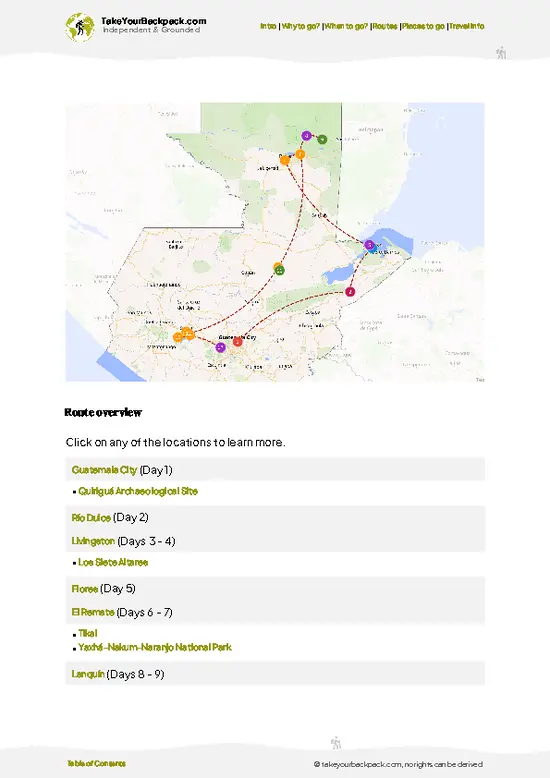
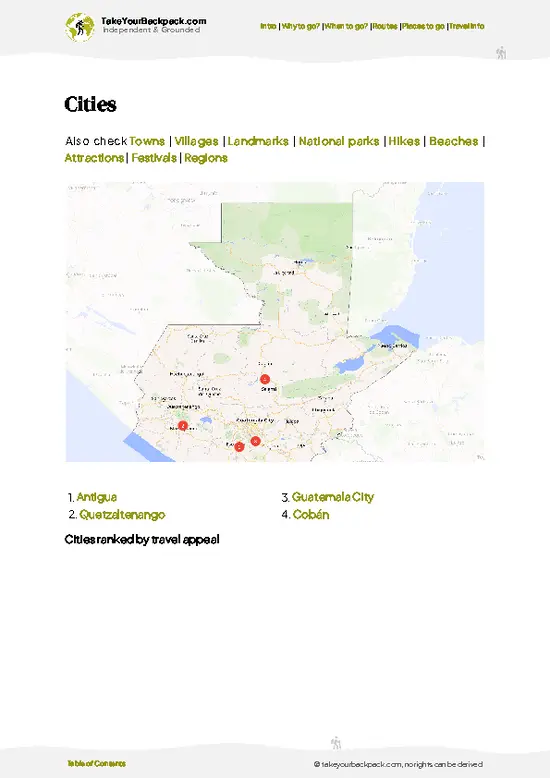
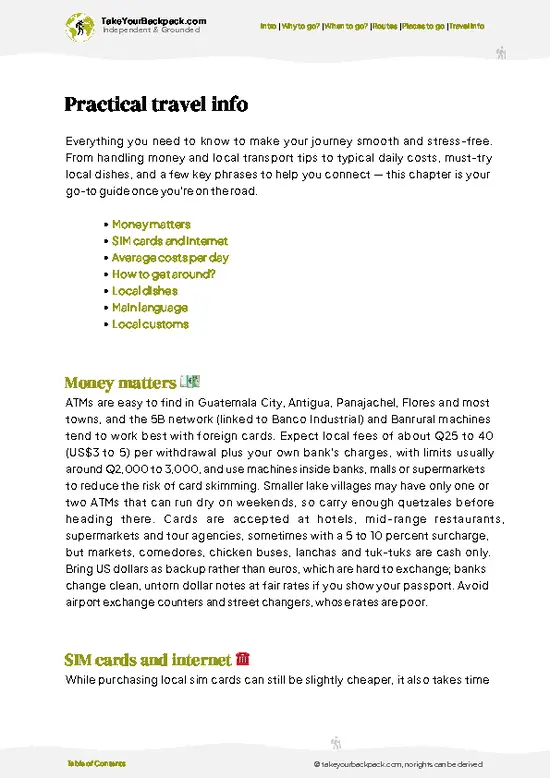
An offline-friendly backpacking guide with optimized travel routes, ranked highlights, transport advice, and the best areas to stay.
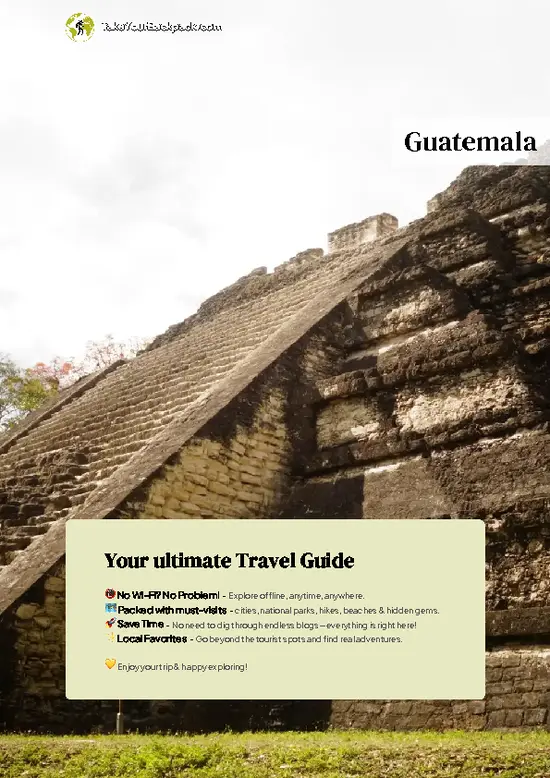
example page 0 from our offline Travel Guide for Guatemala
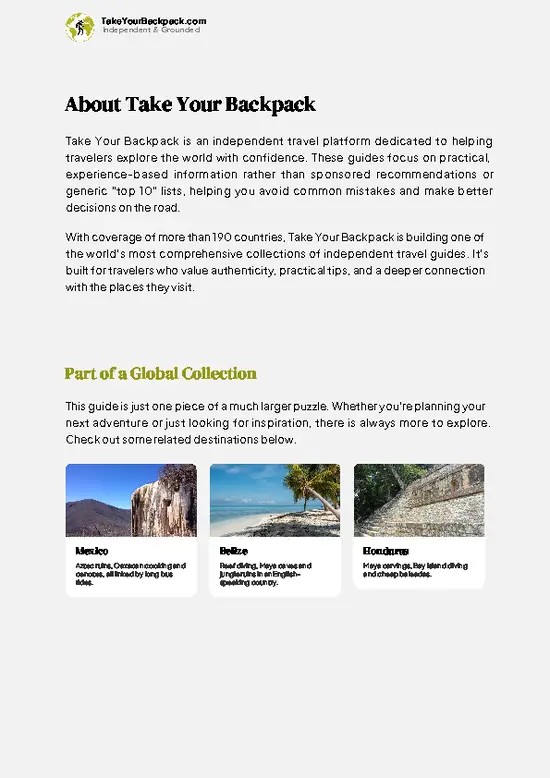
example page 1 from our offline Travel Guide for Guatemala
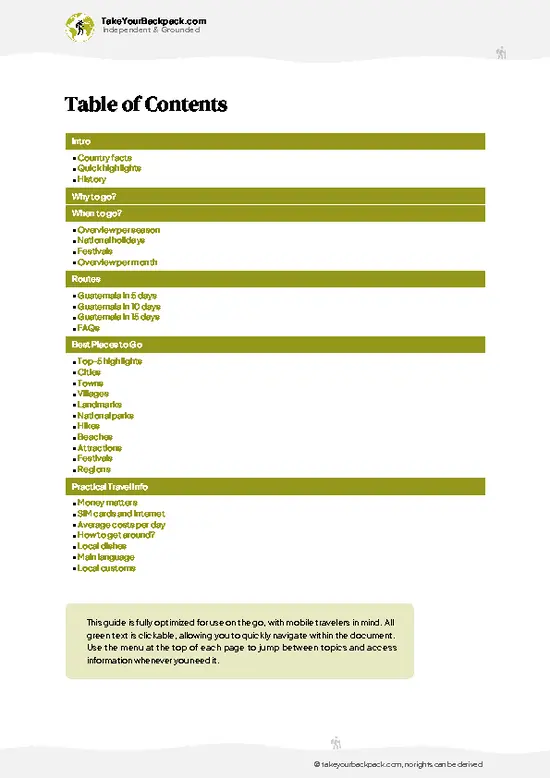
example page 2 from our offline Travel Guide for Guatemala
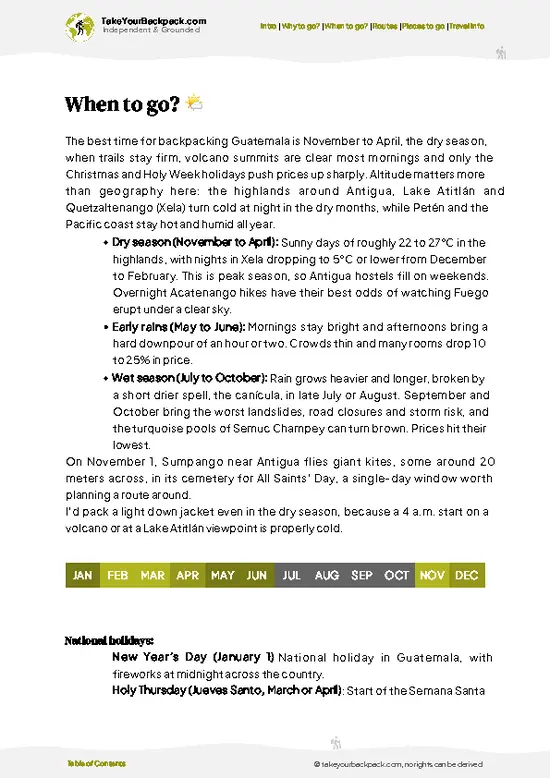
example page 3 from our offline Travel Guide for Guatemala
example page 4 from our offline Travel Guide for Guatemala
example page 5 from our offline Travel Guide for Guatemala
example page 6 from our offline Travel Guide for Guatemala
example page 7 from our offline Travel Guide for Guatemala
The digital guide (272 pages) contains:
✅ 85 highlights, ranked by travel appeal
✅ Optimized 5, 10 & 15-day travel routes
✅ Cities, national parks, landmarks, beaches
✅ How to get around
✅ Offline-friendly for travel without Wi-Fi
👉 Click to see all 30+ guide features

📅 Plan smarter in minutes, not weeks
✅ Month by month travel advice
✅ Festivals & national holidays
✅ Budget expectations

🗺️ Go to the right places, skip the overrated ones
✅ Honest pros & cons of destinations
✅ Top hikes, parks & viewpoints
✅ Lesser-known places most travelers miss
✅ Clear “worth it vs skip it” guidance

🛏️ Travel smoothly without rookie mistakes
✅ Best areas to stay
✅ Transport systems explained simply
✅ Common scams & safety advice
✅ SIM cards, money & practical tips

🌍 Understand the country, not just visit it
✅ Culture & traditions
✅ 52 Essential phrases & customs
✅ Festivals worth planning around
✅ Traveler-friendly historical context
✅ Insights that make places more meaningful

📱 Built for real travel conditions
✅ Fully downloadable PDF
✅ Works completely offline
✅ Optimized for phone use
✅ Useful in remote areas & buses
✅ Everything in one place
Stop searching, start planning
Get instant access to your full guide. 30‑day money-back guarantee.
+ Add another guide for just

By proceeding you agree to our terms.
Sent to your inbox immediately after payment • 100% Secure Checkout
Best Backpacking Travel Advisor 2025 tourism awardBest Backpacking
Travel Advisor
2025
What others say about Take Your Backpack Guides:
⭐⭐⭐⭐⭐
Fantastic, amazing amount of information!
⭐⭐⭐⭐⭐
My goodness this is amazing, it's what I've been looking for hats off too you!
⭐⭐⭐⭐⭐
I think this is absolutely BRILLIANT
⭐⭐⭐⭐
Very complete and informative. It's still missing places, but I gotta to commend you
⭐⭐⭐⭐⭐
This is truly amazing, thank you, can't wait to explore it with my kids!
⭐⭐⭐⭐⭐
Awesome resource, thank you!
⭐⭐⭐⭐⭐
This is amazing! Can't wait to explore the ones I haven't seen
⭐⭐⭐⭐
I love this! Well done, great idea.
⭐⭐⭐⭐⭐
Thanks for taking the time to make this gem!
⭐⭐⭐⭐⭐
This might be the best website I've ever seen.
⭐⭐⭐⭐⭐
Congratulations, and thank you so much for your work; it's incredibly valuable.
⭐⭐⭐⭐
In all seriousness I think you did a great job pointing out the important spots
⭐⭐⭐⭐⭐
10/10 very good
⭐⭐⭐⭐⭐
As someone who's only just starting to visit regularly this is awesome, thank you.
⭐⭐⭐⭐
Thank you very much! I'm going to visit my dad, it's going to be very useful!
⭐⭐⭐⭐⭐
This is really cool! We'll be travelling for the first time and this definitely come in handy.
⭐⭐⭐⭐⭐
You are now our minister of culture, congratulations 👨‍💼
⭐⭐⭐⭐⭐
Just wanted to tell you that this is a pearl! Going to follow your recommendations.
⭐⭐⭐⭐⭐
This is so cool. I'll definitely be using the resource for my travels soon.
⭐⭐⭐⭐⭐
This is very impressive! Good work.
⭐⭐⭐⭐⭐
This is an amazing and informative site. Very well done!

🛏️ Where to stay?Top Places to Consider Staying

Hostels and budget beds are easy to find in Guatemala, with dorms typically running Q80 to 150 (US$10 to 20) and simple private rooms from about Q200 (US$26), clustered in a handful of traveler hubs. Antigua has the widest choice within walking distance of its cobbled center, bars and volcano-tour operators, though prices run highest here and some hostels near the central streets stay loud late into the night. At Lake Atitlán, San Pedro La Laguna is the cheap, social base with plenty of nightlife, San Marcos La Laguna is quieter and leans toward yoga retreats, while Flores works as the compact island gateway to Tikal and Guatemala City’s Zona 10 and Zona 13 are the safer picks for an airport … read more 👉
Hostels and budget beds are easy to find in Guatemala, with dorms typically running Q80 to 150 (US$10 to 20) and simple private rooms from about Q200 (US$26), clustered in a handful of traveler hubs. Antigua has the widest choice within walking distance of its cobbled center, bars and volcano-tour operators, though prices run highest here and some hostels near the central streets stay loud late into the night. At Lake Atitlán, San Pedro La Laguna is the cheap, social base with plenty of nightlife, San Marcos La Laguna is quieter and leans toward yoga retreats, while Flores works as the compact island gateway to Tikal and Guatemala City’s Zona 10 and Zona 13 are the safer picks for an airport night compared with the grittier Zona 1.

If you enjoy meeting fellow travelers, consider choosing hostels with high ratings for atmosphere. On the other hand, if you prefer having your own space, a hotel might be a better option.

GuatemalaMore Places Across Guatemala

👋 Meet the founderWho’s Behind Take Your Backpack?

Johan, backpacker and founder of TakeYourBackpackHi, I’m Johan (Netherlands 🇳🇱), the creator of TakeYourBackpack. Over the past 3 decades, I’ve backpacked through 90+ countries across six continents, gaining extensive experience with independent travel, long-term trips, and overland routes.

This site is built on a combination of firsthand travel experience and carefully curated insights from other backpackers. Many guides are based on places I’ve personally visited, while others bring together tips, observations, and practical advice shared by trusted travelers I’ve met along the way.

The goal is to provide realistic, experience-driven guidance — not generic itineraries — so you can explore destinations with better context, clearer expectations, and more confidence.