×

Guatemala🇬🇹 | best festivalsExplore the 11 Best festivals in Guatemala

Festivals in Guatemala arrive as smoke, sound and color: copal incense curling through cold highland air, marimba and brass bands drifting between church steps, sawdust carpets drying on cobblestones. In the western highlands, Maya and Catholic rites overlap, crowds are mostly Guatemalan, and a bed costs little but fills fast. Antigua draws international crowds and higher prices, with packed hostels and shoulder-to-shoulder streets. The Caribbean coast and Petén lowlands run hotter, quieter and harder to reach. Backpackers and other independent travelers can reach most events by chicken bus, though expect cramped seats, fireworks at dawn and very little sleep.

By Johan Kruseman 🇳🇱 | Updated October 23, 2026
Explore the best regions in Guatemala

Why go?What Makes Them Special

Guatemala suits festivals because living Maya culture and Spanish colonial Catholicism never separated cleanly. About 40 percent of the population is Indigenous, and 20-plus Maya languages are still spoken, so celebrations here are working religious calendars, not staged shows. The 260-day Maya count still guides daykeepers in the highlands, while Catholic brotherhoods (cofradías) carry saints through streets that were laid out in the 1500s. Geography adds to it. Volcanic ridges and deep valleys kept communities distinct, so costume, weaving patterns, music and food change from one town to the next within an hour’s drive.

Travelers should know a few things before choosing Guatemala for this. Most major events follow the Catholic calendar, which concentrates demand into a handful of weeks … read more 👉
Guatemala suits festivals because living Maya culture and Spanish colonial Catholicism never separated cleanly. About 40 percent of the population is Indigenous, and 20-plus Maya languages are still spoken, so celebrations here are working religious calendars, not staged shows. The 260-day Maya count still guides daykeepers in the highlands, while Catholic brotherhoods (cofradías) carry saints through streets that were laid out in the 1500s. Geography adds to it. Volcanic ridges and deep valleys kept communities distinct, so costume, weaving patterns, music and food change from one town to the next within an hour’s drive.

Travelers should know a few things before choosing Guatemala for this. Most major events follow the Catholic calendar, which concentrates demand into a handful of weeks when rooms vanish and prices climb. Many village festivals are announced late or shift dates, and local schedules matter more than websites. Infrastructure is basic outside Antigua, Quetzaltenango and Lake Atitlán: expect cold nights at 2,000 meters and above, long unpaved stretches, and loud fireworks and cohetes at all hours. Some ceremonies are sacred, not performances, so photography is often restricted. In return, the access is real and the welcome is warm if you arrive with patience.
Behind the Scenes of Selection
The list of best festivals in Guatemala is created based on energy, traditions, crowd experience, activities, and overall excitement. If you feel a festival is missing in this list, please let us know.

When to go?Seasonal Guide to Visiting

Best months for festivals: The best months for festivals in Guatemala are November to April, the dry season, when highland skies are clear, days run around 20 to 25°C and rain is rare. Many of the country’s biggest religious and cultural events fall in this window, and roads are at their most reliable.
Peak periods and prices: The Lent and Holy Week stretch, usually March or April, is the busiest time of year. Antigua rooms can cost two to three times normal rates, often US$40 to 100 for a basic private room, and many places require multi-night bookings months ahead. Late October to early November and the weeks around Christmas also push up prices and fill buses. Book early, or sleep in nearby towns such as Ciudad Vieja or Jocotenango and commute.
Shoulder and wet season: May to October brings … read more 👉
Best months for festivals: The best months for festivals in Guatemala are November to April, the dry season, when highland skies are clear, days run around 20 to 25°C and rain is rare. Many of the country’s biggest religious and cultural events fall in this window, and roads are at their most reliable.
Peak periods and prices: The Lent and Holy Week stretch, usually March or April, is the busiest time of year. Antigua rooms can cost two to three times normal rates, often US$40 to 100 for a basic private room, and many places require multi-night bookings months ahead. Late October to early November and the weeks around Christmas also push up prices and fill buses. Book early, or sleep in nearby towns such as Ciudad Vieja or Jocotenango and commute.
Shoulder and wet season: May to October brings the rainy season, with afternoon downpours, mud on mountain roads and occasional landslides on the highways around the highlands. Mornings are often clear, and rooms cost less. Highland nights drop to 5 to 10°C year-round at altitude, so pack a warm layer even in March. The Caribbean coast and Petén stay hot and humid, 28 to 35°C, and rain there can arrive almost any month. Lowland events are better in the drier months, roughly February to May.

festival hoppingHow to Combine festivals Into One Trip

How long it takes: A trip combining several festivals in Guatemala needs 10 to 14 days, which leaves room for delays, overnight rests and the odd cancelled bus. Most of the best options cluster in the southern and western highlands, so the country’s shape does the planning for you.
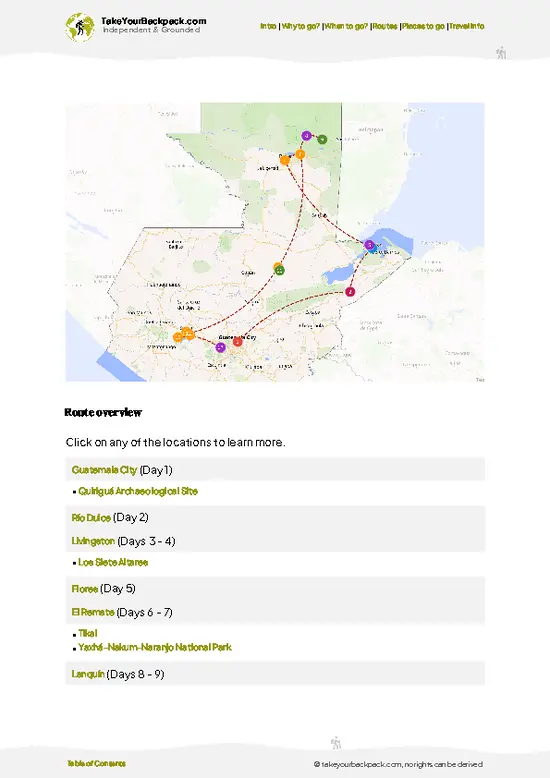
Grouping regions: Start in Guatemala City or Antigua, 45 to 90 minutes apart depending on traffic, then move west through Lake Atitlán (about 3 to 4 hours from Antigua by shuttle), Quetzaltenango (about 4 to 5 hours) and the Ixil and Quiché highlands. Finish in the east or north only if the schedule truly requires it. The Caribbean coast and Petén sit 6 to 10 hours away on long roads, so treat them as separate trips or a deliberate final leg.
Time per stop and common mistakes: Allow two to three nights per stop: one … read more 👉
How long it takes: A trip combining several festivals in Guatemala needs 10 to 14 days, which leaves room for delays, overnight rests and the odd cancelled bus. Most of the best options cluster in the southern and western highlands, so the country’s shape does the planning for you.
Grouping regions: Start in Guatemala City or Antigua, 45 to 90 minutes apart depending on traffic, then move west through Lake Atitlán (about 3 to 4 hours from Antigua by shuttle), Quetzaltenango (about 4 to 5 hours) and the Ixil and Quiché highlands. Finish in the east or north only if the schedule truly requires it. The Caribbean coast and Petén sit 6 to 10 hours away on long roads, so treat them as separate trips or a deliberate final leg.
Time per stop and common mistakes: Allow two to three nights per stop: one for arrival and fatigue, one for the main day, and a spare for noise-wrecked sleep. The usual mistake is stacking events on consecutive days with long transfers between them. Highland roads wind through fog, switchbacks and roadblocks, and a four-hour map estimate often becomes six. Another error is arriving on the festival day itself, when roads close and shuttles stop. Arrive the afternoon before, and use morning departures, when the light is clear and traffic still thin.

The ListHighly Recommended festivals of Guatemala

1 Semana Santa in Antigua Guatemala

Sawdust alfombras, cucuruchos, Good Friday, La Merced

Rise before dawn to watch families lay sawdust carpets along Antigua’s route, then hear brass dirges as purple-robed carriers shoulder floats through copal smoke.

2 Festival de Barriletes Gigantes

20-meter barriletes, Sumpango field, kite crews, All Saints

Walk the Sumpango field to see circular kites up to 20 meters across, each painted with a message for the dead, and talk with the builders.

3 Feria de Santo Tomás

Palo volador, copal steps, cohetes, K’iche’ market

Stand in the plaza to see dancers spin down a tall pole, then watch copal offerings burn on the church stairs of Chichicastenango.

4 Rabin Ajaw

Q’eqchi’ pageant, Cobán, regional dress, Mayan ceremony

Watch delegates in regional dress parade through Cobán, then hear candidates speak in their Mayan languages and sample kak’ik soup from street vendors.

5 Feria de Jocotenango

Asunción procession, neon fairground, weaving stalls, cumbia

Follow a flower-carpeted procession by day, then ride the old Ferris wheel for volcano views and browse huipiles among mostly local fairgoers near Antigua.

6 Fiesta de la Virgen de la Asunción

Capital cathedral, central plaza, zone 1 street food, August feast

Join families around the cathedral and Plaza de la Constitución for masses, balloon sellers, and chuchitos and buñuelos from busy stalls in the city center.

7 Fiesta de San Pedro La Laguna

Tz’utujil procession, dawn rockets, Lake Atitlán, June 29

Walk beside the saint’s platform through narrow lakeside streets, with drums, copal smoke and pre-dawn cohetes marking the days leading up to the feast.

8 Fiesta de San Antonio Palopó

Blue huipiles, San Antonio de Padua, Atitlán shore, June 13

Climb the steep streets behind the saint’s procession, where Kaqchikel women in blue embroidered huipiles gather before the whitewashed church to the sound of brass and marimba.

9 Fiesta de San Miguel Dueñas

San Miguel Arcángel, Volcán de Agua, plaza marimba, firecrackers

Trail the heavy float of Saint Michael from the parish church, then eat grilled meats and tamales at plaza stalls as dancing spreads across the square.

10 Fiesta de San Lucas Sacatepéquez

Parish plaza, San Lucas feast, dusk fairground, October 18

Start at the church for the morning procession, graze on tamales and atol in the plaza, and return at dusk when the Ferris wheel lights up.

11 Fiesta de San Sebastián Retalhuleu

Saint’s procession, incense and firecrackers, marimba dances, fairground stalls, tamales and atol

Follow the saint’s image through streets thick with incense, then browse the fairground stalls and join the open-air marimba dances after dark, 15 to 22 January.

Loading the map 🌍

Expert viewInsights from Locals and Experts

How many to visit: I advise three festivals on a trip of two weeks, or two on a shorter one. Each takes at least two nights once you count arrival, the main day and recovery from the cohetes that start before dawn. Beyond three, you spend more time on chicken buses than in plazas, and the sounds and smells, copal smoke, frying plantain, wet wool, blur together.
Which kind for which traveler: First-timers on a modest schedule do best with one large colonial-city event, where hostels, ATMs, English-speaking guides and clear information all exist. Travelers who want depth should choose one highland village festival, where Maya and Catholic practice overlap and you leave with a clear sense of how the community actually lives. Anyone chasing quiet and heat can add a lowland or Caribbean coast event, … read more 👉
How many to visit: I advise three festivals on a trip of two weeks, or two on a shorter one. Each takes at least two nights once you count arrival, the main day and recovery from the cohetes that start before dawn. Beyond three, you spend more time on chicken buses than in plazas, and the sounds and smells, copal smoke, frying plantain, wet wool, blur together.
Which kind for which traveler: First-timers on a modest schedule do best with one large colonial-city event, where hostels, ATMs, English-speaking guides and clear information all exist. Travelers who want depth should choose one highland village festival, where Maya and Catholic practice overlap and you leave with a clear sense of how the community actually lives. Anyone chasing quiet and heat can add a lowland or Caribbean coast event, with fewer foreigners and more music in the street. Photographers and festival veterans should pair one big, one small.
What it costs: Budget US$30 to 50 a day outside peak weeks: dorm bed US$8 to 15, street food and comedor meals US$3 to 6, local buses US$1 to 5 per leg. Most festivals are free to watch. Expect extras: a local guide for a village event (US$15 to 40), seats on a parade route (US$10 to 25), shuttles of US$10 to 20 between major towns. In peak weeks, double your accommodation figure, and plan US$60 to 90 a day.
Safety and etiquette: Crowds attract pickpockets, so carry a phone and one day’s cash in a zipped front pocket and leave the passport in your room. Ask before photographing people, costumes, altars and ceremonies. Some communities forbid it, and a small payment or a refusal is fair. Cover shoulders and knees in churches. Keep distance from processions and never cross a carried saint’s path. Fireworks are fired close to spectators without much warning, so wear closed shoes and keep your distance. Drink bottled or filtered water, since street drinks and ice can upset stomachs. Travel by day wherever possible, since highland roads after dark carry real risk, and settle your room before the evening begins. Do these things and you spend your time on the best part: the brass-band thump through the chest, the incense that stays in your jacket for days.

✈️ The backpacker research shortcutGuatemala Travel Guide

An offline-friendly backpacking guide with optimized travel routes, ranked highlights, transport advice, and the best areas to stay.
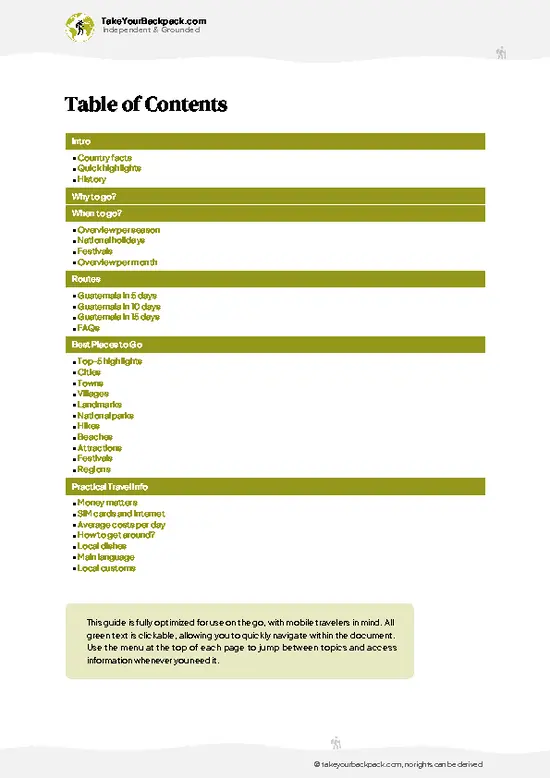
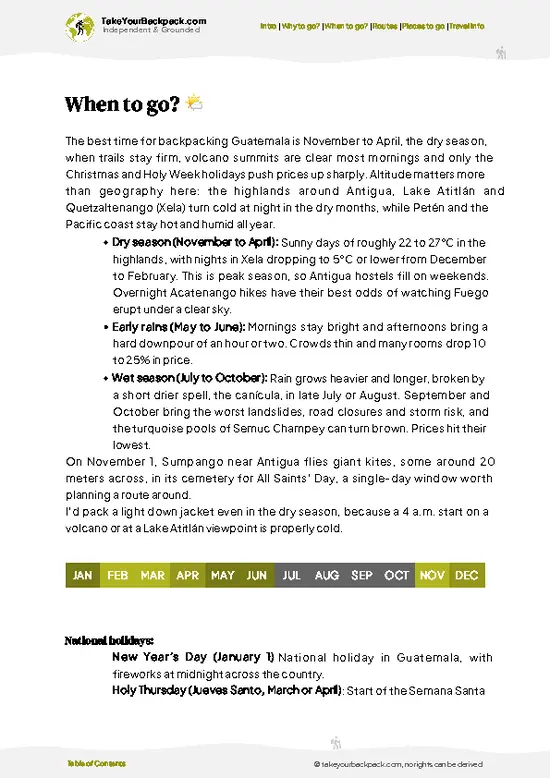
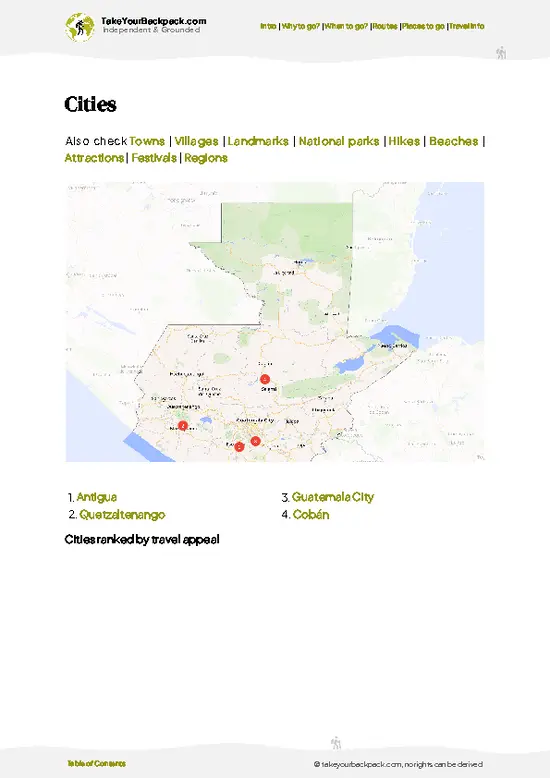
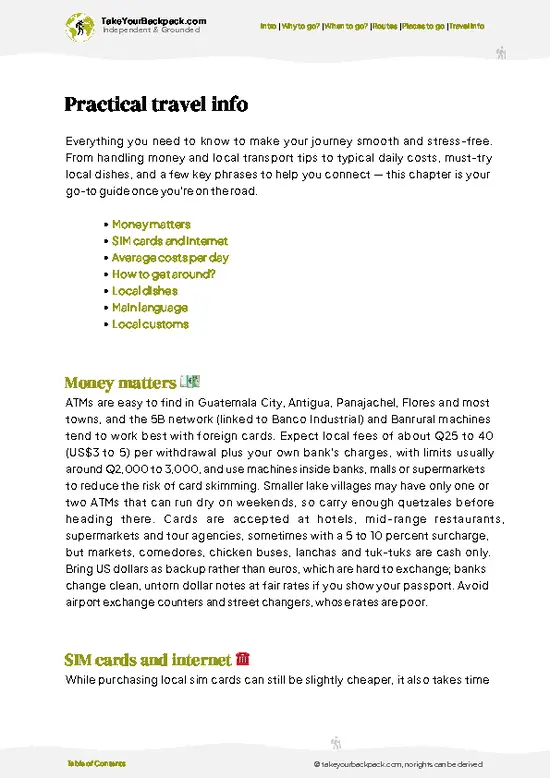
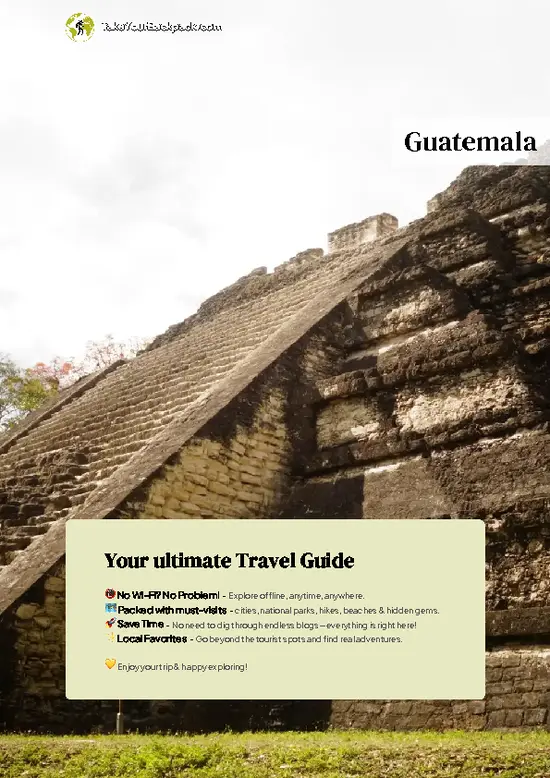
example page 0 from our offline Travel Guide for Guatemala
example page 1 from our offline Travel Guide for Guatemala
example page 2 from our offline Travel Guide for Guatemala
example page 3 from our offline Travel Guide for Guatemala
example page 4 from our offline Travel Guide for Guatemala
example page 5 from our offline Travel Guide for Guatemala
example page 6 from our offline Travel Guide for Guatemala
example page 7 from our offline Travel Guide for Guatemala
The digital guide (272 pages) contains:
✅ 85 highlights, ranked by travel appeal
✅ Optimized 5, 10 & 15-day travel routes
✅ Cities, national parks, landmarks, beaches
✅ How to get around
✅ Offline-friendly for travel without Wi-Fi
👉 Click to see all 30+ guide features

📅 Plan smarter in minutes, not weeks
✅ Month by month travel advice
✅ Festivals & national holidays
✅ Budget expectations

🗺️ Go to the right places, skip the overrated ones
✅ Honest pros & cons of destinations
✅ Top hikes, parks & viewpoints
✅ Lesser-known places most travelers miss
✅ Clear “worth it vs skip it” guidance

🛏️ Travel smoothly without rookie mistakes
✅ Best areas to stay
✅ Transport systems explained simply
✅ Common scams & safety advice
✅ SIM cards, money & practical tips

🌍 Understand the country, not just visit it
✅ Culture & traditions
✅ 52 Essential phrases & customs
✅ Festivals worth planning around
✅ Traveler-friendly historical context
✅ Insights that make places more meaningful

📱 Built for real travel conditions
✅ Fully downloadable PDF
✅ Works completely offline
✅ Optimized for phone use
✅ Useful in remote areas & buses
✅ Everything in one place
Stop searching, start planning
Get instant access to your full guide. 30‑day money-back guarantee.
+ Add another guide for just

By proceeding you agree to our terms.
Sent to your inbox immediately after payment • 100% Secure Checkout
Best Backpacking Travel Advisor 2025 tourism awardBest Backpacking
Travel Advisor
2025
What others say about Take Your Backpack Guides:
⭐⭐⭐⭐⭐
Fantastic, amazing amount of information!
⭐⭐⭐⭐⭐
My goodness this is amazing, it's what I've been looking for hats off too you!
⭐⭐⭐⭐⭐
I think this is absolutely BRILLIANT
⭐⭐⭐⭐
Very complete and informative. It's still missing places, but I gotta to commend you
⭐⭐⭐⭐⭐
This is truly amazing, thank you, can't wait to explore it with my kids!
⭐⭐⭐⭐⭐
Awesome resource, thank you!
⭐⭐⭐⭐⭐
This is amazing! Can't wait to explore the ones I haven't seen
⭐⭐⭐⭐
I love this! Well done, great idea.
⭐⭐⭐⭐⭐
Thanks for taking the time to make this gem!
⭐⭐⭐⭐⭐
This might be the best website I've ever seen.
⭐⭐⭐⭐⭐
Congratulations, and thank you so much for your work; it's incredibly valuable.
⭐⭐⭐⭐
In all seriousness I think you did a great job pointing out the important spots
⭐⭐⭐⭐⭐
10/10 very good
⭐⭐⭐⭐⭐
As someone who's only just starting to visit regularly this is awesome, thank you.
⭐⭐⭐⭐
Thank you very much! I'm going to visit my dad, it's going to be very useful!
⭐⭐⭐⭐⭐
This is really cool! We'll be travelling for the first time and this definitely come in handy.
⭐⭐⭐⭐⭐
You are now our minister of culture, congratulations 👨‍💼
⭐⭐⭐⭐⭐
Just wanted to tell you that this is a pearl! Going to follow your recommendations.
⭐⭐⭐⭐⭐
This is so cool. I'll definitely be using the resource for my travels soon.
⭐⭐⭐⭐⭐
This is very impressive! Good work.
⭐⭐⭐⭐⭐
This is an amazing and informative site. Very well done!

🛏️ Where to stay?Top Areas to Stay

Hostels and budget beds are easy to find in Guatemala, with dorms typically running Q80 to 150 (US$10 to 20) and simple private rooms from about Q200 (US$26), clustered in a handful of traveler hubs. Antigua has the widest choice within walking distance of its cobbled center, bars and volcano-tour operators, though prices run highest here and some hostels near the central streets stay loud late into the night. At Lake Atitlán, San Pedro La Laguna is the cheap, social base with plenty of nightlife, San Marcos La Laguna is quieter and leans toward yoga retreats, while Flores works as the compact island gateway to Tikal and Guatemala City’s Zona 10 and Zona 13 are the safer picks for an airport … read more 👉
Hostels and budget beds are easy to find in Guatemala, with dorms typically running Q80 to 150 (US$10 to 20) and simple private rooms from about Q200 (US$26), clustered in a handful of traveler hubs. Antigua has the widest choice within walking distance of its cobbled center, bars and volcano-tour operators, though prices run highest here and some hostels near the central streets stay loud late into the night. At Lake Atitlán, San Pedro La Laguna is the cheap, social base with plenty of nightlife, San Marcos La Laguna is quieter and leans toward yoga retreats, while Flores works as the compact island gateway to Tikal and Guatemala City’s Zona 10 and Zona 13 are the safer picks for an airport night compared with the grittier Zona 1.

If you enjoy meeting fellow travelers, consider choosing hostels with high ratings for atmosphere. On the other hand, if you prefer having your own space, a hotel might be a better option.

GuatemalaDiscover the Country

👋 Meet the founderWho’s Behind Take Your Backpack?

Johan, backpacker and founder of TakeYourBackpackHi, I’m Johan (Netherlands 🇳🇱), the creator of TakeYourBackpack. Over the past 3 decades, I’ve backpacked through 90+ countries across six continents, gaining extensive experience with independent travel, long-term trips, and overland routes.

This site is built on a combination of firsthand travel experience and carefully curated insights from other backpackers. Many guides are based on places I’ve personally visited, while others bring together tips, observations, and practical advice shared by trusted travelers I’ve met along the way.

The goal is to provide realistic, experience-driven guidance — not generic itineraries — so you can explore destinations with better context, clearer expectations, and more confidence.