×

Guatemala🇬🇹 | best landmarksExplore the 8 Best landmarks in Guatemala

Landmarks in Guatemala come in three distinct flavors, and the one you pick sets the tone of your trip. In the northern lowland jungle, Maya ruins rise out of canopy loud with howler monkeys, at dawn mist and sticky heat, with long bumpy rides and little shade. In the western highlands, volcanoes and lake towns mean cold mornings, woodsmoke, and market stalls thick with woven cloth. Around Antigua, colonial ruins sit on cobbled streets with the most visitors and the highest prices. For backpacking or independent travel, entry fees are modest, but access varies from easy shuttles to rough dirt roads.

By Johan Kruseman 🇳🇱 | Updated October 23, 2026
Explore the best national parks in Guatemala

Why go?What Makes Them Special

Guatemala packs more landmark density into a small country than almost anywhere in the Americas, because three layers of history sit on the same ground. The Maya built limestone pyramids in the lowland jungle of Petén, where howler monkeys roar before dawn and the air hangs thick and wet. The Spanish colonial era left ash-gray and ochre churches, arches and ruined convents in the highlands, where cobblestones are slick with morning mist. Living Maya culture adds a third layer, with market days, cofradía processions and copal smoke curling over church steps.

Geography shapes all of it. A chain of volcanoes and the cool, high-altitude basins around them gave colonial towns their setting, and the same tectonics that built the peaks toppled the old capital in earthquakes, so ruins here are partly … read more 👉
Guatemala packs more landmark density into a small country than almost anywhere in the Americas, because three layers of history sit on the same ground. The Maya built limestone pyramids in the lowland jungle of Petén, where howler monkeys roar before dawn and the air hangs thick and wet. The Spanish colonial era left ash-gray and ochre churches, arches and ruined convents in the highlands, where cobblestones are slick with morning mist. Living Maya culture adds a third layer, with market days, cofradía processions and copal smoke curling over church steps.

Geography shapes all of it. A chain of volcanoes and the cool, high-altitude basins around them gave colonial towns their setting, and the same tectonics that built the peaks toppled the old capital in earthquakes, so ruins here are partly natural. The lowland jungle swallowed Maya cities, which is why many are still half-wrapped in roots and tree cover rather than cleared into manicured lawns.

Before choosing Guatemala, know that access varies sharply. Highland sites sit on well-worn shuttle routes, while jungle ruins mean long, bumpy rides, heat and humidity, and often an early start for the cooler hours. Chicken buses are cheap, loud and crowded. Entry fees are modest by regional standards, but fees for foreigners differ from local rates. Many places are also working religious sites, so expect dress and photography etiquette to matter. Rain and altitude change the experience as much as the monuments do.
How the List Was Created
The list of best unique sites in Guatemala is created based on history or culture, wow factor, atmosphere, quirks, and memorability. If you feel a unique site is missing in this list, please let us know.

When to go?Seasonal Guide to Visiting

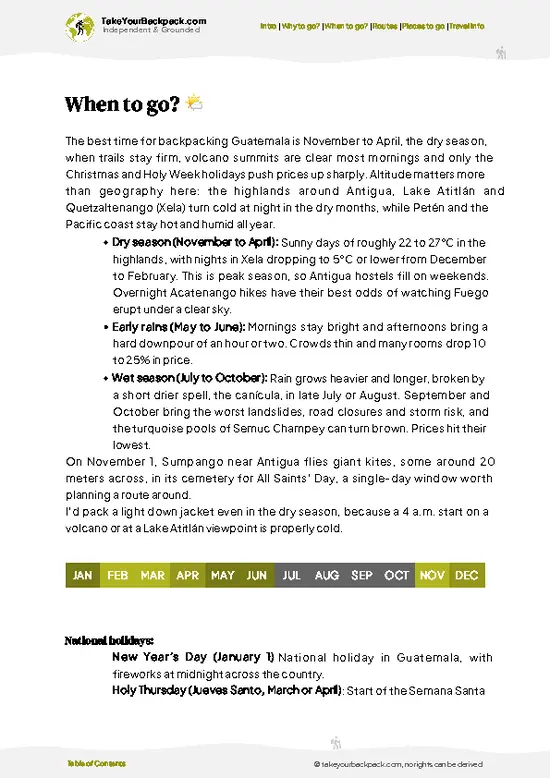
Best months and weather: The best months for landmarks in Guatemala are November to April, the dry season, when skies are clear, trails are firm and volcano summits show their views. Highland days run 18 to 25°C with nights close to freezing at altitude, around 5 to 10°C in places like Quetzaltenango. The northern lowlands stay hot, 28 to 35°C, and humid year-round.
Shoulder and wet season: May to October brings afternoon downpours, with most rain between June and September. Mornings are often clear, so early starts still work, but jungle paths turn to mud, unpaved roads can wash out and volcano peaks hide in cloud by noon. The Petén lowlands get the heaviest rain, often over 1,500 mm a year, plus mosquitoes. A short dry spell called the canícula usually appears in July and August and gives … read more 👉
Best months and weather: The best months for landmarks in Guatemala are November to April, the dry season, when skies are clear, trails are firm and volcano summits show their views. Highland days run 18 to 25°C with nights close to freezing at altitude, around 5 to 10°C in places like Quetzaltenango. The northern lowlands stay hot, 28 to 35°C, and humid year-round.
Shoulder and wet season: May to October brings afternoon downpours, with most rain between June and September. Mornings are often clear, so early starts still work, but jungle paths turn to mud, unpaved roads can wash out and volcano peaks hide in cloud by noon. The Petén lowlands get the heaviest rain, often over 1,500 mm a year, plus mosquitoes. A short dry spell called the canícula usually appears in July and August and gives a useful break. November and April are the sweet spot, with green hills left by the rains and fewer people than midwinter.
Peak periods and prices: Crowds and prices rise around Semana Santa (March or April) and Christmas to New Year, when hostel rates can climb 30 to 50 percent and rooms sell out weeks ahead. Outside those weeks, low season discounts are modest, but fewer travelers means easier shuttle seats and quieter sites.

unique site hoppingHow to Combine landmarks Into One Trip

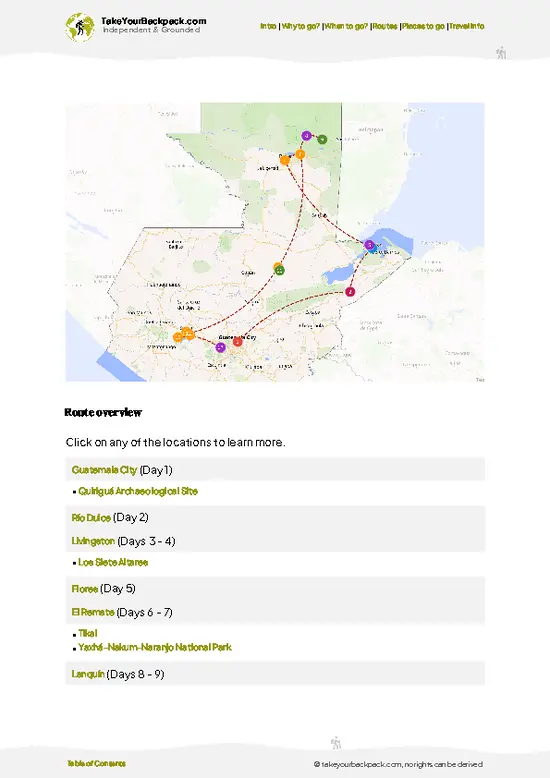
Days needed and how regions group: A trip combining several landmarks in Guatemala needs 10 to 16 days. The country splits into three clusters: the central highlands (Antigua, Lake Atitlán, Quetzaltenango), the northern lowlands around Flores and the Petén, and the eastern corridor toward Río Dulce and the Caribbean coast. The highlands group together easily, with 1 to 3 hours between Antigua and the lake by shuttle.
Direction and time per stop: Start in Guatemala City or Antigua, work west through the highlands, then loop back and head north. Allow 2 to 3 days for Antigua, 2 to 4 for the lake region, and 3 to 4 for the lowland jungle. The overnight bus or short flight from the capital to Flores takes roughly 8 to 10 hours by road or about 1 hour by air. Reaching Río Dulce from Flores takes … read more 👉
Days needed and how regions group: A trip combining several landmarks in Guatemala needs 10 to 16 days. The country splits into three clusters: the central highlands (Antigua, Lake Atitlán, Quetzaltenango), the northern lowlands around Flores and the Petén, and the eastern corridor toward Río Dulce and the Caribbean coast. The highlands group together easily, with 1 to 3 hours between Antigua and the lake by shuttle.
Direction and time per stop: Start in Guatemala City or Antigua, work west through the highlands, then loop back and head north. Allow 2 to 3 days for Antigua, 2 to 4 for the lake region, and 3 to 4 for the lowland jungle. The overnight bus or short flight from the capital to Flores takes roughly 8 to 10 hours by road or about 1 hour by air. Reaching Río Dulce from Flores takes 4 to 5 hours by minibus.
Planning mistakes: The classic error is underestimating road time. Landslides, checkpoints and winding mountain roads regularly add hours, so never schedule a flight or tight connection the same day as a long ride. Another is cramming a dawn volcano climb into the day after an overnight bus. Leave a buffer day before any departure, build in a rest day after the jungle heat, and book shuttles one day ahead during busy seasons. Carry small bills for tickets, as many sites do not accept cards.

The ListHighly Recommended landmarks of Guatemala

1 Tikal

Temple IV summit, Great Plaza, North Acropolis, howler monkey canopy

Climb stone stairs above the rainforest, cross the great plaza between towering pyramids, and read royal history carved into weathered stelae.

Guatemala - Tikal

2 El Mirador

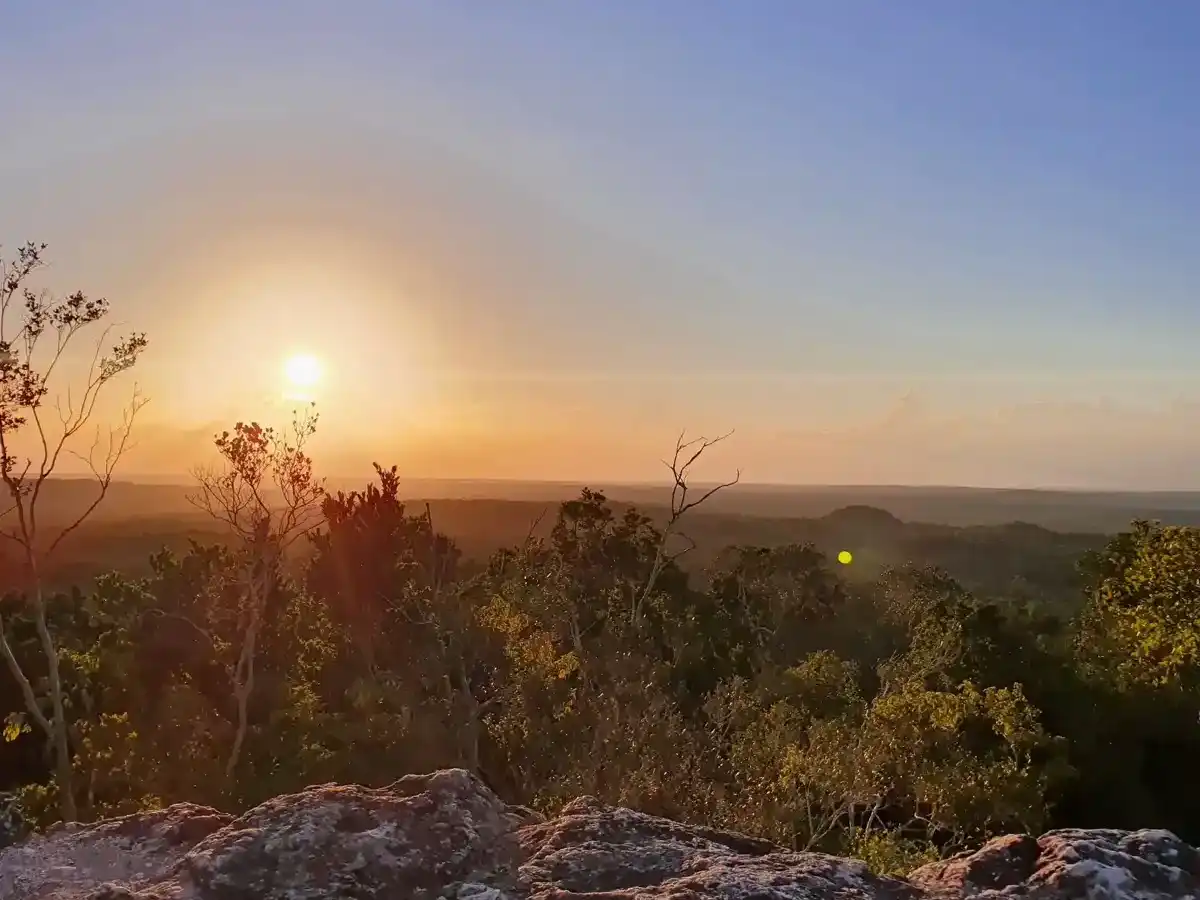
La Danta pyramid, Preclassic capital, multi-day jungle trek, dawn canopy

Trek deep into the Petén forest to reach one of the largest pyramids by volume, then climb it for sunrise over the treetops.

guatemala-unique-site-el-mirador
© Google | Philip Eisenknappl

3 Yaxhá

Lakeview acropolis, steep temple stairs, island ruins, unrestored plazas

Scramble up narrow stairways to a high platform above the lake, then poke through lightly restored plazas with monkeys overhead.

guatemala-unique-site-yaxha
© Google |

4 Uaxactún

E-Group solstice platform, village homestays, Petén stillness, aguada reservoirs

Stand at an ancient sun-alignment complex, then wander smaller plazas and stelae with local guides in a forest village setting.

5 Cerro de la Cruz

White hilltop cross, Volcán de Agua frame, golden-hour roofs, local picnic spot

Walk up a short paved path to a ridge cross, where Antigua’s tiled roofs line up beneath the volcano and families gather at dusk.

guatemala-unique-site-cerro-de-la-cruz
© Google | 安川マサシ

6 Laguna Brava

Blue-green lake, rim cliffs, shoreline camping, Huehuetenango backcountry

Hike to a clear mountain lake ringed by steep walls, paddle quiet bays, and pitch a tent under dark, star-filled skies.

7 Finca Filadelfia

Coffee farm tour, cupping table, manor courtyards, volcano valley views

Follow coffee from cherry to cup on a working hillside farm, then taste the roasts beside old hacienda courtyards and volcano views.

8 Los Siete Altares

Seven stone pools, small cascades, river-mouth jungle, seasonal swimming

Wade through a chain of rock basins linked by small falls, swimming in clear dry-season water or watching louder flows after rain.

Loading the map 🌍

Expert viewInsights from Locals and Experts

How many to visit: Aim for five to seven landmarks on a two-week trip. That is enough to cover the major kinds without turning your days into a blur of minibus windows. Guatemalan roads eat time, and a site seen at 6 a.m. with cool air and birdsong beats three ticked off in a sweaty rush.
Prioritizing by kind: If ancient history draws you, put Maya ruins first, ideally one big lowland city and one smaller site, since the jungle atmosphere is the point. If you like physical challenge and sunrise views, choose volcanoes, where a cold, dark start gives you ash underfoot and clouds below. For architecture and easy walking, colonial Antigua works without any effort, and the cobblestones and pastel walls are best before the tour groups. Villages and markets suit travelers who want culture, with the … read more 👉
How many to visit: Aim for five to seven landmarks on a two-week trip. That is enough to cover the major kinds without turning your days into a blur of minibus windows. Guatemalan roads eat time, and a site seen at 6 a.m. with cool air and birdsong beats three ticked off in a sweaty rush.
Prioritizing by kind: If ancient history draws you, put Maya ruins first, ideally one big lowland city and one smaller site, since the jungle atmosphere is the point. If you like physical challenge and sunrise views, choose volcanoes, where a cold, dark start gives you ash underfoot and clouds below. For architecture and easy walking, colonial Antigua works without any effort, and the cobblestones and pastel walls are best before the tour groups. Villages and markets suit travelers who want culture, with the smell of copal incense and the clack of looms.
What it costs: A realistic backpacker budget is US$30 to 50 a day including dorm beds (US$8 to 15), street meals (US$3 to 6) and local transport. Entry fees run about Q50 to 250 (roughly US$6 to 32), with the top lowland site at the higher end for foreigners. Volcano hikes with required guides cost about Q100 to 400 (US$13 to 52), and some also charge park entry. Chicken buses are cheapest at Q10 to 40 per leg, while tourist shuttles run US$10 to 25. Carry quetzales in small notes.
Safety and etiquette: Hike with registered guides on volcanoes, where robberies on isolated trails have occurred, and avoid walking at night or alone on unfamiliar paths. Use official shuttles for long distances and keep valuables out of sight. At ruins, never climb restricted structures, as rangers enforce it and the stone is slick after rain. Some sites are active ceremonial spaces, so stay clear of rituals, ask before photographing people (especially in highland villages) and dress modestly in churches. Bring layers, a rain shell, sunscreen and insect repellent, because a single day can run from cold dawn to hot, wet afternoon.

✈️ The backpacker research shortcutGuatemala Travel Guide

An offline-friendly backpacking guide with optimized travel routes, ranked highlights, transport advice, and the best areas to stay.
example page 0 from our offline Travel Guide for Guatemala
example page 1 from our offline Travel Guide for Guatemala
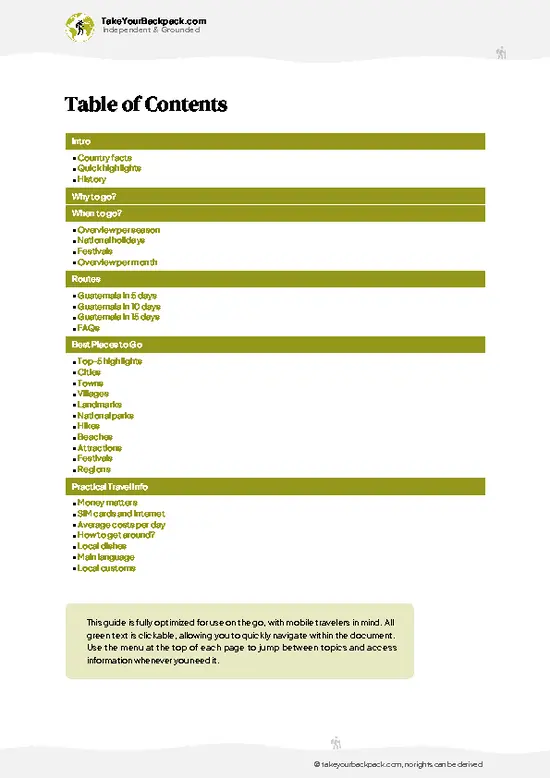
example page 2 from our offline Travel Guide for Guatemala
example page 3 from our offline Travel Guide for Guatemala
example page 4 from our offline Travel Guide for Guatemala
example page 5 from our offline Travel Guide for Guatemala
example page 6 from our offline Travel Guide for Guatemala
example page 7 from our offline Travel Guide for Guatemala
The digital guide (272 pages) contains:
✅ 85 highlights, ranked by travel appeal
✅ Optimized 5, 10 & 15-day travel routes
✅ Cities, national parks, landmarks, beaches
✅ How to get around
✅ Offline-friendly for travel without Wi-Fi
👉 Click to see all 30+ guide features

📅 Plan smarter in minutes, not weeks
✅ Month by month travel advice
✅ Festivals & national holidays
✅ Budget expectations

🗺️ Go to the right places, skip the overrated ones
✅ Honest pros & cons of destinations
✅ Top hikes, parks & viewpoints
✅ Lesser-known places most travelers miss
✅ Clear “worth it vs skip it” guidance

🛏️ Travel smoothly without rookie mistakes
✅ Best areas to stay
✅ Transport systems explained simply
✅ Common scams & safety advice
✅ SIM cards, money & practical tips

🌍 Understand the country, not just visit it
✅ Culture & traditions
✅ 52 Essential phrases & customs
✅ Festivals worth planning around
✅ Traveler-friendly historical context
✅ Insights that make places more meaningful

📱 Built for real travel conditions
✅ Fully downloadable PDF
✅ Works completely offline
✅ Optimized for phone use
✅ Useful in remote areas & buses
✅ Everything in one place
Stop searching, start planning
Get instant access to your full guide. 30‑day money-back guarantee.
+ Add another guide for just

By proceeding you agree to our terms.
Sent to your inbox immediately after payment • 100% Secure Checkout
Best Backpacking Travel Advisor 2025 tourism awardBest Backpacking
Travel Advisor
2025
What others say about Take Your Backpack Guides:
⭐⭐⭐⭐⭐
Fantastic, amazing amount of information!
⭐⭐⭐⭐⭐
My goodness this is amazing, it's what I've been looking for hats off too you!
⭐⭐⭐⭐⭐
I think this is absolutely BRILLIANT
⭐⭐⭐⭐
Very complete and informative. It's still missing places, but I gotta to commend you
⭐⭐⭐⭐⭐
This is truly amazing, thank you, can't wait to explore it with my kids!
⭐⭐⭐⭐⭐
Awesome resource, thank you!
⭐⭐⭐⭐⭐
This is amazing! Can't wait to explore the ones I haven't seen
⭐⭐⭐⭐
I love this! Well done, great idea.
⭐⭐⭐⭐⭐
Thanks for taking the time to make this gem!
⭐⭐⭐⭐⭐
This might be the best website I've ever seen.
⭐⭐⭐⭐⭐
Congratulations, and thank you so much for your work; it's incredibly valuable.
⭐⭐⭐⭐
In all seriousness I think you did a great job pointing out the important spots
⭐⭐⭐⭐⭐
10/10 very good
⭐⭐⭐⭐⭐
As someone who's only just starting to visit regularly this is awesome, thank you.
⭐⭐⭐⭐
Thank you very much! I'm going to visit my dad, it's going to be very useful!
⭐⭐⭐⭐⭐
This is really cool! We'll be travelling for the first time and this definitely come in handy.
⭐⭐⭐⭐⭐
You are now our minister of culture, congratulations 👨‍💼
⭐⭐⭐⭐⭐
Just wanted to tell you that this is a pearl! Going to follow your recommendations.
⭐⭐⭐⭐⭐
This is so cool. I'll definitely be using the resource for my travels soon.
⭐⭐⭐⭐⭐
This is very impressive! Good work.
⭐⭐⭐⭐⭐
This is an amazing and informative site. Very well done!

🛏️ Where to stay?Best Places to Stay in Guatemala

Hostels and budget beds are easy to find in Guatemala, with dorms typically running Q80 to 150 (US$10 to 20) and simple private rooms from about Q200 (US$26), clustered in a handful of traveler hubs. Antigua has the widest choice within walking distance of its cobbled center, bars and volcano-tour operators, though prices run highest here and some hostels near the central streets stay loud late into the night. At Lake Atitlán, San Pedro La Laguna is the cheap, social base with plenty of nightlife, San Marcos La Laguna is quieter and leans toward yoga retreats, while Flores works as the compact island gateway to Tikal and Guatemala City’s Zona 10 and Zona 13 are the safer picks for an airport … read more 👉
Hostels and budget beds are easy to find in Guatemala, with dorms typically running Q80 to 150 (US$10 to 20) and simple private rooms from about Q200 (US$26), clustered in a handful of traveler hubs. Antigua has the widest choice within walking distance of its cobbled center, bars and volcano-tour operators, though prices run highest here and some hostels near the central streets stay loud late into the night. At Lake Atitlán, San Pedro La Laguna is the cheap, social base with plenty of nightlife, San Marcos La Laguna is quieter and leans toward yoga retreats, while Flores works as the compact island gateway to Tikal and Guatemala City’s Zona 10 and Zona 13 are the safer picks for an airport night compared with the grittier Zona 1.

If you enjoy meeting fellow travelers, consider choosing hostels with high ratings for atmosphere. On the other hand, if you prefer having your own space, a hotel might be a better option.

GuatemalaExplore Guatemala

👋 Meet the founderWho’s Behind Take Your Backpack?

Johan, backpacker and founder of TakeYourBackpackHi, I’m Johan (Netherlands 🇳🇱), the creator of TakeYourBackpack. Over the past 3 decades, I’ve backpacked through 90+ countries across six continents, gaining extensive experience with independent travel, long-term trips, and overland routes.

This site is built on a combination of firsthand travel experience and carefully curated insights from other backpackers. Many guides are based on places I’ve personally visited, while others bring together tips, observations, and practical advice shared by trusted travelers I’ve met along the way.

The goal is to provide realistic, experience-driven guidance — not generic itineraries — so you can explore destinations with better context, clearer expectations, and more confidence.