AccessibilityTraveling through Guinea’s villages requires a willingness to embrace the unpredictable. The roads can be rough, often unpaved, and the infrastructure varies widely. Expect to spend a good chunk of time bouncing along dirt paths, especially if you’re venturing into more remote areas. Public transport options like bush taxis can be cramped and slow, but they offer a slice of local life. If you’re short on time, focus on a handful of villages—three to five is a sweet spot. This allows you to soak in the atmosphere without feeling rushed. Just remember, the journey is part of the experience.
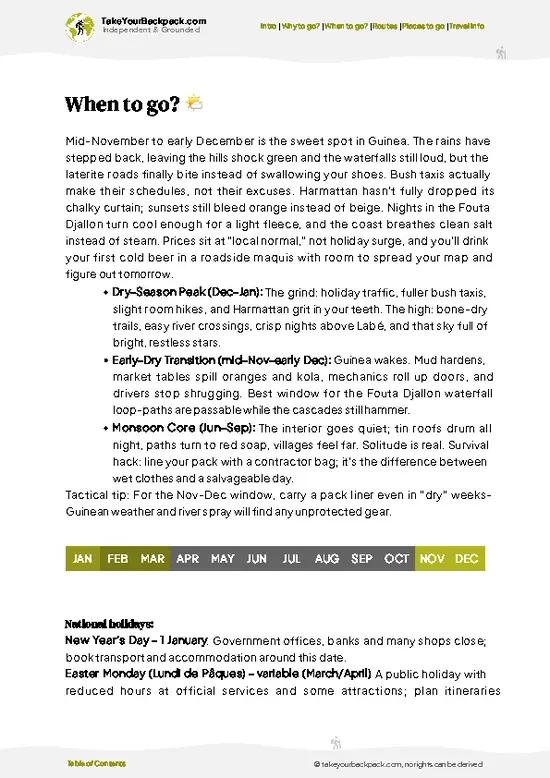
Seasonal VariationTiming your visit is crucial. The dry season, from November to April, offers the best conditions for travel. The roads are more passable, and the weather is generally …
read more 👉 AccessibilityTraveling through Guinea’s villages requires a willingness to embrace the unpredictable. The roads can be rough, often unpaved, and the infrastructure varies widely. Expect to spend a good chunk of time bouncing along dirt paths, especially if you’re venturing into more remote areas. Public transport options like bush taxis can be cramped and slow, but they offer a slice of local life. If you’re short on time, focus on a handful of villages—three to five is a sweet spot. This allows you to soak in the atmosphere without feeling rushed. Just remember, the journey is part of the experience.
Seasonal VariationTiming your visit is crucial. The dry season, from November to April, offers the best conditions for travel. The roads are more passable, and the weather is generally pleasant. However, visiting during the rainy season can reveal a different side of the villages. The lush greenery is stunning, and the rivers swell, creating a vibrant, alive atmosphere. But be prepared for delays; some paths may become impassable. If you choose the wet season, pack extra patience and a good pair of waterproof boots.
AuthenticityGuinea’s villages are rich in culture, but authenticity can be a double-edged sword. While you’ll find genuine experiences, some areas are becoming increasingly popular with tourists. This can dilute the local vibe. To truly connect, seek out villages that are less frequented. Engage with the locals; they often welcome visitors with open arms. Participate in traditional activities, whether it’s a dance, a cooking session, or simply sharing stories over a meal. This not only enriches your experience but also supports the community.
Pacing Between Rural StopsPlan your route with care. Distances can be deceiving, and travel times can stretch longer than expected. Allow for downtime between stops to absorb the local rhythm. A day or two in each village lets you explore without feeling like you’re on a race against the clock. This pacing also allows for spontaneous adventures—perhaps a hike to a nearby waterfall or a visit to a local market. Each village has its own character, and taking the time to appreciate them will reward you with deeper insights into Guinean life.
Safety & Cultural ConsiderationsSafety is paramount. While Guinea is generally safe for travelers, it’s wise to stay aware of your surroundings. Avoid traveling alone at night and respect local customs. Dress modestly, especially in rural areas, where traditional values hold strong. Learning a few phrases in the local languages can go a long way in building rapport. The warmth of the people is palpable, but it’s essential to approach interactions with respect and openness.
In summary, Guinea’s villages offer a tapestry of experiences that are both challenging and rewarding. Embrace the grit of the journey, and you’ll find that the effort pays off in moments of connection and beauty that linger long after you’ve left.
v2.webp)
 Best Backpacking
.jpg) Hi, I’m Johan (Netherlands 🇳🇱), the creator of TakeYourBackpack. Over the past decade, I’ve backpacked through 80+ countries across six continents, gaining extensive experience with independent travel, long-term trips, and overland routes.
Hi, I’m Johan (Netherlands 🇳🇱), the creator of TakeYourBackpack. Over the past decade, I’ve backpacked through 80+ countries across six continents, gaining extensive experience with independent travel, long-term trips, and overland routes.