×

Iceland🇮🇸 | best festivalsDiscover the 6 Best festivals Across Iceland

Festivals in Iceland are small, weather-bound and often free, a different animal from the ticketed mega-events elsewhere in Europe. Reykjavik carries the big urban weekends, with cobbled streets full of live music, the smell of waffles and wet wool, and crowds that thin out by 3 a.m. under a pale sky. Out in the Westfjords, the East and the North, events fit into fishing villages of a few hundred people, where a harbor shed becomes the venue and the wind decides the program. Prices swing too: Reykjavik beds are pricey, while rural events hand you a campsite, a bowl of fish soup and a bus ride on gravel roads. Independent travelers get the most from picking one region, not all.

By Johan Kruseman 🇳🇱 | Updated October 18, 2026
Explore the best regions in Iceland

Why go?Understanding Their Importance

Iceland has one of the world’s smallest populations, about 380,000 people, so festivals grow out of tight communities where musicians, fishermen and teachers share the same stage. That intimacy is the draw. You are standing a few meters from performers, often in a harbor warehouse, a church or a geothermal pool deck, with the smell of salt and diesel in the air. Geography shapes everything. The Ring Road links the main regions, but the Westfjords and the Highlands sit behind long, slow gravel and mountain roads, and weather can close passes in winter. The extreme light matters as well: near-endless daylight in June and July, and only four or five hours of it around December, change how events feel and when they run. Many gatherings were built to break up the dark season, so winter events carry … read more 👉
Iceland has one of the world’s smallest populations, about 380,000 people, so festivals grow out of tight communities where musicians, fishermen and teachers share the same stage. That intimacy is the draw. You are standing a few meters from performers, often in a harbor warehouse, a church or a geothermal pool deck, with the smell of salt and diesel in the air. Geography shapes everything. The Ring Road links the main regions, but the Westfjords and the Highlands sit behind long, slow gravel and mountain roads, and weather can close passes in winter. The extreme light matters as well: near-endless daylight in June and July, and only four or five hours of it around December, change how events feel and when they run. Many gatherings were built to break up the dark season, so winter events carry a warm, candlelit, indoor energy. Know before you choose that costs are high (a beer in Reykjavik runs about 1,400 to 2,000 ISK, or US$10 to 15), venues are small and tickets can sell out, and that Iceland is a better fit for quirky, local-scale events than for sprawling camping festivals. Pack layers and a waterproof shell whatever the date.
Evaluating the Top Choices
The list of best festivals in Iceland is created based on energy, traditions, crowd experience, activities, and overall excitement. If you feel a festival is missing in this list, please let us know.

When to go?Optimal Periods for Travel

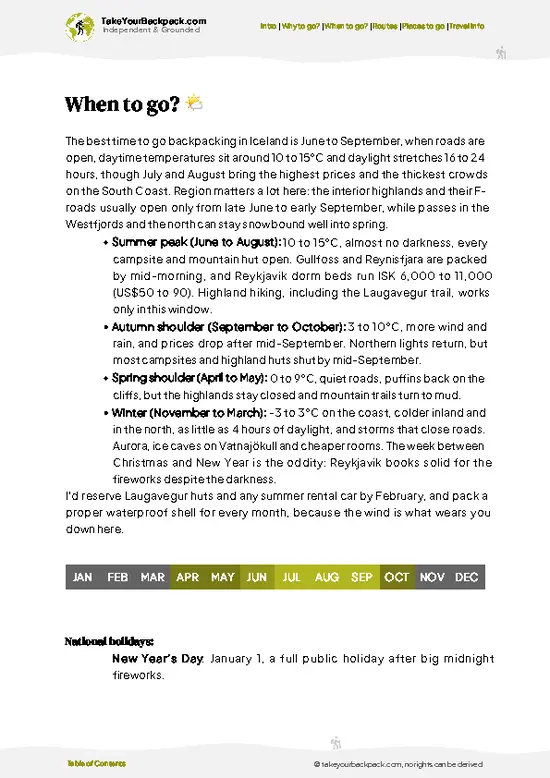
Best months for festivals: The best months for festivals in Iceland are June to August, when daylight stretches to 20 to 24 hours, roads are open and temperatures sit around 10 to 15°C. Summer evenings glow gold rather than going dark, so open-air stages and harbor events can run late, and the Westfjords and Highlands access roads are usually passable. This is also peak season: expect Reykjavik dorm beds at roughly 8,000 to 15,000 ISK (US$58 to 110) and rental cars booking out weeks ahead.
Shoulder seasons: May and September bring cheaper beds, often 20 to 30 percent lower, with temperatures of 5 to 10°C, sharper winds and quick rain showers that can soak a tent in minutes. Daylight is still long enough to travel between towns comfortably. October to April is cold and dark, with highs from … read more 👉
Best months for festivals: The best months for festivals in Iceland are June to August, when daylight stretches to 20 to 24 hours, roads are open and temperatures sit around 10 to 15°C. Summer evenings glow gold rather than going dark, so open-air stages and harbor events can run late, and the Westfjords and Highlands access roads are usually passable. This is also peak season: expect Reykjavik dorm beds at roughly 8,000 to 15,000 ISK (US$58 to 110) and rental cars booking out weeks ahead.
Shoulder seasons: May and September bring cheaper beds, often 20 to 30 percent lower, with temperatures of 5 to 10°C, sharper winds and quick rain showers that can soak a tent in minutes. Daylight is still long enough to travel between towns comfortably. October to April is cold and dark, with highs from about -2 to 4°C in Reykjavik and colder in the North and East, plus icy roads and short days of 4 to 7 hours around the solstice. Winter events are almost entirely indoors in Reykjavik and a few larger towns, which is easier on transport but heavy on warm layers. Check road status on road.is before heading anywhere beyond the capital area.

festival hoppingHow to Combine festivals Into One Trip

How many days to plan: A trip combining several festivals in Iceland needs 8 to 14 days, because distances look short on a map but gravel, weather and single-lane bridges eat the hours. Reykjavik and the Southwest group easily, with Keflavik Airport about 45 minutes from the capital. From there, move clockwise along the Ring Road: Reykjavik to Akureyri takes about 5 to 6 hours by car, and Akureyri to the East fjords (Egilsstadir) about 3 to 3.5 hours. Allow 2 to 3 nights in the capital, 1 to 2 in each northern or eastern base, and a full day at minimum for the Westfjords, where Reykjavik to Isafjordur is around 5 to 6 hours by road or 40 minutes by plane.
Planning mistakes: The most common error is stacking events in opposite corners on consecutive days, which leaves you driving 6-hour stretches … read more 👉
How many days to plan: A trip combining several festivals in Iceland needs 8 to 14 days, because distances look short on a map but gravel, weather and single-lane bridges eat the hours. Reykjavik and the Southwest group easily, with Keflavik Airport about 45 minutes from the capital. From there, move clockwise along the Ring Road: Reykjavik to Akureyri takes about 5 to 6 hours by car, and Akureyri to the East fjords (Egilsstadir) about 3 to 3.5 hours. Allow 2 to 3 nights in the capital, 1 to 2 in each northern or eastern base, and a full day at minimum for the Westfjords, where Reykjavik to Isafjordur is around 5 to 6 hours by road or 40 minutes by plane.
Planning mistakes: The most common error is stacking events in opposite corners on consecutive days, which leaves you driving 6-hour stretches with wind rattling the car and little sleep. Pick one or two regions and build slack around them. Another is relying on public buses in summer only: services thin out outside July and August and rural stops may see one departure a day, so book a rental or hitch-share early. Finally, fuel and food are scarce in the Highlands and East, so fill the tank at every town and carry snacks.

The ListThe Best festivals of Iceland

1 Iceland Airwaves

downtown venues, new music, late-night crowds

Experience Reykjavík’s music scene as emerging artists and international acts fill intimate spaces, with unpredictable weather adding to the city’s electric atmosphere.

2 Þjóðhátíð

Westman Islands, bonfires, tent camping

Join locals on a remote island for a weekend of music, communal singing, and all-night celebrations surrounded by dramatic coastal scenery.

3 Reykjavík Arts Festival

contemporary installations, public performances, cross-genre collaborations

Discover a city transformed by visual art, dance, and experimental projects, where creative boundaries blur and every street corner offers something unexpected.

4 Secret Solstice

midnight sun, outdoor stages, geothermal parties

Dance through endless daylight as DJs and bands perform in natural settings, with unique events held inside glaciers and volcanic caves.

5 Reykjavík International Film Festival

arthouse screenings, filmmaker Q&As, Nordic cinema

Watch films from around the world in Reykjavík’s cozy theaters, meet directors, and join discussions that highlight Iceland’s growing role in global cinema.

6 Aldrei fór ég suður

Ísafjörður harbor, local bands, free entry

Head to the Westfjords for a grassroots festival where musicians play for the community, and travelers mingle with locals in a relaxed, open setting.

Loading the map 🌍

Expert viewInsights from Locals and Experts

How many to attend: I advise two to three festivals on one trip. Iceland’s distances, weather delays and prices make a fourth feel like a chore, and with fewer events you can still see waterfalls, hot springs and black-sand beaches between them. Two lets you pair one big, social city weekend with one small-town gathering; a third only makes sense if it falls close to the others.
Choosing by travel style: If you want nightlife, music and people to meet in hostels, prioritize the Reykjavik events: dense schedules, late sets under midnight light in summer, easy transport on foot. If you crave atmosphere and landscape, choose a village or fjord event in the Westfjords, North or East. These have fewer than a few thousand attendees, communal meals, and the feel of a family gathering with a stage. … read more 👉
How many to attend: I advise two to three festivals on one trip. Iceland’s distances, weather delays and prices make a fourth feel like a chore, and with fewer events you can still see waterfalls, hot springs and black-sand beaches between them. Two lets you pair one big, social city weekend with one small-town gathering; a third only makes sense if it falls close to the others.
Choosing by travel style: If you want nightlife, music and people to meet in hostels, prioritize the Reykjavik events: dense schedules, late sets under midnight light in summer, easy transport on foot. If you crave atmosphere and landscape, choose a village or fjord event in the Westfjords, North or East. These have fewer than a few thousand attendees, communal meals, and the feel of a family gathering with a stage. Culture-focused travelers should look to winter indoor events, where you get warmth, candlelight and lower accommodation costs but short daylight and slippery roads.
What it costs: Budget US$110 to 180 a day as a backpacker on festival days: a dorm bed at US$40 to 75, groceries and bakery meals at US$20 to 35 (a hot dog from a stand is around US$5 to 7), plus transport. Entry per visit varies widely. Many town events are free, while ticketed concerts or multi-day passes run roughly 5,000 to 25,000 ISK (US$36 to 180). Add a bus fare of 3,000 to 9,000 ISK (US$22 to 65) for longer regional hops, or a rental car at about US$60 to 120 a day plus fuel. Campsites run 2,000 to 3,500 ISK (US$15 to 25) a person, the cheapest bed if you carry a tent rated for strong wind. Alcohol is heavily taxed, so many locals pre-drink; buy from the state-run Vinbudin stores, since bars are costly and shops sell only low-alcohol beer.
Safety and culture: Iceland is very safe, with low crime, but weather is the main risk. Wind can flatten tents, wet clothing chills fast even in July, and mountain roads can close with little notice, so check road.is and vedur.is daily. Drive only on marked roads: off-road driving is illegal and heavily fined. Tap water is clean, and drinking from it saves you around US$4 per bottle. Culturally, quiet hours matter in small towns: respect neighbors, keep noise down near campsites and shower before entering geothermal pools, a rule enforced firmly. Locals tend to be low-key, so cheering politely is fine, but pushing to the front or leaving trash behind will be noticed. Book beds and rental cars early for any event weekend, because rural places can have fewer than 20 rooms in the whole village.

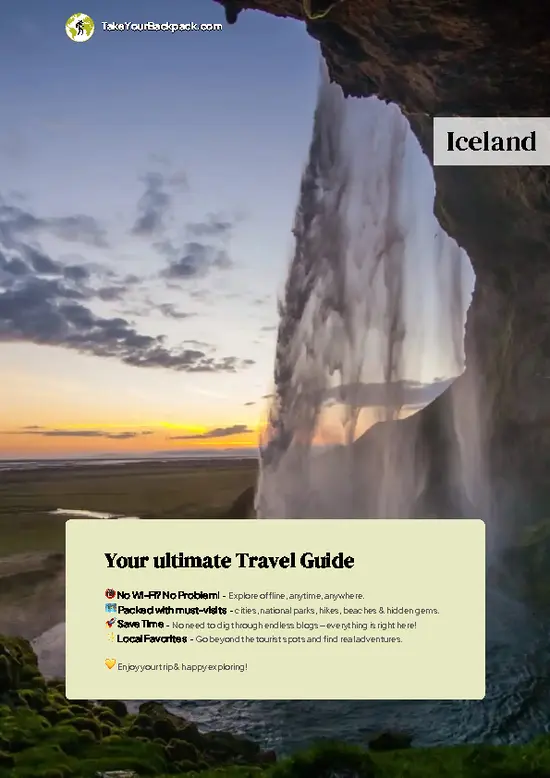
✈️ The backpacker research shortcutIceland Travel Guide

An offline-friendly backpacking guide with optimized travel routes, ranked highlights, transport advice, and the best areas to stay.
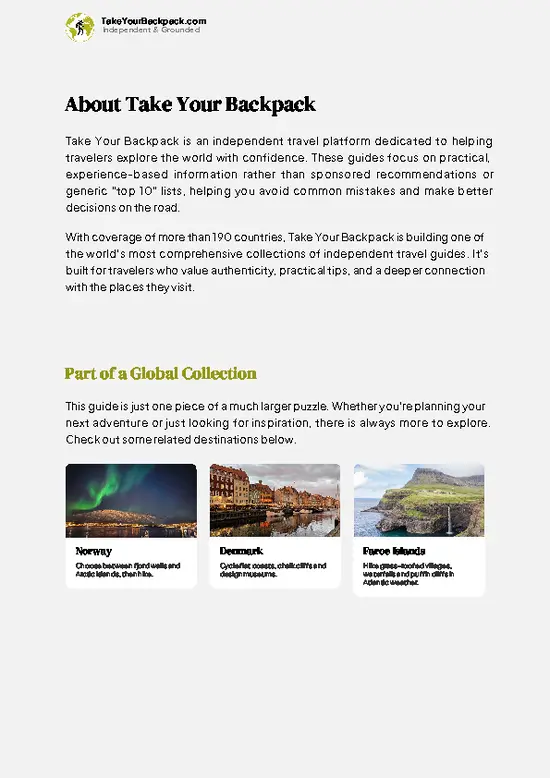
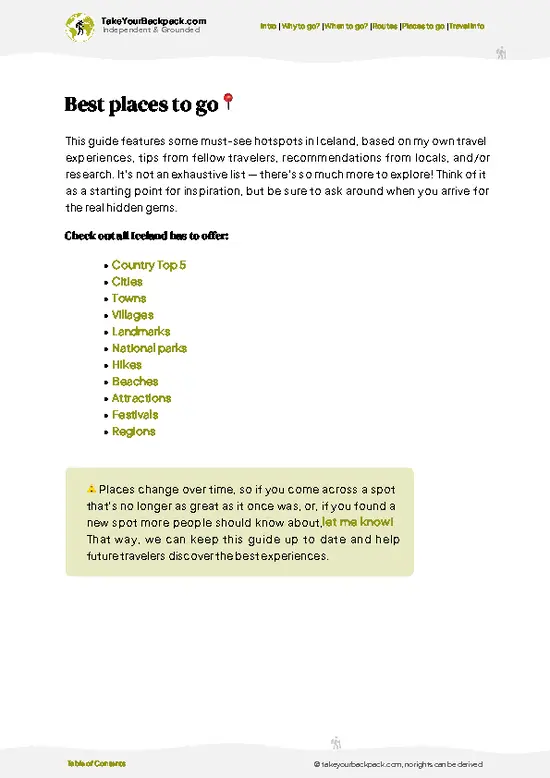
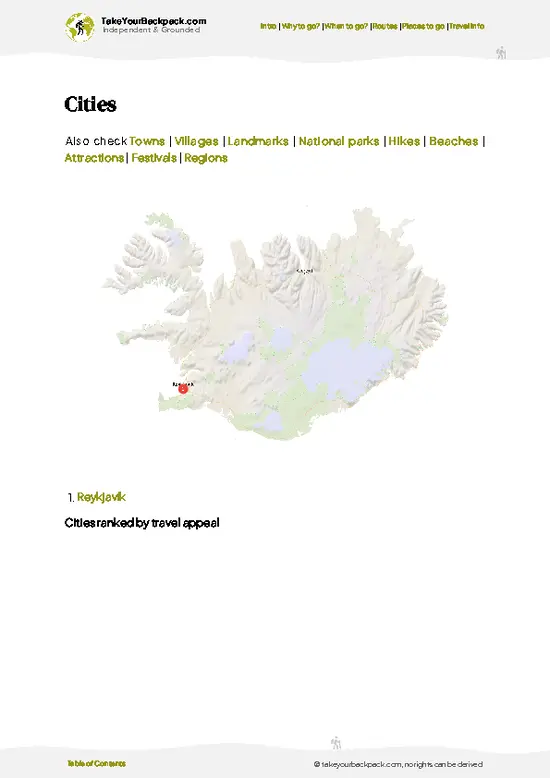
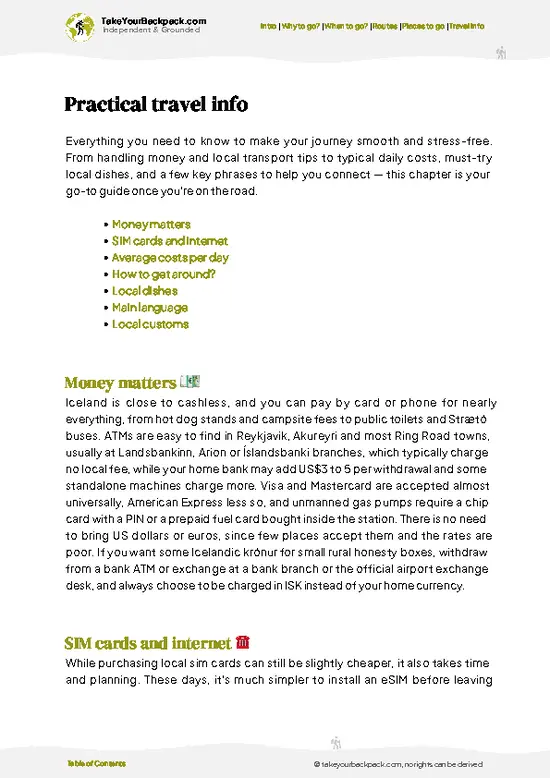
example page 0 from our offline Travel Guide for Iceland
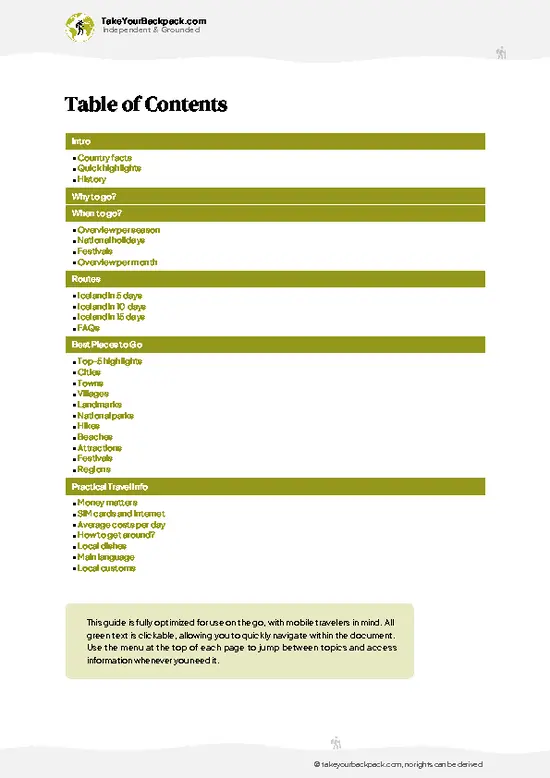
example page 1 from our offline Travel Guide for Iceland
example page 2 from our offline Travel Guide for Iceland
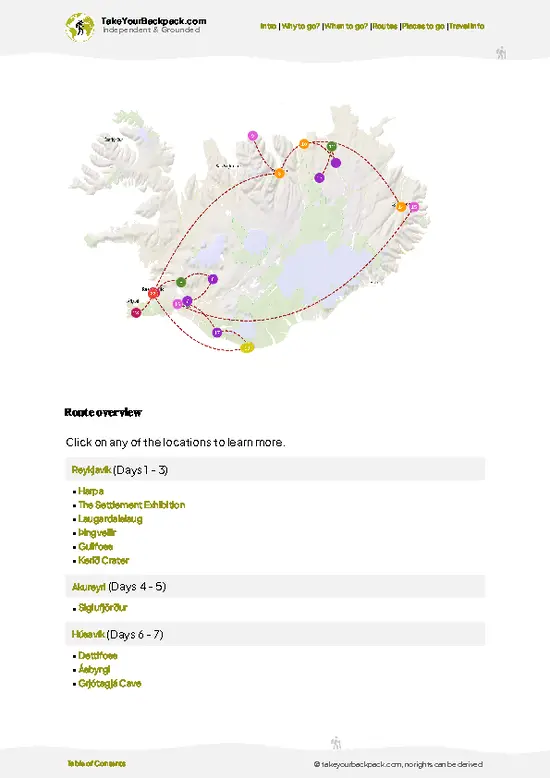
example page 3 from our offline Travel Guide for Iceland
example page 4 from our offline Travel Guide for Iceland
example page 5 from our offline Travel Guide for Iceland
example page 6 from our offline Travel Guide for Iceland
example page 7 from our offline Travel Guide for Iceland
The digital guide (230 pages) contains:
✅ 61 highlights, ranked by travel appeal
✅ Optimized 5, 10 & 15-day travel routes
✅ Cities, national parks, landmarks, beaches
✅ How to get around
✅ Offline-friendly for travel without Wi-Fi
👉 Click to see all 30+ guide features

📅 Plan smarter in minutes, not weeks
✅ Month by month travel advice
✅ Festivals & national holidays
✅ Budget expectations

🗺️ Go to the right places, skip the overrated ones
✅ Honest pros & cons of destinations
✅ Top hikes, parks & viewpoints
✅ Lesser-known places most travelers miss
✅ Clear “worth it vs skip it” guidance

🛏️ Travel smoothly without rookie mistakes
✅ Best areas to stay
✅ Transport systems explained simply
✅ Common scams & safety advice
✅ SIM cards, money & practical tips

🌍 Understand the country, not just visit it
✅ Culture & traditions
✅ 52 Essential phrases & customs
✅ Festivals worth planning around
✅ Traveler-friendly historical context
✅ Insights that make places more meaningful

📱 Built for real travel conditions
✅ Fully downloadable PDF
✅ Works completely offline
✅ Optimized for phone use
✅ Useful in remote areas & buses
✅ Everything in one place
Stop searching, start planning
Get instant access to your full guide. 30‑day money-back guarantee.
+ Add another guide for just

By proceeding you agree to our terms.
Sent to your inbox immediately after payment • 100% Secure Checkout
Best Backpacking Travel Advisor 2025 tourism awardBest Backpacking
Travel Advisor
2025
What others say about Take Your Backpack Guides:
⭐⭐⭐⭐⭐
Fantastic, amazing amount of information!
⭐⭐⭐⭐⭐
My goodness this is amazing, it's what I've been looking for hats off too you!
⭐⭐⭐⭐⭐
I think this is absolutely BRILLIANT
⭐⭐⭐⭐
Very complete and informative. It's still missing places, but I gotta to commend you
⭐⭐⭐⭐⭐
This is truly amazing, thank you, can't wait to explore it with my kids!
⭐⭐⭐⭐⭐
Awesome resource, thank you!
⭐⭐⭐⭐⭐
This is amazing! Can't wait to explore the ones I haven't seen
⭐⭐⭐⭐
I love this! Well done, great idea.
⭐⭐⭐⭐⭐
Thanks for taking the time to make this gem!
⭐⭐⭐⭐⭐
This might be the best website I've ever seen.
⭐⭐⭐⭐⭐
Congratulations, and thank you so much for your work; it's incredibly valuable.
⭐⭐⭐⭐
In all seriousness I think you did a great job pointing out the important spots
⭐⭐⭐⭐⭐
10/10 very good
⭐⭐⭐⭐⭐
As someone who's only just starting to visit regularly this is awesome, thank you.
⭐⭐⭐⭐
Thank you very much! I'm going to visit my dad, it's going to be very useful!
⭐⭐⭐⭐⭐
This is really cool! We'll be travelling for the first time and this definitely come in handy.
⭐⭐⭐⭐⭐
You are now our minister of culture, congratulations 👨‍💼
⭐⭐⭐⭐⭐
Just wanted to tell you that this is a pearl! Going to follow your recommendations.
⭐⭐⭐⭐⭐
This is so cool. I'll definitely be using the resource for my travels soon.
⭐⭐⭐⭐⭐
This is very impressive! Good work.
⭐⭐⭐⭐⭐
This is an amazing and informative site. Very well done!

🛏️ Where to stay?Best Places to Stay in Iceland

Iceland has plenty of hostels and guesthouses, with dorm beds typically running ISK 6,000 to 11,000 (about US$45 to 80) a night in summer, and most of them are in Reykjavík. Miðborg (the 101 downtown area around Laugavegur) puts you within walking distance of Hallgrímskirkja, the harbor and the bus terminals, but weekend bar noise lasts until 4 or 5 a.m. Quieter Vesturbær and Laugardalur, home to the city campsite and the biggest public pool, are 15 to 30 minutes on foot from the center and very safe, while up north Akureyri has a small cluster of budget beds near its compact downtown.

If you enjoy meeting fellow travelers, consider choosing hostels with high ratings for atmosphere. On the other … read more 👉
Iceland has plenty of hostels and guesthouses, with dorm beds typically running ISK 6,000 to 11,000 (about US$45 to 80) a night in summer, and most of them are in Reykjavík. Miðborg (the 101 downtown area around Laugavegur) puts you within walking distance of Hallgrímskirkja, the harbor and the bus terminals, but weekend bar noise lasts until 4 or 5 a.m. Quieter Vesturbær and Laugardalur, home to the city campsite and the biggest public pool, are 15 to 30 minutes on foot from the center and very safe, while up north Akureyri has a small cluster of budget beds near its compact downtown.

If you enjoy meeting fellow travelers, consider choosing hostels with high ratings for atmosphere. On the other hand, if you prefer having your own space, a hotel might be a better option.

IcelandExplore Iceland

👋 Meet the founderWho’s Behind Take Your Backpack?

Johan, backpacker and founder of TakeYourBackpackHi, I’m Johan (Netherlands 🇳🇱), the creator of TakeYourBackpack. Over the past 3 decades, I’ve backpacked through 90+ countries across six continents, gaining extensive experience with independent travel, long-term trips, and overland routes.

This site is built on a combination of firsthand travel experience and carefully curated insights from other backpackers. Many guides are based on places I’ve personally visited, while others bring together tips, observations, and practical advice shared by trusted travelers I’ve met along the way.

The goal is to provide realistic, experience-driven guidance — not generic itineraries — so you can explore destinations with better context, clearer expectations, and more confidence.