×

India🇮🇳 | best attractionsExplore the 10 Best attractions in India

India sells its attractions in very different packages, and picking the wrong one wastes weeks. The country runs on layers: Mughal and Rajput monuments in the north, Dravidian temple cities in the south, Himalayan valleys and beaches at the edges. Each layer has its own pace, price and crowd.

The north is the headline act, and it earns it. Rajasthan and the Delhi to Agra belt hold the big forts and tombs, but foreign entry tickets run roughly ₹550 to 1,100 (about US$7 to 13) at top sites, against ₹30 to 50 for locals. Queues, touts and heat are part of the deal. Skip the commission-driven shopping stops your rickshaw driver proposes; they eat hours and give nothing back.

The south is calmer. Temple towns in Tamil Nadu and Karnataka cost little, often free or under ₹100, and trains are easy to book. The Himalayas ask for more effort: slow roads, landslide delays, altitude. That effort suits independent travelers who want space. Goa’s beaches are fine for a few days but not why you come to India. Choose by region first, then by how much chaos you can enjoy.

By Johan Kruseman 🇳🇱 | Updated October 18, 2026
Explore the best festivals in India

Why go?Why These attraction Stand Out

India works for attractions because it has stacked more than 4,000 years of continuous building on one landmass, and much of it is still in use. Temples hold daily worship, forts sit inside living towns, and ghats double as laundries and funeral grounds. That is the main difference from countries where heritage is fenced off and silent. Here, living culture is the attraction, and the stone is only the setting.

Geography adds range few countries match. Within one country you can cover desert, tropical coast, rainforest, alpine passes and river plains, and the monsoon swings each of them differently. The Himalayas, Western Ghats and Thar all sit under one visa.

Infrastructure is uneven but workable. The rail network links nearly every major site, tickets are cheap, and apps handle booking. … read more 👉
India works for attractions because it has stacked more than 4,000 years of continuous building on one landmass, and much of it is still in use. Temples hold daily worship, forts sit inside living towns, and ghats double as laundries and funeral grounds. That is the main difference from countries where heritage is fenced off and silent. Here, living culture is the attraction, and the stone is only the setting.

Geography adds range few countries match. Within one country you can cover desert, tropical coast, rainforest, alpine passes and river plains, and the monsoon swings each of them differently. The Himalayas, Western Ghats and Thar all sit under one visa.

Infrastructure is uneven but workable. The rail network links nearly every major site, tickets are cheap, and apps handle booking. Roads are slower than the map suggests, and a 300 km drive often means seven to nine hours. Distances are large, so choosing fewer regions beats ticking off many.

There are things to know before committing. The two-tier pricing system charges foreigners many times the local rate at federally run monuments, so a heavy sightseeing schedule adds up. Crowds at headline sites are dense, especially on weekends and national holidays, when locals fill the grounds. Air quality across the northern plains turns poor in winter, which dulls views and tires the lungs. Heat from April to June can make midday visits at open sites miserable.

Also know what is not worth your time. Many second-tier forts and museums repeat what you have already seen, and guided shopping tours attached to attractions are rarely good value. The country is also demanding on the senses: noise, staring, scams and stomach trouble are routine, not exceptions. Travelers who arrive expecting order get frustrated. Those who accept friction and plan slack into each day get the best of it.

For a first visit, India rewards a focused plan: one or two regions, a mix of famous and quiet places, and enough buffer for delayed trains. It punishes an overstuffed checklist. The attractions are strong enough to carry a trip on their own, provided you pick the right season and region.
Behind the Scenes of Selection
The list of best attractions in India is created based on cultural significance or entertainment value. If you feel a attraction is missing in this list, please let us know.

When to go?Best Time to Visit India for attractions

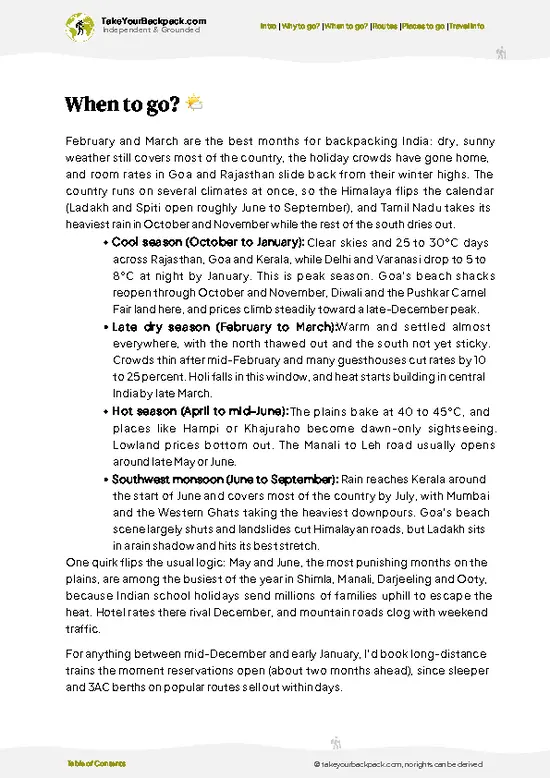
Best months for attractions in India: October to March is the best window for most of India, because daytime highs in the plains sit around 20 to 30°C and rain is mostly absent. This is when Rajasthan, Delhi, Agra, Varanasi and the south are comfortable to walk around in. December and January are the coolest, with northern mornings dropping to 3 to 8°C and fog delaying trains and flights, so give tight connections a buffer.

Shoulder seasons: February to March and late September to October are the smart picks. Crowds thin after the holiday rush, hotel rates ease, and temperatures remain bearable. By late March the north climbs toward 35°C, and midday visits to open forts become a slog. Go early or late in the day.

Peak periods and prices: Late December to early January pushes room rates up … read more 👉
Best months for attractions in India: October to March is the best window for most of India, because daytime highs in the plains sit around 20 to 30°C and rain is mostly absent. This is when Rajasthan, Delhi, Agra, Varanasi and the south are comfortable to walk around in. December and January are the coolest, with northern mornings dropping to 3 to 8°C and fog delaying trains and flights, so give tight connections a buffer.

Shoulder seasons: February to March and late September to October are the smart picks. Crowds thin after the holiday rush, hotel rates ease, and temperatures remain bearable. By late March the north climbs toward 35°C, and midday visits to open forts become a slog. Go early or late in the day.

Peak periods and prices: Late December to early January pushes room rates up by roughly 30 to 100 percent in Rajasthan, Goa and Kerala, and popular trains sell out weeks ahead. Diwali (October or November) and Holi (March) also fill transport and raise prices, and some sites close or run short hours on the main festival day. Indian school holidays in May and June crowd hill stations heavily, even though the plains are scorching.

Monsoon and summer: April to June brings 38 to 45°C across the northern plains and central India. It is not worth planning heritage sightseeing there. The southwest monsoon arrives in Kerala around early June and spreads north by early July, with July and August bringing heavy rain, 200 to 800 mm a month in many regions. Western coastal areas and Goa get far more. Sites stay open, but views disappear, roads flood and many beach shacks shut.

Regional exceptions: The Himalayas flip the calendar. Ladakh and Spiti are accessible roughly June to September, and their high passes close under snow for the rest of the year. Himachal and Uttarakhand are best in April to June and September to October. Tamil Nadu and the southeast coast get their rain from October to December, so the northeast monsoon makes that stretch poor there while the north is at its best. Kerala and Karnataka are better from November to February. Northeast India, including Meghalaya, is extremely wet from June to September.

attraction hoppingOptimizing Your Multi-Stop Itinerary

How many days to combine attractions in India: A trip linking several major attractions in India needs 14 to 21 days, and three weeks is far more comfortable than two. India punishes compression, because distances are large and delays are routine. Pick two or three regions and drop the rest.

Regions that group well: The north clusters naturally: Delhi, Agra and Jaipur form the classic triangle, and Rajasthan extends it west to Jodhpur, Jaisalmer and Udaipur. Delhi to Agra takes about two to three hours by fast train or car, and Agra to Jaipur around four to five hours by road. Varanasi pairs with Delhi by overnight train or a roughly 1.5 hour flight. The south forms its own loop: Chennai, Madurai and Kerala, or Bengaluru, Mysuru and Hampi. Mixing north and south in one short trip costs two … read more 👉
How many days to combine attractions in India: A trip linking several major attractions in India needs 14 to 21 days, and three weeks is far more comfortable than two. India punishes compression, because distances are large and delays are routine. Pick two or three regions and drop the rest.

Regions that group well: The north clusters naturally: Delhi, Agra and Jaipur form the classic triangle, and Rajasthan extends it west to Jodhpur, Jaisalmer and Udaipur. Delhi to Agra takes about two to three hours by fast train or car, and Agra to Jaipur around four to five hours by road. Varanasi pairs with Delhi by overnight train or a roughly 1.5 hour flight. The south forms its own loop: Chennai, Madurai and Kerala, or Bengaluru, Mysuru and Hampi. Mixing north and south in one short trip costs two full days in transit, so it only makes sense past 18 days.

Direction of travel: Fly into Delhi and move west then south, or reverse it by flying into Mumbai or Chennai and finishing in Delhi. The best choice is an open-jaw ticket, so you never backtrack. Travel against the heat: start in the north in winter, and the south in the cooler months of November to February.

Time per stop: Allow one to two nights for single-site towns such as Agra, and two to three for larger bases like Jaipur, Udaipur or Varanasi. Jaisalmer and Hampi deserve at least two. Anywhere you must reach by slow road, such as the Himalayan valleys, needs a full day each way.

Planning mistakes: The biggest is trying to see six cities in ten days. You end up in trains and taxis and see mostly platforms. Cut the list in half. Another is booking trains late: the main routes fill 60 to 120 days ahead, and tourist quota seats exist, so reserve early. Overnight sleeper trains save a hotel night but leave you tired on arrival; do not chain more than two in a row. Do not schedule a flight on the same day as a long train, since fog and delays are common from December to January. Leave one blank day every five or six days for rest, laundry and slippage. Finally, avoid driver-led packages that stack stops you did not pick; they add hours at shops and cut time at the sites.

The ListMust-Visit attractions in India

1 Qutub Minar

red sandstone minaret, ruined mosque, ancient inscriptions

Walk among crumbling pillars and towering spires that illustrate the early Indo-Islamic architectural legacy of Delhi.

2 Amer Fort

hilltop ramparts, mirrored halls, Rajput courtyards

Walk through ornate passageways and expansive terraces offering panoramic views of arid hills and the Maota Lake below.

3 Mehrangarh Fort

clifftop fortress, museum galleries, blue city views

Ascend fortified gates to discover royal artifacts and sweeping panoramas over Jodhpur’s clustered blue houses.

4 Jaisalmer Fort

sandstone bastions, living fort, desert vistas

Wander through narrow lanes lined with homes and temples, all enclosed within massive ramparts rising from the Thar Desert.

5 Chittorgarh Fort

massive ramparts, ancient reservoirs, victory towers

Traverse sprawling ruins and climb watchtowers that recall centuries of siege warfare and Rajput resistance.

6 Mysore Palace

illuminated domes, ceremonial halls, ornate interiors

Stroll through lavish rooms and pillared halls that host annual festivals and display the opulence of southern royalty.

7 Gateway of India

waterfront arch, colonial landmark, ferry departure point

Stand beneath the imposing arch and watch boats depart for Elephanta Island amid the constant flow of visitors and locals.

8 Victoria Memorial

white marble dome, landscaped lawns, colonial-era statues

Wander through galleries of paintings and memorabilia inside a domed monument set amid expansive gardens in Kolkata.

9 Akshardham Temple

intricate stone carvings, spiritual exhibitions, Yamuna riverside

Experience a blend of devotional art, interactive galleries, and landscaped gardens reflecting contemporary Hindu temple architecture and philosophy.

10 Sanchi Stupa

hemispherical dome, Buddhist reliefs, ancient gateways

Circle the stupa’s carved railings and gateways, observing narrative panels that recount episodes from the Buddha’s life.

11 Hawa Mahal

latticed windows, pink sandstone, honeycomb facade

Peer through hundreds of screened windows designed for royal women, with city views filtered by intricate stonework.

12 City Palace, Jaipur

royal chambers, museum collections, marble courtyards

Tour through interconnected palaces and galleries displaying artifacts from the lives of Rajasthan’s former rulers.

13 Lotus Temple

petal-shaped structure, Baháʼí house of worship, tranquil gardens

Sit in a silent prayer hall surrounded by landscaped grounds, where modern design invites quiet contemplation.

14 Indian Museum

natural history exhibits, ancient relics, colonial galleries

Browse diverse collections ranging from prehistoric fossils to Buddhist artifacts inside India’s oldest public museum.

15 National Museum, New Delhi

historic artifacts, sculpture galleries, textile displays

Trace India’s cultural evolution through curated exhibits spanning ancient civilizations, decorative arts, and regional traditions.

Think you know India?

Prove you’re a true local — uncover 5 lesser-known attractions in India that locals tend to keep to themselves.
Loading the map 🌍

Expert viewInsights from Locals and Experts

How many attractions to visit: Plan on one major attraction per day, and no more than 10 to 14 across a three-week trip. India drains energy faster than almost anywhere, since heat, crowds, noise and slow transport all take a toll. After the fourth or fifth fort or temple complex, the details blur and your enjoyment drops. Fewer, better-chosen visits beat a checklist, and two quiet days between busy ones keep you functioning.

How to prioritize by travel style: First-timers should anchor the trip on two or three headline monuments in the north, then balance them with one living site, such as a river ghat or a working temple, where the crowd is part of the experience. History lovers get more from fewer places visited with a guide than from many visited quickly. Budget travelers should favor … read more 👉
How many attractions to visit: Plan on one major attraction per day, and no more than 10 to 14 across a three-week trip. India drains energy faster than almost anywhere, since heat, crowds, noise and slow transport all take a toll. After the fourth or fifth fort or temple complex, the details blur and your enjoyment drops. Fewer, better-chosen visits beat a checklist, and two quiet days between busy ones keep you functioning.

How to prioritize by travel style: First-timers should anchor the trip on two or three headline monuments in the north, then balance them with one living site, such as a river ghat or a working temple, where the crowd is part of the experience. History lovers get more from fewer places visited with a guide than from many visited quickly. Budget travelers should favor free or cheap sites: most temples, markets, ghats, hill walks and village lanes cost nothing or under ₹100 (about US$1.20). Nature seekers should choose one region, such as the Himalayas, the Western Ghats or the northeast, and stay put. Skip the second and third forts in any single Rajasthan town unless you are a devoted fan; they repeat the first at the same ticket price. Skip most state museums and wax or theme attractions.

What it costs: A realistic daily budget for a sightseeing-heavy backpacker is US$25 to 45, covering a dorm or basic room (US$6 to 18), meals (US$5 to 10), local transport and one or two entries. Foreigner tickets at top federal monuments run about ₹550 to 1,100 (US$7 to 13), and the Taj Mahal is considerably higher, around ₹1,100 to 1,300 plus a separate fee for the main mausoleum. Many state-run forts charge ₹200 to 700. Camera fees at some sites add ₹25 to 200. Licensed guides charge roughly ₹1,000 to 2,500 (US$12 to 30) for a half day, and audio guides at the larger monuments run around ₹150 to 250. Autorickshaws for a sightseeing loop cost ₹500 to 1,500 for a half day if you bargain, and a driver-car for a day runs ₹2,500 to 4,500. Budget US$10 to 25 per major visit including entry, transport and a guide if you want one. Several entries can be bundled into multi-site tickets in a few cities, which saves money if you tour intensively.

Costs and mistakes that catch travelers out: Pre-booking online is cheaper. Tickets for federal sites bought through the official portal are typically discounted by about ₹50 compared with the counter, and you skip a queue. Fake ticket sellers and unofficial websites operate near the biggest monuments, so only use the official government sites or the booking apps linked from them. Pay with small notes: breaking ₹500 notes is a daily nuisance, and drivers will claim not to have change.

Touts are the other recurring drain. A friendly stranger who says the site is closed, or that a festival means you must see a shop first, is working for commission. Walk on. Insist on a meter or agree on the price before getting in. Guides who approach you outside the gate vary wildly in quality; hire one with a government-issued badge or through your hotel, and agree the fee and duration up front. Tipping is expected but small, ₹100 to 300 for a good guide.

Time losses are just as costly. Arrive at opening, typically around 6 am to 9 am, for the best light and thinner crowds. Many monuments close one day a week, and the Taj Mahal closes on Fridays, so check before you commit a day to travel. Security queues, bag restrictions and separate lines for foreign visitors can add 30 to 60 minutes; leave tripods, drones, food and large bags at the hotel, since cloakrooms are limited.

Safety and cultural considerations: Dress modestly at religious sites: cover shoulders and knees, and carry a scarf, because women may be asked to cover their heads at some places. Remove shoes before entering temples and mosques, and bring thin socks for hot stone floors. Some temples bar non-Hindus from inner sanctums, and a few ban leather items or phones. Always ask before photographing worshippers, funeral rites at the ghats, or people’s children, and expect to be asked for selfies yourself; you can say no politely. Women traveling alone should avoid empty site corners at dusk and use prepaid taxis or ride apps after dark.

Pollution, heat and stomach trouble are the most common reasons people cut sightseeing short. Carry a filtered bottle, electrolyte salts, sunscreen and a hat. Eat at busy stalls with high turnover rather than empty restaurants, and avoid midday outdoor visits from April to June. Monkeys at several temples snatch food and sunglasses, so keep bags zipped and do not show items. Keep a photocopy of your passport, as ID checks occur at some sites.

Spend on the things that matter: a good early start, a trained guide at one or two complex monuments, and a transport buffer. Save money by skipping souvenir stops, overpriced add-on shows and any attraction that needs a long detour for a brief look.

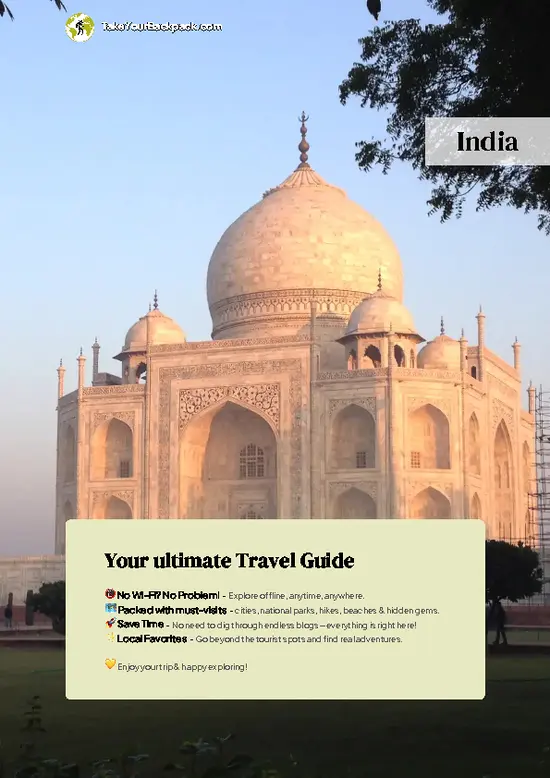
✈️ The backpacker research shortcutIndia Travel Guide

An offline-friendly backpacking guide with optimized travel routes, ranked highlights, transport advice, and the best areas to stay.
example page 0 from our offline Travel Guide for India
example page 1 from our offline Travel Guide for India
example page 2 from our offline Travel Guide for India
example page 3 from our offline Travel Guide for India
example page 4 from our offline Travel Guide for India
example page 5 from our offline Travel Guide for India
example page 6 from our offline Travel Guide for India
example page 7 from our offline Travel Guide for India
The digital guide (483 pages) contains:
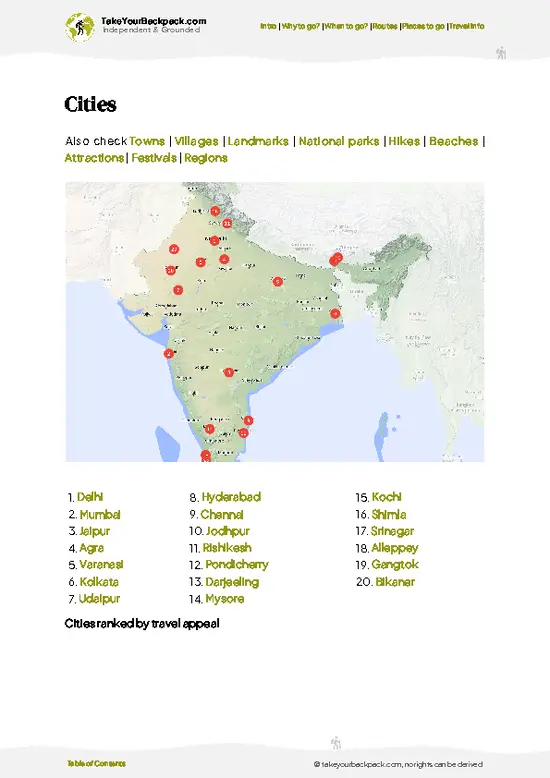
✅ 157 highlights, ranked by travel appeal
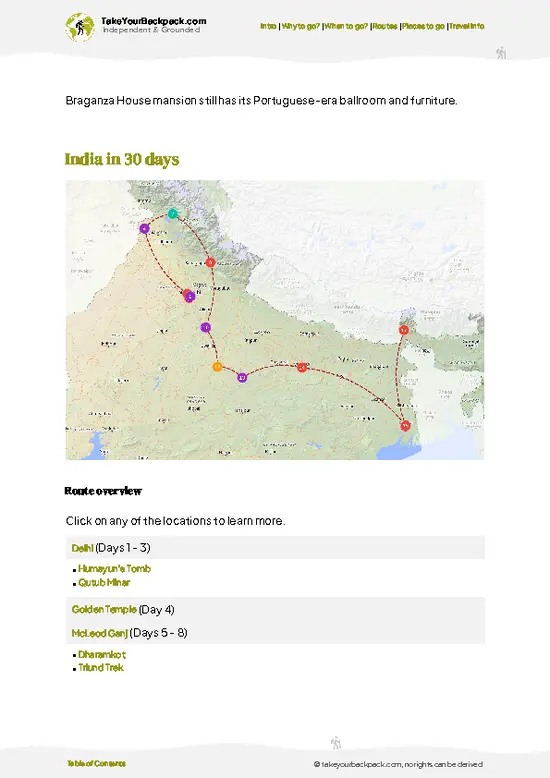
✅ Optimized 14, 21 & 30-day travel routes
✅ Cities, national parks, landmarks, beaches
✅ How to get around
✅ Offline-friendly for travel without Wi-Fi
👉 Click to see all 30+ guide features

📅 Plan smarter in minutes, not weeks
✅ Month by month travel advice
✅ Festivals & national holidays
✅ Budget expectations

🗺️ Go to the right places, skip the overrated ones
✅ Honest pros & cons of destinations
✅ Top hikes, parks & viewpoints
✅ Lesser-known places most travelers miss
✅ Clear “worth it vs skip it” guidance

🛏️ Travel smoothly without rookie mistakes
✅ Best areas to stay
✅ Transport systems explained simply
✅ Common scams & safety advice
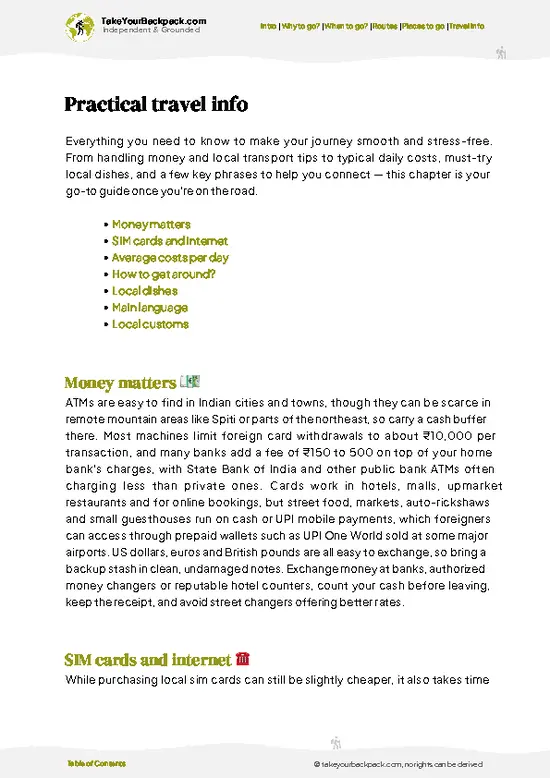
✅ SIM cards, money & practical tips

🌍 Understand the country, not just visit it
✅ Culture & traditions
✅ 52 Essential phrases & customs
✅ Festivals worth planning around
✅ Traveler-friendly historical context
✅ Insights that make places more meaningful

📱 Built for real travel conditions
✅ Fully downloadable PDF
✅ Works completely offline
✅ Optimized for phone use
✅ Useful in remote areas & buses
✅ Everything in one place
Stop searching, start planning
Get instant access to your full guide. 30‑day money-back guarantee.
+ Add another guide for just

By proceeding you agree to our terms.
Sent to your inbox immediately after payment • 100% Secure Checkout
Best Backpacking Travel Advisor 2025 tourism awardBest Backpacking
Travel Advisor
2025
What others say about Take Your Backpack Guides:
⭐⭐⭐⭐⭐
Fantastic, amazing amount of information!
⭐⭐⭐⭐⭐
My goodness this is amazing, it's what I've been looking for hats off too you!
⭐⭐⭐⭐⭐
I think this is absolutely BRILLIANT
⭐⭐⭐⭐
Very complete and informative. It's still missing places, but I gotta to commend you
⭐⭐⭐⭐⭐
This is truly amazing, thank you, can't wait to explore it with my kids!
⭐⭐⭐⭐⭐
Awesome resource, thank you!
⭐⭐⭐⭐⭐
This is amazing! Can't wait to explore the ones I haven't seen
⭐⭐⭐⭐
I love this! Well done, great idea.
⭐⭐⭐⭐⭐
Thanks for taking the time to make this gem!
⭐⭐⭐⭐⭐
This might be the best website I've ever seen.
⭐⭐⭐⭐⭐
Congratulations, and thank you so much for your work; it's incredibly valuable.
⭐⭐⭐⭐
In all seriousness I think you did a great job pointing out the important spots
⭐⭐⭐⭐⭐
10/10 very good
⭐⭐⭐⭐⭐
As someone who's only just starting to visit regularly this is awesome, thank you.
⭐⭐⭐⭐
Thank you very much! I'm going to visit my dad, it's going to be very useful!
⭐⭐⭐⭐⭐
This is really cool! We'll be travelling for the first time and this definitely come in handy.
⭐⭐⭐⭐⭐
You are now our minister of culture, congratulations 👨‍💼
⭐⭐⭐⭐⭐
Just wanted to tell you that this is a pearl! Going to follow your recommendations.
⭐⭐⭐⭐⭐
This is so cool. I'll definitely be using the resource for my travels soon.
⭐⭐⭐⭐⭐
This is very impressive! Good work.
⭐⭐⭐⭐⭐
This is an amazing and informative site. Very well done!

🛏️ Where to stay?Accommodation Highlights

India has one of Asia’s densest backpacker hostel scenes, with dorm beds typically running ₹400 to 900 (US$5 to 11) and simple private guesthouse rooms from about ₹1,000 to 2,000 (US$12 to 24). In Delhi, Paharganj has the cheapest beds and sits right by New Delhi Railway Station, but it is loud, grimy and full of touts, while Hauz Khas costs a little more and gives you cafés, bars and calmer lanes far from the Old Delhi sights. Elsewhere, Colaba in Mumbai puts you near the Gateway of India at the city’s highest prices, Anjuna and Arambol in Goa bring the parties and a laid-back beach crowd, and Tapovan in Rishikesh and Assi Ghat in Varanasi trade nightlife (alcohol is restricted in both towns) … read more 👉
India has one of Asia’s densest backpacker hostel scenes, with dorm beds typically running ₹400 to 900 (US$5 to 11) and simple private guesthouse rooms from about ₹1,000 to 2,000 (US$12 to 24). In Delhi, Paharganj has the cheapest beds and sits right by New Delhi Railway Station, but it is loud, grimy and full of touts, while Hauz Khas costs a little more and gives you cafés, bars and calmer lanes far from the Old Delhi sights. Elsewhere, Colaba in Mumbai puts you near the Gateway of India at the city’s highest prices, Anjuna and Arambol in Goa bring the parties and a laid-back beach crowd, and Tapovan in Rishikesh and Assi Ghat in Varanasi trade nightlife (alcohol is restricted in both towns) for quiet riverside stays within walking distance of the ghats and yoga schools.

If you enjoy meeting fellow travelers, consider choosing hostels with high ratings for atmosphere. On the other hand, if you prefer having your own space, a hotel might be a better option.

IndiaSee More of India

👋 Meet the founderWho’s Behind Take Your Backpack?

Johan, backpacker and founder of TakeYourBackpackHi, I’m Johan (Netherlands 🇳🇱), the creator of TakeYourBackpack. Over the past 3 decades, I’ve backpacked through 90+ countries across six continents, gaining extensive experience with independent travel, long-term trips, and overland routes.

This site is built on a combination of firsthand travel experience and carefully curated insights from other backpackers. Many guides are based on places I’ve personally visited, while others bring together tips, observations, and practical advice shared by trusted travelers I’ve met along the way.

The goal is to provide realistic, experience-driven guidance — not generic itineraries — so you can explore destinations with better context, clearer expectations, and more confidence.