×

Indonesia🇮🇩 | citiesSemarangDutch warehouses, Chinatown, hilltop views | things to do and best time to go

Explore MedanExplore Makassar

Backpacking in Semarang
🏆 Top pickcity ranked #8
By Johan Kruseman 🇳🇱 | Updated October 15, 2026

Semarang isn't a backpacker's first thought when planning Indonesia, but that's precisely why it works. Sitting on Java's north coast, midway between Jakarta and Surabaya, this port city punches above its reputation. The vibe is working-class and real: hawkers call from food stalls, becak drivers navigate narrow streets, and colonial architecture crumbles alongside modern sprawl. I remember standing on the Tugu Muda waterfront at dusk, salt air mixing with grilled fish smoke, watching locals play badminton as the sky turned orange. Semarang suits travelers seeking authentic Java without the tourist machinery of Yogyakarta or Bali. The trade-off is comfort: infrastructure is rougher, English is sparse, and you'll navigate more friction. But that friction is where discovery happens. Compared to nearby cities, Semarang offers more grit and less polish than Yogyakarta, more accessibility than smaller towns, and a genuine working port atmosphere you won't find in tourist hubs.

Discover everything you want to know in the 📖 Indonesia Travel Guide.


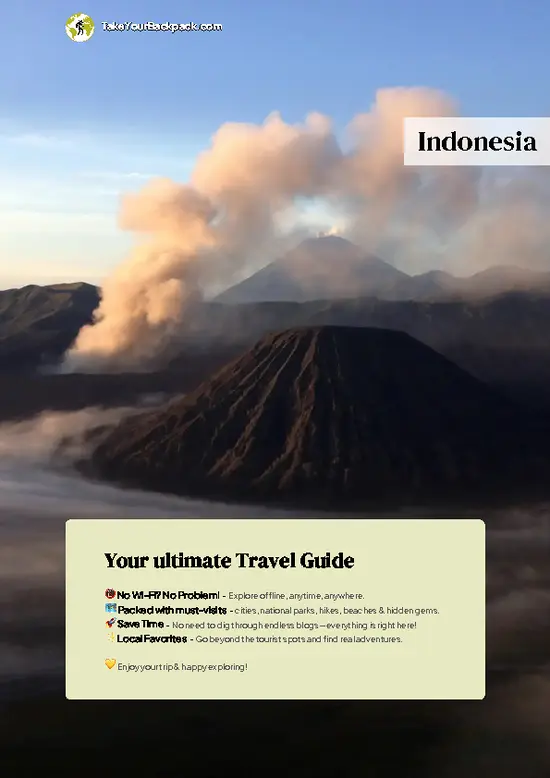
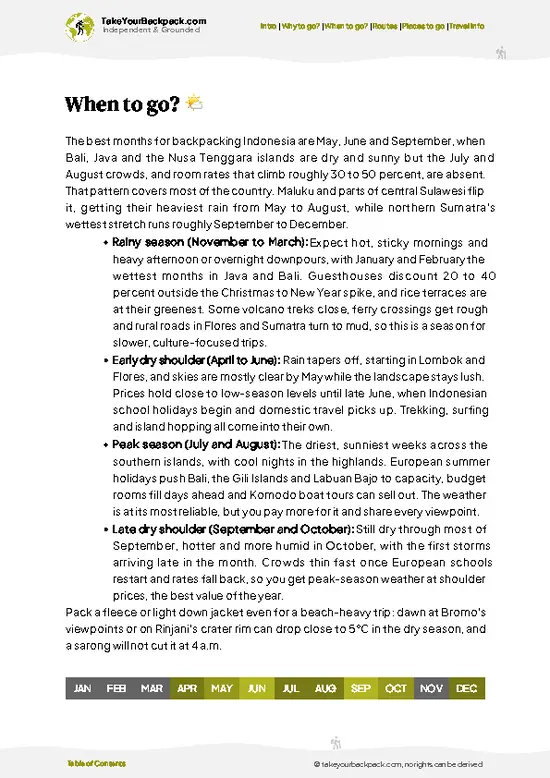
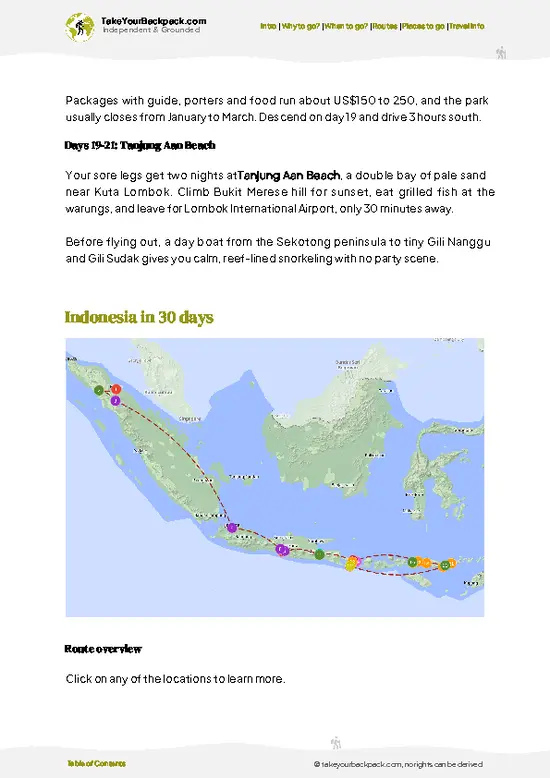
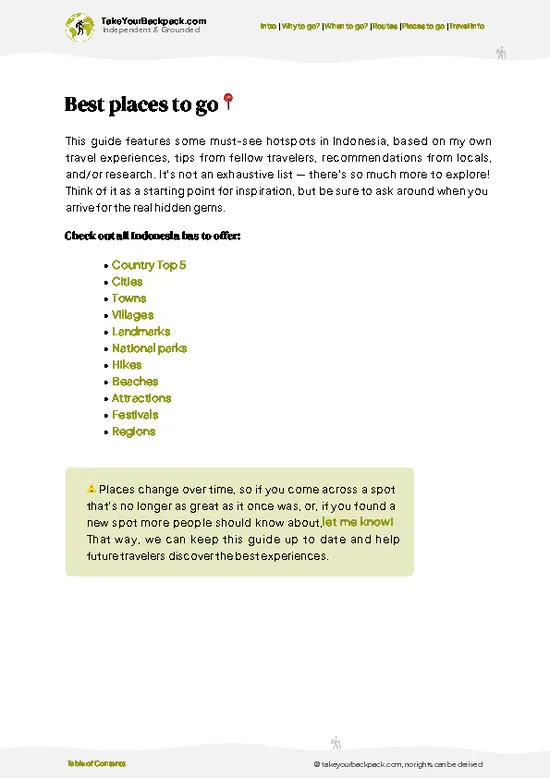
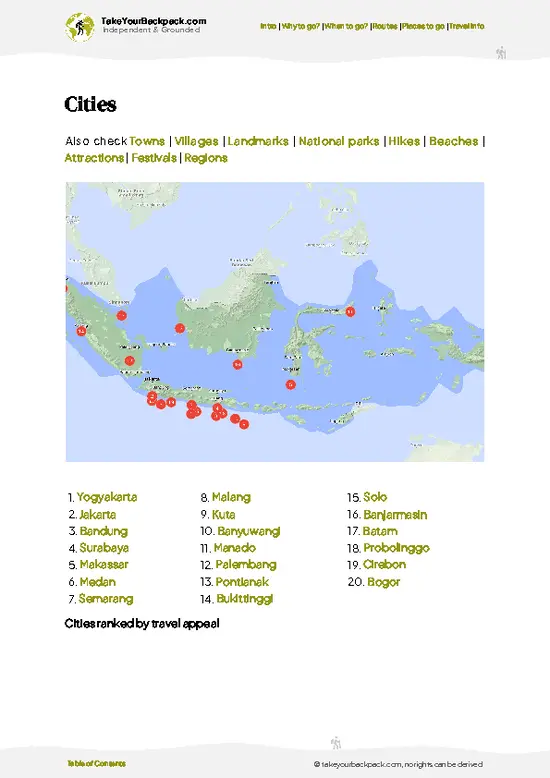
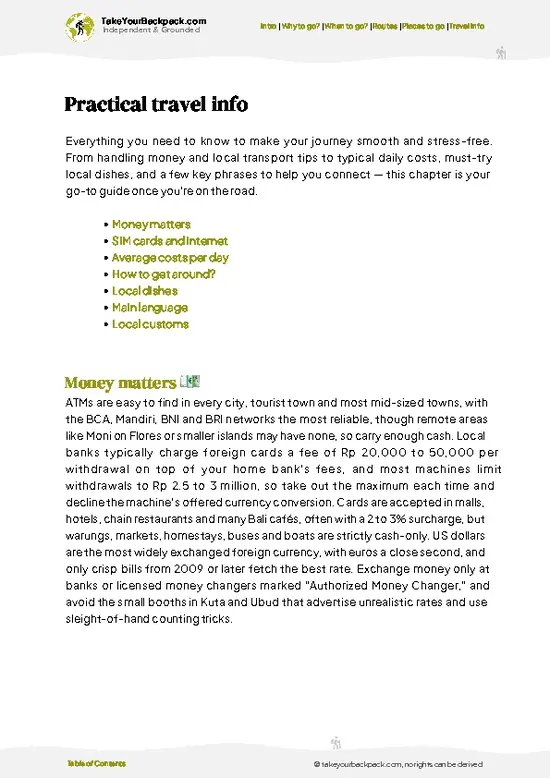
example page 0 from our offline Travel Guide for Indonesia
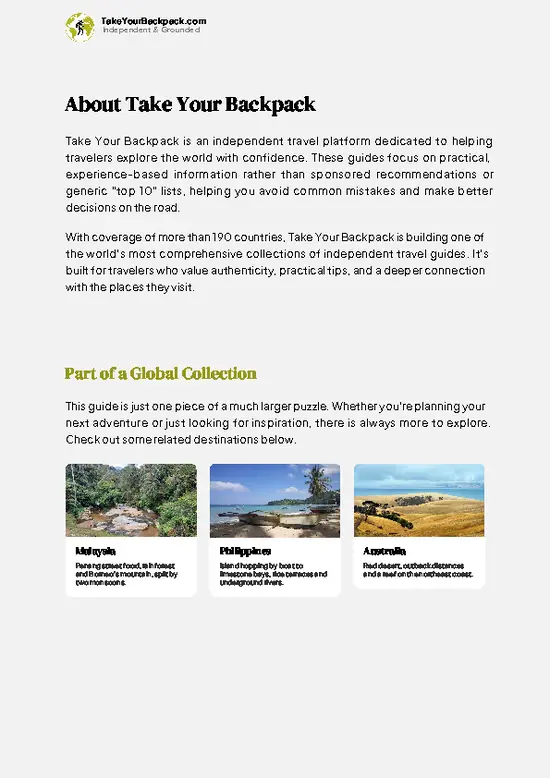
example page 1 from our offline Travel Guide for Indonesia
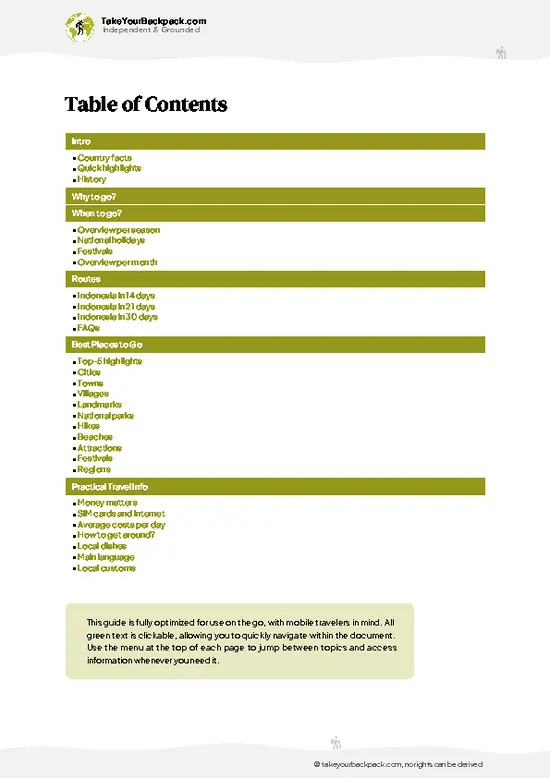
example page 2 from our offline Travel Guide for Indonesia
example page 3 from our offline Travel Guide for Indonesia
example page 4 from our offline Travel Guide for Indonesia
example page 5 from our offline Travel Guide for Indonesia
example page 6 from our offline Travel Guide for Indonesia
example page 7 from our offline Travel Guide for Indonesia
Loading the map 🌍
CLICK TO FILTER
cities
towns
villages
landmarks
national parks
hikes
beaches
attractions
festivals
regions
SHOW COUNTRY’S BESTSHOW ALL

✨ Why go?
Ranked #8 city in Indonesia
Reasons people choose to visit here

Semarang works best as a basecamp for Central Java exploration rather than a destination unto itself, though the city rewards a day or two of wandering. The colonial Old Town is walkable and atmospheric, with Dutch-era buildings and street food that costs pennies. Hostels cluster near the waterfront, offering cheap beds and social spaces where you'll meet other travelers heading to temples and volcanoes. The city sits at a natural junction: day trips reach the Dieng Plateau, Mount Merapi, and Borobudur within 2 to 4 hours. Food is exceptional and dirt-cheap, from seafood at the harbor to street-level noodle stalls. Getting around is straightforward by local bus or becak, and onward travel to Yogyakarta or Surabaya is simple by train or bus. Semarang isn't flashy, but it's efficient, affordable, … read more 👉
Semarang works best as a basecamp for Central Java exploration rather than a destination unto itself, though the city rewards a day or two of wandering. The colonial Old Town is walkable and atmospheric, with Dutch-era buildings and street food that costs pennies. Hostels cluster near the waterfront, offering cheap beds and social spaces where you'll meet other travelers heading to temples and volcanoes. The city sits at a natural junction: day trips reach the Dieng Plateau, Mount Merapi, and Borobudur within 2 to 4 hours. Food is exceptional and dirt-cheap, from seafood at the harbor to street-level noodle stalls. Getting around is straightforward by local bus or becak, and onward travel to Yogyakarta or Surabaya is simple by train or bus. Semarang isn't flashy, but it's efficient, affordable, and genuinely welcoming to backpackers willing to embrace a less polished version of Java.

💡 HighlightsEssential experiences to have while visiting Semarang

  1. Kota Lama (Old Town): The colonial heart of Semarang, with Dutch-era buildings, Chinese temples, and narrow streets lined with cafes and antique shops. Best visited early morning or late afternoon to avoid heat and crowds. Free to explore; budget US$2 to 5 for a meal or coffee. 2 to 3 hours.
  2. Lawang Sewu: A massive abandoned Dutch colonial building from 1904, now partially restored and open to visitors. The architecture is haunting and photogenic, with multiple levels to explore. Open daily, 8:00 AM to 4:00 PM. US$3 to 4 entry. 1 to 2 hours.
  3. Sam Poo Kong Temple: One of Southeast Asia's largest Chinese temples, built into a hillside with multiple levels, courtyards, and intricate carvings. Peaceful and less crowded than major temples elsewhere. Best visited midweek. Free entry, donations welcome.
… read more 👉
  1. Kota Lama (Old Town): The colonial heart of Semarang, with Dutch-era buildings, Chinese temples, and narrow streets lined with cafes and antique shops. Best visited early morning or late afternoon to avoid heat and crowds. Free to explore; budget US$2 to 5 for a meal or coffee. 2 to 3 hours.
  2. Lawang Sewu: A massive abandoned Dutch colonial building from 1904, now partially restored and open to visitors. The architecture is haunting and photogenic, with multiple levels to explore. Open daily, 8:00 AM to 4:00 PM. US$3 to 4 entry. 1 to 2 hours.
  3. Sam Poo Kong Temple: One of Southeast Asia's largest Chinese temples, built into a hillside with multiple levels, courtyards, and intricate carvings. Peaceful and less crowded than major temples elsewhere. Best visited midweek. Free entry, donations welcome. 1 to 2 hours.
  4. Tugu Muda (Youth Monument): An iconic symbol of Indonesian independence, set in a central plaza with surrounding gardens. Simple but historically significant, and a good people-watching spot. Free. 30 minutes.
  5. Pasar Besar (Central Market): A chaotic, sensory-rich traditional market selling textiles, spices, produce, and street food. Go early for the best energy and freshest goods. Free to browse; budget US$1 to 3 for snacks. 1 to 2 hours.
  6. Gereja Blenduk (Blenduk Church): A striking 19th-century Protestant church with a distinctive copper dome, located in the Old Town. Still active and open to visitors outside service times. Free entry. 30 minutes.
  7. Kampung Pelangi (Rainbow Village): A colorful residential neighborhood where houses are painted in bright hues, created as a community art project. Less touristy than similar projects elsewhere, and locals are welcoming. Free to walk around. 1 to 2 hours.
Close by, the Dieng Plateau (3 to 4 hours inland) offers volcanic lakes and temples, while Borobudur (2 to 3 hours toward Yogyakarta) is the region's heavyweight attraction. I'd pick Dieng first if you want something genuinely off the beaten path; Borobudur if you're heading to Yogyakarta anyway.
Spotted a mistake or missing something? Contact us.

Things to do in Semarang

Ratings based on Tripadvisor reviews. When you book through this link, you support our work at no extra cost to you.

🏘️ NeighborhoodsHow different areas shape the experience

  • Kota Lama (Old Town): Walk cobblestone streets lined with Dutch colonial architecture, faded pastel facades, and working warehouses that feel frozen in time. The waterfront draws photographers at dawn. Cafés and small warungs cluster here; foot traffic stays light except weekends. Highly walkable, compact, best explored on foot before midday heat peaks.
  • Simpang Lima: The commercial heart pulses with energy. Street vendors, malls, and casual eateries fill the central square and surrounding blocks. Nightlife concentrates here; bars and live music venues open after dark. Walkable for shopping and eating, though traffic noise is constant. Budget-friendly for meals and drinks.
  • Pandanaran: A quieter residential zone with local markets, small restaurants, and fewer tourists. Wander past family-run
… read more 👉
  • Kota Lama (Old Town): Walk cobblestone streets lined with Dutch colonial architecture, faded pastel facades, and working warehouses that feel frozen in time. The waterfront draws photographers at dawn. Cafés and small warungs cluster here; foot traffic stays light except weekends. Highly walkable, compact, best explored on foot before midday heat peaks.
  • Simpang Lima: The commercial heart pulses with energy. Street vendors, malls, and casual eateries fill the central square and surrounding blocks. Nightlife concentrates here; bars and live music venues open after dark. Walkable for shopping and eating, though traffic noise is constant. Budget-friendly for meals and drinks.
  • Pandanaran: A quieter residential zone with local markets, small restaurants, and fewer tourists. Wander past family-run shops and street food stalls where prices drop noticeably. Less walkable than central areas; grab a ride to reach it, but rewards the effort with authentic daily rhythms and cheaper eats.
  • Tugu Muda (Youth Monument area): Green space and parks anchor this zone. Museums, government buildings, and cultural sites spread across wider streets. Calmer than Simpang Lima, better for daytime exploration. Walking works for the immediate area; distances stretch beyond that.

⌛️ 1 day1-day itinerary for Semarang

Semarang's charm lies in its working waterfront and fading colonial core, best explored on foot through the Old Town and harbor. Start early to beat the heat and crowds.

7:00 AM: Tugu Muda Waterfront Begin at the iconic Youth Monument, a symbol of Indonesian independence. The waterfront is quietest at dawn, and you'll see locals exercising and fishermen preparing boats. Grab coffee and fried snacks from a nearby warung. Walk west along the harbor for 15 minutes.

8:00 AM: Kota Lama (Old Town) Enter the colonial district where Dutch-era buildings line narrow streets. Wander through Jalan Letnan Jenderal Suprapto and peek into shophouses, some still functioning as family businesses. The architecture is weathered and real, not restored for tourism. Spend 90 minutes exploring, then head south … read more 👉
Semarang's charm lies in its working waterfront and fading colonial core, best explored on foot through the Old Town and harbor. Start early to beat the heat and crowds.

7:00 AM: Tugu Muda Waterfront Begin at the iconic Youth Monument, a symbol of Indonesian independence. The waterfront is quietest at dawn, and you'll see locals exercising and fishermen preparing boats. Grab coffee and fried snacks from a nearby warung. Walk west along the harbor for 15 minutes.

8:00 AM: Kota Lama (Old Town) Enter the colonial district where Dutch-era buildings line narrow streets. Wander through Jalan Letnan Jenderal Suprapto and peek into shophouses, some still functioning as family businesses. The architecture is weathered and real, not restored for tourism. Spend 90 minutes exploring, then head south on foot (10 minutes).

9:45 AM: Gereja Blenduk This 18th-century Protestant church is one of Indonesia's oldest, with a distinctive octagonal dome. Entry is free; the interior is simple and cool. Step outside and grab lunch from street vendors nearby.

12:00 PM: Pasar Johar Dive into this sprawling traditional market away from the tourist trail. Navigate the chaos of spice stalls, textile vendors, and food counters. Buy snacks, observe daily life, then return to your hostel area by becak (20 to 30 minutes, US$1 to 2).

🌤️ When to go?Weather, crowds, and seasonal trade-offs

  • Dry Season (May to September): Best window for visiting. Temperatures hover between 24 to 32°C (75 to 90°F), rainfall minimal, and daylight extends to around 6 PM. Crowds peak in July and August; prices rise 10 to 20 percent. Ideal for exploring Old Town and day trips.
  • Wet Season (October to April): Heavy afternoon downpours are common; temperatures climb to 26 to 34°C (79 to 93°F) with high humidity. Travel slows, but prices drop noticeably. Fewer tourists mean quieter streets and better negotiating power at markets.
  • Shoulder Months (April, September): Unpredictable weather but fewer crowds and moderate prices. A practical compromise if flexibility allows.
Visit during May to September for the most reliable weather and easiest day-trip logistics.

source: climatestotravel.comJANJanuary: fair for travelingFEBFebruary: fair for travelingMARMarch: fair for travelingAPRApril: highly recommended for travelingMAYMay: excellent for travelingJUNJune: excellent for travelingJULJuly: highly recommended for travelingAUGAugust: highly recommended for travelingSEPSeptember: excellent for travelingOCTOctober: highly recommended for travelingNOVNovember: fair for travelingDECDecember: fair for traveling
when-to-go

✈️ The backpacker research shortcutIndonesia Travel Guide

An offline-friendly backpacking guide with optimized travel routes, ranked highlights, transport advice, and the best areas to stay.
example page 0 from our offline Travel Guide for Indonesia
example page 1 from our offline Travel Guide for Indonesia
example page 2 from our offline Travel Guide for Indonesia
example page 3 from our offline Travel Guide for Indonesia
example page 4 from our offline Travel Guide for Indonesia
example page 5 from our offline Travel Guide for Indonesia
example page 6 from our offline Travel Guide for Indonesia
example page 7 from our offline Travel Guide for Indonesia
The digital guide (460 pages) contains:
✅ 153 highlights, ranked by travel appeal
✅ Optimized 14, 21 & 30-day travel routes
✅ Cities, national parks, landmarks, beaches
✅ How to get around
✅ Offline-friendly for travel without Wi-Fi
👉 Click to see all 30+ guide features

📅 Plan smarter in minutes, not weeks
✅ Month by month travel advice
✅ Festivals & national holidays
✅ Budget expectations

🗺️ Go to the right places, skip the overrated ones
✅ Honest pros & cons of destinations
✅ Top hikes, parks & viewpoints
✅ Lesser-known places most travelers miss
✅ Clear “worth it vs skip it” guidance

🛏️ Travel smoothly without rookie mistakes
✅ Best areas to stay
✅ Transport systems explained simply
✅ Common scams & safety advice
✅ SIM cards, money & practical tips

🌍 Understand the country, not just visit it
✅ Culture & traditions
✅ 52 Essential phrases & customs
✅ Festivals worth planning around
✅ Traveler-friendly historical context
✅ Insights that make places more meaningful

📱 Built for real travel conditions
✅ Fully downloadable PDF
✅ Works completely offline
✅ Optimized for phone use
✅ Useful in remote areas & buses
✅ Everything in one place
Stop searching, start planning
Get instant access to your full guide. 30‑day money-back guarantee.
+ Add another guide for just

By proceeding you agree to our terms.
Sent to your inbox immediately after payment • 100% Secure Checkout
Best Backpacking Travel Advisor 2025 tourism awardBest Backpacking
Travel Advisor
2025
What others say about Take Your Backpack Guides:
⭐⭐⭐⭐⭐
Fantastic, amazing amount of information!
⭐⭐⭐⭐⭐
My goodness this is amazing, it's what I've been looking for hats off too you!
⭐⭐⭐⭐⭐
I think this is absolutely BRILLIANT
⭐⭐⭐⭐
Very complete and informative. It's still missing places, but I gotta to commend you
⭐⭐⭐⭐⭐
This is truly amazing, thank you, can't wait to explore it with my kids!
⭐⭐⭐⭐⭐
Awesome resource, thank you!
⭐⭐⭐⭐⭐
This is amazing! Can't wait to explore the ones I haven't seen
⭐⭐⭐⭐
I love this! Well done, great idea.
⭐⭐⭐⭐⭐
Thanks for taking the time to make this gem!
⭐⭐⭐⭐⭐
This might be the best website I've ever seen.
⭐⭐⭐⭐⭐
Congratulations, and thank you so much for your work; it's incredibly valuable.
⭐⭐⭐⭐
In all seriousness I think you did a great job pointing out the important spots
⭐⭐⭐⭐⭐
10/10 very good
⭐⭐⭐⭐⭐
As someone who's only just starting to visit regularly this is awesome, thank you.
⭐⭐⭐⭐
Thank you very much! I'm going to visit my dad, it's going to be very useful!
⭐⭐⭐⭐⭐
This is really cool! We'll be travelling for the first time and this definitely come in handy.
⭐⭐⭐⭐⭐
You are now our minister of culture, congratulations 👨‍💼
⭐⭐⭐⭐⭐
Just wanted to tell you that this is a pearl! Going to follow your recommendations.
⭐⭐⭐⭐⭐
This is so cool. I'll definitely be using the resource for my travels soon.
⭐⭐⭐⭐⭐
This is very impressive! Good work.
⭐⭐⭐⭐⭐
This is an amazing and informative site. Very well done!

🛏️ Where to stay?Best areas and accommodation options

Base yourself in Kota Lama or near Simpang Lima for the best balance of budget, safety, and access. Kota Lama offers cheaper dorm beds (US$8 to 15 per night) and a quieter, more atmospheric setting; hostels cluster near the waterfront and colonial streets. Simpang Lima has more hostel variety and sits closer to transport hubs, making day trips easier to organize, though prices run slightly higher (US$10 to 18 per night). Both areas are safe at night and well-lit; Simpang Lima has more foot traffic and nightlife, while Kota Lama feels more residential after dark. Walking between neighborhoods takes … read more 👉
Base yourself in Kota Lama or near Simpang Lima for the best balance of budget, safety, and access. Kota Lama offers cheaper dorm beds (US$8 to 15 per night) and a quieter, more atmospheric setting; hostels cluster near the waterfront and colonial streets. Simpang Lima has more hostel variety and sits closer to transport hubs, making day trips easier to organize, though prices run slightly higher (US$10 to 18 per night). Both areas are safe at night and well-lit; Simpang Lima has more foot traffic and nightlife, while Kota Lama feels more residential after dark. Walking between neighborhoods takes 15 to 20 minutes. Public transport and ojeks connect both areas to the train and bus stations within 10 to 15 minutes, so either works for onward travel. Choose Kota Lama for character and lower costs; pick Simpang Lima if you want more social energy and easier logistics.

🚌 Getting aroundTransportation options and practical tips

The city center around Simpang Lima and Kota Lama is walkable for exploring neighborhoods and markets, but distances stretch quickly beyond these zones. Traffic congestion peaks during rush hours (7 to 9 AM, 4 to 6 PM), and sidewalks can be uneven or crowded. Public transport is affordable and functional, though schedules are loose and routes require local knowledge to navigate efficiently.

  • Walking: Free and rewarding for the compact old town and central squares. Works best early morning or late afternoon to avoid heat and traffic fumes. Costs nothing; takes time but builds familiarity.
  • Becak (three-wheeled rickshaw): Iconic and cheap, US$1 to 3 for short trips within the city. Slow (15 to 25 minutes across town), but comfortable for short distances and great for people-watching. Negotiate
… read more 👉
The city center around Simpang Lima and Kota Lama is walkable for exploring neighborhoods and markets, but distances stretch quickly beyond these zones. Traffic congestion peaks during rush hours (7 to 9 AM, 4 to 6 PM), and sidewalks can be uneven or crowded. Public transport is affordable and functional, though schedules are loose and routes require local knowledge to navigate efficiently.

  • Walking: Free and rewarding for the compact old town and central squares. Works best early morning or late afternoon to avoid heat and traffic fumes. Costs nothing; takes time but builds familiarity.
  • Becak (three-wheeled rickshaw): Iconic and cheap, US$1 to 3 for short trips within the city. Slow (15 to 25 minutes across town), but comfortable for short distances and great for people-watching. Negotiate fare before boarding. Operates dawn to dusk.
  • Ojek (motorcycle taxi): Fast and nimble through traffic, US$1 to 4 depending on distance. Takes 10 to 20 minutes across town. Use Gojek or Grab apps for fixed pricing and safety; street hailing works but requires confidence. Available 24 hours.
  • Public Buses (Transjaya): Extensive network, US$0.30 to 0.50 per ride. Slow and crowded during peak hours, but cheap for longer routes. Routes are numbered but signage is minimal; ask locals or use Google Maps. Runs 5 AM to 10 PM.
  • Taxi or Grab Car: Reliable for longer distances or late night, US$3 to 8 across town. Takes 15 to 30 minutes depending on traffic. Grab offers upfront pricing; traditional taxis require negotiation. Best value for groups or when time matters.

👛 Costs (as of 15 October 2026)How expensive it really is

Budget backpackers spend US$20 to 35 per day in Semarang, covering basic accommodation, meals, and local transport. Prices are lower than Bali or Jakarta, and the city rewards slow travel.
CategoryBudget RangeLocal Reality
Dorm accommodation (high season)US$10 to 18Clean, basic rooms in Kota Lama or Simpang Lima; private rooms cost US$15 to 25
Dorm accommodation (off-season)US$8 to 12Same hostels offer discounts May to June and September to October
MealsUS$1 to 6Warung breakfast US$0.50 to 1.50; lunch and dinner US$1.50 to 4; casual restaurants US$4 to 8
Local transportUS$0.30 to 4Buses US$0.30 to 0.50; becak US$1 to 3; ojek US$1 to 4; Grab car US$3 to 8
City transport passN/ANo multi-day pass; pay per ride or use Grab app for convenience
Basic activities/entry feesUS$1 to 5Museum entries US$1 to
… read more 👉
Budget backpackers spend US$20 to 35 per day in Semarang, covering basic accommodation, meals, and local transport. Prices are lower than Bali or Jakarta, and the city rewards slow travel.
CategoryBudget RangeLocal Reality
Dorm accommodation (high season)US$10 to 18Clean, basic rooms in Kota Lama or Simpang Lima; private rooms cost US$15 to 25
Dorm accommodation (off-season)US$8 to 12Same hostels offer discounts May to June and September to October
MealsUS$1 to 6Warung breakfast US$0.50 to 1.50; lunch and dinner US$1.50 to 4; casual restaurants US$4 to 8
Local transportUS$0.30 to 4Buses US$0.30 to 0.50; becak US$1 to 3; ojek US$1 to 4; Grab car US$3 to 8
City transport passN/ANo multi-day pass; pay per ride or use Grab app for convenience
Basic activities/entry feesUS$1 to 5Museum entries US$1 to 3; temple visits free or US$1 to 2; day-trip tours US$25 to 40
Miscellaneous expensesUS$2 to 5Coffee, snacks, laundry, SIM card top-ups, souvenirs
Total Daily BudgetUS$20 to 35Comfortable backpacking with meals at warungs, dorm beds, and local transport; add US$10 to 15 for day trips
Eat at warungs and markets instead of tourist restaurants to stretch your budget by 50 percent. Buy a local SIM card (US$2 to 5) and use Grab for transport pricing certainty rather than negotiating becaks.
⚠️ Prices can change and everyone travels differently, so take this as a rough guide. Hope it helps you plan your adventure!

🚌 Day tripsBest day trips from Semarang

Dieng Plateau
A high-altitude volcanic landscape about 90 minutes south of Semarang, Dieng rewards the early start with sulfur lakes, Hindu temples dating to the 8th century, and views that stretch across the highlands. The air cools noticeably as you climb, and the scent of sulfur becomes stronger near the crater lakes. Budget travelers spend US$25 to 35 for transport, entry fees, and a simple meal. Go between May and September when roads are passable and visibility is clear; October through April brings heavy rain that can wash out access routes. First-timers often skip the walk to Candi Arjuna temple thinking it's too far, but the 20-minute hike is worth the effort.


Borobudur Temple
Indonesia's largest Buddhist monument sits about 40 kilometers west, a 90-minute drive through rice paddies … read more 👉
Dieng Plateau
A high-altitude volcanic landscape about 90 minutes south of Semarang, Dieng rewards the early start with sulfur lakes, Hindu temples dating to the 8th century, and views that stretch across the highlands. The air cools noticeably as you climb, and the scent of sulfur becomes stronger near the crater lakes. Budget travelers spend US$25 to 35 for transport, entry fees, and a simple meal. Go between May and September when roads are passable and visibility is clear; October through April brings heavy rain that can wash out access routes. First-timers often skip the walk to Candi Arjuna temple thinking it's too far, but the 20-minute hike is worth the effort.


Borobudur Temple
Indonesia's largest Buddhist monument sits about 40 kilometers west, a 90-minute drive through rice paddies and villages. The temple's 504 Buddha statues and intricate stone carvings reveal themselves as you spiral upward through nine levels, each representing a stage of enlightenment. Sunrise visits (4:30 AM departure) cost US$30 to 40 total and avoid the midday heat and crowds. The dry season from June to August offers the clearest views. Arrive the night before if you want to catch dawn without rushing; many backpackers base themselves in nearby Magelang instead.


Tanjung Mas Harbor & Fishing Village
Just 15 minutes north of central Semarang, this working harbor shows the city's maritime roots without the tourist polish. Wooden fishing boats crowd the water at dawn, and the fish market operates early morning through midday. Spend US$5 to 10 on transport and food; watch fishermen repair nets and buy fresh grilled fish from waterside stalls. The smell of salt, diesel, and fresh catch fills the air. Go early before the heat peaks, and wear shoes with grip on the wet docks. This works year-round, though the dry season (May to September) means calmer seas and fewer cancellations.

🍲 FoodLocal Flavors for Backpackers

Semarang's food scene centers on Javanese flavors and seafood. Lumpia (fried spring rolls) and soto ayam (turmeric chicken soup) appear everywhere, cheap and satisfying. Garang asem, a sour soup with fish and turmeric, is a local signature worth seeking out in warungs. Fresh seafood dominates the waterfront; grilled fish and squid cost US$3 to 6 at casual stalls in Kota Lama.

Street food thrives in markets and along Simpang Lima after dark. Satay, bakso (meatball soup), and perkedel (fried potato cakes) fill carts and small stands. Prices run US$0.50 to 2 per item. Coffee culture is strong; local kopi (often served thick and sweet) costs US$0.30 to 1 at warung kopi. Tea and fresh juice are equally cheap and refreshing.

Eating customs are relaxed. Warungs operate on a help-yourself or point-and-order … read more 👉
Semarang's food scene centers on Javanese flavors and seafood. Lumpia (fried spring rolls) and soto ayam (turmeric chicken soup) appear everywhere, cheap and satisfying. Garang asem, a sour soup with fish and turmeric, is a local signature worth seeking out in warungs. Fresh seafood dominates the waterfront; grilled fish and squid cost US$3 to 6 at casual stalls in Kota Lama.

Street food thrives in markets and along Simpang Lima after dark. Satay, bakso (meatball soup), and perkedel (fried potato cakes) fill carts and small stands. Prices run US$0.50 to 2 per item. Coffee culture is strong; local kopi (often served thick and sweet) costs US$0.30 to 1 at warung kopi. Tea and fresh juice are equally cheap and refreshing.

Eating customs are relaxed. Warungs operate on a help-yourself or point-and-order basis. Spice levels are high; ask for "tidak pedas" (not spicy) if you need it milder. Meals are communal and social; sitting at shared tables is normal. Most backpackers eat at warung stalls for breakfast and lunch (US$1 to 3), then explore casual restaurants for dinner (US$3 to 8).

🛡️ SafetyTraveler Safety Guide

Semarang is broadly safe for backpackers, with petty theft the main concern rather than violent crime. Keep valuables out of sight on crowded buses and in busy markets, and avoid displaying expensive cameras or jewelry. Solo travelers, including women, move around comfortably during daylight and early evening; after midnight, stick to main streets and use ride-hailing apps rather than hailing taxis on the street. Scams are rare but do occur: unofficial tour guides may overcharge or take you to commission-paying shops instead of genuine attractions, so book through your hostel or use established operators. Moneychangers in tourist areas sometimes short-change travelers, so count your cash before leaving the counter. Drink tap water only if boiled; bottled water is cheap and widely available. … read more 👉
Semarang is broadly safe for backpackers, with petty theft the main concern rather than violent crime. Keep valuables out of sight on crowded buses and in busy markets, and avoid displaying expensive cameras or jewelry. Solo travelers, including women, move around comfortably during daylight and early evening; after midnight, stick to main streets and use ride-hailing apps rather than hailing taxis on the street. Scams are rare but do occur: unofficial tour guides may overcharge or take you to commission-paying shops instead of genuine attractions, so book through your hostel or use established operators. Moneychangers in tourist areas sometimes short-change travelers, so count your cash before leaving the counter. Drink tap water only if boiled; bottled water is cheap and widely available. The city's traffic is chaotic but predictable; cross streets deliberately and make eye contact with drivers.

FAQTraveler FAQ

Two to three days is ideal. This gives you time to explore the Old Town thoroughly, eat at multiple warungs, visit Lawang Sewu and Sam Poo Kong Temple, and experience the city's rhythm without rushing. Most backpackers spend one night and regret it.
Yes, Semarang is safe for solo backpackers. Petty theft exists in crowded markets and on public transport, so keep valuables secure. The Old Town is walkable and well-lit at night. Local police are visible, and hostels can advise on neighborhoods to avoid. Use standard city sense and you'll be fine.
Semarang is known for its colonial Old Town, Chinese temples, and exceptional street food, particularly lumpia (spring rolls) and seafood. It's also recognized as a major port city and a strategic stop on Java's north coast between Jakarta and Surabaya. For backpackers, it's the authentic alternative to Bali and Yogyakarta.
⚠️ Things can change over time, so always validate details locally before you go.

Other Indonesian cities near Semarang

Explore more nearby:

  • Solo—kraton palace, gamelan halls, batik markets| 80 km away
  • Yogyakarta—royal palace, batik workshops, street art| 91 km away
  • Cirebon—Sultan palaces, batik megamendung, coastal Java, empal gentong| 207 km away

💡 Not sure where to go next?
Create a personalized itinerary for Indonesia including Semarang and the places that fit your trip.

Generate my itinerary

👉 Discover all cities

Or checkout all Indonesia has to offer (think cities, towns, villages, national parks, hikes, beaches, festivals)
Country photo of Indonesia

We 💚 feedbackParting advice and final tips

Semarang delivers authentic Java without the tourist machinery, and the food alone justifies a stopover. The catch is that infrastructure and English are both limited, so you'll need patience and a willingness to figure things out. Worth it if you're seeking real experience over comfort.

✈️ When did I visit Indonesia?
As part of my 1.5 year travel around the world trip, I visited Indonesia twice (and it was worth it): first in September 2015 and a bit later again in January and February 2016.

✍️ Help improve this page!
The information on this page is based on my own backpacking experience in Indonesia, supplemented with up-to-date research and feedback from other travelers. Travel details can change, so if you notice anything outdated or incomplete, feel free to let me know.


🙋‍♂️ Give feedback

👋 Meet the founderWho’s Behind Take Your Backpack?

Johan, backpacker and founder of TakeYourBackpackHi, I’m Johan (Netherlands 🇳🇱), the creator of TakeYourBackpack. Over the past 3 decades, I’ve backpacked through 90+ countries across six continents, gaining extensive experience with independent travel, long-term trips, and overland routes.

This site is built on a combination of firsthand travel experience and carefully curated insights from other backpackers. Many guides are based on places I’ve personally visited, while others bring together tips, observations, and practical advice shared by trusted travelers I’ve met along the way.

The goal is to provide realistic, experience-driven guidance — not generic itineraries — so you can explore destinations with better context, clearer expectations, and more confidence.