


×

Japan🇯🇵 | townsOuchi-jukuthatched roofs, Edo-era street, soba stalls | things to do and best time to go

Explore Kinosaki OnsenExplore Takayama

Backpacking in Ouchi-juku
👌 Worth visitingtown ranked #6
By Johan Kruseman 🇳🇱 | Updated September 4, 2026

Most people arrive in Ouchi-juku expecting a preserved “Edo theme park.” It’s not that slick. It’s a living hamlet with thatched roofs, wood smoke in the air, and tour buses that vanish by late afternoon, leaving the street oddly quiet. You’ll find it in Fukushima Prefecture, in the Aizu region of northern Honshu, tucked in the hills between Aizu-Wakamatsu and the mountains toward Nikko. For backpackers, it’s a scenic detour, not a base: gorgeous in snow or fresh green, but small, pricey for what it is, and basically done in a few hours. People stop for the old post-town feel, the buckwheat noodles eaten with green onions as chopsticks, and the short walks up to viewpoints over the thatched roofs and surrounding forest. Evenings are early, dim, and hushed; you’re more likely to share a quiet ryokan dinner than a hostel bar story. Compared with Aizu-Wakamatsu, it’s more photogenic but less lived-in; compared with tiny onsen villages deeper in the mountains, it’s more touristic but easier to slot into a northbound or Nikko–Tohoku route.

Discover everything you want to know in the 📖 Japan Travel Guide.


Get your Japan guide
140 ranked highlights, routes & tips, works offline (482 pages)
Loading the map 🌍
CLICK TO FILTER
cities
towns
villages
landmarks
national parks
hikes
beaches
attractions
festivals
regions
SHOW COUNTRY’S BESTSHOW ALL

✨ Why go?
Ranked #6 town in Japan
Why Ouchi-juku should be on your travel list

Ouchi-juku is a breath of fresh air for backpackers seeking a slower pace. This former post town, with its thatched-roof houses, feels like stepping into a living history book. The atmosphere is tranquil, perfect for those who want to escape the hustle of Japan’s bigger cities. You’ll find the scent of wood smoke mingling with the crisp mountain air, inviting you to linger over a bowl of local soba noodles.

The village is a gateway to nature, with hiking trails that lead into the surrounding mountains. If you’re a hiker, this is your launchpad for stunning views without the crowds. It’s also a great pause between busier destinations like Nikko and Aizu-Wakamatsu, allowing you to recharge.

Most travelers stay for a night or two, soaking in the local character and chatting with friendly residents. … read more 👉
Ouchi-juku is a breath of fresh air for backpackers seeking a slower pace. This former post town, with its thatched-roof houses, feels like stepping into a living history book. The atmosphere is tranquil, perfect for those who want to escape the hustle of Japan’s bigger cities. You’ll find the scent of wood smoke mingling with the crisp mountain air, inviting you to linger over a bowl of local soba noodles.

The village is a gateway to nature, with hiking trails that lead into the surrounding mountains. If you’re a hiker, this is your launchpad for stunning views without the crowds. It’s also a great pause between busier destinations like Nikko and Aizu-Wakamatsu, allowing you to recharge.

Most travelers stay for a night or two, soaking in the local character and chatting with friendly residents. It’s a haven for slow travelers, couples, and solo adventurers looking for calm. If you crave connection and a taste of rural Japan, Ouchi-juku is worth the stop. Just be ready to slow down and savor the moment.
Want to include Ouchi-juku in your Japan route?
Create a personalized Japan itinerary that includes Ouchi-juku and the places that fit your trip — based on your travel style, budget, and available time. Get your route in seconds.

Generate my trip

💡 HighlightsWhat this place is best known for

  • The Thatched-Roof Main Street — The whole point of Ouchi-juku: a single, perfectly preserved Edo-period post-town street lined with kayabuki (thatched) houses. Perfect for wandering, photographing, and feeling how travel felt 200+ years ago.
  • Former Honjin (Main Inn) — The principal samurai inn for high-ranking travelers; interiors and exhibits show how lodging and official hospitality worked on the old Aizu-Nishi Kaidō.
  • Former Waki-Honjin (Secondary Inn) — The companion inn to the Honjin, smaller but equally informative — good for comparing everyday layouts for lower-rank guests and merchants.
  • Negi-Soba Restaurants — Eating local soba using a long green onion as chopsticks is a quirky, hands-on cultural experience you really can’t get in many other places. It’s local food history and
read more 👉
  • The Thatched-Roof Main Street — The whole point of Ouchi-juku: a single, perfectly preserved Edo-period post-town street lined with kayabuki (thatched) houses. Perfect for wandering, photographing, and feeling how travel felt 200+ years ago.
  • Former Honjin (Main Inn) — The principal samurai inn for high-ranking travelers; interiors and exhibits show how lodging and official hospitality worked on the old Aizu-Nishi Kaidō.
  • Former Waki-Honjin (Secondary Inn) — The companion inn to the Honjin, smaller but equally informative — good for comparing everyday layouts for lower-rank guests and merchants.
  • Negi-Soba Restaurants — Eating local soba using a long green onion as chopsticks is a quirky, hands-on cultural experience you really can’t get in many other places. It’s local food history and a fun challenge at once.
  • Thatched Houses Turned Shops & Workshops — Many original buildings now hold craft studios, lacquerware and pottery sellers, and tiny museums; the architecture plus live craft demonstrations make these more than just souvenir stops.
  • Village Viewpoint (Lookout) — A short climb above the village gives the classic panorama of the roofs and mountains. Essential for sunrise/sunset photos and to see the town’s layout from the only angle that explains why the post town was placed here.
  • House-Museums and Kura (Storehouses) — Several houses keep period interiors and agricultural tools on display (often in converted kura). They’re small, quiet, and tell the everyday side of Edo-era life rather than the big events.
  • Small Shrines, Stone Markers and Jizō Statues — Sprinkled along the street are local religious markers and milestone stones that mark travel routes and local beliefs — great for slowing down and reading local history carved in stone.
  • Ouchi-juku Visitor Center / Local History Exhibits — Compact but useful: maps, short exhibits about the post-town’s role, and friendly staff to explain walking routes and seasonal events so you don’t miss hidden corners.
  • Seasonal Events & Winter Illumination — When scheduled, the torchlight/illumination nights and village festivals transform the thatched roofs into an atmospheric scene you can’t get during the daytime — plan for the dates if you want that vibe.
A few great day-trips nearby: Tsuruga Castle in Aizuwakamatsu, the Tadami Line scenic viewpoints over the Tadami River, and Higashiyama Onsen — my personal favorite for scenery and photography is the Tadami Line river-bridge viewpoint.
Spotted a mistake or missing something? Contact us.

Things to do near Ouchi-juku

Ratings based on Tripadvisor reviews. When you book through this link, you support our work at no extra cost to you.

🏘️ NeighborhoodsKey areas and districts to know

Ouchi-juku is a compact, historic post town where every step feels like stepping back into Edo-era Japan. Its charm is in the details—the wooden facades, the scent of charcoal fires, the quiet rhythm of foot traffic. Here’s how to navigate its key areas without missing the soul or wasting time.

Main Street (Nakasendo Road)
This is the heart of Ouchi-juku, where the old thatched-roof buildings line the narrow, stone-paved street. It’s the busiest spot, especially midday, with souvenir shops, soba noodle stalls, and traditional inns. Walkability is perfect—no cars allowed, so you can soak in the atmosphere without distractions. It’s lively but never overwhelming, making it ideal for a day visit or a short overnight stay. Nightlife is minimal; expect quiet evenings with lantern-lit streets. … read more 👉
Ouchi-juku is a compact, historic post town where every step feels like stepping back into Edo-era Japan. Its charm is in the details—the wooden facades, the scent of charcoal fires, the quiet rhythm of foot traffic. Here’s how to navigate its key areas without missing the soul or wasting time.

Main Street (Nakasendo Road)
This is the heart of Ouchi-juku, where the old thatched-roof buildings line the narrow, stone-paved street. It’s the busiest spot, especially midday, with souvenir shops, soba noodle stalls, and traditional inns. Walkability is perfect—no cars allowed, so you can soak in the atmosphere without distractions. It’s lively but never overwhelming, making it ideal for a day visit or a short overnight stay. Nightlife is minimal; expect quiet evenings with lantern-lit streets.

West End Residential Area
A few minutes’ walk from the main street, this neighborhood offers a quieter, more authentic vibe. Wooden houses here are lived-in, and you’ll catch locals going about their day. It’s the place to slow down, breathe in the cedar wood scent, and appreciate the town’s living history. No shops or nightlife here, so it’s best for longer stays if you want peace and a break from tourist buzz.

East Entrance Zone
This area serves as the gateway to Ouchi-juku, with parking lots and bus stops. It’s practical for arrivals and departures but less charming for lingering. If you’re carrying heavy gear or arriving late, this is your logistical base. It’s noisy compared to the rest, so plan to move on quickly unless you’re just passing through.

Understanding these zones helps you tailor your visit—whether you want to dive into the town’s pulse on Main Street or retreat to the calm of the West End. Either way, Ouchi-juku rewards patience and curiosity.

⌛️ 1 dayA smart one-day plan

Ouchi-juku is a rare breath of Edo-period Japan, where time slows and wooden buildings with thatched roofs line a single main street, dusted with the scent of pine and wood smoke. It’s not just a photo op; it’s a place where you can feel the weight of history underfoot and hear the creak of old shutters as locals go about their day. The town’s charm is in its simplicity and the way it invites you to step back into a quieter, slower rhythm.

Start your morning by arriving early, before the crowds swell. The soft light filtering through the mist makes the wooden facades glow warmly. Walk the main street, known as the Nakasendo route, and pop into the shops selling hand-crafted soba noodles and local pickles. Don’t rush—listen for the clatter of geta sandals on the stone pavement and breathe … read more 👉
Ouchi-juku is a rare breath of Edo-period Japan, where time slows and wooden buildings with thatched roofs line a single main street, dusted with the scent of pine and wood smoke. It’s not just a photo op; it’s a place where you can feel the weight of history underfoot and hear the creak of old shutters as locals go about their day. The town’s charm is in its simplicity and the way it invites you to step back into a quieter, slower rhythm.

Start your morning by arriving early, before the crowds swell. The soft light filtering through the mist makes the wooden facades glow warmly. Walk the main street, known as the Nakasendo route, and pop into the shops selling hand-crafted soba noodles and local pickles. Don’t rush—listen for the clatter of geta sandals on the stone pavement and breathe in the faint aroma of charcoal fires from the inns. For a break from the usual, slip into the less-visited side alleys behind the main street. Here, you’ll find a small, almost secretive sake brewery where the owner is often happy to share a taste and stories about the brewing process. It’s a quiet moment that feels like a handshake with the town’s soul.

By afternoon, head to the Ouchi-juku Folk Museum. It’s small but packed with artifacts that bring the Edo period to life—old farming tools, traditional clothing, and faded maps. From there, wander toward the nearby Shiozawa River. The gentle rush of water and the green canopy above offer a cool contrast to the sunlit street. If you’re up for it, rent a bike and explore the outskirts where rice paddies stretch out, framed by distant mountains. It’s a reminder that this town was once a vital rest stop for weary travelers crossing the mountains.

As evening falls, settle into one of the ryokans with open-air baths. The steam rising into the crisp air, the quiet murmur of the town settling down—it’s the perfect way to end the day. Dinner is often a multi-course affair featuring local mountain vegetables and river fish, simple but deeply satisfying. The day in Ouchi-juku isn’t about rushing to the next highlight; it’s about savoring the texture of a place that still carries the echoes of footsteps from centuries ago.
Turn your Ouchi-juku visit into an Japan adventure
Build a complete Japan route with Ouchi-juku, hidden gems, must-see destinations, and realistic travel times included.

Generate my trip

🌤️ When to go?Choosing the right time of year


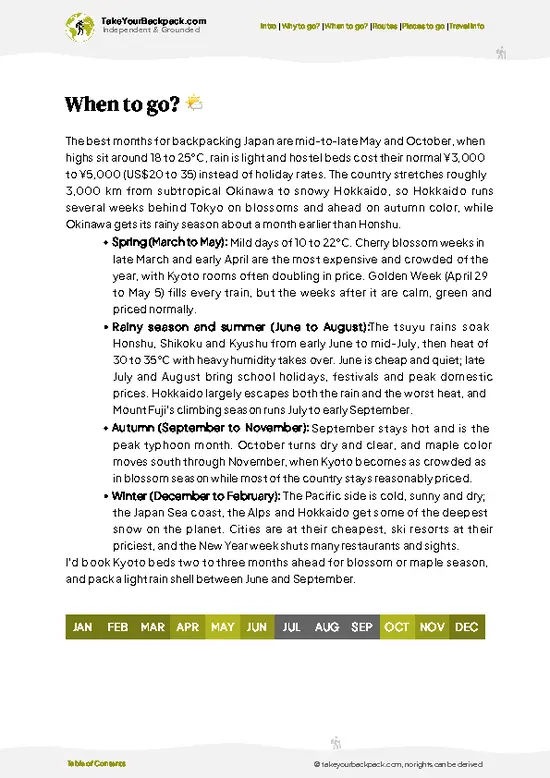
  • Weather: Spring and autumn bring crisp, clear air that sharpens the wooden textures of Ouchi-juku’s thatched roofs. Summers can be humid, pushing temperatures to 25-30°C (77-86°F), making midday strolls sticky and slow. Winters drop below freezing, often under 0°C (32°F), blanketing the village in snow—a scene straight from a postcard but requiring serious cold-weather gear.

  • Temperature: Spring (10-20°C / 50-68°F) and autumn (8-18°C / 46-64°F) offer the most comfortable hiking and wandering conditions. Winter’s chill is biting but rewards with serene, snow-dusted streets. Summer’s warmth can feel heavy, especially if you’re carrying a pack.

  • Daylight Hours: Longer days in late spring and summer (up to 14-15 hours) give you more time to explore without rushing. Winter days shrink to about
read more 👉

  • Weather: Spring and autumn bring crisp, clear air that sharpens the wooden textures of Ouchi-juku’s thatched roofs. Summers can be humid, pushing temperatures to 25-30°C (77-86°F), making midday strolls sticky and slow. Winters drop below freezing, often under 0°C (32°F), blanketing the village in snow—a scene straight from a postcard but requiring serious cold-weather gear.

  • Temperature: Spring (10-20°C / 50-68°F) and autumn (8-18°C / 46-64°F) offer the most comfortable hiking and wandering conditions. Winter’s chill is biting but rewards with serene, snow-dusted streets. Summer’s warmth can feel heavy, especially if you’re carrying a pack.

  • Daylight Hours: Longer days in late spring and summer (up to 14-15 hours) give you more time to explore without rushing. Winter days shrink to about 9-10 hours, so plan your hikes early to avoid losing light in the mountain shadows.

  • Crowds: Peak tourist seasons hit in autumn for leaf-peeping and winter for snow festivals. Spring’s cherry blossoms draw visitors but less intensely. Summer sees fewer tourists, but the humidity and occasional rain can be a drag.

  • Seasonal Activities: Autumn’s fiery foliage transforms the village into a living painting, while winter’s snow festivals add a quiet magic. Spring offers fresh greenery and occasional cherry blossoms, perfect for photographers. Summer’s festivals are lively but can feel less connected to the village’s historic vibe.

  • Price Fluctuations: Expect higher accommodation rates during autumn and winter festivals. Spring and summer offer better deals, especially midweek, making these seasons ideal for budget-conscious backpackers.


Pro-tip: Visit in late autumn just before the peak leaf season—fewer crowds, crisp air, and the village’s colors start to pop without the festival price surge.


source: climatestotravel.comJANJanuary: highly recommended for travelingFEBFebruary: highly recommended for travelingMARMarch: highly recommended for travelingAPRApril: excellent for travelingMAYMay: highly recommended for travelingJUNJune: good for travelingJULJuly: fair for travelingAUGAugust: fair for travelingSEPSeptember: good for travelingOCTOctober: excellent for travelingNOVNovember: excellent for travelingDECDecember: highly recommended for traveling
when-to-go

✈️ The backpacker research shortcutJapan Travel Guide

An offline-friendly backpacking guide with optimized travel routes, ranked highlights, transport advice, and the best areas to stay.
example page 0 from our offline Travel Guide for Japan
example page 1 from our offline Travel Guide for Japan
example page 2 from our offline Travel Guide for Japan
example page 3 from our offline Travel Guide for Japan
example page 4 from our offline Travel Guide for Japan
example page 5 from our offline Travel Guide for Japan
example page 6 from our offline Travel Guide for Japan
example page 7 from our offline Travel Guide for Japan
The digital guide (482 pages) contains:
140 highlights, ranked by travel appeal
Optimized 7, 14 & 21-day travel routes
Cities, national parks, landmarks, beaches
How to get around
Offline-friendly for travel without Wi-Fi
👉 Click to see all 30+ guide features

📅 Plan smarter in minutes, not weeks
Month by month travel advice
Festivals & national holidays
Budget expectations

🗺️ Go to the right places, skip the overrated ones
Honest pros & cons of destinations
Top hikes, parks & viewpoints
Lesser-known places most travelers miss
Clear “worth it vs skip it” guidance

🛏️ Travel smoothly without rookie mistakes
Best areas to stay
Transport systems explained simply
Common scams & safety advice
SIM cards, money & practical tips

🌍 Understand the country, not just visit it
Culture & traditions
52 Essential phrases & customs
Festivals worth planning around
Traveler-friendly historical context
Insights that make places more meaningful

📱 Built for real travel conditions
Fully downloadable PDF
Works completely offline
Optimized for phone use
Useful in remote areas & buses
Everything in one place
Save weeks of stressful planning
Get instant access to your full guide. 30‑day money-back guarantee.
+ Add another guide for just US$7.80

By proceeding you agree to our terms.
Sent to your inbox immediately after payment • 100% Secure Checkout
Best Backpacking Travel Advisor 2025 tourism awardBest Backpacking
Travel Advisor
2025
What others say about Take Your Backpack Guides:
⭐⭐⭐⭐⭐
Fantastic, amazing amount of information!
⭐⭐⭐⭐⭐
My goodness this is amazing, it's what I've been looking for hats off too you!
⭐⭐⭐⭐⭐
I think this is absolutely BRILLIANT
⭐⭐⭐⭐
Very complete and informative. It's still missing places, but I gotta to commend you
⭐⭐⭐⭐⭐
This is truly amazing, thank you, can't wait to explore it with my kids!
⭐⭐⭐⭐⭐
Awesome resource, thank you!
⭐⭐⭐⭐⭐
This is amazing! Can't wait to explore the ones I haven't seen
⭐⭐⭐⭐
I love this! Well done, great idea.
⭐⭐⭐⭐⭐
Thanks for taking the time to make this gem!
⭐⭐⭐⭐⭐
This might be the best website I've ever seen.
⭐⭐⭐⭐⭐
Congratulations, and thank you so much for your work; it's incredibly valuable.
⭐⭐⭐⭐
In all seriousness I think you did a great job pointing out the important spots
⭐⭐⭐⭐⭐
10/10 very good
⭐⭐⭐⭐⭐
As someone who's only just starting to visit regularly this is awesome, thank you.
⭐⭐⭐⭐
Thank you very much! I'm going to visit my dad, it's going to be very useful!
⭐⭐⭐⭐⭐
This is really cool! We'll be travelling for the first time and this definitely come in handy.
⭐⭐⭐⭐⭐
You are now our minister of culture, congratulations 👨‍💼
⭐⭐⭐⭐⭐
Just wanted to tell you that this is a pearl! Going to follow your recommendations.
⭐⭐⭐⭐⭐
This is so cool. I'll definitely be using the resource for my travels soon.
⭐⭐⭐⭐⭐
This is very impressive! Good work.
⭐⭐⭐⭐⭐
This is an amazing and informative site. Very well done!

🛏️ Where to stay?Best areas to stay in Japan

In ’Ouchi-juku’, the best places to stay aren’t flashy hotels—they’re the traditional thatched-roof inns called minshuku or ryokan. These lodgings are your ticket to stepping back into Edo-period Japan, where the scent of wood smoke and tatami mats fills the air. Why settle for a generic room when you can sleep on a futon laid out on straw mats, waking up to the soft creak of old timber and the faint aroma of simmering miso from the kitchen downstairs?

The village is small, so proximity matters. Staying near the main street means you’ll catch the golden light filtering through the wooden lattice … read more 👉
In ’Ouchi-juku’, the best places to stay aren’t flashy hotels—they’re the traditional thatched-roof inns called minshuku or ryokan. These lodgings are your ticket to stepping back into Edo-period Japan, where the scent of wood smoke and tatami mats fills the air. Why settle for a generic room when you can sleep on a futon laid out on straw mats, waking up to the soft creak of old timber and the faint aroma of simmering miso from the kitchen downstairs?

The village is small, so proximity matters. Staying near the main street means you’ll catch the golden light filtering through the wooden lattice windows at dawn, and you’ll be steps away from local soba shops and sake bars. But here’s the pro tip: book a place that offers a communal bath. After a day of wandering the uneven cobblestones and absorbing the quiet hum of rural life, soaking in hot water with locals is more than comfort—it’s a ritual that connects you to the rhythm of the village.

Avoid modern guesthouses that strip away character for convenience. The charm of ’Ouchi-juku’ is in its preserved atmosphere, and your lodging should echo that. The creaking floors, the paper sliding doors, the crackle of a charcoal brazier—these aren’t inconveniences; they’re the soundtrack of authenticity. Embrace them, and your stay becomes part of the story, not just a place to crash.

🚌 Getting aroundHow to get from A to B

Ouchi-juku moves at the pace of a whispered story told over a crackling fire—unhurried, deliberate, and steeped in the scent of aged wood and simmering miso. This post town doesn’t rush you; it invites you to slow down, to feel the grain of the wooden shutters under your fingertips and hear the soft clatter of geta on stone. The flow here is less about rigid timetables and more about syncing with the rhythm of the place—early morning mist lifting off the river, locals opening their shops, and the occasional chime of a bicycle bell. You won’t find a subway or a taxi fleet waiting at every corner, but that’s the point. The charm is in the measured steps, the pauses between moments, and the way the town’s layout nudges you to explore on foot or by simple, reliable transit.


  • Walking: The heart
read more 👉
Ouchi-juku moves at the pace of a whispered story told over a crackling fire—unhurried, deliberate, and steeped in the scent of aged wood and simmering miso. This post town doesn’t rush you; it invites you to slow down, to feel the grain of the wooden shutters under your fingertips and hear the soft clatter of geta on stone. The flow here is less about rigid timetables and more about syncing with the rhythm of the place—early morning mist lifting off the river, locals opening their shops, and the occasional chime of a bicycle bell. You won’t find a subway or a taxi fleet waiting at every corner, but that’s the point. The charm is in the measured steps, the pauses between moments, and the way the town’s layout nudges you to explore on foot or by simple, reliable transit.


  • Walking: The heart of Ouchi-juku is best explored on foot. The main street is a compact stretch of preserved Edo-period buildings, perfect for a leisurely stroll that lets you soak in the wooden facades, the smell of charcoal fires, and the occasional waft of soba noodles cooking. Walking is free, obviously, and the uneven stone pavement means sturdy shoes are a must.


  • Local Bus: A single bus route connects Ouchi-juku with nearby towns like Aizuwakamatsu. It runs roughly every hour from early morning (around 7:00 AM) until early evening (about 6:00 PM). Tickets cost around 300-400 yen. The bus is slow but reliable, offering a chance to see the countryside unfold outside the window—rolling hills, rice paddies, and distant mountains. It’s a budget-friendly way to get in and out without the hassle of taxis.


  • Bicycle Rental: For a bit more freedom, renting a bicycle is a smart move. Several shops offer rentals for about 1000 yen per day. The terrain is mostly flat with gentle slopes, making cycling accessible even if you’re not a hardcore rider. This option lets you explore beyond the main street, like the nearby riverbanks or quiet back alleys where fewer tourists wander.


  • Taxi: Taxis are available but scarce and pricey, with a starting fare around 600 yen and additional charges per kilometer. They’re best reserved for early arrivals or late departures when buses have stopped running. If you’re carrying heavy gear or traveling in a group, a taxi can save time and hassle, but it’s not the go-to for budget travelers.

👛 Costs (as of 4 September 2026)Money, prices, and spending tips

Backpacking through Ouchi-juku, Japan, means stepping into a slice of Edo-period life, but that charm comes with a clear cost structure you’ll want to know before you go.
  • Dorm Accommodation: Expect to pay around $25 to $40 USD per night for a spot in a guesthouse dorm. Ouchi-juku’s options are limited and rustic, often traditional wooden inns (minshuku) that keep prices modest but don’t skimp on atmosphere. Booking ahead is smart since space is tight and popular with history buffs.
  • Meals: Meals hover around $10 to $20 USD each. Local eateries serve hearty soba noodles and grilled river fish, which are filling but not fancy. Convenience stores nearby offer cheaper snacks, but eating out is part of the experience here—think simple, warming, and authentic flavors that match the wooden streets.
read more 👉
Backpacking through Ouchi-juku, Japan, means stepping into a slice of Edo-period life, but that charm comes with a clear cost structure you’ll want to know before you go.
  • Dorm Accommodation: Expect to pay around $25 to $40 USD per night for a spot in a guesthouse dorm. Ouchi-juku’s options are limited and rustic, often traditional wooden inns (minshuku) that keep prices modest but don’t skimp on atmosphere. Booking ahead is smart since space is tight and popular with history buffs.
  • Meals: Meals hover around $10 to $20 USD each. Local eateries serve hearty soba noodles and grilled river fish, which are filling but not fancy. Convenience stores nearby offer cheaper snacks, but eating out is part of the experience here—think simple, warming, and authentic flavors that match the wooden streets.
  • Local Transport: Ouchi-juku is a small town best explored on foot, so transport costs are minimal. If you’re coming from nearby towns, a bus ride might cost about $5 to $10 USD one way. Once inside, walking is your best bet to soak in the scent of aged timber and the quiet murmur of the mountain air.
  • Basic Activities/Entry Fees: There’s no hefty entrance fee to wander the historic streets, but some preserved houses or museums charge a small fee around $2 to $5 USD. These spots offer a closer look at traditional crafts and lifestyle, worth the few dollars for the deeper connection.
  • Miscellaneous Expenses: Budget $5 to $10 USD for things like bottled water, small souvenirs, or a cup of tea at a local café. The town’s charm lies in its simplicity, so splurging isn’t necessary, but having a little extra cash for unexpected finds is wise.

All told, you’re looking at roughly $50 to $85 USD per day to cover the essentials without cutting corners. Ouchi-juku’s quiet streets and historic vibe reward those who embrace the slower pace—and the modest budget reflects that balance. Walking through the town in the soft afternoon light, you’ll find the cost feels like a fair trade for a step back in time.


source: enjoytokyo.jp
⚠️ Prices can change and everyone travels differently, so take this as a rough guide. Hope it helps you plan your adventure!

🚌 Day tripsExploring the surroundings

Ouchi-juku is a fantastic base for exploring the heart of Japan’s rural beauty. With its thatched-roof houses and serene atmosphere, it’s a perfect launchpad for day trips that reveal the region’s hidden treasures.

Trip to Aizu-Wakamatsu
Just a 30-minute bus ride from Ouchi-juku, Aizu-Wakamatsu is a must-see for history buffs. The town is steeped in samurai culture, and you can wander through Tsuruga Castle, where the cherry blossoms bloom spectacularly in spring. Expect to spend around ¥500 for the bus and a few hundred yen for castle entry. A common mistake is underestimating the time needed to explore; plan for at least half a day to soak in the atmosphere and grab some local sake. 👉 Explore Ouchi-juku

Trip to Lake Inawashiro
About an hour away by bus, Lake Inawashiro offers stunning … read more 👉
Ouchi-juku is a fantastic base for exploring the heart of Japan’s rural beauty. With its thatched-roof houses and serene atmosphere, it’s a perfect launchpad for day trips that reveal the region’s hidden treasures.

Trip to Aizu-Wakamatsu
Just a 30-minute bus ride from Ouchi-juku, Aizu-Wakamatsu is a must-see for history buffs. The town is steeped in samurai culture, and you can wander through Tsuruga Castle, where the cherry blossoms bloom spectacularly in spring. Expect to spend around ¥500 for the bus and a few hundred yen for castle entry. A common mistake is underestimating the time needed to explore; plan for at least half a day to soak in the atmosphere and grab some local sake. 👉 Explore Ouchi-juku

Trip to Lake Inawashiro
About an hour away by bus, Lake Inawashiro offers stunning views, especially during autumn when the leaves turn fiery shades. The lake is Japan’s fourth-largest and is perfect for a leisurely hike along its shores or a picnic with a view. Budget around ¥1,000 for transport and snacks. Many first-timers miss the chance to rent a bike at the lake; it’s a game changer for covering more ground and enjoying the scenery. 👉 Explore Ouchi-juku

Trip to Mount Bandai
If you’re up for a challenge, Mount Bandai is about a 90-minute bus ride away and offers breathtaking hiking trails. The ascent is steep, but the panoramic views from the summit are worth every step. Expect to spend around ¥1,500 for the bus and a packed lunch. The best time to go is late spring or early autumn when the weather is mild. A rookie mistake is not checking the weather; conditions can change rapidly, so be prepared. 👉 Explore Ouchi-juku

Trip to Ouchi-juku Hot Springs
Just a short walk from the village, the local hot springs are a perfect way to unwind after a day of exploration. The entry fee is typically around ¥600, and the experience of soaking in an outdoor bath surrounded by nature is unbeatable. Many overlook this gem, thinking they need to travel far for relaxation. Don’t skip it; it’s a soothing end to your day. 👉 Explore Ouchi-juku
Want to know what more Japan offers?
The Japan Travel Guide describes 140 highlights, from cities to national parks, from beaches to hikes

Get the Travel Guide -

🛡️ SafetyScams, Hazards, and Annoyances

Ouchi-juku is a place where safety feels as natural as the scent of pine in the crisp mountain air. The town’s quiet streets and traditional thatched roofs invite exploration without the usual urban edge. Still, the narrow lanes can get slippery when wet, especially after rain, so steady footing matters more than usual. Solo travelers will find the village welcoming, but as dusk falls, the dim lantern light softens—stick to well-trodden paths and avoid wandering into the surrounding woods where visibility drops sharply.

Scams are practically nonexistent here; locals rely on genuine hospitality rather than tricks. The main annoyance is the occasional crowd during peak times, which can make the peaceful atmosphere feel a bit rushed. To keep your experience smooth, visit early or late in the … read more 👉
Ouchi-juku is a place where safety feels as natural as the scent of pine in the crisp mountain air. The town’s quiet streets and traditional thatched roofs invite exploration without the usual urban edge. Still, the narrow lanes can get slippery when wet, especially after rain, so steady footing matters more than usual. Solo travelers will find the village welcoming, but as dusk falls, the dim lantern light softens—stick to well-trodden paths and avoid wandering into the surrounding woods where visibility drops sharply.

Scams are practically nonexistent here; locals rely on genuine hospitality rather than tricks. The main annoyance is the occasional crowd during peak times, which can make the peaceful atmosphere feel a bit rushed. To keep your experience smooth, visit early or late in the day when the light casts long shadows on the wooden facades, and the town’s slower rhythm lets you breathe in its old-world charm without distraction.

FAQCommon questions from travelers

Yes, Ouchi-juku is worth visiting for its well-preserved Edo-period post town atmosphere and traditional thatched-roof buildings. It offers a unique cultural experience rather than just a quick stopover. The town is especially picturesque in winter when covered in snow.
One day is sufficient to explore Ouchi-juku thoroughly, including walking the main street, visiting local shops, and trying regional food like negi soba. Most visitors spend about 4-6 hours here to soak in the atmosphere and take photos.
Yes, Ouchi-juku can be visited as a day trip from nearby cities like Aizuwakamatsu, which is about 40 kilometers away. Public buses and rental cars make it accessible within 1 to 1.5 hours, allowing a comfortable day trip itinerary.
⚠️ Things can change over time, so always validate details locally before you go.

Other Japanese towns near Ouchi-juku

Explore more nearby:

  • Nikko—ornate shrines, forested mountains, misty waterfalls| 69 km away
  • Fujiyoshida—Mt. Fuji base, pilgrimage routes, retro shopping streets| 226 km away
  • Hakone—open-air art, volcanic hot springs, lake views| 243 km away

💡 Not sure where to go next?
Create a personalized itinerary for Japan including Ouchi-juku and the places that fit your trip.

Generate my itinerary

👉 Discover all towns

Or checkout all Japan has to offer (think cities, towns, villages, national parks, hikes, beaches, festivals)
Country photo of Japan

We 💚 feedbackWhat to keep in mind

Ouchi-juku is a postcard come to life, with thatched-roof houses and snow-dusted landscapes that feel like stepping into a different era. The charm is palpable, especially when you sip warm sake by a fire after a day of exploring. But be ready for the cold; winter can bite hard, and the village isn’t bustling with amenities. Embrace the quiet, though—it’s part of the magic. The stillness makes every moment feel like a treasure.

✈️ When did I visit Japan?
As part of my 1.5 year travel around the world trip, I visited Japan in August 2015.

✍️ Help improve this page!
The information on this page is based on my own backpacking experience in Japan, supplemented with up-to-date research and feedback from other travelers. Travel details can change, so if you notice anything outdated or incomplete, feel free to let me know.


🙋‍♂️ Give feedback

👋 Meet the founderWho’s Behind Take Your Backpack?

Johan, backpacker and founder of TakeYourBackpackHi, I’m Johan (Netherlands 🇳🇱), the creator of TakeYourBackpack. Over the past decade, I’ve backpacked through 80+ countries across six continents, gaining extensive experience with independent travel, long-term trips, and overland routes.

This site is built on a combination of firsthand travel experience and carefully curated insights from other backpackers. Many guides are based on places I’ve personally visited, while others bring together tips, observations, and practical advice shared by trusted travelers I’ve met along the way.

The goal is to provide realistic, experience-driven guidance — not generic itineraries — so you can explore destinations with better context, clearer expectations, and more confidence.

Get full Japan guide •
Instant download • 140 highlights • Full Offline guide