×

Lebanon🇱🇧 | best festivalsYour Guide to the 11 Best festivals in Lebanon

Festivals in Lebanon run on summer open-air stages, village fairs and wine and food weekends, and the country is small enough that the differences come down to setting. Mountain and cedar-region events are cool, intimate and cheap, but they need a car or a long shared-taxi day. Coastal and archaeological-site events in Byblos, Baalbek and Beiteddine have the biggest names, the best staging and the highest ticket prices. Beirut offers the easiest access and the most nightlife. Independent travelers can reach most of it with vans and taxis, yet schedules shift often, so skip anything you cannot confirm a few weeks out. Big-ticket concerts are not worth the money on a tight budget. Village events are.

By Johan Kruseman 🇳🇱 | Updated October 19, 2026
Explore the best cities in Lebanon

Why go?Key Factors That Shape the Experience

Lebanon packs Phoenician, Roman, Ottoman and Crusader ruins, mountain villages and a Mediterranean coast into an area smaller than Connecticut, and that is why its festivals feel unlike those elsewhere. Concerts and performances happen inside Roman temples and Ottoman palaces rather than in generic venues. Eighteen recognized religious communities also mean church feasts, Ramadan nights and saints’ days all shape the calendar, so a single month can hold several traditions.

The climate helps. Rain is almost absent from June to September, which makes outdoor programming reliable, and the mountains stay noticeably cooler than Beirut at night.

What to know before choosing Lebanon for festivals: programs are less predictable than in Europe. Economic crisis since 2019, regional tension and security … read more 👉
Lebanon packs Phoenician, Roman, Ottoman and Crusader ruins, mountain villages and a Mediterranean coast into an area smaller than Connecticut, and that is why its festivals feel unlike those elsewhere. Concerts and performances happen inside Roman temples and Ottoman palaces rather than in generic venues. Eighteen recognized religious communities also mean church feasts, Ramadan nights and saints’ days all shape the calendar, so a single month can hold several traditions.

The climate helps. Rain is almost absent from June to September, which makes outdoor programming reliable, and the mountains stay noticeably cooler than Beirut at night.

What to know before choosing Lebanon for festivals: programs are less predictable than in Europe. Economic crisis since 2019, regional tension and security shifts have caused cancellations and last-minute changes, and some headline events have been postponed with little notice. Official websites and social pages are the only dependable confirmation, and ticketing is often handled through local platforms or at the venue. Public transport is informal, with shared vans and taxis and no timetables, and late-night returns from mountain or ruin sites are hard without a car. Cash in US dollars is widely used alongside Lebanese pounds. Check current travel advisories, especially for the south and the Bekaa border areas.
Evaluating the Top Choices
The list of best festivals in Lebanon is created based on energy, traditions, crowd experience, activities, and overall excitement. If you feel a festival is missing in this list, please let us know.

When to go?Optimal Periods for Travel

Best months: July and August are the best months for festivals in Lebanon because dry, stable weather lets open-air stages and ruin sites run full programs. Coastal highs reach 30 to 33°C with heavy humidity, while mountain villages at 1,000 to 1,800 meters sit around 22 to 28°C and drop sharply after dark, so a light jacket is needed there. Rain is rare from June to September.

Shoulder seasons: May, June and September are worth considering if you want lower prices and thinner crowds. Temperatures run 22 to 28°C on the coast, accommodation can be 20 to 30 percent cheaper than in peak weeks, and food and harvest events cluster in September and October. Spring brings some village events but also unpredictable showers.

Winter and peak pressure: From December to February, the coast gets 150 … read more 👉
Best months: July and August are the best months for festivals in Lebanon because dry, stable weather lets open-air stages and ruin sites run full programs. Coastal highs reach 30 to 33°C with heavy humidity, while mountain villages at 1,000 to 1,800 meters sit around 22 to 28°C and drop sharply after dark, so a light jacket is needed there. Rain is rare from June to September.

Shoulder seasons: May, June and September are worth considering if you want lower prices and thinner crowds. Temperatures run 22 to 28°C on the coast, accommodation can be 20 to 30 percent cheaper than in peak weeks, and food and harvest events cluster in September and October. Spring brings some village events but also unpredictable showers.

Winter and peak pressure: From December to February, the coast gets 150 to 200 mm of monthly rain at its wettest, and snow closes higher mountain roads, including routes toward the cedars. Few big outdoor festivals run then, so winter is not worth planning around. Prices jump in July and August as diaspora Lebanese return, and Beirut and Byblos hotels and guesthouses fill quickly. Book lodging early for any weekend with a major concert, and expect shared-taxi fares to rise a little too. Ramadan shifts each year by about eleven days and changes opening hours and nightlife, so check the dates.

festival hoppingPlanning Your Route Efficiently

How long to allow: A trip combining several festivals in Lebanon needs 7 to 10 days, because the roads are slow even where the distances are short. Beirut to Byblos is 40 to 60 minutes, Beirut to Beiteddine around 1.5 hours, Beirut to Baalbek 2 to 2.5 hours, and Beirut to the northern cedar area 2.5 to 3.5 hours depending on traffic and weather.

Grouping and direction: Use Beirut as the hub and treat the country as clusters. Byblos and the north coast form one cluster, the Chouf mountains with Beiteddine another, and Baalbek and the Bekaa Valley a third. Travel north to south along the coast, then loop inland, or reverse it. Spend 2 to 3 nights in Beirut, 1 to 2 per cluster, and keep a spare day.

Planning mistakes: The most common error is stacking two distant events in one day. Mountain … read more 👉
How long to allow: A trip combining several festivals in Lebanon needs 7 to 10 days, because the roads are slow even where the distances are short. Beirut to Byblos is 40 to 60 minutes, Beirut to Beiteddine around 1.5 hours, Beirut to Baalbek 2 to 2.5 hours, and Beirut to the northern cedar area 2.5 to 3.5 hours depending on traffic and weather.

Grouping and direction: Use Beirut as the hub and treat the country as clusters. Byblos and the north coast form one cluster, the Chouf mountains with Beiteddine another, and Baalbek and the Bekaa Valley a third. Travel north to south along the coast, then loop inland, or reverse it. Spend 2 to 3 nights in Beirut, 1 to 2 per cluster, and keep a spare day.

Planning mistakes: The most common error is stacking two distant events in one day. Mountain roads clog on summer weekends, and returning at night from Baalbek or the Chouf by shared van is unreliable. Allow a full day per inland stop and sleep near the venue. Another mistake is booking transport before confirming dates, since schedules shift. Confirm each event first, then book beds. Skip the idea of covering the whole country by public transport on a tight timetable; hire a driver for one inland day instead, typically US$60 to 100.

The ListThe Best festivals of Lebanon

1 Baalbeck International Festival

Roman ruins, orchestral concerts, open-air stage

Attend world-class performances set among ancient columns, where music and theater echo through Lebanon’s most iconic archaeological site.

2 Byblos International Festival

harbor stage, ancient port, international acts

Catch headline artists performing beside the Mediterranean, where a historic port city hosts music from across genres and continents.

3 Beiteddine Art Festival

palace courtyard, classical music, dance troupes

Sit beneath stone arches for concerts and dance, with each evening framed by the grandeur of a 19th-century mountain palace.

4 Beirut International Film Festival

independent cinema, filmmaker panels, urban venues

Watch films from emerging directors and established voices, then join discussions that draw cinephiles and industry insiders into Beirut’s creative core.

5 Jounieh International Festival

fireworks display, seaside concerts, mountain backdrop

Experience large-scale concerts and light shows along the bay, with the city’s mountains and sea framing every evening’s event.

6 Batroun International Festival

vineyard tours, local bands, harbor views

Sample regional wines and listen to live music in a coastal town known for its relaxed nightlife and scenic Mediterranean setting.

7 Tyre International Festival

Roman hippodrome, coastal ruins, regional dance

Watch performances staged among ancient ruins by the sea, with programs that highlight the cultural heritage of southern Lebanon.

8 Zouk Mikael International Festival

amphitheater setting, coastal town, family-friendly events

Attend performances in an open-air amphitheater, where music and dance blend with the relaxed atmosphere of a Mediterranean town.

9 Tripoli International Festival

Mamluk architecture, city squares, cultural showcases

Discover performances staged in historic courtyards and public spaces, highlighting Tripoli’s layered history and diverse communities.

10 Ehdeniyat International Festival

mountain amphitheater, folk traditions, cool climate

Enjoy open-air shows in a high-altitude setting, where local customs and music come alive in Lebanon’s northern hills.

11 Hammana Artist House Festival

artist residencies, rural village, experimental art

Engage with contemporary art and performance in a mountain village, where workshops and installations invite direct participation.

Loading the map 🌍

Expert viewPro Tips for Exploring the Best

How many to attend: Two to three festivals is the right number for a one- to two-week trip. Lebanon’s roads are slow, lodging is the main cost, and a fourth event usually means a rushed day in traffic rather than more to enjoy. Two lets you leave a flexible gap if something is canceled, which happens more here than in most countries. You end up with time to eat properly in a village instead of watching the clock.

Choosing a kind: Budget travelers get the most from village fairs and food or harvest weekends. You stand in a square eating fresh manakish or grilled meat for a few dollars, talk to the cook and leave with a better sense of the place than a ticketed show gives. Culture-focused travelers should pick one ruin-site or palace concert, since the staging among Roman columns is hard to … read more 👉
How many to attend: Two to three festivals is the right number for a one- to two-week trip. Lebanon’s roads are slow, lodging is the main cost, and a fourth event usually means a rushed day in traffic rather than more to enjoy. Two lets you leave a flexible gap if something is canceled, which happens more here than in most countries. You end up with time to eat properly in a village instead of watching the clock.

Choosing a kind: Budget travelers get the most from village fairs and food or harvest weekends. You stand in a square eating fresh manakish or grilled meat for a few dollars, talk to the cook and leave with a better sense of the place than a ticketed show gives. Culture-focused travelers should pick one ruin-site or palace concert, since the staging among Roman columns is hard to match, though it costs more. Skip the pricier Beirut club-style events unless nightlife is your goal; they are interchangeable with those in other Mediterranean capitals.

What it costs: Budget about US$40 to 70 a day for a dorm or simple guesthouse, local food and shared transport, and US$80 to 130 if you add private rooms. Village events are often free or US$5 to 20. Major concerts at heritage sites run roughly US$30 to 120 depending on the act and seat. Taxis back from an evening event can cost US$20 to 50 one way, while a driver for a full day is about US$60 to 100. Carry US dollars in small bills, because card payment is patchy at village events.

Safety and etiquette: Check current advisories before booking, and avoid border areas in the south and parts of the Bekaa unless a local contact confirms conditions. Keep your passport copy on you, as checkpoints are common on mountain and valley roads. Dress modestly at religious feasts, ask before photographing worshippers and stand back during processions. Alcohol is available at most summer events, but drinking in the street at a village celebration reads badly. Hold your own transport home before the show ends, since taxis vanish after the last song. Power cuts are routine, so a charged phone and a headlamp help on dark mountain roads, and you get home without a long walk.

✈️ The backpacker research shortcutLebanon Travel Guide

An offline-friendly backpacking guide with optimized travel routes, ranked highlights, transport advice, and the best areas to stay.
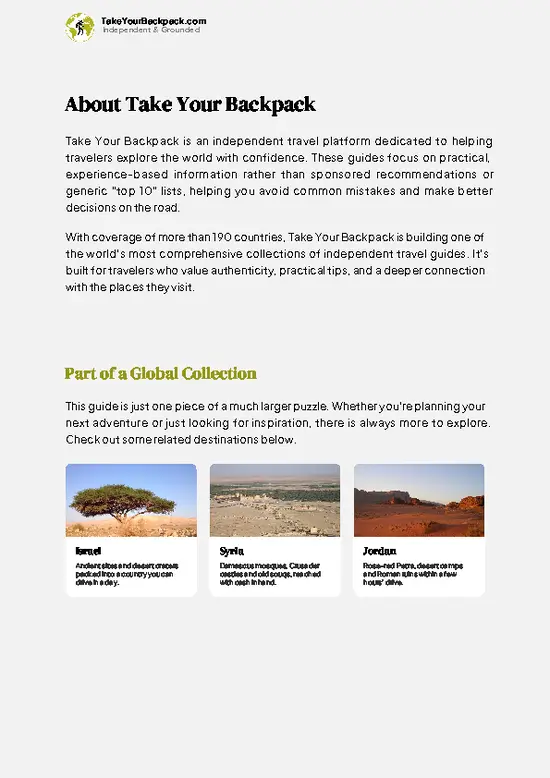
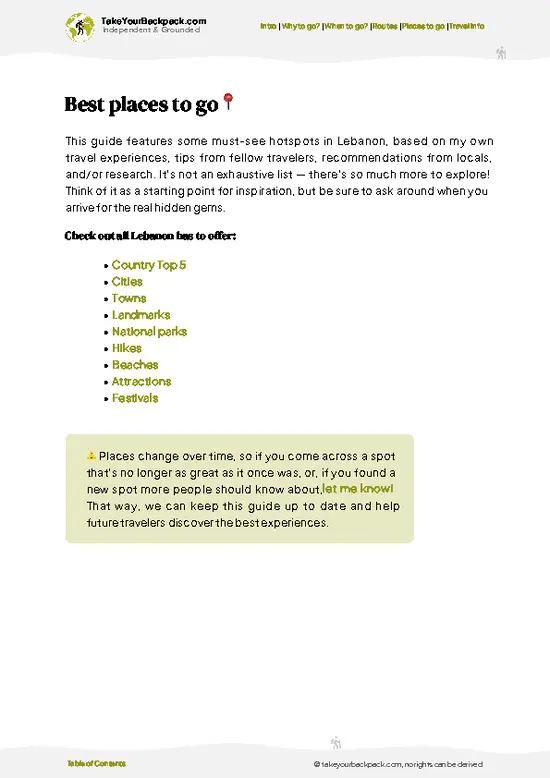
example page 0 from our offline Travel Guide for Lebanon
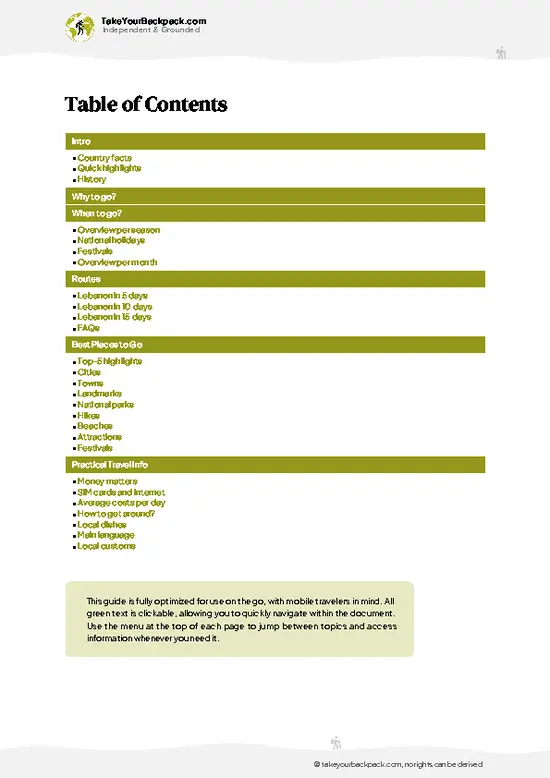
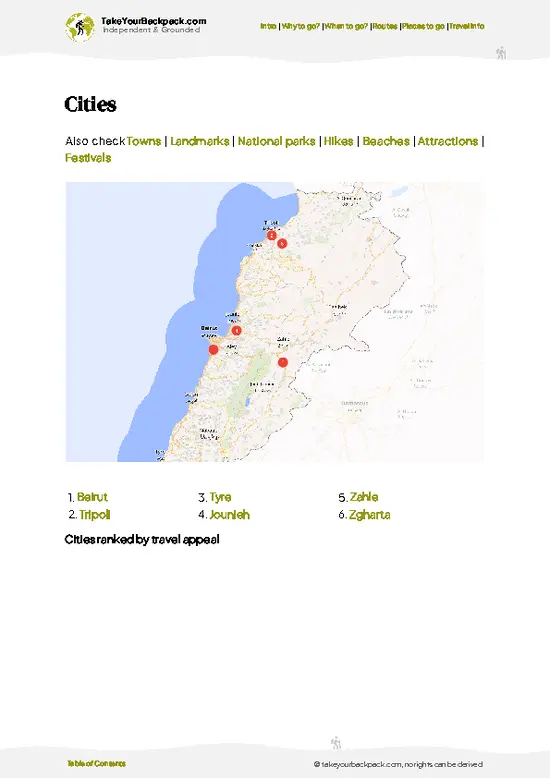
example page 1 from our offline Travel Guide for Lebanon
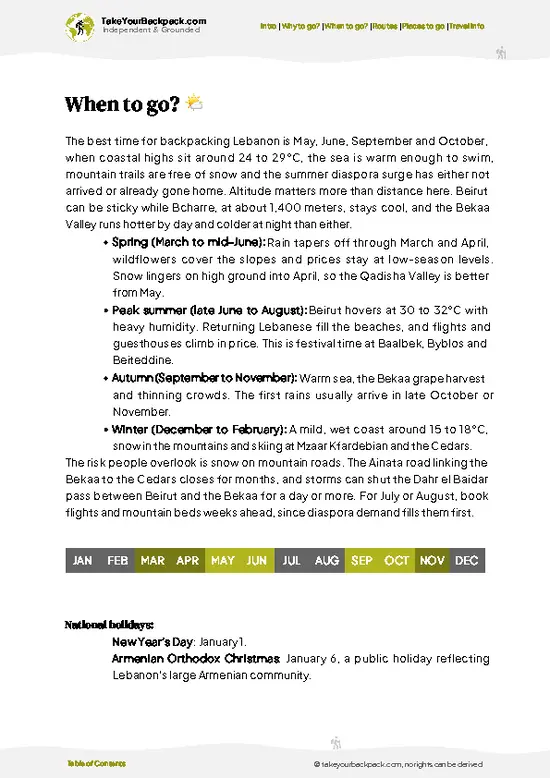
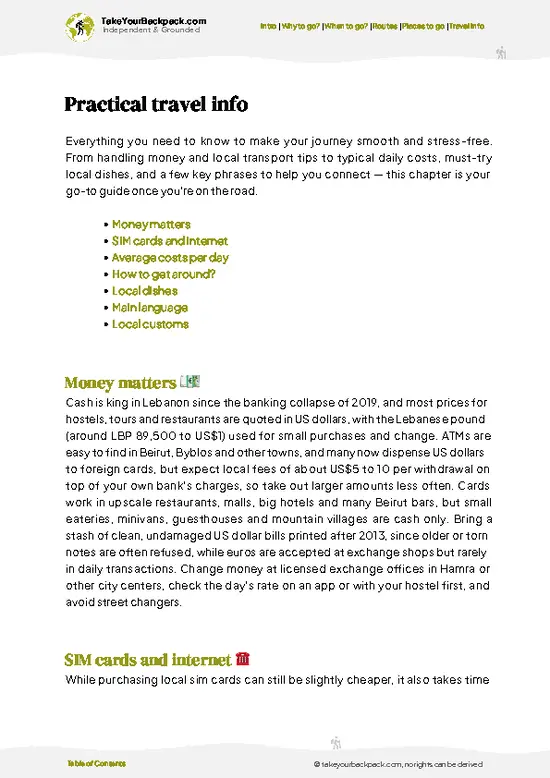
example page 2 from our offline Travel Guide for Lebanon
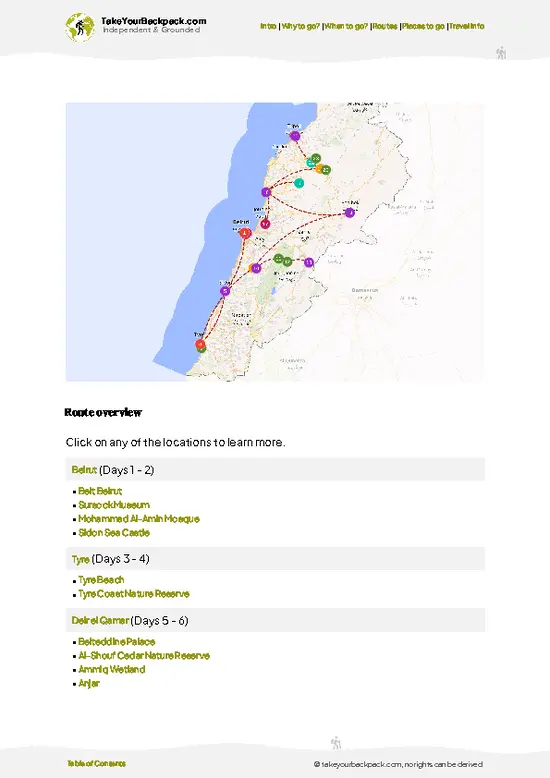
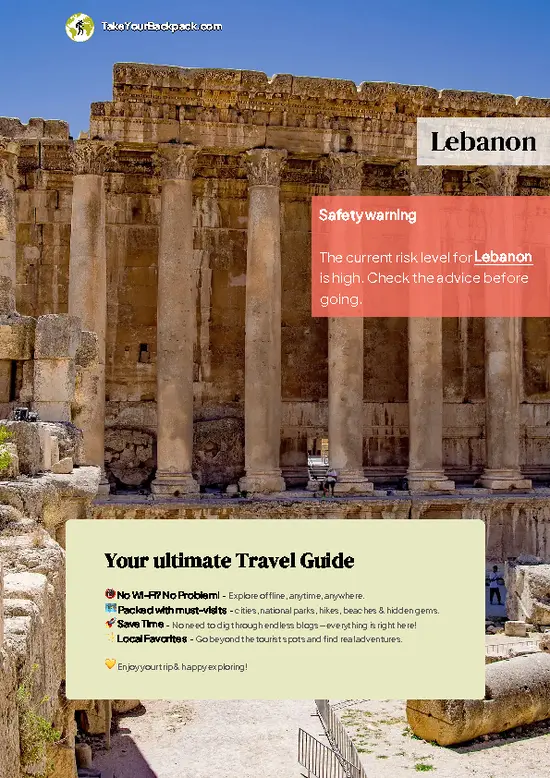
example page 3 from our offline Travel Guide for Lebanon
example page 4 from our offline Travel Guide for Lebanon
example page 5 from our offline Travel Guide for Lebanon
example page 6 from our offline Travel Guide for Lebanon
example page 7 from our offline Travel Guide for Lebanon
The digital guide (286 pages) contains:
✅ 77 highlights, ranked by travel appeal
✅ Optimized 5, 10 & 15-day travel routes
✅ Cities, national parks, landmarks, beaches
✅ How to get around
✅ Offline-friendly for travel without Wi-Fi
👉 Click to see all 30+ guide features

📅 Plan smarter in minutes, not weeks
✅ Month by month travel advice
✅ Festivals & national holidays
✅ Budget expectations

🗺️ Go to the right places, skip the overrated ones
✅ Honest pros & cons of destinations
✅ Top hikes, parks & viewpoints
✅ Lesser-known places most travelers miss
✅ Clear “worth it vs skip it” guidance

🛏️ Travel smoothly without rookie mistakes
✅ Best areas to stay
✅ Transport systems explained simply
✅ Common scams & safety advice
✅ SIM cards, money & practical tips

🌍 Understand the country, not just visit it
✅ Culture & traditions
✅ 52 Essential phrases & customs
✅ Festivals worth planning around
✅ Traveler-friendly historical context
✅ Insights that make places more meaningful

📱 Built for real travel conditions
✅ Fully downloadable PDF
✅ Works completely offline
✅ Optimized for phone use
✅ Useful in remote areas & buses
✅ Everything in one place
Stop searching, start planning
Get instant access to your full guide. 30‑day money-back guarantee.
+ Add another guide for just

By proceeding you agree to our terms.
Sent to your inbox immediately after payment • 100% Secure Checkout
Best Backpacking Travel Advisor 2025 tourism awardBest Backpacking
Travel Advisor
2025
What others say about Take Your Backpack Guides:
⭐⭐⭐⭐⭐
Fantastic, amazing amount of information!
⭐⭐⭐⭐⭐
My goodness this is amazing, it's what I've been looking for hats off too you!
⭐⭐⭐⭐⭐
I think this is absolutely BRILLIANT
⭐⭐⭐⭐
Very complete and informative. It's still missing places, but I gotta to commend you
⭐⭐⭐⭐⭐
This is truly amazing, thank you, can't wait to explore it with my kids!
⭐⭐⭐⭐⭐
Awesome resource, thank you!
⭐⭐⭐⭐⭐
This is amazing! Can't wait to explore the ones I haven't seen
⭐⭐⭐⭐
I love this! Well done, great idea.
⭐⭐⭐⭐⭐
Thanks for taking the time to make this gem!
⭐⭐⭐⭐⭐
This might be the best website I've ever seen.
⭐⭐⭐⭐⭐
Congratulations, and thank you so much for your work; it's incredibly valuable.
⭐⭐⭐⭐
In all seriousness I think you did a great job pointing out the important spots
⭐⭐⭐⭐⭐
10/10 very good
⭐⭐⭐⭐⭐
As someone who's only just starting to visit regularly this is awesome, thank you.
⭐⭐⭐⭐
Thank you very much! I'm going to visit my dad, it's going to be very useful!
⭐⭐⭐⭐⭐
This is really cool! We'll be travelling for the first time and this definitely come in handy.
⭐⭐⭐⭐⭐
You are now our minister of culture, congratulations 👨‍💼
⭐⭐⭐⭐⭐
Just wanted to tell you that this is a pearl! Going to follow your recommendations.
⭐⭐⭐⭐⭐
This is so cool. I'll definitely be using the resource for my travels soon.
⭐⭐⭐⭐⭐
This is very impressive! Good work.
⭐⭐⭐⭐⭐
This is an amazing and informative site. Very well done!

🛏️ Where to stay?Where to Base Yourself

Backpacking Lebanon is easy on a budget, with hostel dorms around US$12 to 25 a night and simple guesthouses beyond Beirut. In the capital, Hamra has the widest and cheapest choice and is walkable to the Corniche and university cafés, though traffic noise never stops, while Mar Mikhael and Gemmayzeh put you on the city’s best bar streets at the cost of loud weekend nights and pricier beds. For quieter nights, coastal Byblos and Batroun have small guesthouses near the old souks and beaches, and they work well as bases for trips north.

If you enjoy meeting fellow travelers, consider choosing hostels with high ratings for atmosphere. On the other hand, if you prefer having your own space, a hotel might be a better option.

LebanonExpand Your Journey

👋 Meet the founderWho’s Behind Take Your Backpack?

Johan, backpacker and founder of TakeYourBackpackHi, I’m Johan (Netherlands 🇳🇱), the creator of TakeYourBackpack. Over the past 3 decades, I’ve backpacked through 90+ countries across six continents, gaining extensive experience with independent travel, long-term trips, and overland routes.

This site is built on a combination of firsthand travel experience and carefully curated insights from other backpackers. Many guides are based on places I’ve personally visited, while others bring together tips, observations, and practical advice shared by trusted travelers I’ve met along the way.

The goal is to provide realistic, experience-driven guidance — not generic itineraries — so you can explore destinations with better context, clearer expectations, and more confidence.