×

Lebanon🇱🇧 | best hikesYour Guide to the 5 Best hikes in Lebanon

Hikes in Lebanon are short on infrastructure and long on character. Most trails are day hikes of 3 to 7 hours in a country smaller than Connecticut, so you can sleep in Beirut and walk somewhere different each morning. The Qadisha Valley and Cedars in the north bring monasteries, cliffs and winter snow. The Chouf and Mount Lebanon offer cedar forests and village-to-village walks that are easy to reach. The Bekaa and the south have fewer waymarks and need local help. For backpacking or independent travel, the Lebanon Mountain Trail (about 470 km) is the real prize, with guesthouses costing a fraction of Beirut prices. Skip the coastal strip for hiking: it is built up and dull underfoot.

By Johan Kruseman 🇳🇱 | Updated October 19, 2026
Explore the best beaches in Lebanon

Why go?Key Factors That Shape the Experience

Lebanon packs an unusual range into a small space: a coastal plain, the Mount Lebanon range rising above 3,000 meters, the Bekaa Valley and the Anti-Lebanon range, all within a couple of hours of each other. That means snow and sea in the same day in winter and spring, which almost no neighbor offers. The country is also layered with history. Trails pass Maronite hermitages carved into cliffs, Phoenician and Roman ruins, Ottoman-era village paths and old shepherd routes, so even a modest walk crosses centuries of use.

What Lebanon lacks is public infrastructure. There is almost no reliable public transport to trailheads, signage is patchy outside the Lebanon Mountain Trail, and mobile maps are often incomplete. Hiking clubs and local guides fill the gap, and joining a group hike is often … read more 👉
Lebanon packs an unusual range into a small space: a coastal plain, the Mount Lebanon range rising above 3,000 meters, the Bekaa Valley and the Anti-Lebanon range, all within a couple of hours of each other. That means snow and sea in the same day in winter and spring, which almost no neighbor offers. The country is also layered with history. Trails pass Maronite hermitages carved into cliffs, Phoenician and Roman ruins, Ottoman-era village paths and old shepherd routes, so even a modest walk crosses centuries of use.

What Lebanon lacks is public infrastructure. There is almost no reliable public transport to trailheads, signage is patchy outside the Lebanon Mountain Trail, and mobile maps are often incomplete. Hiking clubs and local guides fill the gap, and joining a group hike is often the cheapest way to reach a remote start. Hospitality does the rest: village guesthouses and home-cooked meals are part of the trail experience.

Travelers should also know that security conditions change. Areas near the southern border and parts of the northeast Bekaa can be restricted or unsafe, so check current government advice before choosing a region. Unexploded ordnance remains in some southern areas, so stay on established paths. Do not expect remote wilderness solitude; farmland and villages are never far away, and that suits the country well.
Behind the Scenes of Selection
The list of best hikes in Lebanon is created based on scenery, challenge, trail quality, landmarks, and overall enjoyment. If you feel a hike is missing in this list, please let us know.

When to go?Optimal Periods for Travel

Best months and weather: The best months for hikes in Lebanon are April to June and September to November, when daytime temperatures in the mountains sit around 15 to 25°C and trails are dry and open. Spring brings wildflowers and running streams, while autumn has clear air and warm light, with fewer crowds than summer.

Summer, winter and shoulder seasons: July and August are hot at lower elevations, often 30 to 35°C inland and humid on the coast, so start before 7 a.m. and stay above 1,500 meters. This is the peak period for domestic and diaspora visitors, and guesthouse prices in mountain villages such as Bcharre and the Chouf rise noticeably. Book ahead on weekends.

Winter, roughly December to March, is wet. Rainfall on Mount Lebanon can reach 1,000 mm or more a year, mostly in these … read more 👉
Best months and weather: The best months for hikes in Lebanon are April to June and September to November, when daytime temperatures in the mountains sit around 15 to 25°C and trails are dry and open. Spring brings wildflowers and running streams, while autumn has clear air and warm light, with fewer crowds than summer.

Summer, winter and shoulder seasons: July and August are hot at lower elevations, often 30 to 35°C inland and humid on the coast, so start before 7 a.m. and stay above 1,500 meters. This is the peak period for domestic and diaspora visitors, and guesthouse prices in mountain villages such as Bcharre and the Chouf rise noticeably. Book ahead on weekends.

Winter, roughly December to March, is wet. Rainfall on Mount Lebanon can reach 1,000 mm or more a year, mostly in these months, and snow covers the high routes above about 1,500 to 2,000 meters until April or even May. Skip the high ridges and the cedar zones on foot then unless you have snowshoes or ski gear. Lower-elevation walks along the coast and in the foothills stay usable, though muddy.

In the Bekaa and the south, spring and autumn are better still, because summer heat is stronger and there is less shade. Some guesthouses along the Lebanon Mountain Trail close or shorten hours in deep winter, so confirm before you go.

hike hoppingPlanning Your Route Efficiently

How many days to combine hikes: A trip combining several hikes in Lebanon needs 7 to 10 days, and 12 to 14 if you want a long stretch of the Lebanon Mountain Trail. Lebanon is small, so the limit is trailhead access, not distance.

Which regions group together: The north (Qadisha Valley, Bcharre, the Cedars) clusters naturally, as does the Mount Lebanon and Chouf area south and east of Beirut. Beirut works as the hub for both. Travel from Beirut to Bcharre takes about 2.5 to 3.5 hours, and to the Chouf villages around 1.5 to 2 hours. Going north first and then working south toward the Chouf suits most trips, since the highest, snow-prone terrain is best done early in a spring trip or late in an autumn one.

Time per stop and common planning mistakes: Allow 2 to 3 nights per region, which gives … read more 👉
How many days to combine hikes: A trip combining several hikes in Lebanon needs 7 to 10 days, and 12 to 14 if you want a long stretch of the Lebanon Mountain Trail. Lebanon is small, so the limit is trailhead access, not distance.

Which regions group together: The north (Qadisha Valley, Bcharre, the Cedars) clusters naturally, as does the Mount Lebanon and Chouf area south and east of Beirut. Beirut works as the hub for both. Travel from Beirut to Bcharre takes about 2.5 to 3.5 hours, and to the Chouf villages around 1.5 to 2 hours. Going north first and then working south toward the Chouf suits most trips, since the highest, snow-prone terrain is best done early in a spring trip or late in an autumn one.

Time per stop and common planning mistakes: Allow 2 to 3 nights per region, which gives one full hiking day plus a buffer for weather or late transport. Travelers often cram two regions into one day. Mountain roads are slow, minibuses and shared taxis run irregularly and mostly in the morning, and a 100 km trip can take 3 hours. Choose one base per region and hire a driver or join a club hike for remote trailheads instead of improvising.

Another error is pairing the Bekaa or the south with the north in one push. Take them as separate trips and check security first. Skip the coast between hikes except as a rest day; it adds traffic, not trail time.

The ListThe Best hikes of Lebanon

1 Qadisha Valley

rock monasteries, deep canyon, pilgrimage route

Follow ancient footpaths along a steep gorge, passing centuries-old monasteries carved into cliffs and landscapes shaped by religious retreat.

lebanon-hike-qadisha-valley
© Google |

2 Baatara Gorge Waterfall Trail

sinkhole descent, limestone cliffs, spring cascade

Descend through a dramatic vertical gorge to reach a seasonal waterfall that plunges into a deep natural sinkhole surrounded by sheer rock faces.

lebanon-hike-baatara-gorge-waterfall-trail
© Google |

3 Chouwen Lake

emerald water, pine forest, swimming spot

Reach a secluded lake surrounded by dense pines, where clear water invites a swim and the forest muffles outside noise.

4 Afqa Waterfall Trail

karst spring, mythic cave, river crossing

Approach a powerful waterfall emerging from a cave linked to ancient legends, with river crossings and lush vegetation along the route.

lebanon-hike-afqa-waterfall-trail
© Google |

5 Baskinta Literary Trail

writers’ landmarks, village lanes, orchard views

Trace the footsteps of Lebanese authors through rural landscapes, passing memorials and homes while enjoying open vistas of fruit orchards and hills.

Loading the map 🌍

Expert viewPro Tips for Exploring the Best

How many hikes to do: Plan on 4 to 6 hikes in total. That gives you enough variety across the north, the Chouf and one long-trail section without turning the trip into a dash. Lebanese mountain roads are slow, and one hike a day with a village lunch and a late start is the realistic pace. More than that and you spend your days in vans instead of on trails.

Which kind to prioritize: First-timers and short-stay travelers should choose valley and monastery walks in the north: clear paths, easy logistics, and cliff-side chapels as the payoff. Experienced backpackers should put time into multi-day stretches of the Lebanon Mountain Trail, where you sleep in village guesthouses and eat family cooking. Skip the lowland and coastal walks; they are built-up and the views rarely justify the time. Cedar … read more 👉
How many hikes to do: Plan on 4 to 6 hikes in total. That gives you enough variety across the north, the Chouf and one long-trail section without turning the trip into a dash. Lebanese mountain roads are slow, and one hike a day with a village lunch and a late start is the realistic pace. More than that and you spend your days in vans instead of on trails.

Which kind to prioritize: First-timers and short-stay travelers should choose valley and monastery walks in the north: clear paths, easy logistics, and cliff-side chapels as the payoff. Experienced backpackers should put time into multi-day stretches of the Lebanon Mountain Trail, where you sleep in village guesthouses and eat family cooking. Skip the lowland and coastal walks; they are built-up and the views rarely justify the time. Cedar forests are worth the detour, but go at dawn or on a weekday when the car parks are empty.

What it costs: Budget US$30 to 60 a day for independent hiking. Guesthouses with dinner and breakfast often run US$25 to 45 per person, lunches and snacks US$5 to 10, and shared transport US$2 to 10 per leg. A local guide for a day costs roughly US$40 to 100 depending on group size, and is worth paying where trails are unmarked. Entry fees to nature reserves such as the Cedars area are small, usually under US$10. For a 7 to 10 day visit expect US$350 to 700 in total, before flights. Prices in Lebanon are often quoted in US dollars, and cash is useful in villages where cards and ATMs are rare.

Safety and culture: Check current security advice before choosing a region; the southern border zone and parts of the northeast should be avoided without local confirmation. Stay on marked paths in the south because of unexploded ordnance. Carry offline maps and download them in advance, since signal fades in valleys, and tell your guesthouse your route. Summer heat and winter snow both catch people out; bring a shell and layers year-round above 1,500 meters.

Villages are conservative and hospitable. Dress modestly when passing through, ask before photographing people, and accept tea or coffee when it is offered, since refusing can read as rude. Hunting is common in autumn, so wear a bright layer. Pay for guides and guesthouses locally, because that money is what keeps the trail network alive and gives you the warmest welcome in the hills.

✈️ The backpacker research shortcutLebanon Travel Guide

An offline-friendly backpacking guide with optimized travel routes, ranked highlights, transport advice, and the best areas to stay.
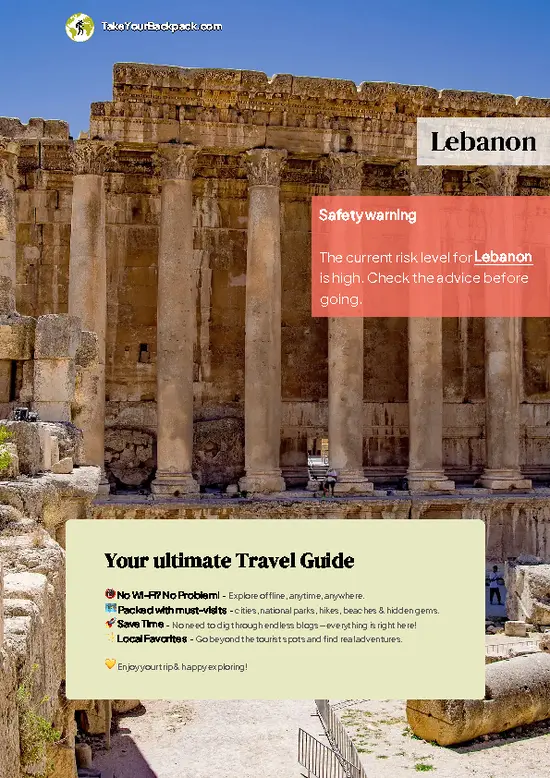
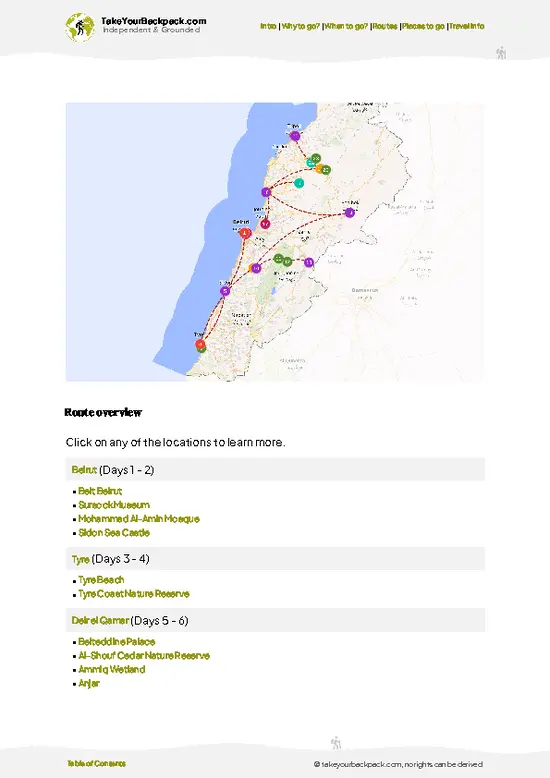
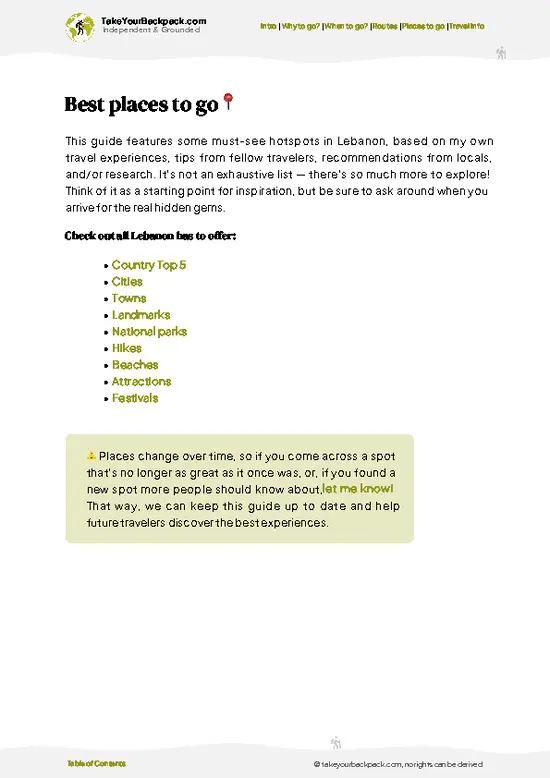
example page 0 from our offline Travel Guide for Lebanon
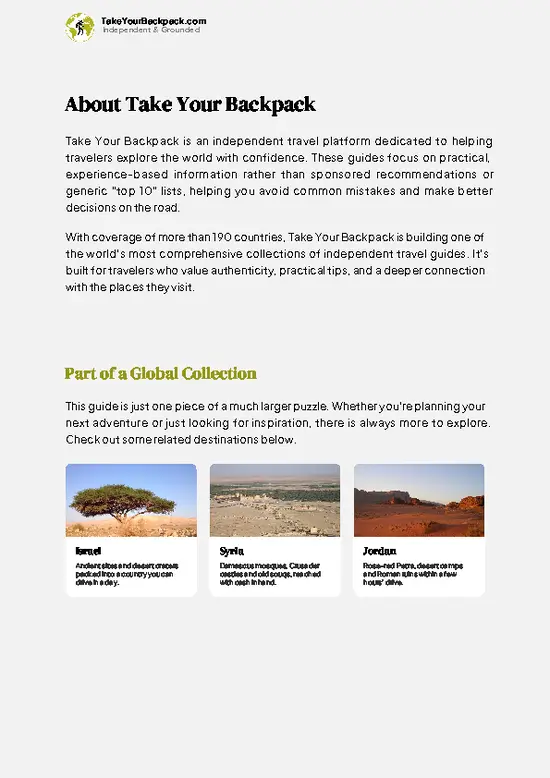
example page 1 from our offline Travel Guide for Lebanon
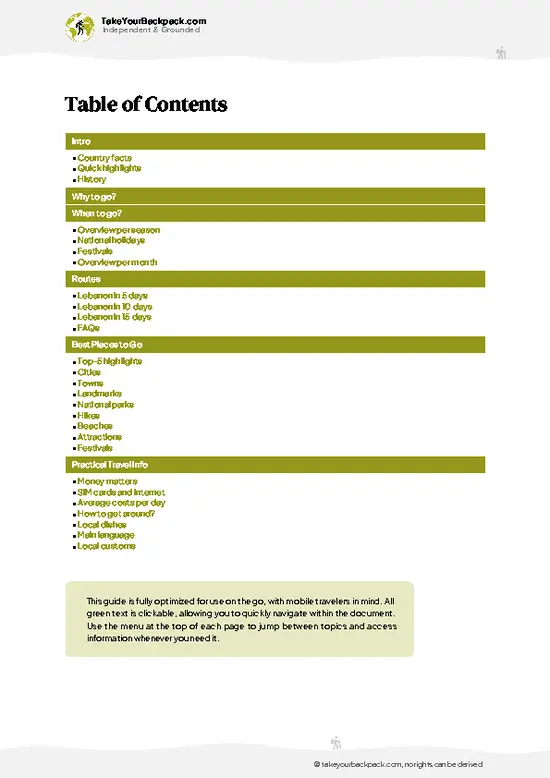
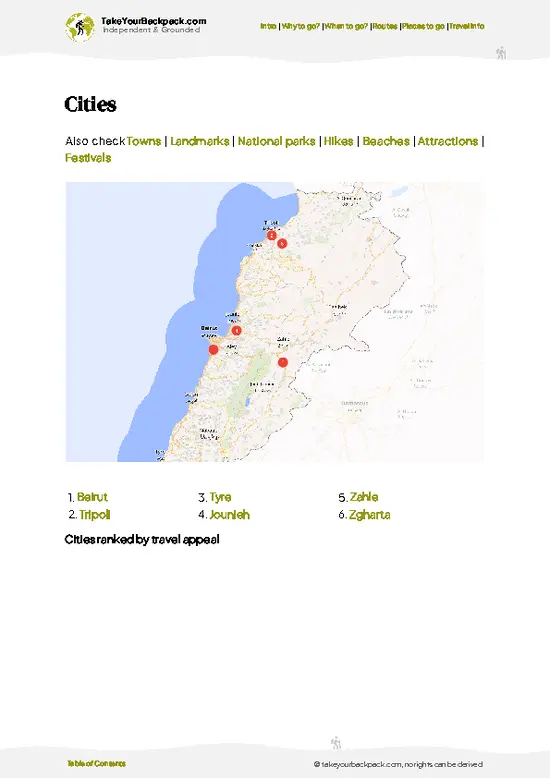
example page 2 from our offline Travel Guide for Lebanon
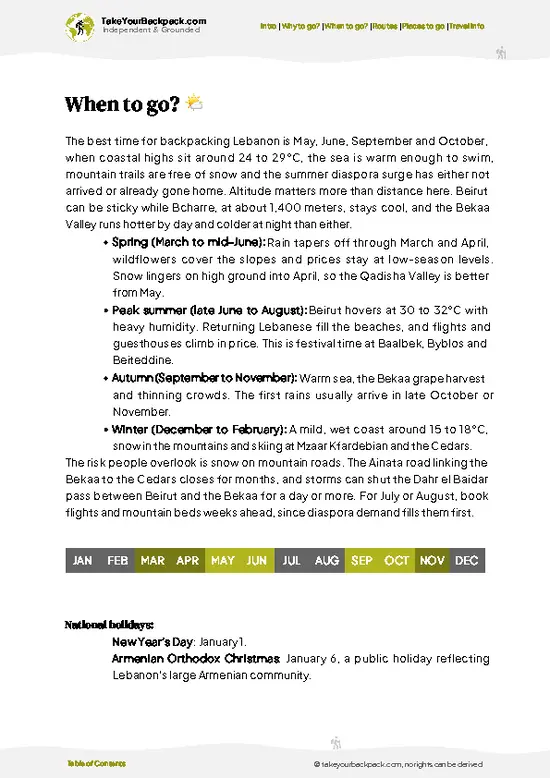
example page 3 from our offline Travel Guide for Lebanon
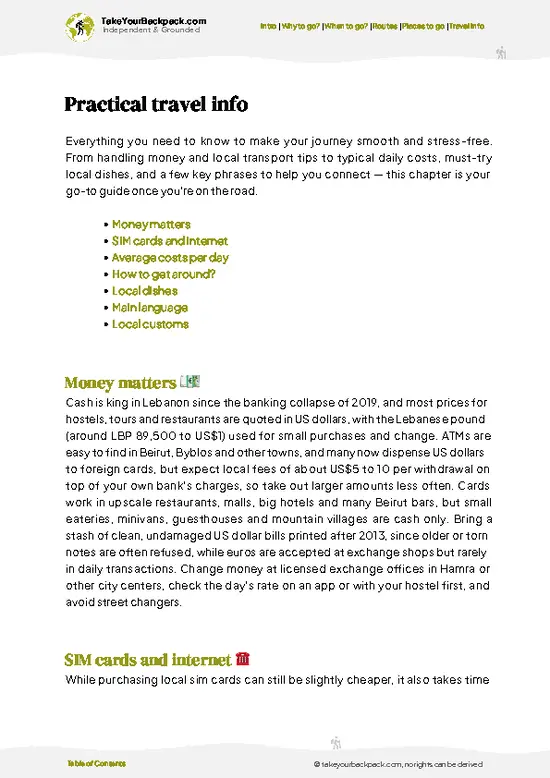
example page 4 from our offline Travel Guide for Lebanon
example page 5 from our offline Travel Guide for Lebanon
example page 6 from our offline Travel Guide for Lebanon
example page 7 from our offline Travel Guide for Lebanon
The digital guide (286 pages) contains:
✅ 77 highlights, ranked by travel appeal
✅ Optimized 5, 10 & 15-day travel routes
✅ Cities, national parks, landmarks, beaches
✅ How to get around
✅ Offline-friendly for travel without Wi-Fi
👉 Click to see all 30+ guide features

📅 Plan smarter in minutes, not weeks
✅ Month by month travel advice
✅ Festivals & national holidays
✅ Budget expectations

🗺️ Go to the right places, skip the overrated ones
✅ Honest pros & cons of destinations
✅ Top hikes, parks & viewpoints
✅ Lesser-known places most travelers miss
✅ Clear “worth it vs skip it” guidance

🛏️ Travel smoothly without rookie mistakes
✅ Best areas to stay
✅ Transport systems explained simply
✅ Common scams & safety advice
✅ SIM cards, money & practical tips

🌍 Understand the country, not just visit it
✅ Culture & traditions
✅ 52 Essential phrases & customs
✅ Festivals worth planning around
✅ Traveler-friendly historical context
✅ Insights that make places more meaningful

📱 Built for real travel conditions
✅ Fully downloadable PDF
✅ Works completely offline
✅ Optimized for phone use
✅ Useful in remote areas & buses
✅ Everything in one place
Stop searching, start planning
Get instant access to your full guide. 30‑day money-back guarantee.
+ Add another guide for just

By proceeding you agree to our terms.
Sent to your inbox immediately after payment • 100% Secure Checkout
Best Backpacking Travel Advisor 2025 tourism awardBest Backpacking
Travel Advisor
2025
What others say about Take Your Backpack Guides:
⭐⭐⭐⭐⭐
Fantastic, amazing amount of information!
⭐⭐⭐⭐⭐
My goodness this is amazing, it's what I've been looking for hats off too you!
⭐⭐⭐⭐⭐
I think this is absolutely BRILLIANT
⭐⭐⭐⭐
Very complete and informative. It's still missing places, but I gotta to commend you
⭐⭐⭐⭐⭐
This is truly amazing, thank you, can't wait to explore it with my kids!
⭐⭐⭐⭐⭐
Awesome resource, thank you!
⭐⭐⭐⭐⭐
This is amazing! Can't wait to explore the ones I haven't seen
⭐⭐⭐⭐
I love this! Well done, great idea.
⭐⭐⭐⭐⭐
Thanks for taking the time to make this gem!
⭐⭐⭐⭐⭐
This might be the best website I've ever seen.
⭐⭐⭐⭐⭐
Congratulations, and thank you so much for your work; it's incredibly valuable.
⭐⭐⭐⭐
In all seriousness I think you did a great job pointing out the important spots
⭐⭐⭐⭐⭐
10/10 very good
⭐⭐⭐⭐⭐
As someone who's only just starting to visit regularly this is awesome, thank you.
⭐⭐⭐⭐
Thank you very much! I'm going to visit my dad, it's going to be very useful!
⭐⭐⭐⭐⭐
This is really cool! We'll be travelling for the first time and this definitely come in handy.
⭐⭐⭐⭐⭐
You are now our minister of culture, congratulations 👨‍💼
⭐⭐⭐⭐⭐
Just wanted to tell you that this is a pearl! Going to follow your recommendations.
⭐⭐⭐⭐⭐
This is so cool. I'll definitely be using the resource for my travels soon.
⭐⭐⭐⭐⭐
This is very impressive! Good work.
⭐⭐⭐⭐⭐
This is an amazing and informative site. Very well done!

🛏️ Where to stay?Best Stay Options in Lebanon

Backpacking Lebanon is easy on a budget, with hostel dorms around US$12 to 25 a night and simple guesthouses beyond Beirut. In the capital, Hamra has the widest and cheapest choice and is walkable to the Corniche and university cafés, though traffic noise never stops, while Mar Mikhael and Gemmayzeh put you on the city’s best bar streets at the cost of loud weekend nights and pricier beds. For quieter nights, coastal Byblos and Batroun have small guesthouses near the old souks and beaches, and they work well as bases for trips north.

If you enjoy meeting fellow travelers, consider choosing hostels with high ratings for atmosphere. On the other hand, if you prefer having your own space, a hotel might be a better option.

LebanonWhere to Go Next

👋 Meet the founderWho’s Behind Take Your Backpack?

Johan, backpacker and founder of TakeYourBackpackHi, I’m Johan (Netherlands 🇳🇱), the creator of TakeYourBackpack. Over the past 3 decades, I’ve backpacked through 90+ countries across six continents, gaining extensive experience with independent travel, long-term trips, and overland routes.

This site is built on a combination of firsthand travel experience and carefully curated insights from other backpackers. Many guides are based on places I’ve personally visited, while others bring together tips, observations, and practical advice shared by trusted travelers I’ve met along the way.

The goal is to provide realistic, experience-driven guidance — not generic itineraries — so you can explore destinations with better context, clearer expectations, and more confidence.