×

Lebanon🇱🇧 | best beachesYour Guide to the 4 Best beaches in Lebanon

Beaches in Lebanon are mostly private, paid, and built around lounging, not wild coastline. Along the central coast between Beirut and Jbeil, resort clubs charge roughly US$15 to 40 for a day pass, with DJs and cocktails. Skip them on a tight budget. The north and south are cheaper and quieter, with rocky coves, public stretches and small fishing harbors, and they suit backpackers and independent travelers far better. Sandy public beaches exist but can be crowded and unevenly cleaned. Pick the south for space, the north for value, and Beirut-area clubs only if the party is the point.

By Johan Kruseman 🇳🇱 | Updated October 19, 2026
Explore the best attractions in Lebanon

Why go?Key Factors That Shape the Experience

Lebanon’s coast runs about 225 kilometers along the eastern Mediterranean, with mountains rising directly behind it. That geography means you can swim in the morning and be in snow-capped hills by afternoon in winter and spring, a combination few countries offer. The sea is warm for much of the year and the sun is reliable.

The flip side is access. Much of the shoreline is privately owned or occupied by resorts, so free public sand is limited and entry fees are normal, not an exception. Coastal development, dense roads and the legacy of limited waste management mean water and sand quality vary sharply from one stretch to the next. Rocky shores are common, so sandals for the water are worth packing.

There is also a cultural layer. Beach life here is a social scene: music, long lunches, and … read more 👉
Lebanon’s coast runs about 225 kilometers along the eastern Mediterranean, with mountains rising directly behind it. That geography means you can swim in the morning and be in snow-capped hills by afternoon in winter and spring, a combination few countries offer. The sea is warm for much of the year and the sun is reliable.

The flip side is access. Much of the shoreline is privately owned or occupied by resorts, so free public sand is limited and entry fees are normal, not an exception. Coastal development, dense roads and the legacy of limited waste management mean water and sand quality vary sharply from one stretch to the next. Rocky shores are common, so sandals for the water are worth packing.

There is also a cultural layer. Beach life here is a social scene: music, long lunches, and a relaxed dress code at the clubs, while smaller and more traditional towns, especially in the north and south, expect more modest swimwear. Choose Lebanon for beaches if you want an easy mix of sea, food and city life, not remote, empty sand. Check current local conditions and travel advice before booking, since security and economic circumstances can shift quickly.
Why These Made the Cut
The list of best beaches in Lebanon is created based on beauty, vibe, water quality, activities, and surrounding scenery. If you feel a beach is missing in this list, please let us know.

When to go?Optimal Periods for Travel

Best months for the sea: The best beach months in Lebanon are June to September, when sea temperatures reach roughly 25 to 28°C and rain is nearly absent. Coastal air temperatures sit around 28 to 33°C, with high humidity in July and August that makes midday heat heavy.
Shoulder seasons: May and October are the smart picks. The sea is around 21 to 25°C, the sun is strong, and day-pass prices and crowds drop compared with high summer. Swimming in May is pleasant, while October stays warm into its second half. Clubs often open in late spring and begin winding down after the early autumn weekends.
Winter and peak periods: From December to March, skip beach plans. Rain is heavy along the coast (Beirut gets around 600 to 800 mm a year, mostly in these months), the sea falls to about 16 to 18°C, and … read more 👉
Best months for the sea: The best beach months in Lebanon are June to September, when sea temperatures reach roughly 25 to 28°C and rain is nearly absent. Coastal air temperatures sit around 28 to 33°C, with high humidity in July and August that makes midday heat heavy.
Shoulder seasons: May and October are the smart picks. The sea is around 21 to 25°C, the sun is strong, and day-pass prices and crowds drop compared with high summer. Swimming in May is pleasant, while October stays warm into its second half. Clubs often open in late spring and begin winding down after the early autumn weekends.
Winter and peak periods: From December to March, skip beach plans. Rain is heavy along the coast (Beirut gets around 600 to 800 mm a year, mostly in these months), the sea falls to about 16 to 18°C, and many beach clubs close. July and August weekends, especially around Beirut and Jbeil, are the busiest, and entry fees are at their highest. If you can travel midweek, you will find space and sometimes lower prices. In the north and south, the pattern holds, though the north can see a little more rain and cooler breezes in the shoulder months.

beach hoppingPlanning Your Route Efficiently

How many days to allow: A trip combining several beaches in Lebanon needs 5 to 8 days, because the coast is short but the roads are slow. Beirut is the best hub, as buses, shared taxis and rental cars leave from it in every direction.
Grouping regions: Treat the coast as three clusters: the north (Batroun, Tripoli area), the central stretch around Beirut and Jbeil, and the south (Sidon, Tyre). Travel in one direction, for example north to south or the reverse, and avoid zigzagging back through Beirut more than once. Allow 1 to 2 nights per cluster and a half day to a full day of actual beach time per stop. Anything less turns the trip into a commute.
Travel times and mistakes: Beirut to Batroun takes roughly 1 to 1.5 hours, Beirut to Tyre roughly 1.5 to 2 hours, and Tripoli to Tyre can take … read more 👉
How many days to allow: A trip combining several beaches in Lebanon needs 5 to 8 days, because the coast is short but the roads are slow. Beirut is the best hub, as buses, shared taxis and rental cars leave from it in every direction.
Grouping regions: Treat the coast as three clusters: the north (Batroun, Tripoli area), the central stretch around Beirut and Jbeil, and the south (Sidon, Tyre). Travel in one direction, for example north to south or the reverse, and avoid zigzagging back through Beirut more than once. Allow 1 to 2 nights per cluster and a half day to a full day of actual beach time per stop. Anything less turns the trip into a commute.
Travel times and mistakes: Beirut to Batroun takes roughly 1 to 1.5 hours, Beirut to Tyre roughly 1.5 to 2 hours, and Tripoli to Tyre can take 3 hours or more. Traffic on the coastal highway, especially on summer weekends and around Beirut’s edges, can double those times. The common mistake is trying to cover north and south in a single day. Do not. Another is relying on public buses for beach access, since many stretches sit off the main road. Base yourself in one town per cluster and use shared taxis or a rental car for short hops.

The ListThe Best beaches of Lebanon

1 Tyre Beach

wide sands, clear shallows, protected reserve

Walk along expansive, undeveloped sands and swim in transparent waters, with a nature reserve nearby supporting sea turtles and migratory birds.

2 Ramlet al-Baida

urban stretch, public access, city skyline

Experience Beirut’s only public sandy beach, where locals gather for swimming and city views frame the horizon beyond the gentle surf.

3 Byblos Beach

harbor views, archaeological backdrop, pebbled shore

Relax on a pebbled stretch with direct views of fishing boats and ruins, then wander to nearby archaeological sites just steps from the water.

4 Batroun Beach

rocky coves, ancient sea wall, beach bars

Swim beside weathered limestone formations and unwind at casual seaside hangouts, where the coastline’s layered history meets a laid-back social scene.

lebanon-beach-batroun-beach
© Google |
Loading the map 🌍

Expert viewPro Tips for Exploring the Best

How many beaches to visit: Plan on three to four beach days in a week. That is enough to compare a resort club, a public stretch and a quieter rocky cove without burning days on traffic. More than that and you are paying entry fees and sitting on highways to see variations on the same Mediterranean. You get a clear sense of the coast’s range and still have time for the mountains and cities.
Choosing the kind: For a social, comfortable day, pick one resort club. You pay for sun beds, music, showers and food, and you can stay from late morning until sunset. Choose a public beach if you want a local scene, where families set up with their own umbrellas and food. It costs little but can be crowded and less tidy. A rocky cove or small harbor in the north or south is best if you want clear water … read more 👉
How many beaches to visit: Plan on three to four beach days in a week. That is enough to compare a resort club, a public stretch and a quieter rocky cove without burning days on traffic. More than that and you are paying entry fees and sitting on highways to see variations on the same Mediterranean. You get a clear sense of the coast’s range and still have time for the mountains and cities.
Choosing the kind: For a social, comfortable day, pick one resort club. You pay for sun beds, music, showers and food, and you can stay from late morning until sunset. Choose a public beach if you want a local scene, where families set up with their own umbrellas and food. It costs little but can be crowded and less tidy. A rocky cove or small harbor in the north or south is best if you want clear water and space, and you swim from flat rock with sandals on. Mix one of each, and skip any beach that is only a roadside strip with no facilities.
What it costs: Budget about US$30 to 60 a day for a backpacker mixing clubs and local spots, or US$20 to 35 on days with only public beaches. Club entry runs roughly US$15 to 40, often with a minimum spend credited against food and drinks. Public beaches cost little or nothing, though parking or umbrella rental may add US$3 to 10. Shared taxis between coastal towns cost roughly US$2 to 8 per ride. Lunch by the sea with a drink often comes to US$8 to 20. Carry cash in small notes, since card systems at smaller spots may be unreliable, and confirm prices before sitting down.
Safety and etiquette: Currents are usually mild, but rocky entries are slippery and sea urchins are common, so wear water shoes. Lifeguards are not guaranteed outside the larger clubs, so swim near other people. Pollution varies, so avoid water that looks cloudy or has debris near river mouths and city outfalls. Keep valuables at your hotel or in the club lockers.
Cultural considerations: Swimwear is relaxed at upscale clubs, but in smaller or more conservative towns, cover up when walking to and from the water and avoid topless sunbathing. Ask before photographing people. Respect private property, since many beaches that look open are not. Check current travel advice before heading to the far south, as border-area conditions can change quickly.

✈️ The backpacker research shortcutLebanon Travel Guide

An offline-friendly backpacking guide with optimized travel routes, ranked highlights, transport advice, and the best areas to stay.
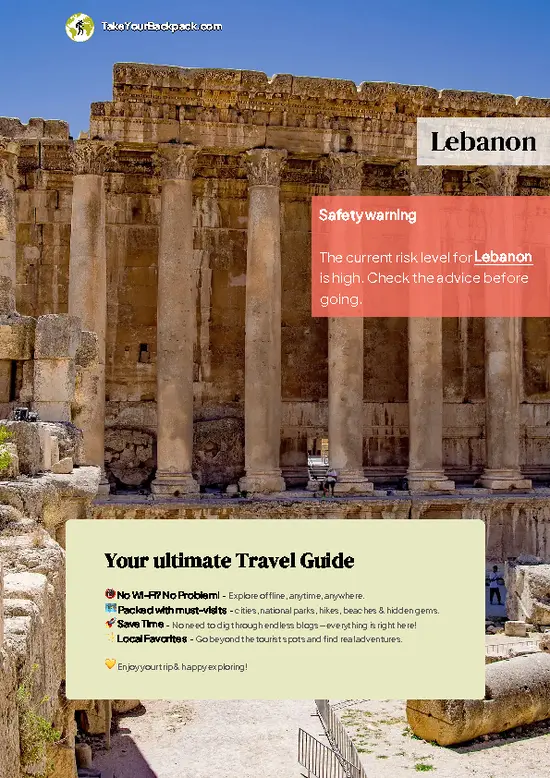
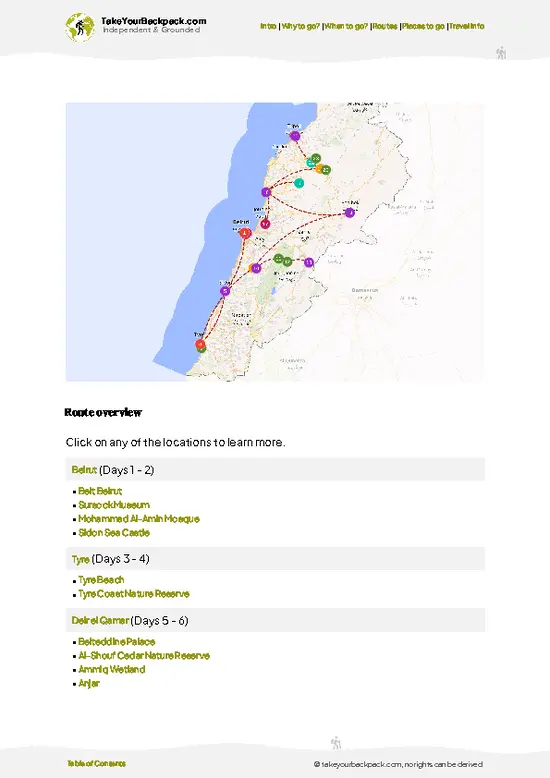
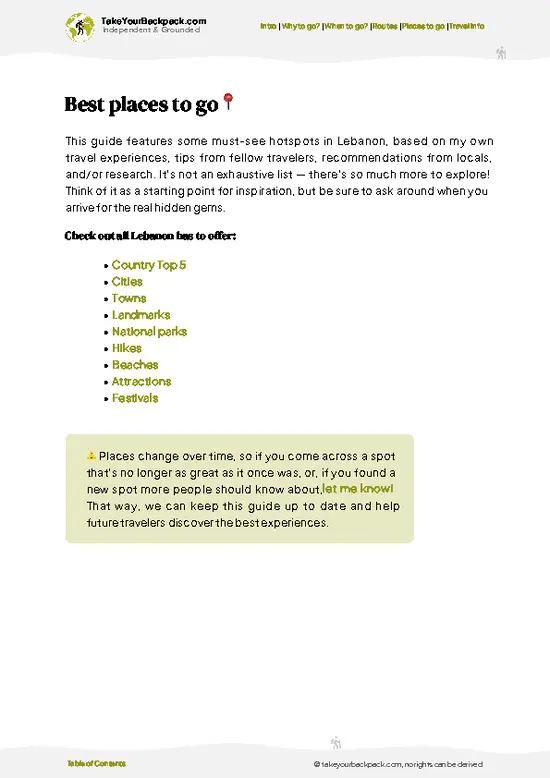
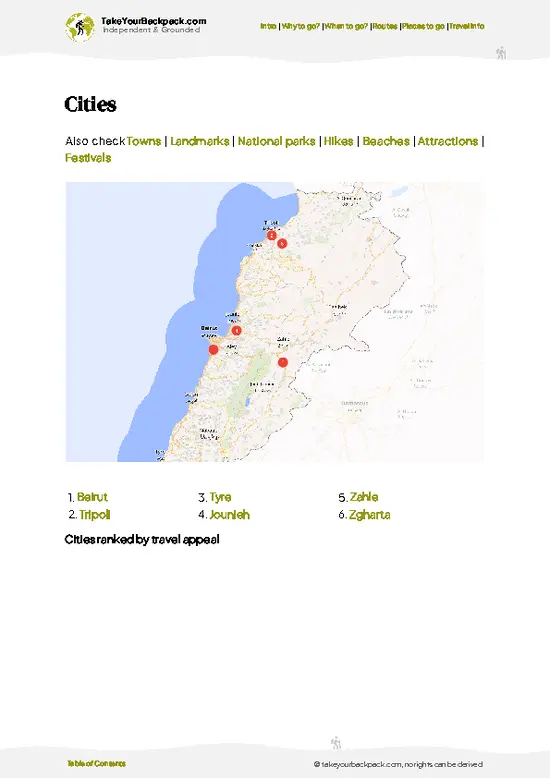
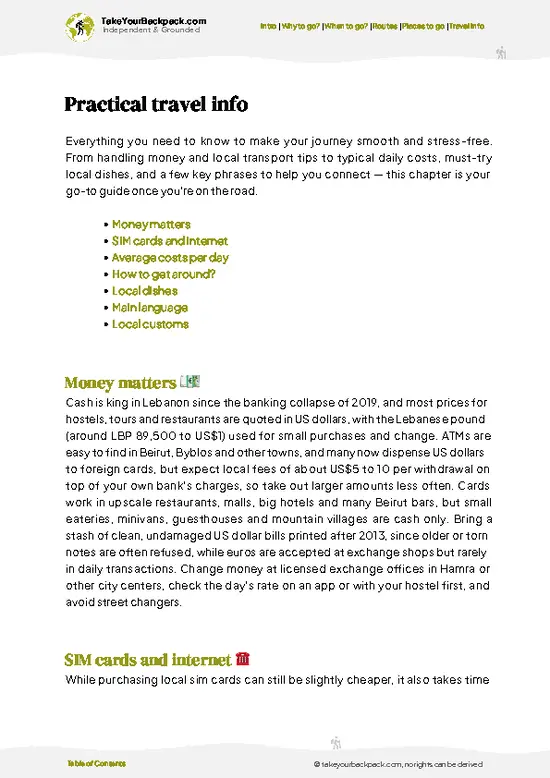
example page 0 from our offline Travel Guide for Lebanon
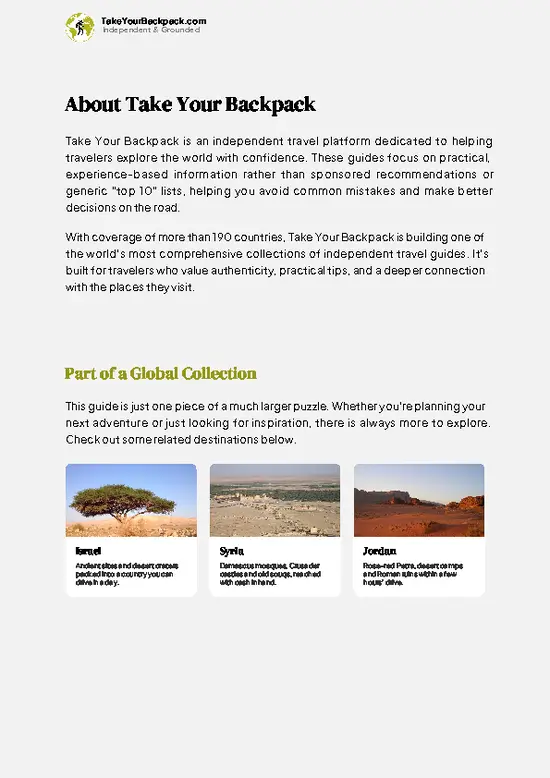
example page 1 from our offline Travel Guide for Lebanon
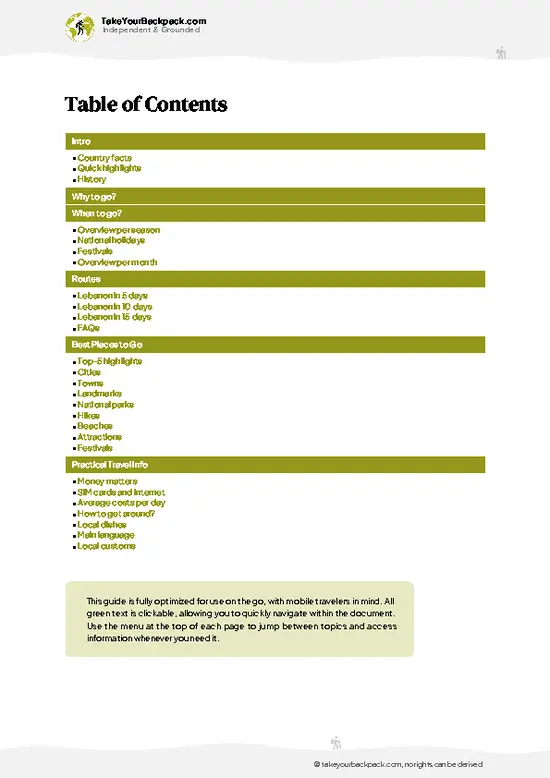
example page 2 from our offline Travel Guide for Lebanon
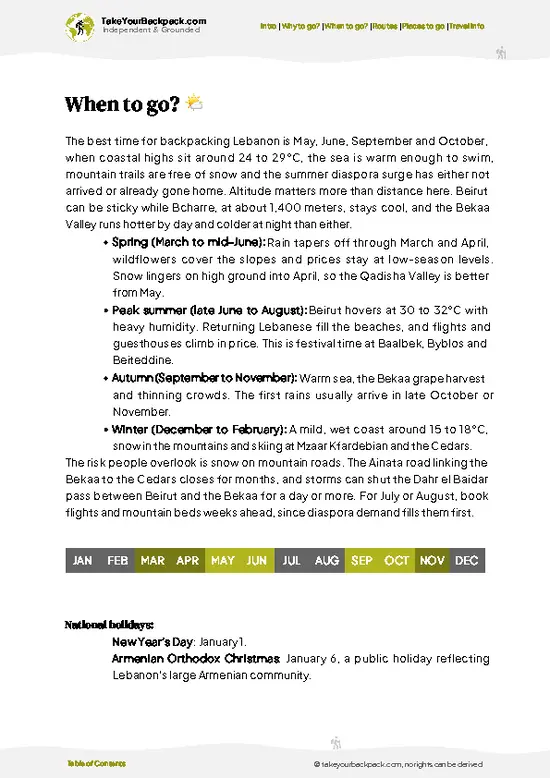
example page 3 from our offline Travel Guide for Lebanon
example page 4 from our offline Travel Guide for Lebanon
example page 5 from our offline Travel Guide for Lebanon
example page 6 from our offline Travel Guide for Lebanon
example page 7 from our offline Travel Guide for Lebanon
The digital guide (286 pages) contains:
✅ 77 highlights, ranked by travel appeal
✅ Optimized 5, 10 & 15-day travel routes
✅ Cities, national parks, landmarks, beaches
✅ How to get around
✅ Offline-friendly for travel without Wi-Fi
👉 Click to see all 30+ guide features

📅 Plan smarter in minutes, not weeks
✅ Month by month travel advice
✅ Festivals & national holidays
✅ Budget expectations

🗺️ Go to the right places, skip the overrated ones
✅ Honest pros & cons of destinations
✅ Top hikes, parks & viewpoints
✅ Lesser-known places most travelers miss
✅ Clear “worth it vs skip it” guidance

🛏️ Travel smoothly without rookie mistakes
✅ Best areas to stay
✅ Transport systems explained simply
✅ Common scams & safety advice
✅ SIM cards, money & practical tips

🌍 Understand the country, not just visit it
✅ Culture & traditions
✅ 52 Essential phrases & customs
✅ Festivals worth planning around
✅ Traveler-friendly historical context
✅ Insights that make places more meaningful

📱 Built for real travel conditions
✅ Fully downloadable PDF
✅ Works completely offline
✅ Optimized for phone use
✅ Useful in remote areas & buses
✅ Everything in one place
Stop searching, start planning
Get instant access to your full guide. 30‑day money-back guarantee.
+ Add another guide for just

By proceeding you agree to our terms.
Sent to your inbox immediately after payment • 100% Secure Checkout
Best Backpacking Travel Advisor 2025 tourism awardBest Backpacking
Travel Advisor
2025
What others say about Take Your Backpack Guides:
⭐⭐⭐⭐⭐
Fantastic, amazing amount of information!
⭐⭐⭐⭐⭐
My goodness this is amazing, it's what I've been looking for hats off too you!
⭐⭐⭐⭐⭐
I think this is absolutely BRILLIANT
⭐⭐⭐⭐
Very complete and informative. It's still missing places, but I gotta to commend you
⭐⭐⭐⭐⭐
This is truly amazing, thank you, can't wait to explore it with my kids!
⭐⭐⭐⭐⭐
Awesome resource, thank you!
⭐⭐⭐⭐⭐
This is amazing! Can't wait to explore the ones I haven't seen
⭐⭐⭐⭐
I love this! Well done, great idea.
⭐⭐⭐⭐⭐
Thanks for taking the time to make this gem!
⭐⭐⭐⭐⭐
This might be the best website I've ever seen.
⭐⭐⭐⭐⭐
Congratulations, and thank you so much for your work; it's incredibly valuable.
⭐⭐⭐⭐
In all seriousness I think you did a great job pointing out the important spots
⭐⭐⭐⭐⭐
10/10 very good
⭐⭐⭐⭐⭐
As someone who's only just starting to visit regularly this is awesome, thank you.
⭐⭐⭐⭐
Thank you very much! I'm going to visit my dad, it's going to be very useful!
⭐⭐⭐⭐⭐
This is really cool! We'll be travelling for the first time and this definitely come in handy.
⭐⭐⭐⭐⭐
You are now our minister of culture, congratulations 👨‍💼
⭐⭐⭐⭐⭐
Just wanted to tell you that this is a pearl! Going to follow your recommendations.
⭐⭐⭐⭐⭐
This is so cool. I'll definitely be using the resource for my travels soon.
⭐⭐⭐⭐⭐
This is very impressive! Good work.
⭐⭐⭐⭐⭐
This is an amazing and informative site. Very well done!

🛏️ Where to stay?Best Stay Options in Lebanon

Backpacking Lebanon is easy on a budget, with hostel dorms around US$12 to 25 a night and simple guesthouses beyond Beirut. In the capital, Hamra has the widest and cheapest choice and is walkable to the Corniche and university cafés, though traffic noise never stops, while Mar Mikhael and Gemmayzeh put you on the city’s best bar streets at the cost of loud weekend nights and pricier beds. For quieter nights, coastal Byblos and Batroun have small guesthouses near the old souks and beaches, and they work well as bases for trips north.

If you enjoy meeting fellow travelers, consider choosing hostels with high ratings for atmosphere. On the other hand, if you prefer having your own space, a hotel might be a better option.

LebanonWhere to Go Next

👋 Meet the founderWho’s Behind Take Your Backpack?

Johan, backpacker and founder of TakeYourBackpackHi, I’m Johan (Netherlands 🇳🇱), the creator of TakeYourBackpack. Over the past 3 decades, I’ve backpacked through 90+ countries across six continents, gaining extensive experience with independent travel, long-term trips, and overland routes.

This site is built on a combination of firsthand travel experience and carefully curated insights from other backpackers. Many guides are based on places I’ve personally visited, while others bring together tips, observations, and practical advice shared by trusted travelers I’ve met along the way.

The goal is to provide realistic, experience-driven guidance — not generic itineraries — so you can explore destinations with better context, clearer expectations, and more confidence.