×

Madagascar🇲🇬 | townsAmbatolampyAluminum foundries, sand-mold pots, rice terraces, zebu skewers | things to do and best time to go

Explore AmbanjaExplore Ankify

Backpacking in Ambatolampy
👍 Recommendedtown ranked #16
By Johan Kruseman 🇳🇱 | Updated October 16, 2026

Ambatolampy puts you at roughly 1,700 meters on the RN7, so the road south from Antananarivo gets you here without a long haul. It sits in Madagascar’s central highlands, where pine plantations and terraced rice fields line the road. Streets are red dirt and tarmac, loud with hammering from the aluminum pot foundries, and you leave with a hand-cast pot. Hostels are scarce and evenings are quiet, so meeting other backpackers happens at a roadside hotely over zebu brochettes. The smell of charcoal and melting metal stays with me. Bring a warm layer for nights.

Discover everything you want to know in the 📖 Madagascar Travel Guide.


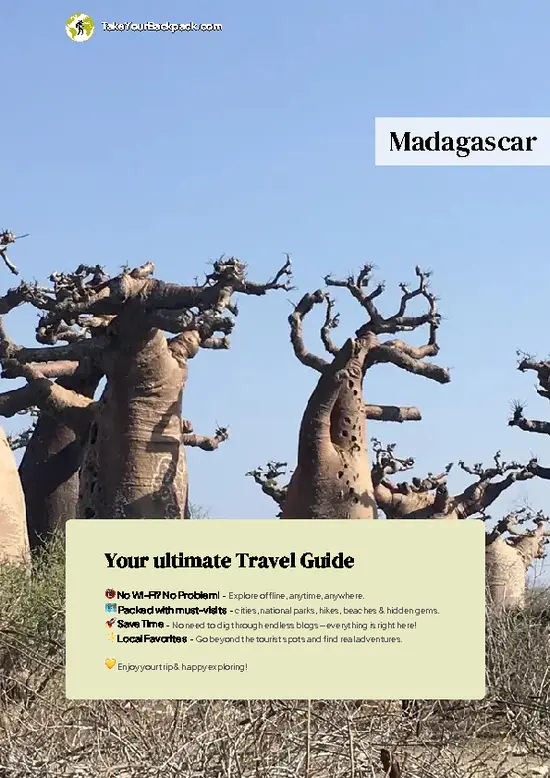
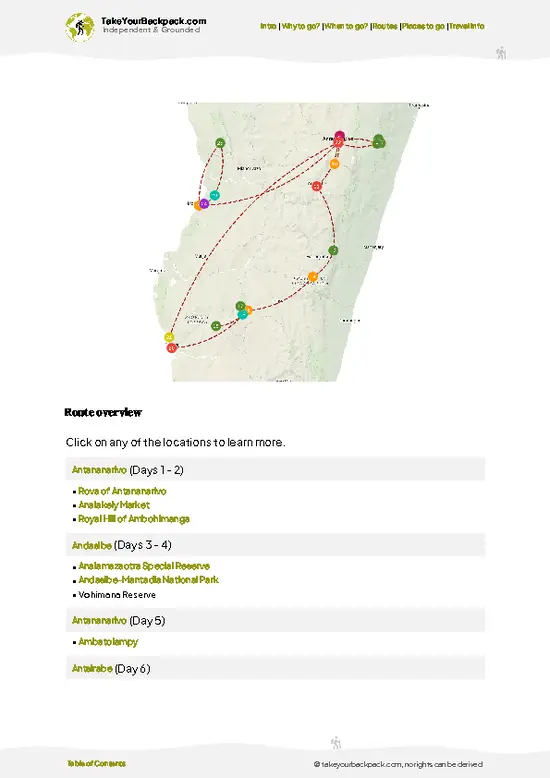
example page 0 from our offline Travel Guide for Madagascar
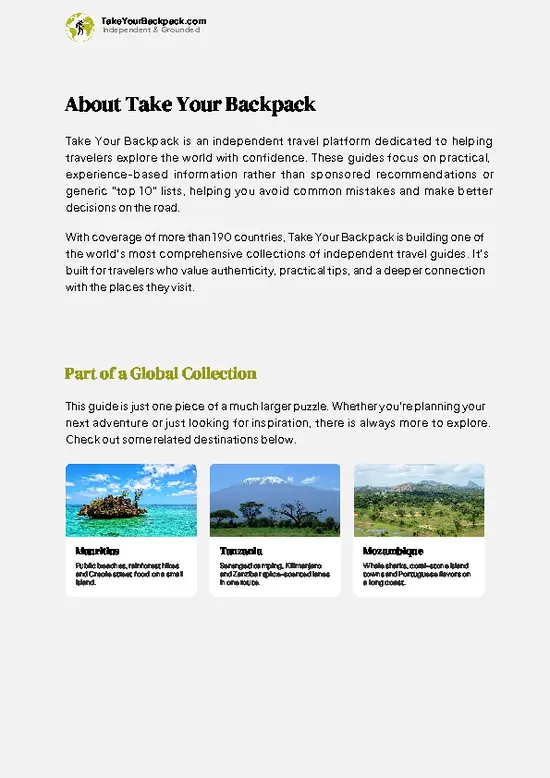
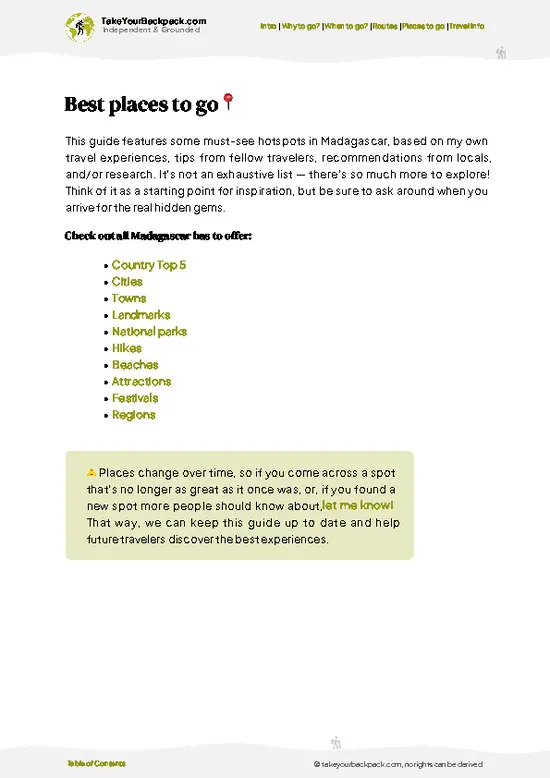
example page 1 from our offline Travel Guide for Madagascar
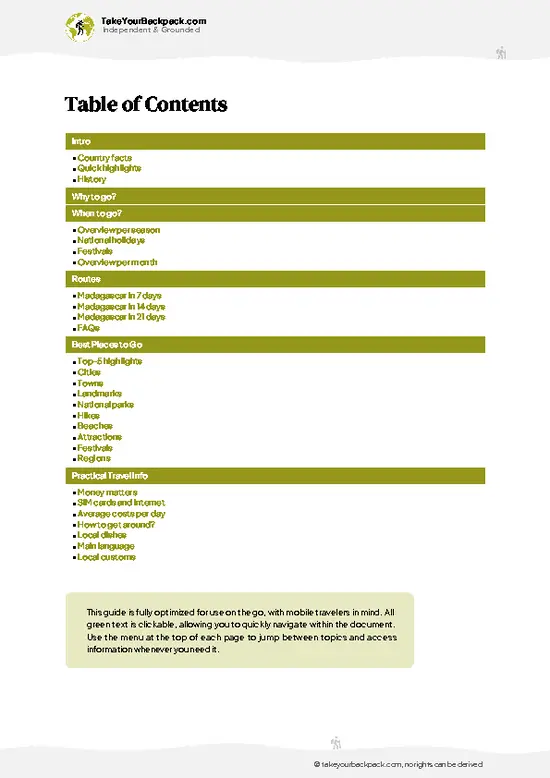
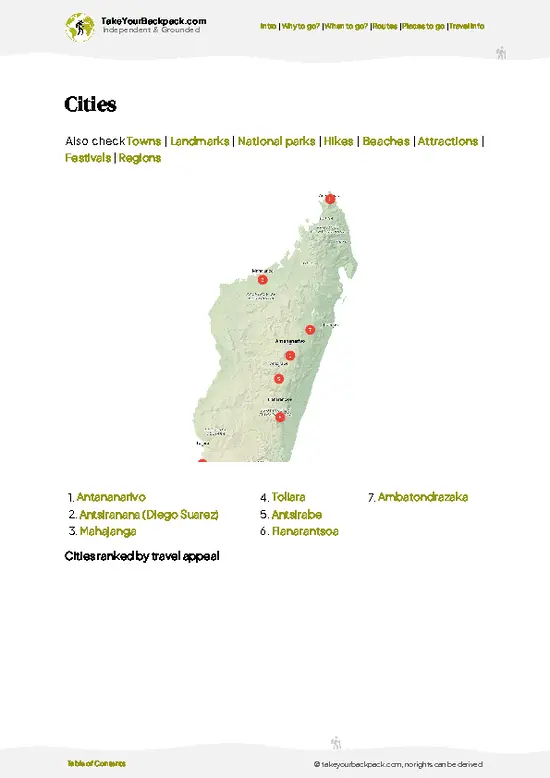
example page 2 from our offline Travel Guide for Madagascar
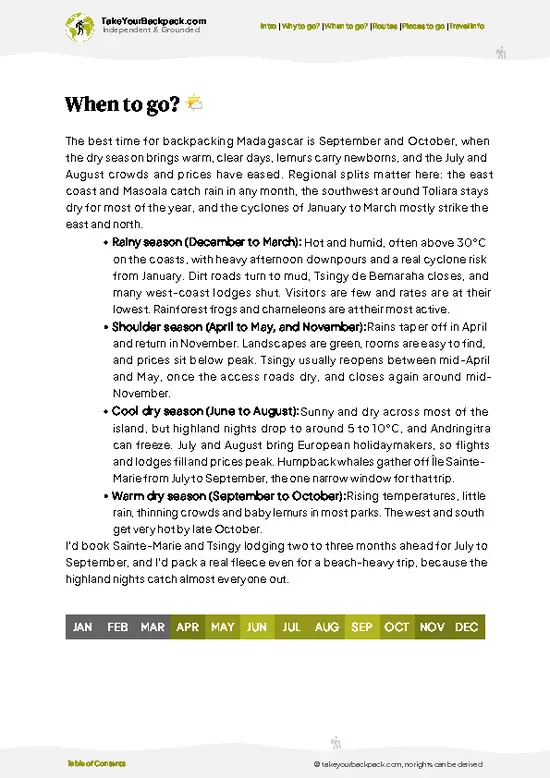
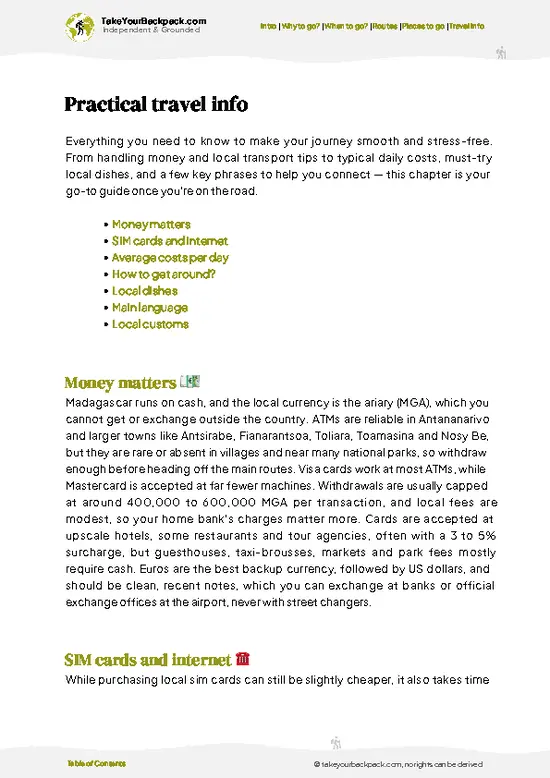
example page 3 from our offline Travel Guide for Madagascar
example page 4 from our offline Travel Guide for Madagascar
example page 5 from our offline Travel Guide for Madagascar
example page 6 from our offline Travel Guide for Madagascar
example page 7 from our offline Travel Guide for Madagascar
Loading the map 🌍
CLICK TO FILTER
cities
towns
landmarks
national parks
hikes
beaches
attractions
festivals
regions
SHOW COUNTRY’S BESTSHOW ALL

✨ Why go?
Ranked #16 town in Madagascar
Why visitors keep coming back

Ambatolampy works as a short stop on the RN7 between the capital and Antsirabe, and most travelers give it one night or an unhurried afternoon. The draw is the aluminum casting workshops, where families pour molten scrap into sand molds and produce cooking pots you can buy straight from the maker. Add the Tsiafajavona trail in nearby Ankaratra Massif and you have enough for two days if you like hiking. It suits slow travelers, solo walkers and anyone curious about how things are made. Nightlife is basically absent, and accommodation is simple, so those chasing company should push on to Antsirabe.

💡 HighlightsKey sights and experiences for travelers

  1. Aluminum foundries: Small family workshops melt recycled metal and pour it into sand molds, then finish pots on lathes. Go in the morning when casting is under way. Entry is usually free, a small tip is appreciated, and pots cost a few dollars. Allow 1 to 2 hours.
  2. Town market: Stalls sell highland vegetables, strawberries in season, and the finished pots and ladles. Mornings are liveliest. Browsing costs nothing and takes about an hour.
  3. Roadside zebu brochette stalls: Grilled skewers and fried street snacks are sold along the RN7 at dusk. Expect to spend roughly Ar 2,000 to 5,000 (about US$0.50 to 1). Thirty minutes is plenty.
  4. Old railway station: The line from the capital to Antsirabe passes here, and the colonial-era building shows how the highlands were once linked. It is a quick photo stop
… read more 👉
  1. Aluminum foundries: Small family workshops melt recycled metal and pour it into sand molds, then finish pots on lathes. Go in the morning when casting is under way. Entry is usually free, a small tip is appreciated, and pots cost a few dollars. Allow 1 to 2 hours.
  2. Town market: Stalls sell highland vegetables, strawberries in season, and the finished pots and ladles. Mornings are liveliest. Browsing costs nothing and takes about an hour.
  3. Roadside zebu brochette stalls: Grilled skewers and fried street snacks are sold along the RN7 at dusk. Expect to spend roughly Ar 2,000 to 5,000 (about US$0.50 to 1). Thirty minutes is plenty.
  4. Old railway station: The line from the capital to Antsirabe passes here, and the colonial-era building shows how the highlands were once linked. It is a quick photo stop of about 20 minutes, free.
  5. Walk through the rice terraces: Paths leave from the edge of town into paddies and brick villages. Late afternoon light is best. It is free and takes 1 to 2 hours.
Beyond town, Lake Tritriva and the Ankaratra Massif with its Tsiafajavona summit make the best day trips. For a first visit, the aluminum foundries are the one stop to make.
Spotted a mistake or missing something? Contact us.

Things to do near Ambatolampy

Ratings based on Tripadvisor reviews. When you book through this link, you support our work at no extra cost to you.

🏘️ NeighborhoodsHow different areas shape the experience

Ambatolampy is small enough to cover on foot in an afternoon, and its areas differ mostly by what they sell and make.
  • Route Nationale 7 strip: The main road is loud with trucks, taxi-brousses and horns, and smells of diesel and frying dough. Roadside stalls sell mofo gasy (rice cakes) and brochettes, so you eat hot snacks while buses roar past.
  • Market area: Stalls pile up with potatoes, carrots, apples and aluminum pots. Mornings are busiest and muddiest. You leave with a bag of cheap fruit and a feel for highland trade.
  • Aluminum foundry lanes: Workshops behind the main road melt scrap in sand molds, and the air carries hot metal and smoke. Artisans pour pots by hand and will often let you watch, so you see a cooking pot born.
  • Hillside residential streets: Brick houses climb steep dirt lanes,
… read more 👉
Ambatolampy is small enough to cover on foot in an afternoon, and its areas differ mostly by what they sell and make.
  • Route Nationale 7 strip: The main road is loud with trucks, taxi-brousses and horns, and smells of diesel and frying dough. Roadside stalls sell mofo gasy (rice cakes) and brochettes, so you eat hot snacks while buses roar past.
  • Market area: Stalls pile up with potatoes, carrots, apples and aluminum pots. Mornings are busiest and muddiest. You leave with a bag of cheap fruit and a feel for highland trade.
  • Aluminum foundry lanes: Workshops behind the main road melt scrap in sand molds, and the air carries hot metal and smoke. Artisans pour pots by hand and will often let you watch, so you see a cooking pot born.
  • Hillside residential streets: Brick houses climb steep dirt lanes, cool and quiet by evening. The walk is tiring but ends in views over rice terraces and pine-dotted hills.

⌛️ 1 dayWhat you can realistically do in a day

8:30 AM, Aluminum foundries: Start with the workshops while crews pour metal into sand molds. Watching a pot go from scrap to shiny takes an hour, and you can buy one directly. Walk into the center afterward.
10:30 AM, Town market: Browse vegetables, fruit and hardware stalls along the main road. It is a good spot for a coffee and fried dough snack before moving on.
12:30 PM, Roadside hotely: Eat rice with zebu or pork at a local eatery. Plates are filling and the owners are usually curious about visitors.
2:00 PM, Old railway station: Stroll to the colonial station and look at the tracks that still cut through town.
3:30 PM, Rice terrace walk: This is the off-route stop. Take a footpath from the town edge past brick hamlets and paddies, where kids wave and ducks crowd the channels. Return by dusk for grilled skewers.

🌤️ When to go?Weather, crowds, and seasonal trade-offs

  • May to October (cool, dry): Days reach 18 to 24°C (64 to 75°F), but nights at about 1,600 m drop to 3 to 8°C (37 to 46°F), and frost is possible in July. Skies are mostly sunny, with roughly 11 hours of daylight.
  • November to April (warm, wet): Highs of 24 to 27°C (75 to 81°F) come with afternoon downpours, and January to March sees cyclone-driven rain. Dirt tracks turn to mud, though the hills glow green.
  • Crowds and prices: Few tourists come in any month. Prices stay steady, though transport can jump around holidays like June 26.
Pack a warm layer even for a June or August visit.

source: climatestotravel.comJANJanuary: fair for travelingFEBFebruary: fair for travelingMARMarch: fair for travelingAPRApril: good for travelingMAYMay: excellent for travelingJUNJune: excellent for travelingJULJuly: highly recommended for travelingAUGAugust: highly recommended for travelingSEPSeptember: highly recommended for travelingOCTOctober: highly recommended for travelingNOVNovember: good for travelingDECDecember: fair for traveling
when-to-go

✈️ The backpacker research shortcutMadagascar Travel Guide

An offline-friendly backpacking guide with optimized travel routes, ranked highlights, transport advice, and the best areas to stay.
example page 0 from our offline Travel Guide for Madagascar
example page 1 from our offline Travel Guide for Madagascar
example page 2 from our offline Travel Guide for Madagascar
example page 3 from our offline Travel Guide for Madagascar
example page 4 from our offline Travel Guide for Madagascar
example page 5 from our offline Travel Guide for Madagascar
example page 6 from our offline Travel Guide for Madagascar
example page 7 from our offline Travel Guide for Madagascar
The digital guide (305 pages) contains:
✅ 96 highlights, ranked by travel appeal
✅ Optimized 7, 14 & 21-day travel routes
✅ Cities, national parks, landmarks, beaches
✅ How to get around
✅ Offline-friendly for travel without Wi-Fi
👉 Click to see all 30+ guide features

📅 Plan smarter in minutes, not weeks
✅ Month by month travel advice
✅ Festivals & national holidays
✅ Budget expectations

🗺️ Go to the right places, skip the overrated ones
✅ Honest pros & cons of destinations
✅ Top hikes, parks & viewpoints
✅ Lesser-known places most travelers miss
✅ Clear “worth it vs skip it” guidance

🛏️ Travel smoothly without rookie mistakes
✅ Best areas to stay
✅ Transport systems explained simply
✅ Common scams & safety advice
✅ SIM cards, money & practical tips

🌍 Understand the country, not just visit it
✅ Culture & traditions
✅ 52 Essential phrases & customs
✅ Festivals worth planning around
✅ Traveler-friendly historical context
✅ Insights that make places more meaningful

📱 Built for real travel conditions
✅ Fully downloadable PDF
✅ Works completely offline
✅ Optimized for phone use
✅ Useful in remote areas & buses
✅ Everything in one place
Stop searching, start planning
Get instant access to your full guide. 30‑day money-back guarantee.
+ Add another guide for just

By proceeding you agree to our terms.
Sent to your inbox immediately after payment • 100% Secure Checkout
Best Backpacking Travel Advisor 2025 tourism awardBest Backpacking
Travel Advisor
2025
What others say about Take Your Backpack Guides:
⭐⭐⭐⭐⭐
Fantastic, amazing amount of information!
⭐⭐⭐⭐⭐
My goodness this is amazing, it's what I've been looking for hats off too you!
⭐⭐⭐⭐⭐
I think this is absolutely BRILLIANT
⭐⭐⭐⭐
Very complete and informative. It's still missing places, but I gotta to commend you
⭐⭐⭐⭐⭐
This is truly amazing, thank you, can't wait to explore it with my kids!
⭐⭐⭐⭐⭐
Awesome resource, thank you!
⭐⭐⭐⭐⭐
This is amazing! Can't wait to explore the ones I haven't seen
⭐⭐⭐⭐
I love this! Well done, great idea.
⭐⭐⭐⭐⭐
Thanks for taking the time to make this gem!
⭐⭐⭐⭐⭐
This might be the best website I've ever seen.
⭐⭐⭐⭐⭐
Congratulations, and thank you so much for your work; it's incredibly valuable.
⭐⭐⭐⭐
In all seriousness I think you did a great job pointing out the important spots
⭐⭐⭐⭐⭐
10/10 very good
⭐⭐⭐⭐⭐
As someone who's only just starting to visit regularly this is awesome, thank you.
⭐⭐⭐⭐
Thank you very much! I'm going to visit my dad, it's going to be very useful!
⭐⭐⭐⭐⭐
This is really cool! We'll be travelling for the first time and this definitely come in handy.
⭐⭐⭐⭐⭐
You are now our minister of culture, congratulations 👨‍💼
⭐⭐⭐⭐⭐
Just wanted to tell you that this is a pearl! Going to follow your recommendations.
⭐⭐⭐⭐⭐
This is so cool. I'll definitely be using the resource for my travels soon.
⭐⭐⭐⭐⭐
This is very impressive! Good work.
⭐⭐⭐⭐⭐
This is an amazing and informative site. Very well done!

🛏️ Where to stay?How to pick the right area

The best area for a budget bed is the stretch around the RN7 center, close to the market and taxi-brousse stops. Beds are few in Ambatolampy, so expect small guesthouses with basic private rooms rather than a dorm scene, and plan on simple rooms at roughly 25,000 to 60,000 ariary (US$6 to 14). Walking distance to food and morning departures is the big plus. Trucks rattle through until late and start again before dawn, so earplugs matter. A quieter option is the residential streets just off the main road, which are calmer at night but a bit steeper to walk. Nights are cold, so check for blankets. … read more 👉
The best area for a budget bed is the stretch around the RN7 center, close to the market and taxi-brousse stops. Beds are few in Ambatolampy, so expect small guesthouses with basic private rooms rather than a dorm scene, and plan on simple rooms at roughly 25,000 to 60,000 ariary (US$6 to 14). Walking distance to food and morning departures is the big plus. Trucks rattle through until late and start again before dawn, so earplugs matter. A quieter option is the residential streets just off the main road, which are calmer at night but a bit steeper to walk. Nights are cold, so check for blankets. If rooms are full, Antsirabe has far more choice.

🚌 Getting aroundHow to get around Ambatolampy

A shared taxi-brousse seat around town or to nearby villages costs about 500 to 1,500 ariary (US$0.10 to 0.35), paid in cash to the driver or his assistant once you are seated. Ambatolampy sits on the busy RN7, so most visitors arrive by minibus and then walk. The center is compact, the road is noisy, and public transport is informal, packed and unscheduled.
  • Walking: Free, and it covers the market, foundries and main road in under an hour. Steep side lanes are muddy in the rains, but you smell woodsmoke and hear hammering as you climb.
  • Taxi-brousse: To Antananarivo (about 70 km) costs roughly 8,000 to 12,000 ariary (US$2 to 3) and takes 2 to 3 hours. Southbound to Antsirabe is about 5,000 to 8,000 ariary (US$1.20 to 2) for 1.5 to 2 hours. Vehicles leave when full, mostly between early morning
… read more 👉
A shared taxi-brousse seat around town or to nearby villages costs about 500 to 1,500 ariary (US$0.10 to 0.35), paid in cash to the driver or his assistant once you are seated. Ambatolampy sits on the busy RN7, so most visitors arrive by minibus and then walk. The center is compact, the road is noisy, and public transport is informal, packed and unscheduled.
  • Walking: Free, and it covers the market, foundries and main road in under an hour. Steep side lanes are muddy in the rains, but you smell woodsmoke and hear hammering as you climb.
  • Taxi-brousse: To Antananarivo (about 70 km) costs roughly 8,000 to 12,000 ariary (US$2 to 3) and takes 2 to 3 hours. Southbound to Antsirabe is about 5,000 to 8,000 ariary (US$1.20 to 2) for 1.5 to 2 hours. Vehicles leave when full, mostly between early morning and mid-afternoon, and you sit knee to knee with sacks of vegetables.
  • Pousse-pousse and local taxis: Short hops run about 1,000 to 3,000 ariary (US$0.25 to 0.70) after bargaining before you climb in. You see the town at a slow pace.
  • Motorbike or hired car with driver: Needed for Lake Tritriva or forest sites, at roughly 40,000 to 120,000 ariary (US$9 to 27) or more for a car. Tracks are bumpy and dusty, with highland views.

👛 Costs (as of 16 October 2026)How expensive it really is

Budget travelers can expect to spend roughly US$18 to 38 a day in Ambatolampy.
CategoryBudget RangeLocal Reality
Dorm accommodationUS$6 to 14No dorms; simple private rooms in small guesthouses, with cold nights and shared or basic bathrooms.
MealsUS$4 to 9Rice with zebu or vegetables at a hotely costs about US$1.50 to 3; street snacks are pennies.
Local transportUS$2 to 6Taxi-brousse hops and pousse-pousse rides; longer trips cost more.
Basic activities/entry feesUS$3 to 7Guided hike or foundry visit with a small tip.
Miscellaneous expensesUS$2 to 3Water, snacks, a warm layer or data credit.
Total Daily BudgetUS$18 to 38Per person, per day, in high season.
Buy fruit and snacks at the market and eat your main meal at a local hotely to save the most.
⚠️ Prices can change and everyone travels differently, so take this as a rough guide. Hope it helps you plan your adventure!

🚌 Day tripsWhere to go beyond the main area

Ambatolampy works well as a quiet base for short outings, though you need your own wheels or patience with taxi-brousses.Andrangoloaka Mountain: This granite peak above town gives wide views over highland pines and farmland. Allow 3 to 5 hours for the climb with a local guide, around 20,000 to 40,000 ariary (US$4.50 to 9). Go in the dry months, as wet rock is slick, and start early before clouds gather.
Lake Tritriva: A deep green crater lake ringed by cliffs near Antsirabe. It is about 1.5 to 2 hours by road, so a hired car or motorbike with a driver (roughly 80,000 to 150,000 ariary, US$18 to 34, plus about 10,000 ariary entry) makes it feasible in a day. First-timers often start too late and lose the light.
Antsirabe: A highland city of pousse-pousses and thermal baths, about 1.5 to 2 hours … read more 👉
Ambatolampy works well as a quiet base for short outings, though you need your own wheels or patience with taxi-brousses.Andrangoloaka Mountain: This granite peak above town gives wide views over highland pines and farmland. Allow 3 to 5 hours for the climb with a local guide, around 20,000 to 40,000 ariary (US$4.50 to 9). Go in the dry months, as wet rock is slick, and start early before clouds gather.
Lake Tritriva: A deep green crater lake ringed by cliffs near Antsirabe. It is about 1.5 to 2 hours by road, so a hired car or motorbike with a driver (roughly 80,000 to 150,000 ariary, US$18 to 34, plus about 10,000 ariary entry) makes it feasible in a day. First-timers often start too late and lose the light.
Antsirabe: A highland city of pousse-pousses and thermal baths, about 1.5 to 2 hours south by taxi-brousse for US$1.20 to 2. Craft workshops, markets and cafes fill a day nicely. Return before dusk, as the last minibuses thin out.
👉 Explore Antsirabe

🛡️ SafetySafety Tips and Common Scams in Ambatolampy

Ambatolampy is a calm highland town, and most problems are minor. Pickpocketing in the crowded market and around taxi-brousse stops happens, so keep phones in a front pocket and carry only small cash. Agree on prices before any pousse-pousse ride or guide. Night roads are poorly lit and trucks speed on the RN7, so avoid walking the highway in the dark. Solo travelers, women included, generally find locals curious and friendly, but return to your room by early evening, as streets empty fast. Cold nights are a bigger nuisance than crime.

FAQFrequently asked questions about Ambatolampy

Ambatolampy is worth a short stop rather than a long stay. Its aluminum foundries, market and highland views reward a half day, and it sits on the RN7 between Antananarivo (about 70 km) and Antsirabe. Add a hike up Andrangoloaka for a fuller visit.
One night is plenty, and a full day suffices for the foundries, market and a walk. Add a second day if you hike Andrangoloaka (3 to 5 hours) or hire transport to Lake Tritriva. Most travelers pass through in half a day.
Yes, it works from Antananarivo, with taxi-brousses taking 2 to 3 hours each way for about US$2 to 3. Leave early to see the foundries and market, then return by mid-afternoon. Antsirabe is also reachable in 1.5 to 2 hours, but a day trip there leaves little time to explore.
⚠️ Things can change over time, so always validate details locally before you go.

Other Malagasy towns near Ambatolampy

Explore more nearby:

  • Anosibe An’ala—Rainforest edge, Mangoro River, frog chorus, red mud lanes| 81 km away
  • Moramanga—1947 memorial, rail junction, RN2 skewers, Andasibe gateway| 96 km away
  • Andasibe—Indri calls, night walks, lemur island, forest guides| 114 km away

💡 Not sure where to go next?
Create a personalized itinerary for Madagascar including Ambatolampy and the places that fit your trip.

Generate my itinerary

👉 Discover all towns

Or checkout all Madagascar has to offer (think cities, towns, villages, national parks, hikes, beaches, festivals)
Country photo of Madagascar

We 💚 feedbackSumming up the experience

Give Ambatolampy one night. A morning at the foundries and a late walk through the terraces cover it, and a second day only makes sense if you plan the Ankaratra hike. I would pack a fleece and carry small bills for pots and skewers.

✈️ When did I visit Madagascar?
Madagascar I went backpacking in October 2019. With a friend I rented a 4WD and drove around the southern part of Madagascar.

✍️ Help improve this page!
The information on this page is based on my own backpacking experience in Madagascar, supplemented with up-to-date research and feedback from other travelers. Travel details can change, so if you notice anything outdated or incomplete, feel free to let me know.


🙋‍♂️ Give feedback

👋 Meet the founderWho’s Behind Take Your Backpack?

Johan, backpacker and founder of TakeYourBackpackHi, I’m Johan (Netherlands 🇳🇱), the creator of TakeYourBackpack. Over the past 3 decades, I’ve backpacked through 90+ countries across six continents, gaining extensive experience with independent travel, long-term trips, and overland routes.

This site is built on a combination of firsthand travel experience and carefully curated insights from other backpackers. Many guides are based on places I’ve personally visited, while others bring together tips, observations, and practical advice shared by trusted travelers I’ve met along the way.

The goal is to provide realistic, experience-driven guidance — not generic itineraries — so you can explore destinations with better context, clearer expectations, and more confidence.