×

Madagascar🇲🇬 | townsAnkifyNosy Be ferry dock, mangrove bay, grilled crab, cashew stands | things to do and best time to go

Explore AmbatolampyExplore Anosibe An’ala

Backpacking in Ankify
👍 Recommendedtown ranked #14
By Johan Kruseman 🇳🇱 | Updated October 16, 2026

Most people reach Ankify because it is the ferry landing for Nosy Be, where speedboats and the slow ferry slap across the Mozambique Channel. Just as useful, the village itself is a quiet roadside stop with grilled fish, cashew sellers and a mangrove-lined bay. Ankify sits on the northwest coast of Madagascar, at the end of the paved road from Ambanja. I once arrived without cash and learned that the nearest reliable ATM is back in town. The sand is gray, the shade is thin, and the wait smells of diesel and salt. Bring enough ariary before you come.

Discover everything you want to know in the 📖 Madagascar Travel Guide.


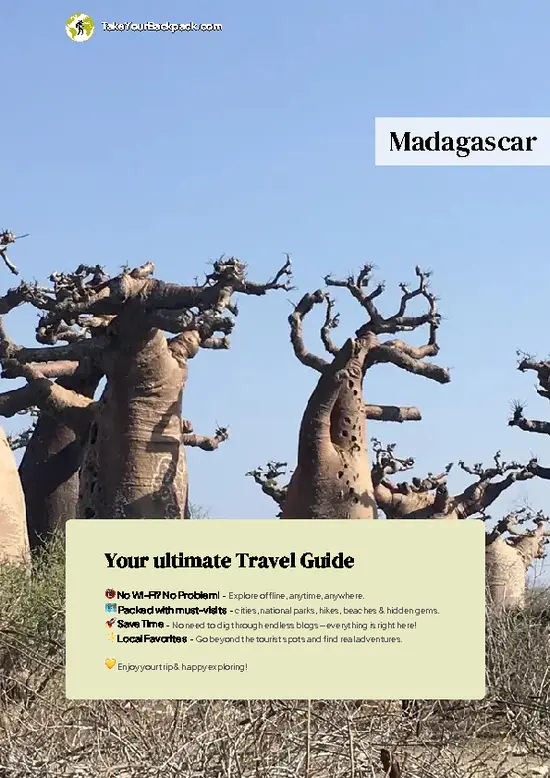
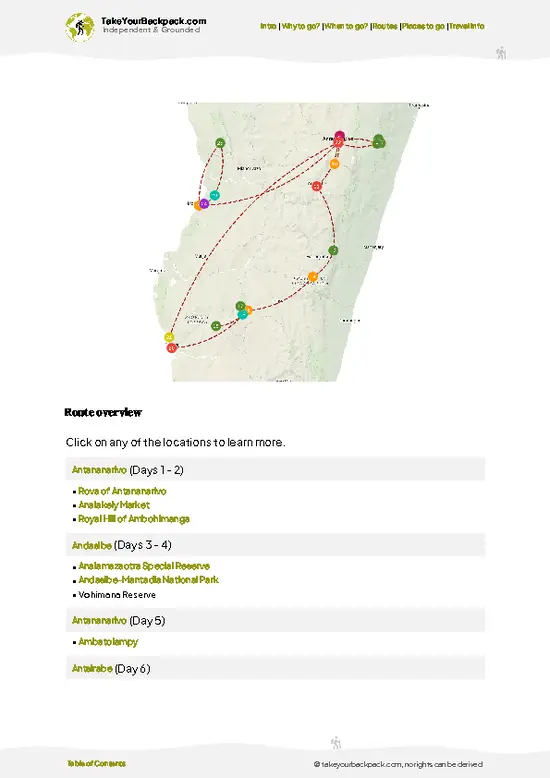
example page 0 from our offline Travel Guide for Madagascar
example page 1 from our offline Travel Guide for Madagascar
example page 2 from our offline Travel Guide for Madagascar
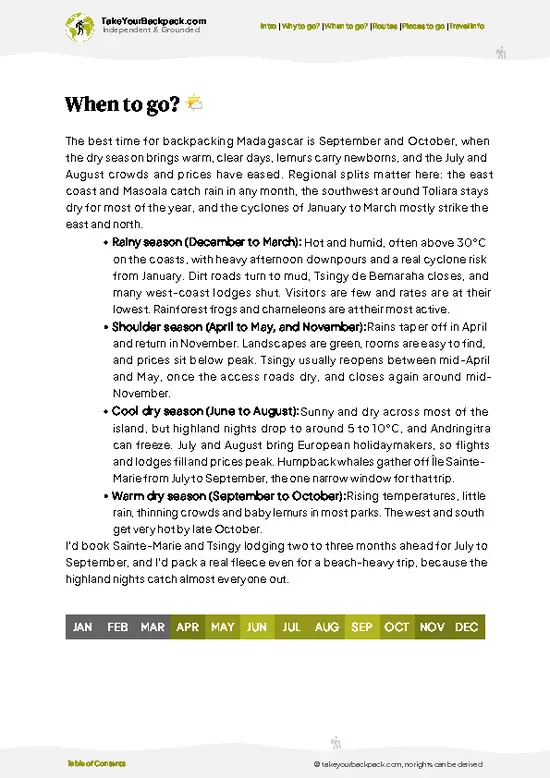
example page 3 from our offline Travel Guide for Madagascar
example page 4 from our offline Travel Guide for Madagascar
example page 5 from our offline Travel Guide for Madagascar
example page 6 from our offline Travel Guide for Madagascar
example page 7 from our offline Travel Guide for Madagascar
Loading the map 🌍
CLICK TO FILTER
cities
towns
landmarks
national parks
hikes
beaches
attractions
festivals
regions
SHOW COUNTRY’S BESTSHOW ALL

✨ Why go?
Ranked #14 town in Madagascar
Why visitors keep coming back

Ankify earns its place as a gateway between the mainland and Nosy Be, not as a place to stay for a week. Most travelers pass through in an hour or two, but those who linger a night find a calm, low-key coast where evenings mean fishermen mending nets and a few simple guesthouses with seafood grilled on the beach. It suits solo travelers and slow movers who like to break up the long road from Ambanja, and anyone catching an early crossing who would rather sleep close to the dock. Social life is thin. You will meet other backpackers in the boat queue and at the ticket hut, not at a bar. Treat it as a smart pause, and you will enjoy it.

💡 HighlightsDon't-miss highlights and experiences

  1. Ankify ferry and speedboat landing: The reason most people come, a working dock where boats leave for Nosy Be and the mangroves frame the crossing. Go early in the morning when the water is calmest. Expect to spend 30 minutes to 1 hour waiting and boarding. Tickets vary by boat type, roughly US$3 to 15, and the dock itself is free to watch.
  2. Ankify beach and fishing boats: A narrow strip of gray sand where wooden pirogues are pulled up and nets dry. Visit at sunrise or late afternoon for the best light and the day's catch. Free, and 30 minutes to 1 hour is plenty.
  3. Roadside grilled fish stalls: Women cook fish, crab and skewers over charcoal near the landing. Come around midday when the catch is fresh. A plate costs roughly 8,000 to 20,000 ariary (about US$2 to 5), and a meal takes 30 to 45 minutes.
… read more 👉
  1. Ankify ferry and speedboat landing: The reason most people come, a working dock where boats leave for Nosy Be and the mangroves frame the crossing. Go early in the morning when the water is calmest. Expect to spend 30 minutes to 1 hour waiting and boarding. Tickets vary by boat type, roughly US$3 to 15, and the dock itself is free to watch.
  2. Ankify beach and fishing boats: A narrow strip of gray sand where wooden pirogues are pulled up and nets dry. Visit at sunrise or late afternoon for the best light and the day's catch. Free, and 30 minutes to 1 hour is plenty.
  3. Roadside grilled fish stalls: Women cook fish, crab and skewers over charcoal near the landing. Come around midday when the catch is fresh. A plate costs roughly 8,000 to 20,000 ariary (about US$2 to 5), and a meal takes 30 to 45 minutes.
  4. Mangrove edge walk: A short stroll along the shoreline reveals mudskippers, crabs and herons among the roots. Go at low tide in the morning. It is free and takes about 45 minutes.
  5. Cashew and spice stands: Local sellers offer roasted cashews, vanilla and ylang-ylang products to travelers waiting for boats. Mornings are busiest. Budget 2 to 5 US$ for small buys and 15 to 20 minutes to browse and bargain.
Day trips from Ankify can include the markets and cacao farms around Ambanja, the Tsingy-like hills inland, and the beaches and lemur reserve of Lokobe on Nosy Be. The easiest item to miss is the mangrove edge walk, which most people skip while watching the dock.
Spotted a mistake or missing something? Contact us.

🏘️ NeighborhoodsWhere things are and how it's laid out

Ankify is a ferry landing on the mainland coast of the Ampasindava Peninsula, so the areas are small and you cover them on foot in minutes.
  • The ferry landing and port: Boats from Nosy Be dock at a muddy, tide-dependent shore where porters shout, zebu carts rattle and the air smells of diesel and drying fish. Come to watch the boat crowds sort themselves out, then leave.
  • Main road strip: A short stretch of dust and tarmac lined with tiny shops, a few roadside eateries and taxi-brousse touts. Grilled fish, rice and sweet coffee cost little, and you get a plain, unhurried view of daily mainland life.
  • Village lanes behind the coast: Thatched houses, mango trees, chickens and children calling “vazaha” as you pass. Walking here in the early light, with smoke from cooking fires drifting over, is the
… read more 👉
Ankify is a ferry landing on the mainland coast of the Ampasindava Peninsula, so the areas are small and you cover them on foot in minutes.
  • The ferry landing and port: Boats from Nosy Be dock at a muddy, tide-dependent shore where porters shout, zebu carts rattle and the air smells of diesel and drying fish. Come to watch the boat crowds sort themselves out, then leave.
  • Main road strip: A short stretch of dust and tarmac lined with tiny shops, a few roadside eateries and taxi-brousse touts. Grilled fish, rice and sweet coffee cost little, and you get a plain, unhurried view of daily mainland life.
  • Village lanes behind the coast: Thatched houses, mango trees, chickens and children calling “vazaha” as you pass. Walking here in the early light, with smoke from cooking fires drifting over, is the best part of the stop.
  • Shoreline and mangroves: Quiet flats where fishermen mend nets and pirogues rest on the sand. Nightlife is absent, and the reward is a calm sunset over the water.

⌛️ 1 dayHow to make the most of one day

7:00 AM, Ankify landing: Start at the dock while boats load and the mangrove light is soft. Buy your ticket early and watch the crossings, which is the heart of the village. Then walk five minutes along the shore.
8:30 AM, Fishing beach: Pirogues come in and nets get sorted. Take photos from a polite distance and chat with the fishers if they are open to it. Move on along the sand toward the mangroves.
10:00 AM, Mangrove edge: Walk the shoreline at low tide, a quiet corner most visitors ignore. Look for mudskippers and small crabs, then head back to the road.
12:00 PM, Grilled fish stalls: Pick a stall with a busy charcoal grill, order the catch with rice and enjoy the shade.
2:00 PM, Cashew and spice stands: Browse for roasted cashews and vanilla, then settle in for the afternoon crossing, or find a simple room for the night.

🌤️ When to go?When to go for the best experience

The dry months of May to October give the easiest travel, with highs around 28 to 31°C (82 to 88°F), little rain and roughly 11 to 12 hours of daylight.
  • Dry Season (May to October): Calm seas make the Nosy Be crossing smoother, roads are passable, and prices for rooms and transfers rise slightly.
  • Hot Wet Season (November to April): Expect 30 to 34°C (86 to 93°F), heavy downpours, humidity and the occasional cyclone. Dirt roads turn to mud, though crowds thin and rooms are cheaper.
  • Shoulder Weeks (October, early November): Warm, quieter and mostly dry.
Book onward transport a day ahead in July and August.

source: climatestotravel.comJANJanuary: not recommended for travelingFEBFebruary: not recommended for travelingMARMarch: not recommended for travelingAPRApril: not recommended for travelingMAYMay: highly recommended for travelingJUNJune: excellent for travelingJULJuly: excellent for travelingAUGAugust: excellent for travelingSEPSeptember: excellent for travelingOCTOctober: highly recommended for travelingNOVNovember: not recommended for travelingDECDecember: not recommended for traveling
when-to-go

✈️ The backpacker research shortcutMadagascar Travel Guide

An offline-friendly backpacking guide with optimized travel routes, ranked highlights, transport advice, and the best areas to stay.
example page 0 from our offline Travel Guide for Madagascar
example page 1 from our offline Travel Guide for Madagascar
example page 2 from our offline Travel Guide for Madagascar
example page 3 from our offline Travel Guide for Madagascar
example page 4 from our offline Travel Guide for Madagascar
example page 5 from our offline Travel Guide for Madagascar
example page 6 from our offline Travel Guide for Madagascar
example page 7 from our offline Travel Guide for Madagascar
The digital guide (305 pages) contains:
✅ 96 highlights, ranked by travel appeal
✅ Optimized 7, 14 & 21-day travel routes
✅ Cities, national parks, landmarks, beaches
✅ How to get around
✅ Offline-friendly for travel without Wi-Fi
👉 Click to see all 30+ guide features

📅 Plan smarter in minutes, not weeks
✅ Month by month travel advice
✅ Festivals & national holidays
✅ Budget expectations

🗺️ Go to the right places, skip the overrated ones
✅ Honest pros & cons of destinations
✅ Top hikes, parks & viewpoints
✅ Lesser-known places most travelers miss
✅ Clear “worth it vs skip it” guidance

🛏️ Travel smoothly without rookie mistakes
✅ Best areas to stay
✅ Transport systems explained simply
✅ Common scams & safety advice
✅ SIM cards, money & practical tips

🌍 Understand the country, not just visit it
✅ Culture & traditions
✅ 52 Essential phrases & customs
✅ Festivals worth planning around
✅ Traveler-friendly historical context
✅ Insights that make places more meaningful

📱 Built for real travel conditions
✅ Fully downloadable PDF
✅ Works completely offline
✅ Optimized for phone use
✅ Useful in remote areas & buses
✅ Everything in one place
Stop searching, start planning
Get instant access to your full guide. 30‑day money-back guarantee.
+ Add another guide for just

By proceeding you agree to our terms.
Sent to your inbox immediately after payment • 100% Secure Checkout
Best Backpacking Travel Advisor 2025 tourism awardBest Backpacking
Travel Advisor
2025
What others say about Take Your Backpack Guides:
⭐⭐⭐⭐⭐
Fantastic, amazing amount of information!
⭐⭐⭐⭐⭐
My goodness this is amazing, it's what I've been looking for hats off too you!
⭐⭐⭐⭐⭐
I think this is absolutely BRILLIANT
⭐⭐⭐⭐
Very complete and informative. It's still missing places, but I gotta to commend you
⭐⭐⭐⭐⭐
This is truly amazing, thank you, can't wait to explore it with my kids!
⭐⭐⭐⭐⭐
Awesome resource, thank you!
⭐⭐⭐⭐⭐
This is amazing! Can't wait to explore the ones I haven't seen
⭐⭐⭐⭐
I love this! Well done, great idea.
⭐⭐⭐⭐⭐
Thanks for taking the time to make this gem!
⭐⭐⭐⭐⭐
This might be the best website I've ever seen.
⭐⭐⭐⭐⭐
Congratulations, and thank you so much for your work; it's incredibly valuable.
⭐⭐⭐⭐
In all seriousness I think you did a great job pointing out the important spots
⭐⭐⭐⭐⭐
10/10 very good
⭐⭐⭐⭐⭐
As someone who's only just starting to visit regularly this is awesome, thank you.
⭐⭐⭐⭐
Thank you very much! I'm going to visit my dad, it's going to be very useful!
⭐⭐⭐⭐⭐
This is really cool! We'll be travelling for the first time and this definitely come in handy.
⭐⭐⭐⭐⭐
You are now our minister of culture, congratulations 👨‍💼
⭐⭐⭐⭐⭐
Just wanted to tell you that this is a pearl! Going to follow your recommendations.
⭐⭐⭐⭐⭐
This is so cool. I'll definitely be using the resource for my travels soon.
⭐⭐⭐⭐⭐
This is very impressive! Good work.
⭐⭐⭐⭐⭐
This is an amazing and informative site. Very well done!

🛏️ Where to stay?Where staying makes the most sense

Ankify has almost no budget beds, so most backpackers sleep either in the small village itself or, more commonly, back on Nosy Be or in Ambanja. Staying in the village means simple basic rooms for around Ar 30,000 to 80,000 (US$7 to 18) a night, walkable access to the landing and quiet nights with only roosters and the surf for noise. It suits a very early departure, but food and options are limited.

Ambanja, about 1.5 to 2 hours away by road, has more guesthouses, markets, ATMs and frequent taxi-brousse links toward Diego Suarez and Antananarivo. It is busier and louder, though lighting and … read more 👉
Ankify has almost no budget beds, so most backpackers sleep either in the small village itself or, more commonly, back on Nosy Be or in Ambanja. Staying in the village means simple basic rooms for around Ar 30,000 to 80,000 (US$7 to 18) a night, walkable access to the landing and quiet nights with only roosters and the surf for noise. It suits a very early departure, but food and options are limited.

Ambanja, about 1.5 to 2 hours away by road, has more guesthouses, markets, ATMs and frequent taxi-brousse links toward Diego Suarez and Antananarivo. It is busier and louder, though lighting and people on the main streets make evening walks feel reasonable. Book ahead around July and August, and carry cash.

🚌 Getting aroundTransportation options and practical tips

From the ferry landing, the main road and its handful of shops sit a few minutes’ walk up the shore, so most travelers never need a ride inside Ankify itself. The village is tiny, traffic is a trickle of motorbikes and the occasional truck, and public transport means shared vehicles that leave when full rather than on a timetable.
  • Walking: Free, and it covers everything. You pass drying fish, mango shade and the smell of woodsmoke, and you can reach the shore and the main road in about five to ten minutes.
  • Speedboat from Nosy Be: The usual way in, around 30 to 45 minutes from Hell-Ville or Ambatoloaka area docks, roughly Ar 20,000 to 40,000 (US$5 to 9) per person on shared boats. Expect salt spray and a wet landing at low tide.
  • Taxi-brousse: Cramped minibuses and trucks run toward Ambanja, about
… read more 👉
From the ferry landing, the main road and its handful of shops sit a few minutes’ walk up the shore, so most travelers never need a ride inside Ankify itself. The village is tiny, traffic is a trickle of motorbikes and the occasional truck, and public transport means shared vehicles that leave when full rather than on a timetable.
  • Walking: Free, and it covers everything. You pass drying fish, mango shade and the smell of woodsmoke, and you can reach the shore and the main road in about five to ten minutes.
  • Speedboat from Nosy Be: The usual way in, around 30 to 45 minutes from Hell-Ville or Ambatoloaka area docks, roughly Ar 20,000 to 40,000 (US$5 to 9) per person on shared boats. Expect salt spray and a wet landing at low tide.
  • Taxi-brousse: Cramped minibuses and trucks run toward Ambanja, about 1.5 to 2 hours, for roughly Ar 10,000 to 15,000 (US$2 to 3.50). They leave when full, usually in the morning after boats arrive, and the ride gives you a long look at cacao and ylang-ylang country.
  • Private taxi or 4x4 transfer: A car to Ambanja or beyond costs around Ar 100,000 to 200,000 (US$22 to 45) for the vehicle. It is dusty and bumpy, but it saves waiting and lets you stop for fruit stalls.
  • Moto-taxi: Short hops cost Ar 2,000 to 5,000 (US$0.50 to 1). Hold tight on the potholed tracks and you get breezy views over the coast.

👛 Costs (as of 16 October 2026)How expensive it really is

A backpacker in Ankify spends roughly US$25 to 55 a day, with transport and lodging the largest items.
CategoryBudget RangeLocal Reality
Dorm accommodationUS$7 to 15No true dorms. Simple private rooms with a fan or net are the norm, and cheaper options sit in Ambanja.
MealsUS$5 to 10Rice with fish or zebu, grilled seafood and street snacks at roadside eateries.
Local transportUS$5 to 12Moto-taxis, shared taxi-brousse and boat fares add up quickly.
Basic activities/entry feesUS$4 to 10Plantation visits, village guides and park fees on nearby trips.
Miscellaneous expensesUS$4 to 8Water, SIM data, tips and small bags of fruit.
Total Daily BudgetUS$25 to 55Lower end with shared rides and local food.
Share boat and taxi fares with other travelers to cut transport costs sharply.
⚠️ Prices can change and everyone travels differently, so take this as a rough guide. Hope it helps you plan your adventure!

🚌 Day tripsEasy escapes and nearby places

Ankify works as a launch point for a few mainland outings, though most need a private driver or a boat.
Ambanja and Cacao Plantations: Around 1.5 to 2 hours by taxi-brousse, Ambanja is the center of Madagascar’s cacao and ylang-ylang farming. Budget Ar 30,000 to 60,000 (US$7 to 14) with transport and a plantation visit, and go in the dry season when roads are firmer. Many first-timers arrive in the afternoon, when farms are closed, so leave early.
👉 Explore Ambanja
Nosy Komba: Boats run from the Ankify area toward the island of lemurs and embroidery stalls, with a ride of about one hour on a chartered boat, often shared for Ar 50,000 to 100,000 (US$11 to 22) per person. Calm months from May to October are best. Agree the price before boarding, since add-ons for the lemur park appear later.
👉 Explore … read more 👉
Ankify works as a launch point for a few mainland outings, though most need a private driver or a boat.
Ambanja and Cacao Plantations: Around 1.5 to 2 hours by taxi-brousse, Ambanja is the center of Madagascar’s cacao and ylang-ylang farming. Budget Ar 30,000 to 60,000 (US$7 to 14) with transport and a plantation visit, and go in the dry season when roads are firmer. Many first-timers arrive in the afternoon, when farms are closed, so leave early.
👉 Explore Ambanja
Nosy Komba: Boats run from the Ankify area toward the island of lemurs and embroidery stalls, with a ride of about one hour on a chartered boat, often shared for Ar 50,000 to 100,000 (US$11 to 22) per person. Calm months from May to October are best. Agree the price before boarding, since add-ons for the lemur park appear later.
👉 Explore Nosy Komba
Lokobe Reserve: Around one hour by boat, then a short walk, Lokobe protects one of the last pieces of Nosy Be’s original forest, with black lemurs and chameleons. Guided half-day walks run roughly Ar 40,000 to 80,000 (US$9 to 18) plus entry. Go in the morning when animals are active.
👉 Explore Lokobe National Park

🛡️ SafetyTraveler Safety Guide

Ankify is a quiet, low-crime village, and the usual problems are small ones. At the ferry landing, porters and touts may grab luggage and then ask for payment, so decline firmly and carry your own bag unless you agree a price first. Agree boat and taxi fares before leaving, and keep cash split between pockets. After dark the village has few lights, so carry a headlamp, avoid the shoreline alone and stick to the main road. Solo travelers, including women, generally find locals friendly, though dressing modestly helps. Tap water is not safe to drink.

FAQFrequently asked questions about Ankify

Ankify is mostly a stopover, because it is the mainland landing for boats from Nosy Be rather than a destination with sights of its own. Its strengths are village lanes, mangrove shores and easy access to Ambanja’s cacao farms, about 1.5 to 2 hours away. Most travelers pass through in an hour or two.
One night is plenty, and most people need less than a day. A half day covers the landing, the village lanes and the coast, and a second day only makes sense if you add a plantation visit in Ambanja or a boat trip toward Nosy Komba, which costs roughly US$10 to 22.
Yes, Ankify is easy as a day trip from Nosy Be, since speedboats cross in about 30 to 45 minutes and cost roughly US$5 to 9 each way. You can combine it with a road trip to Ambanja, though the return boats are best caught before late afternoon. Leaving from Hell-Ville or Ambatoloaka early gives a full day.
⚠️ Things can change over time, so always validate details locally before you go.

Other Malagasy towns near Ankify

Explore more nearby:

  • Ambanja—Sambirano cocoa, ylang-ylang stills, chocolate workshops, river dusk| 13 km away
  • Sambava—Vanilla curing yards, casuarina beach, Marojejy permits, SAVA market| 209 km away
  • Maroantsetra—Masoala gateway, Nosy Mangabe, vanilla sheds, river crossings| 254 km away

💡 Not sure where to go next?
Create a personalized itinerary for Madagascar including Ankify and the places that fit your trip.

Generate my itinerary

👉 Discover all towns

Or checkout all Madagascar has to offer (think cities, towns, villages, national parks, hikes, beaches, festivals)
Country photo of Madagascar

We 💚 feedbackIs it worth it?

Most visitors rush past the shoreline behind the dock, but the mangrove edge is where Ankify feels like itself. I would arrive the day before a crossing, sleep close to the landing, and carry cash, since there is no bank here.

✈️ When did I visit Madagascar?
Madagascar I went backpacking in October 2019. With a friend I rented a 4WD and drove around the southern part of Madagascar.

✍️ Help improve this page!
The information on this page is based on my own backpacking experience in Madagascar, supplemented with up-to-date research and feedback from other travelers. Travel details can change, so if you notice anything outdated or incomplete, feel free to let me know.


🙋‍♂️ Give feedback

👋 Meet the founderWho’s Behind Take Your Backpack?

Johan, backpacker and founder of TakeYourBackpackHi, I’m Johan (Netherlands 🇳🇱), the creator of TakeYourBackpack. Over the past 3 decades, I’ve backpacked through 90+ countries across six continents, gaining extensive experience with independent travel, long-term trips, and overland routes.

This site is built on a combination of firsthand travel experience and carefully curated insights from other backpackers. Many guides are based on places I’ve personally visited, while others bring together tips, observations, and practical advice shared by trusted travelers I’ve met along the way.

The goal is to provide realistic, experience-driven guidance — not generic itineraries — so you can explore destinations with better context, clearer expectations, and more confidence.