×

Madagascar🇲🇬 | townsMorondavaAvenue of the Baobabs, mangrove estuaries, Sakalava culture | things to do and best time to go

Explore MaroantsetraExplore Sambava

Backpacking in Morondava
🏆 Top picktown ranked #1
By Johan Kruseman 🇳🇱 | Updated September 3, 2026

A decade ago, Morondava was the kind of place where the main street felt like a sand track, and the only soundtrack was the wind off the Mozambique Channel and the clatter of zebu carts. Today, you’ll find more guesthouses, a handful of Wi-Fi cafés, and a trickle of travelers swapping stories over THB beers, but the town still feels like the edge of the map. Morondava sits on Madagascar’s west coast, a sun-bleached outpost where the air smells of salt and grilled fish, and the pace is dictated by the tides. For backpackers, it’s less a destination than a launchpad—your gateway to the Avenue of the Baobabs, Kirindy Forest, and the surreal, bone-dry landscapes beyond. The town itself is low-key: a lively market, a few sandy beaches, and sunsets that turn the sky into a watercolor. It’s walkable, but for anything beyond the center, you’ll need a pousse-pousse or a shared taxi. Social life is mellow; you’ll meet other travelers, but don’t expect a party circuit. Costs are reasonable, though transport can add up if you’re chasing the big sights. Compared to busier Antsirabe or touristy Nosy Be, Morondava is more relaxed, more real, and best enjoyed as a staging ground for the wild west of Madagascar.

Discover everything you want to know in the 📖 Madagascar Travel Guide.
Loading the map 🌍
CLICK TO FILTER
cities
towns
villages
landmarks
national parks
hikes
beaches
attractions
festivals
regions
SHOW COUNTRY’S BESTSHOW ALL

✨ Why go?
Ranked #1 town in Madagascar
Why Morondava should be on your travel list

Morondava serves as a gateway for backpackers exploring Madagascar’s unique landscapes. Its proximity to the famous Avenue of the Baobabs makes it a must-stop for those eager to witness these towering trees at sunrise or sunset, when the light casts a magical glow. The town itself is walkable, with friendly locals and a laid-back vibe that invites you to linger. Small-scale hostels and guesthouses offer affordable stays, often with communal spaces where travelers can swap stories over local dishes like romazava or fresh seafood.

While some backpackers might breeze through in a day, many find themselves staying a few extra nights to soak in the beach atmosphere or embark on nearby hikes. The social scene is relaxed, perfect for solo travelers or small groups looking to connect without the … read more 👉
Morondava serves as a gateway for backpackers exploring Madagascar’s unique landscapes. Its proximity to the famous Avenue of the Baobabs makes it a must-stop for those eager to witness these towering trees at sunrise or sunset, when the light casts a magical glow. The town itself is walkable, with friendly locals and a laid-back vibe that invites you to linger. Small-scale hostels and guesthouses offer affordable stays, often with communal spaces where travelers can swap stories over local dishes like romazava or fresh seafood.

While some backpackers might breeze through in a day, many find themselves staying a few extra nights to soak in the beach atmosphere or embark on nearby hikes. The social scene is relaxed, perfect for solo travelers or small groups looking to connect without the pressure of a bustling nightlife. Here, you can enjoy a quiet evening under the stars or join a local fishing expedition. Morondava is ideal for those who appreciate a slower pace, making it a rewarding stop that balances adventure with a sense of community.
Want to include Morondava in your Madagascar route?
Create a personalized Madagascar itinerary that includes Morondava and the places that fit your trip — based on your travel style, budget, and available time. Get your route in seconds.

Generate my trip

💡 HighlightsEssential experiences to have while visiting Morondava

  1. Marché Municipal (Grand Market) — The real pulse of Morondava: fruit, spices, dried fish, zebu bits, and stalls stacked with woodcarvings and raffia. Best for early-morning bargaining, people-watching and spotting everyday life you won’t see in guidebooks.
  2. Port / Fishermen’s Landing — Colorful pirogues hauled up on the sand, crews gutting the catch and small fish auctions right on the beach. Great for photos, meeting fishermen, and watching the daily economy in action.
  3. Plage de Morondava & Sunset Promenade — A low-key town beach where locals swim and families gather. The sunsets over the Mozambique Channel are simple and wide open — bring a cold drink and a blanket.
  4. Morondava Riverfront & Estuary — Where the town meets the mangroves: short boat rides and ferries leave from here, and the
read more 👉
  1. Marché Municipal (Grand Market) — The real pulse of Morondava: fruit, spices, dried fish, zebu bits, and stalls stacked with woodcarvings and raffia. Best for early-morning bargaining, people-watching and spotting everyday life you won’t see in guidebooks.
  2. Port / Fishermen’s Landing — Colorful pirogues hauled up on the sand, crews gutting the catch and small fish auctions right on the beach. Great for photos, meeting fishermen, and watching the daily economy in action.
  3. Plage de Morondava & Sunset Promenade — A low-key town beach where locals swim and families gather. The sunsets over the Mozambique Channel are simple and wide open — bring a cold drink and a blanket.
  4. Morondava Riverfront & Estuary — Where the town meets the mangroves: short boat rides and ferries leave from here, and the estuary is a living ecosystem full of birds, pirogues and salt-of-the-earth activity.
  5. Cathédrale de l’Immaculée-Conception — A modest but atmospheric church that doubles as a community hub; visiting during a service gives a genuine glimpse into local religious life and architecture.
  6. Local artisan workshops & woodcarvers — Skip the airport souvenirs and walk the side streets off the market to find small workshops where artisans carve, paint and weave. You can often watch work being done and buy directly from the maker.
  7. Scattered town baobabs (local roadside baobabs) — Not the famous Avenue, but several solitary and cluster baobabs stand inside town and along main roads. They offer quiet, photogenic moments without the tourist crowds.
  8. Old colonial quarter & former gare area — Weathered facades, shuttered buildings and a few relics of the colonial era give a stroll through these streets a melancholic, story-filled feel — good for slow wandering and photography.
  9. Seafront grilled-fish stalls & evening food scene — Tiny grills and family stalls spring up near the beach at dusk. Freshly grilled fish, skewers and local sides — cheap, tasty and a true local experience.
  10. Short mangrove/ecotour departures — Several local guides run half-day boat trips into nearby mangroves from town. Expect birdlife, small waterways and a hands-on look at the coastal ecology that supports Morondava’s fishermen.
Avenue of the Baobabs, Kirindy Forest Reserve and the fishing village/ferry at Katsepy are all close enough for day trips from Morondava — Kirindy is my personal favorite for wildlife (nocturnal lemurs, giant fossas and a proper dry-forest vibe).
Spotted a mistake or missing something? Contact us.

Things to do around Morondava

Ratings based on Tripadvisor reviews. When you book through this link, you support our work at no extra cost to you.

🏘️ NeighborhoodsNeighborhood guide to Morondava

Morondava is a laid-back coastal town that serves as a gateway to Madagascar’s stunning landscapes. Each neighborhood has its own character, making it essential to choose wisely for your backpacking adventure.

Centre Ville: This is the heart of Morondava. You’ll find bustling markets, local eateries, and a vibrant atmosphere. It’s walkable, with plenty of budget accommodations. The nightlife here is lively, with bars and music spilling into the streets. Perfect for short stays, as you can easily explore on foot and soak up the local culture.

Plage de Morondava: If you crave beach vibes, this area is your go-to. The scent of saltwater fills the air, and the sunsets are breathtaking. Accommodations range from budget hostels to mid-range bungalows. It’s quieter than Centre Ville, ideal for … read more 👉
Morondava is a laid-back coastal town that serves as a gateway to Madagascar’s stunning landscapes. Each neighborhood has its own character, making it essential to choose wisely for your backpacking adventure.

Centre Ville: This is the heart of Morondava. You’ll find bustling markets, local eateries, and a vibrant atmosphere. It’s walkable, with plenty of budget accommodations. The nightlife here is lively, with bars and music spilling into the streets. Perfect for short stays, as you can easily explore on foot and soak up the local culture.

Plage de Morondava: If you crave beach vibes, this area is your go-to. The scent of saltwater fills the air, and the sunsets are breathtaking. Accommodations range from budget hostels to mid-range bungalows. It’s quieter than Centre Ville, ideal for relaxing after a day of exploration. While it’s a bit farther from the town center, you can rent bikes or take a short taxi ride to get around.

Antsanitia: A bit off the beaten path, this area offers a more tranquil experience. It’s home to eco-lodges and small guesthouses, making it suitable for longer stays. The atmosphere is serene, with fewer tourists. You’ll need to arrange transport to reach the main attractions, but the peace and natural beauty are worth it.

Amborovy: This neighborhood is a blend of local life and tourist amenities. It’s less crowded, with a mix of budget and mid-range options. Walkability is decent, but you’ll want to use local transport for longer distances. It’s a good base for those looking to balance exploration with downtime.

⌛️ 1 daySeeing the highlights in 24 hours

Morondava, Madagascar, is a laid-back coastal town that feels like a world apart. With its palm-fringed beaches and the iconic Avenue of the Baobabs, it’s a place where the rhythm of life slows down, inviting you to soak in the beauty around you. The scent of saltwater mingles with the earthy aroma of baobab trees, creating an atmosphere that’s both refreshing and grounding.

Start your morning with a stroll along the beach. The sun rises slowly, casting a golden hue over the water. Grab a fresh coconut from a local vendor; the sweet, cool water is the perfect way to kick off your day. Afterward, head to the nearby fishing village of Antsanitia. It’s not on the typical tourist path, but the vibrant local life here is captivating. Watch fishermen haul in their catch, and if you’re lucky, you … read more 👉
Morondava, Madagascar, is a laid-back coastal town that feels like a world apart. With its palm-fringed beaches and the iconic Avenue of the Baobabs, it’s a place where the rhythm of life slows down, inviting you to soak in the beauty around you. The scent of saltwater mingles with the earthy aroma of baobab trees, creating an atmosphere that’s both refreshing and grounding.

Start your morning with a stroll along the beach. The sun rises slowly, casting a golden hue over the water. Grab a fresh coconut from a local vendor; the sweet, cool water is the perfect way to kick off your day. Afterward, head to the nearby fishing village of Antsanitia. It’s not on the typical tourist path, but the vibrant local life here is captivating. Watch fishermen haul in their catch, and if you’re lucky, you might even catch a glimpse of traditional fishing techniques.

In the afternoon, make your way to the Avenue of the Baobabs. The trees stand like ancient sentinels, their massive trunks and twisted branches creating a surreal landscape. Take your time walking among them; the light filtering through the leaves creates a magical atmosphere. Bring a book or a sketchpad—this is a place that invites reflection.

As the sun begins to set, head back to Morondava and find a spot at a beachside restaurant. Order the grilled zebu, a local delicacy, and pair it with a cold Malagasy beer. The sound of waves crashing and the warm breeze will make the meal even more enjoyable.

End your day by watching the sunset over the ocean. The sky transforms into a canvas of oranges and purples, a perfect capstone to a day spent exploring the heart of Madagascar. Each moment here feels earned, a reminder that the journey is just as rewarding as the destination.
Turn your Morondava visit into an Madagascar adventure
Build a complete Madagascar route with Morondava, hidden gems, must-see destinations, and realistic travel times included.

Generate my trip

🌤️ When to go?When to go for the best experience


  • Topic: Weather – Morondava’s dry season runs from May to October, offering clear skies and minimal rain. This is your best bet for dusty trails and reliable sunsets. The wet season, November to April, brings heavy rains that can turn dirt roads into mud traps and make some paths impassable.

  • Topic: Temperature – Expect daytime highs around 28-32°C (82-90°F) during the dry months, with cooler nights dipping to 18-22°C (64-72°F). The wet season is warmer and more humid, often pushing highs above 33°C (91°F), which can sap your energy on hikes.

  • Topic: Daylight Hours – Near the equator, daylight stays steady year-round, roughly 11 to 12 hours. This consistency means you can plan early starts and late finishes without worrying about losing light too soon.

  • Topic: Crowds – Peak tourist season
read more 👉

  • Topic: Weather – Morondava’s dry season runs from May to October, offering clear skies and minimal rain. This is your best bet for dusty trails and reliable sunsets. The wet season, November to April, brings heavy rains that can turn dirt roads into mud traps and make some paths impassable.

  • Topic: Temperature – Expect daytime highs around 28-32°C (82-90°F) during the dry months, with cooler nights dipping to 18-22°C (64-72°F). The wet season is warmer and more humid, often pushing highs above 33°C (91°F), which can sap your energy on hikes.

  • Topic: Daylight Hours – Near the equator, daylight stays steady year-round, roughly 11 to 12 hours. This consistency means you can plan early starts and late finishes without worrying about losing light too soon.

  • Topic: Crowds – Peak tourist season aligns with the dry months, especially July and August. You’ll find more travelers around the iconic Baobab Alley, which can dilute the solitude but also means better services and social opportunities.

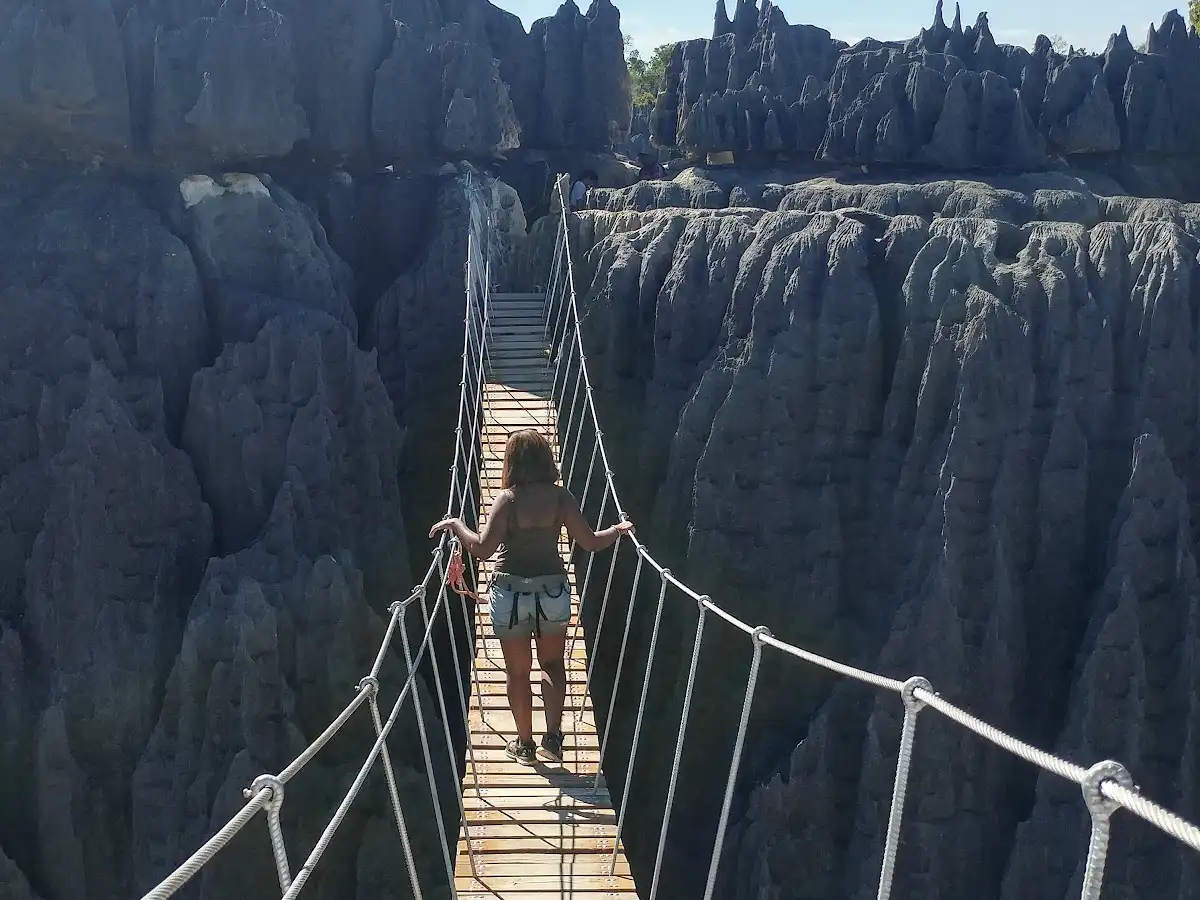
  • Topic: Seasonal Activities – Dry season is prime for exploring the Tsingy de Bemaraha and spotting wildlife without the hindrance of rain. The wet season, while challenging, brings lush greenery and fewer tourists, perfect if you want a quieter, more intimate experience.

  • Topic: Price Fluctuations – Accommodation and tours spike in the dry season, particularly mid-year. Booking ahead can save you a premium. The wet season sees lower prices but factor in potential transport delays and closures.


Pro-tip: Aim for late April or early May—just as the rains ease but before the tourist surge—to catch fresh landscapes, manageable crowds, and better deals.


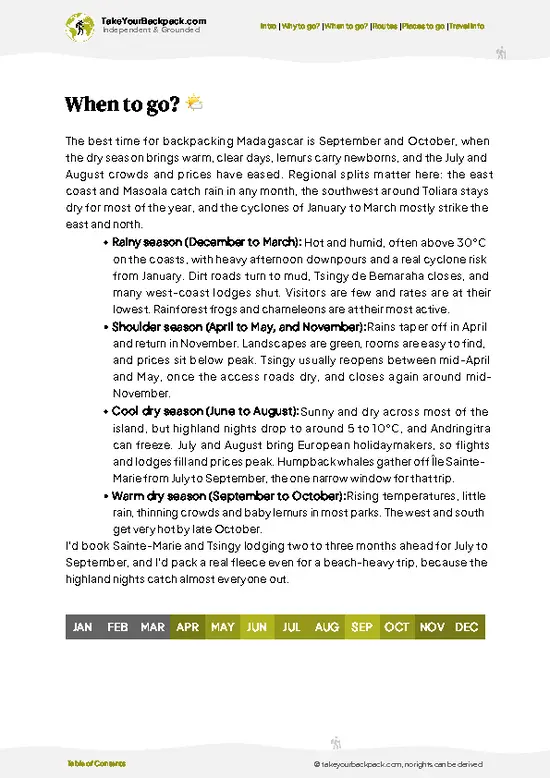
source: climatestotravel.comJANJanuary: fair for travelingFEBFebruary: fair for travelingMARMarch: fair for travelingAPRApril: good for travelingMAYMay: highly recommended for travelingJUNJune: excellent for travelingJULJuly: excellent for travelingAUGAugust: excellent for travelingSEPSeptember: excellent for travelingOCTOctober: highly recommended for travelingNOVNovember: fair for travelingDECDecember: fair for traveling
madagascar-city-morondava v1
© Google |

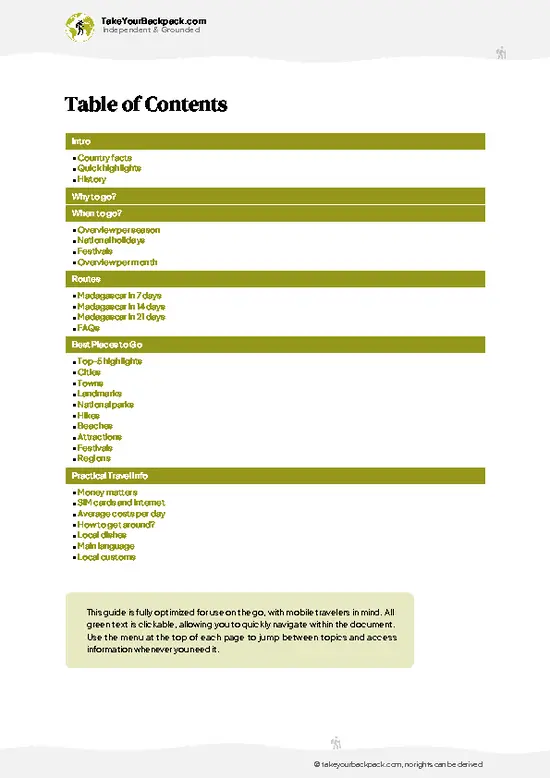
✈️ The backpacker research shortcutMadagascar Travel Guide

An offline-friendly backpacking guide with optimized travel routes, ranked highlights, transport advice, and the best areas to stay.
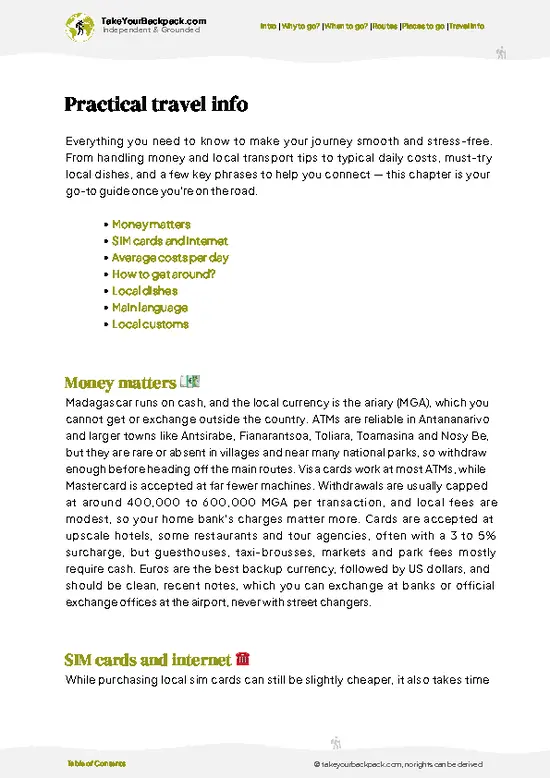
example page 0 from our offline Travel Guide for Madagascar
example page 1 from our offline Travel Guide for Madagascar
example page 2 from our offline Travel Guide for Madagascar
example page 3 from our offline Travel Guide for Madagascar
example page 4 from our offline Travel Guide for Madagascar
example page 5 from our offline Travel Guide for Madagascar
example page 6 from our offline Travel Guide for Madagascar
example page 7 from our offline Travel Guide for Madagascar
The digital guide (418 pages) contains:
110 highlights, ranked by travel appeal
Optimized 7, 14 & 21-day travel routes
Cities, national parks, landmarks, beaches
How to get around
Offline-friendly for travel without Wi-Fi
👉 Click to see all 30+ guide features

📅 Plan smarter in minutes, not weeks
Month by month travel advice
Festivals & national holidays
Budget expectations

🗺️ Go to the right places, skip the overrated ones
Honest pros & cons of destinations
Top hikes, parks & viewpoints
Lesser-known places most travelers miss
Clear “worth it vs skip it” guidance

🛏️ Travel smoothly without rookie mistakes
Best areas to stay
Transport systems explained simply
Common scams & safety advice
SIM cards, money & practical tips

🌍 Understand the country, not just visit it
Culture & traditions
52 Essential phrases & customs
Festivals worth planning around
Traveler-friendly historical context
Insights that make places more meaningful

📱 Built for real travel conditions
Fully downloadable PDF
Works completely offline
Optimized for phone use
Useful in remote areas & buses
Everything in one place
Save weeks of stressful planning
Get instant access to your full guide. 30‑day money-back guarantee.
+ Add another guide for just US$7.80

By proceeding you agree to our terms.
Sent to your inbox immediately after payment • 100% Secure Checkout
Best Backpacking Travel Advisor 2025 tourism awardBest Backpacking
Travel Advisor
2025
What others say about Take Your Backpack Guides:
⭐⭐⭐⭐⭐
Fantastic, amazing amount of information!
⭐⭐⭐⭐⭐
My goodness this is amazing, it's what I've been looking for hats off too you!
⭐⭐⭐⭐⭐
I think this is absolutely BRILLIANT
⭐⭐⭐⭐
Very complete and informative. It's still missing places, but I gotta to commend you
⭐⭐⭐⭐⭐
This is truly amazing, thank you, can't wait to explore it with my kids!
⭐⭐⭐⭐⭐
Awesome resource, thank you!
⭐⭐⭐⭐⭐
This is amazing! Can't wait to explore the ones I haven't seen
⭐⭐⭐⭐
I love this! Well done, great idea.
⭐⭐⭐⭐⭐
Thanks for taking the time to make this gem!
⭐⭐⭐⭐⭐
This might be the best website I've ever seen.
⭐⭐⭐⭐⭐
Congratulations, and thank you so much for your work; it's incredibly valuable.
⭐⭐⭐⭐
In all seriousness I think you did a great job pointing out the important spots
⭐⭐⭐⭐⭐
10/10 very good
⭐⭐⭐⭐⭐
As someone who's only just starting to visit regularly this is awesome, thank you.
⭐⭐⭐⭐
Thank you very much! I'm going to visit my dad, it's going to be very useful!
⭐⭐⭐⭐⭐
This is really cool! We'll be travelling for the first time and this definitely come in handy.
⭐⭐⭐⭐⭐
You are now our minister of culture, congratulations 👨‍💼
⭐⭐⭐⭐⭐
Just wanted to tell you that this is a pearl! Going to follow your recommendations.
⭐⭐⭐⭐⭐
This is so cool. I'll definitely be using the resource for my travels soon.
⭐⭐⭐⭐⭐
This is very impressive! Good work.
⭐⭐⭐⭐⭐
This is an amazing and informative site. Very well done!

🛏️ Where to stay?How to pick the right area

In Morondava, the real backpacker pulse beats strongest along the beachfront stretch near the town center. This area is your go-to for safety and social buzz, where the air carries a salty tang mixed with the faint smoke of street grills. It’s where budget travelers cluster, drawn by the handful of hostels that offer simple dorms and a chance to swap stories over shared meals. The vibe here is relaxed but lively—locals and travelers mingle easily, and the sunset views over the Mozambique Channel give you a daily reward for sticking around.

Venture a little inland from the coast, and you’ll find … read more 👉
In Morondava, the real backpacker pulse beats strongest along the beachfront stretch near the town center. This area is your go-to for safety and social buzz, where the air carries a salty tang mixed with the faint smoke of street grills. It’s where budget travelers cluster, drawn by the handful of hostels that offer simple dorms and a chance to swap stories over shared meals. The vibe here is relaxed but lively—locals and travelers mingle easily, and the sunset views over the Mozambique Channel give you a daily reward for sticking around.

Venture a little inland from the coast, and you’ll find quieter neighborhoods with fewer backpackers but also fewer amenities and a less secure feel after dark. These areas might seem tempting for solitude, but they lack the social infrastructure that makes Morondava’s center so welcoming. The town’s layout funnels most visitors toward the waterfront, where you can easily walk to markets, eateries, and transport hubs without worrying about safety or isolation.

Choosing the central beachfront zone means you’re plugged into the town’s rhythm—morning fishermen hauling nets, afternoon hammocks swaying in the breeze, and evenings alive with chatter and music. It’s not just about avoiding trouble; it’s about stepping into the heart of Morondava’s daily life, where every moment feels earned and every connection genuine.

🚌 Getting aroundGetting around like a local

Morondava moves at the pace of the ocean breeze—unhurried but deliberate, with a rhythm that feels both improvised and deeply rooted. The sun slants low in the late afternoon, casting long shadows on dusty streets where scooters buzz past wooden stalls selling fresh fruit and grilled fish. Time here isn’t measured by strict schedules but by the ebb and flow of daily life: fishermen returning with their catch, children chasing each other under baobab trees, and locals gathering at the market as the light softens. If you expect rigid timetables, you’ll be frustrated. Instead, lean into the town’s pulse—watch, listen, and move with its natural cadence. That’s how you unlock the real Morondava.

Walking: The most straightforward way to get around, especially within the town center. Morondava’s … read more 👉
Morondava moves at the pace of the ocean breeze—unhurried but deliberate, with a rhythm that feels both improvised and deeply rooted. The sun slants low in the late afternoon, casting long shadows on dusty streets where scooters buzz past wooden stalls selling fresh fruit and grilled fish. Time here isn’t measured by strict schedules but by the ebb and flow of daily life: fishermen returning with their catch, children chasing each other under baobab trees, and locals gathering at the market as the light softens. If you expect rigid timetables, you’ll be frustrated. Instead, lean into the town’s pulse—watch, listen, and move with its natural cadence. That’s how you unlock the real Morondava.

Walking: The most straightforward way to get around, especially within the town center. Morondava’s compact layout means you can cover most spots on foot in 15-30 minutes. Walking lets you soak in the scent of ocean salt mixed with grilled meat and the chatter of vendors. It’s free, flexible, and perfect for spontaneous detours to street food stalls or local markets.

Bush Taxis (Taxi-Brousse): These shared minivans are the backbone of regional travel. They leave when full, so departure times are unpredictable—plan for waits but expect a lively, communal atmosphere. Prices are low, around 5,000 to 10,000 MGA for short trips, making them ideal for budget travelers heading to nearby villages or the famous Avenue of the Baobabs. The ride is bumpy and slow, but it’s a window into local life, with stops for passengers and goods along the way.

Motorcycle Taxis (Taxi-Moto): When time is tight or you want to dodge the dust, motorcycle taxis are your go-to. They weave through traffic and narrow alleys with ease, charging roughly 1,000 to 3,000 MGA per short trip. Negotiate the price upfront and hold tight—the ride is fast and open to the elements, so prepare for dust and wind. Perfect for quick hops from the market to the beach or to catch a sunset spot.

Private Car Hire: For those who want to explore beyond Morondava’s limits—like the Tsingy de Bemaraha or Kirindy Forest—renting a 4x4 with a driver is the practical choice. It’s pricier (starting around 150,000 MGA per day), but the comfort and flexibility pay off when navigating rough, unpaved roads. Booking through a local guesthouse often nets better rates and ensures the driver knows the terrain and best times to travel.

Bicycle Rental: A slower, sweatier option but one that rewards you with intimate access to the landscape. Rentals cost about 10,000 to 20,000 MGA per day. The coastal breeze cools you as you pedal past baobabs and rice paddies, and you can stop anywhere to snap photos or chat with farmers. It’s a budget-friendly way to explore at your own pace, though be ready for uneven roads and midday heat.

Understanding Morondava’s transit isn’t about ticking boxes on a schedule; it’s about syncing with the town’s natural flow. Walk when you want to linger, hop on a moto when you need speed, and embrace the unpredictability of bush taxis for authentic local flavor. This mix of options turns travel from a chore into part of the adventure itself.

👛 Costs (as of 3 September 2026)What things cost and how to budget

Backpacking in Morondava, Madagascar, offers a raw, earthy vibe where every dollar stretches further than you might expect, but the trade-off is a bit of rugged charm in the infrastructure and services.
  • Dorm Accommodation: Dorm beds in basic guesthouses or hostels hover around €5 to €10 per night. These places are simple—expect a fan rather than air conditioning, and sometimes a shared bathroom that’s more functional than fancy. It’s about the experience, not luxury.
  • Meals: Street food and local eateries serve up hearty Malagasy dishes for roughly €2 to €5 per meal. Rice with zebu meat or fresh fish is common, and the flavors are straightforward but satisfying. If you opt for a tourist-oriented restaurant, prices can double, but the local spots offer the real taste of Morondava.
  • Local Transport:
read more 👉
Backpacking in Morondava, Madagascar, offers a raw, earthy vibe where every dollar stretches further than you might expect, but the trade-off is a bit of rugged charm in the infrastructure and services.
  • Dorm Accommodation: Dorm beds in basic guesthouses or hostels hover around €5 to €10 per night. These places are simple—expect a fan rather than air conditioning, and sometimes a shared bathroom that’s more functional than fancy. It’s about the experience, not luxury.
  • Meals: Street food and local eateries serve up hearty Malagasy dishes for roughly €2 to €5 per meal. Rice with zebu meat or fresh fish is common, and the flavors are straightforward but satisfying. If you opt for a tourist-oriented restaurant, prices can double, but the local spots offer the real taste of Morondava.
  • Local Transport: Getting around town mainly means tuk-tuks or shared taxis, costing about €0.50 to €1 per short ride. For longer trips, like heading out to the famous Avenue of the Baobabs, expect to pay around €10 to €15 for a round trip with a driver, which is worth it for the convenience and time saved.
  • Basic Activities/Entry Fees: Entrance to the Avenue of the Baobabs is around €1 to €2. Other local sights and small reserves might charge similar modest fees. Guided tours or excursions can push the cost higher, but independent exploration keeps it lean.
  • Miscellaneous Expenses: Bottled water, snacks, and small tips add up to about €1 to €3 daily. Internet cafes or SIM cards for mobile data are affordable, around €1 to €3, but expect patchy coverage outside town.

All told, you’re looking at roughly €10 to €25 per day to cover the essentials in Morondava. This range gives you the flexibility to lean into local simplicity or add a few creature comforts. The payoff is a place where the dusty roads and baobab silhouettes at sunset feel like a reward earned through a bit of grit and savvy budgeting.


source: madagascar-tourisme.com
⚠️ Prices can change and everyone travels differently, so take this as a rough guide. Hope it helps you plan your adventure!

🚌 Day tripsEasy escapes and nearby places

Morondava is your launchpad for some of Madagascar’s most captivating day trips, each offering a unique slice of the island’s soul. The beauty of this place isn’t just in the sights; it’s in the journey, the scents of the earth, and the warmth of the locals.

Avenue of the Baobabs
Just a short drive from Morondava, the Avenue of the Baobabs is a surreal landscape that feels like stepping into another world. The towering baobabs, some over a thousand years old, create a stunning silhouette against the setting sun. Aim to arrive in the late afternoon for that golden hour glow. The trip takes about 30 minutes by taxi-brousse, costing around $2. Many first-timers miss the magic of dusk, so plan your visit to linger and soak in the atmosphere.
👉 Explore Avenue of the Baobabs

Kirindy Forest read more 👉
Morondava is your launchpad for some of Madagascar’s most captivating day trips, each offering a unique slice of the island’s soul. The beauty of this place isn’t just in the sights; it’s in the journey, the scents of the earth, and the warmth of the locals.

Avenue of the Baobabs
Just a short drive from Morondava, the Avenue of the Baobabs is a surreal landscape that feels like stepping into another world. The towering baobabs, some over a thousand years old, create a stunning silhouette against the setting sun. Aim to arrive in the late afternoon for that golden hour glow. The trip takes about 30 minutes by taxi-brousse, costing around $2. Many first-timers miss the magic of dusk, so plan your visit to linger and soak in the atmosphere.
👉 Explore Avenue of the Baobabs

Kirindy Forest Reserve
For wildlife enthusiasts, Kirindy Forest Reserve is a must. This dry deciduous forest is home to unique species like the fossa and various lemurs. The journey takes about 1.5 hours, and a round-trip taxi-brousse will set you back around $10. Go early in the morning to catch the animals at their most active. A common mistake is underestimating the heat; bring plenty of water and a hat. The sounds of the forest are a symphony you won’t want to miss.


Morondava Beach
If you’re looking to unwind, head to Morondava Beach. It’s not just a place to relax; the beach is alive with local culture. Grab a fresh coconut from a vendor and watch fishermen haul in their catch. The beach is just a short walk from the town center, making it easily accessible. Costs are minimal unless you indulge in local seafood. The best time to visit is during the dry season, from May to October, when the weather is perfect for lounging. Don’t forget your sunscreen; the sun can be relentless.
👉 Explore Morondava Beach

Antsirabe
Though a bit further afield, a day trip to Antsirabe is worth the effort. Known for its thermal springs and vibrant markets, it’s about a 5-hour trip by taxi-brousse, costing around $15. The colorful rickshaws and bustling streets offer a glimpse into local life. Many backpackers overlook this gem, but the experience of mingling with locals and tasting street food is invaluable. Plan your trip on a weekday to avoid the weekend crowds.
👉 Explore Antsirabe
Want to know what more Madagascar offers?
The Madagascar Travel Guide describes 110 highlights, from cities to national parks, from beaches to hikes

Get the Travel Guide -

🛡️ SafetySafety Tips and Common Scams in Morondava

Morondava is generally safe, but like any place, a little awareness goes a long way. The main streets are lively, filled with the scent of street food and the chatter of locals. Stick to well-lit areas at night, especially if you’re solo. The beach can be a bit quieter after dark, so it’s best to avoid wandering too far from the main strip.

Watch out for the occasional tout trying to sell you a tour or a trinket. They can be persistent, but a polite “no, thank you” usually does the trick. If you’re approached, keep your tone friendly but firm.

Transportation can be a hassle. Be cautious with taxi-brousse drivers; they might quote inflated prices. Always agree on a fare before hopping in.

Overall, carry yourself with confidence. A relaxed demeanor can deter most annoyances. Embrace the … read more 👉
Morondava is generally safe, but like any place, a little awareness goes a long way. The main streets are lively, filled with the scent of street food and the chatter of locals. Stick to well-lit areas at night, especially if you’re solo. The beach can be a bit quieter after dark, so it’s best to avoid wandering too far from the main strip.

Watch out for the occasional tout trying to sell you a tour or a trinket. They can be persistent, but a polite “no, thank you” usually does the trick. If you’re approached, keep your tone friendly but firm.

Transportation can be a hassle. Be cautious with taxi-brousse drivers; they might quote inflated prices. Always agree on a fare before hopping in.

Overall, carry yourself with confidence. A relaxed demeanor can deter most annoyances. Embrace the rhythm of Morondava, and you’ll find the beauty in its quirks.

FAQTraveler FAQ

Yes, Morondava is worth visiting for its unique attractions like the Avenue of the Baobabs and nearby Kirindy Forest, which offers wildlife viewing including lemurs and fossa. It is more than just a stopover if you want to experience Madagascar's distinctive landscapes and biodiversity.
You need about 2 to 3 days in Morondava to explore the Avenue of the Baobabs, visit Kirindy Forest, and enjoy the local beaches. This allows enough time to see the main sights without rushing and to accommodate travel delays on rough roads.
No, Morondava cannot be visited as a day trip from nearby cities like Antsirabe or Antananarivo due to long travel times; it is about 700 km from Antananarivo and takes around 12-14 hours by road. Overnight stays in Morondava are necessary to make the most of the visit.
⚠️ Things can change over time, so always validate details locally before you go.

Other Malagasy towns near Morondava

Explore more nearby:

  • Maintirano—remote west coast, Vezo fishing, sandy tracks| 250 km away
  • Ranohira—Isalo park access, sandstone cliffs, small hotels| 277 km away
  • Sakaraha—sapphire mines, dry bushland, roadside stalls| 292 km away

💡 Not sure where to go next?
Create a personalized itinerary for Madagascar including Morondava and the places that fit your trip.

Generate my itinerary

👉 Discover all towns

Or checkout all Madagascar has to offer (think cities, towns, villages, national parks, hikes, beaches, festivals)
Country photo of Madagascar

We 💚 feedbackWhat to keep in mind

Morondava’s sunsets over the Avenue of the Baobabs are a sight that lingers in your mind long after you leave. The way the golden light filters through those ancient trees feels like stepping into a dream. But be ready for the heat and the dust; it’s relentless. Embrace the sweat and the grit, and you’ll find that the beauty here is earned, not given. It’s a trade-off, but one worth making.

✈️ When did I visit Madagascar?
Madagascar I went backpacking in October 2019. With a friend I rented a 4WD and drove around the southern part of Madagascar.

✍️ Help improve this page!
The information on this page is based on my own backpacking experience in Madagascar, supplemented with up-to-date research and feedback from other travelers. Travel details can change, so if you notice anything outdated or incomplete, feel free to let me know.


🙋‍♂️ Give feedback

👋 Meet the founderWho’s Behind Take Your Backpack?

Johan, backpacker and founder of TakeYourBackpackHi, I’m Johan (Netherlands 🇳🇱), the creator of TakeYourBackpack. Over the past decade, I’ve backpacked through 80+ countries across six continents, gaining extensive experience with independent travel, long-term trips, and overland routes.

This site is built on a combination of firsthand travel experience and carefully curated insights from other backpackers. Many guides are based on places I’ve personally visited, while others bring together tips, observations, and practical advice shared by trusted travelers I’ve met along the way.

The goal is to provide realistic, experience-driven guidance — not generic itineraries — so you can explore destinations with better context, clearer expectations, and more confidence.

Get full Madagascar guide •
Instant download • 110 highlights • Full Offline guide