×

New Zealand🇳🇿 | best villagesExplore the 6 Best villages in New Zealand

Villages in New Zealand are rarely the walled, centuries-old clusters you find in Europe. The country was settled by Europeans only from the 1800s, so most small places grew around a gold rush, a port, a sheep run or a ferry landing, and many sit in a single strip of buildings along a highway. Māori kāinga and marae add an older layer, but they are mostly private and visited by invitation.

The differences are regional. The South Island alpine and lakeside settlements are the most scenic but the most expensive and crowded in summer, because tourism drives their economy. The North Island coastal and geothermal villages cost less and see fewer visitors outside school holidays. Access is the real filter: intercity buses reach only main routes, so independent backpackers without a car or campervan will find many small places hard to reach, and should plan their transport first.

By Johan Kruseman 🇳🇱 | Updated October 17, 2026
Explore the best landmarks in New Zealand

Why go?Why Travelers Love These Spots

New Zealand suits village travel differently from Europe or Asia. The islands were among the last significant landmasses to be settled, with Polynesian arrival roughly 700 to 800 years ago and European colonization from the early 1800s. That means few historic village cores. Instead you find frontier-era settlements with wooden false-front buildings, a pub, a general store and a hall, shaped by farming, gold and timber rather than defensive walls or markets.

Geography explains the layout. A population of about 5 million is spread across mountainous islands, so settlements are small, far apart and tied to a single road. Distances are long, and a village that looks close on a map can take two hours on winding roads. Public transport is thin, which is why a vehicle or well-planned shuttles matter … read more 👉
New Zealand suits village travel differently from Europe or Asia. The islands were among the last significant landmasses to be settled, with Polynesian arrival roughly 700 to 800 years ago and European colonization from the early 1800s. That means few historic village cores. Instead you find frontier-era settlements with wooden false-front buildings, a pub, a general store and a hall, shaped by farming, gold and timber rather than defensive walls or markets.

Geography explains the layout. A population of about 5 million is spread across mountainous islands, so settlements are small, far apart and tied to a single road. Distances are long, and a village that looks close on a map can take two hours on winding roads. Public transport is thin, which is why a vehicle or well-planned shuttles matter more here than in most countries.

The climate adds to the draw and the risk. Maritime weather changes within hours, and coastal and mountain places can be cut off by slips, floods or snow. Services are small too, so many villages have one shop, limited fuel and few cash machines. Book accommodation ahead in summer, because a village with 20 beds fills quickly.

Culture matters before you choose. Māori heritage is central to the country, and some villages are shaped by iwi (tribal) ownership of land, cultural centers and guided experiences, which are best approached with respect and a booking. Visit for landscape, outdoor access and a relaxed small-town pace, and not for ancient architecture. That expectation keeps the trip satisfying.
Evaluating the Top Choices
The list of best villages in New Zealand is created based on authenticity, scenic beauty, community spirit, traditions, and overall character. If you feel a village is missing in this list, please let us know.

When to go?Best Time to Visit New Zealand for villages

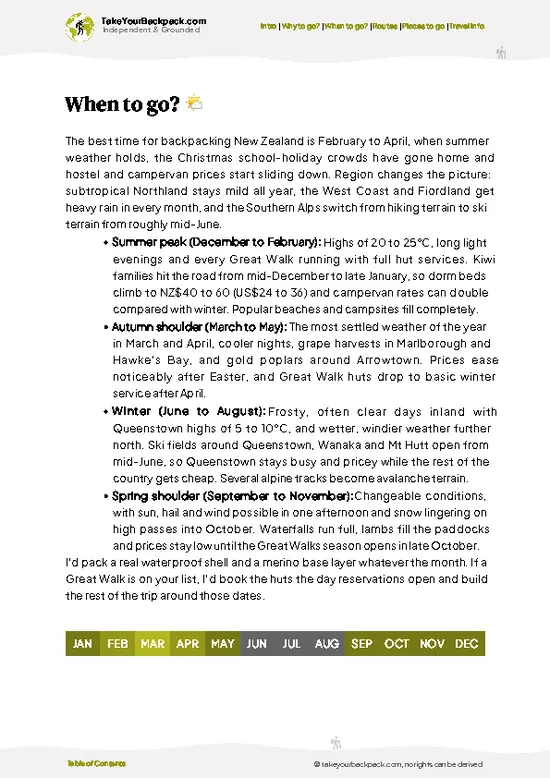
Best months for village visits: The best months are December to March (summer) and the shoulder months of April and October to November, when days are long, roads and walking tracks are open and most small cafes and shuttles run. Summer daytime temperatures typically sit around 20 to 26°C in most regions, with long daylight until about 9 pm.

Peak, shoulder and quiet seasons: The peak runs from late December to the end of January, when New Zealanders take summer holidays and beach and lakeside villages fill up. Accommodation can be 30 to 60 percent higher and dorm beds in popular alpine and coastal spots sell out weeks ahead. Shoulder seasons of March to April and October to November have cheaper beds, thinner crowds and stable weather, though autumn mornings are cold in the south at 3 to … read more 👉
Best months for village visits: The best months are December to March (summer) and the shoulder months of April and October to November, when days are long, roads and walking tracks are open and most small cafes and shuttles run. Summer daytime temperatures typically sit around 20 to 26°C in most regions, with long daylight until about 9 pm.

Peak, shoulder and quiet seasons: The peak runs from late December to the end of January, when New Zealanders take summer holidays and beach and lakeside villages fill up. Accommodation can be 30 to 60 percent higher and dorm beds in popular alpine and coastal spots sell out weeks ahead. Shoulder seasons of March to April and October to November have cheaper beds, thinner crowds and stable weather, though autumn mornings are cold in the south at 3 to 10°C.

Winter and regional differences: Winter, June to August, is cold and wet in the South Island, where high-country and alpine villages drop to around 0 to 8°C, and snow can close passes. Ski villages such as those near Queenstown and Wānaka swing to their own peak then, with higher prices. The North Island is milder at roughly 10 to 15°C, and the Northland and Bay of Islands coast stays comfortable, though it is wetter in winter. The West Coast of the South Island receives 3,000 mm or more of rain yearly, so allow for delays in any season. Some small seasonal businesses and tracks close or reduce hours from May to September, so check opening times before you commit.

village hoppingTips for Visiting Multiple Destinations

How long a multi-village trip takes: A trip combining several villages needs 10 to 21 days, because distances are long and roads are slow. Even 300 km can take 4 to 5 hours on narrow, winding state highways.

Grouping regions and direction: Treat the islands as two separate clusters rather than one loop. In the North Island, Auckland connects to Northland, the Coromandel and the Rotorua and Taupō area, with Wellington as the exit point. For the South Island, fly or take the Interislander or Bluebridge ferry (about 3.5 hours) from Wellington to Picton, then move through Nelson and the West Coast to Queenstown and Wānaka, or reverse it. Traveling south with the prevailing sun and weather windows is simple, but direction matters less than choosing the one-way route so you avoid backtracking and … read more 👉
How long a multi-village trip takes: A trip combining several villages needs 10 to 21 days, because distances are long and roads are slow. Even 300 km can take 4 to 5 hours on narrow, winding state highways.

Grouping regions and direction: Treat the islands as two separate clusters rather than one loop. In the North Island, Auckland connects to Northland, the Coromandel and the Rotorua and Taupō area, with Wellington as the exit point. For the South Island, fly or take the Interislander or Bluebridge ferry (about 3.5 hours) from Wellington to Picton, then move through Nelson and the West Coast to Queenstown and Wānaka, or reverse it. Traveling south with the prevailing sun and weather windows is simple, but direction matters less than choosing the one-way route so you avoid backtracking and save a full day.

Time per stop and transfers: Allow 1 to 3 nights per village. One night suits a transit stop, while two or three let you do a walk, a boat trip or a day trip. Typical transfers between regions run 2 to 6 hours by road, and intercity buses or shuttles cover main corridors only.

Planning mistakes to avoid: The most common error is trying to fit too many stops, which turns the trip into driving. Choose fewer places and leave one buffer day per week for weather, since slips, floods and snow close roads. Another is relying on buses to reach small settlements, where services may run once a day or only in season, so confirm timetables or rent a car or campervan. Travelers also arrive late without booking, and with limited fuel and food in small places, fill the tank and shop in the larger town first. Finally, avoid driving after dark in rural areas, where animals and narrow bends add risk.

The ListMust-Visit villages in New Zealand

1 Akaroa

Crater harbor, Hector’s dolphin cruises, French street names, lighthouse waterfront

Cruise a flooded volcanic crater to spot dolphins and seals, then stroll Beach Road past colonial cottages and a relocated 1880 lighthouse.

2 Kaikōura

Sperm whale tours, fur seals, peninsula clifftops, mountain backdrop

Book an early boat out to the canyon edge for whales, then walk an 11.5 kilometer clifftop loop alongside resting seals.

new-zealand-city-kaikoura
© Google |

3 Riverton

Aparima heritage, Foveaux Strait beach, estuary birds, fishing wharf

Trace sealing and whaling history at Te Hikoi, then walk pale dunes and tidal flats where waders feed near the fishing boats.

4 Little River

Old railway station, lake-edge trail, peninsula pottery, Summit Road gateway

Pause at a restored 1886 station for coffee and local ceramics, then ride or walk the flat gravel trail beside Lake Forsyth.

5 Kawhia

Hot sand pools, Tainui memorial, tidal flats, remote harbor

Dig your own hot spring pool in the ocean beach sand near low tide, then pay respects at the Tainui canoe stones.

6 Makarora

Blue Pools, Siberia flightseeing, Haast Pass falls, valley trailheads

Cross a swing bridge above turquoise glacial water, or fly into the Siberia Valley and jet boat home along the Wilkin.

Loading the map 🌍

Expert viewWhat You Should Know

How many villages to visit: Plan for five to eight villages on a typical two to three week trip. The reason is the road. New Zealand’s villages are spread across long, slow highways, so each extra stop costs half a day of driving. Fewer, longer stays (two nights each) let you see the landscape and actually meet people, which is the point of a small place. An experienced traveler picks fewer and stays longer, not more and rushes.

Choosing between kinds of villages: Three kinds dominate. Alpine and lakeside villages suit adventure travelers who want hiking, skiing, bungee or boat trips, but they cost the most and need booking in summer and winter. Coastal and farming settlements suit slower travelers and budget backpackers, with cheaper beds, surf, beaches and quiet pubs. Geothermal and Māori … read more 👉
How many villages to visit: Plan for five to eight villages on a typical two to three week trip. The reason is the road. New Zealand’s villages are spread across long, slow highways, so each extra stop costs half a day of driving. Fewer, longer stays (two nights each) let you see the landscape and actually meet people, which is the point of a small place. An experienced traveler picks fewer and stays longer, not more and rushes.

Choosing between kinds of villages: Three kinds dominate. Alpine and lakeside villages suit adventure travelers who want hiking, skiing, bungee or boat trips, but they cost the most and need booking in summer and winter. Coastal and farming settlements suit slower travelers and budget backpackers, with cheaper beds, surf, beaches and quiet pubs. Geothermal and Māori cultural villages suit those wanting culture and landscape, though many experiences are ticketed. If you have limited time, choose one of each kind rather than several similar ones, since the lakes all look alike after a while.

What it costs: Budget about NZ$100 to 160 (US$60 to 100) a day for a backpacker using dorms, self-catering and public transport, and NZ$180 to 280 (US$110 to 170) with a rental car, private rooms and paid activities. Dorm beds run NZ$35 to 65, and village campsites NZ$15 to 40 per person. Fuel is among the main costs, so share a car where you can. Most villages themselves are free to walk around. Costs show up in the activities: Māori cultural experiences commonly run NZ$80 to 200 (US$50 to 125), guided walks NZ$100 to 250, and Department of Conservation huts NZ$20 to 40 a night. Shops are small and pricey, so buy groceries in the larger town before you arrive, and carry some cash because not every small place has a cash machine or reliable card terminal.

Safety and conditions: New Zealand is very safe from crime, and the real hazards are weather and driving. Roads are narrow and often one lane over bridges, and visitors from right-hand-drive countries must drive on the left. Add time for slow stretches and never drive tired. Mountain weather turns fast, so check forecasts at MetService and track alerts with the Department of Conservation before any walk, and leave your plans with someone. Sandflies are common on the West Coast and Fiordland, so carry repellent. Rivers rise quickly after rain, so never cross a flooded ford. Phone coverage drops out in many valleys, and a personal locator beacon can be hired for remote walks.

Cultural etiquette: Respect for Māori culture is expected. A marae is a sacred meeting ground, so enter only with an invitation or on a guided visit, remove your shoes, and don’t sit on tables or eat in the meeting house. Ask before photographing people or carvings. Some places are tapu (restricted), and a rāhui is a temporary ban on entering an area or taking resources, which should be obeyed. Villages are also working communities, so keep noise down, stay on marked tracks across farmland and close gates behind you. Freedom camping rules differ by council, and fines for illegal camping can reach NZ$200, so use designated sites and carry your rubbish out. A friendly greeting such as “kia ora” is welcomed.

✈️ The backpacker research shortcutNew Zealand Travel Guide

An offline-friendly backpacking guide with optimized travel routes, ranked highlights, transport advice, and the best areas to stay.
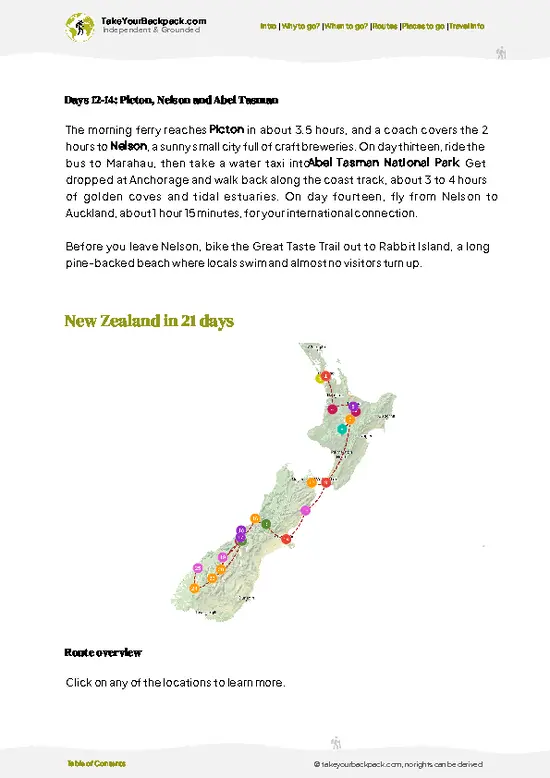
example page 0 from our offline Travel Guide for New Zealand
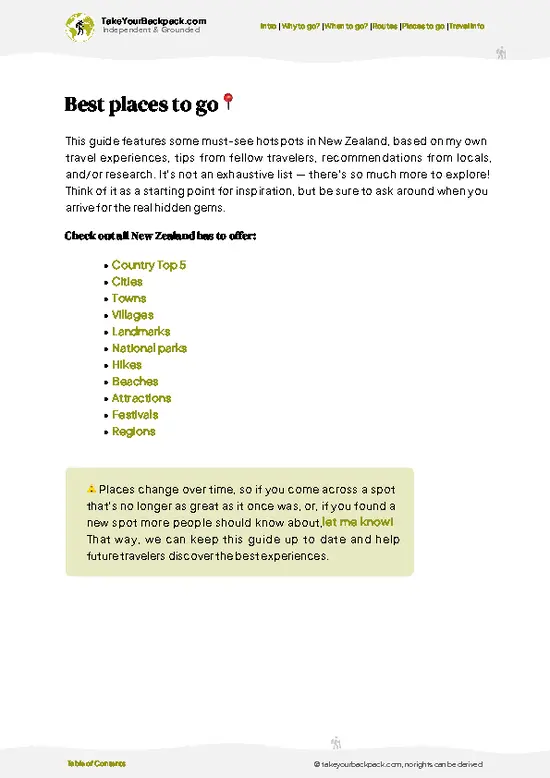
example page 1 from our offline Travel Guide for New Zealand
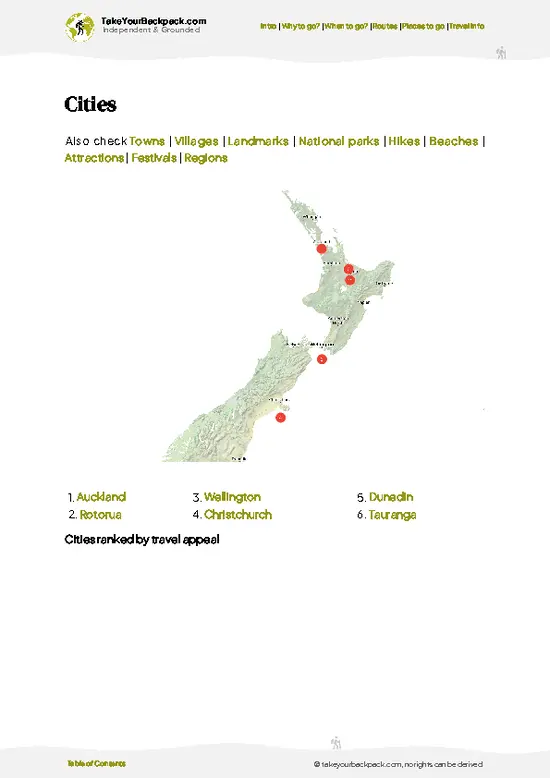
example page 2 from our offline Travel Guide for New Zealand
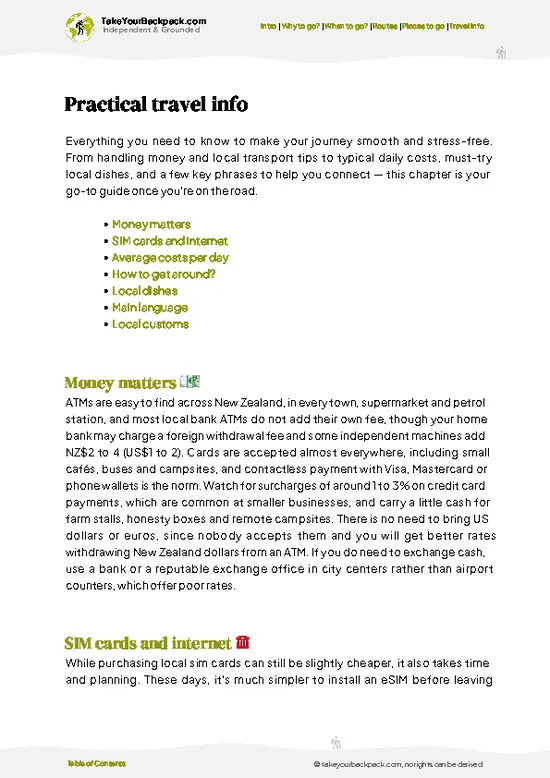
example page 3 from our offline Travel Guide for New Zealand
example page 4 from our offline Travel Guide for New Zealand
example page 5 from our offline Travel Guide for New Zealand
example page 6 from our offline Travel Guide for New Zealand
example page 7 from our offline Travel Guide for New Zealand
The digital guide (327 pages) contains:
✅ 110 highlights, ranked by travel appeal
✅ Optimized 7, 14 & 21-day travel routes
✅ Cities, national parks, landmarks, beaches
✅ How to get around
✅ Offline-friendly for travel without Wi-Fi
👉 Click to see all 30+ guide features

📅 Plan smarter in minutes, not weeks
✅ Month by month travel advice
✅ Festivals & national holidays
✅ Budget expectations

🗺️ Go to the right places, skip the overrated ones
✅ Honest pros & cons of destinations
✅ Top hikes, parks & viewpoints
✅ Lesser-known places most travelers miss
✅ Clear “worth it vs skip it” guidance

🛏️ Travel smoothly without rookie mistakes
✅ Best areas to stay
✅ Transport systems explained simply
✅ Common scams & safety advice
✅ SIM cards, money & practical tips

🌍 Understand the country, not just visit it
✅ Culture & traditions
✅ Local customs
✅ Festivals worth planning around
✅ Traveler-friendly historical context
✅ Insights that make places more meaningful

📱 Built for real travel conditions
✅ Fully downloadable PDF
✅ Works completely offline
✅ Optimized for phone use
✅ Useful in remote areas & buses
✅ Everything in one place
Stop searching, start planning
Get instant access to your full guide. 30‑day money-back guarantee.
+ Add another guide for just

By proceeding you agree to our terms.
Sent to your inbox immediately after payment • 100% Secure Checkout
Best Backpacking Travel Advisor 2025 tourism awardBest Backpacking
Travel Advisor
2025
What others say about Take Your Backpack Guides:
⭐⭐⭐⭐⭐
Fantastic, amazing amount of information!
⭐⭐⭐⭐⭐
My goodness this is amazing, it's what I've been looking for hats off too you!
⭐⭐⭐⭐⭐
I think this is absolutely BRILLIANT
⭐⭐⭐⭐
Very complete and informative. It's still missing places, but I gotta to commend you
⭐⭐⭐⭐⭐
This is truly amazing, thank you, can't wait to explore it with my kids!
⭐⭐⭐⭐⭐
Awesome resource, thank you!
⭐⭐⭐⭐⭐
This is amazing! Can't wait to explore the ones I haven't seen
⭐⭐⭐⭐
I love this! Well done, great idea.
⭐⭐⭐⭐⭐
Thanks for taking the time to make this gem!
⭐⭐⭐⭐⭐
This might be the best website I've ever seen.
⭐⭐⭐⭐⭐
Congratulations, and thank you so much for your work; it's incredibly valuable.
⭐⭐⭐⭐
In all seriousness I think you did a great job pointing out the important spots
⭐⭐⭐⭐⭐
10/10 very good
⭐⭐⭐⭐⭐
As someone who's only just starting to visit regularly this is awesome, thank you.
⭐⭐⭐⭐
Thank you very much! I'm going to visit my dad, it's going to be very useful!
⭐⭐⭐⭐⭐
This is really cool! We'll be travelling for the first time and this definitely come in handy.
⭐⭐⭐⭐⭐
You are now our minister of culture, congratulations 👨‍💼
⭐⭐⭐⭐⭐
Just wanted to tell you that this is a pearl! Going to follow your recommendations.
⭐⭐⭐⭐⭐
This is so cool. I'll definitely be using the resource for my travels soon.
⭐⭐⭐⭐⭐
This is very impressive! Good work.
⭐⭐⭐⭐⭐
This is an amazing and informative site. Very well done!

🛏️ Where to stay?Top Areas to Stay

New Zealand has one of the densest hostel networks anywhere, with dorm beds typically running NZ$35 to 60 (about US$20 to 36) a night and holiday parks offering cheap cabins and campsites in even the smallest towns. In Auckland, the CBD around Queen Street puts you next to ferries and airport buses but can feel loud and a little gritty late at night, while Ponsonby and Karangahape Road trade that convenience for better bars, cafés and a more local feel. In Wellington, Te Aro near Cuba Street is walkable to the waterfront and has the city’s best nightlife, and in Queenstown the compact town center keeps you steps from adventure-tour pickups and the party scene, though beds there fill fast and … read more 👉
New Zealand has one of the densest hostel networks anywhere, with dorm beds typically running NZ$35 to 60 (about US$20 to 36) a night and holiday parks offering cheap cabins and campsites in even the smallest towns. In Auckland, the CBD around Queen Street puts you next to ferries and airport buses but can feel loud and a little gritty late at night, while Ponsonby and Karangahape Road trade that convenience for better bars, cafés and a more local feel. In Wellington, Te Aro near Cuba Street is walkable to the waterfront and has the city’s best nightlife, and in Queenstown the compact town center keeps you steps from adventure-tour pickups and the party scene, though beds there fill fast and cost the most in the country, so quieter Frankton is the cheaper fallback.

If you enjoy meeting fellow travelers, consider choosing hostels with high ratings for atmosphere. On the other hand, if you prefer having your own space, a hotel might be a better option.

New ZealandDiscover the Country

👋 Meet the founderWho’s Behind Take Your Backpack?

Johan, backpacker and founder of TakeYourBackpackHi, I’m Johan (Netherlands 🇳🇱), the creator of TakeYourBackpack. Over the past 3 decades, I’ve backpacked through 90+ countries across six continents, gaining extensive experience with independent travel, long-term trips, and overland routes.

This site is built on a combination of firsthand travel experience and carefully curated insights from other backpackers. Many guides are based on places I’ve personally visited, while others bring together tips, observations, and practical advice shared by trusted travelers I’ve met along the way.

The goal is to provide realistic, experience-driven guidance — not generic itineraries — so you can explore destinations with better context, clearer expectations, and more confidence.