×

Nicaragua🇳🇮 | best national parksDiscover the 12 Best national parks Across Nicaragua

Nicaragua’s national parks are a tapestry of diverse landscapes, from volcanic peaks to lush rainforests, each offering unique wildlife and adventure opportunities. These parks are defined by their rich ecosystems and the varying climates across regions, influencing the best times to visit. For backpackers, choosing the right park can dramatically affect your experience—think accessibility, safety, and cultural immersion.

Some parks, like Masaya, are easily navigable and budget-friendly, perfect for independent travelers seeking a quick thrill. Others, such as Mombacho, demand more effort but reward you with breathtaking views and a deeper connection to nature. Understanding these nuances will enhance your journey through Nicaragua’s wild heart.

By Johan Kruseman 🇳🇱 | Updated June 1, 2026
Explore the best hikes in Nicaragua

Why go?Understanding Their Importance

Nicaragua’s national parks stand out in Central America for their diverse ecosystems and rich biodiversity. The country’s unique geography, with volcanic landscapes and lush rainforests, creates habitats that are home to countless species, some found nowhere else on Earth. This biodiversity is a treasure trove for nature lovers and adventure seekers alike, offering opportunities for birdwatching, hiking, and wildlife spotting that are often more intimate than in more commercialized parks elsewhere.

However, accessibility can be a double-edged sword. While some parks are relatively easy to reach, others require a commitment to travel time and rugged conditions. This trade-off often leads to a more authentic experience, where the effort to reach a remote trailhead rewards visitors with solitude … read more 👉
Nicaragua’s national parks stand out in Central America for their diverse ecosystems and rich biodiversity. The country’s unique geography, with volcanic landscapes and lush rainforests, creates habitats that are home to countless species, some found nowhere else on Earth. This biodiversity is a treasure trove for nature lovers and adventure seekers alike, offering opportunities for birdwatching, hiking, and wildlife spotting that are often more intimate than in more commercialized parks elsewhere.

However, accessibility can be a double-edged sword. While some parks are relatively easy to reach, others require a commitment to travel time and rugged conditions. This trade-off often leads to a more authentic experience, where the effort to reach a remote trailhead rewards visitors with solitude and breathtaking views. The climatic conditions also play a role; the rainy season can make trails muddy and challenging, but it also brings vibrant flora and fauna to life.

Culturally, Nicaragua’s parks are steeped in history, with indigenous influences and colonial remnants adding layers to the natural beauty. Yet, infrastructure can be inconsistent, impacting how travelers navigate these wild spaces. Understanding these nuances is crucial for anyone looking to explore Nicaragua’s national parks, where the journey often enhances the destination.
Why These Made the Cut
The list of best national parks in Nicaragua is created based on landscapes, wildlife, adventure opportunities, facilities, and overall experience. If you feel a national park is missing in this list, please let us know.

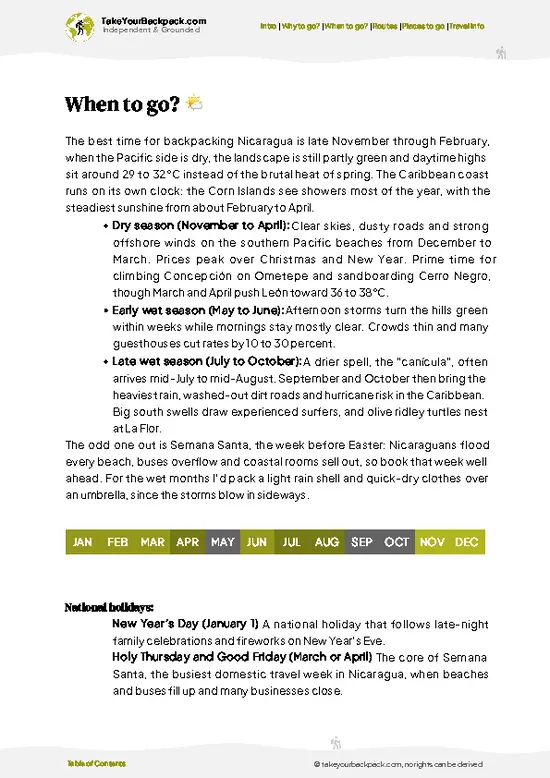
When to go?Seasonal Guide to Visiting

Seasonality plays a crucial role in the experience of Nicaragua’s national parks. The dry season, typically from November to April, offers the best conditions for wildlife visibility and trail accessibility. During these months, the sun shines bright, and temperatures can soar, making early morning hikes essential to avoid the heat. Wildlife is more active, and the chances of spotting elusive creatures increase significantly.

Rainy season, from May to October, transforms the landscape. Trails can become muddy and challenging, but this is when the parks burst with life. The air is thick with the scent of wet earth, and vibrant flora thrives. However, heavy rains can lead to trail closures, limiting access to certain areas. Wildlife is still present, but visibility may decrease as animals seek … read more 👉
Seasonality plays a crucial role in the experience of Nicaragua’s national parks. The dry season, typically from November to April, offers the best conditions for wildlife visibility and trail accessibility. During these months, the sun shines bright, and temperatures can soar, making early morning hikes essential to avoid the heat. Wildlife is more active, and the chances of spotting elusive creatures increase significantly.

Rainy season, from May to October, transforms the landscape. Trails can become muddy and challenging, but this is when the parks burst with life. The air is thick with the scent of wet earth, and vibrant flora thrives. However, heavy rains can lead to trail closures, limiting access to certain areas. Wildlife is still present, but visibility may decrease as animals seek shelter.

Shoulder seasons—the transitions between dry and wet—offer a mixed bag. These months can be less crowded, providing a more intimate experience with nature. Costs may also drop, making it an appealing option for budget-conscious travelers. However, weather can be unpredictable, with occasional downpours.

Peak periods coincide with the dry season, attracting larger crowds. While the scenery is at its best, the trails can feel congested. Balancing the desire for stunning views with the reality of busy paths is essential for planning an effective trip.

national park hoppingHow to Combine national parks Into One Trip

Combining national parks in Nicaragua requires strategic planning and a keen sense of pacing. Start by clustering parks regionally. The northern parks, like Cerro Verde and Somoto Canyon, can be tackled together, while the southern parks, such as Masaya and La Isla de Ometepe, offer a different flavor. This regional approach minimizes travel time and maximizes exploration.

Typical visits should allow for at least half a day in each park, but a full day is ideal for deeper immersion. Hiking trails vary in difficulty, and some may require more time to appreciate the landscapes fully. For instance, the trails in Masaya Volcano National Park can be explored in a few hours, but lingering to watch the sunset adds a rewarding layer to the experience.

Common mistakes include underestimating travel read more 👉
Combining national parks in Nicaragua requires strategic planning and a keen sense of pacing. Start by clustering parks regionally. The northern parks, like Cerro Verde and Somoto Canyon, can be tackled together, while the southern parks, such as Masaya and La Isla de Ometepe, offer a different flavor. This regional approach minimizes travel time and maximizes exploration.

Typical visits should allow for at least half a day in each park, but a full day is ideal for deeper immersion. Hiking trails vary in difficulty, and some may require more time to appreciate the landscapes fully. For instance, the trails in Masaya Volcano National Park can be explored in a few hours, but lingering to watch the sunset adds a rewarding layer to the experience.

Common mistakes include underestimating travel times between parks and over-scheduling. Nicaragua’s roads can be unpredictable, and flexibility is key. Prioritize quality over quantity; rushing through parks can lead to missed opportunities for connection with nature.

Consider trade-offs carefully. A faster pace might save time but can diminish the experience. Budget constraints may limit comfort, but investing in local guides can enhance understanding and enjoyment. Ultimately, the reward lies in the moments spent in nature, whether it’s the thrill of a challenging hike or the tranquility of a lakeside sunset.

The ListTop national parks of Nicaragua

1 Masaya Volcano National Park

lava lake, night glow, volcanic vents, accessible crater

Peer into an active crater glowing with molten lava, then explore rugged trails and volcanic vents just minutes from the city.

nicaragua-national-park-masaya-volcano-national-park
© Google | Norman Valerio

2 Mombacho Volcano Natural Reserve

cloud forest, fumaroles, hanging bridges, endemic orchids

Ascend misty slopes to walk through dense cloud forest, where volcanic steam vents and rare orchids create a distinct highland ecosystem.

nicaragua-national-park-mombacho-volcano-natural-reserve
© Google |

3 Somoto Canyon National Monument

rock walls, river gorge, swimming pools, narrow passages

Float or hike through a dramatic river canyon, navigating narrow corridors and deep pools carved into ancient stone by persistent water.

nicaragua-national-park-somoto-canyon-national-monument
© Google |

4 Apoyo Lagoon Natural Reserve

crater lake, warm waters, forested slopes, birdlife

Swim in a volcanic crater lake surrounded by forested hills, with opportunities to spot colorful birds and relax on quiet shores.

nicaragua-national-park-apoyo-lagoon-natural-reserve
© Google |

5 Indio Maíz Biological Reserve

primary rainforest, jaguars, remote rivers, biodiversity

Venture deep into untouched rainforest along winding rivers, where elusive wildlife and dense vegetation define a true wilderness experience.

6 Chocoyero-El Brujo Natural Reserve

waterfalls, parrot colonies, dense jungle, short trails

Watch green parakeets nest on cliff faces near waterfalls, then follow short jungle trails through thick vegetation alive with birdsong.

nicaragua-national-park-chocoyero-el-brujo-natural-reserve
© Google |

7 Isla Juan Venado Wildlife Refuge

mangrove forest, barrier island, nesting birds, tidal channels

Paddle through mangrove tunnels and tidal creeks, observing nesting birds and shifting sands on a narrow island off the Pacific coast.

8 La Flor Wildlife Refuge

sea turtle nesting, Pacific beach, dry forest, coastal dunes

Witness sea turtles nesting on a remote Pacific beach, then walk through dry coastal forest and shifting dunes teeming with wildlife.

nicaragua-national-park-la-flor-wildlife-refuge v1
© Google |

9 Miraflor Natural Reserve

coffee farms, rural villages, cloud forest, orchids

Stay with local families in a patchwork of farms and forest, exploring highland trails lined with wild orchids and rustic homesteads.

10 Los Guatuzos Wildlife Refuge

wetlands, caiman, river channels, tropical birds

Travel by boat through flooded forests and winding waterways, where caiman bask and herons hunt in a remote wetland habitat.

11 Cosigüina Volcano Natural Reserve

volcanic crater, panoramic views, dry forest, Gulf of Fonseca

Climb to a vast crater rim for sweeping views over three countries, passing through dry forest and open savanna along the way.

12 Cerro Negro Volcano National Park

black ash slopes, active crater, volcano boarding, open landscape

Descend loose volcanic ash on a board or foot, experiencing the stark, open terrain of one of Central America's youngest volcanoes.

Loading the map 🌍

Expert viewInsights from Locals and Experts

Terrain
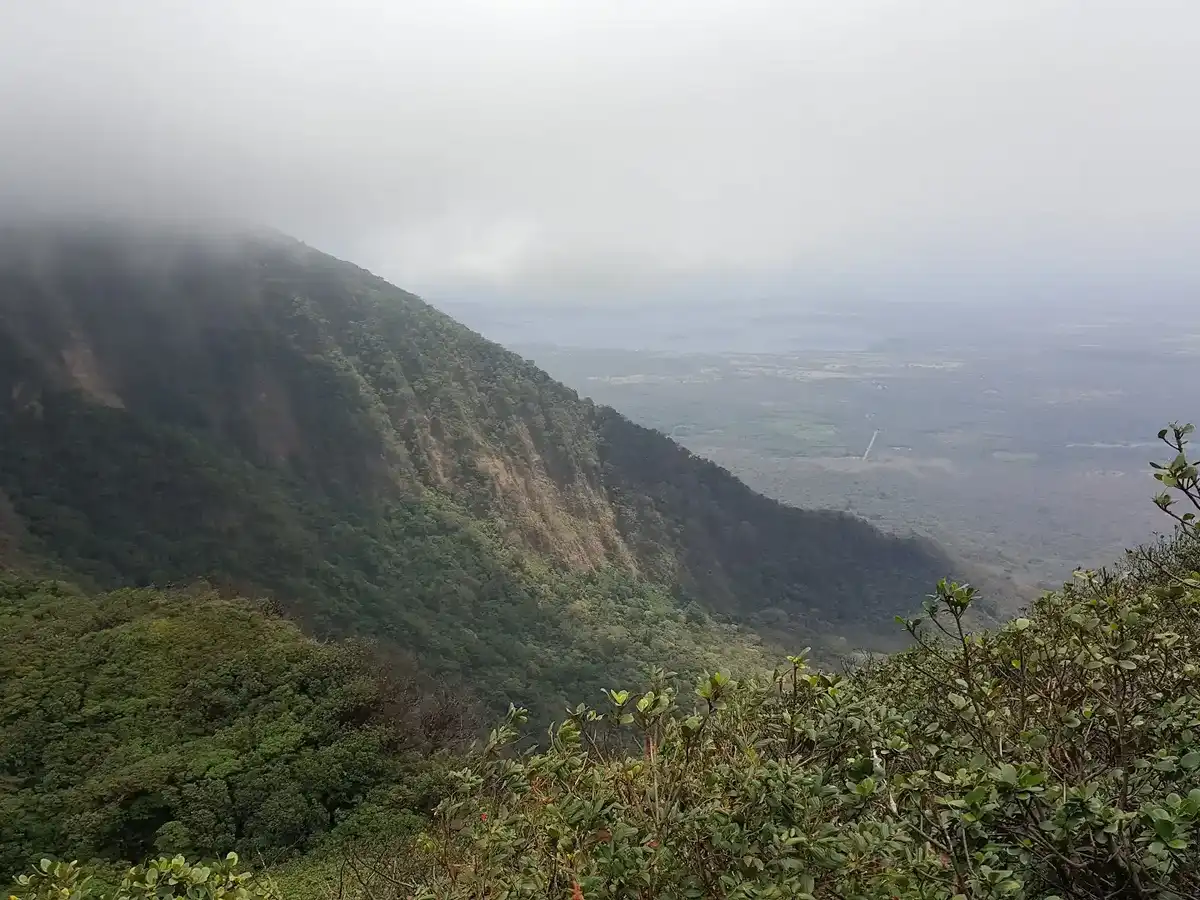
Nicaragua’s national parks are a patchwork of ecosystems, each with its own character. From the volcanic landscapes of Masaya to the lush rainforests of Indio Maíz, the terrain varies dramatically. Expect steep ascents in some areas, especially around the volcanoes, where the ground can shift underfoot, and the air grows thin. Trails can be rugged, often requiring sturdy footwear and a willingness to embrace the sweat that comes with the climb. The payoff? A panoramic view that stretches for miles, where the horizon meets the sky in a fiery sunset, or the sight of a smoking crater that reminds you of nature’s raw power.

Park Infrastructure
While some parks are well-maintained, others can feel a bit more wild and untamed. Infrastructure varies; some parks have established trails … read more 👉
Terrain
Nicaragua’s national parks are a patchwork of ecosystems, each with its own character. From the volcanic landscapes of Masaya to the lush rainforests of Indio Maíz, the terrain varies dramatically. Expect steep ascents in some areas, especially around the volcanoes, where the ground can shift underfoot, and the air grows thin. Trails can be rugged, often requiring sturdy footwear and a willingness to embrace the sweat that comes with the climb. The payoff? A panoramic view that stretches for miles, where the horizon meets the sky in a fiery sunset, or the sight of a smoking crater that reminds you of nature’s raw power.

Park Infrastructure
While some parks are well-maintained, others can feel a bit more wild and untamed. Infrastructure varies; some parks have established trails and visitor centers, while others rely on local guides to navigate the less-trodden paths. This can be a double-edged sword. On one hand, a guided experience can enrich your understanding of the flora and fauna, but it may also limit your freedom to explore at your own pace. Budget for both entrance fees and potential guide costs, as they can add up, especially if you’re hopping between parks.

Wildlife Activity
Wildlife is abundant, but spotting it often requires patience. In parks like Masaya, you might catch a glimpse of howler monkeys swinging through the trees or the flash of a toucan’s beak against the green backdrop. Early mornings or late afternoons are prime times for activity, but be prepared for the heat of midday when many creatures retreat. This rhythm of nature means you’ll need to plan your hikes accordingly. The trade-off? You might miss out on some sights if you’re not willing to rise with the sun or trek into the evening.

Time Management
With several national parks to choose from, prioritizing is essential. Aim to visit three to four parks if you have a week, allowing for a mix of experiences without feeling rushed. Each park offers a unique slice of Nicaragua’s biodiversity, but travel times can be deceptive. Roads may be unpaved or poorly marked, adding hours to your journey. Factor in travel time when planning your itinerary. It’s better to savor a few parks than to rush through many, leaving you with a sense of having skimmed the surface.

Cultural Considerations
Engaging with local communities can enhance your experience, but it’s crucial to approach with respect. Many parks are adjacent to indigenous territories, where traditions and lifestyles are deeply rooted. Take the time to learn about local customs and be mindful of your impact. This cultural exchange can lead to richer experiences, whether it’s sharing a meal or learning about traditional conservation practices. However, be aware of safety considerations; some areas may require a local guide for both navigation and cultural sensitivity.

Safety
Safety is paramount, especially in remote areas. Always check in with park rangers about trail conditions and wildlife activity. While Nicaragua is generally safe for travelers, petty crime can occur, particularly in more populated areas. Keep your belongings secure and be aware of your surroundings. The thrill of exploring these parks is amplified when you feel secure in your environment.

In summary, Nicaragua’s national parks offer a diverse range of experiences, but thoughtful planning is key. Embrace the grit of the trails, the warmth of local culture, and the beauty that comes from effort. Each park has its own story to tell, waiting for you to discover it.

✈️ The backpacker research shortcutNicaragua Travel Guide

An offline-friendly backpacking guide with optimized travel routes, ranked highlights, transport advice, and the best areas to stay.
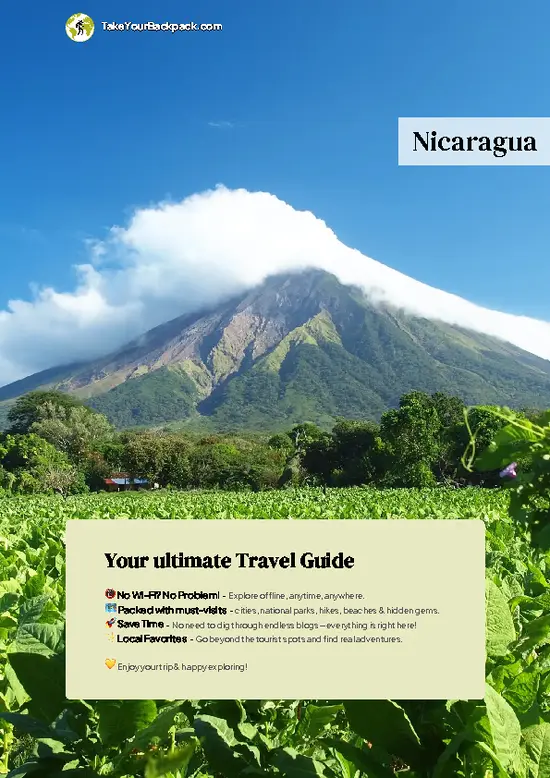
example page 0 from our offline Travel Guide for Nicaragua
example page 1 from our offline Travel Guide for Nicaragua
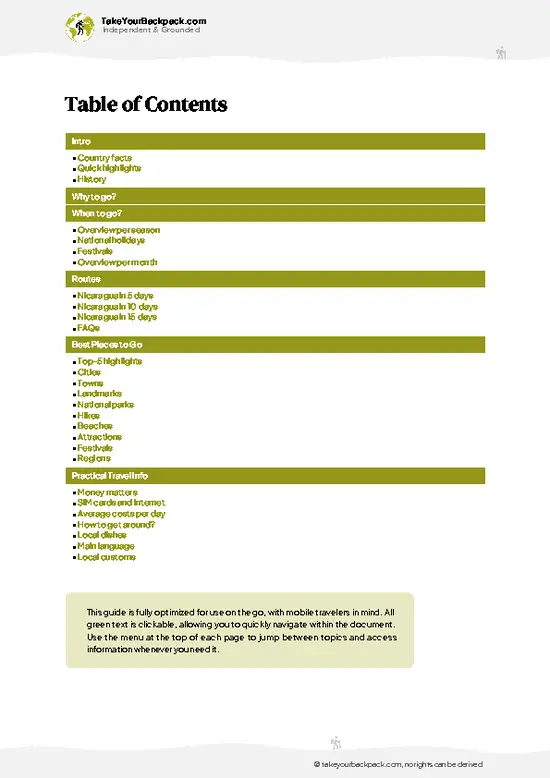
example page 2 from our offline Travel Guide for Nicaragua
example page 3 from our offline Travel Guide for Nicaragua
example page 4 from our offline Travel Guide for Nicaragua
example page 5 from our offline Travel Guide for Nicaragua
example page 6 from our offline Travel Guide for Nicaragua
example page 7 from our offline Travel Guide for Nicaragua
The digital guide (342 pages) contains:
86 highlights, ranked by travel appeal
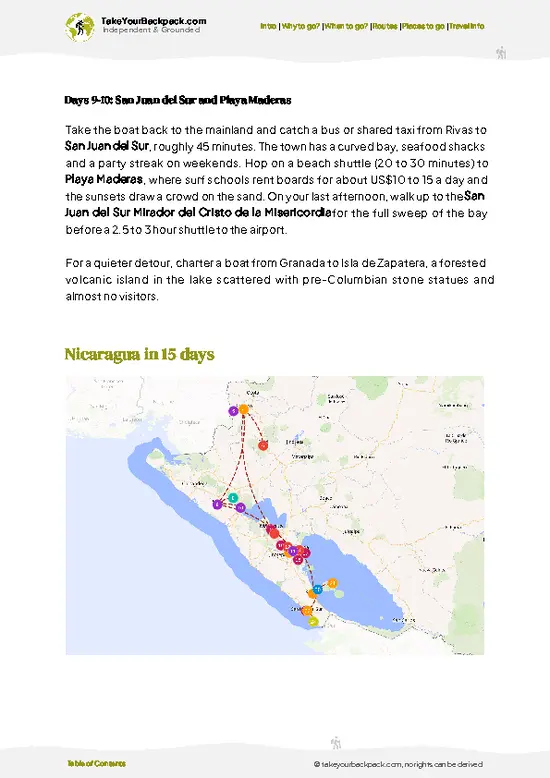
Optimized 5, 10 & 15-day travel routes
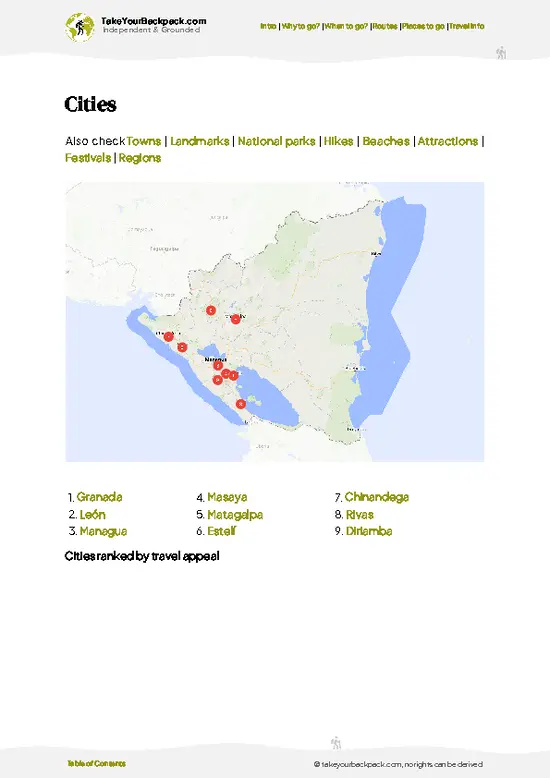
Cities, national parks, landmarks, beaches
How to get around
Offline-friendly for travel without Wi-Fi
👉 Click to see all 30+ guide features

📅 Plan smarter in minutes, not weeks
Month by month travel advice
Festivals & national holidays
Budget expectations

🗺️ Go to the right places, skip the overrated ones
Honest pros & cons of destinations
Top hikes, parks & viewpoints
Lesser-known places most travelers miss
Clear “worth it vs skip it” guidance

🛏️ Travel smoothly without rookie mistakes
Best areas to stay
Transport systems explained simply
Common scams & safety advice
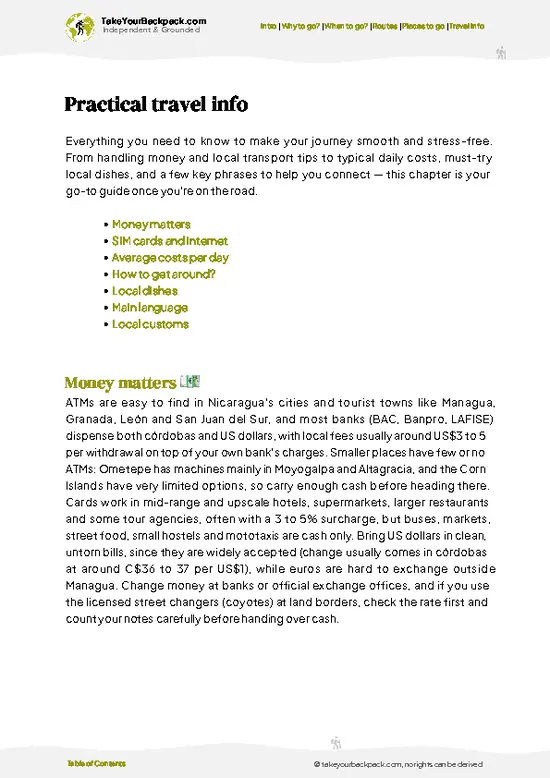
SIM cards, money & practical tips

🌍 Understand the country, not just visit it
Culture & traditions
52 Essential phrases & customs
Festivals worth planning around
Traveler-friendly historical context
Insights that make places more meaningful

📱 Built for real travel conditions
Fully downloadable PDF
Works completely offline
Optimized for phone use
Useful in remote areas & buses
Everything in one place
Save weeks of stressful planning
Get instant access to your full guide. 30‑day money-back guarantee.


By proceeding you agree to our terms.
Sent to your inbox immediately after payment • 100% Secure Checkout
Best Backpacking Travel Advisor 2025 tourism awardBest Backpacking
Travel Advisor
2025
What others say about Take Your Backpack Guides:
⭐⭐⭐⭐⭐
Fantastic, amazing amount of information!
⭐⭐⭐⭐⭐
My goodness this is amazing, it's what I've been looking for hats off too you!
⭐⭐⭐⭐⭐
I think this is absolutely BRILLIANT
⭐⭐⭐⭐
Very complete and informative. It's still missing places, but I gotta to commend you
⭐⭐⭐⭐⭐
This is truly amazing, thank you, can't wait to explore it with my kids!
⭐⭐⭐⭐⭐
Awesome resource, thank you!
⭐⭐⭐⭐⭐
This is amazing! Can't wait to explore the ones I haven't seen
⭐⭐⭐⭐
I love this! Well done, great idea.
⭐⭐⭐⭐⭐
Thanks for taking the time to make this gem!
⭐⭐⭐⭐⭐
This might be the best website I've ever seen.
⭐⭐⭐⭐⭐
Congratulations, and thank you so much for your work; it's incredibly valuable.
⭐⭐⭐⭐
In all seriousness I think you did a great job pointing out the important spots
⭐⭐⭐⭐⭐
10/10 very good
⭐⭐⭐⭐⭐
As someone who's only just starting to visit regularly this is awesome, thank you.
⭐⭐⭐⭐
Thank you very much! I'm going to visit my dad, it's going to be very useful!
⭐⭐⭐⭐⭐
This is really cool! We'll be travelling for the first time and this definitely come in handy.
⭐⭐⭐⭐⭐
You are now our minister of culture, congratulations 👨‍💼
⭐⭐⭐⭐⭐
Just wanted to tell you that this is a pearl! Going to follow your recommendations.
⭐⭐⭐⭐⭐
This is so cool. I'll definitely be using the resource for my travels soon.
⭐⭐⭐⭐⭐
This is very impressive! Good work.
⭐⭐⭐⭐⭐
This is an amazing and informative site. Very well done!

🛏️ Where to stay?Best Stay Options in Nicaragua

Yes — Nicaragua has plenty of hostels and budget accommodation in its main tourist hubs.
Granada Centro: close to colonial sights and Lake Nicaragua ferries, generally quieter evenings but limited surf; León Centro: cheapest beds and easy access to volcano boarding and lively bars, expect louder nights; San Juan del Sur: best for beaches, surf and nightlife but busier and pricier in high season; Moyogalpa (Ometepe): great for nature, cheap camping/hostels and relaxed nights, but slower transport and fewer services; Corn Islands: Caribbean beaches with some budget options but overall higher costs and scarce inventory; Managua (near airport): practical for transit with a few budget digs but less … read more 👉
Yes — Nicaragua has plenty of hostels and budget accommodation in its main tourist hubs.
Granada Centro: close to colonial sights and Lake Nicaragua ferries, generally quieter evenings but limited surf; León Centro: cheapest beds and easy access to volcano boarding and lively bars, expect louder nights; San Juan del Sur: best for beaches, surf and nightlife but busier and pricier in high season; Moyogalpa (Ometepe): great for nature, cheap camping/hostels and relaxed nights, but slower transport and fewer services; Corn Islands: Caribbean beaches with some budget options but overall higher costs and scarce inventory; Managua (near airport): practical for transit with a few budget digs but less walkable and mixed safety.
Stick to central tourist neighborhoods, lock valuables, expect basic dorm facilities, and book ahead for high season and ferry days.

If you enjoy meeting fellow travelers, consider choosing hostels with high ratings for atmosphere. On the other hand, if you prefer having your own space, a hotel might be a better option.

NicaraguaWhere to Go Next

👋 Meet the founderWho’s Behind Take Your Backpack?

Johan, backpacker and founder of TakeYourBackpackHi, I’m Johan (Netherlands 🇳🇱), the creator of TakeYourBackpack. Over the past decade, I’ve backpacked through 80+ countries across six continents, gaining extensive experience with independent travel, long-term trips, and overland routes.

This site is built on a combination of firsthand travel experience and carefully curated insights from other backpackers. Many guides are based on places I’ve personally visited, while others bring together tips, observations, and practical advice shared by trusted travelers I’ve met along the way.

The goal is to provide realistic, experience-driven guidance — not generic itineraries — so you can explore destinations with better context, clearer expectations, and more confidence.

Get full Nicaragua guide •
Instant download • 86 highlights • Full Offline guide