×

Nigeria🇳🇬 | best regionsWhere to Find the 2 Best regions in Nigeria

Nigeria is a land of striking contrasts, where each region offers a unique tapestry of climate, landscapes, and cultural character. Understanding these regional differences is crucial for any backpacker or independent traveler. The North boasts arid savannas and ancient cities, while the South is lush, with vibrant coastal areas and bustling markets.

Seasons play a significant role; the dry season in the North can be harsh, while the South enjoys a milder climate. Choosing the right region impacts your budget, safety, and overall vibe. For instance, the Northeast may present challenges in terms of security, while the Southwest is generally more accessible and welcoming.

Cultural immersion varies widely; the Igbo, Yoruba, and Hausa cultures each offer distinct experiences. Selecting your region wisely not only enhances your journey but also ensures you connect deeply with Nigeria’s rich heritage.

By Johan Kruseman 🇳🇱 | Updated June 11, 2026
Explore the best cities in Nigeria

Why go?Why These region Stand Out

Nigeria’s regions are a tapestry of climatic diversity, cultural character, and landscapes that set them apart from other countries. The north is arid, with the Sahara Desert shaping its identity, while the south boasts a humid, tropical climate that nurtures lush vegetation. This stark contrast influences not just the scenery but also the cultural practices and lifestyles of the people.

Traveling through Nigeria means navigating these geographic extremes. The distances between regions can be significant, which often translates to longer travel times. This is a trade-off: while you may spend more time on the road, the depth of experiences you gain is unparalleled. Each region offers a unique lens into Nigeria’s rich history and traditions, from the ancient kingdoms in the north to the vibrant … read more 👉
Nigeria’s regions are a tapestry of climatic diversity, cultural character, and landscapes that set them apart from other countries. The north is arid, with the Sahara Desert shaping its identity, while the south boasts a humid, tropical climate that nurtures lush vegetation. This stark contrast influences not just the scenery but also the cultural practices and lifestyles of the people.

Traveling through Nigeria means navigating these geographic extremes. The distances between regions can be significant, which often translates to longer travel times. This is a trade-off: while you may spend more time on the road, the depth of experiences you gain is unparalleled. Each region offers a unique lens into Nigeria’s rich history and traditions, from the ancient kingdoms in the north to the vibrant coastal cultures in the south.

However, infrastructure can be a double-edged sword. Major highways exist, but they can be poorly maintained, leading to delays and unexpected detours. This can be frustrating, but it also means that travelers must plan carefully, balancing accessibility with the desire for immersive experiences.

Nigeria is especially well-suited for those who appreciate cultural richness and historical depth. Yet, it’s not a destination for the faint-hearted. Travelers should be prepared for the realities of navigating a developing country, where conveniences may not always align with expectations. Understanding these constraints is crucial for preserving both energy and budget, allowing for genuine engagement with the regions that truly matter.
Behind the Scenes of Selection
The list of best regions in Nigeria is created based on landscapes, local culture, attractions, vibes, and overall appeal. If you feel a region is missing in this list, please let us know.

When to go?Timing Your Visit for the Best Experience

Climate Variation

Nigeria’s climate varies significantly across its regions. The north experiences a dry season from November to March, with scorching temperatures. The south, on the other hand, has a more humid tropical climate, with a rainy season peaking from April to October. Understanding these patterns is crucial for planning.

Optimal Months

For most travelers, the best time to visit is during the dry season, particularly from December to February. This period offers comfortable temperatures and lower humidity, making it ideal for outdoor activities. However, the dry season can also attract larger crowds, especially around major festivals.

Shoulder Seasons

The shoulder seasons—just before and after the rainy season—can be a double-edged sword. Visiting in late March or early April … read more 👉

Climate Variation

Nigeria’s climate varies significantly across its regions. The north experiences a dry season from November to March, with scorching temperatures. The south, on the other hand, has a more humid tropical climate, with a rainy season peaking from April to October. Understanding these patterns is crucial for planning.

Optimal Months

For most travelers, the best time to visit is during the dry season, particularly from December to February. This period offers comfortable temperatures and lower humidity, making it ideal for outdoor activities. However, the dry season can also attract larger crowds, especially around major festivals.

Shoulder Seasons

The shoulder seasons—just before and after the rainy season—can be a double-edged sword. Visiting in late March or early April may mean fewer tourists and lower prices, but be prepared for unpredictable weather. The rains can start early, leading to muddy conditions that may hinder travel plans. Conversely, visiting in late October can offer a similar experience, but the lingering humidity might be uncomfortable.

Peak Periods

Certain festivals can significantly influence travel decisions. Major cultural events often draw large crowds, leading to higher accommodation costs and limited availability. Planning around these peak periods can enhance the experience but requires early booking and flexibility.

Seasonal Constraints

Travelers should also consider the impact of the rainy season on accessibility. Some regions may become difficult to navigate due to flooding or road conditions. Balancing comfort with the desire to experience local culture is essential. Timing your visit to align with regional highlights can make all the difference in enjoying Nigeria’s rich diversity.

region hoppingTips for Visiting Multiple Destinations

Combining Regions in Nigeria requires a strategic approach. Start by clustering regions based on proximity and travel routes. The north and south are distinct, so consider a route that flows logically. For example, begin in the bustling south, exploring Lagos and its vibrant culture, then head north to the historical sites in places like Kano. This direction minimizes backtracking and maximizes exposure to diverse experiences.

Time Management is crucial. Allocate at least two to three days per major stop. This allows for a deeper dive into local culture, cuisine, and attractions without feeling rushed. Each region has its unique rhythm, and rushing through can lead to missing the essence of what makes each place special.

Common Mistakes include trying to see too much too quickly. Many travelers … read more 👉
Combining Regions in Nigeria requires a strategic approach. Start by clustering regions based on proximity and travel routes. The north and south are distinct, so consider a route that flows logically. For example, begin in the bustling south, exploring Lagos and its vibrant culture, then head north to the historical sites in places like Kano. This direction minimizes backtracking and maximizes exposure to diverse experiences.

Time Management is crucial. Allocate at least two to three days per major stop. This allows for a deeper dive into local culture, cuisine, and attractions without feeling rushed. Each region has its unique rhythm, and rushing through can lead to missing the essence of what makes each place special.

Common Mistakes include trying to see too much too quickly. Many travelers underestimate travel times and overestimate what they can accomplish in a day. Nigeria’s infrastructure varies; some roads are excellent, while others can be challenging. Plan for delays and factor in rest periods.

Trade-offs are inevitable. Speed often sacrifices depth. If the goal is to experience the heart of Nigeria, prioritize fewer regions but spend more time in each. Budget considerations also play a role; some areas may require more comfortable accommodations, while others offer budget-friendly options.

Flexibility is key. Be prepared to adjust plans based on local advice or unexpected opportunities. Embrace the spontaneity of travel. The best experiences often come from unplanned moments.

Strategic Planning means balancing effort with reward. Choose regions that resonate with personal interests, whether it’s the natural beauty of the Niger Delta or the cultural richness of the Middle Belt. This approach ensures a fulfilling journey through Nigeria’s diverse landscape.

The ListThe Best regions of Nigeria

1 Obudu Mountain Resort

cloud forest trails, cable car views, plateau grasslands, cool climate

Ascend to a highland retreat where misty mornings, panoramic ridges, and crisp air create a distinct contrast to Nigeria’s lowland heat.

2 Sukur Cultural Landscape

stone terraces, sacred shrines, traditional hilltop village, iron smelting sites

Wander ancient footpaths among terraced hills, encountering a living landscape shaped by centuries of ritual, craft, and community.

Loading the map 🌍

Expert viewInsights from Locals and Experts

Geographic Diversity

Nigeria is a land of contrasts. From the arid north to the lush south, each region offers a unique flavor. You’ll find savannahs, rainforests, and coastal areas, all packed with their own ecosystems and cultures. This diversity is a double-edged sword. While it enriches your experience, it also demands careful planning. You can’t just hop from one region to another without considering the logistics.

Aim to explore at least three regions to get a well-rounded view of the country. Each region has its own rhythm, and you’ll want to pace yourself accordingly. The north is vast and often less developed in terms of infrastructure, while the south is more urbanized but can be chaotic. Expect to spend a good chunk of your time traveling, especially in the north where distances … read more 👉

Geographic Diversity

Nigeria is a land of contrasts. From the arid north to the lush south, each region offers a unique flavor. You’ll find savannahs, rainforests, and coastal areas, all packed with their own ecosystems and cultures. This diversity is a double-edged sword. While it enriches your experience, it also demands careful planning. You can’t just hop from one region to another without considering the logistics.

Aim to explore at least three regions to get a well-rounded view of the country. Each region has its own rhythm, and you’ll want to pace yourself accordingly. The north is vast and often less developed in terms of infrastructure, while the south is more urbanized but can be chaotic. Expect to spend a good chunk of your time traveling, especially in the north where distances are greater and roads can be rough.

Transport Between Regions

Getting around Nigeria is an adventure in itself. Domestic flights can save you time, but they can also drain your budget. Buses are the backbone of intercity travel, and while they’re cheaper, they can be slow and uncomfortable. If you’re planning to cover significant distances, factor in the time lost on the road.

Consider the trade-off: do you want to spend more money for quicker travel or save cash and endure longer journeys? If you choose the latter, prepare for delays and be flexible with your schedule. Always check the condition of the roads and the reliability of the bus companies.

Cultural Variation

Cultural experiences vary dramatically from region to region. The north is predominantly Muslim, with rich traditions and festivals that reflect its heritage. The south, on the other hand, is a melting pot of ethnicities and religions, offering a vibrant mix of customs and celebrations.

This cultural diversity means you’ll need to adapt your approach depending on where you are. In the north, dress modestly and be respectful of local customs. In the south, you might find a more relaxed atmosphere, but that doesn’t mean you can ignore local etiquette. Understanding these nuances can enhance your experience and help you connect with locals.

Pacing Trade-Offs

When planning your trip, think about how much time you want to spend in each region. You could easily spend weeks in Nigeria, but if you’re on a tighter schedule, prioritize wisely. Each region has its own highlights, and rushing through them will leave you feeling unsatisfied.

If you’re short on time, consider focusing on two regions that contrast sharply. For example, pairing the northern savannah with the southern coast can give you a broader perspective of the country’s diversity. Just remember, the more you try to cram in, the less you’ll truly absorb.

Safety & Cultural Considerations

Safety is a crucial factor in your planning. Some regions have specific security concerns, particularly in the north. Stay informed about the current situation and avoid areas known for unrest. It’s wise to connect with locals or fellow travelers who can provide real-time insights.

Culturally, be prepared for a range of experiences. Some areas are more welcoming to tourists than others. In more remote regions, you might find that locals are curious and eager to share their way of life, while in urban centers, you may encounter a more commercialized atmosphere.

Always approach interactions with respect and openness. A simple greeting in the local language can go a long way in breaking the ice.

Planning and Prioritizing Regions

When mapping out your journey, consider the time of year. The dry season is generally the best time to travel, as roads are more navigable and festivals are plentiful. However, this is also peak tourist season, so expect higher prices and larger crowds.

Budget wisely. While some regions are more affordable, others can be surprisingly pricey, especially in urban areas. Allocate funds for unexpected expenses, like last-minute transport changes or local guides.

Ultimately, your experience in Nigeria will be shaped by the choices you make. Embrace the chaos, be flexible, and allow yourself to be immersed in the rich tapestry of cultures. The journey might be challenging, but the rewards are worth every ounce of effort.

✈️ The backpacker research shortcutNigeria Travel Guide

An offline-friendly backpacking guide with optimized travel routes, ranked highlights, transport advice, and the best areas to stay.
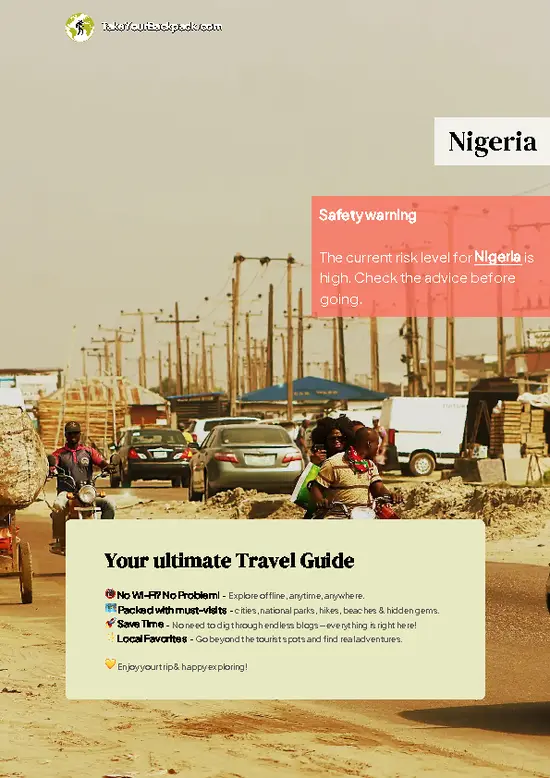
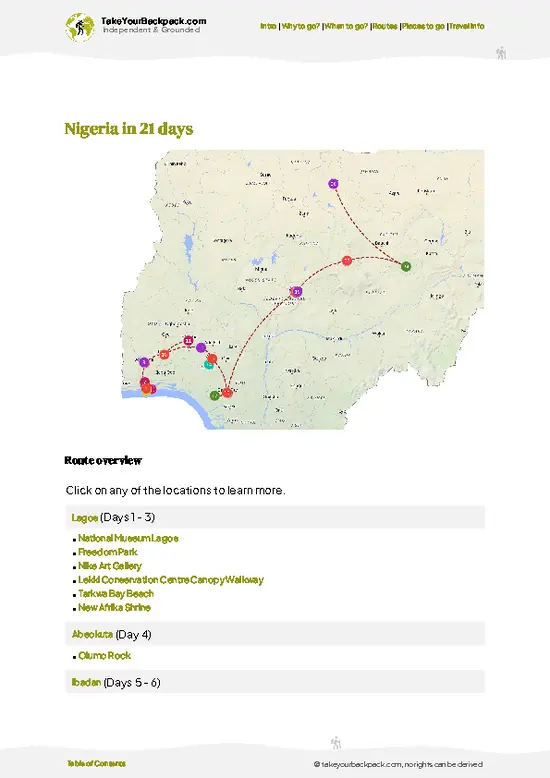
example page 0 from our offline Travel Guide for Nigeria
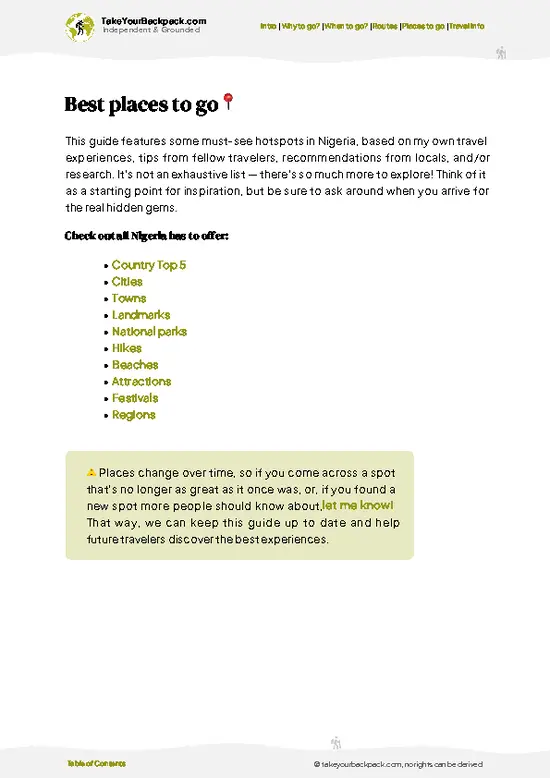
example page 1 from our offline Travel Guide for Nigeria
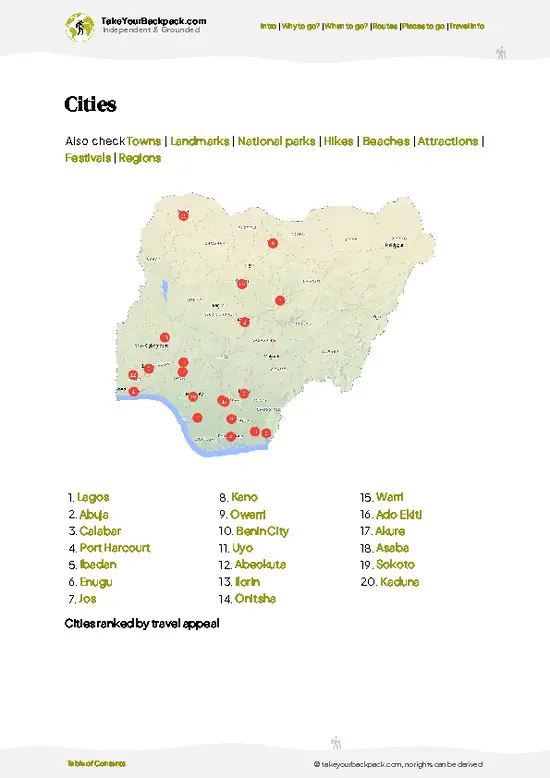
example page 2 from our offline Travel Guide for Nigeria
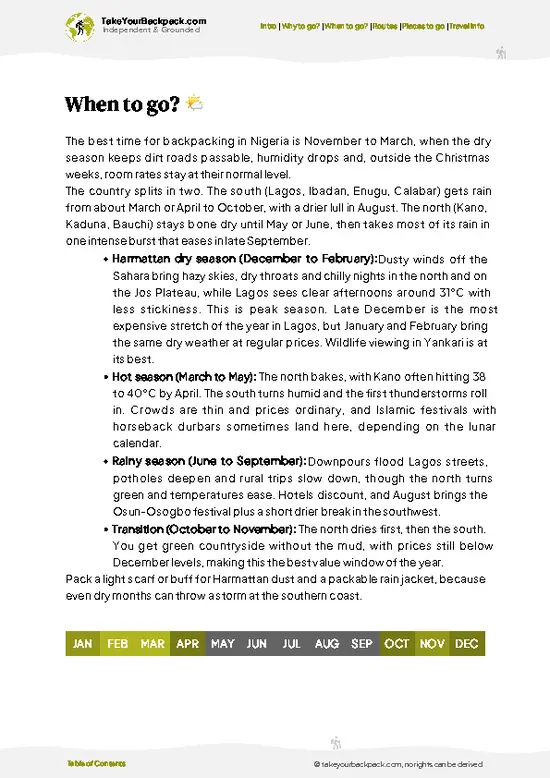
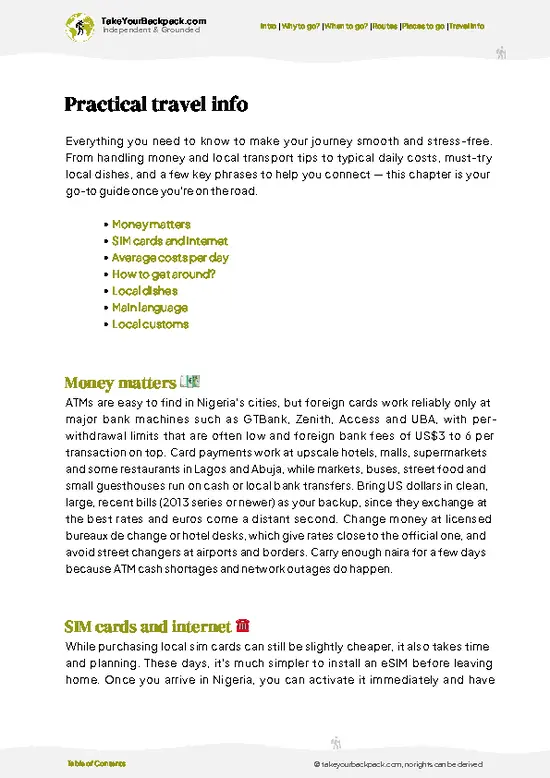
example page 3 from our offline Travel Guide for Nigeria
example page 4 from our offline Travel Guide for Nigeria
example page 5 from our offline Travel Guide for Nigeria
example page 6 from our offline Travel Guide for Nigeria
example page 7 from our offline Travel Guide for Nigeria
The digital guide (332 pages) contains:
89 highlights, ranked by travel appeal
Optimized 7, 14 & 21-day travel routes
Cities, national parks, landmarks, beaches
How to get around
Offline-friendly for travel without Wi-Fi
👉 Click to see all 30+ guide features

📅 Plan smarter in minutes, not weeks
Month by month travel advice
Festivals & national holidays
Budget expectations

🗺️ Go to the right places, skip the overrated ones
Honest pros & cons of destinations
Top hikes, parks & viewpoints
Lesser-known places most travelers miss
Clear “worth it vs skip it” guidance

🛏️ Travel smoothly without rookie mistakes
Best areas to stay
Transport systems explained simply
Common scams & safety advice
SIM cards, money & practical tips

🌍 Understand the country, not just visit it
Culture & traditions
52 Essential phrases & customs
Festivals worth planning around
Traveler-friendly historical context
Insights that make places more meaningful

📱 Built for real travel conditions
Fully downloadable PDF
Works completely offline
Optimized for phone use
Useful in remote areas & buses
Everything in one place
Save weeks of stressful planning
Get instant access to your full guide. 30‑day money-back guarantee.


By proceeding you agree to our terms.
Sent to your inbox immediately after payment • 100% Secure Checkout
Best Backpacking Travel Advisor 2025 tourism awardBest Backpacking
Travel Advisor
2025
What others say about Take Your Backpack Guides:
⭐⭐⭐⭐⭐
Fantastic, amazing amount of information!
⭐⭐⭐⭐⭐
My goodness this is amazing, it's what I've been looking for hats off too you!
⭐⭐⭐⭐⭐
I think this is absolutely BRILLIANT
⭐⭐⭐⭐
Very complete and informative. It's still missing places, but I gotta to commend you
⭐⭐⭐⭐⭐
This is truly amazing, thank you, can't wait to explore it with my kids!
⭐⭐⭐⭐⭐
Awesome resource, thank you!
⭐⭐⭐⭐⭐
This is amazing! Can't wait to explore the ones I haven't seen
⭐⭐⭐⭐
I love this! Well done, great idea.
⭐⭐⭐⭐⭐
Thanks for taking the time to make this gem!
⭐⭐⭐⭐⭐
This might be the best website I've ever seen.
⭐⭐⭐⭐⭐
Congratulations, and thank you so much for your work; it's incredibly valuable.
⭐⭐⭐⭐
In all seriousness I think you did a great job pointing out the important spots
⭐⭐⭐⭐⭐
10/10 very good
⭐⭐⭐⭐⭐
As someone who's only just starting to visit regularly this is awesome, thank you.
⭐⭐⭐⭐
Thank you very much! I'm going to visit my dad, it's going to be very useful!
⭐⭐⭐⭐⭐
This is really cool! We'll be travelling for the first time and this definitely come in handy.
⭐⭐⭐⭐⭐
You are now our minister of culture, congratulations 👨‍💼
⭐⭐⭐⭐⭐
Just wanted to tell you that this is a pearl! Going to follow your recommendations.
⭐⭐⭐⭐⭐
This is so cool. I'll definitely be using the resource for my travels soon.
⭐⭐⭐⭐⭐
This is very impressive! Good work.
⭐⭐⭐⭐⭐
This is an amazing and informative site. Very well done!

🛏️ Where to stay?Best Places to Stay in Nigeria

Yes — hostels and budget accommodation are available in Nigeria, concentrated in major cities like Lagos (Victoria Island, Lekki, Yaba, Ikeja), Abuja (Wuse, Garki) and Port Harcourt (GRA/Diobu).
Victoria Island and Lekki put you close to nightlife, beaches and business hubs but are pricier and suffer heavy traffic; Ikeja and Yaba offer cheaper stays with better transit links yet feel busier and less polished.
Wuse and Garki in Abuja are central, relatively secure and convenient for markets and government sites but quiet after dark, while Port Harcourt’s GRA is calmer and safer than industrial areas though budget options are scarcer and expect security checkpoints and fewer late‑night services. … read more 👉
Yes — hostels and budget accommodation are available in Nigeria, concentrated in major cities like Lagos (Victoria Island, Lekki, Yaba, Ikeja), Abuja (Wuse, Garki) and Port Harcourt (GRA/Diobu).
Victoria Island and Lekki put you close to nightlife, beaches and business hubs but are pricier and suffer heavy traffic; Ikeja and Yaba offer cheaper stays with better transit links yet feel busier and less polished.
Wuse and Garki in Abuja are central, relatively secure and convenient for markets and government sites but quiet after dark, while Port Harcourt’s GRA is calmer and safer than industrial areas though budget options are scarcer and expect security checkpoints and fewer late‑night services.

If you enjoy meeting fellow travelers, consider choosing hostels with high ratings for atmosphere. On the other hand, if you prefer having your own space, a hotel might be a better option.

NigeriaExplore Nigeria

👋 Meet the founderWho’s Behind Take Your Backpack?

Johan, backpacker and founder of TakeYourBackpackHi, I’m Johan (Netherlands 🇳🇱), the creator of TakeYourBackpack. Over the past decade, I’ve backpacked through 80+ countries across six continents, gaining extensive experience with independent travel, long-term trips, and overland routes.

This site is built on a combination of firsthand travel experience and carefully curated insights from other backpackers. Many guides are based on places I’ve personally visited, while others bring together tips, observations, and practical advice shared by trusted travelers I’ve met along the way.

The goal is to provide realistic, experience-driven guidance — not generic itineraries — so you can explore destinations with better context, clearer expectations, and more confidence.

Get full Nigeria guide •
Instant download • 89 highlights • Full Offline guide