×

North Korea🇰🇵 | citiesTokchon
agricultural plains, collective farms, local markets | things to do and best time to go

Explore TanchonExplore Arirang Festival

Backpacking in Tokchon
👍 Recommendedcity ranked #7
By Johan Kruseman 🇳🇱 | Updated May 4, 2026

Tokchon is not for anyone chasing easy freedom: no spontaneous bar-hopping, no hostel common room full of Australians, no wandering off alone with a camera. But if you’re already committing to a tightly controlled North Korea itinerary, Tokchon can sharpen your sense of how the country actually works beyond Pyongyang’s stage set. Sitting inland in South Pyongan Province, it’s an industrial town framed by low hills and coal dust, more chimneys than monuments. As a “destination,” it’s a brief stop rather than a base: a half-day walk through wide, quiet streets, a market visit if your guide allows, maybe a drive out toward the surrounding countryside. Compared with Pyongyang’s curated gloss or the coastal pull of Wonsan, Tokchon feels raw, workaday, and emotionally heavier—valuable context, but not a place you linger.

Discover everything you want to know in the 📖 North Korea Travel Guide.
Safety warning

The current risk level for North Korea is high. Check the advice before going.


Get your North Korea Travel Guide
Loading the map 🌍
CLICK TO FILTER
city
town
unique site
national park
hike
beach
attraction
festival
region
SHOW COUNTRY‘S BESTSHOW ALL

✨ Why go?
Ranked #7 city in North Korea
The unique appeal for travelers

Tokchon serves as a strategic waypoint for backpackers exploring North Korea. Its proximity to hikes like the scenic Mount Kumgang makes it a natural stop for those craving the outdoors. The walkable streets are lined with small-scale guesthouses that offer a cozy atmosphere, perfect for solo travelers or small groups looking to connect. You’ll find local food experiences that are both authentic and affordable, with the scent of freshly cooked dishes wafting through the air. Most travelers tend to stay briefly, perhaps a night or two, soaking in the friendly social vibe before moving on. It’s not a party town, but rather a place where slow travelers can appreciate the nuances of daily life. If you’re after a genuine glimpse into North Korean culture, Tokchon is a worthwhile stop on your journey.
Get the complete Travel Guide for North Korea
Everything organized for offline planning — routes, highlights, costs & tips

See what’s inside 👉

Get the Travel Guide -

💡 HighlightsDon't-miss highlights and experiences

  • Tokchon Revolutionary Site — A state-marked spot (often the top listed attraction) that commemorates local revolutionary activity; worth visiting for the plaques, propaganda art and the way the site frames local history through North Korean official storytelling.
  • Tokchon Coal Mining Complex — The city’s industrial heart. Organized visits (or views from permitted vantage points) give a clear sense of Tokchon’s role in the country’s heavy-industry economy and everyday life for miners and their families.
  • Tokchon Thermal/Power Station (visitor viewpoint) — Industrial infrastructure is a common theme in provincial DPRK travel. From approved viewing areas you can see a working power plant and learn how local energy production is presented to visitors.
  • Central City Square and Leader Monument(s) — Most
read more 👉
  • Tokchon Revolutionary Site — A state-marked spot (often the top listed attraction) that commemorates local revolutionary activity; worth visiting for the plaques, propaganda art and the way the site frames local history through North Korean official storytelling.
  • Tokchon Coal Mining Complex — The city’s industrial heart. Organized visits (or views from permitted vantage points) give a clear sense of Tokchon’s role in the country’s heavy-industry economy and everyday life for miners and their families.
  • Tokchon Thermal/Power Station (visitor viewpoint) — Industrial infrastructure is a common theme in provincial DPRK travel. From approved viewing areas you can see a working power plant and learn how local energy production is presented to visitors.
  • Central City Square and Leader Monument(s) — Most North Korean cities have a central square with statues, flags and murals praising the leadership; it’s the most straightforward place to feel the civic choreography and take the typical “city portrait” photos allowed by guides.
  • Tokchon Central Market — The best place to see everyday civilian life: food stalls, produce, household goods and local bargaining. Interaction will be limited and guided, but it’s the most authentic-feeling slice of the city you’ll find.
  • Chongchon River Embankment / Riverside Park — A local green space along the river where people walk, fish or rest. It offers a quieter, non-monumental perspective on Tokchon and is good for notes-and-people-watching (again, expect guided access).
  • Tokchon Railway Station — Old-style railway stations in provincial DPRK towns are oddly evocative: Soviet-era architecture, slow local trains and a snapshot of regional transport life. Perfect for train-spotting and observing comings-and-goings.
  • Local Revolutionary Museum / Memorial Hall — Small municipal museums in towns like Tokchon collect photos, uniforms and local war-era stories. Not flashy, but useful for context on how the state presents local history.
  • Workers’ Palace / Cultural House — The civic cultural center where workers’ clubs, amateur troupes and public events are staged. If you can time a visit with a performance or exhibit, you’ll see genuine local culture (staged, but still revealing).
  • Municipal Schools or Youth Camp (exterior visits) — Visits are normally limited to exteriors and supervised tours, but school buildings and youth facilities show the regime’s emphasis on education and youth mobilization; architecture, murals and playgrounds tell their own story.
A few real, visitable highlights outside Tokchon that make good day trips include Pyongyang’s Mansudae Grand Monument and Kumsusan Memorial Palace, the industrial town of Anju and nearby riverside scenery along the Chongchon — my personal favorite for a day trip is Mansudae Grand Monument in Pyongyang.
Spotted a mistake or missing something? Contact us.

🏘️ NeighborhoodsUnderstanding the local layout

Tokchon offers a unique glimpse into North Korean life, blending history with a sense of community. Here’s how to navigate its neighborhoods for an enriching experience.

Central Tokchon: This area buzzes with local life. You’ll find markets filled with fresh produce and street vendors selling snacks. It’s walkable, making it easy to explore on foot. Costs are low, perfect for budget travelers. While nightlife is limited, the atmosphere is lively during the day, giving you a taste of daily routines.

East Tokchon: Quieter and more residential, this neighborhood is ideal for longer stays. The pace slows down here, allowing for deeper connections with locals. It’s less touristy, so expect a more authentic experience. Transport options are limited, but the tranquility makes it worth it.

West read more 👉
Tokchon offers a unique glimpse into North Korean life, blending history with a sense of community. Here’s how to navigate its neighborhoods for an enriching experience.

Central Tokchon: This area buzzes with local life. You’ll find markets filled with fresh produce and street vendors selling snacks. It’s walkable, making it easy to explore on foot. Costs are low, perfect for budget travelers. While nightlife is limited, the atmosphere is lively during the day, giving you a taste of daily routines.

East Tokchon: Quieter and more residential, this neighborhood is ideal for longer stays. The pace slows down here, allowing for deeper connections with locals. It’s less touristy, so expect a more authentic experience. Transport options are limited, but the tranquility makes it worth it.

West Tokchon: This area is a mix of local eateries and small shops. It’s a great spot for sampling traditional dishes. The vibe is relaxed, with a few bars that come alive in the evenings. Accessibility is decent, making it suitable for short visits while still offering a taste of local culture.

⌛️ 1 daySeeing the highlights in 24 hours

Tokchon, North Korea, is a town that pulses with the rhythm of everyday life, offering a glimpse into the local culture beyond the usual tourist trails. Start your morning with a stroll through the bustling streets, where the scent of freshly baked bread wafts from local bakeries. Grab a warm bun and head to the Tokchon Revolutionary Museum. The exhibits are straightforward but rich in history, giving you context about the town’s role in the Korean War.

As the sun climbs higher, make your way to the nearby Pyongyang Agricultural College. This isn’t on the standard itinerary, but it’s a fascinating spot. The students often showcase their projects, and you might even get a chance to chat with them about their studies. The energy here is palpable, filled with youthful ambition and a sense of … read more 👉
Tokchon, North Korea, is a town that pulses with the rhythm of everyday life, offering a glimpse into the local culture beyond the usual tourist trails. Start your morning with a stroll through the bustling streets, where the scent of freshly baked bread wafts from local bakeries. Grab a warm bun and head to the Tokchon Revolutionary Museum. The exhibits are straightforward but rich in history, giving you context about the town’s role in the Korean War.

As the sun climbs higher, make your way to the nearby Pyongyang Agricultural College. This isn’t on the standard itinerary, but it’s a fascinating spot. The students often showcase their projects, and you might even get a chance to chat with them about their studies. The energy here is palpable, filled with youthful ambition and a sense of purpose.

In the afternoon, wander through the residential neighborhoods. The architecture tells stories of resilience, with homes adorned with colorful murals. Stop by a local market; the vibrant stalls are a feast for the eyes, brimming with fresh produce and handmade goods. Engage with the vendors; they appreciate a friendly face.

As evening approaches, find a spot by the river. The golden light reflecting off the water creates a serene atmosphere. Enjoy a simple meal at a local eatery, where the flavors are authentic and the hospitality warm. This day in Tokchon isn’t just about seeing; it’s about feeling the pulse of a community, making every moment count.
Build the Right Itinerary
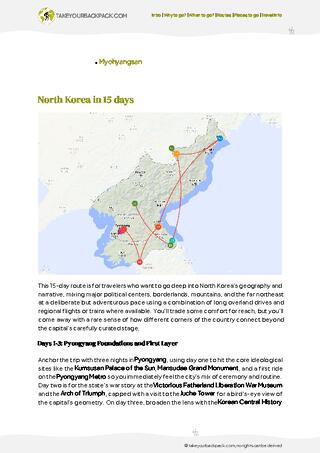
Use the North Korea Travel Guide’s 5, 10 & 15-day routes as a starting point to plan a trip that actually works on the ground.

Get the Travel Guide -

🌤️ When to go?Choosing the right time of year


  • Weather: Spring (April to June) and autumn (September to October) offer mild, dry conditions. Expect temperatures from 10°C to 22°C (50°F to 72°F), perfect for walking without overheating or freezing.

  • Temperature: Winters plunge below freezing, often -10°C to -20°C (14°F to -4°F), making outdoor exploration tough. Summers can hit 25°C to 30°C (77°F to 86°F), but humidity spikes, turning the air heavy and sticky.

  • Daylight Hours: Spring and autumn provide balanced daylight—about 12 to 14 hours—enough time to soak in the town’s atmosphere without rushing or losing light early.

  • Crowds: Tourist numbers are low year-round, but spring and autumn see a slight uptick with organized tours. This means you get a livelier vibe without feeling overwhelmed.

  • Seasonal Activities: Autumn brings harvest
read more 👉

  • Weather: Spring (April to June) and autumn (September to October) offer mild, dry conditions. Expect temperatures from 10°C to 22°C (50°F to 72°F), perfect for walking without overheating or freezing.

  • Temperature: Winters plunge below freezing, often -10°C to -20°C (14°F to -4°F), making outdoor exploration tough. Summers can hit 25°C to 30°C (77°F to 86°F), but humidity spikes, turning the air heavy and sticky.

  • Daylight Hours: Spring and autumn provide balanced daylight—about 12 to 14 hours—enough time to soak in the town’s atmosphere without rushing or losing light early.

  • Crowds: Tourist numbers are low year-round, but spring and autumn see a slight uptick with organized tours. This means you get a livelier vibe without feeling overwhelmed.

  • Seasonal Activities: Autumn brings harvest festivals and vibrant foliage, adding layers of local culture and color. Spring’s bloom is subtle but freshens the air and landscape.

  • Price Fluctuations: Prices remain relatively stable due to limited tourism infrastructure, but spring and autumn tours may cost a bit more due to demand and better weather.


Pro-tip: Aim for early autumn—cool air, golden leaves, and just enough daylight to wander without the summer humidity or winter freeze stealing your joy.


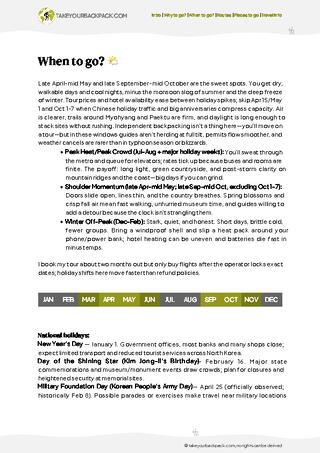
source: climatestotravel.comJANJanuary: below average for travelingFEBFebruary: below average for travelingMARMarch: fair for travelingAPRApril: highly recommended for travelingMAYMay: excellent for travelingJUNJune: highly recommended for travelingJULJuly: fair for travelingAUGAugust: fair for travelingSEPSeptember: excellent for travelingOCTOctober: excellent for travelingNOVNovember: good for travelingDECDecember: below average for traveling
when-to-go

✈️ The backpacker research shortcutNorth Korea Travel Guide

An offline-friendly backpacking guide with optimized travel routes, ranked highlights, transport advice, and the best areas to stay.
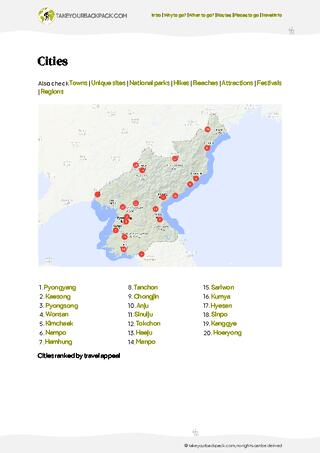
example page 0 from our offline Travel Guide for North Koreaexample page 1 from our offline Travel Guide for North Koreaexample page 2 from our offline Travel Guide for North Koreaexample page 3 from our offline Travel Guide for North Koreaexample page 4 from our offline Travel Guide for North Koreaexample page 5 from our offline Travel Guide for North Korea
The digital guide (251 pages) contains:
74 highlights, ranked by travel appeal
Optimized 5, 10 & 15-day travel routes
Best neighborhoods to stay
How to get around
Offline-friendly for travel without Wi-Fi
👉 See all 30+ guide features

📅 Plan smarter in minutes, not weeks
Month by month travel advice
Festivals & national holidays
Budget expectations

🗺️ Go to the right places, skip the overrated ones
Honest pros & cons of destinations
Top hikes, parks & viewpoints
Lesser-known places most travelers miss
Clear “worth it vs skip it” guidance

🛏️ Travel smoothly without rookie mistakes
Best areas to stay
Transport systems explained simply
Common scams & safety advice
SIM cards, money & practical tips

🌍 Understand the country, not just visit it
Culture & traditions
52 Essential phrases & customs
Festivals worth planning around
Traveler-friendly historical context
Insights that make places more meaningful

📱 Built for real travel conditions
Fully downloadable PDF
Works completely offline
Optimized for phone use
Useful in remote areas & buses
Everything in one place
Save weeks of stressful planning
Get instant access to the full guide directly. 30-day money-back guarantee.


Sent to your inbox immediately after payment • 100% Secure Checkout
Best Backpacking Travel Advisor 2025 tourism awardBest Backpacking
Travel Advisor
2025
What others say about Take Your Backpack Guides:
⭐⭐⭐⭐⭐
Fantastic, amazing amount of information!
⭐⭐⭐⭐⭐
My goodness this is amazing, it's what I've been looking for hats off too you!
⭐⭐⭐⭐⭐
I think this is absolutely BRILLIANT
⭐⭐⭐⭐
Very complete and informative. It's still missing places, but I gotta to commend you
⭐⭐⭐⭐⭐
This is truly amazing, thank you, can't wait to explore it with my kids!
⭐⭐⭐⭐⭐
Awesome resource, thank you!
⭐⭐⭐⭐⭐
This is amazing! Can't wait to explore the ones I haven't seen
⭐⭐⭐⭐
I love this! Well done, great idea.
⭐⭐⭐⭐⭐
Thanks for taking the time to make this gem!
⭐⭐⭐⭐⭐
This might be the best website I've ever seen.
⭐⭐⭐⭐⭐
Congratulations, and thank you so much for your work; it's incredibly valuable.
⭐⭐⭐⭐
In all seriousness I think you did a great job pointing out the important spots
⭐⭐⭐⭐⭐
10/10 very good
⭐⭐⭐⭐⭐
As someone who's only just starting to visit regularly this is awesome, thank you.
⭐⭐⭐⭐
Thank you very much! I'm going to visit my dad, it's going to be very useful!
⭐⭐⭐⭐⭐
This is really cool! We'll be travelling for the first time and this definitely come in handy.
⭐⭐⭐⭐⭐
You are now our minister of culture, congratulations 👨‍💼
⭐⭐⭐⭐⭐
Just wanted to tell you that this is a pearl! Going to follow your recommendations.
⭐⭐⭐⭐⭐
This is so cool. I'll definitely be using the resource for my travels soon.
⭐⭐⭐⭐⭐
This is very impressive! Good work.
⭐⭐⭐⭐⭐
This is an amazing and informative site. Very well done!

🛏️ Where to stay?Where staying makes the most sense

In Tokchon, the best spot for backpackers is the area around the city center, where the pulse of daily life hums steadily. This neighborhood is compact, making it easy to navigate on foot, which is crucial since public transport options are limited and taxis are tightly regulated. Staying here means you’re close to local markets and communal spaces where you can soak in the scent of street food—think steamed dumplings and fresh kimchi—without the touristy gloss. The vibe is quietly social; locals gather in small groups, and you’ll find a few guesthouses that cater to budget travelers, offering … read more 👉
In Tokchon, the best spot for backpackers is the area around the city center, where the pulse of daily life hums steadily. This neighborhood is compact, making it easy to navigate on foot, which is crucial since public transport options are limited and taxis are tightly regulated. Staying here means you’re close to local markets and communal spaces where you can soak in the scent of street food—think steamed dumplings and fresh kimchi—without the touristy gloss. The vibe is quietly social; locals gather in small groups, and you’ll find a few guesthouses that cater to budget travelers, offering basic but clean accommodations. Hostels here aren’t flashy, but they provide a rare chance to connect with other solo travelers in a country where independent travel is tightly controlled. Compared to the quieter, more residential outskirts, the city center feels alive without being overwhelming, striking a balance between safety and the subtle buzz of everyday North Korean life. It’s where you get the real texture of Tokchon, not just a postcard view.

🚌 Getting aroundHow to get around Tokchon

Tokchon moves at its own rhythm—a blend of deliberate pace and bursts of bustling energy. The streets don’t hum with the relentless tick of a clock but pulse with a human tempo, where waiting is part of the experience and the scent of street food mingles with the dust kicked up by passing bicycles. Here, schedules exist but flex, and the best way to get around is to sync with the town’s ebb and flow rather than fight it. You’ll find that patience pays off, and the payoff is a deeper connection to the place, where every corner turned reveals a slice of daily life that no timetable could capture.


  • Walking: The heart of Tokchon is best explored on foot. Streets are compact, and the air carries the aroma of grilled corn and fresh herbs. Walking lets you catch the subtle details—the cracked
read more 👉
Tokchon moves at its own rhythm—a blend of deliberate pace and bursts of bustling energy. The streets don’t hum with the relentless tick of a clock but pulse with a human tempo, where waiting is part of the experience and the scent of street food mingles with the dust kicked up by passing bicycles. Here, schedules exist but flex, and the best way to get around is to sync with the town’s ebb and flow rather than fight it. You’ll find that patience pays off, and the payoff is a deeper connection to the place, where every corner turned reveals a slice of daily life that no timetable could capture.


  • Walking: The heart of Tokchon is best explored on foot. Streets are compact, and the air carries the aroma of grilled corn and fresh herbs. Walking lets you catch the subtle details—the cracked paint on a shopfront, the chatter of locals at a market stall. It’s free, flexible, and the only way to truly soak in the town’s atmosphere.


  • Shared Minibuses: These are the lifeline for budget travelers needing to cover longer distances. They run roughly from 6:00 AM to 8:00 PM, with fares around a dollar or less. Expect a tight squeeze and a stop-anywhere vibe, but the windows frame a moving postcard of rice paddies and mountain shadows. They’re slower than private taxis but unbeatable for price and local interaction.


  • Bicycles: Renting a bike costs a few dollars a day and offers a sweet spot between speed and immersion. The roads are mostly flat, and the breeze carries the scent of pine and earth. Cycling lets you escape the main drag and discover quiet lanes where time seems to pause. Just watch for uneven pavement and the occasional stray dog.


  • Local Taxis: If you’re short on time or traveling with gear, taxis are a practical choice. They’re more expensive—expect to pay several times the minibus fare—but they run 24/7 and offer door-to-door comfort. Drivers may not speak much English, so having your destination written in Korean is a smart move.

👛 Costs (as of 10 April 2026)Money, prices, and spending tips

Backpacking in Tokchon, North Korea, is a rare and tightly controlled experience, and the costs reflect both the limited infrastructure and the strict regulations on independent travel. Here’s a realistic breakdown of what you’ll spend daily if you manage to navigate the system.
  • Dorm Accommodation: Options are extremely limited, often government-run guesthouses or designated hotels for foreigners. Prices hover around $30 to $50 USD per night. The rooms are basic—think sparse furnishings, minimal heating, and a strong scent of institutional cleaning products. Expect no frills, but a clean place to crash.
  • Meals: Food options are restricted to state-approved restaurants or hotel dining rooms. Meals typically cost between $10 and $20 USD per day. The cuisine is simple—lots of rice, kimchi, and
read more 👉
Backpacking in Tokchon, North Korea, is a rare and tightly controlled experience, and the costs reflect both the limited infrastructure and the strict regulations on independent travel. Here’s a realistic breakdown of what you’ll spend daily if you manage to navigate the system.
  • Dorm Accommodation: Options are extremely limited, often government-run guesthouses or designated hotels for foreigners. Prices hover around $30 to $50 USD per night. The rooms are basic—think sparse furnishings, minimal heating, and a strong scent of institutional cleaning products. Expect no frills, but a clean place to crash.
  • Meals: Food options are restricted to state-approved restaurants or hotel dining rooms. Meals typically cost between $10 and $20 USD per day. The cuisine is simple—lots of rice, kimchi, and stews with local vegetables. The flavor profile is mild, with occasional bursts of fermented tang. Don’t expect street food or snacks on the go.
  • Local Transport: Public transport is scarce and not designed for tourists. Most travelers rely on arranged taxis or official vehicles, which can cost $10 to $20 USD per day depending on distances. The rides are slow, with the hum of old engines and the occasional whistle of passing trains, adding to the sense of stepping back in time.
  • Basic Activities/Entry Fees: Access to attractions is tightly controlled and often bundled into guided tours. Entry fees or activity costs range from $15 to $30 USD daily, covering visits to monuments, museums, or cultural performances. The experience is less about spontaneous exploration and more about absorbing curated history and ideology.
  • Miscellaneous Expenses: This includes bottled water, occasional souvenirs, or small tips. Budget around $5 to $10 USD. Bottled water is a must, as tap water is not recommended. The air carries a faint metallic scent in some areas, making hydration essential.

All told, expect to spend roughly $70 to $130 USD per day backpacking in Tokchon. It’s not a budget destination by any stretch, but the price buys you access to a place frozen in time, where every step feels like peeling back layers of a tightly sealed world. The challenge is real, but so is the reward of witnessing a society few outsiders ever see.


source: korea-dpr.com
⚠️ Prices can change and everyone travels differently, so take this as a rough guide. Hope it helps you plan your adventure!

🚌 Day tripsEasy escapes and nearby places

Tokchon, North Korea, serves as a unique base for day trips that blend history, culture, and the raw beauty of the landscape. The town itself is a microcosm of North Korean life, and venturing out from here reveals layers of experience that are both enlightening and humbling.

Trip to Kaesong
This ancient city, just a couple of hours from Tokchon, is steeped in history. You’ll wander through the remnants of the Koryo Dynasty, with the serene atmosphere of the Koryo Museum and the stunning architecture of the Tomb of King Wang Geon. The journey costs around $10 for transport, and the best time to visit is during spring or autumn when the weather is mild and the scenery is vibrant. A common mistake is underestimating the time needed to explore; plan for a full day to soak it all in.
👉 Explore read more 👉
Tokchon, North Korea, serves as a unique base for day trips that blend history, culture, and the raw beauty of the landscape. The town itself is a microcosm of North Korean life, and venturing out from here reveals layers of experience that are both enlightening and humbling.

Trip to Kaesong
This ancient city, just a couple of hours from Tokchon, is steeped in history. You’ll wander through the remnants of the Koryo Dynasty, with the serene atmosphere of the Koryo Museum and the stunning architecture of the Tomb of King Wang Geon. The journey costs around $10 for transport, and the best time to visit is during spring or autumn when the weather is mild and the scenery is vibrant. A common mistake is underestimating the time needed to explore; plan for a full day to soak it all in.
👉 Explore Kaesong

Trip to the DMZ
Visiting the Demilitarized Zone is a must. It’s a surreal experience, standing at the edge of two worlds. The guided tour typically takes about half a day and costs around $30, including transport. The best time to go is early morning to avoid crowds and catch the mist rising over the landscape. Many first-timers forget to bring their passport, which is essential for entry.


Trip to Mount Kumgang
A trek to Mount Kumgang offers breathtaking views and a chance to connect with nature. The journey takes about two hours, and the entry fee is around $20. Late spring is ideal, as the flowers bloom and the air is crisp. A common oversight is not checking the weather; conditions can change rapidly, so be prepared for anything.
👉 Explore Mount Kumgang

Trip to Pyongyang
While it’s a bit further, a day trip to Pyongyang is worth the effort. The capital is a showcase of North Korean architecture and ideology. Expect to spend around $40 for transport and entry fees. Aim for a weekday to avoid the weekend crowds. Many travelers miss out on the local eateries; don’t skip lunch at a local spot for an authentic taste of North Korean cuisine.
👉 Explore Pyongyang
Want to know what more North Korea offers?
The North Korea Travel Guide describes 74 highlights, from cities to national parks, from beaches to hikes

Get the Travel Guide -

🍲 FoodLocal Flavors for Backpackers

In Tokchon, food and drink offer a rare glimpse into everyday North Korean life, where simplicity meets tradition. The city’s signature dishes lean heavily on hearty staples like cold noodles (naengmyeon) and spicy kimchi, often accompanied by rice and pickled vegetables. These flavors are straightforward but deeply satisfying, a reflection of local ingredients and seasonal rhythms.

Backpackers will find themselves drawn to bustling markets and street stalls, where the air is thick with the scent of grilled meats and fermented spices. Casual eateries here serve up generous portions without fuss, perfect for those who want to eat like locals without the pretense. Don’t expect flashy bars; instead, small cafés and modest taverns offer simple rice wines and soju, often shared communally, fostering … read more 👉
In Tokchon, food and drink offer a rare glimpse into everyday North Korean life, where simplicity meets tradition. The city’s signature dishes lean heavily on hearty staples like cold noodles (naengmyeon) and spicy kimchi, often accompanied by rice and pickled vegetables. These flavors are straightforward but deeply satisfying, a reflection of local ingredients and seasonal rhythms.

Backpackers will find themselves drawn to bustling markets and street stalls, where the air is thick with the scent of grilled meats and fermented spices. Casual eateries here serve up generous portions without fuss, perfect for those who want to eat like locals without the pretense. Don’t expect flashy bars; instead, small cafés and modest taverns offer simple rice wines and soju, often shared communally, fostering a quiet camaraderie.

Eating in Tokchon is as much about the ritual as the food. It’s customary to wait for the eldest to start before digging in, and pouring drinks for others is a sign of respect. This subtle etiquette turns every meal into a shared moment, where the act of eating becomes a bridge across cultural divides.

🛡️ SafetyTraveler Safety Guide

In Tokchon, safety is generally solid, but awareness is your best ally. Stick to well-trodden paths, especially near the train station where the bustle can distract you. Solo travelers should avoid wandering too far after dark; the streets can feel eerily quiet, and it’s easy to lose your bearings.

While scams are rare, be cautious of overly friendly locals offering unsolicited help. They may expect something in return. Everyday annoyances include the occasional bureaucratic delay, especially at checkpoints. Carry yourself confidently, smile, and engage with locals respectfully. This approach not only enhances your experience but also fosters a sense of connection in a place where every interaction counts.

Other North Korean cities near Tokchon

Explore more nearby:

  • Anju—coal mining, riverside industry, worker districts| 56 km away
  • Pyongsong—industrial zones, academic institutes, transport hub| 67 km away
  • Kumya—coastal wetlands, fishing villages, tidal flats| 85 km away

👉 Discover all cities

Or checkout all North Korea has to offer (think cities, towns, villages, national parks, hikes, beaches, festivals)
Country photo of North Korea

We 💚 feedbackSumming up the experience

Tokchon offers a rare glimpse into North Korean life, where the scent of fresh kimchi mingles with the sound of laughter from locals. It’s a chance to see resilience up close. But be ready: the rigid rules can feel stifling. You’ll need patience and flexibility to navigate the restrictions, but the experience is worth every moment of adjustment.

✈️ When did I visit North Korea?
As part of my 1.5 year travel around the world trip, I visited North Korea in August 2015. I had never expected I was able to get in.

✍️ Help improve this page!
The information on this page is based on my own backpacking experience in North Korea, supplemented with up-to-date research and feedback from other travelers. Travel details can change, so if you notice anything outdated or incomplete, feel free to let me know.


🙋‍♂️ Give feedback

👋 Meet the founderWho’s Behind Take Your Backpack?

Johan, backpacker and founder of TakeYourBackpackHi, I’m Johan (Netherlands 🇳🇱), the creator of TakeYourBackpack. Over the past decade, I’ve backpacked through 80+ countries across six continents, gaining extensive experience with independent travel, long-term trips, and overland routes.

This site is built on a combination of firsthand travel experience and carefully curated insights from other backpackers. Many guides are based on places I’ve personally visited, while others bring together tips, observations, and practical advice shared by trusted travelers I’ve met along the way.

The goal is to provide realistic, experience-driven guidance — not generic itineraries — so you can explore destinations with better context, clearer expectations, and more confidence.

Get Full Country Guide |
Instant download • 74 highlights • Full Offline guide