×

North Korea🇰🇵 | citiesTanchonmineral resources, river gorge, industrial plants | things to do and best time to go

Explore SinuijuExplore Tokchon

Backpacking in Tanchon
🌟 Highlightcity ranked #5
By Johan Kruseman 🇳🇱 | Updated June 11, 2026

Tanchon is not for anyone chasing easy freedom of movement, nightlife, or spontaneous side quests. It’s tightly controlled, industrial, and emotionally heavy. But for backpackers who care more about understanding how North Korea actually functions than ticking off pretty postcards, Tanchon can sharpen your sense of the country’s reality and give context to the more polished stops.

Tanchon sits on the east coast of North Korea in South Hamgyong Province, roughly between Hamhung and Chongjin, with the sea on one side and low, scarred hills on the other. The town feels work-first: mining, factories, a port, grey apartment blocks, and streets that empty into a quiet, almost echoing evening. As a destination, it’s a practical stop on an east-coast route rather than a base; you pass through with your guide, maybe walk a central street, glimpse the harbor, or visit a state-approved monument. Transport is by pre-arranged vehicle or train, movement is guided, and meeting other independent travelers is essentially impossible. Compared with Hamhung, Tanchon feels more utilitarian and less scenic; costs are baked into your tour, and safety is about following rules, not wandering freely.

Discover everything you want to know in the 📖 North Korea Travel Guide.
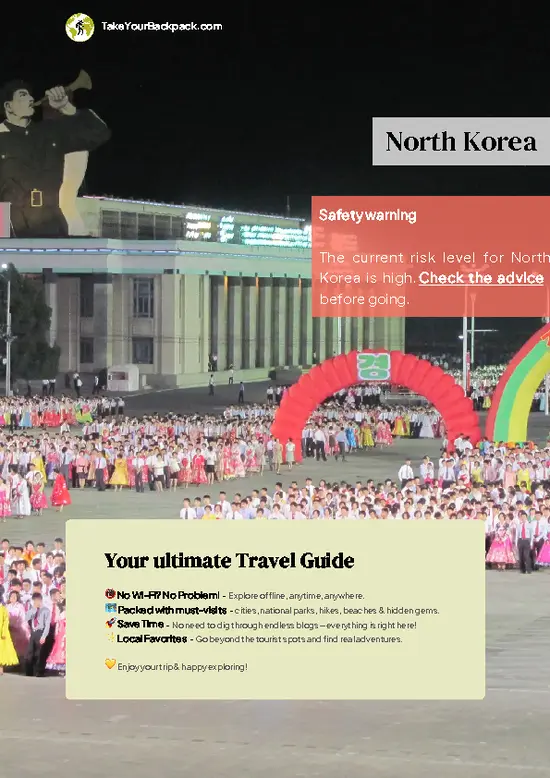
Safety warning

The current risk level for North Korea is high. Check the advice before going.


Get your North Korea guide
74 ranked highlights, routes & tips, works offline (296 pages)
Loading the map 🌍
CLICK TO FILTER
cities
towns
landmarks
national parks
hikes
beaches
attractions
festivals
regions
SHOW COUNTRY’S BESTSHOW ALL

✨ Why go?
Ranked #5 city in North Korea
Why Tanchon should be on your travel list

Tanchon is a strategic stop for backpackers exploring North Korea. Its proximity to hikes and beaches makes it a natural base for outdoor enthusiasts. The small-scale guesthouses offer a cozy atmosphere, perfect for solo travelers or small groups looking to connect. Streets are walkable, inviting you to explore local food stalls where the aroma of grilled meats fills the air. Most travelers stay briefly, using Tanchon as a launchpad for adventures, but those who linger appreciate the friendly social vibe. It’s not a party town, but if you’re into slow travel and genuine experiences, Tanchon fits the bill beautifully.
Want to include Tanchon in your North Korea route?
Create a personalized North Korea itinerary that includes Tanchon and the places that fit your trip — based on your travel style, budget, and available time. Get your route in seconds.

Generate my trip

💡 HighlightsDon't-miss highlights and experiences

  • Komdok Mining Complex — One of the region’s biggest industrial anchors: a sprawling mining and processing area tied to Tanchon’s economy. Visiting shows massive mine works, heavy-industry infrastructure, and the gritty scale of DPRK resource towns.
  • Tanchon Harbor and Fish Market — The working port where local fishing boats land their catch; good for seeing everyday coastal life, seafood trade, and waterfront activity rather than polished tourist scenes.
  • Tanchon Coastal Road and Fishing Villages — Rocky headlands, small beaches and low-key villages along the coast that give a clear sense of local maritime culture and sea views away from big-city crowds.
Nearby, visitable day-trip highlights include Hamhung (the provincial capital with city sights and markets), Kŭmya County’s coastal areas, … read more 👉
  • Komdok Mining Complex — One of the region’s biggest industrial anchors: a sprawling mining and processing area tied to Tanchon’s economy. Visiting shows massive mine works, heavy-industry infrastructure, and the gritty scale of DPRK resource towns.
  • Tanchon Harbor and Fish Market — The working port where local fishing boats land their catch; good for seeing everyday coastal life, seafood trade, and waterfront activity rather than polished tourist scenes.
  • Tanchon Coastal Road and Fishing Villages — Rocky headlands, small beaches and low-key villages along the coast that give a clear sense of local maritime culture and sea views away from big-city crowds.
Nearby, visitable day-trip highlights include Hamhung (the provincial capital with city sights and markets), Kŭmya County’s coastal areas, and other East-Coast fishing towns — my personal favorite to explore is Hamhung.
Spotted a mistake or missing something? Contact us.
🏘️ NeighborhoodsUnderstanding the local layout

Tanchon offers a unique glimpse into North Korean life, blending history with the everyday hustle of its residents. Here’s how to navigate its neighborhoods:

Central Tanchon: This area buzzes with local markets and street vendors. The vibe is lively, making it perfect for short stays. Walkability is high, but be prepared for uneven sidewalks. Nightlife is minimal, so enjoy the local cuisine early.

Riverside District: A quieter spot with scenic views of the river. Ideal for longer stays, it offers a peaceful atmosphere. Transport options are limited, so plan to walk or bike. The sunsets here are worth the extra effort.

Industrial Zone: Less touristy, this area showcases the working side of Tanchon. It’s gritty but authentic. Not recommended for longer stays, as amenities are sparse, but it’s a fascinating place for a quick visit.

⌛️ 1 daySeeing the highlights in 24 hours

Tanchon, a coastal town in North Korea, offers a unique glimpse into daily life away from the capital’s spotlight. The salty breeze carries the scent of the sea, mingling with the earthy aroma of local markets. Start your morning at the bustling Tanchon Market, where vendors sell fresh seafood and vibrant produce. Engage with locals; their smiles are genuine, and you might even snag a taste of homemade kimchi.

In the afternoon, head to the nearby Tanchon Revolutionary Museum. This lesser-known spot is rich in history, showcasing artifacts that tell the story of the region’s past. The museum’s quiet halls allow for reflection, and the guides are often eager to share personal anecdotes that breathe life into the exhibits.

As evening falls, stroll along the waterfront. The setting sun casts … read more 👉
Tanchon, a coastal town in North Korea, offers a unique glimpse into daily life away from the capital’s spotlight. The salty breeze carries the scent of the sea, mingling with the earthy aroma of local markets. Start your morning at the bustling Tanchon Market, where vendors sell fresh seafood and vibrant produce. Engage with locals; their smiles are genuine, and you might even snag a taste of homemade kimchi.

In the afternoon, head to the nearby Tanchon Revolutionary Museum. This lesser-known spot is rich in history, showcasing artifacts that tell the story of the region’s past. The museum’s quiet halls allow for reflection, and the guides are often eager to share personal anecdotes that breathe life into the exhibits.

As evening falls, stroll along the waterfront. The setting sun casts a warm glow over the waves, creating a perfect backdrop for a moment of peace. Grab a simple dinner at a local eatery, savoring dishes that reflect the town’s character. Tanchon may not be on every tourist’s radar, but its charm lies in the authenticity of its people and experiences.
Turn your Tanchon visit into an North Korea adventure
Build a complete North Korea route with Tanchon, hidden gems, must-see destinations, and realistic travel times included.

Generate my trip

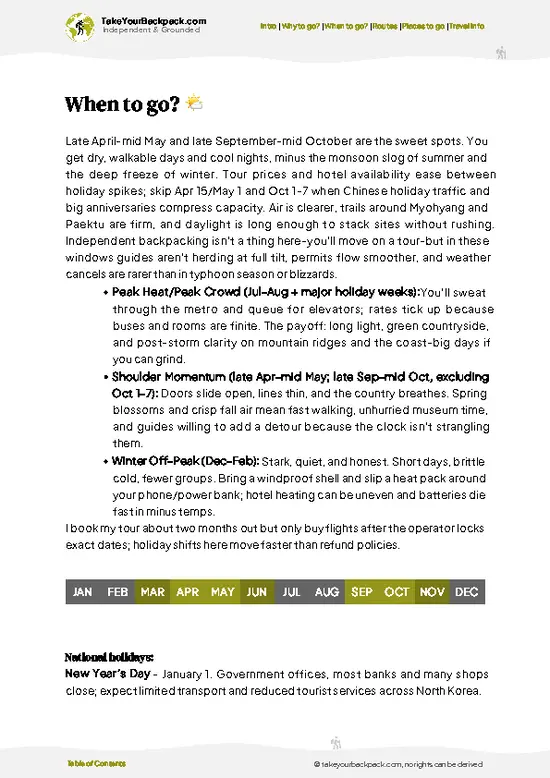
🌤️ When to go?Weather, crowds, and seasonal trade-offs


  • Weather: Tanchon’s coastal location means summers are humid and hot, often hitting 25-30°C (77-86°F), which can feel sticky and slow you down. Winters plunge below freezing, with temperatures around -5 to -10°C (23-14°F), bringing biting winds off the Sea of Japan. Spring and autumn offer a crisp, clear atmosphere that’s easier on your gear and your lungs.

  • Temperature: Aim for late April to early June or September to October. Daytime temps hover comfortably between 15-22°C (59-72°F), perfect for hiking and exploring without overheating or freezing. Nights can still be chilly, so pack layers.

  • Daylight Hours: Spring and autumn provide a balanced 12-14 hours of daylight, enough time to soak in the rugged coastline and mountain trails without rushing. Winter days shrink to 9-10 hours, limiting
read more 👉

  • Weather: Tanchon’s coastal location means summers are humid and hot, often hitting 25-30°C (77-86°F), which can feel sticky and slow you down. Winters plunge below freezing, with temperatures around -5 to -10°C (23-14°F), bringing biting winds off the Sea of Japan. Spring and autumn offer a crisp, clear atmosphere that’s easier on your gear and your lungs.

  • Temperature: Aim for late April to early June or September to October. Daytime temps hover comfortably between 15-22°C (59-72°F), perfect for hiking and exploring without overheating or freezing. Nights can still be chilly, so pack layers.

  • Daylight Hours: Spring and autumn provide a balanced 12-14 hours of daylight, enough time to soak in the rugged coastline and mountain trails without rushing. Winter days shrink to 9-10 hours, limiting your window for outdoor activities.

  • Crowds: Tanchon isn’t a tourist hotspot, but local holidays and national events can bring small surges. Visiting outside major North Korean holidays means quieter streets and more authentic interactions.

  • Seasonal Activities: Autumn is prime for witnessing the fiery foliage along the mountains, while spring bursts with wildflowers and fresh greenery. Summer’s sea breeze invites coastal walks but beware of occasional heavy rains.

  • Price Fluctuations: Prices for accommodations and permits remain relatively stable year-round due to limited tourism infrastructure, but shoulder seasons (spring and autumn) often yield better availability and slightly smoother logistics.


Pro-tip: Time your visit for early autumn when the air is sharp, the colors pop, and the light lingers just long enough to savor every rugged, salty breath.


source: climatestotravel.comJANJanuary: below average for travelingFEBFebruary: below average for travelingMARMarch: good for travelingAPRApril: highly recommended for travelingMAYMay: excellent for travelingJUNJune: highly recommended for travelingJULJuly: fair for travelingAUGAugust: fair for travelingSEPSeptember: excellent for travelingOCTOctober: excellent for travelingNOVNovember: good for travelingDECDecember: below average for traveling
when-to-go

✈️ The backpacker research shortcutNorth Korea Travel Guide

An offline-friendly backpacking guide with optimized travel routes, ranked highlights, transport advice, and the best areas to stay.
example page 0 from our offline Travel Guide for North Korea
example page 1 from our offline Travel Guide for North Korea
example page 2 from our offline Travel Guide for North Korea
example page 3 from our offline Travel Guide for North Korea
example page 4 from our offline Travel Guide for North Korea
example page 5 from our offline Travel Guide for North Korea
example page 6 from our offline Travel Guide for North Korea
example page 7 from our offline Travel Guide for North Korea
The digital guide (296 pages) contains:
74 highlights, ranked by travel appeal
Optimized 5, 10 & 15-day travel routes
Cities, national parks, landmarks, beaches
How to get around
Offline-friendly for travel without Wi-Fi
👉 Click to see all 30+ guide features

📅 Plan smarter in minutes, not weeks
Month by month travel advice
Festivals & national holidays
Budget expectations

🗺️ Go to the right places, skip the overrated ones
Honest pros & cons of destinations
Top hikes, parks & viewpoints
Lesser-known places most travelers miss
Clear “worth it vs skip it” guidance

🛏️ Travel smoothly without rookie mistakes
Best areas to stay
Transport systems explained simply
Common scams & safety advice
SIM cards, money & practical tips

🌍 Understand the country, not just visit it
Culture & traditions
52 Essential phrases & customs
Festivals worth planning around
Traveler-friendly historical context
Insights that make places more meaningful

📱 Built for real travel conditions
Fully downloadable PDF
Works completely offline
Optimized for phone use
Useful in remote areas & buses
Everything in one place
Save weeks of stressful planning
Get instant access to your full guide. 30‑day money-back guarantee.


By proceeding you agree to our terms.
Sent to your inbox immediately after payment • 100% Secure Checkout
Best Backpacking Travel Advisor 2025 tourism awardBest Backpacking
Travel Advisor
2025
What others say about Take Your Backpack Guides:
⭐⭐⭐⭐⭐
Fantastic, amazing amount of information!
⭐⭐⭐⭐⭐
My goodness this is amazing, it's what I've been looking for hats off too you!
⭐⭐⭐⭐⭐
I think this is absolutely BRILLIANT
⭐⭐⭐⭐
Very complete and informative. It's still missing places, but I gotta to commend you
⭐⭐⭐⭐⭐
This is truly amazing, thank you, can't wait to explore it with my kids!
⭐⭐⭐⭐⭐
Awesome resource, thank you!
⭐⭐⭐⭐⭐
This is amazing! Can't wait to explore the ones I haven't seen
⭐⭐⭐⭐
I love this! Well done, great idea.
⭐⭐⭐⭐⭐
Thanks for taking the time to make this gem!
⭐⭐⭐⭐⭐
This might be the best website I've ever seen.
⭐⭐⭐⭐⭐
Congratulations, and thank you so much for your work; it's incredibly valuable.
⭐⭐⭐⭐
In all seriousness I think you did a great job pointing out the important spots
⭐⭐⭐⭐⭐
10/10 very good
⭐⭐⭐⭐⭐
As someone who's only just starting to visit regularly this is awesome, thank you.
⭐⭐⭐⭐
Thank you very much! I'm going to visit my dad, it's going to be very useful!
⭐⭐⭐⭐⭐
This is really cool! We'll be travelling for the first time and this definitely come in handy.
⭐⭐⭐⭐⭐
You are now our minister of culture, congratulations 👨‍💼
⭐⭐⭐⭐⭐
Just wanted to tell you that this is a pearl! Going to follow your recommendations.
⭐⭐⭐⭐⭐
This is so cool. I'll definitely be using the resource for my travels soon.
⭐⭐⭐⭐⭐
This is very impressive! Good work.
⭐⭐⭐⭐⭐
This is an amazing and informative site. Very well done!

🛏️ Where to stay?Choosing the right base

Tanchon’s urban rhythm centers around its industrial waterfront district, where most backpackers find their bearings. This area hums with the steady pulse of factory life, the air tinged with the sharp scent of salt and metal—a gritty backdrop that’s oddly comforting once you settle in. Staying here means you’re close to the city’s modest but reliable guesthouses, where the vibe leans toward practical and unpretentious. It’s not about luxury; it’s about connection. You’ll find other solo travelers here, drawn by the straightforward access to local markets and the chance to share stories over simple … read more 👉
Tanchon’s urban rhythm centers around its industrial waterfront district, where most backpackers find their bearings. This area hums with the steady pulse of factory life, the air tinged with the sharp scent of salt and metal—a gritty backdrop that’s oddly comforting once you settle in. Staying here means you’re close to the city’s modest but reliable guesthouses, where the vibe leans toward practical and unpretentious. It’s not about luxury; it’s about connection. You’ll find other solo travelers here, drawn by the straightforward access to local markets and the chance to share stories over simple meals.

Venture away from the waterfront, and the city’s residential quarters stretch out—quieter, less social, and with fewer lodging options. These neighborhoods offer a glimpse into everyday life but lack the communal buzz that makes solo travel easier and safer. The industrial zone’s compact layout means you can walk most places, soaking in the muted hum of daily routines without the hassle of complicated transit.

Choosing the waterfront district isn’t just about convenience; it’s about stepping into Tanchon’s working heart, where the city’s character is raw and real, and your stay feels earned rather than handed to you.

🚌 Getting aroundHow to get around Tanchon

Tanchon moves at its own rhythm—less a strict clock and more a pulse you feel in the air. The town’s pace is a mix of deliberate work and spontaneous breaks, where the salty breeze from the Sea of Japan drifts through narrow streets lined with industrial grit and quiet residential pockets. You won’t find a place obsessed with timetables here; instead, it’s about reading the flow, catching the right moment to hop on a bus or flag down a shared taxi. The light shifts quickly in the late afternoon, casting long shadows over the harbor, and that’s when the town’s true character emerges—less polished, more real. Understanding this ebb and flow is your ticket to moving like a local, not just a visitor.


  • Walking: The most reliable and immersive way to get around Tanchon. Streets are compact, and
read more 👉
Tanchon moves at its own rhythm—less a strict clock and more a pulse you feel in the air. The town’s pace is a mix of deliberate work and spontaneous breaks, where the salty breeze from the Sea of Japan drifts through narrow streets lined with industrial grit and quiet residential pockets. You won’t find a place obsessed with timetables here; instead, it’s about reading the flow, catching the right moment to hop on a bus or flag down a shared taxi. The light shifts quickly in the late afternoon, casting long shadows over the harbor, and that’s when the town’s true character emerges—less polished, more real. Understanding this ebb and flow is your ticket to moving like a local, not just a visitor.


  • Walking: The most reliable and immersive way to get around Tanchon. Streets are compact, and many key spots—markets, docks, small eateries—are within a 20- to 30-minute stroll. Walking lets you soak in the scent of salt and diesel, hear the clatter of fishing boats, and catch the subtle shifts in the town’s mood as day turns to dusk.


  • Local Buses: These run roughly from 6:00 AM to 7:00 PM, though don’t expect strict adherence to schedules. Fares are low, often under 1,000 KRW, making them budget-friendly. Buses are basic—no air conditioning, often crowded—but they cover main routes between the industrial zones, residential areas, and the town center. Flagging one down is a skill: stand near a stop and raise your hand confidently.


  • Shared Taxis (Jipsa): These minibuses or vans operate on set routes but leave only when full, so timing is flexible but unpredictable. They cost a bit more than buses but get you moving faster, especially if you’re heading to less accessible spots like the nearby mountains or coastal outskirts. The interior is tight, and the ride can be bumpy, but it’s a genuine slice of local life.


  • Bicycle Rentals: Not widespread but available near the town center. Ideal for short trips along the waterfront or exploring quieter neighborhoods. The terrain is mostly flat, and the sea breeze makes cycling pleasant, but watch for uneven pavement and occasional industrial traffic.


  • Private Car Hire: Rare and pricier, but if you want to break free from the town’s slower pace, this is your option. Drivers often double as informal guides, offering insights into local history and hidden spots. Negotiation is key, and expect to pay significantly more than public transit, but the comfort and flexibility can be worth it for longer day trips.

👛 Costs (as of 10 April 2026)Money, prices, and spending tips

Backpacking in Tanchon, North Korea, is a rare and tightly controlled experience, and the costs reflect the unique restrictions and limited infrastructure of the area.
  • Dorm Accommodation: Options are extremely limited, often tied to government-approved guesthouses or hotels. Prices typically start around $50 to $70 USD per night, reflecting the scarcity and controlled access rather than comfort or amenities.
  • Meals: Food choices are basic and usually provided through arranged tours or local canteens. Expect to spend about $5 to $10 USD per meal, with simple dishes like rice, kimchi, and occasional meat or fish. Independent dining options are nearly nonexistent.
  • Local Transport: Public transport is minimal and not designed for tourists. Most movement is arranged via official vehicles or guided
read more 👉
Backpacking in Tanchon, North Korea, is a rare and tightly controlled experience, and the costs reflect the unique restrictions and limited infrastructure of the area.
  • Dorm Accommodation: Options are extremely limited, often tied to government-approved guesthouses or hotels. Prices typically start around $50 to $70 USD per night, reflecting the scarcity and controlled access rather than comfort or amenities.
  • Meals: Food choices are basic and usually provided through arranged tours or local canteens. Expect to spend about $5 to $10 USD per meal, with simple dishes like rice, kimchi, and occasional meat or fish. Independent dining options are nearly nonexistent.
  • Local Transport: Public transport is minimal and not designed for tourists. Most movement is arranged via official vehicles or guided transport, costing roughly $10 to $20 USD per day, depending on distance and itinerary.
  • Basic Activities/Entry Fees: Sightseeing is tightly regulated, often bundled into guided tours. Entry fees to local sites or museums are generally included in tour costs, but if paid separately, expect around $5 to $15 USD.
  • Miscellaneous Expenses: This includes bottled water, snacks, and small souvenirs, which are scarce and often overpriced. Budget around $5 to $10 USD daily for these extras.

The total daily budget for backpacking in Tanchon realistically falls between $75 and $125 USD. This isn’t a place for spontaneous wandering or budget hacks; the price reflects the controlled environment and limited options. The payoff is in the rare glimpse behind a heavily guarded curtain, where every step feels deliberate and every detail counts.


source: korea-dpr.com
⚠️ Prices can change and everyone travels differently, so take this as a rough guide. Hope it helps you plan your adventure!

🚌 Day tripsEasy escapes and nearby places

Tanchon is a unique base for exploring North Korea’s rugged beauty and rich history. With its strategic location, you can dive into experiences that reveal the country’s soul.

Mount Kumgang
A day trip to Mount Kumgang is like stepping into a postcard. The jagged peaks rise dramatically, cloaked in mist. It’s about a two-hour drive, but the journey is part of the thrill, with local snacks and roadside views to savor. Expect to pay around $30 for transport and entry. Spring and autumn are ideal; the colors are vibrant, and the weather is mild. A common mistake? Underestimating the hike. Bring sturdy shoes and water; the trails can surprise you with their steepness.
👉 Explore Mount Kumgang

Wonsan
Wonsan offers a glimpse into coastal life, just a short bus ride away. The salty air and … read more 👉
Tanchon is a unique base for exploring North Korea’s rugged beauty and rich history. With its strategic location, you can dive into experiences that reveal the country’s soul.

Mount Kumgang
A day trip to Mount Kumgang is like stepping into a postcard. The jagged peaks rise dramatically, cloaked in mist. It’s about a two-hour drive, but the journey is part of the thrill, with local snacks and roadside views to savor. Expect to pay around $30 for transport and entry. Spring and autumn are ideal; the colors are vibrant, and the weather is mild. A common mistake? Underestimating the hike. Bring sturdy shoes and water; the trails can surprise you with their steepness.
👉 Explore Mount Kumgang

Wonsan
Wonsan offers a glimpse into coastal life, just a short bus ride away. The salty air and bustling harbor are invigorating. You can explore the local market, where the scent of fresh seafood mingles with spices. The trip costs about $20, including transport and lunch. Late summer is best for enjoying the beach vibe. Many first-timers miss the chance to chat with locals; don’t shy away from engaging.
👉 Explore Wonsan

Kaesong
Head to Kaesong for a taste of history. The drive takes about two hours, and the ancient architecture is a feast for the eyes. Entry fees and transport will set you back around $40. Spring is perfect for this trip, as the cherry blossoms add a magical touch. A common pitfall is rushing through the sites; take your time to absorb the stories behind the walls.
👉 Explore Kaesong
Want to know what more North Korea offers?
The North Korea Travel Guide describes 74 highlights, from cities to national parks, from beaches to hikes

Get the Travel Guide -

🍲 FoodLocal Flavors for Backpackers

In Tanchon, food and drink are a subtle dance of local flavors and communal spirit. The city’s signature dishes lean heavily on fresh seafood from the East Sea—think simple, hearty stews brimming with fish and seaweed, or grilled squid with a smoky char that hits the spot after a long day of wandering. Don’t miss the chance to try naengmyeon, cold buckwheat noodles served in a tangy broth, a refreshing contrast to the region’s often robust flavors.

Backpackers will find their best bets at local markets and street stalls, where the air buzzes with sizzling grills and the sharp scent of fermented kimchi. These spots are casual, unpretentious, and perfect for sampling a variety of small plates without breaking the bank. Cafés here tend to be quiet, offering simple teas or black coffee, while … read more 👉
In Tanchon, food and drink are a subtle dance of local flavors and communal spirit. The city’s signature dishes lean heavily on fresh seafood from the East Sea—think simple, hearty stews brimming with fish and seaweed, or grilled squid with a smoky char that hits the spot after a long day of wandering. Don’t miss the chance to try naengmyeon, cold buckwheat noodles served in a tangy broth, a refreshing contrast to the region’s often robust flavors.

Backpackers will find their best bets at local markets and street stalls, where the air buzzes with sizzling grills and the sharp scent of fermented kimchi. These spots are casual, unpretentious, and perfect for sampling a variety of small plates without breaking the bank. Cafés here tend to be quiet, offering simple teas or black coffee, while bars—though rare—serve soju, the clear rice spirit that locals sip slowly, often accompanied by rounds of shared snacks.

Eating in Tanchon is a social affair. Expect to share dishes and pass bowls around the table, a gesture of trust and connection. Toasting is serious business; always raise your glass with both hands and avoid pointing your chopsticks directly at others. This is food culture as a conversation, not just fuel.

🛡️ SafetyTraveler Safety Guide

Tanchon is generally safe, but awareness is key. Stick to well-trodden paths, especially near the port where locals gather. Solo travelers should avoid wandering alone after dark; the streets can feel eerily quiet, and it’s best to have a buddy or guide.

While scams are rare, be cautious of overly friendly locals offering unsolicited help; they might expect a tip. Carry yourself confidently, and engage with your surroundings. A genuine smile goes a long way, but stay alert to maintain a smooth experience.

Other North Korean cities near Tanchon

Explore more nearby:

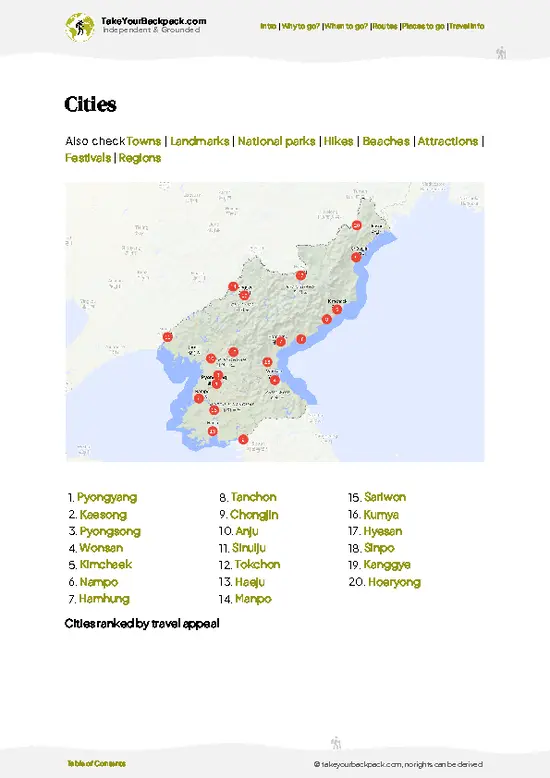
  • Kimchaek—port city, steelworks, coastal neighborhoods| 34 km away
  • Sinpo—fishing fleet, shipyards, east coast harbor| 77 km away
  • Hyesan—border river, mountain views, timber yards| 120 km away

💡 Not sure where to go next?
Create a personalized itinerary for North Korea including Tanchon and the places that fit your trip.

Generate my itinerary

👉 Discover all cities

Or checkout all North Korea has to offer (think cities, towns, villages, national parks, hikes, beaches, festivals)
Country photo of North Korea

We 💚 feedbackFinal thoughts on visiting Tanchon

Tanchon’s coastal charm is a breath of fresh air in North Korea, with salty sea breezes and the rhythmic crash of waves. But be ready for strict regulations; spontaneity is a luxury here. Embrace the structure, and you’ll find beauty in the unexpected moments.

✈️ When did I visit North Korea?
As part of my 1.5 year travel around the world trip, I visited North Korea in August 2015. I had never expected I was able to get in.

✍️ Help improve this page!
The information on this page is based on my own backpacking experience in North Korea, supplemented with up-to-date research and feedback from other travelers. Travel details can change, so if you notice anything outdated or incomplete, feel free to let me know.


🙋‍♂️ Give feedback

👋 Meet the founderWho’s Behind Take Your Backpack?

Johan, backpacker and founder of TakeYourBackpackHi, I’m Johan (Netherlands 🇳🇱), the creator of TakeYourBackpack. Over the past decade, I’ve backpacked through 80+ countries across six continents, gaining extensive experience with independent travel, long-term trips, and overland routes.

This site is built on a combination of firsthand travel experience and carefully curated insights from other backpackers. Many guides are based on places I’ve personally visited, while others bring together tips, observations, and practical advice shared by trusted travelers I’ve met along the way.

The goal is to provide realistic, experience-driven guidance — not generic itineraries — so you can explore destinations with better context, clearer expectations, and more confidence.

Get full country guide •
Instant download • 74 highlights • Full Offline guide