×

Pakistan🇵🇰 | best townsEssential 3 towns to Explore in Pakistan

Pakistan’s towns come in sharp flavors, and picking the right one shapes your whole trip. In the far north, mountain towns of Gilgit-Baltistan and Chitral sit under 7,000 meter peaks, with apricot orchards, guesthouse terraces and rough roads that eat whole days. Down in the Punjab and Sindh plains, old bazaar and Sufi shrine towns hum with rickshaws, qawwali and hot tea, and cost less than almost anywhere in Asia. Khyber Pakhtunkhwa mixes both worlds, while Balochistan stays remote and needs serious planning. Expect quiet streets, few foreign faces and hosts who insist on feeding you. Northern towns draw the most visitors in summer, yet even then you share them with domestic holidaymakers more than backpackers. For independent travel, the north rewards flexibility, while the plains reward curiosity and a strong stomach. Pick a region, grab a seat on a minibus and go.

By Johan Kruseman 🇳🇱 | Updated October 18, 2026
Explore the best villages in Pakistan

Why go?What Makes Them Special

Pakistan packs an unusual number of civilizations into one border. The Indus Valley, Gandhara Buddhism, Mughal court culture, Sufi saints and Silk Road trade all left their marks, and towns here grew around them. That is why a single country offers fortress settlements, shrine cities and caravan stops with such different moods.

Geography does the rest. The Karakoram, Himalaya and Hindu Kush collide in the north, so valley towns form wherever a river leaves enough flat ground for terraced fields. Below them, the Indus plain carries dense, walled bazaar towns where trades still cluster by street. Altitude changes everything, from climate to food to how fast you can travel.

Towns also work here because hospitality is a social rule, not a tourism product. Tea invitations are routine, and a shopkeeper … read more 👉
Pakistan packs an unusual number of civilizations into one border. The Indus Valley, Gandhara Buddhism, Mughal court culture, Sufi saints and Silk Road trade all left their marks, and towns here grew around them. That is why a single country offers fortress settlements, shrine cities and caravan stops with such different moods.

Geography does the rest. The Karakoram, Himalaya and Hindu Kush collide in the north, so valley towns form wherever a river leaves enough flat ground for terraced fields. Below them, the Indus plain carries dense, walled bazaar towns where trades still cluster by street. Altitude changes everything, from climate to food to how fast you can travel.

Towns also work here because hospitality is a social rule, not a tourism product. Tea invitations are routine, and a shopkeeper will often walk you to your guesthouse. Prices stay low, with simple rooms often US$8 to 25 and meals under US$5.

Know the limits before you commit. Infrastructure is uneven. Mountain roads close with landslides, mobile signal drops outside main towns, and power cuts are common. Tourism facilities are thin, so there are few signposts, little English outside hotels and limited cash machines. Foreign visitors should check the latest government travel advice, since some regions, especially parts of Balochistan and areas near the Afghan border, are restricted or considered higher risk. Dress modestly, carry cash in rupees and expect to adapt. Women travelers will find men-only teahouses, though family-run guesthouses are welcoming and the experience is very doable with preparation. Pakistan is not a country of polished sightseeing. It is a country where you arrive, ask, wander and get pulled into things.
Behind the Scenes of Selection
The list of best towns in Pakistan is created based on charm, local culture, atmosphere, hidden gems, and visitor appeal. If you feel a town is missing in this list, please let us know.

When to go?Optimal Periods for Travel

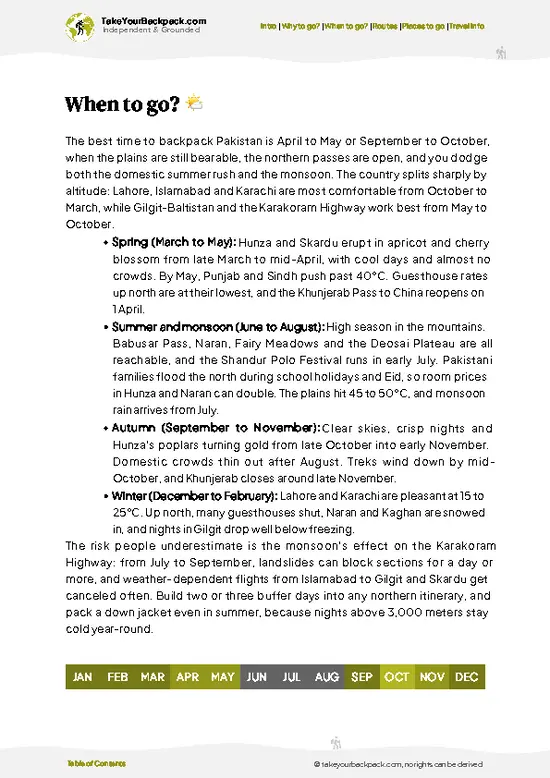
Best Months for Towns in Pakistan: The best months are April to June and September to October, when northern valleys sit at roughly 15 to 30°C by day and mountain roads are open. Pick these windows and you get green terraces in spring or golden poplars and harvested fields in autumn.

Mountain Regions: Gilgit-Baltistan and Chitral peak from June to September. Daytime temperatures reach 25 to 35°C in lower valleys such as Gilgit and Skardu, while nights cool fast. July and August bring the most domestic holidaymakers, so rooms fill and prices rise by about 20 to 50 percent around the Eid holidays. Monsoon rain barely touches the high north, but it can trigger landslides and flash floods on the Karakoram Highway, sometimes blocking it for days. Winter, from November to March, closes high passes … read more 👉
Best Months for Towns in Pakistan: The best months are April to June and September to October, when northern valleys sit at roughly 15 to 30°C by day and mountain roads are open. Pick these windows and you get green terraces in spring or golden poplars and harvested fields in autumn.

Mountain Regions: Gilgit-Baltistan and Chitral peak from June to September. Daytime temperatures reach 25 to 35°C in lower valleys such as Gilgit and Skardu, while nights cool fast. July and August bring the most domestic holidaymakers, so rooms fill and prices rise by about 20 to 50 percent around the Eid holidays. Monsoon rain barely touches the high north, but it can trigger landslides and flash floods on the Karakoram Highway, sometimes blocking it for days. Winter, from November to March, closes high passes and many guesthouses, with temperatures well below freezing.

Plains and Lowlands: The Punjab and Sindh towns work best from late October to March. Days run about 18 to 28°C, comfortable for long bazaar walks. Summer from May to August is brutal, often 40 to 47°C, and the monsoon in July and August can flood roads and add humidity. Sufi shrine towns fill during annual urs festivals, which shift with the Islamic calendar and bring music, crowds and higher room prices.

Shoulder Seasons and Ramadan: March and November are quiet and cheaper, though the north can be cold and some hotels stay shut. During Ramadan, daytime restaurants often close and the pace slows, but evenings turn lively with shared iftar meals. Plan around Eid, when buses sell out and fares jump.

town hoppingSuggested Travel Strategies

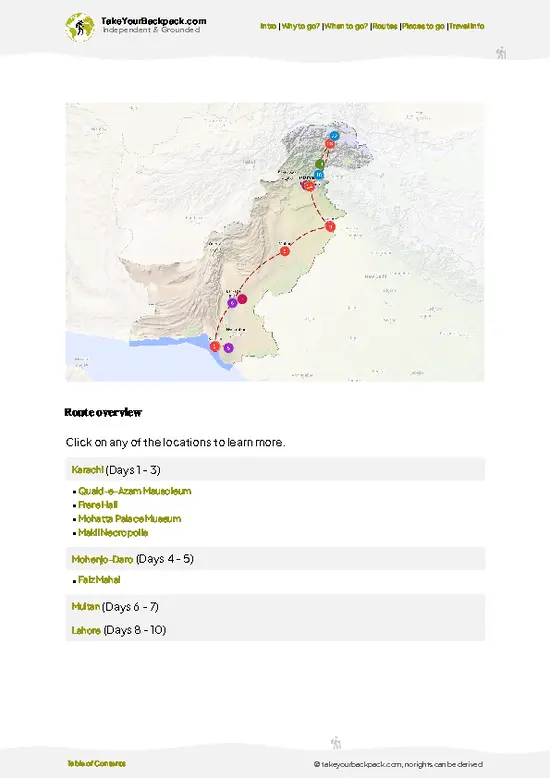
How Many Days to Combine Towns: A trip linking several towns in Pakistan needs 14 to 21 days, because distances are long and roads are slow. Even 300 kilometers can take 8 to 12 hours on mountain routes.

Grouping Regions and Direction: The cleanest clusters are Islamabad and Rawalpindi as the gateway, the Karakoram Highway corridor running north into Gilgit-Baltistan, and the Punjab and Sindh plains around Lahore and Multan. Chitral and the Swat area form their own northwest loop. Travel the plains in the cooler months, then head north when passes open. In summer, reverse that and start in the mountains, finishing in the plains only if the heat is bearable. Moving north to south from Gilgit down to Islamabad lets you finish with flights and easier connections.

Time Per Stop and Transport: … read more 👉
How Many Days to Combine Towns: A trip linking several towns in Pakistan needs 14 to 21 days, because distances are long and roads are slow. Even 300 kilometers can take 8 to 12 hours on mountain routes.

Grouping Regions and Direction: The cleanest clusters are Islamabad and Rawalpindi as the gateway, the Karakoram Highway corridor running north into Gilgit-Baltistan, and the Punjab and Sindh plains around Lahore and Multan. Chitral and the Swat area form their own northwest loop. Travel the plains in the cooler months, then head north when passes open. In summer, reverse that and start in the mountains, finishing in the plains only if the heat is bearable. Moving north to south from Gilgit down to Islamabad lets you finish with flights and easier connections.

Time Per Stop and Transport: Give mountain towns 2 to 4 nights, since altitude, rain or road closures can steal a day. Plains towns work in 1 to 2 nights. Islamabad to Gilgit by road takes about 12 to 16 hours on the Karakoram Highway, and Islamabad to Lahore takes 4 to 5 hours by motorway. Flights from Islamabad to Skardu or Gilgit take roughly 1 hour but cancel often in poor weather, so keep a buffer day. Daewoo and similar coach services cover major routes, while jeeps and shared vans link valley towns.

Planning Mistakes: The biggest error is cramming too many stops into too few days. Choose 3 to 5 bases and use day trips instead. Another is skipping buffer days, so leave one spare for every week. Travelers also overnight-bus into mountains and arrive wrecked, so break long hauls with a stop. Finally, booking fixed flights out right after a mountain leg invites trouble, so leave a margin before departing.

The ListHighly Recommended towns of Pakistan

1 Karimabad

Baltit Fort, apricot orchards, Hunza Valley views

Wander among stone alleys, sample sun-dried fruit, and watch the shifting light on snow peaks from terraced rooftops.

2 Passu

cathedral peaks, glacier tongues, suspension bridge

Trace narrow trails beneath jagged mountains, cross swaying bridges, and feel the chill air rolling off nearby glaciers.

3 Zood Khun

Wakhi culture, remote pasturelands, Pamir gateway

Reach the end of the road, meet herders tending yaks, and sense the isolation that defines the uppermost Wakhan settlements.

Loading the map 🌍

Expert viewPro Tips for Exploring the Best

How Many Towns to Visit: Plan on four to six towns for a trip of three to four weeks. Pakistan’s distances are long, its mountain roads are slow, and a single landslide on a highway can eat a day. Fewer stops mean you actually sit down in the tea shop, get invited to a wedding or a cricket match, and learn which bakery sells the hot naan at 7 a.m. Cram in ten and you will mostly see the inside of vans. Five towns, each with two or three nights, gives you time to walk the bazaar twice, once for orientation and once to buy things, and to have the owner of your guesthouse know your name by day two.

Choosing the Kind of Town: Match the town to your appetite. Mountain towns in the north (Gilgit-Baltistan, Chitral, the Swat and Kaghan valleys) put apricot orchards, glacier-fed rivers and trailheads … read more 👉
How Many Towns to Visit: Plan on four to six towns for a trip of three to four weeks. Pakistan’s distances are long, its mountain roads are slow, and a single landslide on a highway can eat a day. Fewer stops mean you actually sit down in the tea shop, get invited to a wedding or a cricket match, and learn which bakery sells the hot naan at 7 a.m. Cram in ten and you will mostly see the inside of vans. Five towns, each with two or three nights, gives you time to walk the bazaar twice, once for orientation and once to buy things, and to have the owner of your guesthouse know your name by day two.

Choosing the Kind of Town: Match the town to your appetite. Mountain towns in the north (Gilgit-Baltistan, Chitral, the Swat and Kaghan valleys) put apricot orchards, glacier-fed rivers and trailheads at the end of the main street. They suit hikers and photographers, and you will meet the most other foreign travelers there. Old plains and Punjab towns give you crowded bazaars, Mughal-era gateways, shrines with drumming on Thursday nights and food that arrives sizzling off a street grill. They suit anyone who likes people-watching and wants to eat well on a thin budget. Sindh and southern towns offer Sufi shrine culture, river and desert landscapes, and far fewer foreigners, so every conversation turns into tea. Pick one mountain base, one or two culture-heavy plains towns, and one off-track choice. Hikers can flip that ratio. Anyone short on time or wary of rough roads should lean toward the plains, where buses run frequently and hotels are easy to book.

What It Costs: A comfortable backpacker budget runs US$20 to 35 a day (roughly PKR 5,500 to 10,000). Dorm beds and basic guesthouse rooms cost PKR 2,500 to 6,000 (US$9 to 21) a night in most towns, and mountain hotels with a river view and a wood stove climb to PKR 8,000 to 15,000 (US$29 to 54) in summer. A plate of daal, a pile of rotis and tea cost PKR 500 to 900 (US$2 to 3). Heartier meals of karahi or mutton run PKR 1,500 to 3,000 (US$5 to 11) for sharing.

Per-visit costs are where the budget moves. Fort and museum entry for foreigners usually falls between PKR 500 and 2,000 (US$2 to 7). A local guide for a day hike costs PKR 5,000 to 10,000 (US$18 to 36), and jeep hire to a high valley can reach PKR 15,000 to 30,000 (US$54 to 107) per vehicle, which drops sharply when you split it among four people. Intercity buses are cheap, typically PKR 1,000 to 4,000 (US$4 to 14) for a long day ride, while a private car with a driver costs several times that. Carry cash in rupees. ATMs thin out fast beyond the main bazaars and cards are rarely accepted outside upscale hotels.

Safety and Cultural Considerations: Check current government travel advisories before booking, because the security picture differs sharply by province. Most popular tourist towns in the north and Punjab see steady visitors, while parts of Balochistan and the border districts of Khyber Pakhtunkhwa carry heavier restrictions, and some areas need permits or police escorts. Registering at the local police post when asked is routine and often leads to a friendly officer offering you tea. Road risk deserves more attention than crime. Mountain highways close after landslides and rain, so keep a spare day, travel in daylight, and skip night buses on the Karakoram Highway.

Dress modestly. Long sleeves and loose trousers keep the stares and sunburn down, and women travelers often carry a light scarf for mosques and conservative areas. Women travelers report warm hospitality, but they usually find life easier by sitting in the family sections of restaurants and on the women’s seats on buses. Ask before photographing anyone, and especially women. During Ramadan, eat and drink discreetly in public until sunset, and expect many restaurants to open late. Friday midday prayer closes shops for an hour or two, and Muharram processions can shut roads and mobile networks in some cities.

Say yes to the second cup of tea, because hospitality here runs on small invitations. Accept the plate of dried apricots, carry small bills for tips, and keep a printed copy of your passport and visa. Expect heartfelt questions about family, religion and your country. Answer with curiosity and patience, and you will leave town with a dozen phone numbers and an open invitation to stay with someone’s cousin.

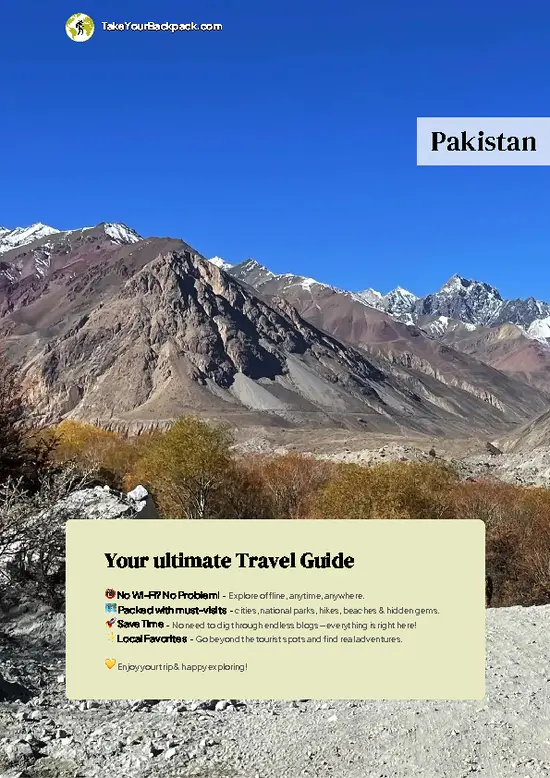
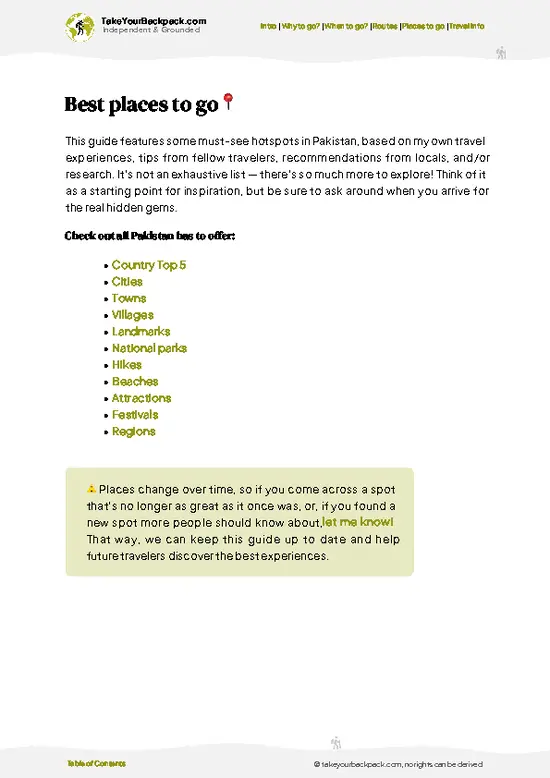
✈️ The backpacker research shortcutPakistan Travel Guide

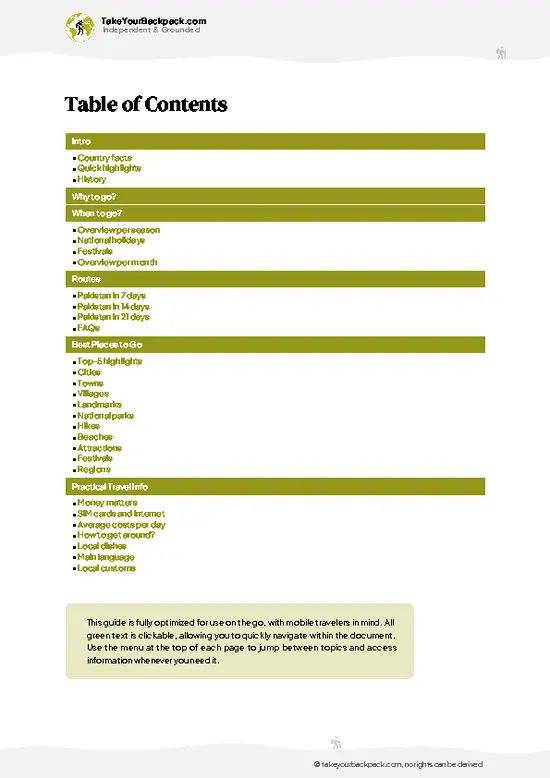
An offline-friendly backpacking guide with optimized travel routes, ranked highlights, transport advice, and the best areas to stay.
example page 0 from our offline Travel Guide for Pakistan
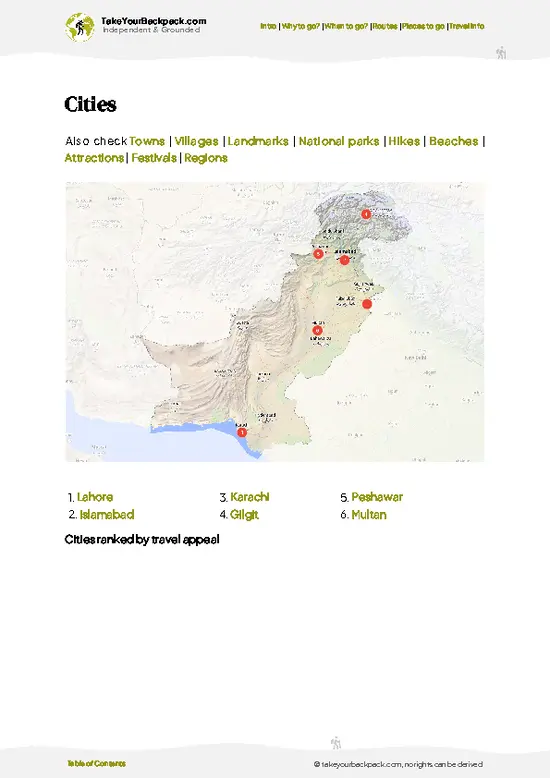
example page 1 from our offline Travel Guide for Pakistan
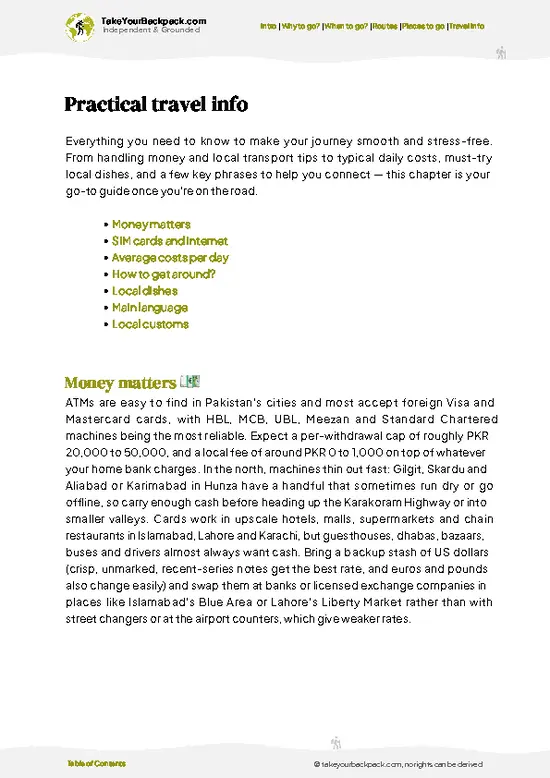
example page 2 from our offline Travel Guide for Pakistan
example page 3 from our offline Travel Guide for Pakistan
example page 4 from our offline Travel Guide for Pakistan
example page 5 from our offline Travel Guide for Pakistan
example page 6 from our offline Travel Guide for Pakistan
example page 7 from our offline Travel Guide for Pakistan
The digital guide (290 pages) contains:
✅ 97 highlights, ranked by travel appeal
✅ Optimized 7, 14 & 21-day travel routes
✅ Cities, national parks, landmarks, beaches
✅ How to get around
✅ Offline-friendly for travel without Wi-Fi
👉 Click to see all 30+ guide features

📅 Plan smarter in minutes, not weeks
✅ Month by month travel advice
✅ Festivals & national holidays
✅ Budget expectations

🗺️ Go to the right places, skip the overrated ones
✅ Honest pros & cons of destinations
✅ Top hikes, parks & viewpoints
✅ Lesser-known places most travelers miss
✅ Clear “worth it vs skip it” guidance

🛏️ Travel smoothly without rookie mistakes
✅ Best areas to stay
✅ Transport systems explained simply
✅ Common scams & safety advice
✅ SIM cards, money & practical tips

🌍 Understand the country, not just visit it
✅ Culture & traditions
✅ 52 Essential phrases & customs
✅ Festivals worth planning around
✅ Traveler-friendly historical context
✅ Insights that make places more meaningful

📱 Built for real travel conditions
✅ Fully downloadable PDF
✅ Works completely offline
✅ Optimized for phone use
✅ Useful in remote areas & buses
✅ Everything in one place
Stop searching, start planning
Get instant access to your full guide. 30‑day money-back guarantee.
+ Add another guide for just

By proceeding you agree to our terms.
Sent to your inbox immediately after payment • 100% Secure Checkout
Best Backpacking Travel Advisor 2025 tourism awardBest Backpacking
Travel Advisor
2025
What others say about Take Your Backpack Guides:
⭐⭐⭐⭐⭐
Fantastic, amazing amount of information!
⭐⭐⭐⭐⭐
My goodness this is amazing, it's what I've been looking for hats off too you!
⭐⭐⭐⭐⭐
I think this is absolutely BRILLIANT
⭐⭐⭐⭐
Very complete and informative. It's still missing places, but I gotta to commend you
⭐⭐⭐⭐⭐
This is truly amazing, thank you, can't wait to explore it with my kids!
⭐⭐⭐⭐⭐
Awesome resource, thank you!
⭐⭐⭐⭐⭐
This is amazing! Can't wait to explore the ones I haven't seen
⭐⭐⭐⭐
I love this! Well done, great idea.
⭐⭐⭐⭐⭐
Thanks for taking the time to make this gem!
⭐⭐⭐⭐⭐
This might be the best website I've ever seen.
⭐⭐⭐⭐⭐
Congratulations, and thank you so much for your work; it's incredibly valuable.
⭐⭐⭐⭐
In all seriousness I think you did a great job pointing out the important spots
⭐⭐⭐⭐⭐
10/10 very good
⭐⭐⭐⭐⭐
As someone who's only just starting to visit regularly this is awesome, thank you.
⭐⭐⭐⭐
Thank you very much! I'm going to visit my dad, it's going to be very useful!
⭐⭐⭐⭐⭐
This is really cool! We'll be travelling for the first time and this definitely come in handy.
⭐⭐⭐⭐⭐
You are now our minister of culture, congratulations 👨‍💼
⭐⭐⭐⭐⭐
Just wanted to tell you that this is a pearl! Going to follow your recommendations.
⭐⭐⭐⭐⭐
This is so cool. I'll definitely be using the resource for my travels soon.
⭐⭐⭐⭐⭐
This is very impressive! Good work.
⭐⭐⭐⭐⭐
This is an amazing and informative site. Very well done!

🛏️ Where to stay?Accommodation Highlights

But dedicated backpacker hostels in Pakistan are scarce, so most budget travelers sleep in family-run guesthouses at roughly Rs 3,000 to 7,000 (US$11 to 25) a night, with a small hostel scene in Lahore, Islamabad and the north. In Lahore, the area around Mall Road puts you close to the Walled City and Lahore Fort but is noisy and congested, while Gulberg is calmer and has the cafés and evening life, at the cost of long rides to the old town; in Islamabad, the leafy F-6 and F-7 sectors are safe, quiet and near the markets, but nightlife is close to nonexistent. Up north, Karimabad in Hunza has the densest cluster of cheap guesthouses with walkable valley views and a sociable traveler crowd, though … read more 👉
But dedicated backpacker hostels in Pakistan are scarce, so most budget travelers sleep in family-run guesthouses at roughly Rs 3,000 to 7,000 (US$11 to 25) a night, with a small hostel scene in Lahore, Islamabad and the north. In Lahore, the area around Mall Road puts you close to the Walled City and Lahore Fort but is noisy and congested, while Gulberg is calmer and has the cafés and evening life, at the cost of long rides to the old town; in Islamabad, the leafy F-6 and F-7 sectors are safe, quiet and near the markets, but nightlife is close to nonexistent. Up north, Karimabad in Hunza has the densest cluster of cheap guesthouses with walkable valley views and a sociable traveler crowd, though many places close or cut back between November and March.

If you enjoy meeting fellow travelers, consider choosing hostels with high ratings for atmosphere. On the other hand, if you prefer having your own space, a hotel might be a better option.

PakistanSee More of Pakistan

👋 Meet the founderWho’s Behind Take Your Backpack?

Johan, backpacker and founder of TakeYourBackpackHi, I’m Johan (Netherlands 🇳🇱), the creator of TakeYourBackpack. Over the past 3 decades, I’ve backpacked through 90+ countries across six continents, gaining extensive experience with independent travel, long-term trips, and overland routes.

This site is built on a combination of firsthand travel experience and carefully curated insights from other backpackers. Many guides are based on places I’ve personally visited, while others bring together tips, observations, and practical advice shared by trusted travelers I’ve met along the way.

The goal is to provide realistic, experience-driven guidance — not generic itineraries — so you can explore destinations with better context, clearer expectations, and more confidence.