×

Pakistan🇵🇰 | best national parksEssential 10 national parks to Explore in Pakistan

Pakistan’s national parks refuse to behave like one category. Alpine plateaus and glacier-fed valleys in Gilgit-Baltistan deliver big skies, cold nights and jeep tracks that make you earn every kilometer. Forested hills around Islamabad and Hazara hand you easy day hikes, cheap local buses and weekend crowds. Down south, desert canyons, juniper woodland and a wild coastline in Balochistan and Sindh reward travelers who plan hard and tolerate long drives. Fees are small everywhere (often under US$10), so the real costs come from transport, permits and guides. Independent travel works best in the north and near the capital, where guesthouses and shared jeeps are plentiful. The south needs more preparation and more patience. Pick your terrain first, then chase the season and go explore.

By Johan Kruseman 🇳🇱 | Updated October 18, 2026
Explore the best hikes in Pakistan

Why go?What Makes Them Special

Pakistan packs three of the world’s great mountain systems, the Karakoram, Himalaya and Hindu Kush, into one country, then adds a desert coast, river plains and dry juniper highlands. That range of altitude is what makes its protected areas so varied. Few places let you pass from subtropical foothills to glaciated peaks within a single long road day.

The country’s wildlife is specialized: snow leopard, Himalayan brown bear, ibex, markhor and marmots live here, and many areas protect them alongside the herding communities that have used the land for centuries. People often live inside or beside the parks, so expect shepherds, village paths and seasonal pastures instead of fenced wilderness with ranger booths every few kilometers.

That shapes what you should know before committing. Infrastructure … read more 👉
Pakistan packs three of the world’s great mountain systems, the Karakoram, Himalaya and Hindu Kush, into one country, then adds a desert coast, river plains and dry juniper highlands. That range of altitude is what makes its protected areas so varied. Few places let you pass from subtropical foothills to glaciated peaks within a single long road day.

The country’s wildlife is specialized: snow leopard, Himalayan brown bear, ibex, markhor and marmots live here, and many areas protect them alongside the herding communities that have used the land for centuries. People often live inside or beside the parks, so expect shepherds, village paths and seasonal pastures instead of fenced wilderness with ranger booths every few kilometers.

That shapes what you should know before committing. Infrastructure is thin. Park offices are often basic, signage is limited, and trails are frequently unmarked, so a local guide, driver or at least a good offline map earns its fee. Roads like the Karakoram Highway deliver spectacular access but are exposed to landslides, floods and rockfalls, which can add a day or two to any plan. Altitude is serious, because many highland areas sit above 3,500 meters.

Security and permissions vary by province. Gilgit-Baltistan and the Islamabad area are well trodden by foreign travelers. Parts of Balochistan require checking current advisories and sometimes arranging an escort or local contact. Hospitality is a genuine strength: tea invitations, homestays and village guides are normal, and the best days often come from accepting them. Dress modestly, respect local rules on photography, and treat Pakistan’s parks as living landscapes rather than scenery stops.
Our Approach to Ranking
The list of best national parks in Pakistan is created based on landscapes, wildlife, adventure opportunities, facilities, and overall experience. If you feel a national park is missing in this list, please let us know.

When to go?Optimal Periods for Travel

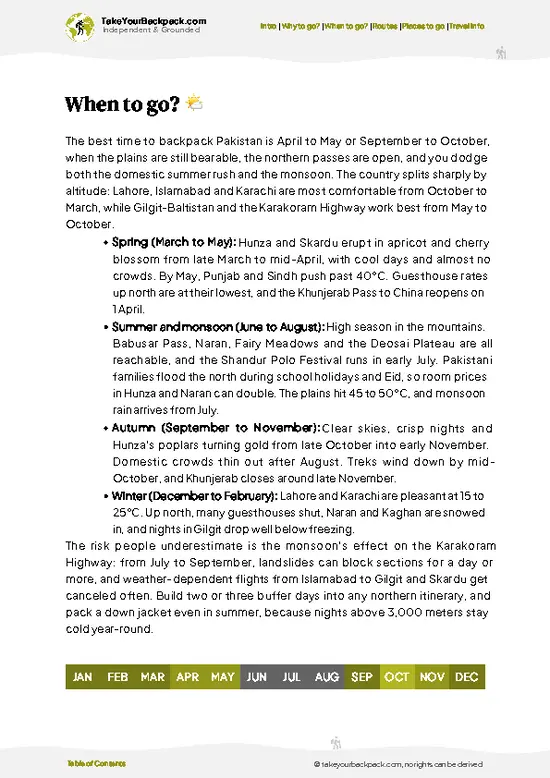
Best months by region: The best months for Pakistan’s national parks are June to September in the northern mountains and November to March in the south, because that is when high roads are open and lowland heat is tolerable.

In Gilgit-Baltistan and the high plateaus, summer brings daytime temperatures of 15 to 28°C in valleys and 5 to 15°C at altitude, with nights near freezing above 4,000 meters. Snow typically blocks the highest passes and plateau roads from roughly October to May, so visiting outside summer often means turning around. July and August are peak, when guesthouse prices in popular valleys can rise 20 to 50 percent and jeeps need booking a day ahead.

Shoulder seasons and lowlands: In the Hazara hills and the Islamabad foothills, March to May and September to November are the … read more 👉
Best months by region: The best months for Pakistan’s national parks are June to September in the northern mountains and November to March in the south, because that is when high roads are open and lowland heat is tolerable.

In Gilgit-Baltistan and the high plateaus, summer brings daytime temperatures of 15 to 28°C in valleys and 5 to 15°C at altitude, with nights near freezing above 4,000 meters. Snow typically blocks the highest passes and plateau roads from roughly October to May, so visiting outside summer often means turning around. July and August are peak, when guesthouse prices in popular valleys can rise 20 to 50 percent and jeeps need booking a day ahead.

Shoulder seasons and lowlands: In the Hazara hills and the Islamabad foothills, March to May and September to November are the sweet spot, with 15 to 25°C days and clear views. Monsoon from July to mid-September drops heavy rain here, often 200 to 400 mm a month, making trails muddy and leech-prone and roads slide-prone. The Karakoram Highway can close for hours or days after storms, even when the far north itself stays drier.

In Balochistan and Sindh, summer reaches 40 to 50°C on the coast and in desert basins, so the window runs November to March, with days of 18 to 28°C and cold nights inland. Juniper highlands in northern Balochistan get snow in winter, so layers matter there even when the south is warm.

Dates that change plans: Eid holidays and Ramadan shift prices and services. During Ramadan, daytime food options shrink and many local drivers fast, so build in slower days. Domestic tourism surges around Eid and the summer school break, pushing up transport fares and filling rooms in hill stations. Shoulder weeks in late May or mid-September keep the open roads and cut the crowds.

national park hoppingSuggested Travel Strategies

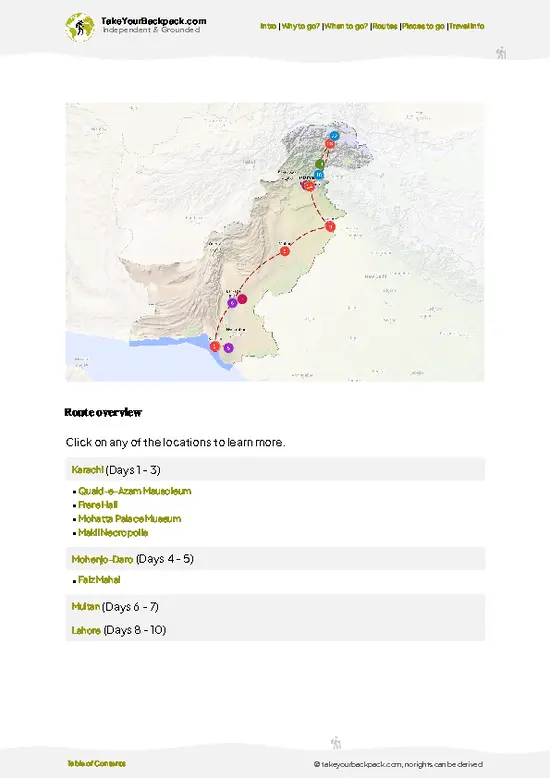
How long to allow: A trip linking several national parks in Pakistan needs 10 to 21 days, because mountain roads are slow and weather decides the schedule.

The cleanest cluster runs through the north. Start in Islamabad or Rawalpindi, the hub for buses, flights and permits, then work up through the Hazara hills into Gilgit-Baltistan, where Gilgit and Skardu act as bases. Traveling north to south along the highlands lets you acclimatize gradually and finish at lower altitude, so the biggest passes come when your legs are ready. Finish by returning to Islamabad by road or by flight.

Time per stop and between regions: Allow 2 to 4 days for each high-altitude area, including acclimatization and one buffer day. Forested hill parks near the capital need only a half day to one day. Islamabad to … read more 👉
How long to allow: A trip linking several national parks in Pakistan needs 10 to 21 days, because mountain roads are slow and weather decides the schedule.

The cleanest cluster runs through the north. Start in Islamabad or Rawalpindi, the hub for buses, flights and permits, then work up through the Hazara hills into Gilgit-Baltistan, where Gilgit and Skardu act as bases. Traveling north to south along the highlands lets you acclimatize gradually and finish at lower altitude, so the biggest passes come when your legs are ready. Finish by returning to Islamabad by road or by flight.

Time per stop and between regions: Allow 2 to 4 days for each high-altitude area, including acclimatization and one buffer day. Forested hill parks near the capital need only a half day to one day. Islamabad to Gilgit takes 14 to 20 hours by road, usually split with an overnight stop. Gilgit to Skardu runs 5 to 7 hours depending on road conditions, and flights from Islamabad to either city take about an hour but are frequently cancelled for cloud. Keep a fallback seat on the road.

The southern parks form a separate trip. Karachi works as the base, with drives of 5 to 8 hours to reach coastal and desert zones. Plan one to two days per stop and travel in the cooler months.

Planning mistakes to fix: The classic error is squeezing too many parks into too little time, assuming distance on a map equals hours. Instead, count driving hours and halve what you hope to do. Another is booking tight flights home straight after remote stays. Leave 1 to 2 buffer days at the end. Mixing the north and the south in one trip rarely works, since the best seasons barely overlap. Split them across different years or accept only one region. Finally, skipping altitude pacing invites headaches and lost days, so climb in stages.

The ListHighly Recommended national parks of Pakistan

1 Deosai National Park

Alpine plateau, brown bears, treeless expanse

Cross a rolling high plateau above 4,000 metres where brown bears forage and summer wildflowers cover the open ground.

pakistan-national-park-deosai-national-park
© Google |

2 Hingol National Park

Coastal desert, mud volcanoes, Hingol river

Drive through sculpted desert badlands and past bubbling mud volcanoes where the Hingol river meets the Arabian Sea.

3 Margalla Hills National Park

Islamabad backdrop, hiking trails, urban wilderness

Escape city traffic on trails that climb straight from Islamabad's edge into forested ridgelines within an hour's walk.

4 Ayubia National Park

Chairlift ridges, pine forest, monkey sightings

Walk shaded trails through moist temperate forest where chairlifts carry visitors above valleys thick with pine and wildlife calls.

pakistan-national-park-ayubia-national-park
© Google |

5 Central Karakoram National Park

Eight-thousanders, glacier basins, high-altitude wilderness

Trek beneath four of the world's fourteen highest peaks through glacier-fed valleys largely untouched by roads or settlement.

6 Chitral Gol National Park

Markhor habitat, dry conifer slopes, royal hunting grounds

Track markhor along steep conifer ridges once reserved for the Mehtar of Chitral's private hunting excursions.

pakistan-national-park-chitral-gol-national-park
© Google |

7 Kirthar National Park

Sindh ibex, dry hills, largest protected area

Cover Pakistan's largest protected area on foot or by jeep, tracking Sindh ibex across dusty, sun-baked hill country.

8 Lulusar-Dudipatsar National Park

Alpine lake, source of Kunhar, wildflower meadows

Hike past a turquoise alpine lake that feeds the Kunhar river, surrounded by meadows thick with summer wildflowers.

9 Saiful Muluk National Park

Kaghan Valley lake, jeep-track access, folklore legend

Ride a jeep past glacial streams to a mountain lake steeped in local legend, framed by Malika Parbat's sharp summit.

10 Broghil Valley National Park

Remote plateau, Wakhi herders, high passes

Reach one of the most isolated valleys in the country, where Wakhi herding communities graze yaks beneath wide open passes.

11 Hazarganji-Chiltan National Park

Chiltan goat, arid ranges, Quetta backdrop

Scan dry mountain slopes near Quetta for the Chiltan wild goat, found nowhere else on earth in such numbers.

12 Machiara National Park

Musk deer, dense forest, Neelum valley approach

Push through dense forest tracks near the Neelum valley where musk deer and pheasant still hold onto their range.

13 Pir Lasura National Park

Azad Kashmir forest, leopard range, low visitor numbers

Explore a lesser-visited forest reserve in Azad Kashmir where leopards persist away from any significant tourist traffic.

14 Shandur National Park

Highest polo ground, Chitral-Gilgit divide, summer festival

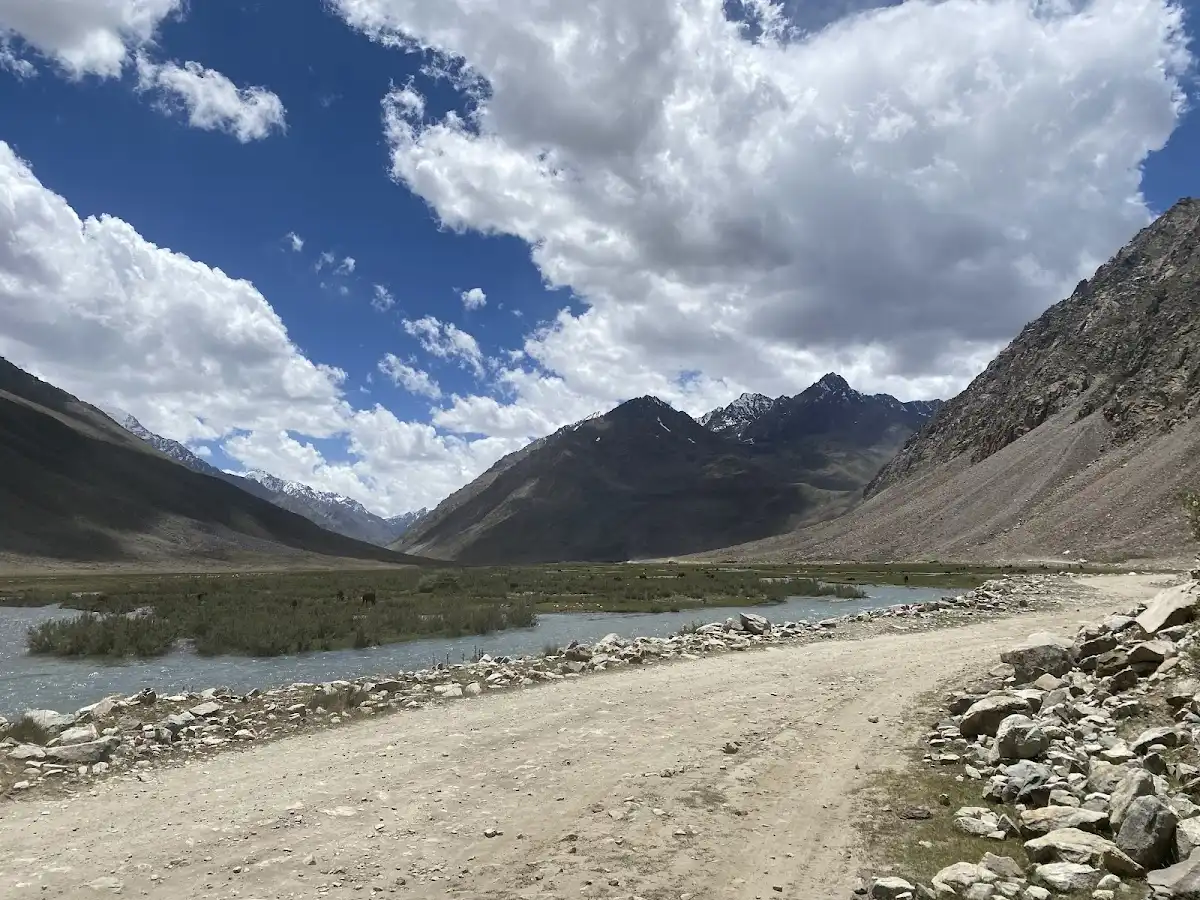
Cross a windswept plateau where riders compete on the world's highest polo ground amid barren peaks and shifting cloud shadows.

pakistan-national-park-shandur-national-park
© Google |

15 Toli Pir National Park

Rolling meadows, Rawalakot access, pine-covered ridgeline

Wander open meadows and pine ridges above Rawalakot, where grazing herds and layered valley views define a quieter Kashmir escape.

Think you know Pakistan?

Prove you’re a true local — uncover 5 lesser-known national parks in Pakistan that locals tend to keep to themselves.
Loading the map 🌍

Expert viewPro Tips for Exploring the Best

How many parks to visit: I advise three parks in one trip, maybe four if you have three weeks. Roads in Pakistan eat hours, and the best moments come from staying put long enough to hike a side valley, share chai with a herder and catch dawn light on the peaks. Three stops give each place two to four days and still leave slack for landslides. Chasing seven turns the trip into a windshield tour.

Which kind suits your style: First-timers and budget travelers should start with the northern highland parks. Guesthouses, shared jeeps and local guides are easy to find, and the payoff is huge: meadows scattered with wildflowers, glacial streams and peaks above 6,000 meters. Choose the forested hill parks near Islamabad if you have only a few days or want an easy shakedown before the mountains. They … read more 👉
How many parks to visit: I advise three parks in one trip, maybe four if you have three weeks. Roads in Pakistan eat hours, and the best moments come from staying put long enough to hike a side valley, share chai with a herder and catch dawn light on the peaks. Three stops give each place two to four days and still leave slack for landslides. Chasing seven turns the trip into a windshield tour.

Which kind suits your style: First-timers and budget travelers should start with the northern highland parks. Guesthouses, shared jeeps and local guides are easy to find, and the payoff is huge: meadows scattered with wildflowers, glacial streams and peaks above 6,000 meters. Choose the forested hill parks near Islamabad if you have only a few days or want an easy shakedown before the mountains. They are cheap, reachable by local bus or taxi, and buzzing with weekend families. Go to the southern desert and coastal parks only if you enjoy long, sparse drives and can arrange a driver, a local contact and fuel stops. Their reward is empty canyons and beaches where you may meet more goats than people.

What it costs: A backpacker on local transport and basic guesthouses spends US$25 to 45 a day (about PKR 7,000 to 12,500). Add more if you hire private jeeps. Entry fees for foreigners usually run PKR 500 to 2,500 (US$2 to 9) per park. Guides cost PKR 5,000 to 12,000 a day (US$18 to 43), and a jeep with driver on rough plateau tracks runs PKR 18,000 to 35,000 a day (US$65 to 125), best split among four people. A full visit to one northern park, with transport shares, a guide for two days and camping or a guesthouse, lands around US$120 to 250 per person. Southern parks cost more per visit because private transport is hard to avoid.

Safety on the ground: Altitude is the quiet hazard. Many plateaus sit above 3,500 meters, and the dull throb behind your eyes on the second night is your cue to rest a day rather than push on. Pack a warm sleeping bag, because nights drop below freezing even in July. River crossings swell fast in afternoon melt, so cross early. Carry cash in rupees, since ATMs vanish beyond the main towns, and download offline maps before leaving town.

Security differs sharply by area. The northern valleys and the capital’s hills are routinely visited by foreigners, while parts of Balochistan and border areas may require advance checks with local operators or authorities, and sometimes an official escort. Check current government advisories before booking and tell your guesthouse your plans.

Cultural manners that open doors: Dress modestly: long trousers and loose tops, and women should carry a scarf. Ask before photographing people, especially women, and never photograph military posts or bridges. Villagers graze animals inside many parks, so give herds space and keep dogs off pasture. Accept the offered tea, cover your own rubbish, and carry out what you pack. During Ramadan, avoid eating or drinking in public during daylight. You get warmer welcomes, better stories and often a free cup of salted tea beside a campfire at 3,800 meters.

✈️ The backpacker research shortcutPakistan Travel Guide

An offline-friendly backpacking guide with optimized travel routes, ranked highlights, transport advice, and the best areas to stay.
example page 0 from our offline Travel Guide for Pakistan
example page 1 from our offline Travel Guide for Pakistan
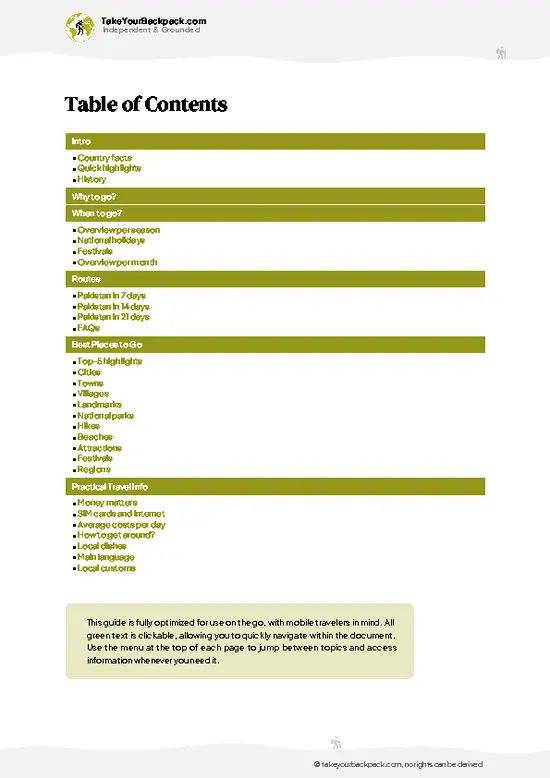
example page 2 from our offline Travel Guide for Pakistan
example page 3 from our offline Travel Guide for Pakistan
example page 4 from our offline Travel Guide for Pakistan
example page 5 from our offline Travel Guide for Pakistan
example page 6 from our offline Travel Guide for Pakistan
example page 7 from our offline Travel Guide for Pakistan
The digital guide (290 pages) contains:
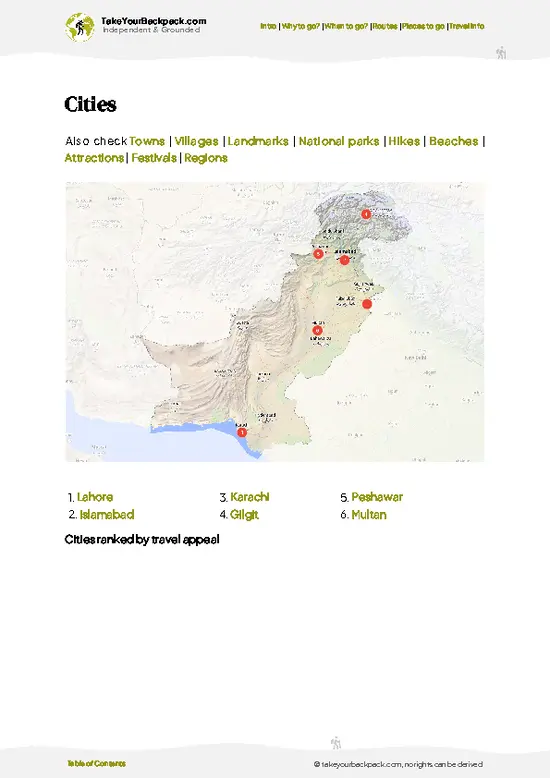
✅ 97 highlights, ranked by travel appeal
✅ Optimized 7, 14 & 21-day travel routes
✅ Cities, national parks, landmarks, beaches
✅ How to get around
✅ Offline-friendly for travel without Wi-Fi
👉 Click to see all 30+ guide features

📅 Plan smarter in minutes, not weeks
✅ Month by month travel advice
✅ Festivals & national holidays
✅ Budget expectations

🗺️ Go to the right places, skip the overrated ones
✅ Honest pros & cons of destinations
✅ Top hikes, parks & viewpoints
✅ Lesser-known places most travelers miss
✅ Clear “worth it vs skip it” guidance

🛏️ Travel smoothly without rookie mistakes
✅ Best areas to stay
✅ Transport systems explained simply
✅ Common scams & safety advice
✅ SIM cards, money & practical tips

🌍 Understand the country, not just visit it
✅ Culture & traditions
✅ 52 Essential phrases & customs
✅ Festivals worth planning around
✅ Traveler-friendly historical context
✅ Insights that make places more meaningful

📱 Built for real travel conditions
✅ Fully downloadable PDF
✅ Works completely offline
✅ Optimized for phone use
✅ Useful in remote areas & buses
✅ Everything in one place
Stop searching, start planning
Get instant access to your full guide. 30‑day money-back guarantee.
+ Add another guide for just

By proceeding you agree to our terms.
Sent to your inbox immediately after payment • 100% Secure Checkout
Best Backpacking Travel Advisor 2025 tourism awardBest Backpacking
Travel Advisor
2025
What others say about Take Your Backpack Guides:
⭐⭐⭐⭐⭐
Fantastic, amazing amount of information!
⭐⭐⭐⭐⭐
My goodness this is amazing, it's what I've been looking for hats off too you!
⭐⭐⭐⭐⭐
I think this is absolutely BRILLIANT
⭐⭐⭐⭐
Very complete and informative. It's still missing places, but I gotta to commend you
⭐⭐⭐⭐⭐
This is truly amazing, thank you, can't wait to explore it with my kids!
⭐⭐⭐⭐⭐
Awesome resource, thank you!
⭐⭐⭐⭐⭐
This is amazing! Can't wait to explore the ones I haven't seen
⭐⭐⭐⭐
I love this! Well done, great idea.
⭐⭐⭐⭐⭐
Thanks for taking the time to make this gem!
⭐⭐⭐⭐⭐
This might be the best website I've ever seen.
⭐⭐⭐⭐⭐
Congratulations, and thank you so much for your work; it's incredibly valuable.
⭐⭐⭐⭐
In all seriousness I think you did a great job pointing out the important spots
⭐⭐⭐⭐⭐
10/10 very good
⭐⭐⭐⭐⭐
As someone who's only just starting to visit regularly this is awesome, thank you.
⭐⭐⭐⭐
Thank you very much! I'm going to visit my dad, it's going to be very useful!
⭐⭐⭐⭐⭐
This is really cool! We'll be travelling for the first time and this definitely come in handy.
⭐⭐⭐⭐⭐
You are now our minister of culture, congratulations 👨‍💼
⭐⭐⭐⭐⭐
Just wanted to tell you that this is a pearl! Going to follow your recommendations.
⭐⭐⭐⭐⭐
This is so cool. I'll definitely be using the resource for my travels soon.
⭐⭐⭐⭐⭐
This is very impressive! Good work.
⭐⭐⭐⭐⭐
This is an amazing and informative site. Very well done!

🛏️ Where to stay?Top Places to Consider Staying

But dedicated backpacker hostels in Pakistan are scarce, so most budget travelers sleep in family-run guesthouses at roughly Rs 3,000 to 7,000 (US$11 to 25) a night, with a small hostel scene in Lahore, Islamabad and the north. In Lahore, the area around Mall Road puts you close to the Walled City and Lahore Fort but is noisy and congested, while Gulberg is calmer and has the cafés and evening life, at the cost of long rides to the old town; in Islamabad, the leafy F-6 and F-7 sectors are safe, quiet and near the markets, but nightlife is close to nonexistent. Up north, Karimabad in Hunza has the densest cluster of cheap guesthouses with walkable valley views and a sociable traveler crowd, though … read more 👉
But dedicated backpacker hostels in Pakistan are scarce, so most budget travelers sleep in family-run guesthouses at roughly Rs 3,000 to 7,000 (US$11 to 25) a night, with a small hostel scene in Lahore, Islamabad and the north. In Lahore, the area around Mall Road puts you close to the Walled City and Lahore Fort but is noisy and congested, while Gulberg is calmer and has the cafés and evening life, at the cost of long rides to the old town; in Islamabad, the leafy F-6 and F-7 sectors are safe, quiet and near the markets, but nightlife is close to nonexistent. Up north, Karimabad in Hunza has the densest cluster of cheap guesthouses with walkable valley views and a sociable traveler crowd, though many places close or cut back between November and March.

If you enjoy meeting fellow travelers, consider choosing hostels with high ratings for atmosphere. On the other hand, if you prefer having your own space, a hotel might be a better option.

PakistanMore Places Across Pakistan

👋 Meet the founderWho’s Behind Take Your Backpack?

Johan, backpacker and founder of TakeYourBackpackHi, I’m Johan (Netherlands 🇳🇱), the creator of TakeYourBackpack. Over the past 3 decades, I’ve backpacked through 90+ countries across six continents, gaining extensive experience with independent travel, long-term trips, and overland routes.

This site is built on a combination of firsthand travel experience and carefully curated insights from other backpackers. Many guides are based on places I’ve personally visited, while others bring together tips, observations, and practical advice shared by trusted travelers I’ve met along the way.

The goal is to provide realistic, experience-driven guidance — not generic itineraries — so you can explore destinations with better context, clearer expectations, and more confidence.