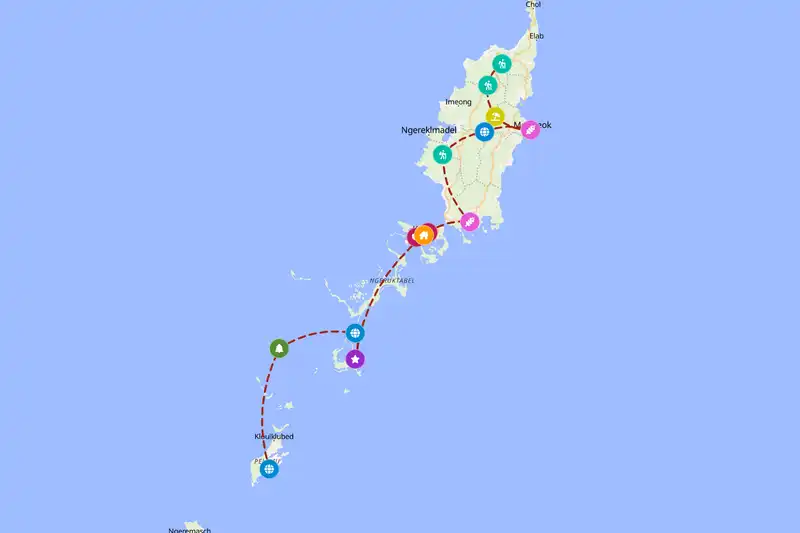
Short version: yes, you can backpack Palau independently, but it feels more like a DIY island trip than a classic shoestring backpacking circuit. There are no hostels in the usual sense, but you can find basic guesthouses, homestays, and cheaper lodges in Koror if you book ahead. Walk-in deals exist in low season, but I wouldn’t rely on them if you’re tight on cash or time.
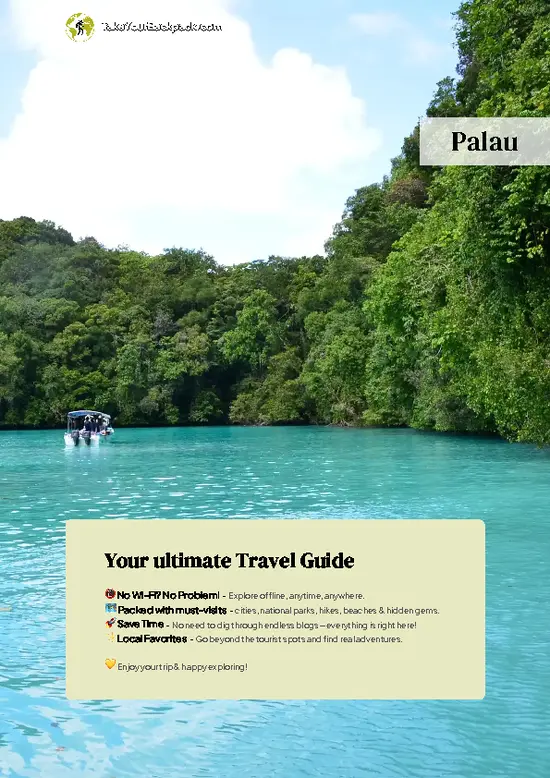
The big catch is that most of what you came for (Rock Islands, Jellyfish Lake when open, top dive/snorkel sites) is only reachable by boat with licensed operators. That means you’re independent in where you sleep, eat, and wander on land, but you’ll join day tours for the water-based highlights. Think of it as backpacking with mandatory day trips rather than full-on independent trekking.
Visas are easy for many nationalities, English is widely spoken, and the country is very safe. ATMs exist in Koror but are limited elsewhere, so you should arrive with a solid cash buffer. Food can be kept reasonable by using supermarkets, bakeries, and local snack spots instead of resort restaurants. If you’re used to Southeast Asia prices, Palau will feel expensive, but compared to resort-package tourists, you can still travel here on a controlled budget by staying simple, sharing tours with others, and skipping the most premium add-ons.
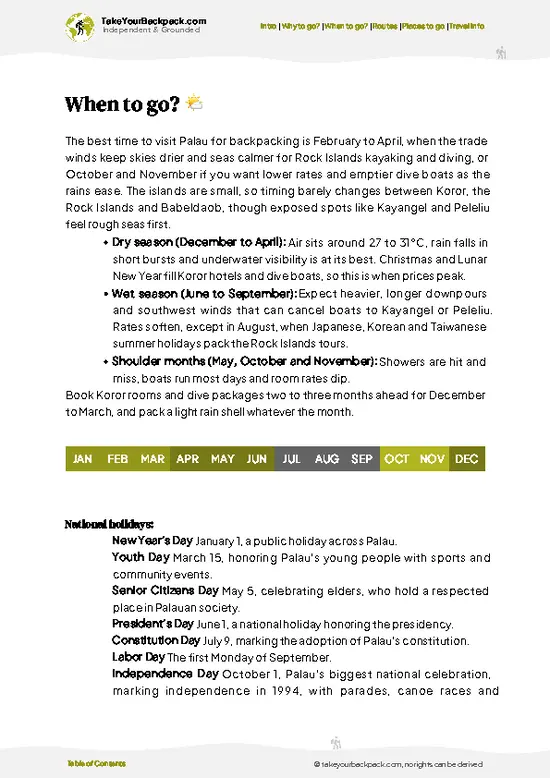
For a budget traveler, the sweet spot is 6–9 days, depending on how many water activities you want and how much you care about diving.
3–4 days: Bare minimum. You can do one full Rock Islands/snorkel day, one extra water day (kayak or second snorkel trip), and a land day around Koror and Babeldaob. This works if you’re passing through and don’t dive, but you’ll feel rushed and very tour-schedule-dependent.
6–7 days: Ideal if you don’t dive or only want a couple of fun dives. You can spread out boat trips to avoid burnout and bad-weather days, add a proper Babeldaob road trip, and still have downtime to just sit by the water without feeling like you’re wasting money.
8–9+ days: Best if you’re a diver or you want to mix diving, snorkeling, and land exploring without stacking expensive days back-to-back. You can do 3–5 dive days, a dedicated Rock Islands/kayak day, a Babeldaob loop, and still have a buffer for weather or rest.
Anything beyond 10–12 days makes sense mainly for serious divers or remote-work types. For most backpackers watching their budget, a focused week is the best balance between cost and experience.
Technically yes, you can get around without a car, but it limits you and requires more planning. Koror itself is walkable in segments, and some guesthouses offer shuttles to town or the main road. There are occasional local buses and shared vans, but they’re not frequent or tourist-oriented, so you shouldn’t rely on them for tight schedules.
For day-to-day life in Koror, you can combine walking with cheap taxis for specific hops (like supermarket runs or getting back at night). Split taxi costs with other travelers whenever you can; prices add up fast if you’re solo.
For exploring Babeldaob (the big island with waterfalls, viewpoints, and traditional sites), not having a car is a real constraint. The practical options are:
- Join a land tour from Koror (more expensive but easy and time-efficient).
- Arrange a private driver for a half or full day and split the cost with other backpackers.
Boat trips to the Rock Islands, Jellyfish Lake (when open), and main snorkel/dive sites all depart from Koror with tour operators, so you don’t need your own transport for those—just get to the dock or pickup point.
If you’re comfortable driving and can afford it, renting a car for 1–2 days just for Babeldaob and errands is the most freedom-per-dollar. If you absolutely don’t want to drive, base yourself in Koror, accept that you’ll mostly move by foot and taxi, and treat land excursions as organized day trips.
For a budget traveler, the must-visits are the experiences that are uniquely Palauan and hard to replicate elsewhere, even if they cost a bit more.
1) Rock Islands by boat: Non-negotiable. This is the core of Palau—limestone islands, blue channels, and lagoons that actually justify the hype. Do at least one full-day boat trip that includes multiple snorkel stops and viewpoints. If you can, pick an itinerary that mixes:
- A classic blue channel or pass for big fish and coral.
- A calm lagoon or coral garden for color and easy snorkeling.
- A sandbar or viewpoint stop for that “this is why I flew here” moment.
2) World-class snorkeling (or diving if you’re certified): Even if you don’t dive, Palau’s snorkeling is next-level. Look for trips that include:
- Reefs with sharks and big schools of fish.
- Drop-offs or walls where you can see depth and movement.
- At least one site known for healthy coral, not just fish.
Divers should prioritize sites like Blue Corner, German Channel (for mantas when they’re around), and a wreck or two if budget allows.
3) A day on Babeldaob: Rent a car or join a tour and loop parts of the island. Prioritize:
- One or two waterfalls (Ngardmau or Ngatpang, depending on access and conditions).
- Traditional bai (meeting houses) and village sites for a sense of Palauan culture beyond the water.
- Coastal viewpoints and short walks to break up the driving.
This gives you a feel for the country as a living place, not just a marine playground.
4) Simple local food experiences: For budget travelers, this means:
- Supermarket picnics with local snacks and fruit.
- Small eateries or BBQ stands where locals eat.
- Trying taro, fish dishes, and local-style bentos instead of resort buffets.
It’s not a “sight,” but it’s where your money-per-experience ratio is highest.
If you have extra time or cash, add:
- A kayak day in the Rock Islands (more quiet, more self-powered, still guided).
- A night dive or night snorkel if you’re into marine life and not easily spooked.
If you’re short on time or money, skip anything that duplicates what you’re already doing or leans heavily on resort pricing without adding much uniqueness.
1) Multiple similar boat days with near-identical routes: One or two well-chosen Rock Islands/snorkel days are enough for most backpackers. Three or four days on similar boats, similar lunches, and similar reefs will burn your budget fast. If you dive, prioritize dive days over extra generic snorkel tours.
2) High-end resort day passes: Lounging at a fancy pool or private beach is nice but not what makes Palau special. If you’re counting dollars, that money is better spent on one more dive, a kayak trip, or a Babeldaob day.
3) Shopping time in Koror: A quick walk through town is worthwhile, but extended souvenir hunting in air-conditioned shops doesn’t add much. Grab what you need, maybe one meaningful item, and move on.
4) Overloading on paid add-ons in a single day: Some tours will offer extra stops or upgrades that sound tempting but don’t change the core experience much. If you’re tight on cash, stick to the base itinerary that already includes a good mix of snorkel sites and viewpoints.
5) Repeating easy-access viewpoints if you’ve already done a full Babeldaob loop: Once you’ve had a solid land day with a few viewpoints and a waterfall, you don’t need to chase every minor lookout. Use extra time to rest, swim near your guesthouse, or self-cater meals instead of paying for more transport.
If you have to choose between land and sea with very limited time, prioritize at least one full Rock Islands/snorkel day over a second land day. The water is what makes Palau globally unique; the inland scenery is good but not worth sacrificing your only chance to see those reefs and channels.