×

Papua New Guinea🇵🇬 | festivalsGoroka Bilum FestivalLooped string bags, natural dye displays, bilum fashion parade | things to do and best time to go

Explore Frangipani FestivalExplore Black Cat Track

Backpacking in Goroka Bilum
👍 Recommendedfestival ranked #9
By Johan Kruseman 🇳🇱 | Updated October 15, 2026

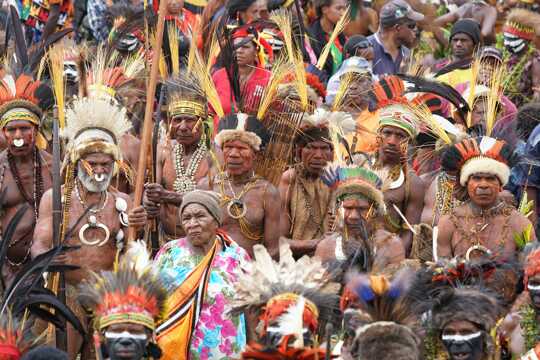
Bilum Festival is a celebration of the looped string bag, and it is not a music event, so pack your ears for string-bag talk, not stage acts. It happens in Goroka, in the Eastern Highlands of Papua New Guinea, a cool highland town ringed by green ridges. Walk the town’s main streets and you meet women unrolling bags in every color, men trying them on, and artists twisting fiber on the spot, so you leave with a bag and the maker’s name. Crowds are mostly Papua New Guineans, plus a modest handful of curious foreigners. The mood is friendly, loud and proud, with singsing groups drifting through. Check the dates with local organizers or your Goroka guesthouse before you book flights, since the schedule can shift.

Discover everything you want to know in the 📖 Papua New Guinea Travel Guide.


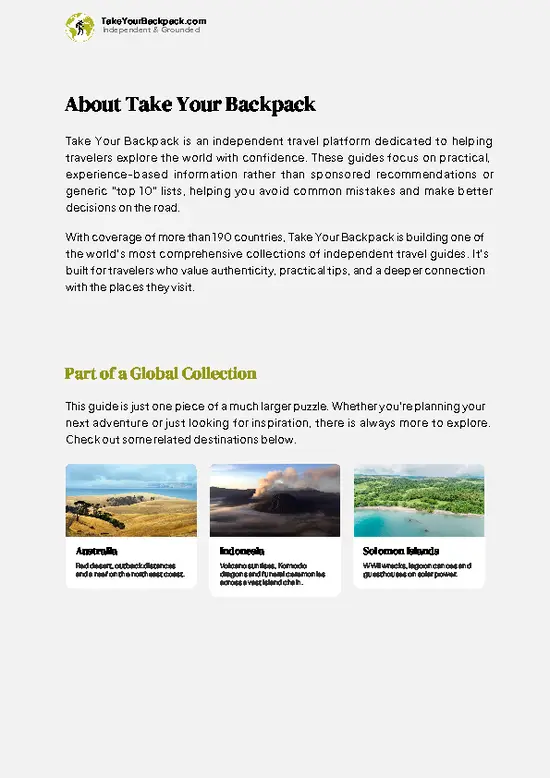
example page 0 from our offline Travel Guide for Papua New Guinea
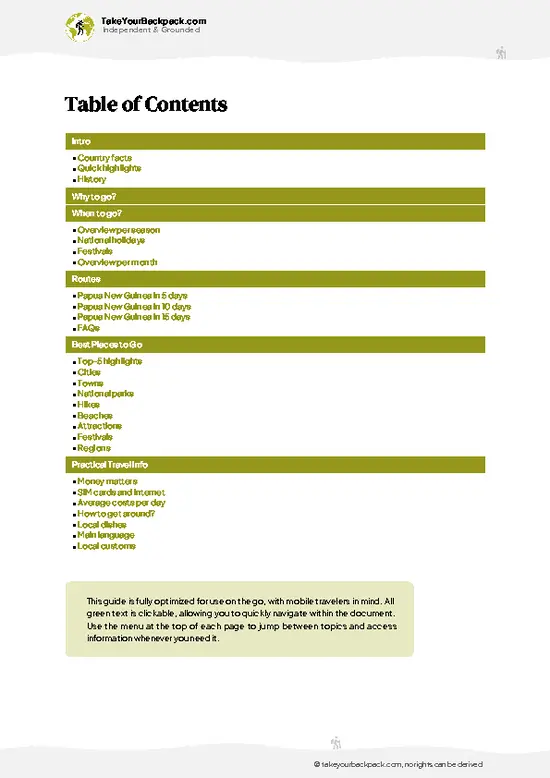
example page 1 from our offline Travel Guide for Papua New Guinea
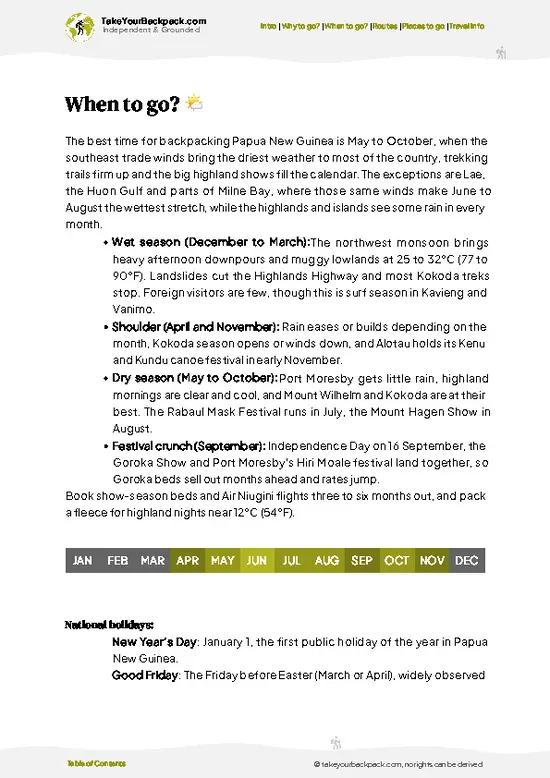
example page 2 from our offline Travel Guide for Papua New Guinea
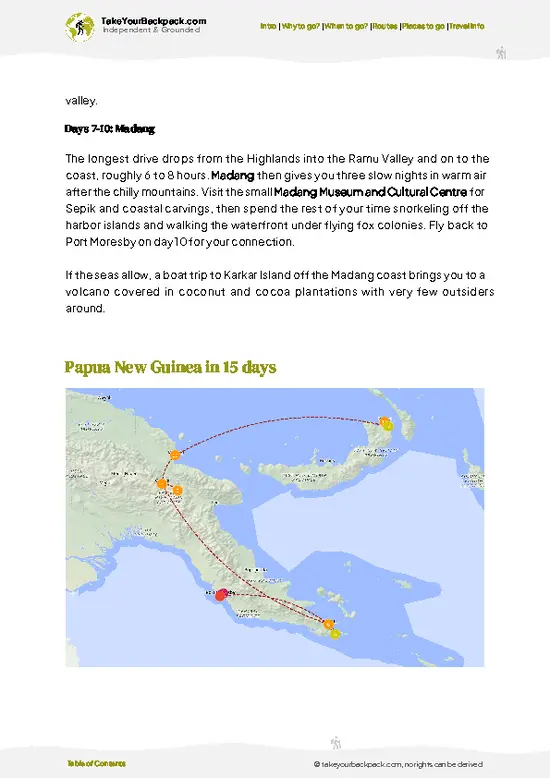
example page 3 from our offline Travel Guide for Papua New Guinea
example page 4 from our offline Travel Guide for Papua New Guinea
example page 5 from our offline Travel Guide for Papua New Guinea
example page 6 from our offline Travel Guide for Papua New Guinea
example page 7 from our offline Travel Guide for Papua New Guinea
Loading the map 🌍
CLICK TO FILTER
cities
towns
national parks
hikes
beaches
attractions
festivals
regions
SHOW COUNTRY’S BESTSHOW ALL

✨ Why go?
Ranked #9 festival in Papua New Guinea
The unique appeal for travelers

Backpackers build a route around this festival because it puts you face to face with the women who make the bilums, the string bags that carry babies, sweet potatoes and everything else across the country. You can watch the looping technique up close, ask what the patterns mean, and buy directly from the maker. That beats any souvenir stall in Port Moresby.

Goroka also makes it easy to stack events. It is the home of the Goroka Show, so many travelers fold both into one highland loop, with Mount Hagen and the Asaro Valley nearby. The festival is small enough that you will be talking to strangers within an hour, sharing a table at a market lunch, and getting invited to a village. Prices for crafts are fair when you bargain gently, and the real value is the people you meet.

💡 HighlightsKey sights and experiences for travelers

  1. Bilum Stalls and Demonstrations: Rows of makers loop bags with fiber in front of you. Watch the speed, then ask about the patterns and natural dyes.
  2. The Bilum Fashion Parade: Bags become headwear, dresses and capes on the catwalk. It is colorful, and the crowd cheers each design loudly.
  3. Singsing Groups: Highland dancers in feathers, paint and shell ornaments appear with drums. Their costumes pair surprisingly well with the bilums around them.
  4. Natural Dye Displays: Artists show how bark, leaves and roots produce reds, yellows and browns. You can see the raw plants beside the finished string.
  5. Goroka Town Market: Pick through sweet potato, greens and betel nut, then circle back to the craft sellers. It is a good place to see bilums doing their daily job.
If time is short, skip the town market and spend those hours with the makers at their stalls.
Spotted a mistake or missing something? Contact us.

🌤️ When to go?When is the celebration of Goroka Bilum Festival?

The Bilum Festival is held in Goroka, Eastern Highlands Province, usually in the weeks around the Goroka Show in mid-September, and runs about two to three days at venues in town.
  • Best day: Go on the main display day, when bilum weavers from several provinces show string bags and competitions fill the grounds. Quieter weekdays suit browsing and chatting with makers.
  • Weather: Goroka sits at about 1,550 m, so days run 24 to 27°C (75 to 81°F) and nights drop to 12 to 14°C (54 to 57°F). Showers are possible. Bring a light rain jacket, a fleece, sunscreen and a daypack.
  • Booking: Reserve beds two to three months ahead, since rooms around show week often cost 30 to 50 percent more. Flights into Goroka fill early.
  • Crowds: Arrive the day before and avoid moving on the final afternoon, when the Highlands
… read more 👉
The Bilum Festival is held in Goroka, Eastern Highlands Province, usually in the weeks around the Goroka Show in mid-September, and runs about two to three days at venues in town.
  • Best day: Go on the main display day, when bilum weavers from several provinces show string bags and competitions fill the grounds. Quieter weekdays suit browsing and chatting with makers.
  • Weather: Goroka sits at about 1,550 m, so days run 24 to 27°C (75 to 81°F) and nights drop to 12 to 14°C (54 to 57°F). Showers are possible. Bring a light rain jacket, a fleece, sunscreen and a daypack.
  • Booking: Reserve beds two to three months ahead, since rooms around show week often cost 30 to 50 percent more. Flights into Goroka fill early.
  • Crowds: Arrive the day before and avoid moving on the final afternoon, when the Highlands Highway and the airport are busiest.
Arrive early in the day, because the best bilum sell first.


source: climatestotravel.comJANJanuary: not recommended for travelingFEBFebruary: not recommended for travelingMARMarch: not recommended for travelingAPRApril: not recommended for travelingMAYMay: not recommended for travelingJUNJune: not recommended for travelingJULJuly: excellent for travelingAUGAugust: not recommended for travelingSEPSeptember: not recommended for travelingOCTOctober: not recommended for travelingNOVNovember: not recommended for travelingDECDecember: not recommended for traveling

✈️ The backpacker research shortcutPapua New Guinea Travel Guide

An offline-friendly backpacking guide with optimized travel routes, ranked highlights, transport advice, and the best areas to stay.
example page 0 from our offline Travel Guide for Papua New Guinea
example page 1 from our offline Travel Guide for Papua New Guinea
example page 2 from our offline Travel Guide for Papua New Guinea
example page 3 from our offline Travel Guide for Papua New Guinea
example page 4 from our offline Travel Guide for Papua New Guinea
example page 5 from our offline Travel Guide for Papua New Guinea
example page 6 from our offline Travel Guide for Papua New Guinea
example page 7 from our offline Travel Guide for Papua New Guinea
The digital guide (251 pages) contains:
✅ 81 highlights, ranked by travel appeal
✅ Optimized 5, 10 & 15-day travel routes
✅ Cities, national parks, landmarks, beaches
✅ How to get around
✅ Offline-friendly for travel without Wi-Fi
👉 Click to see all 30+ guide features

📅 Plan smarter in minutes, not weeks
✅ Month by month travel advice
✅ Festivals & national holidays
✅ Budget expectations

🗺️ Go to the right places, skip the overrated ones
✅ Honest pros & cons of destinations
✅ Top hikes, parks & viewpoints
✅ Lesser-known places most travelers miss
✅ Clear “worth it vs skip it” guidance

🛏️ Travel smoothly without rookie mistakes
✅ Best areas to stay
✅ Transport systems explained simply
✅ Common scams & safety advice
✅ SIM cards, money & practical tips

🌍 Understand the country, not just visit it
✅ Culture & traditions
✅ 52 Essential phrases & customs
✅ Festivals worth planning around
✅ Traveler-friendly historical context
✅ Insights that make places more meaningful

📱 Built for real travel conditions
✅ Fully downloadable PDF
✅ Works completely offline
✅ Optimized for phone use
✅ Useful in remote areas & buses
✅ Everything in one place
Stop searching, start planning
Get instant access to your full guide. 30‑day money-back guarantee.
+ Add another guide for just

By proceeding you agree to our terms.
Sent to your inbox immediately after payment • 100% Secure Checkout
Best Backpacking Travel Advisor 2025 tourism awardBest Backpacking
Travel Advisor
2025
What others say about Take Your Backpack Guides:
⭐⭐⭐⭐⭐
Fantastic, amazing amount of information!
⭐⭐⭐⭐⭐
My goodness this is amazing, it's what I've been looking for hats off too you!
⭐⭐⭐⭐⭐
I think this is absolutely BRILLIANT
⭐⭐⭐⭐
Very complete and informative. It's still missing places, but I gotta to commend you
⭐⭐⭐⭐⭐
This is truly amazing, thank you, can't wait to explore it with my kids!
⭐⭐⭐⭐⭐
Awesome resource, thank you!
⭐⭐⭐⭐⭐
This is amazing! Can't wait to explore the ones I haven't seen
⭐⭐⭐⭐
I love this! Well done, great idea.
⭐⭐⭐⭐⭐
Thanks for taking the time to make this gem!
⭐⭐⭐⭐⭐
This might be the best website I've ever seen.
⭐⭐⭐⭐⭐
Congratulations, and thank you so much for your work; it's incredibly valuable.
⭐⭐⭐⭐
In all seriousness I think you did a great job pointing out the important spots
⭐⭐⭐⭐⭐
10/10 very good
⭐⭐⭐⭐⭐
As someone who's only just starting to visit regularly this is awesome, thank you.
⭐⭐⭐⭐
Thank you very much! I'm going to visit my dad, it's going to be very useful!
⭐⭐⭐⭐⭐
This is really cool! We'll be travelling for the first time and this definitely come in handy.
⭐⭐⭐⭐⭐
You are now our minister of culture, congratulations 👨‍💼
⭐⭐⭐⭐⭐
Just wanted to tell you that this is a pearl! Going to follow your recommendations.
⭐⭐⭐⭐⭐
This is so cool. I'll definitely be using the resource for my travels soon.
⭐⭐⭐⭐⭐
This is very impressive! Good work.
⭐⭐⭐⭐⭐
This is an amazing and informative site. Very well done!

🛏️ Where to stay?Best areas to stay in Papua New Guinea

Central Goroka is the best place to stay, because the festival grounds, market, banks and restaurants sit within a short walk or cheap taxi ride of each other. Look at the streets around the main town center and the Goroka Market area, where you can reach stalls and transport on foot in daylight. Guesthouses and small lodges on the hillsides above town are quieter and often have views over the Asaro valley, though you will need a taxi or PMV for the festival. These areas also have the most travelers, researchers and aid workers, so you will meet people at shared tables and breakfast. Solo backpackers … read more 👉
Central Goroka is the best place to stay, because the festival grounds, market, banks and restaurants sit within a short walk or cheap taxi ride of each other. Look at the streets around the main town center and the Goroka Market area, where you can reach stalls and transport on foot in daylight. Guesthouses and small lodges on the hillsides above town are quieter and often have views over the Asaro valley, though you will need a taxi or PMV for the festival. These areas also have the most travelers, researchers and aid workers, so you will meet people at shared tables and breakfast. Solo backpackers should choose places with secured compounds and guards, as most do in Goroka. Avoid walking after dark anywhere, even short distances, and arrange taxis through your accommodation. Book early because festival week fills every bed in town. Staying farther out, such as near the university or the airport road, works if you want calmer evenings but you will rely on taxis.

👛 Costs (as of 15 October 2026)Money, prices, and spending tips

A realistic budget for the Bilum Festival is about US$95 to 160 per day, since Papua New Guinea is pricey for backpackers and Goroka is no exception.
CategoryBudget RangeLocal Reality
Festival ticketsUS$3 to 15 per dayEntry fees are modest. Prices vary by event and by grandstand access.
AccommodationUS$50 to 90 per nightGuesthouse rooms in Goroka rise in festival week. Dorm beds are rare.
Local transportUS$5 to 20 per dayPMV minibuses cost under US$1 per ride. Taxis around town cost more, and many travelers use them after dark.
Food & drinksUS$15 to 30 per dayMarket and stall meals cost US$2 to 5. Restaurant mains cost US$8 to 15.
Miscellaneous expensesUS$5 to 22 per dayBilum bags cost US$10 to 80 depending on size and quality, plus tips and bottled water.
Total Daily BudgetUS$95 to 160Based on high season accommodation.
⚠️ Prices can change and everyone travels differently, so take this as a rough guide. Hope it helps you plan your adventure!

🍲 FoodLocal Cuisine & Drinks

Expect the festival to run on street-side grills and market stalls. Roast corn, steamed sweet potato (kaukau) and boiled bananas are everywhere, and they are the cheap, filling staples of Highlands life. Look for mumu, food slow-cooked in an earth oven with hot stones, which often appears during cultural displays and is worth seeking out for the smoky, tender pork and greens. Grilled chicken and lamb flaps are common stall fare, along with fried scones and bread.

For drinks, try fresh coconut water and local Highlands coffee, grown in the hills around Goroka and far better here than anywhere else in the country. Beer is sold near the grounds, but drink modestly and stay aware of your surroundings.

Bring small cash in kina notes, as stalls do not take cards. Portions are generous, so sharing … read more 👉
Expect the festival to run on street-side grills and market stalls. Roast corn, steamed sweet potato (kaukau) and boiled bananas are everywhere, and they are the cheap, filling staples of Highlands life. Look for mumu, food slow-cooked in an earth oven with hot stones, which often appears during cultural displays and is worth seeking out for the smoky, tender pork and greens. Grilled chicken and lamb flaps are common stall fare, along with fried scones and bread.

For drinks, try fresh coconut water and local Highlands coffee, grown in the hills around Goroka and far better here than anywhere else in the country. Beer is sold near the grounds, but drink modestly and stay aware of your surroundings.

Bring small cash in kina notes, as stalls do not take cards. Portions are generous, so sharing a plate is normal. Ask before photographing vendors or their food. Carry your own water bottle and eat from stalls where food is cooked in front of you.

FAQCommon questions from travelers

The Bilum Festival takes place in Goroka, Eastern Highlands Province, usually in September around the Goroka Show. It typically runs two to three days, with the main displays on the middle and final days. Dates shift each year, so confirm with local organizers before booking flights into Goroka.
Plan on roughly US$95 to 160 per day all in. Entry is modest at about US$3 to 15 per day, and beds in Goroka cost US$50 to 90 a night in festival week. Meals at stalls are US$2 to 5, and a good bilum bag costs US$10 to 80.
Tickets are normally sold at the gate, so advance purchase is rarely needed for general entry. Your accommodation is what you must book early, ideally two to three months ahead, because Goroka fills during festival week. Flights from Port Moresby to Goroka also sell out, so book them as soon as dates are confirmed.
⚠️ Things can change over time, so always validate details locally before you go.

Other Papua New Guinean festivals near Goroka Bilum

Explore more nearby:

  • Goroka Show—Asaro mudmen, Huli wigs, highland singsing, Independence weekend| 2 km away
  • Madang Festival—Harbor waterfront, string bands, decorated outriggers, north coast| 106 km away
  • Mount Hagen Cultural Show—Kagamuga grand parade, bird-of-paradise plumes, camp areas, clan regalia| 125 km away

💡 Not sure where to go next?
Create a personalized itinerary for Papua New Guinea including Goroka Bilum and the places that fit your trip.

Generate my itinerary

👉 Discover all festivals

Or checkout all Papua New Guinea has to offer (think cities, towns, villages, national parks, hikes, beaches, festivals)
Country photo of Papua New Guinea

We 💚 feedbackParting advice and final tips

Give it two full days. The first lets you wander, haggle and learn the patterns, and the second lets you return for the bags you could not stop thinking about, plus the parade. I would bring small notes in kina and a roomy daypack. Stay a third day if you want the nearby highland villages.

✍️ Help improve this page!
The information on this page is based on in-depth research, insights shared by experienced travelers, and feedback from the local travel community in Papua New Guinea. While every effort is made to keep the information accurate and current, conditions can change — so if you spot anything incorrect or outdated, please get in touch.


🙋‍♂️ Give feedback

👋 Meet the founderWho’s Behind Take Your Backpack?

Johan, backpacker and founder of TakeYourBackpackHi, I’m Johan (Netherlands 🇳🇱), the creator of TakeYourBackpack. Over the past 3 decades, I’ve backpacked through 90+ countries across six continents, gaining extensive experience with independent travel, long-term trips, and overland routes.

This site is built on a combination of firsthand travel experience and carefully curated insights from other backpackers. Many guides are based on places I’ve personally visited, while others bring together tips, observations, and practical advice shared by trusted travelers I’ve met along the way.

The goal is to provide realistic, experience-driven guidance — not generic itineraries — so you can explore destinations with better context, clearer expectations, and more confidence.