×

Peru🇵🇪 | best villagesBest villages in Peru

In Peru, villages are vibrant hubs of culture, each with its own unique character shaped by geography and tradition. From the high-altitude Andean settlements to the lush Amazonian communities, the diversity is staggering. Each region offers distinct experiences, influenced by seasonal activities like harvest festivals in the Sacred Valley or traditional weaving in the highlands.

Choosing the right village can dramatically affect your backpacking journey. Some areas are more accessible, while others require a bit of grit to reach. Safety varies, too; some villages are bustling with tourists, while others offer a more authentic, off-the-beaten-path vibe.

Budget considerations are crucial; remote villages may have fewer amenities, but they often provide deeper cultural immersion. Understanding these nuances will help you navigate your options and preserve your energy and funds for the moments that truly matter in your independent travel adventure.

By Johan Kruseman 🇳🇱 | Updated September 5, 2026
Explore the best landmarks in Peru

Why go?Why Travelers Love These Spots

The villages of Peru pulse with authenticity, steeped in traditions that have endured for centuries. Unlike many countries, where modernization often overshadows local customs, Peru’s rural communities thrive on their rich cultural heritage. Here, traditional practices are not just preserved; they are woven into the daily lives of the inhabitants. From vibrant textile weaving to age-old agricultural methods, these villages offer a glimpse into a way of life that remains largely untouched by the rapid pace of urbanization.

Geographically, Peru’s diverse landscapes—from the Andes to the Amazon—create unique challenges and opportunities for exploration. The climatic variations mean that accessibility can fluctuate dramatically with the seasons. Some villages become nearly unreachable during … read more 👉
The villages of Peru pulse with authenticity, steeped in traditions that have endured for centuries. Unlike many countries, where modernization often overshadows local customs, Peru’s rural communities thrive on their rich cultural heritage. Here, traditional practices are not just preserved; they are woven into the daily lives of the inhabitants. From vibrant textile weaving to age-old agricultural methods, these villages offer a glimpse into a way of life that remains largely untouched by the rapid pace of urbanization.

Geographically, Peru’s diverse landscapes—from the Andes to the Amazon—create unique challenges and opportunities for exploration. The climatic variations mean that accessibility can fluctuate dramatically with the seasons. Some villages become nearly unreachable during the rainy season, while others bloom into life, showcasing lush greenery and vibrant festivals. This seasonal rhythm demands careful planning; travelers must weigh the trade-off between travel time and the depth of their experience.

Rural infrastructure can be a double-edged sword. While some villages boast charming, rustic accommodations, others may lack basic amenities. This can lead to a more immersive experience, but it also requires a readiness to adapt. The remoteness of these areas often means longer travel times, yet this journey can deepen your connection to the land and its people.

Peru’s villages are not just destinations; they are living museums of cultural resilience. Understanding these nuances—accessibility versus authenticity, comfort versus immersion—will empower travelers to make choices that enrich their experience. Embrace the challenge; the rewards lie in the journey as much as the destination.
How the List Was Created
The list of best villages in Peru is created based on authenticity, scenic beauty, community spirit, traditions, and overall character. If you feel a village is missing in this list, please let us know.

When to go?Timing Your Visit for the Best Experience

Seasonality in Peru’s Villages


Visiting villages in Peru is a dance with the seasons. Each period brings its own rhythm, affecting not just the landscape but also the local culture and activities. The dry season, typically from May to September, offers clear skies and pleasant temperatures. This is when many travelers flock to rural areas, eager to witness vibrant festivals and agricultural fairs. However, the influx of visitors can lead to crowded conditions, especially in popular regions.

The wet season, from November to March, transforms the scenery. Rain nourishes the earth, making it lush and green. This is the time for farmers to plant and harvest, providing a unique glimpse into traditional agricultural practices. However, accessibility can be a challenge. Roads may become muddy … read more 👉

Seasonality in Peru’s Villages


Visiting villages in Peru is a dance with the seasons. Each period brings its own rhythm, affecting not just the landscape but also the local culture and activities. The dry season, typically from May to September, offers clear skies and pleasant temperatures. This is when many travelers flock to rural areas, eager to witness vibrant festivals and agricultural fairs. However, the influx of visitors can lead to crowded conditions, especially in popular regions.

The wet season, from November to March, transforms the scenery. Rain nourishes the earth, making it lush and green. This is the time for farmers to plant and harvest, providing a unique glimpse into traditional agricultural practices. However, accessibility can be a challenge. Roads may become muddy or impassable, limiting access to some villages. Travelers should prepare for potential delays and plan for flexibility in their itineraries.

Shoulder seasons, like April and October, present a mixed bag. These months often feature milder weather and fewer tourists. While conditions can be unpredictable, the trade-off is worth it for those seeking a more intimate experience. Prices for accommodations and activities may also drop, making it a budget-friendly option.

Peak periods, such as major festivals, can significantly influence travel plans. These events showcase local culture but can also lead to inflated prices and limited availability. Understanding these seasonal dynamics is crucial for preserving energy and budget. By aligning travel plans with the natural rhythm of rural life, visitors can immerse themselves in authentic experiences that resonate long after the journey ends.

village hoppingOptimizing Your Multi-Stop Itinerary

Routing Logic
Start by clustering villages regionally. The Sacred Valley is a prime example, where you can hop between Pisac, Ollantaytambo, and Chinchero. This minimizes travel time and maximizes immersion. Move south toward the Altiplano, hitting villages like Puno and Juliaca. Each leg should feel like a natural progression, not a forced march.

Time Management
Allocate at least two days per village. This allows for exploration without feeling rushed. Some villages, like those around Lake Titicaca, offer unique experiences that deserve a full day. Factor in travel time; rural transport can be slow. Expect a few hours between stops, especially on winding mountain roads.

Common Mistakes
One major pitfall is over-scheduling. Trying to cram too many villages into a short timeframe leads … read more 👉
Routing Logic
Start by clustering villages regionally. The Sacred Valley is a prime example, where you can hop between Pisac, Ollantaytambo, and Chinchero. This minimizes travel time and maximizes immersion. Move south toward the Altiplano, hitting villages like Puno and Juliaca. Each leg should feel like a natural progression, not a forced march.

Time Management
Allocate at least two days per village. This allows for exploration without feeling rushed. Some villages, like those around Lake Titicaca, offer unique experiences that deserve a full day. Factor in travel time; rural transport can be slow. Expect a few hours between stops, especially on winding mountain roads.

Common Mistakes
One major pitfall is over-scheduling. Trying to cram too many villages into a short timeframe leads to exhaustion and missed experiences. Prioritize quality over quantity. Another mistake is underestimating transport logistics. Research local bus schedules or consider hiring a driver for flexibility.

Trade-offs and Constraints
Speed often sacrifices depth. Rushing through villages means skimming the surface of local culture. Budget constraints can also impact comfort; local transport is cheaper but less reliable. Weigh the cost of time against the richness of experience. Sometimes, a slightly pricier option can save hours and enhance enjoyment.

Flexibility and Strategic Planning
Embrace a flexible mindset. Weather can affect accessibility, especially in rural areas. Seasonal variations may limit transport options, so be prepared to adjust plans. Prioritize experiences that resonate with personal interests, whether it’s local cuisine, artisan crafts, or breathtaking landscapes. This approach ensures that each stop is not just a checkbox but a meaningful part of the journey.

The ListThe Best villages of Peru

1 Huacachina

desert oasis, sand dunes, lagoon

Ride dune buggies at sunset, watch shifting sands encircle a palm-lined lagoon, and experience the stark contrast of water and desert.

peru-city-huacachina
© Google | Alexa
Loading the map 🌍

Expert viewPro Tips for Exploring the Best

Accessibility
Navigating Peru’s villages requires a keen sense of logistics. Many are tucked away in the Andes, accessible primarily by winding roads that can be rough and time-consuming. Public transport is your best friend here, but it’s not always reliable. Expect to spend a good chunk of your day traveling between villages. Aim for three to five villages to keep your experience rich but manageable. This allows you to soak in the local culture without feeling rushed. If you try to cram in too many stops, you’ll miss the essence of each place.

Seasonal Variation
Timing is everything. The dry season, from May to September, is ideal for trekking and exploring. Villages come alive with festivals, and the weather is generally more forgiving. However, the wet season can transform the landscape … read more 👉
Accessibility
Navigating Peru’s villages requires a keen sense of logistics. Many are tucked away in the Andes, accessible primarily by winding roads that can be rough and time-consuming. Public transport is your best friend here, but it’s not always reliable. Expect to spend a good chunk of your day traveling between villages. Aim for three to five villages to keep your experience rich but manageable. This allows you to soak in the local culture without feeling rushed. If you try to cram in too many stops, you’ll miss the essence of each place.

Seasonal Variation
Timing is everything. The dry season, from May to September, is ideal for trekking and exploring. Villages come alive with festivals, and the weather is generally more forgiving. However, the wet season can transform the landscape into a lush paradise, but it also brings challenges. Roads can become impassable, and some villages may be less accessible. If you’re planning to visit during the rainy months, be prepared for delays and have backup plans. This is where flexibility becomes your ally.

Authenticity
Seek out villages that maintain their cultural integrity. Many places have become touristy, losing their local flavor. Look for communities that prioritize their traditions, like weaving or farming. Engage with locals—this is where the real stories lie. However, be mindful of your impact. Some villages may not be accustomed to tourists, and your presence can disrupt their daily lives. Approach with respect, and you’ll find that authenticity often blossoms from genuine interactions.

Pacing Between Rural Stops
The rhythm of your journey matters. Allow yourself time to breathe between stops. Each village has its own heartbeat, and rushing through them can lead to missed connections. Spend at least two nights in each village to truly absorb the atmosphere. This pacing not only enriches your experience but also gives you time to acclimatize to the altitude, which can be a challenge in the Andes.

Travel Constraints
Be aware of the infrastructure. While some villages are well-connected, others may require a bit of grit to reach. Expect limited amenities in more remote areas. This isn’t a luxury trip; it’s an adventure. Bring cash, as ATMs can be scarce. Also, familiarize yourself with local customs and safety protocols. Some areas may have cultural sensitivities, so understanding the local way of life will enhance your experience and keep you safe.

Budgeting
Costs can vary widely. Accommodations range from basic hostels to family-run guesthouses. Eating local food is usually affordable and delicious, but be cautious with street food if you have a sensitive stomach. Factor in transportation costs, which can add up quickly if you’re not careful. A little research goes a long way in finding the best value. Prioritize experiences that resonate with you—whether it’s a cooking class or a guided hike—over generic tourist traps.

Safety & Cultural Considerations
Safety is paramount. While most villages are welcoming, petty crime can occur, especially in tourist-heavy areas. Keep your belongings secure and be aware of your surroundings. Engage with locals, but do so respectfully. Learn a few phrases in Spanish; it goes a long way in building rapport. Cultural norms can vary significantly, so observe and adapt. In some villages, traditional dress is a point of pride, and wearing it without understanding its significance can be seen as disrespectful.

Final Thoughts
In the end, the journey through Peru’s villages is about connection—both with the land and its people. Embrace the challenges; they often lead to the most rewarding experiences. By choosing your villages wisely, pacing your travels, and respecting local customs, you’ll not only preserve your energy and budget but also enrich your adventure. Each village has a story to tell, and it’s up to you to listen.

✈️ The backpacker research shortcutPeru Travel Guide

An offline-friendly backpacking guide with optimized travel routes, ranked highlights, transport advice, and the best areas to stay.
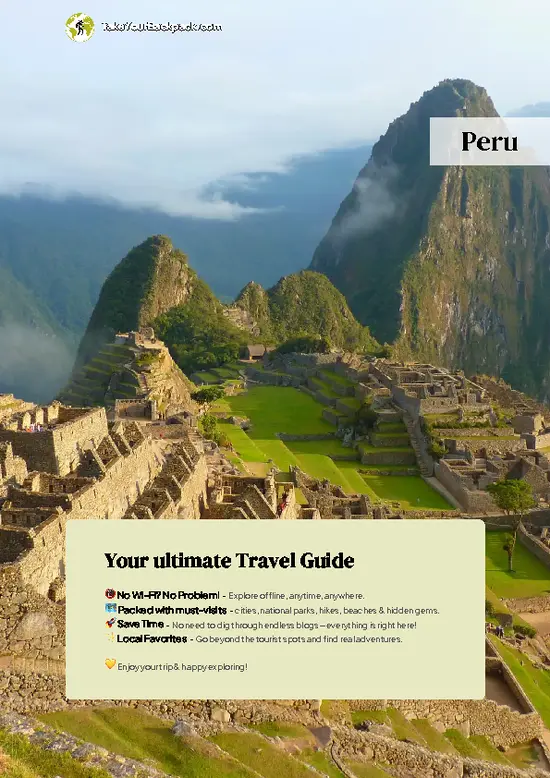
example page 0 from our offline Travel Guide for Peru
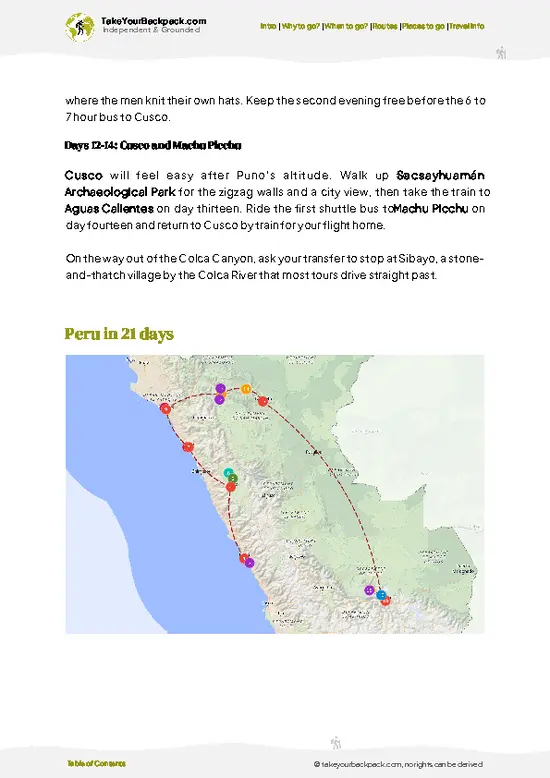
example page 1 from our offline Travel Guide for Peru
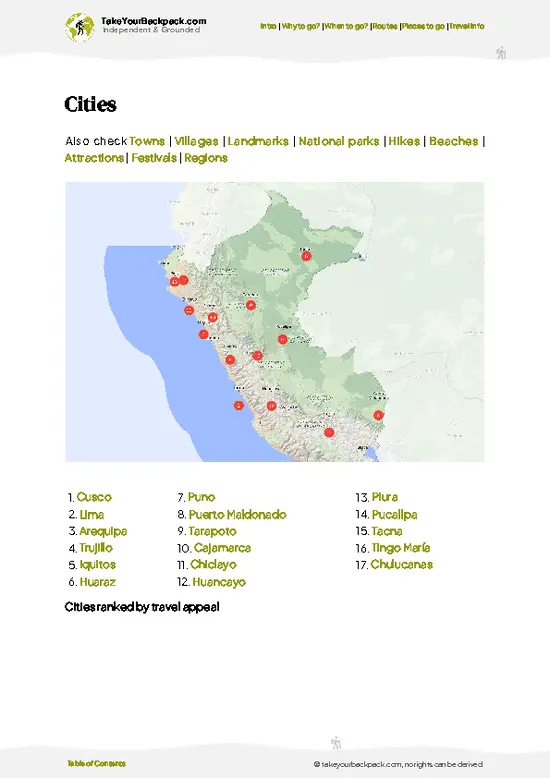
example page 2 from our offline Travel Guide for Peru
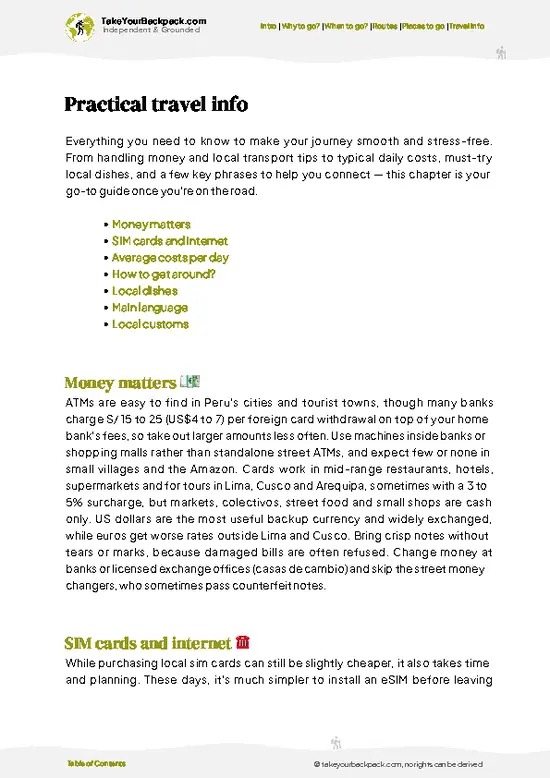
example page 3 from our offline Travel Guide for Peru
example page 4 from our offline Travel Guide for Peru
example page 5 from our offline Travel Guide for Peru
example page 6 from our offline Travel Guide for Peru
example page 7 from our offline Travel Guide for Peru
The digital guide (416 pages) contains:
113 highlights, ranked by travel appeal
Optimized 7, 14 & 21-day travel routes
Cities, national parks, landmarks, beaches
How to get around
Offline-friendly for travel without Wi-Fi
👉 Click to see all 30+ guide features

📅 Plan smarter in minutes, not weeks
Month by month travel advice
Festivals & national holidays
Budget expectations

🗺️ Go to the right places, skip the overrated ones
Honest pros & cons of destinations
Top hikes, parks & viewpoints
Lesser-known places most travelers miss
Clear “worth it vs skip it” guidance

🛏️ Travel smoothly without rookie mistakes
Best areas to stay
Transport systems explained simply
Common scams & safety advice
SIM cards, money & practical tips

🌍 Understand the country, not just visit it
Culture & traditions
52 Essential phrases & customs
Festivals worth planning around
Traveler-friendly historical context
Insights that make places more meaningful

📱 Built for real travel conditions
Fully downloadable PDF
Works completely offline
Optimized for phone use
Useful in remote areas & buses
Everything in one place
Save weeks of stressful planning
Get instant access to your full guide. 30‑day money-back guarantee.
+ Add another guide for just €6.50

By proceeding you agree to our terms.
Sent to your inbox immediately after payment • 100% Secure Checkout
Best Backpacking Travel Advisor 2025 tourism awardBest Backpacking
Travel Advisor
2025
What others say about Take Your Backpack Guides:
⭐⭐⭐⭐⭐
Fantastic, amazing amount of information!
⭐⭐⭐⭐⭐
My goodness this is amazing, it's what I've been looking for hats off too you!
⭐⭐⭐⭐⭐
I think this is absolutely BRILLIANT
⭐⭐⭐⭐
Very complete and informative. It's still missing places, but I gotta to commend you
⭐⭐⭐⭐⭐
This is truly amazing, thank you, can't wait to explore it with my kids!
⭐⭐⭐⭐⭐
Awesome resource, thank you!
⭐⭐⭐⭐⭐
This is amazing! Can't wait to explore the ones I haven't seen
⭐⭐⭐⭐
I love this! Well done, great idea.
⭐⭐⭐⭐⭐
Thanks for taking the time to make this gem!
⭐⭐⭐⭐⭐
This might be the best website I've ever seen.
⭐⭐⭐⭐⭐
Congratulations, and thank you so much for your work; it's incredibly valuable.
⭐⭐⭐⭐
In all seriousness I think you did a great job pointing out the important spots
⭐⭐⭐⭐⭐
10/10 very good
⭐⭐⭐⭐⭐
As someone who's only just starting to visit regularly this is awesome, thank you.
⭐⭐⭐⭐
Thank you very much! I'm going to visit my dad, it's going to be very useful!
⭐⭐⭐⭐⭐
This is really cool! We'll be travelling for the first time and this definitely come in handy.
⭐⭐⭐⭐⭐
You are now our minister of culture, congratulations 👨‍💼
⭐⭐⭐⭐⭐
Just wanted to tell you that this is a pearl! Going to follow your recommendations.
⭐⭐⭐⭐⭐
This is so cool. I'll definitely be using the resource for my travels soon.
⭐⭐⭐⭐⭐
This is very impressive! Good work.
⭐⭐⭐⭐⭐
This is an amazing and informative site. Very well done!

🛏️ Where to stay?Where to Stay: Peru Edition

Yes — Peru has abundant hostels and budget accommodation across cities and tourist routes, with the strongest concentrations in Miraflores and Barranco (Lima), Cusco and San Blas, Sacred Valley towns like Ollantaytambo and Pisac, Arequipa historic center, and northern beach towns such as Máncora.
Miraflores/Barranco are safer with great food, beach access and transport links but pricier; Cusco/San Blas put you next to train departures to Machu Picchu and lively nightlife but are crowded and demand altitude acclimatisation; the Sacred Valley is quieter and cheaper with direct ruin access but has fewer late-night services and limited transport options.
Arequipa’s Cercado gives a compact, safe … read more 👉
Yes — Peru has abundant hostels and budget accommodation across cities and tourist routes, with the strongest concentrations in Miraflores and Barranco (Lima), Cusco and San Blas, Sacred Valley towns like Ollantaytambo and Pisac, Arequipa historic center, and northern beach towns such as Máncora.
Miraflores/Barranco are safer with great food, beach access and transport links but pricier; Cusco/San Blas put you next to train departures to Machu Picchu and lively nightlife but are crowded and demand altitude acclimatisation; the Sacred Valley is quieter and cheaper with direct ruin access but has fewer late-night services and limited transport options.
Arequipa’s Cercado gives a compact, safe colonial base with good long-distance buses but less backpacker nightlife, while northern beach towns offer cheap surf and party hostels yet can be seasonal, have variable infrastructure and less reliable transport connections.

If you enjoy meeting fellow travelers, consider choosing hostels with high ratings for atmosphere. On the other hand, if you prefer having your own space, a hotel might be a better option.

PeruExplore Beyond This Category

👋 Meet the founderWho’s Behind Take Your Backpack?

Johan, backpacker and founder of TakeYourBackpackHi, I’m Johan (Netherlands 🇳🇱), the creator of TakeYourBackpack. Over the past decade, I’ve backpacked through 80+ countries across six continents, gaining extensive experience with independent travel, long-term trips, and overland routes.

This site is built on a combination of firsthand travel experience and carefully curated insights from other backpackers. Many guides are based on places I’ve personally visited, while others bring together tips, observations, and practical advice shared by trusted travelers I’ve met along the way.

The goal is to provide realistic, experience-driven guidance — not generic itineraries — so you can explore destinations with better context, clearer expectations, and more confidence.

Get full Peru guide •
Instant download • 113 highlights • Full Offline guide