×

Philippines🇵🇭 | best hikesYour Guide to the 12 Best hikes in Philippines

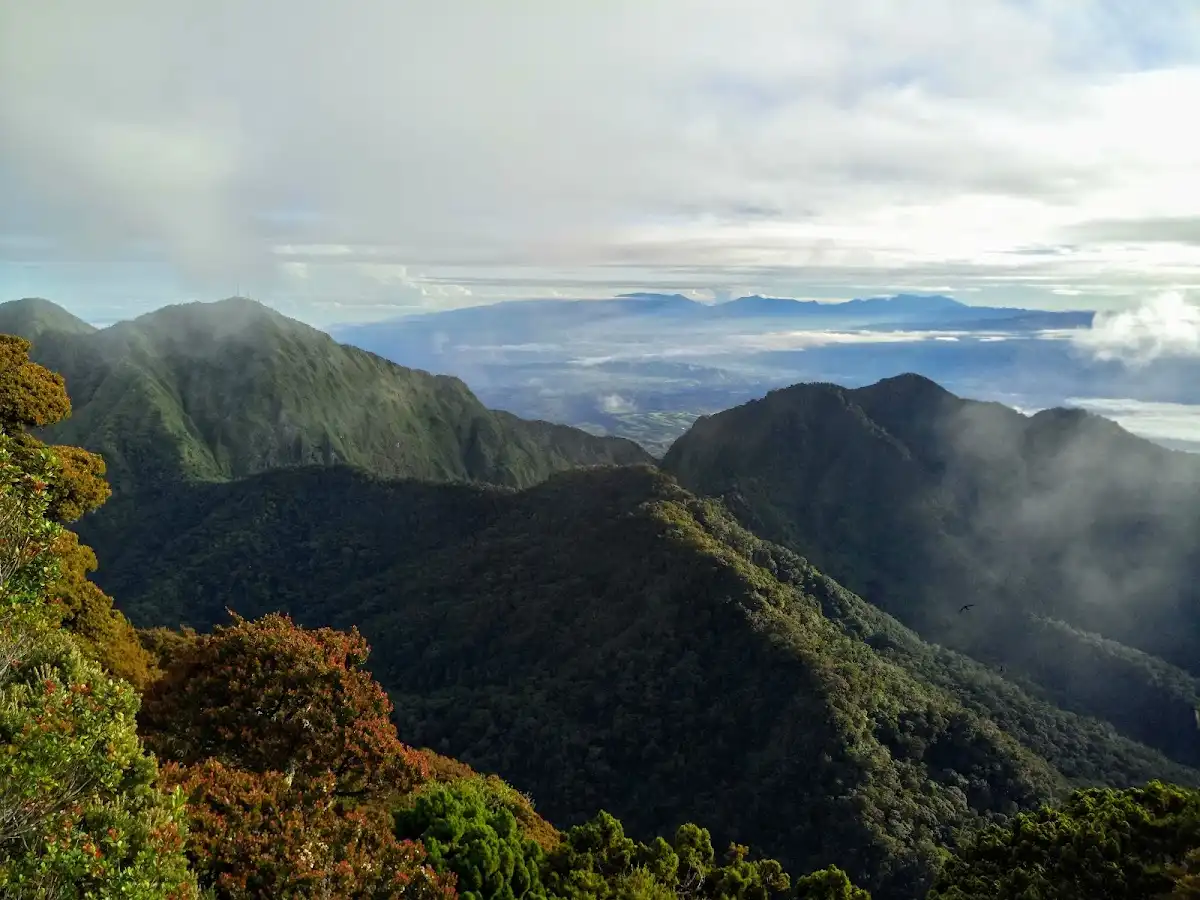
Hiking in the Philippines means volcano cones, jungle ridgelines and limestone peaks scattered across more than 7,000 islands, and almost nothing is built for self-guided walking. Most trails need a local guide, often a mandatory one, and that shapes everything from price to pace. Luzon is the easiest to reach and the busiest: Manila-based weekenders pack the Cordillera and the Sierra Madre on Saturdays, so go midweek and you will often have a trail to yourself. Visayas and Mindanao trade convenience for quiet, with longer approaches, fewer jeepneys and more homestays than hotels. Costs stay gentle, usually a few dollars for fees plus a guide, though a lone traveler pays more than a group. Independent backpackers can stitch it together with buses, ferries and habal-habal motorcycle rides. Start early, since cloud rolls in by mid-morning on most summits, and carry small bills for barangay fees.

By Johan Kruseman 🇳🇱 | Updated October 18, 2026
Explore the best beaches in Philippines

Why go?Why These hike Stand Out

The Philippines sits on the Pacific Ring of Fire, so its mountains are young, steep and mostly volcanic, and they rise from sea level to summits near 3,000 meters within a short distance. That means you can hike a jungle ridge in the morning and be swimming off a beach by afternoon, which few countries can offer. Tropical climate keeps the forest dense and the trails muddy, so proper footwear matters more than fancy gear.

What really sets hiking here apart is the community-run system. Most trailheads are managed by a barangay or a local tourism office, and guides are usually required, registered and paid at set rates. That is good news: your money lands in the village, you get someone who reads the weather and the path, and you rarely worry about route-finding. It also means you need to register … read more 👉
The Philippines sits on the Pacific Ring of Fire, so its mountains are young, steep and mostly volcanic, and they rise from sea level to summits near 3,000 meters within a short distance. That means you can hike a jungle ridge in the morning and be swimming off a beach by afternoon, which few countries can offer. Tropical climate keeps the forest dense and the trails muddy, so proper footwear matters more than fancy gear.

What really sets hiking here apart is the community-run system. Most trailheads are managed by a barangay or a local tourism office, and guides are usually required, registered and paid at set rates. That is good news: your money lands in the village, you get someone who reads the weather and the path, and you rarely worry about route-finding. It also means you need to register on arrival, sometimes attend a short briefing, and plan around guide availability, especially on weekends and holidays.

Infrastructure is uneven. Luzon has paved roads to many trailheads, while islands in Visayas and Mindanao often need a boat, a long bus ride and a motorcycle taxi to reach the start. Signal is patchy, and ATMs thin out fast, so carry cash. Typhoon season can close trails with little notice and landslides after heavy rain are a real hazard.

Culturally, hospitality is the default. Greet people, accept the offered coffee and respect any Indigenous ancestral lands you cross, where local rules on photography and behavior may apply. Expect humidity and effort over technical difficulty; fitness matters more than climbing skill.
Evaluating the Top Choices
The list of best hikes in Philippines is created based on scenery, challenge, trail quality, landmarks, and overall enjoyment. If you feel a hike is missing in this list, please let us know.

When to go?Timing Your Visit for the Best Experience

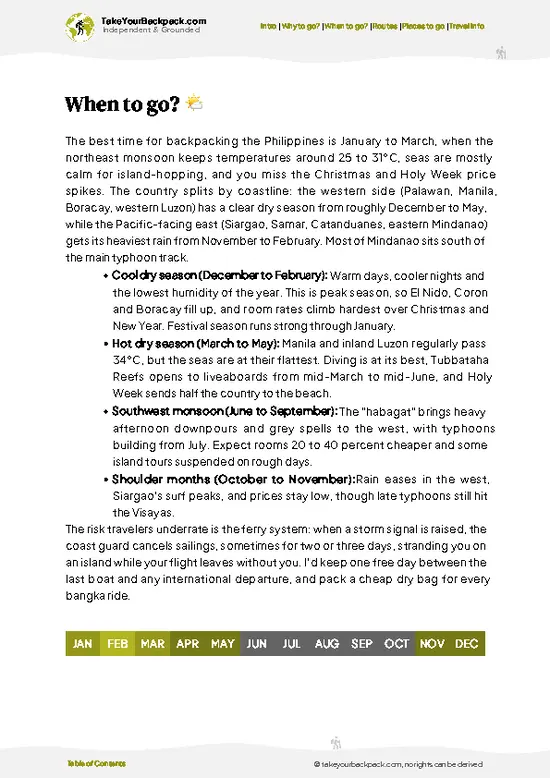
Best Months for Hiking: The best months for hiking in the Philippines are December to May, when the dry season (or the cooler, drier stretch of it) keeps trails firm and summits clear across most of the country. December to February is the comfortable window: lowlands sit around 24 to 30°C, and highland nights in Benguet and Mountain Province can drop to 8 to 14°C, so pack a real layer for sunrise starts. March to May is hotter, with lowland highs of 32 to 36°C, so start at first light and be off exposed ridges by late morning.Shoulder Seasons and the Wet Months: June to November is the southwest monsoon (habagat) and typhoon season, peaking August to October. Luzon and the Visayas can see 300 to 600 mm of rain a month at the height of it, and trails turn to mud, rivers rise and some are closed … read more 👉
Best Months for Hiking: The best months for hiking in the Philippines are December to May, when the dry season (or the cooler, drier stretch of it) keeps trails firm and summits clear across most of the country. December to February is the comfortable window: lowlands sit around 24 to 30°C, and highland nights in Benguet and Mountain Province can drop to 8 to 14°C, so pack a real layer for sunrise starts. March to May is hotter, with lowland highs of 32 to 36°C, so start at first light and be off exposed ridges by late morning.Shoulder Seasons and the Wet Months: June to November is the southwest monsoon (habagat) and typhoon season, peaking August to October. Luzon and the Visayas can see 300 to 600 mm of rain a month at the height of it, and trails turn to mud, rivers rise and some are closed after storms. Local authorities often shut peaks during typhoon warnings, so check with the local tourism office or the guide association the day before. June and early November are workable shoulder months if you accept afternoon downpours and plan morning hikes.Regional Differences: Not every region follows the same calendar. Eastern Visayas and Mindanao’s east coast get their heaviest rain from November to February, while Palawan and the west side are driest in that period. Mindanao’s interior has a less pronounced dry season, so showers can turn up at any time. For Mount Pulag in Luzon, the cold, clear mornings of December to February give the best sea-of-clouds odds.Crowds and Prices: Holy Week (March or April), Christmas to New Year, and long weekends bring crowds and book out guides and homestays. Weekday starts are far quieter. Guide and permit fees usually stay fixed all year, but transport and rooms near popular trailheads climb 20 to 50 percent at peak holidays. Book those weeks a month ahead, and for the rest of the dry season you can often arrange things a day or two before.

hike hoppingHow to Combine hikes Into One Trip

How many days to plan: A trip combining several hikes in the Philippines needs 10 to 21 days, because transfers between islands eat far more time than the walking itself. Pick one or two regions rather than the whole archipelago.

Which regions pair well: Northern Luzon clusters naturally: Manila is the hub, and from there night buses reach the Cordillera in about 6 to 9 hours. Southern Luzon and Bicol pair together too, with Manila to Legazpi taking roughly 9 to 12 hours by bus or about an hour by air. For Visayas, use Cebu as the base and work outward by ferry; Cebu to Negros or Bohol crossings run 2 to 4 hours. Mindanao works best as its own trip, entered by flight into Davao or Cagayan de Oro.

A sensible direction is to start with the easiest-access region while your legs adjust, then … read more 👉
How many days to plan: A trip combining several hikes in the Philippines needs 10 to 21 days, because transfers between islands eat far more time than the walking itself. Pick one or two regions rather than the whole archipelago.

Which regions pair well: Northern Luzon clusters naturally: Manila is the hub, and from there night buses reach the Cordillera in about 6 to 9 hours. Southern Luzon and Bicol pair together too, with Manila to Legazpi taking roughly 9 to 12 hours by bus or about an hour by air. For Visayas, use Cebu as the base and work outward by ferry; Cebu to Negros or Bohol crossings run 2 to 4 hours. Mindanao works best as its own trip, entered by flight into Davao or Cagayan de Oro.

A sensible direction is to start with the easiest-access region while your legs adjust, then move toward the remote one. If you fly in and out of Manila, go north first, return, then fly south, and finish near a major airport.

Time per stop and common mistakes: Plan 2 to 3 nights per hiking base: one for arrival and registration, one for the hike and one to recover or absorb weather delays. Travel between regions typically takes 6 to 12 hours when you count ferry schedules, waiting and ground transfers.

The usual mistake is cramming back-to-back summit days with overnight buses, which leaves you wrecked and exposed to missed connections. Leave a buffer day for typhoon or ferry cancellations, especially from June to November. Another is booking tight flights home after a remote trek; keep a full day in hand. Instead, alternate hard days with rest, and book domestic flights flexibly. Budget carriers often charge extra for baggage, so pack light.

The ListHighly Recommended hikes of Philippines

1 Mt. Apo

Philippines’ highest point, geothermal vents, boulder fields

Summit the country’s tallest peak, traversing shifting terrain from forest to volcanic rock, with steam rising from the earth and wide views at the top.

2 Banaue Rice Terraces

stepped paddies, Ifugao culture, stone pathways

Walk centuries-old trails carved into mountainsides, where agricultural heritage and daily life unfold among intricate terraces and traditional villages.

philippines-hike-banaue-rice-terraces
© Google |

3 Mayon Volcano

perfect cone, lava flows, ash fields

Approach the iconic volcano’s lower slopes, where trails skirt hardened lava and offer clear lines of sight to its near-symmetrical summit.

4 Mt. Guiting-Guiting

knife-edge ridges, technical scrambling, jagged peaks

Traverse exposed rock spines and steep ascents where every step demands focus, revealing panoramic views and dramatic mountain contours unique to Sibuyan Island.

philippines-hike-mt-guiting-guiting
© Google |

5 Mt. Batulao

rolling hills, grassland ridges, accessible trailheads

Hike a series of gentle slopes and open ridges, with clear paths and frequent rest stops, making it a practical choice for a quick escape from Manila.

philippines-hike-mt-batulao
© Google |

6 Mt. Dulang-Dulang

cloud forest, ancient trees, sacred summit

Experience Mindanao’s highest mossy forests, where the air cools and the trail weaves through centuries-old trees revered by indigenous peoples.

philippines-hike-mt-dulang-dulang
© Google |

7 Mount Kitanglad

towering radio masts, endemic flora, bird habitat

Reach a summit marked by communication towers, with trails passing through biodiverse forests home to rare birds and unique mountain plants.

philippines-hike-mount-kitanglad
© Google |

8 Mount Hibok-Hibok

active volcano, crater lake, coastal views

Climb a living volcano on Camiguin, where the route rises from lush lowlands to a summit overlooking sea and island landscapes.

9 Mt. Talinis

volcanic lakes, mossy forests, sulfur vents

Ascend through dense foliage and past steaming vents, with the trail winding between crater lakes and cloud-draped slopes on Negros Island.

10 Kibungan Circuit

remote villages, pine forests, deep gorges

Navigate a rugged loop through Cordillera highlands, passing through isolated communities and shifting landscapes shaped by wind, water, and altitude.

11 Mount Kalatungan

dense jungle, river crossings, remote ascent

Trek through thick Mindanao undergrowth and cross mountain streams, gaining elevation on a seldom-traveled route to a quiet, forested peak.

12 Mt. Ugo

open ridgelines, pine woodlands, mountain hamlets

Follow undulating trails across grassy ridges and through pine stands, encountering local life and expansive Luzon highland vistas.

Loading the map 🌍

Expert viewTips and Advice from Travelers

How many hikes to take on: Three to five hikes is the number I would advise for a typical two to three week trip. Fewer than three and you waste the logistics you already paid for; more than five and transfers, mud-soaked gear and recovery days turn the trip into a chore. Because most trails need a registered guide, each hike also carries fixed costs, so a few well-chosen ones beat a long checklist. Keep one slot open for weather, since postponed hikes are routine.

Which kind to prioritize: First-timers and anyone short on time get the most from accessible volcano and ridge hikes near Manila: a half day, cheap, easy to book, and a good test of your fitness in tropical heat. The cost is crowds on weekends, so go midweek and you fix that for free. Comfort seekers should choose day hikes from … read more 👉
How many hikes to take on: Three to five hikes is the number I would advise for a typical two to three week trip. Fewer than three and you waste the logistics you already paid for; more than five and transfers, mud-soaked gear and recovery days turn the trip into a chore. Because most trails need a registered guide, each hike also carries fixed costs, so a few well-chosen ones beat a long checklist. Keep one slot open for weather, since postponed hikes are routine.

Which kind to prioritize: First-timers and anyone short on time get the most from accessible volcano and ridge hikes near Manila: a half day, cheap, easy to book, and a good test of your fitness in tropical heat. The cost is crowds on weekends, so go midweek and you fix that for free. Comfort seekers should choose day hikes from a town with real beds, because you sleep dry and eat well. Experienced backpackers wanting solitude should spend their days on multi-day jungle or high-mountain treks in Visayas, Mindanao or the northern Cordillera. They cost more in time and money, since you pay for porters, camp food and a longer approach, but they deliver the most atmosphere per dollar. Beach-and-trail combinations suit people who want rest between efforts, and the limestone and coastal walks around islands like Palawan fit that pattern.

What it costs: A practical budget is US$25 to 45 a day on the trail circuit, covering a homestay or guesthouse bed (US$8 to 20), local meals (US$5 to 10) and short rides. Add hike costs on top: environmental or registration fees run roughly PHP 50 to 500 (US$1 to 9), and guides commonly charge PHP 500 to 1,500 (US$9 to 27) for a day hike, split among the group. Multi-day treks with porters and food typically land around PHP 3,000 to 8,000 (US$55 to 145) per person for a few days. Transport to remote trailheads, by jeepney, tricycle or habal-habal, adds PHP 100 to 600 (US$2 to 11) each way. A three to five hike trip therefore runs about US$150 to 450 in hike-specific costs, beyond daily living. Hiring in a group is the single biggest saving, so link up with others at your hostel.

Safety and cultural points: Heat and humidity are the main hazards. Carry at least 2 to 3 liters of water, electrolytes and a rain shell, and start at dawn. Check typhoon forecasts through PAGASA, the national weather service, and cancel without argument if a guide advises it. Slippery clay, leeches and sudden river rises are routine in the wet months. Do not skip the registration and briefing; rescue in remote areas is slow, and your guide is the safety system. Some areas in parts of Mindanao and the Sulu archipelago carry government travel advisories, so check current guidance before heading there.

On culture, treat guides and porters as local professionals. Agree the rate before you start, and tip PHP 100 to 300 (US$2 to 5) if service was good. Many trails cross Indigenous lands, so ask before photographing people or ritual sites, dress modestly in villages, and never leave trash. Carry cash, since cards are rarely accepted at trailheads, and a small gift of coffee or snacks for a host family is always welcome.

✈️ The backpacker research shortcutPhilippines Travel Guide

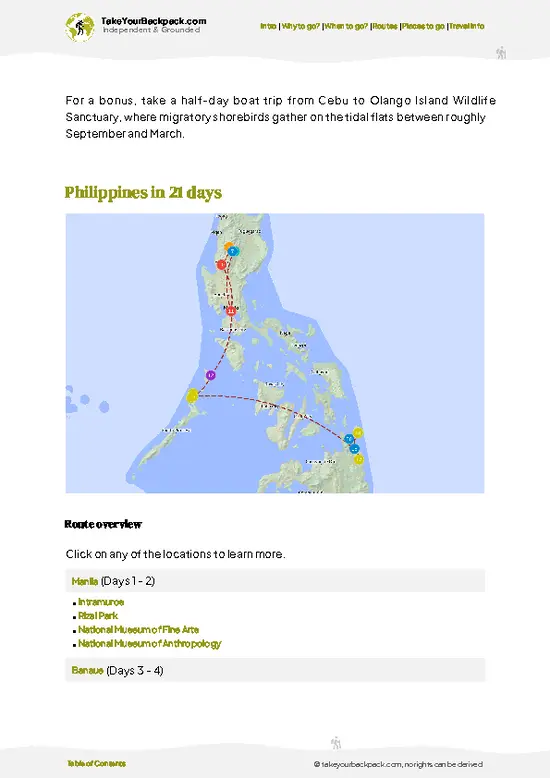
An offline-friendly backpacking guide with optimized travel routes, ranked highlights, transport advice, and the best areas to stay.
example page 0 from our offline Travel Guide for Philippines
example page 1 from our offline Travel Guide for Philippines
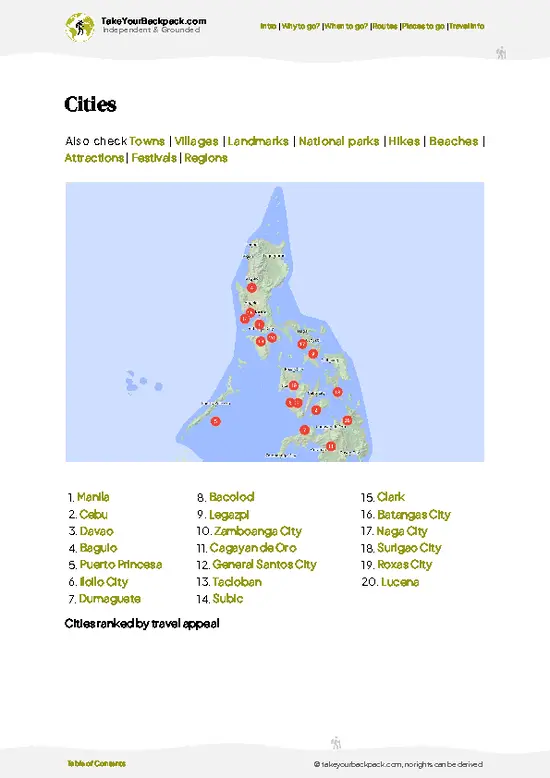
example page 2 from our offline Travel Guide for Philippines
example page 3 from our offline Travel Guide for Philippines
example page 4 from our offline Travel Guide for Philippines
example page 5 from our offline Travel Guide for Philippines
example page 6 from our offline Travel Guide for Philippines
example page 7 from our offline Travel Guide for Philippines
The digital guide (517 pages) contains:
✅ 151 highlights, ranked by travel appeal
✅ Optimized 7, 14 & 21-day travel routes
✅ Cities, national parks, landmarks, beaches
✅ How to get around
✅ Offline-friendly for travel without Wi-Fi
👉 Click to see all 30+ guide features

📅 Plan smarter in minutes, not weeks
✅ Month by month travel advice
✅ Festivals & national holidays
✅ Budget expectations

🗺️ Go to the right places, skip the overrated ones
✅ Honest pros & cons of destinations
✅ Top hikes, parks & viewpoints
✅ Lesser-known places most travelers miss
✅ Clear “worth it vs skip it” guidance

🛏️ Travel smoothly without rookie mistakes
✅ Best areas to stay
✅ Transport systems explained simply
✅ Common scams & safety advice
✅ SIM cards, money & practical tips

🌍 Understand the country, not just visit it
✅ Culture & traditions
✅ 52 Essential phrases & customs
✅ Festivals worth planning around
✅ Traveler-friendly historical context
✅ Insights that make places more meaningful

📱 Built for real travel conditions
✅ Fully downloadable PDF
✅ Works completely offline
✅ Optimized for phone use
✅ Useful in remote areas & buses
✅ Everything in one place
Stop searching, start planning
Get instant access to your full guide. 30‑day money-back guarantee.
+ Add another guide for just

By proceeding you agree to our terms.
Sent to your inbox immediately after payment • 100% Secure Checkout
Best Backpacking Travel Advisor 2025 tourism awardBest Backpacking
Travel Advisor
2025
What others say about Take Your Backpack Guides:
⭐⭐⭐⭐⭐
Fantastic, amazing amount of information!
⭐⭐⭐⭐⭐
My goodness this is amazing, it's what I've been looking for hats off too you!
⭐⭐⭐⭐⭐
I think this is absolutely BRILLIANT
⭐⭐⭐⭐
Very complete and informative. It's still missing places, but I gotta to commend you
⭐⭐⭐⭐⭐
This is truly amazing, thank you, can't wait to explore it with my kids!
⭐⭐⭐⭐⭐
Awesome resource, thank you!
⭐⭐⭐⭐⭐
This is amazing! Can't wait to explore the ones I haven't seen
⭐⭐⭐⭐
I love this! Well done, great idea.
⭐⭐⭐⭐⭐
Thanks for taking the time to make this gem!
⭐⭐⭐⭐⭐
This might be the best website I've ever seen.
⭐⭐⭐⭐⭐
Congratulations, and thank you so much for your work; it's incredibly valuable.
⭐⭐⭐⭐
In all seriousness I think you did a great job pointing out the important spots
⭐⭐⭐⭐⭐
10/10 very good
⭐⭐⭐⭐⭐
As someone who's only just starting to visit regularly this is awesome, thank you.
⭐⭐⭐⭐
Thank you very much! I'm going to visit my dad, it's going to be very useful!
⭐⭐⭐⭐⭐
This is really cool! We'll be travelling for the first time and this definitely come in handy.
⭐⭐⭐⭐⭐
You are now our minister of culture, congratulations 👨‍💼
⭐⭐⭐⭐⭐
Just wanted to tell you that this is a pearl! Going to follow your recommendations.
⭐⭐⭐⭐⭐
This is so cool. I'll definitely be using the resource for my travels soon.
⭐⭐⭐⭐⭐
This is very impressive! Good work.
⭐⭐⭐⭐⭐
This is an amazing and informative site. Very well done!

🛏️ Where to stay?Accommodation Highlights

The Philippines has a solid hostel scene, with dorm beds typically running ₱500 to 1,000 (US$9 to 18) and simple private rooms from about ₱1,200 (US$21). In Manila, Poblacion in Makati packs the most social hostels and late-night bars, though the noise runs past midnight, while Malate and Ermita are cheaper and close to Intramuros but feel grittier after dark. On the islands, El Nido town and General Luna on Siargao put you steps from boats and surf, with lively evenings and beds that fill fast in peak season, and Boracay’s Station 3 stays quieter and cheaper than the party strip around Station 2.

If you enjoy meeting fellow travelers, consider choosing hostels with high ratings for atmosphere. … read more 👉
The Philippines has a solid hostel scene, with dorm beds typically running ₱500 to 1,000 (US$9 to 18) and simple private rooms from about ₱1,200 (US$21). In Manila, Poblacion in Makati packs the most social hostels and late-night bars, though the noise runs past midnight, while Malate and Ermita are cheaper and close to Intramuros but feel grittier after dark. On the islands, El Nido town and General Luna on Siargao put you steps from boats and surf, with lively evenings and beds that fill fast in peak season, and Boracay’s Station 3 stays quieter and cheaper than the party strip around Station 2.

If you enjoy meeting fellow travelers, consider choosing hostels with high ratings for atmosphere. On the other hand, if you prefer having your own space, a hotel might be a better option.

PhilippinesSee More of Philippines

👋 Meet the founderWho’s Behind Take Your Backpack?

Johan, backpacker and founder of TakeYourBackpackHi, I’m Johan (Netherlands 🇳🇱), the creator of TakeYourBackpack. Over the past 3 decades, I’ve backpacked through 90+ countries across six continents, gaining extensive experience with independent travel, long-term trips, and overland routes.

This site is built on a combination of firsthand travel experience and carefully curated insights from other backpackers. Many guides are based on places I’ve personally visited, while others bring together tips, observations, and practical advice shared by trusted travelers I’ve met along the way.

The goal is to provide realistic, experience-driven guidance — not generic itineraries — so you can explore destinations with better context, clearer expectations, and more confidence.