×

Philippines🇵🇭 | best beachesYour Guide to the 10 Best beaches in Philippines

The Philippines is a paradise of diverse beaches, each offering a unique slice of coastal life. From the white sands of Boracay to the rugged shores of Siargao, the choices reflect regional flavors and seasonal shifts. Timing is crucial; the dry season from November to April brings clearer waters and vibrant marine life, perfect for snorkeling and surfing. Conversely, the rainy season can lead to crowded beaches and unpredictable weather, affecting your overall experience.

For backpackers, selecting the right beach can shape your journey. Some beaches cater to a laid-back vibe, ideal for relaxation and cultural immersion, while others buzz with nightlife and adventure. Budget considerations also play a role; popular spots may come with higher prices, while off-the-beaten-path locations offer more affordable options. Understanding these nuances will help you navigate the Philippines’ coastal treasures, ensuring your trip aligns with your travel style and budget.

By Johan Kruseman 🇳🇱 | Updated June 4, 2026
Explore the best attractions in Philippines

Why go?Why These beach Stand Out

The beaches of the Philippines stand out in a world filled with coastal beauty, thanks to their diverse ecosystems and unique geological formations. With over 7,000 islands, the country offers a variety of beach experiences, from powdery white sands to rugged coastlines. This diversity means that travelers can find everything from serene hideaways to bustling beach towns, each with its own charm.

However, timing is crucial. The peak season from December to May brings optimal weather but also crowds. If you’re after a more tranquil experience, consider visiting during the shoulder months. The trade-off here is clear: fewer tourists often mean less-than-ideal weather, especially during the rainy season from June to November. But those willing to brave the elements can enjoy a more intimate … read more 👉
The beaches of the Philippines stand out in a world filled with coastal beauty, thanks to their diverse ecosystems and unique geological formations. With over 7,000 islands, the country offers a variety of beach experiences, from powdery white sands to rugged coastlines. This diversity means that travelers can find everything from serene hideaways to bustling beach towns, each with its own charm.

However, timing is crucial. The peak season from December to May brings optimal weather but also crowds. If you’re after a more tranquil experience, consider visiting during the shoulder months. The trade-off here is clear: fewer tourists often mean less-than-ideal weather, especially during the rainy season from June to November. But those willing to brave the elements can enjoy a more intimate connection with the local culture, as fewer visitors often lead to more authentic interactions.

Accessibility can also be a double-edged sword. While many beaches are easily reachable from major cities, the most stunning spots often require a bit of effort to access. This means longer travel times but deeper exploration. The journey to these remote beaches can reveal hidden treasures, such as local fishing villages or untouched natural beauty, enriching the overall experience.

Culturally, the Philippines is a melting pot of influences, which is reflected in its coastal communities. Understanding local customs and traditions can enhance your beach experience, but it requires a willingness to engage beyond the surface.

In summary, the beaches of the Philippines offer a unique blend of natural beauty, cultural richness, and varied experiences. However, travelers must navigate the trade-offs between time, money, and comfort to truly appreciate what these shores have to offer.
How the List Was Created
The list of best beaches in Philippines is created based on beauty, vibe, water quality, activities, and surrounding scenery. If you feel a beach is missing in this list, please let us know.

When to go?Timing Your Visit for the Best Experience

Monsoon Seasons

The Philippines experiences a tropical climate, which means it has distinct wet and dry seasons. The monsoon season typically runs from June to October, bringing heavy rains and potential typhoons. During this time, many beaches can be less appealing due to rough waters and poor visibility. Swimming and water activities may be limited, and some areas might even close for safety reasons.

Optimal Months

The best time to visit for beachgoers is generally from November to May. This period offers clear skies, calm waters, and excellent visibility for snorkeling and diving. December to February is particularly popular, as the weather is cooler and more comfortable. However, this is also peak season, leading to higher prices and larger crowds.

Shoulder Seasons

Travelers looking … read more 👉

Monsoon Seasons

The Philippines experiences a tropical climate, which means it has distinct wet and dry seasons. The monsoon season typically runs from June to October, bringing heavy rains and potential typhoons. During this time, many beaches can be less appealing due to rough waters and poor visibility. Swimming and water activities may be limited, and some areas might even close for safety reasons.

Optimal Months

The best time to visit for beachgoers is generally from November to May. This period offers clear skies, calm waters, and excellent visibility for snorkeling and diving. December to February is particularly popular, as the weather is cooler and more comfortable. However, this is also peak season, leading to higher prices and larger crowds.

Shoulder Seasons

Travelers looking for a balance between good conditions and fewer crowds should consider the shoulder months of March to May. While the heat can be intense, especially in April, the beaches are less crowded than in peak season, and prices for accommodations often drop. This is a trade-off worth considering for those who prefer a more relaxed atmosphere.

Peak Periods

Holidays and festivals can significantly influence beach conditions and crowd levels. Major holidays often see a surge in local tourists, which can lead to crowded beaches and inflated prices. Planning around these peak periods can enhance the experience, allowing for a more tranquil visit.

Seasonal Constraints

Understanding these seasonal patterns is crucial for making informed decisions. The trade-offs between time, money, and comfort can shape the overall experience. Choosing the right time to visit ensures that the beaches of the Philippines deliver the best possible experience, tailored to individual preferences.

beach hoppingHow to Combine beaches Into One Trip

To efficiently combine multiple beaches across the Philippines, start by clustering regions. The country is an archipelago, so grouping islands can save time and energy. For instance, consider the Visayas for a mix of stunning beaches and vibrant culture. Begin in Cebu, then hop to Bohol, and finish in Siquijor. This route minimizes travel time while maximizing beach time.

Next, think about the direction of travel. The Philippines has a distinct wet and dry season. Aim for the dry season, typically from November to April, to enjoy the best conditions. During this period, beaches like Boracay and Palawan are less crowded, allowing for a more relaxed experience. Timing is crucial; visiting during peak season can lead to overcrowded spots, diminishing the experience.

Typical time spent at each read more 👉
To efficiently combine multiple beaches across the Philippines, start by clustering regions. The country is an archipelago, so grouping islands can save time and energy. For instance, consider the Visayas for a mix of stunning beaches and vibrant culture. Begin in Cebu, then hop to Bohol, and finish in Siquijor. This route minimizes travel time while maximizing beach time.

Next, think about the direction of travel. The Philippines has a distinct wet and dry season. Aim for the dry season, typically from November to April, to enjoy the best conditions. During this period, beaches like Boracay and Palawan are less crowded, allowing for a more relaxed experience. Timing is crucial; visiting during peak season can lead to overcrowded spots, diminishing the experience.

Typical time spent at each beach should be around two to three days. This allows for a balance of relaxation and exploration. However, be flexible. Some beaches may captivate longer than expected, while others might not meet expectations. Avoid the common mistake of over-scheduling. A packed itinerary can lead to burnout and missed opportunities for spontaneous adventures.

Consider trade-offs carefully. Speed versus depth of experience is a constant balancing act. Rushing through beaches can lead to missing the local culture and hidden spots. Budget versus comfort also plays a role; opting for faster transport might save time but can be less comfortable. Lastly, effort versus reward is key. Sometimes, the best beaches require a bit of a trek, but the payoff is often worth it.

Strategic planning is essential. Prioritize flexibility to adapt to weather changes or local recommendations. This approach ensures a richer, more rewarding experience across the stunning beaches of the Philippines.

The ListHighly Recommended beaches of Philippines

1 Nacpan Beach

twin beaches, coconut groves, wide open sand

Walk between two parallel beaches lined with palms, where the sand stretches far and the crowds are thin.

2 White Beach

fine sand, shallow gradient, busy promenade

Swim in clear, shallow water and stroll a lively beachfront lined with shops and restaurants, especially popular at sunset.

3 Alona Beach

dive shops, nightlife, compact strip

Find everything close at hand, from diving operators to evening bars, along a busy stretch of sand popular with travelers.

philippines-beach-alona-beach
© Google |

4 El Nido

towering cliffs, hidden lagoons, island tours

Join boat trips to secret beaches and lagoons, surrounded by vertical limestone walls and clear, shallow water.

philippines-beach-el-nido
© Google |

5 Bacuit Bay

limestone karsts, island clusters, turquoise water

Paddle or boat between dramatic rock formations and small islands, with clear water and endless options for exploration.

6 Kalanggaman Island

long sandbar, clear water, minimal facilities

Walk the length of a narrow sandbar surrounded by blue water, with little infrastructure and a strong sense of isolation.

philippines-beach-kalanggaman-island
© Google |

7 Bantayan Island

fishing villages, tidal flats, quiet sandbars

Wander through coastal communities and discover broad, shallow shores where daily life moves with the tides and sunrise brings fishermen to work.

8 Malapascua Island

thresher shark dives, compact beaches, village life

Dive with rare sharks or explore small beaches, with a local community atmosphere and easy access to the water.

9 Moalboal

sardine run, rocky shore, snorkeling spots

Snorkel above swirling sardines or relax on rocky beaches, with easy access to marine life just offshore.

10 Camiguin White Island

bare sandbar, open sea views, volcanic backdrop

Stand on a shifting sandbar surrounded by open water, with volcanic peaks framing the horizon and no shelter but your own shade.

11 Daku Island

circular shape, palm huts, sand volleyball

Spend the day under palms or join a beach game, with a rounded shoreline that invites both relaxation and activity.

12 Guyam Island

tiny islet, palm cluster, shallow reef

Circle a small island on foot in minutes, resting under palms or snorkeling in the shallow reef just offshore.

13 Naked Island

bare sandbar, no shade, exposed setting

Experience total exposure on a strip of sand with no trees or shelter, surrounded by open sea and nothing else.

14 Port Barton

quiet bay, backpacker lodges, island hopping

Base yourself in a laid-back village for easy boat trips to nearby islands, with calm water and a relaxed pace.

15 Caramoan

limestone islets, secluded coves, jungle cliffs

Navigate by boat to remote beaches tucked between cliffs and forest, where each cove offers a different sense of isolation.

16 Samal Island

resort strips, bat caves, gentle bays

Relax on calm beaches or explore inland caves, with easy access to both developed areas and quieter natural corners.

17 Long Beach

extended shoreline, undeveloped stretch, gentle surf

Cover kilometers of uninterrupted sand where development is sparse and the waves roll in gently all day.

18 Jomalig Island

golden sand, casuarina trees, remote setting

Reach a distant shore lined with wind-shaped trees and deep yellow sand, where few travelers linger for long.

19 Cagbalete Island

mangrove forests, shifting sandbars, tidal flats

Watch the landscape change with the tide, revealing sandbars and mangroves that invite exploration on foot or by kayak.

20 Dahican Beach

surf breaks, coconut groves, wide sandy stretch

Watch local surfers ride steady waves or walk for miles along a palm-lined shore known for its open space and active shoreline.

philippines-beach-dahican-beach
© Google |

21 Subic Beach

pinkish sand, clear shallows, offshore islets

Notice the subtle blush of the sand and wade into gentle waters, with small islands dotting the view just offshore.

22 Patar Beach

coarse sand, sunset views, rustic huts

Settle into a simple hut and watch the sun drop behind the horizon, with textured sand underfoot and little development nearby.

23 Gumasa Beach

gentle arc, powdery sand, calm waters

Stroll along a broad, curving shoreline with soft sand and tranquil water, ideal for slow mornings and quiet afternoons.

24 Anguib Beach

pine trees, white sand, shallow bay

Rest in the shade of pines and swim in clear, shallow water, where the forest meets a bright, open beach.

25 Bitaog Beach

rocky headlands, fine sand, limited access

Arrive by boat to a small cove framed by rocks, where fine sand and privacy reward those willing to make the journey.

26 Tikling Island

pinkish sand, wild grass, offshore location

Land on a quiet island where grass meets sand with a faint pink hue, and the only sounds are wind and distant surf.

27 Quinale Beach

wide shoreline, shallow entry, local market

Swim in gradually deepening water and browse nearby stalls, with plenty of space to spread out along the broad beach.

28 Bagasbas Beach

long surf zone, open coastline, local eateries

Join surfers on consistent waves or grab a meal at simple beachfront stalls, where the coast stretches as far as you can walk.

29 Pagudpud

wind turbines, rolling dunes, strong surf

See turbines turning above grassy hills and feel the power of the surf, with wide beaches shaped by steady winds.

30 Panglao

reef diving, white sand, family resorts

Dive or snorkel among reefs, then return to a beach lined with resorts catering to groups and families.

philippines-beach-panglao
© Google |

31 Apo Island

coral reefs, turtle encounters, rocky coastline

Swim above vibrant reefs and spot sea turtles along a rugged shore where marine life thrives just steps from the beach.

32 Dinagat Islands

jagged coastline, blue lagoons, remote access

Venture to far-flung shores marked by dramatic rock formations and hidden lagoons, where travel logistics shape your experience.

Think you know Philippines?

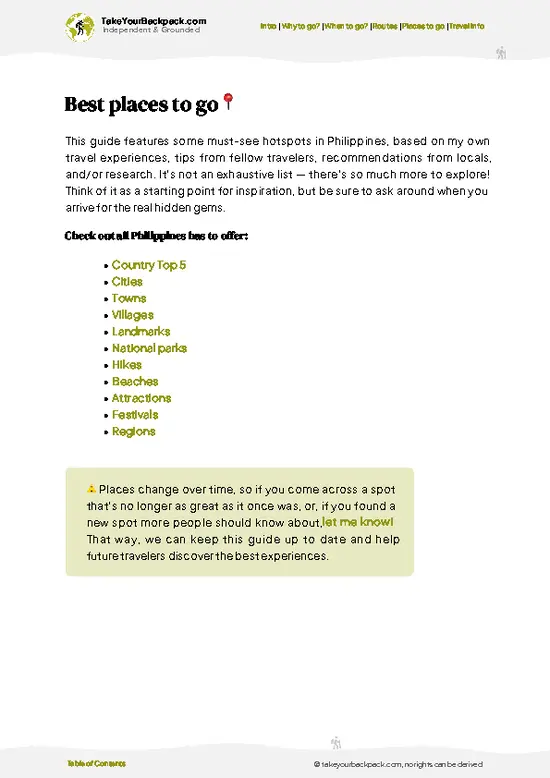
Prove you’re a true local — uncover 22 lesser-known beaches in Philippines that locals tend to keep to themselves.
Loading the map 🌍

Expert viewTips and Advice from Travelers

Coastline Flow
The Philippines boasts over 7,000 islands, each with its own character. When planning your beach itinerary, think about how the coastline flows. Some beaches are close enough to hop between, while others require a bit of travel. For instance, if you’re in a region known for its white sands, like Boracay, you might want to explore nearby beaches like Puka Shell Beach or Ilig-Iligan Beach to maximize your experience without losing too much time.

However, don’t underestimate travel time. Ferries and local transport can be unpredictable. If you’re aiming for a laid-back vibe, consider clustering your beach visits. This way, you can enjoy the sun without the stress of constant movement. Aim for three to five beaches in a week, allowing you to soak in the local culture and scenery … read more 👉
Coastline Flow
The Philippines boasts over 7,000 islands, each with its own character. When planning your beach itinerary, think about how the coastline flows. Some beaches are close enough to hop between, while others require a bit of travel. For instance, if you’re in a region known for its white sands, like Boracay, you might want to explore nearby beaches like Puka Shell Beach or Ilig-Iligan Beach to maximize your experience without losing too much time.

However, don’t underestimate travel time. Ferries and local transport can be unpredictable. If you’re aiming for a laid-back vibe, consider clustering your beach visits. This way, you can enjoy the sun without the stress of constant movement. Aim for three to five beaches in a week, allowing you to soak in the local culture and scenery without feeling rushed.

Seasonal Conditions
Timing is everything. The dry season, from November to April, is ideal for beach hopping. The weather is generally more stable, and the waters are calmer, making it easier to explore. However, this is also peak tourist season. Expect larger crowds and higher prices. If you’re willing to brave the occasional rain, the shoulder months of May and October can offer a more tranquil experience, albeit with some risk of storms.

Consider the trade-off: do you want to enjoy pristine beaches with fewer people, or are you okay with sharing the sand for better weather? If you choose the latter, be prepared for a more vibrant atmosphere, but also for the hustle and bustle that comes with it.

Access Points
Getting to these beaches can be a mixed bag. Some are easily accessible via well-maintained roads, while others require a bit of effort. If you’re venturing to more remote locations, factor in the time it takes to get there. Local boats can be a fun way to travel, but they often run on their own schedules.

For those who prioritize comfort, consider staying at beach resorts that offer shuttle services. This can save you time and energy, allowing you to focus on relaxation rather than logistics. However, this convenience often comes at a premium. If you’re on a tighter budget, be prepared to navigate local transport options, which can be an adventure in itself but may require more time and patience.

Crowd Density
Some beaches are known for their lively atmosphere, while others offer solitude. If you’re looking for a party vibe, beaches like White Beach in Boracay will deliver, but expect to share the space with many others. For a quieter experience, seek out lesser-known spots.

The trade-off here is between social interaction and personal space. If you thrive in a bustling environment, go where the crowds are. But if you want to unwind, consider visiting during off-peak hours, like early mornings or late afternoons. This way, you can enjoy the beach without feeling like you’re in a sardine can.

Balancing Relaxation vs. Travel Speed
Finding the right balance between relaxation and travel speed is crucial. The Philippines is a paradise for beach lovers, but the temptation to see as many beaches as possible can lead to burnout. Instead of trying to cram in too many locations, prioritize quality over quantity.

Spend a few days at a beach that resonates with you, whether it’s for the scenery, the local food, or the activities available. This allows you to immerse yourself in the local culture and truly unwind. If you’re feeling adventurous, take day trips to nearby beaches, but don’t overdo it. A well-planned itinerary might include two to three days at a primary beach, with one or two day trips to nearby spots.

Safety & Cultural Considerations
Safety is paramount. While the Philippines is generally safe for tourists, it’s wise to stay aware of your surroundings, especially in crowded areas. Respect local customs and traditions, particularly in more remote communities. Dress modestly when venturing away from the beach, and be mindful of local practices.

Cultural immersion can enhance your experience. Engage with locals, try regional dishes, and participate in community events if you can. This adds depth to your travels and often leads to unexpected adventures.

In summary, the Philippines offers a diverse range of beaches, each with its own charm. By understanding the trade-offs between time, money, and comfort, you can curate an experience that resonates with your travel style. Prioritize what matters most to you, and you’ll find that the journey is just as rewarding as the destination.

✈️ The backpacker research shortcutPhilippines Travel Guide

An offline-friendly backpacking guide with optimized travel routes, ranked highlights, transport advice, and the best areas to stay.
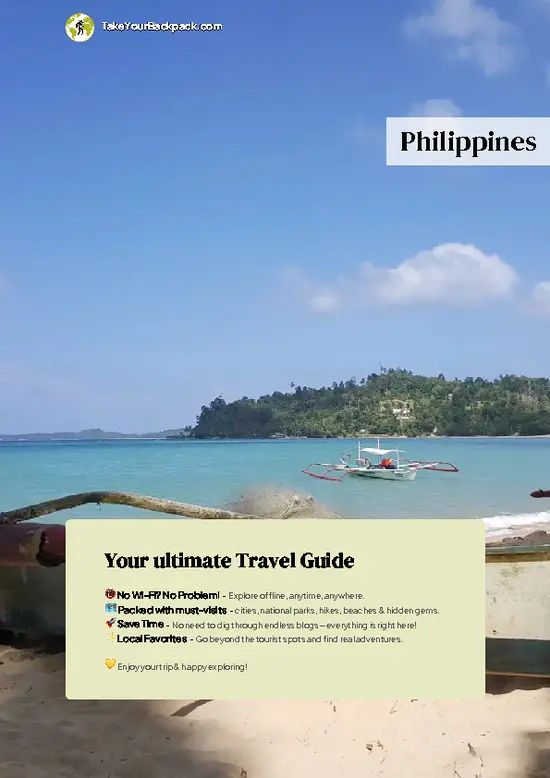
example page 0 from our offline Travel Guide for Philippines
example page 1 from our offline Travel Guide for Philippines
example page 2 from our offline Travel Guide for Philippines
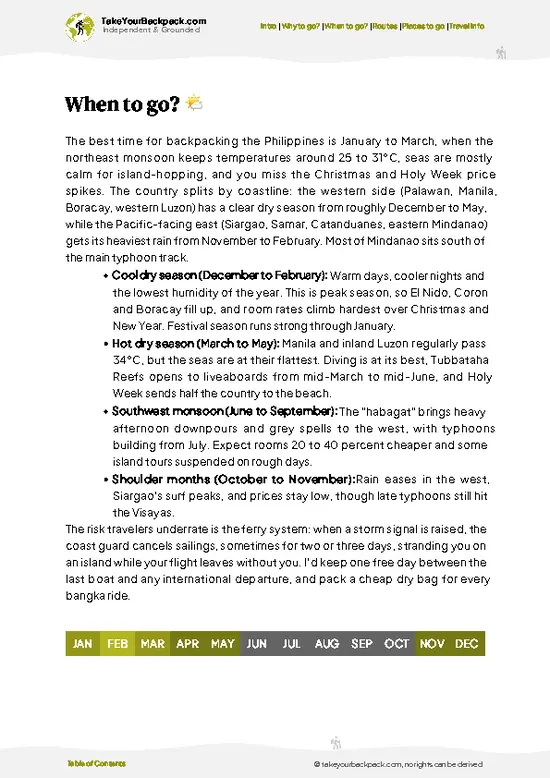
example page 3 from our offline Travel Guide for Philippines
example page 4 from our offline Travel Guide for Philippines
example page 5 from our offline Travel Guide for Philippines
example page 6 from our offline Travel Guide for Philippines
example page 7 from our offline Travel Guide for Philippines
The digital guide (505 pages) contains:
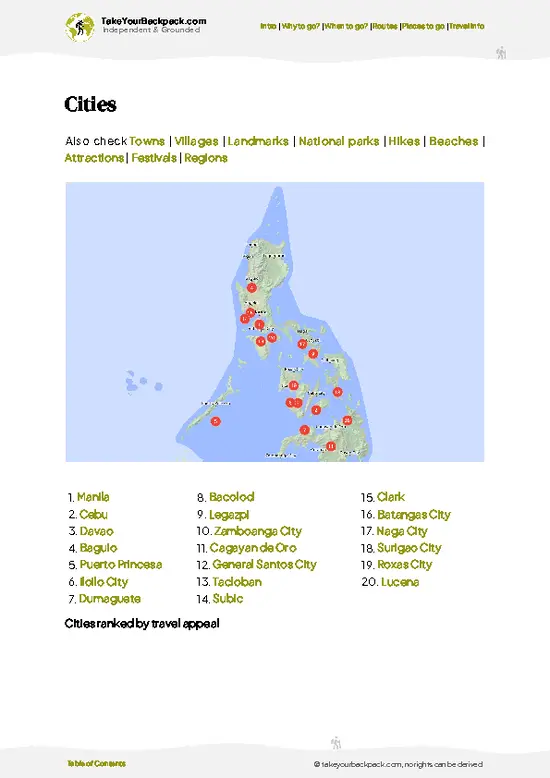
144 highlights, ranked by travel appeal
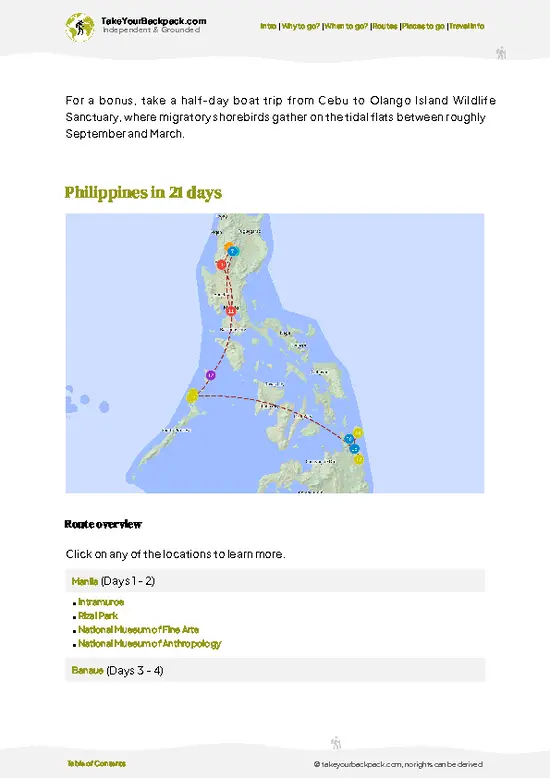
Optimized 7, 14 & 21-day travel routes
Cities, national parks, landmarks, beaches
How to get around
Offline-friendly for travel without Wi-Fi
👉 Click to see all 30+ guide features

📅 Plan smarter in minutes, not weeks
Month by month travel advice
Festivals & national holidays
Budget expectations

🗺️ Go to the right places, skip the overrated ones
Honest pros & cons of destinations
Top hikes, parks & viewpoints
Lesser-known places most travelers miss
Clear “worth it vs skip it” guidance

🛏️ Travel smoothly without rookie mistakes
Best areas to stay
Transport systems explained simply
Common scams & safety advice
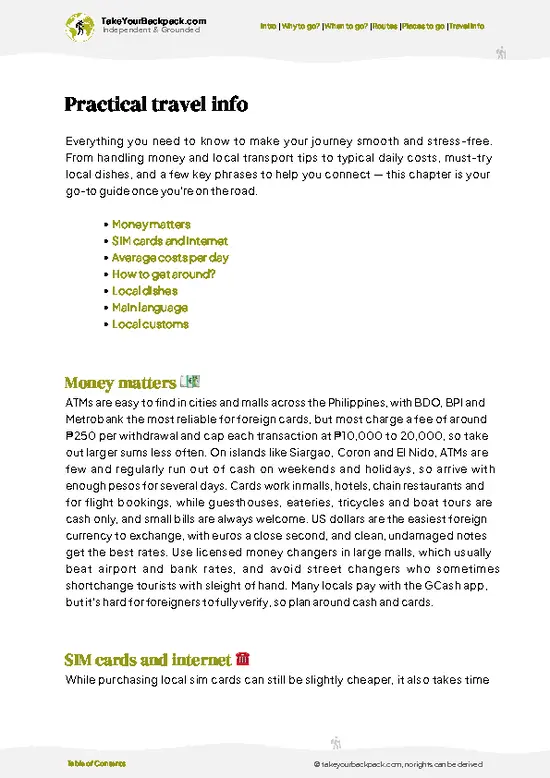
SIM cards, money & practical tips

🌍 Understand the country, not just visit it
Culture & traditions
52 Essential phrases & customs
Festivals worth planning around
Traveler-friendly historical context
Insights that make places more meaningful

📱 Built for real travel conditions
Fully downloadable PDF
Works completely offline
Optimized for phone use
Useful in remote areas & buses
Everything in one place
Save weeks of stressful planning
Get instant access to your full guide. 30‑day money-back guarantee.


By proceeding you agree to our terms.
Sent to your inbox immediately after payment • 100% Secure Checkout
Best Backpacking Travel Advisor 2025 tourism awardBest Backpacking
Travel Advisor
2025
What others say about Take Your Backpack Guides:
⭐⭐⭐⭐⭐
Fantastic, amazing amount of information!
⭐⭐⭐⭐⭐
My goodness this is amazing, it's what I've been looking for hats off too you!
⭐⭐⭐⭐⭐
I think this is absolutely BRILLIANT
⭐⭐⭐⭐
Very complete and informative. It's still missing places, but I gotta to commend you
⭐⭐⭐⭐⭐
This is truly amazing, thank you, can't wait to explore it with my kids!
⭐⭐⭐⭐⭐
Awesome resource, thank you!
⭐⭐⭐⭐⭐
This is amazing! Can't wait to explore the ones I haven't seen
⭐⭐⭐⭐
I love this! Well done, great idea.
⭐⭐⭐⭐⭐
Thanks for taking the time to make this gem!
⭐⭐⭐⭐⭐
This might be the best website I've ever seen.
⭐⭐⭐⭐⭐
Congratulations, and thank you so much for your work; it's incredibly valuable.
⭐⭐⭐⭐
In all seriousness I think you did a great job pointing out the important spots
⭐⭐⭐⭐⭐
10/10 very good
⭐⭐⭐⭐⭐
As someone who's only just starting to visit regularly this is awesome, thank you.
⭐⭐⭐⭐
Thank you very much! I'm going to visit my dad, it's going to be very useful!
⭐⭐⭐⭐⭐
This is really cool! We'll be travelling for the first time and this definitely come in handy.
⭐⭐⭐⭐⭐
You are now our minister of culture, congratulations 👨‍💼
⭐⭐⭐⭐⭐
Just wanted to tell you that this is a pearl! Going to follow your recommendations.
⭐⭐⭐⭐⭐
This is so cool. I'll definitely be using the resource for my travels soon.
⭐⭐⭐⭐⭐
This is very impressive! Good work.
⭐⭐⭐⭐⭐
This is an amazing and informative site. Very well done!

🛏️ Where to stay?Where to Base Yourself

Yes — hostels and budget guesthouses are widespread across the Philippines, concentrated in Manila (Ermita/Malate) and Makati, Cebu (Fuente Osmeña/IT Park), Boracay (Station 2), El Nido, Coron, Siargao (General Luna) and Panglao/Tagbilaran in Bohol, which cover the main transport hubs and island gateways you’ll use.
Ermita/Malate offers cheap transport and nightlife but is noisy and touristy; Makati is safer with better transit and higher prices; Cebu city gives fast ferries and budget eats though parts feel busy at night; Boracay Station 2 is best for beaches and nightlife but crowded and pricier (Stations 1/3 are quieter); El Nido and Coron are ideal for island-hopping with social hostels … read more 👉
Yes — hostels and budget guesthouses are widespread across the Philippines, concentrated in Manila (Ermita/Malate) and Makati, Cebu (Fuente Osmeña/IT Park), Boracay (Station 2), El Nido, Coron, Siargao (General Luna) and Panglao/Tagbilaran in Bohol, which cover the main transport hubs and island gateways you’ll use.
Ermita/Malate offers cheap transport and nightlife but is noisy and touristy; Makati is safer with better transit and higher prices; Cebu city gives fast ferries and budget eats though parts feel busy at night; Boracay Station 2 is best for beaches and nightlife but crowded and pricier (Stations 1/3 are quieter); El Nido and Coron are ideal for island-hopping with social hostels but have limited late-night services and seasonal crowds; Siargao’s General Luna is the surf-and-party hub with laid-back safety but high-season congestion; Panglao/Tagbilaran suit budget divers and quieter nights while requiring more planning for inter-island travel.

If you enjoy meeting fellow travelers, consider choosing hostels with high ratings for atmosphere. On the other hand, if you prefer having your own space, a hotel might be a better option.

PhilippinesExpand Your Journey

👋 Meet the founderWho’s Behind Take Your Backpack?

Johan, backpacker and founder of TakeYourBackpackHi, I’m Johan (Netherlands 🇳🇱), the creator of TakeYourBackpack. Over the past decade, I’ve backpacked through 80+ countries across six continents, gaining extensive experience with independent travel, long-term trips, and overland routes.

This site is built on a combination of firsthand travel experience and carefully curated insights from other backpackers. Many guides are based on places I’ve personally visited, while others bring together tips, observations, and practical advice shared by trusted travelers I’ve met along the way.

The goal is to provide realistic, experience-driven guidance — not generic itineraries — so you can explore destinations with better context, clearer expectations, and more confidence.

Get full country guide •
Instant download • 144 highlights • Full Offline guide