×

Portugal🇵🇹 | best hikesExplore the 5 Best hikes in Portugal

Hikes in Portugal run from granite ridges to cliff paths where the Atlantic wind carries salt and wild rosemary. In the north, the Peneda-Gerês uplands mean stone villages, wet moss and cowbells, with few crowds off the main trailheads. The Alentejo and Algarve coast is sand, sun-baked ankles and fennel scent, easy to reach and busy by midday in summer. Madeira and the Azores add laurel forest, dripping tunnels and volcanic mud, with a real jump in cost and transport planning. For backpackers traveling independently, the mainland is cheapest and simplest, while the islands reward a bigger budget.

By Johan Kruseman 🇳🇱 | Updated October 18, 2026
Explore the best beaches in Portugal

Why go?Why These hike Stand Out

Portugal packs an unusual range into a small country. Atlantic weather meets Mediterranean heat, so within a few hours you can pass from granite mountains with mist and bracken to cork oak plains that smell of dry resin. The Atlantic also carves the long cliff coastline, where trails run close to the edge and the wind never really drops.

Centuries of rural life left a web of shepherd tracks, stone-walled lanes and levada channels that now double as walking routes. Many are old working paths, so surfaces can be rutted, slick or steep rather than polished. Waymarking has improved through the Rota Vicentina and the national network of PR (short) and GR (long) routes, yet signs fade and junctions vanish in thick scrub.

Before choosing Portugal, know that public transport thins sharply outside … read more 👉
Portugal packs an unusual range into a small country. Atlantic weather meets Mediterranean heat, so within a few hours you can pass from granite mountains with mist and bracken to cork oak plains that smell of dry resin. The Atlantic also carves the long cliff coastline, where trails run close to the edge and the wind never really drops.

Centuries of rural life left a web of shepherd tracks, stone-walled lanes and levada channels that now double as walking routes. Many are old working paths, so surfaces can be rutted, slick or steep rather than polished. Waymarking has improved through the Rota Vicentina and the national network of PR (short) and GR (long) routes, yet signs fade and junctions vanish in thick scrub.

Before choosing Portugal, know that public transport thins sharply outside cities, and a rental car or a taxi to trailheads often saves a whole day. Summer heat inland can pass 35°C with almost no shade, while winter brings mud and sudden rain. Trails are rarely crowded, but the best-known coastal and island paths fill fast, and wildfire closures can reshape plans in the dry months.
Behind the Scenes of Selection
The list of best hikes in Portugal is created based on scenery, challenge, trail quality, landmarks, and overall enjoyment. If you feel a hike is missing in this list, please let us know.

When to go?Seasonal Guide to Visiting

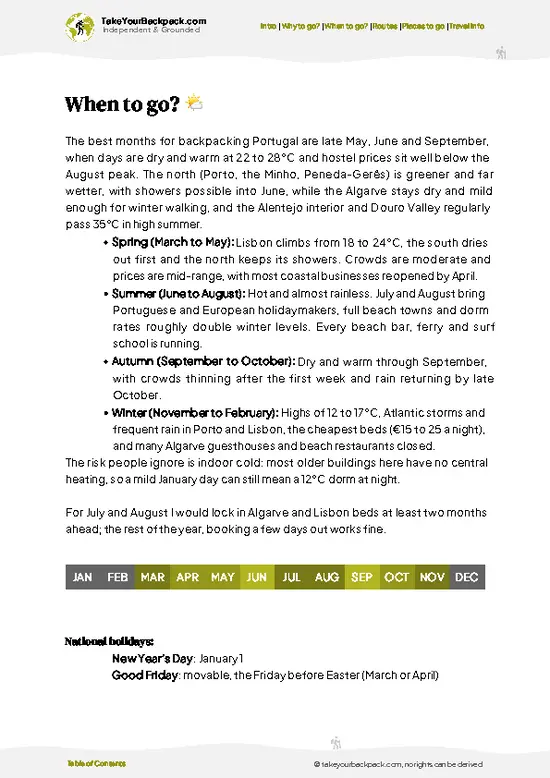
Best months for hiking: The best months for hiking in Portugal are April to June and September to October, when daytime temperatures sit around 15 to 25°C and the light is soft and golden rather than white and punishing. Spring brings wildflowers, green hillsides and the smell of crushed rockrose, while early autumn keeps the sea warm and the trails drier.

Shoulder seasons and regional differences: In the north, including Peneda-Gerês, rain is heavy from November to March, often 150 to 250 mm a month, and streams run loud and brown. Trails turn muddy, though waterfalls are at their best. The Alentejo and Algarve are milder in winter, around 12 to 17°C, and good for walking on dry days, but fierce inland in July and August. Madeira hikes well almost all year, though upper trails can be cloudy … read more 👉
Best months for hiking: The best months for hiking in Portugal are April to June and September to October, when daytime temperatures sit around 15 to 25°C and the light is soft and golden rather than white and punishing. Spring brings wildflowers, green hillsides and the smell of crushed rockrose, while early autumn keeps the sea warm and the trails drier.

Shoulder seasons and regional differences: In the north, including Peneda-Gerês, rain is heavy from November to March, often 150 to 250 mm a month, and streams run loud and brown. Trails turn muddy, though waterfalls are at their best. The Alentejo and Algarve are milder in winter, around 12 to 17°C, and good for walking on dry days, but fierce inland in July and August. Madeira hikes well almost all year, though upper trails can be cloudy and cold, while the Azores are changeable any month, with four seasons in a day.

Peak periods and prices: July and August bring the biggest crowds, especially on the coast, and accommodation can cost 30 to 60 percent more than in spring. Heat and wildfire risk can close forest areas, so start at dawn and finish before the afternoon furnace. Easter and long weekends also fill popular guesthouses.

hike hoppingTips for Visiting Multiple Destinations

How many days to plan: A trip combining several hikes in Portugal needs 10 to 14 days, which allows two to three days per region without constant packing. Rushing across the country in a week means more time in vehicles than on trails.

Grouping regions and direction: The cleanest approach is a north to south arc: start around Porto, then the northern mountains, then drop through the center and finish on the Alentejo and Algarve coast near Lisbon or Faro. Porto to the northern uplands takes about 1.5 to 2.5 hours by road, Porto to Lisbon about 3 hours by train or bus, and Lisbon to the southwest coast around 2 to 3 hours. Flying to the islands is a separate trip, as Madeira and the Azores each need four to seven days, plus a flight of about 1.5 to 2.5 hours from Lisbon.

Pacing and common … read more 👉
How many days to plan: A trip combining several hikes in Portugal needs 10 to 14 days, which allows two to three days per region without constant packing. Rushing across the country in a week means more time in vehicles than on trails.

Grouping regions and direction: The cleanest approach is a north to south arc: start around Porto, then the northern mountains, then drop through the center and finish on the Alentejo and Algarve coast near Lisbon or Faro. Porto to the northern uplands takes about 1.5 to 2.5 hours by road, Porto to Lisbon about 3 hours by train or bus, and Lisbon to the southwest coast around 2 to 3 hours. Flying to the islands is a separate trip, as Madeira and the Azores each need four to seven days, plus a flight of about 1.5 to 2.5 hours from Lisbon.

Pacing and common mistakes: Allow two to three nights per stop so one weather-ruined day does not wreck the plan. The most common mistake is trusting maps for rural bus links, which may run once or twice daily or not on weekends. Book a rental car for the mountains and coast, or arrange taxis and shuttles. Another is squeezing a long hike into a transfer day, leaving you walking in late heat or fading light. Plan transfers for the morning and keep afternoons for rest.

The ListTop hikes of Portugal

1 Pico do Arieiro to Pico Ruivo

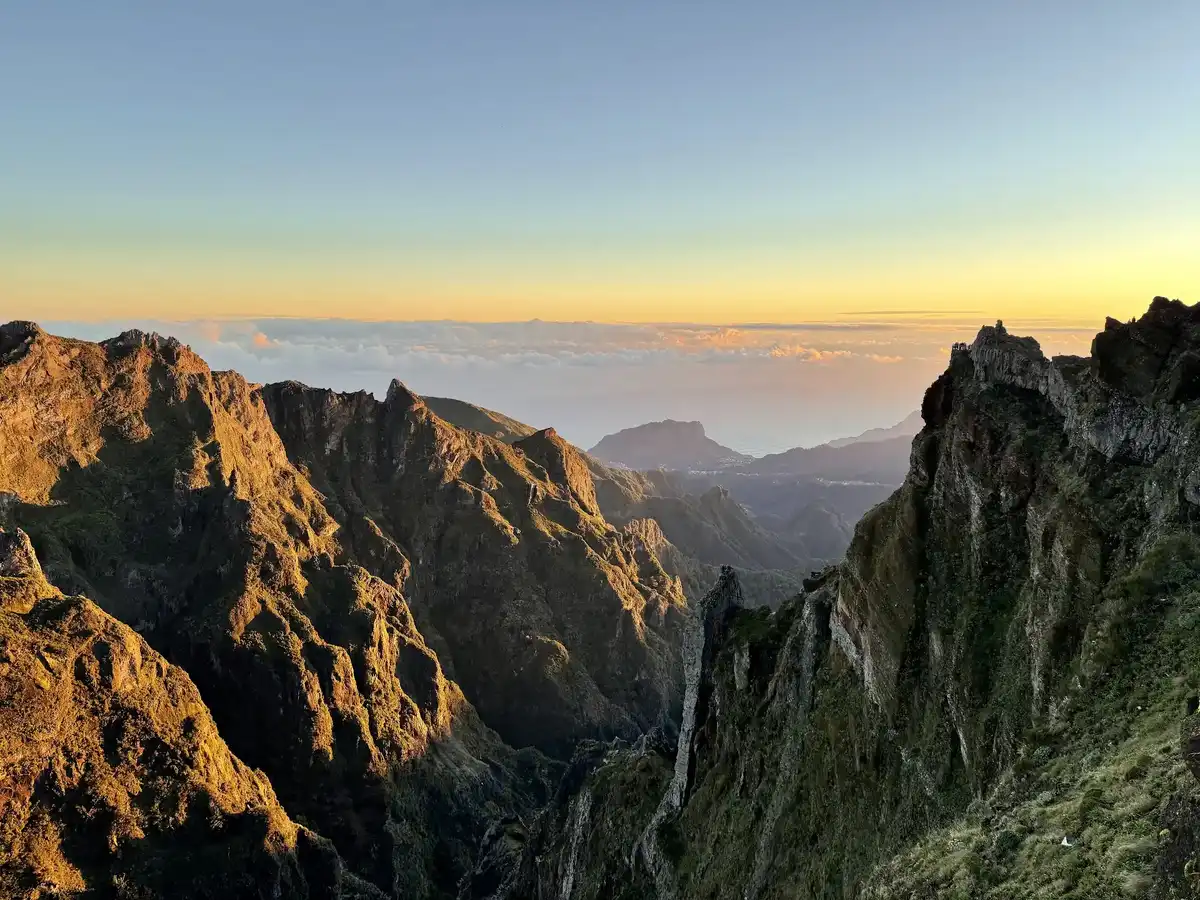
volcanic ridges, mountain tunnels, cloud forest

Traverse narrow ridgelines and high-altitude tunnels, gaining altitude through shifting weather and dramatic volcanic terrain.

portugal-hike-pico-do-arieiro-to-pico-ruivo
© Google | Wanderlust Wolf

2 Seven Hanging Valleys Trail

limestone cliffs, sea caves, golden beaches

Walk above sculpted coves and natural arches, with frequent descents to secluded sands and panoramic views over turquoise water.

portugal-hike-seven-hanging-valleys-trail
© Google | Vn

3 Fisherman’s Trail

clifftop tracks, Atlantic spray, remote fishing villages

Trace rugged coastal edges where wind and sea shape the path, passing isolated hamlets and stretches of wild, exposed shoreline.

portugal-hike-fishermans-trail
© Google | Timo Honkanen

4 Passadiços do Paiva

wooden walkways, river gorge, cascading rapids

Follow suspended boardwalks along a twisting gorge, with steep stair climbs and close encounters with fast-moving water and forested slopes.

portugal-hike-passadicos-do-paiva
© Google | Rodrigo Sales

5 Rota Vicentina

long-distance trail, rural farmland, cork oak forests

Navigate a network of inland and coastal routes, moving between agricultural landscapes, quiet villages, and stretches of Mediterranean woodland.

portugal-hike-rota-vicentina
© Google | Vasco Soares
Loading the map 🌍

Expert viewPro Tips for Exploring the Best

How many hikes to include: I advise four to six hikes on a two-week trip, with at least one rest day for every three days of walking. That number leaves room for rain, closures and the tired calves that come after steep granite steps. Packing in ten routes usually means trading depth for car time.

Choosing by travel style: For budget-minded independent travelers, prioritize the mainland coastal and northern mountain trails. They offer the best mix of access and cost, with sea air, stone villages and cheap food at the end of the day. If you want solitude, choose inland and mountain routes outside July and August. Beach-focused walkers do best on the southwest cliffs, where paths cross sand and fennel scrub. If you have a bigger budget and want drama, the islands are worth the splurge for levada … read more 👉
How many hikes to include: I advise four to six hikes on a two-week trip, with at least one rest day for every three days of walking. That number leaves room for rain, closures and the tired calves that come after steep granite steps. Packing in ten routes usually means trading depth for car time.

Choosing by travel style: For budget-minded independent travelers, prioritize the mainland coastal and northern mountain trails. They offer the best mix of access and cost, with sea air, stone villages and cheap food at the end of the day. If you want solitude, choose inland and mountain routes outside July and August. Beach-focused walkers do best on the southwest cliffs, where paths cross sand and fennel scrub. If you have a bigger budget and want drama, the islands are worth the splurge for levada channels and crater rims, but they cost more in flights, car rental and lodging.

What it costs: Most hikes on the mainland are free, with no entry fees on most trails. A realistic budget is €45 to 80 a day for hostels or simple guesthouses, local meals and some transport. Add €30 to 60 a day for a rental car, shared between travelers, and €25 to 90 for a guide if you want one for a remote or technical route. Madeira and the Azores often run €70 to 120 a day, plus €10 to 50 for local shuttles or taxis to trailheads. Some island trails charge small fees, around €3 to 10 per person.

Safety and local etiquette: The biggest risks are heat, dehydration and wildfire. Carry at least 2 to 3 liters of water in summer, start early and check local fire restrictions, because entry to forests may be banned on high-risk days. Coastal cliffs have crumbling edges and strong gusts, so keep distance in wind. Mountain fog can swallow a trail in minutes, so download offline maps. Call 112 for emergencies.

On farmland and village paths, close gates behind you and give grazing cattle, goats and guard dogs space. Walk quietly through hamlets, where many routes pass within meters of front doors. Greet people with a quick “bom dia”, which helps. Wild camping is generally prohibited, and fines are real, so use campsites or guesthouses.

The effort is worth it for the details: the clang of cowbells in mist, warm stone after rain, and the first sight of the ocean breaking beneath the trail.

✈️ The backpacker research shortcutPortugal Travel Guide

An offline-friendly backpacking guide with optimized travel routes, ranked highlights, transport advice, and the best areas to stay.
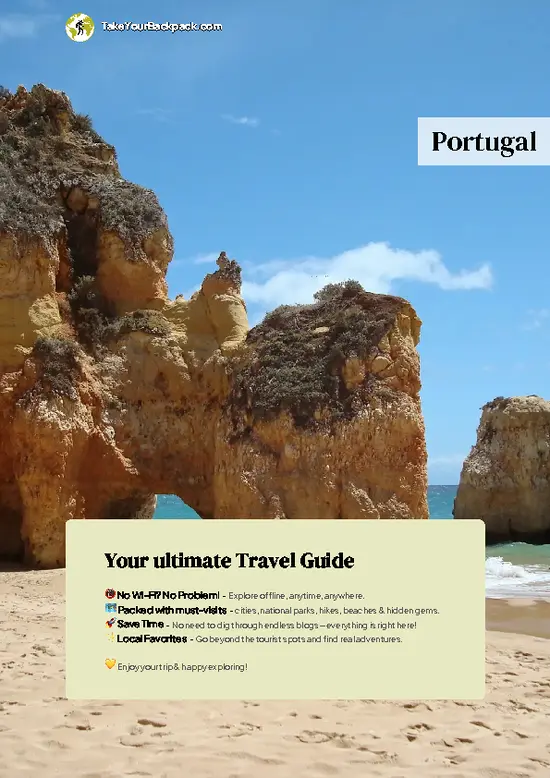
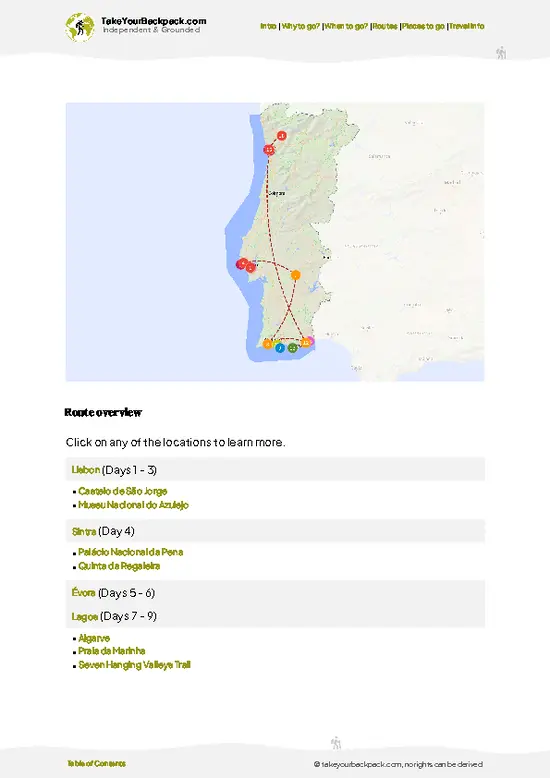
example page 0 from our offline Travel Guide for Portugal
example page 1 from our offline Travel Guide for Portugal
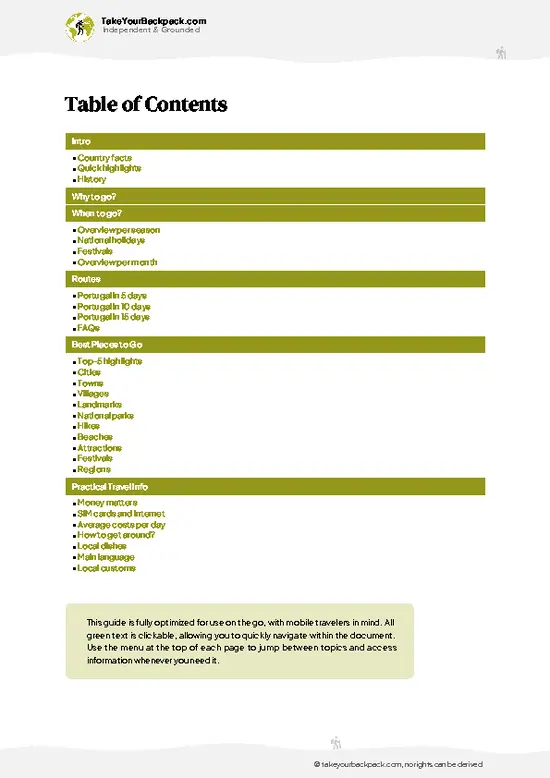
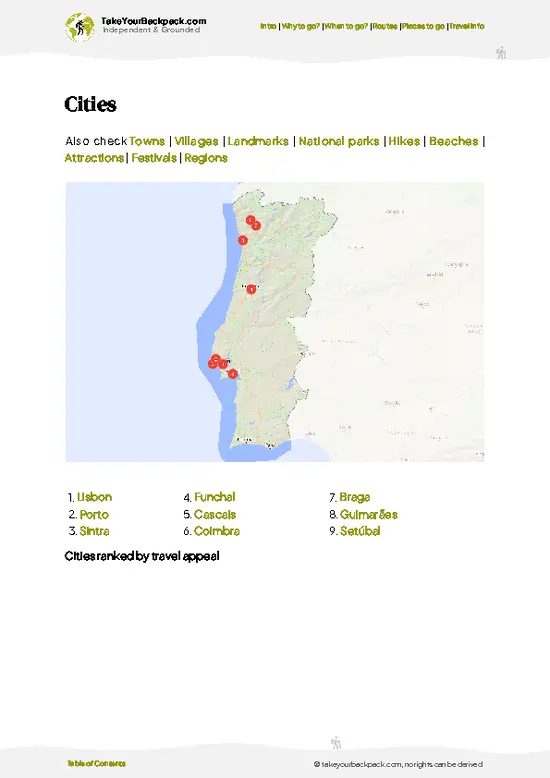
example page 2 from our offline Travel Guide for Portugal
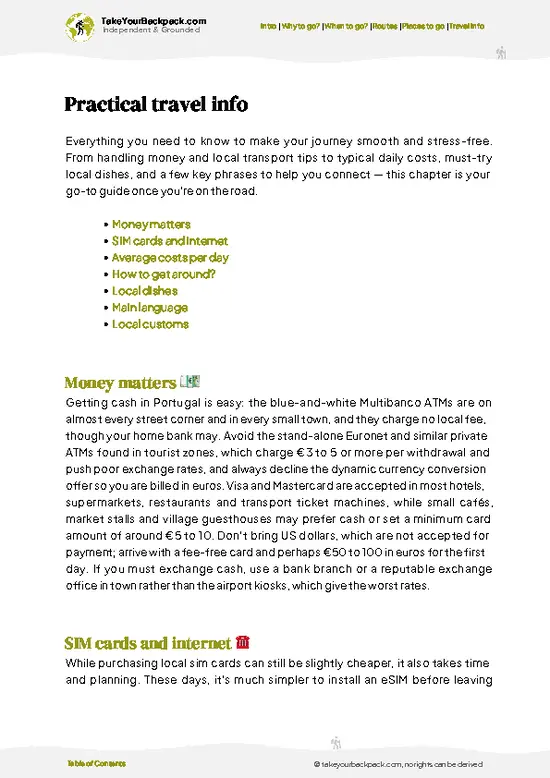
example page 3 from our offline Travel Guide for Portugal
example page 4 from our offline Travel Guide for Portugal
example page 5 from our offline Travel Guide for Portugal
example page 6 from our offline Travel Guide for Portugal
example page 7 from our offline Travel Guide for Portugal
The digital guide (361 pages) contains:
✅ 87 highlights, ranked by travel appeal
✅ Optimized 5, 10 & 15-day travel routes
✅ Cities, national parks, landmarks, beaches
✅ How to get around
✅ Offline-friendly for travel without Wi-Fi
👉 Click to see all 30+ guide features

📅 Plan smarter in minutes, not weeks
✅ Month by month travel advice
✅ Festivals & national holidays
✅ Budget expectations

🗺️ Go to the right places, skip the overrated ones
✅ Honest pros & cons of destinations
✅ Top hikes, parks & viewpoints
✅ Lesser-known places most travelers miss
✅ Clear “worth it vs skip it” guidance

🛏️ Travel smoothly without rookie mistakes
✅ Best areas to stay
✅ Transport systems explained simply
✅ Common scams & safety advice
✅ SIM cards, money & practical tips

🌍 Understand the country, not just visit it
✅ Culture & traditions
✅ 52 Essential phrases & customs
✅ Festivals worth planning around
✅ Traveler-friendly historical context
✅ Insights that make places more meaningful

📱 Built for real travel conditions
✅ Fully downloadable PDF
✅ Works completely offline
✅ Optimized for phone use
✅ Useful in remote areas & buses
✅ Everything in one place
Stop searching, start planning
Get instant access to your full guide. 30‑day money-back guarantee.
+ Add another guide for just

By proceeding you agree to our terms.
Sent to your inbox immediately after payment • 100% Secure Checkout
Best Backpacking Travel Advisor 2025 tourism awardBest Backpacking
Travel Advisor
2025
What others say about Take Your Backpack Guides:
⭐⭐⭐⭐⭐
Fantastic, amazing amount of information!
⭐⭐⭐⭐⭐
My goodness this is amazing, it's what I've been looking for hats off too you!
⭐⭐⭐⭐⭐
I think this is absolutely BRILLIANT
⭐⭐⭐⭐
Very complete and informative. It's still missing places, but I gotta to commend you
⭐⭐⭐⭐⭐
This is truly amazing, thank you, can't wait to explore it with my kids!
⭐⭐⭐⭐⭐
Awesome resource, thank you!
⭐⭐⭐⭐⭐
This is amazing! Can't wait to explore the ones I haven't seen
⭐⭐⭐⭐
I love this! Well done, great idea.
⭐⭐⭐⭐⭐
Thanks for taking the time to make this gem!
⭐⭐⭐⭐⭐
This might be the best website I've ever seen.
⭐⭐⭐⭐⭐
Congratulations, and thank you so much for your work; it's incredibly valuable.
⭐⭐⭐⭐
In all seriousness I think you did a great job pointing out the important spots
⭐⭐⭐⭐⭐
10/10 very good
⭐⭐⭐⭐⭐
As someone who's only just starting to visit regularly this is awesome, thank you.
⭐⭐⭐⭐
Thank you very much! I'm going to visit my dad, it's going to be very useful!
⭐⭐⭐⭐⭐
This is really cool! We'll be travelling for the first time and this definitely come in handy.
⭐⭐⭐⭐⭐
You are now our minister of culture, congratulations 👨‍💼
⭐⭐⭐⭐⭐
Just wanted to tell you that this is a pearl! Going to follow your recommendations.
⭐⭐⭐⭐⭐
This is so cool. I'll definitely be using the resource for my travels soon.
⭐⭐⭐⭐⭐
This is very impressive! Good work.
⭐⭐⭐⭐⭐
This is an amazing and informative site. Very well done!

🛏️ Where to stay?Where to Base Yourself

Portugal has one of Europe’s densest and best-rated hostel scenes, with dorm beds from roughly €18 to €35 in summer and plenty of budget guesthouses outside the big cities. In Lisbon, Baixa and Chiado put you on flat ground near the metro and most sights, Bairro Alto and Cais do Sodré are the nightlife picks but stay loud until 3am, and Alfama is hilly and quieter, with fado bars instead of clubs. In Porto, Ribeira is right on the river but steep and touristy, while Baixa around the university area has more beds, cheaper food and an easy walk to the bars, and on the Algarve Lagos old town is the party hub, so pick a spot a few streets back if you want sleep.

If you enjoy meeting fellow travelers, … read more 👉
Portugal has one of Europe’s densest and best-rated hostel scenes, with dorm beds from roughly €18 to €35 in summer and plenty of budget guesthouses outside the big cities. In Lisbon, Baixa and Chiado put you on flat ground near the metro and most sights, Bairro Alto and Cais do Sodré are the nightlife picks but stay loud until 3am, and Alfama is hilly and quieter, with fado bars instead of clubs. In Porto, Ribeira is right on the river but steep and touristy, while Baixa around the university area has more beds, cheaper food and an easy walk to the bars, and on the Algarve Lagos old town is the party hub, so pick a spot a few streets back if you want sleep.

If you enjoy meeting fellow travelers, consider choosing hostels with high ratings for atmosphere. On the other hand, if you prefer having your own space, a hotel might be a better option.

PortugalExpand Your Journey

👋 Meet the founderWho’s Behind Take Your Backpack?

Johan, backpacker and founder of TakeYourBackpackHi, I’m Johan (Netherlands 🇳🇱), the creator of TakeYourBackpack. Over the past 3 decades, I’ve backpacked through 90+ countries across six continents, gaining extensive experience with independent travel, long-term trips, and overland routes.

This site is built on a combination of firsthand travel experience and carefully curated insights from other backpackers. Many guides are based on places I’ve personally visited, while others bring together tips, observations, and practical advice shared by trusted travelers I’ve met along the way.

The goal is to provide realistic, experience-driven guidance — not generic itineraries — so you can explore destinations with better context, clearer expectations, and more confidence.